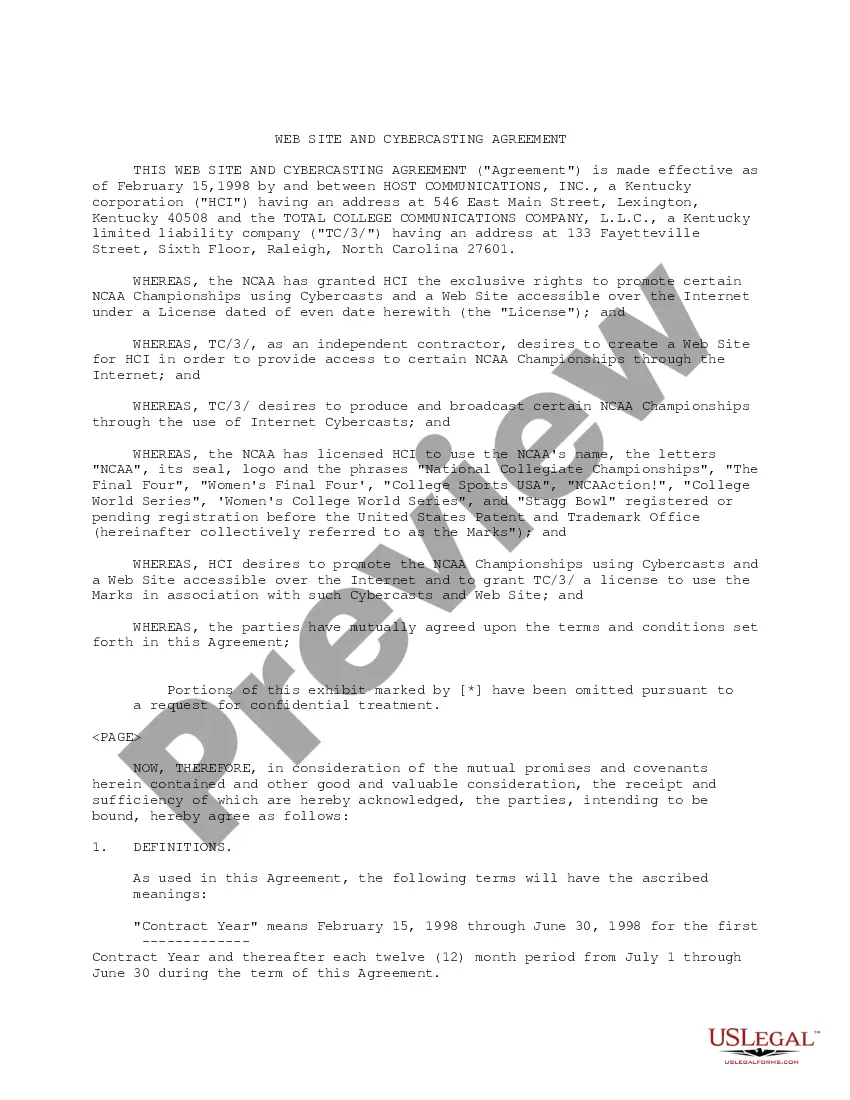
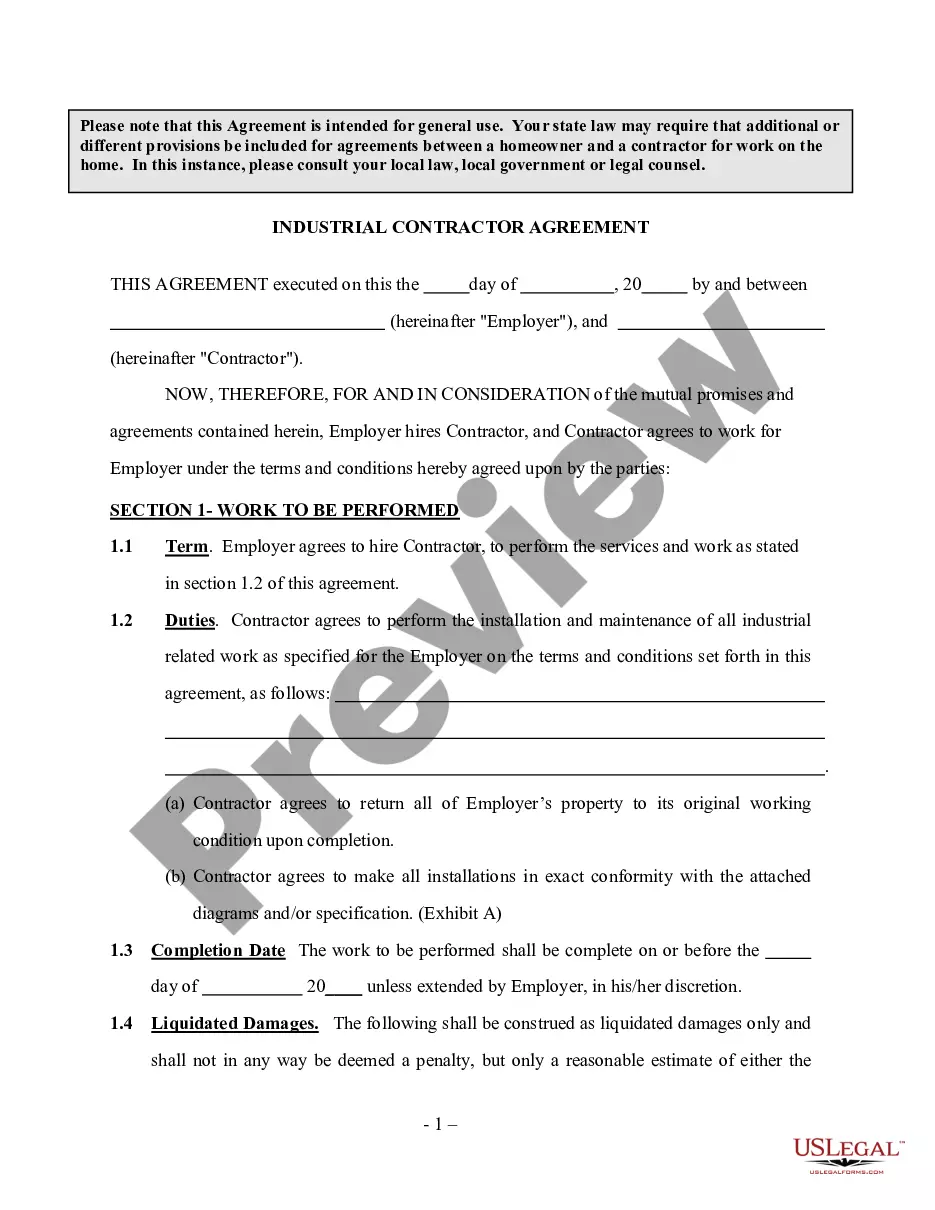
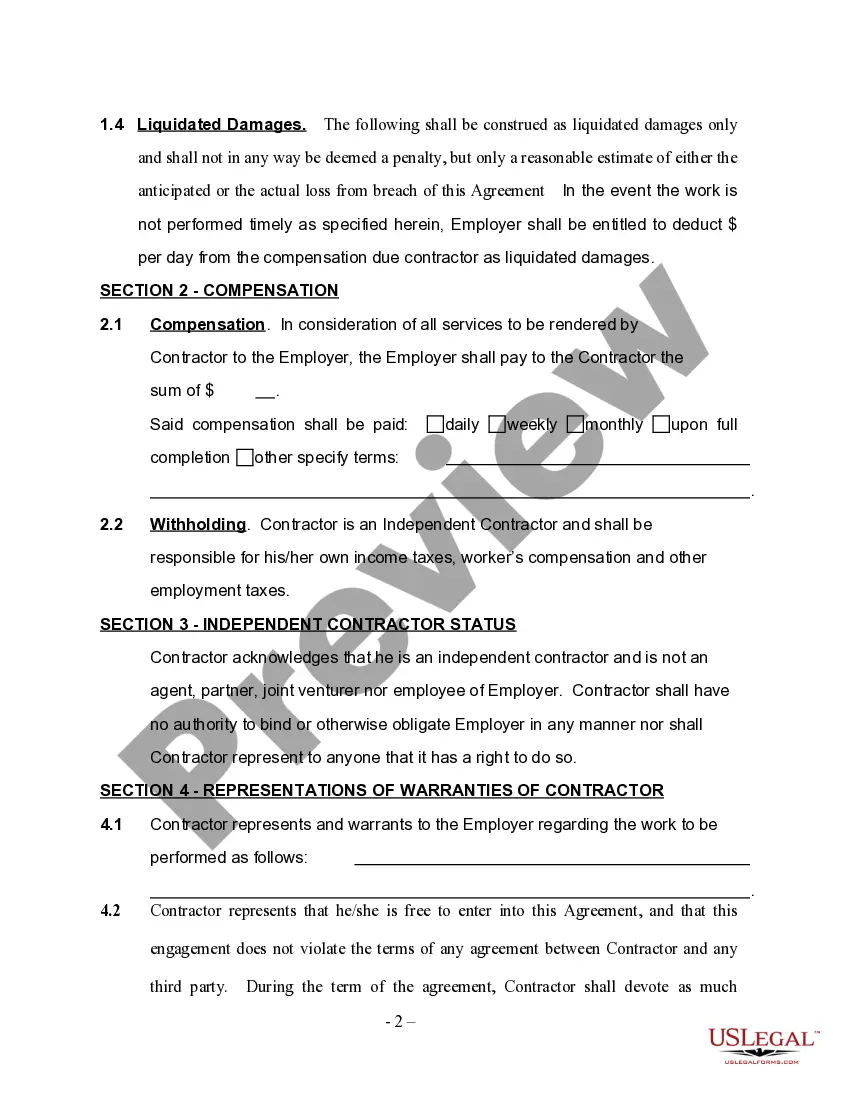
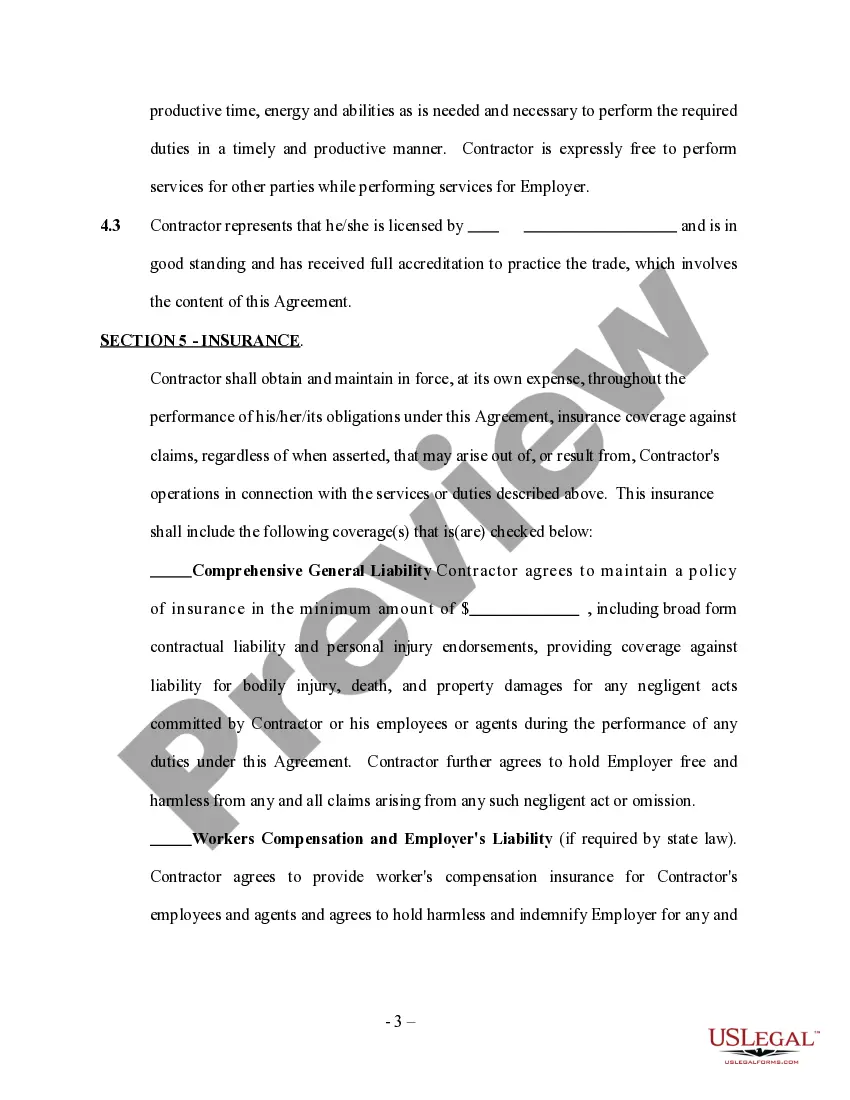
Employer contracts with an independent contractor to provide industrial contractor services as specified and agreed upon in the contract.
North Carolina Industrial Contractor Agreement - Self-Employed
State:
Multi-State
Control #:
US-INDC-110
Format:
Word;
Rich Text
Instant download
Description
Free preview
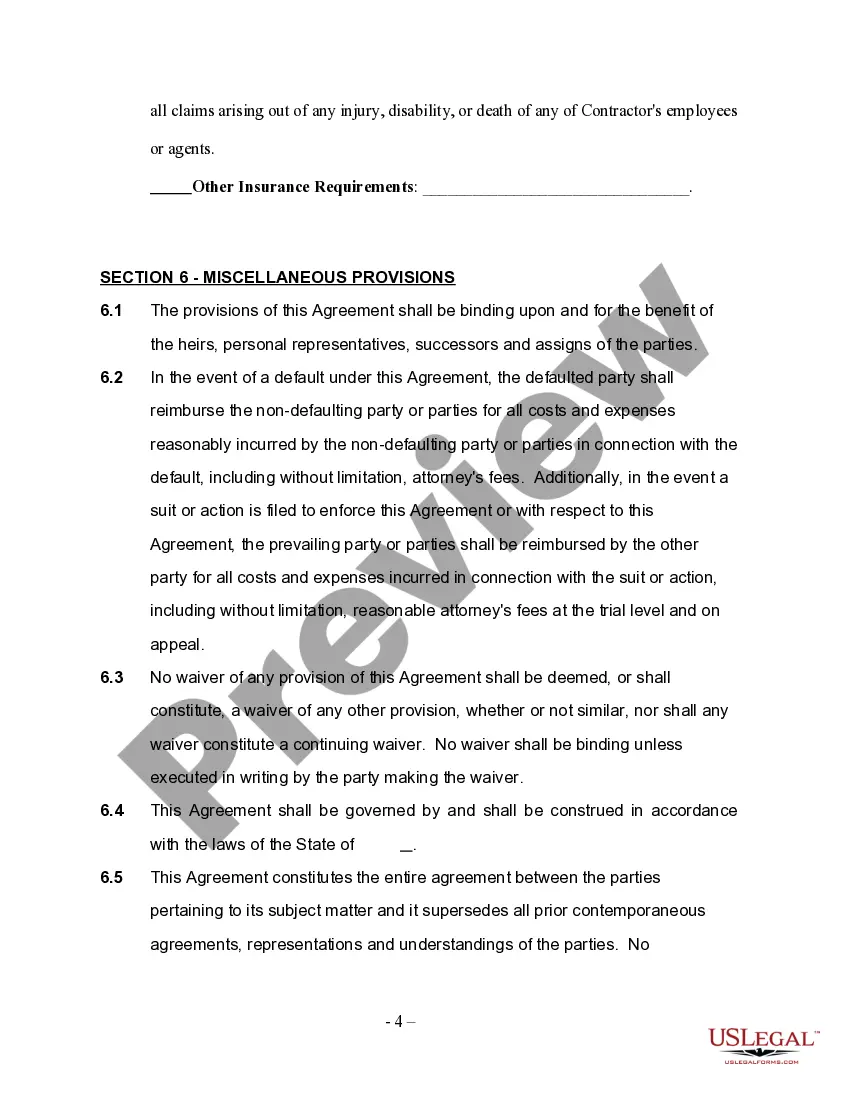
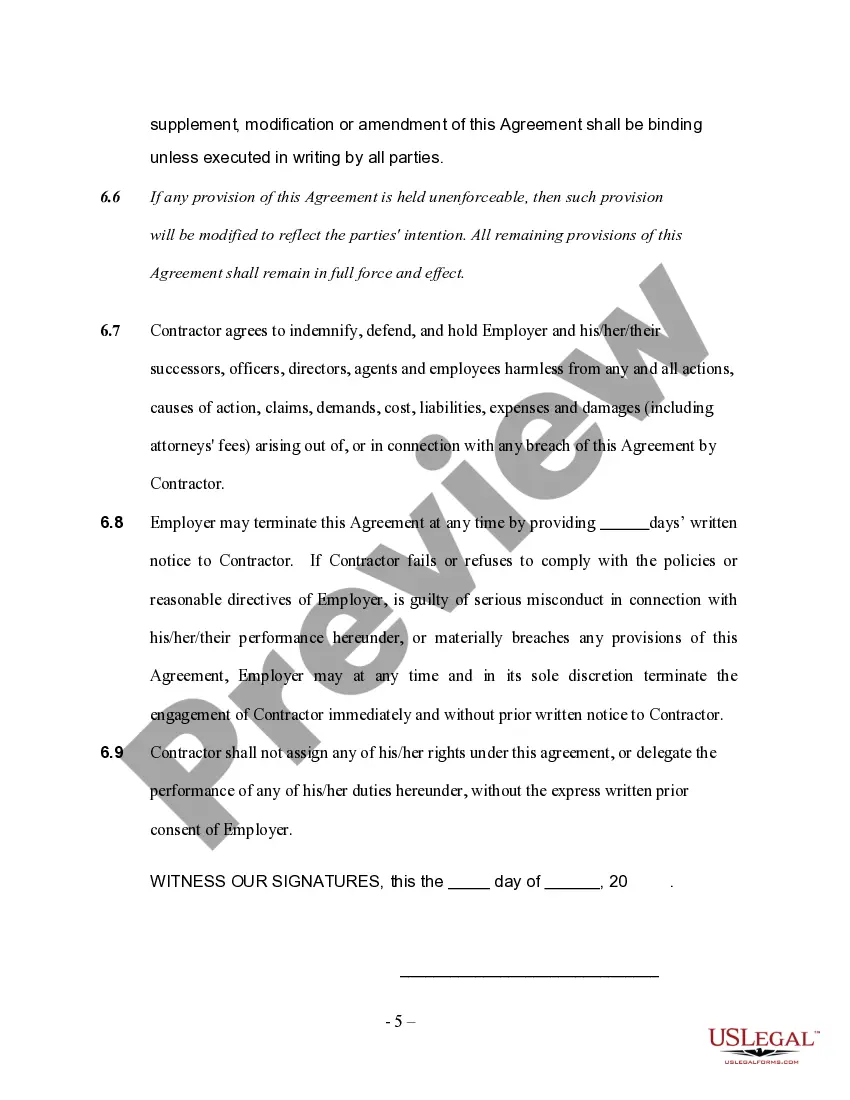
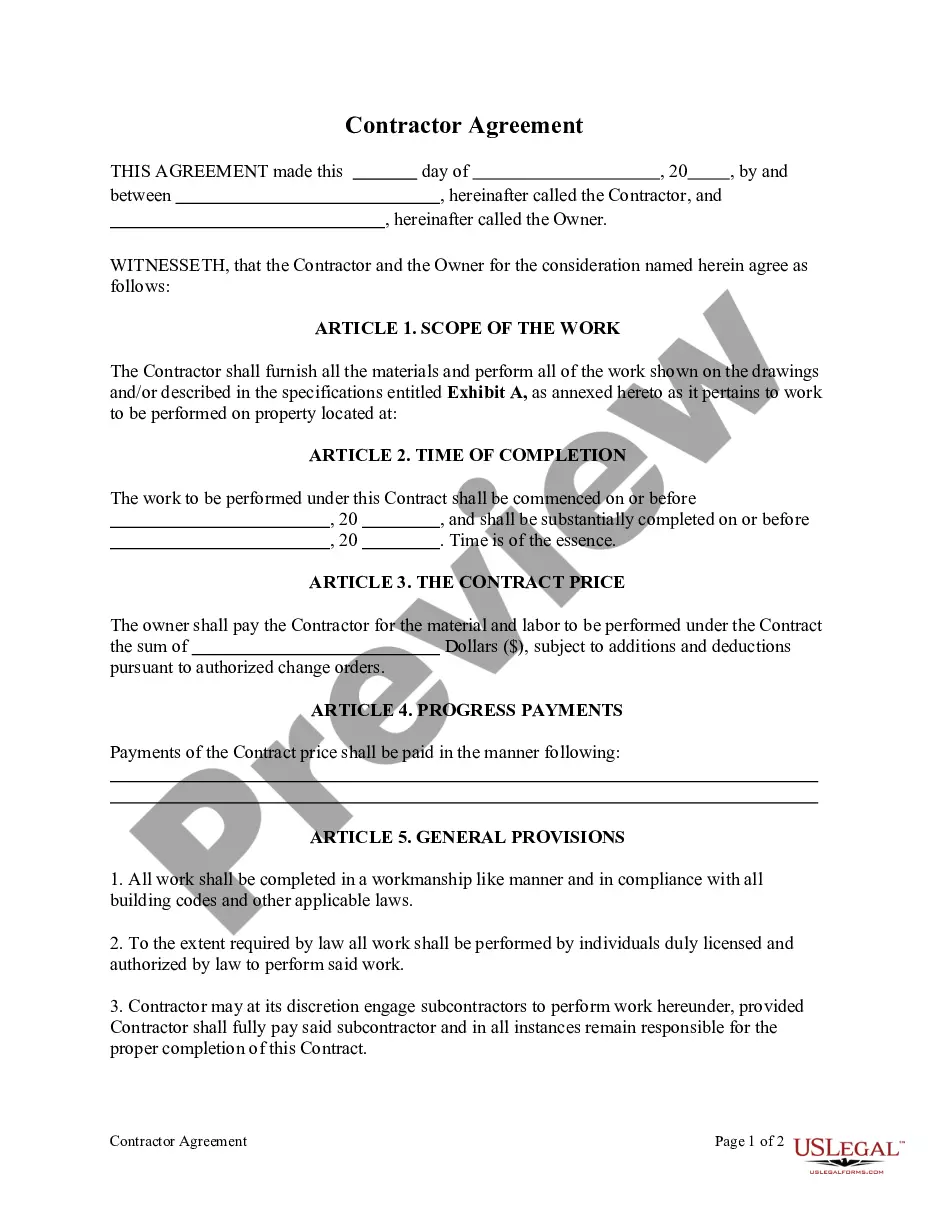
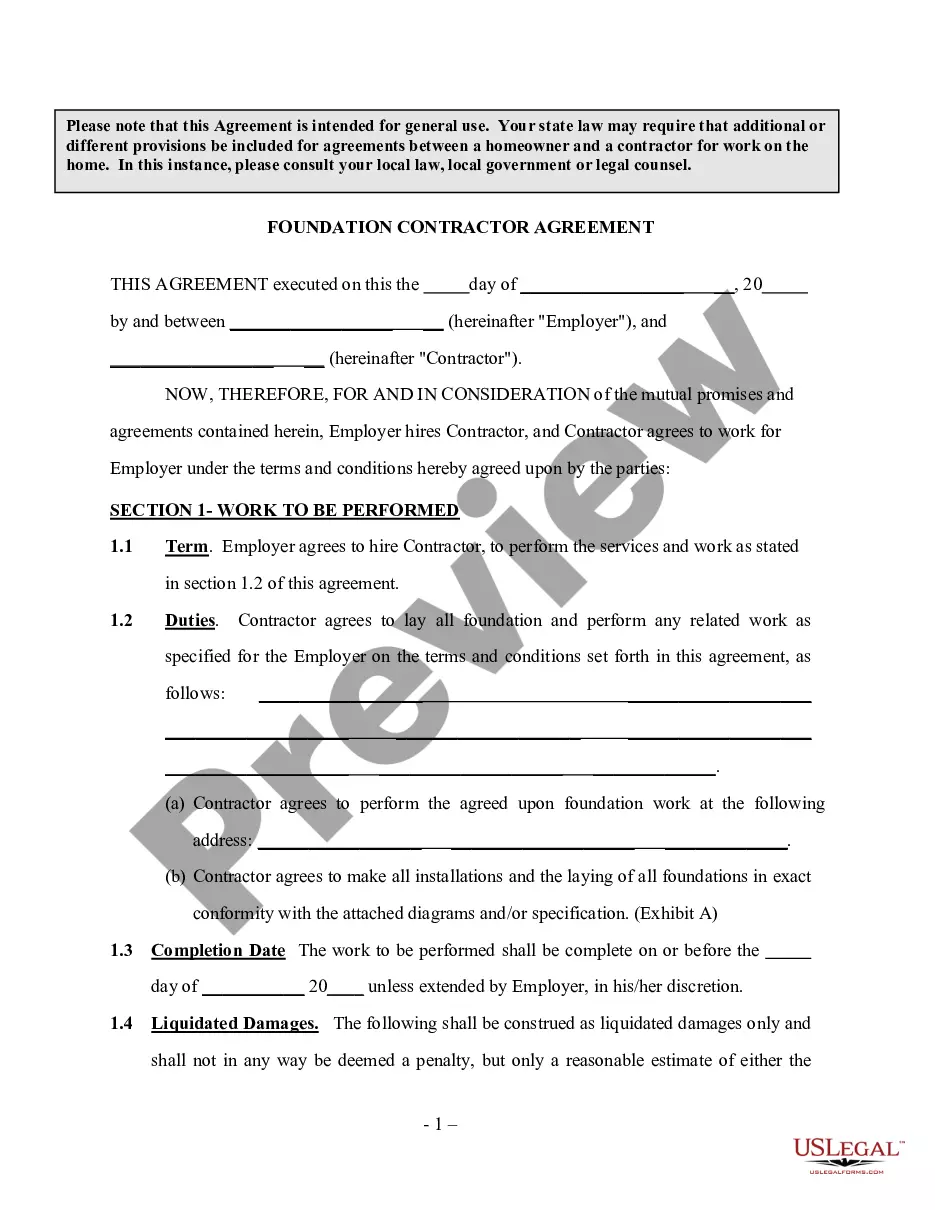
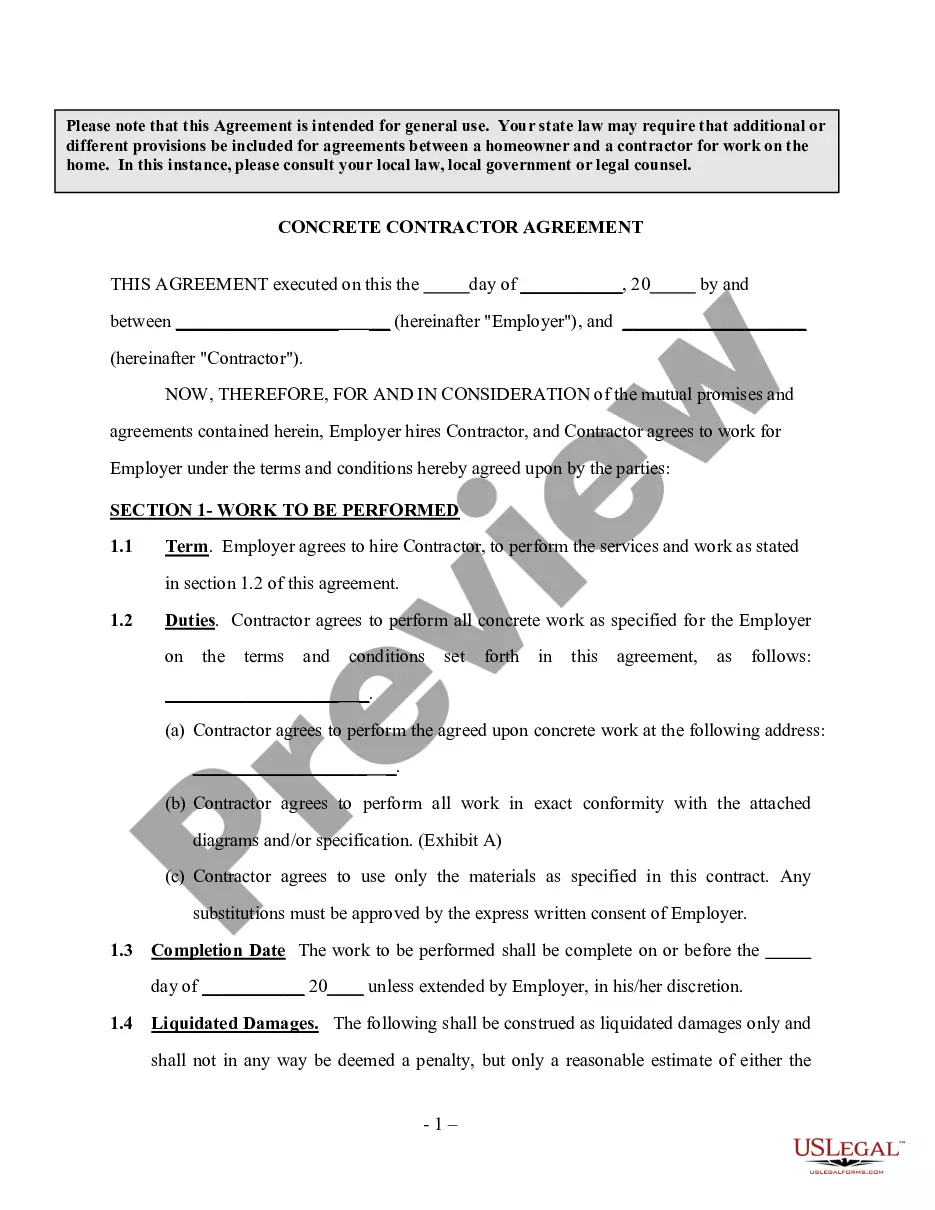
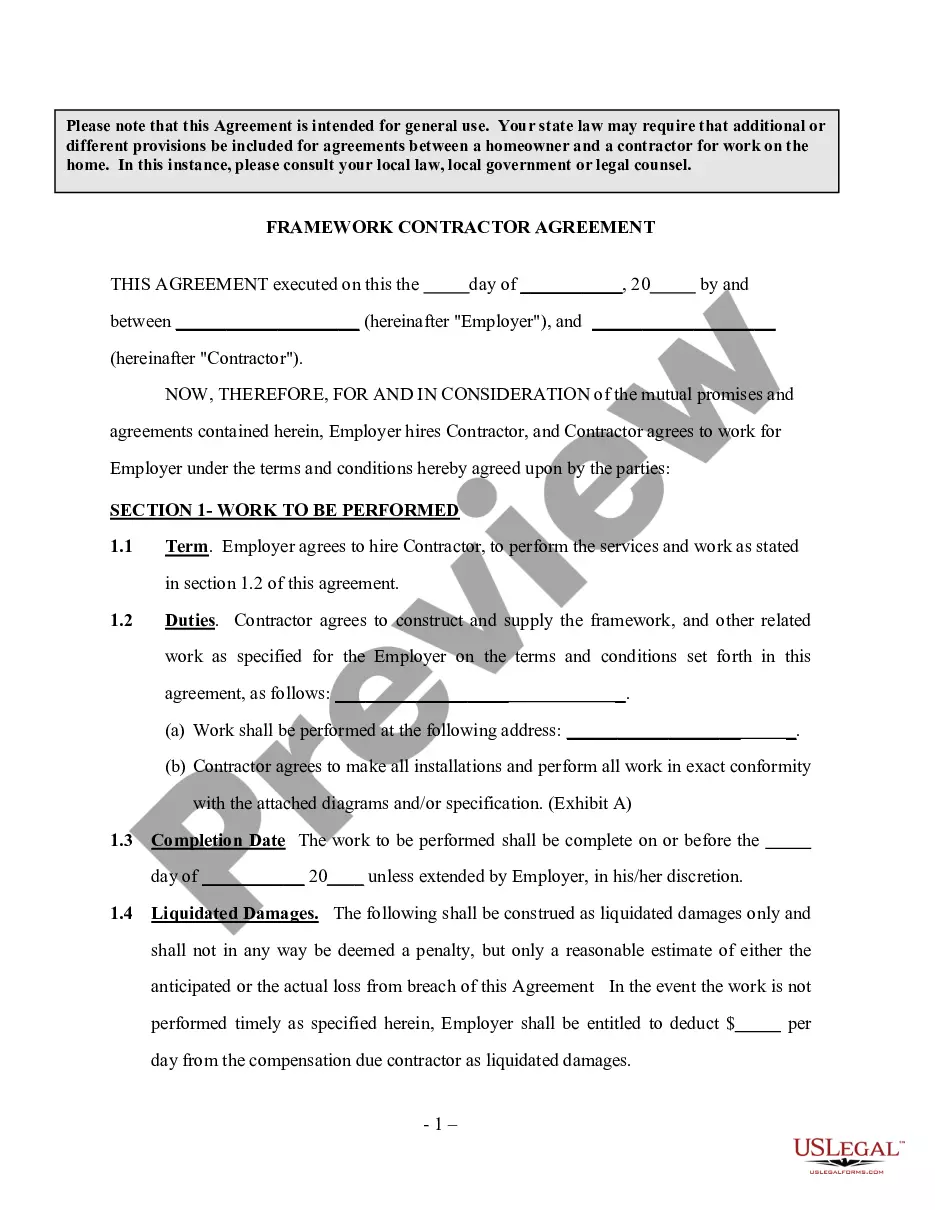
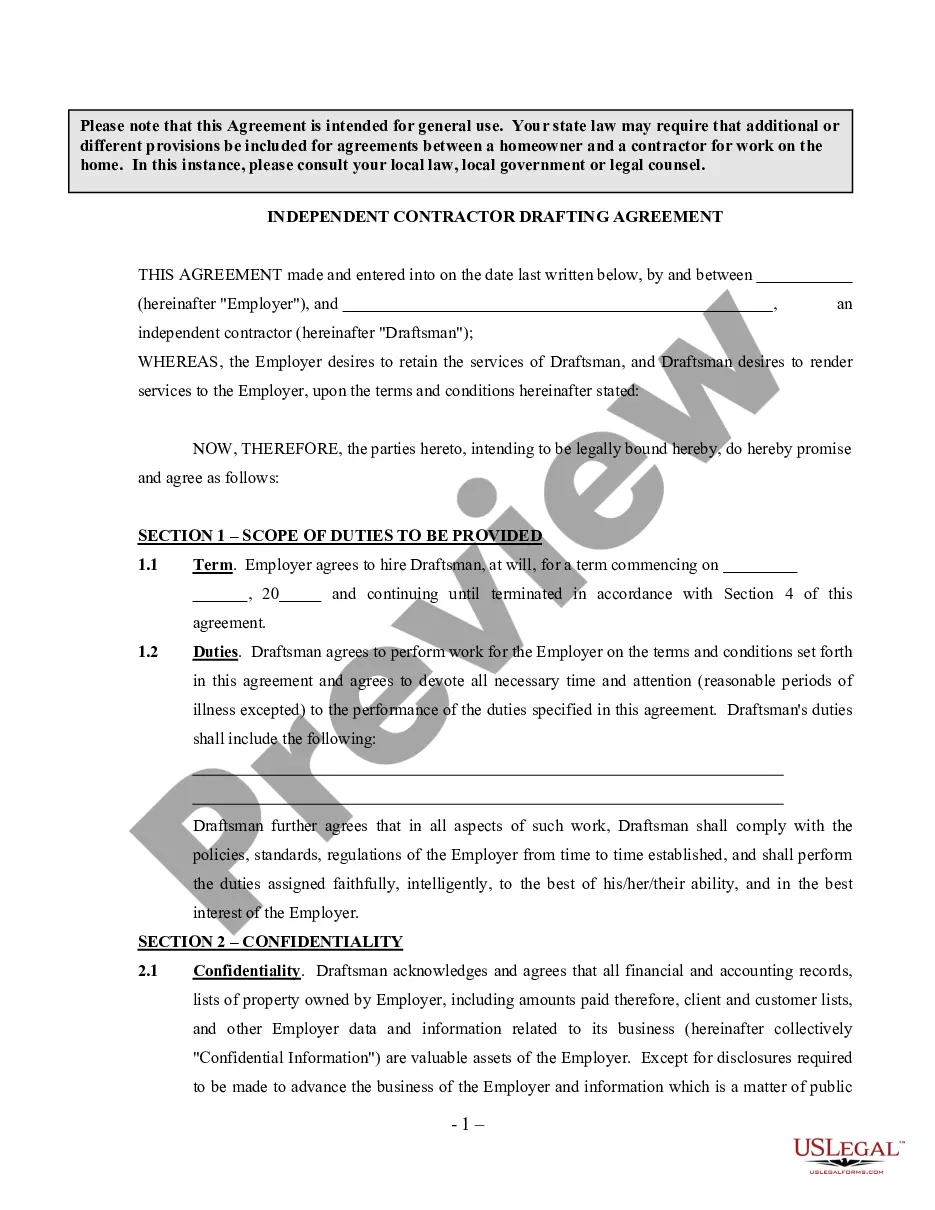
Get your form ready online
Our built-in tools help you complete, sign, share, and store your documents in one place.
Built-in online Word editor
Make edits, fill in missing information, and update formatting in US Legal Forms—just like you would in MS Word.
Export easily
Download a copy, print it, send it by email, or mail it via USPS—whatever works best for your next step.
E-sign your document
Sign and collect signatures with our SignNow integration. Send to multiple recipients, set reminders, and more. Go Premium to unlock E-Sign.
Notarize online 24/7
If this form requires notarization, complete it online through a secure video call—no need to meet a notary in person or wait for an appointment.
Store your document securely
We protect your documents and personal data by following strict security and privacy standards.

Make edits, fill in missing information, and update formatting in US Legal Forms—just like you would in MS Word.

Download a copy, print it, send it by email, or mail it via USPS—whatever works best for your next step.

Sign and collect signatures with our SignNow integration. Send to multiple recipients, set reminders, and more. Go Premium to unlock E-Sign.

If this form requires notarization, complete it online through a secure video call—no need to meet a notary in person or wait for an appointment.

We protect your documents and personal data by following strict security and privacy standards.
Looking for another form?






How to fill out Industrial Contractor Agreement - Self-Employed?
If you wish to total, acquire, or print valid document templates, utilize US Legal Forms, the largest selection of legal forms available on the web.
Take advantage of the site's simple and convenient search to find the documents you need.
Various templates for business and personal purposes are organized by categories and states or keywords. Utilize US Legal Forms to access the North Carolina Industrial Contractor Agreement - Self-Employed in just a few clicks.
Step 5. Process the payment. You can use your credit card or PayPal account to complete the transaction.
Step 6. Choose the format of your legal form and download it to your device. Step 7. Fill out, edit, and print or sign the North Carolina Industrial Contractor Agreement - Self-Employed. Every legal document template you obtain is yours indefinitely. You have access to every form you acquired in your account. Select the My documents section and choose a form to print or download again. Compete and obtain, and print the North Carolina Industrial Contractor Agreement - Self-Employed with US Legal Forms. There are millions of professional and state-specific forms available for your business or personal needs.
- If you are already a US Legal Forms user, Log In to your account and click the Acquire button to locate the North Carolina Industrial Contractor Agreement - Self-Employed.
- You can also access forms you previously obtained in the My documents section of your account.
- If you are using US Legal Forms for the first time, follow the steps below.
- Step 1. Ensure you have selected the form for the correct city/state.
- Step 2. Use the Preview option to review the form's content. Don't forget to read the description.
- Step 3. If you are dissatisfied with the form, utilize the Search field at the top of the screen to find alternative versions of the legal form template.
- Step 4. Once you have located the form you need, select the Buy now button. Choose your preferred pricing plan and enter your details to register for an account.
Form popularity
FAQ
Filling out an independent contractor agreement requires careful attention to detail. Start by entering the names of the parties involved and their addresses. Then, describe the services to be provided, the payment procedure, and any deadlines. By leveraging a template for a North Carolina Industrial Contractor Agreement - Self-Employed from US Legal Forms, you can ensure accuracy and completeness in your agreement.
To write a self-employed contract, begin with a title that clearly indicates it is a contract for self-employment. Outline the project details, including deliverables, timeline, and payment schedules. Adding terms regarding termination, confidentiality, and liability can strengthen your agreement. For a compliant North Carolina Industrial Contractor Agreement - Self-Employed, make use of US Legal Forms to guide your writing.
Filling out an independent contractor form involves providing essential information about both the contractor and the hiring party. Include names, addresses, and contact details, as well as the nature of the work to be performed. Be sure to specify payment terms and any other relevant conditions. Utilizing a template for a North Carolina Industrial Contractor Agreement - Self-Employed from US Legal Forms can simplify this process.
Writing an independent contractor agreement requires a clear understanding of the terms between the parties involved. Start by specifying the scope of work, payment terms, and deadlines. Additionally, include clauses that address confidentiality and dispute resolution. For creating a North Carolina Industrial Contractor Agreement - Self-Employed, consider using a reliable resource like US Legal Forms to ensure you cover all necessary legal aspects.
An independent contractor is classified as self-employed and operates without the oversight typical of an employee. This independence allows for flexibility in work arrangements and potentially higher earnings. When drafting a North Carolina Industrial Contractor Agreement - Self-Employed, you can establish clear terms that reflect this relationship.
Writing an independent contractor agreement involves outlining the scope of work, payment terms, and any deadlines. Include clauses that specify rights, responsibilities, and termination conditions. Utilizing a template for a North Carolina Industrial Contractor Agreement - Self-Employed from US Legal Forms can simplify this process and ensure legal compliance.
Yes, independent contractors are indeed considered self-employed. This classification means they manage their own taxes and work arrangements without direct oversight from an employer. In your North Carolina Industrial Contractor Agreement - Self-Employed, you can detail the terms of your engagement to ensure both parties understand their obligations.
Yes, receiving a 1099 form typically indicates that you are considered self-employed in the eyes of the IRS. This means you are not an employee, but rather an independent contractor providing services to clients. Having a North Carolina Industrial Contractor Agreement - Self-Employed can help clarify your status and the nature of your work arrangements.
A person qualifies as self-employed if they work for themselves and do not receive a regular paycheck from an employer. This status often includes freelancers, independent contractors, and small business owners. To formalize your self-employment, consider using a North Carolina Industrial Contractor Agreement - Self-Employed, which outlines your rights and responsibilities.
The terms 'self-employed' and 'independent contractor' are often used interchangeably; however, they can have subtle differences. 'Self-employed' generally refers to anyone who works for themselves, while 'independent contractor' specifically denotes a person who provides services to clients under a contract. For your North Carolina Industrial Contractor Agreement - Self-Employed, it's essential to use the term that best reflects your business relationship.