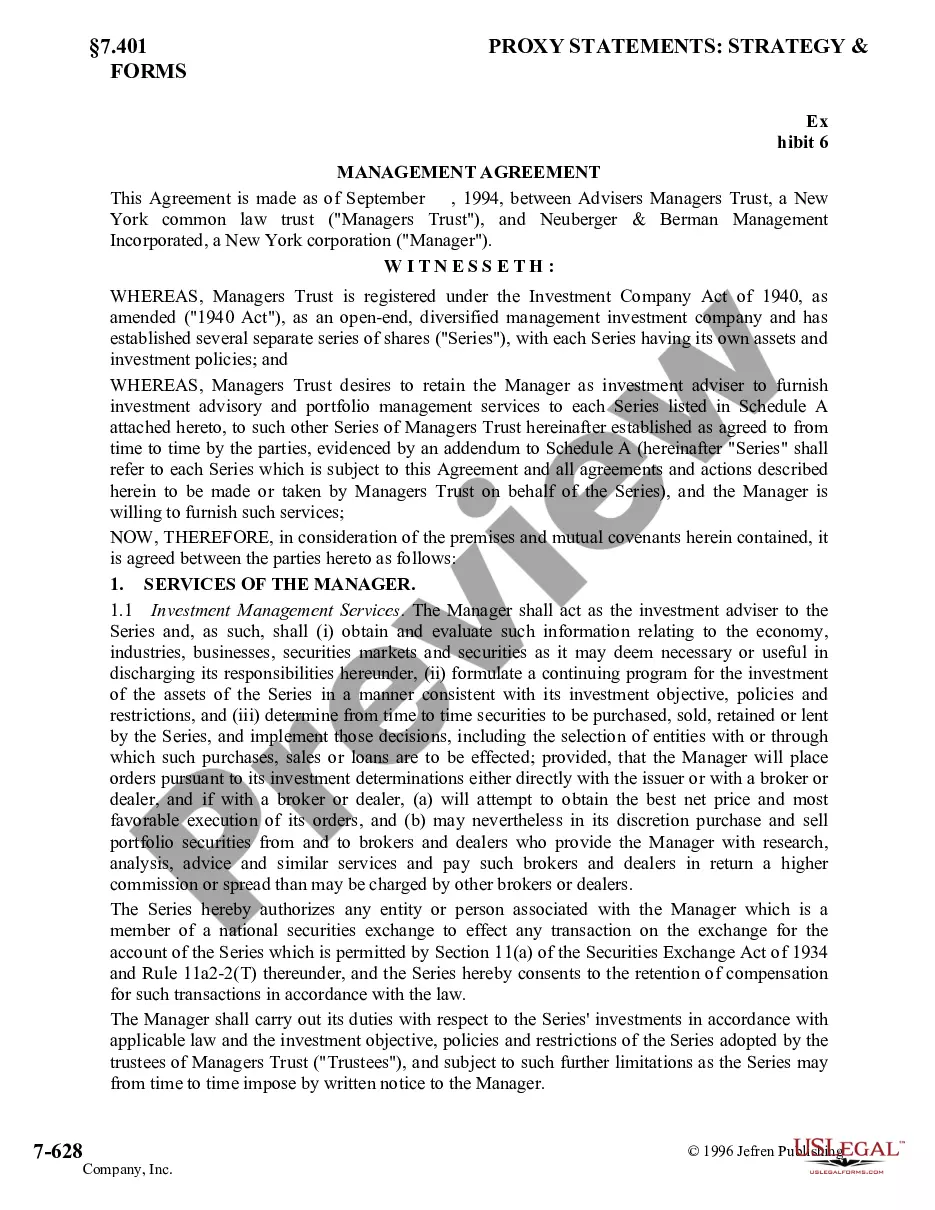
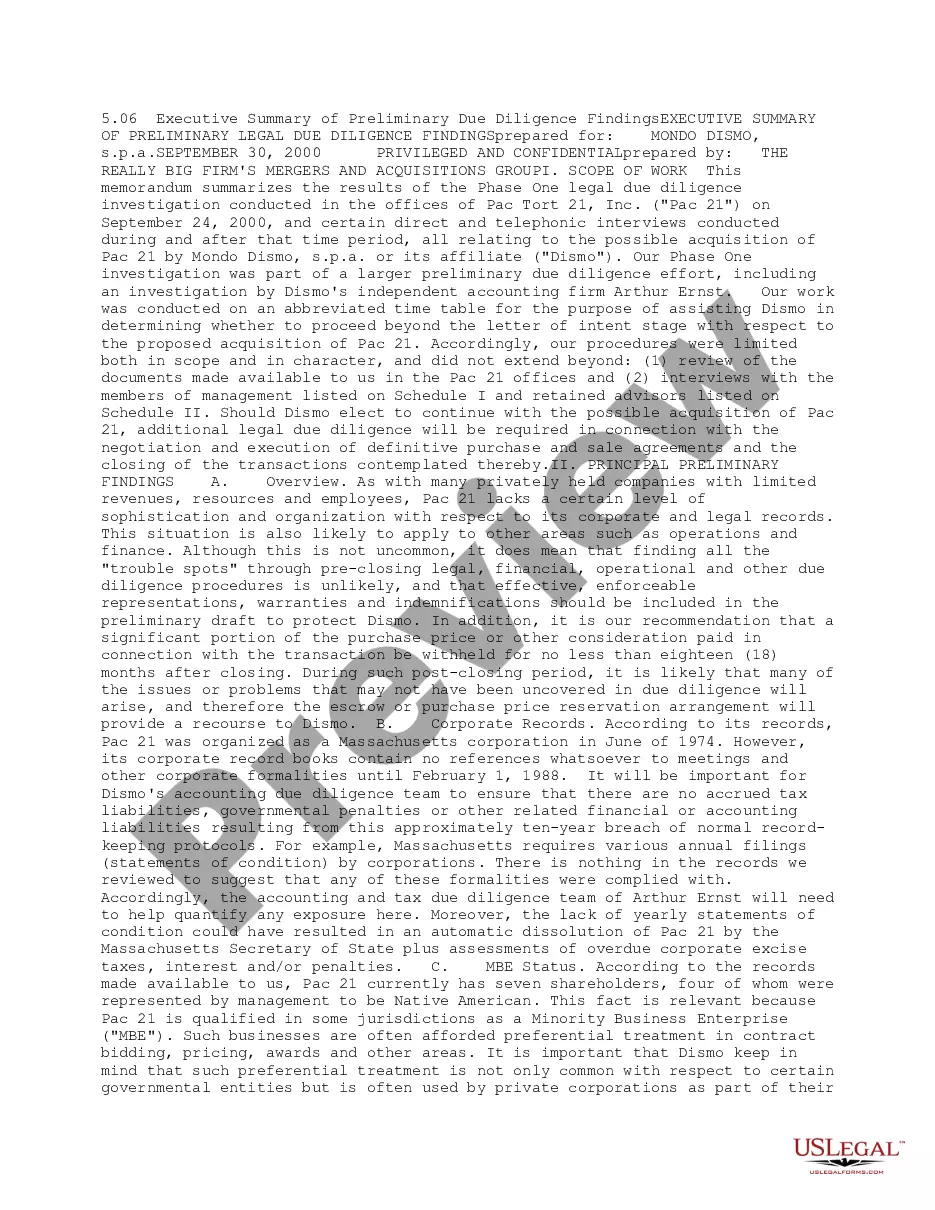
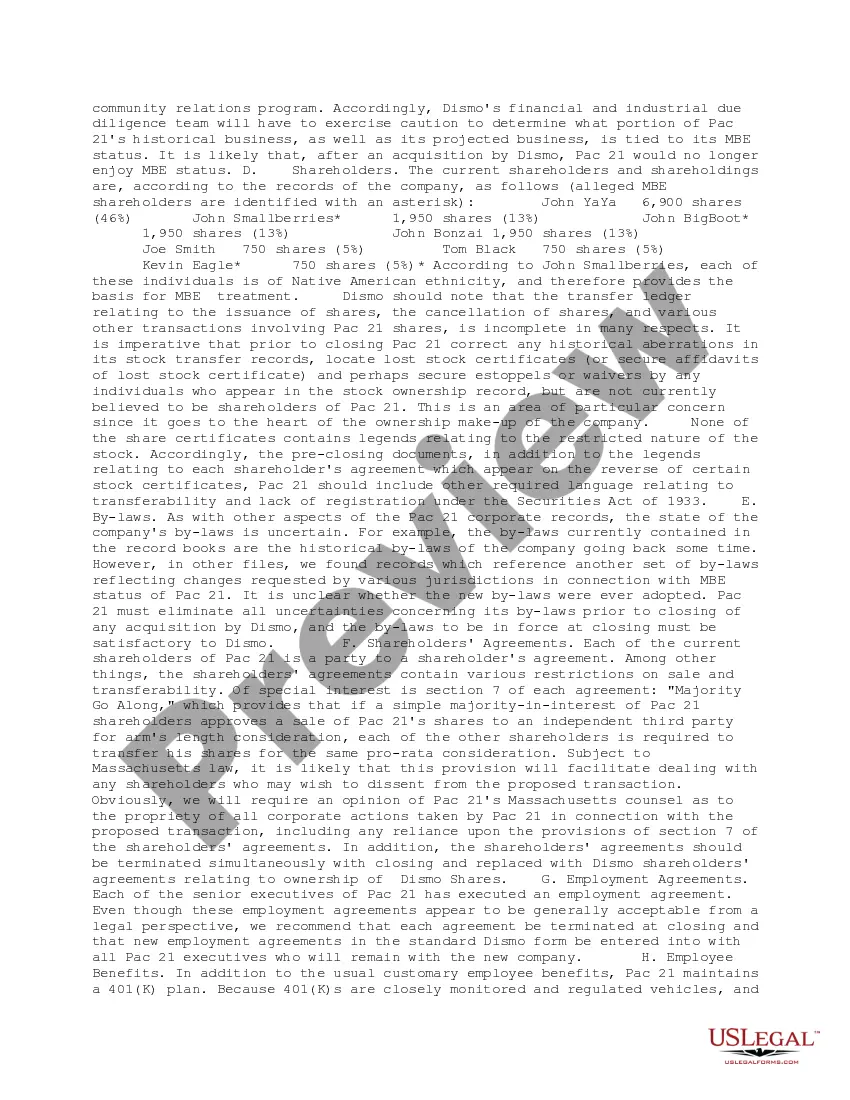
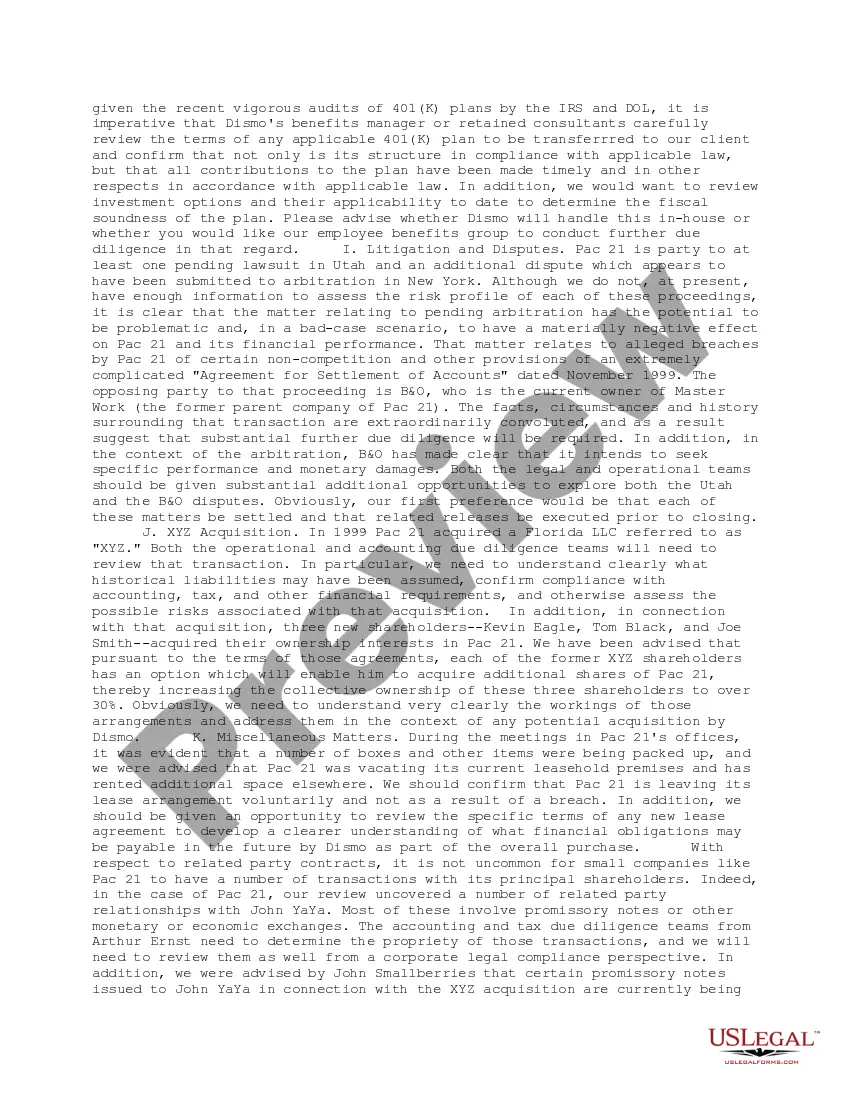
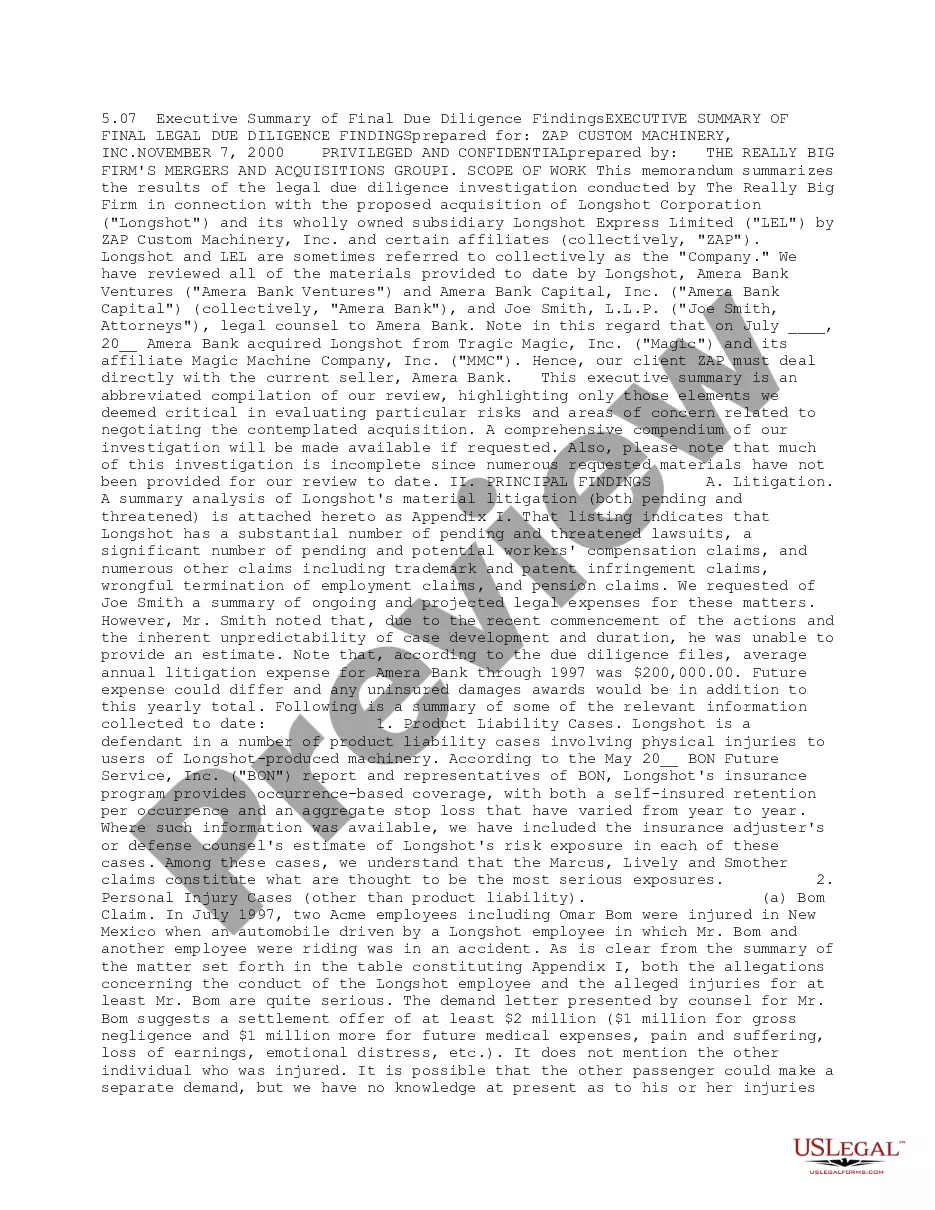
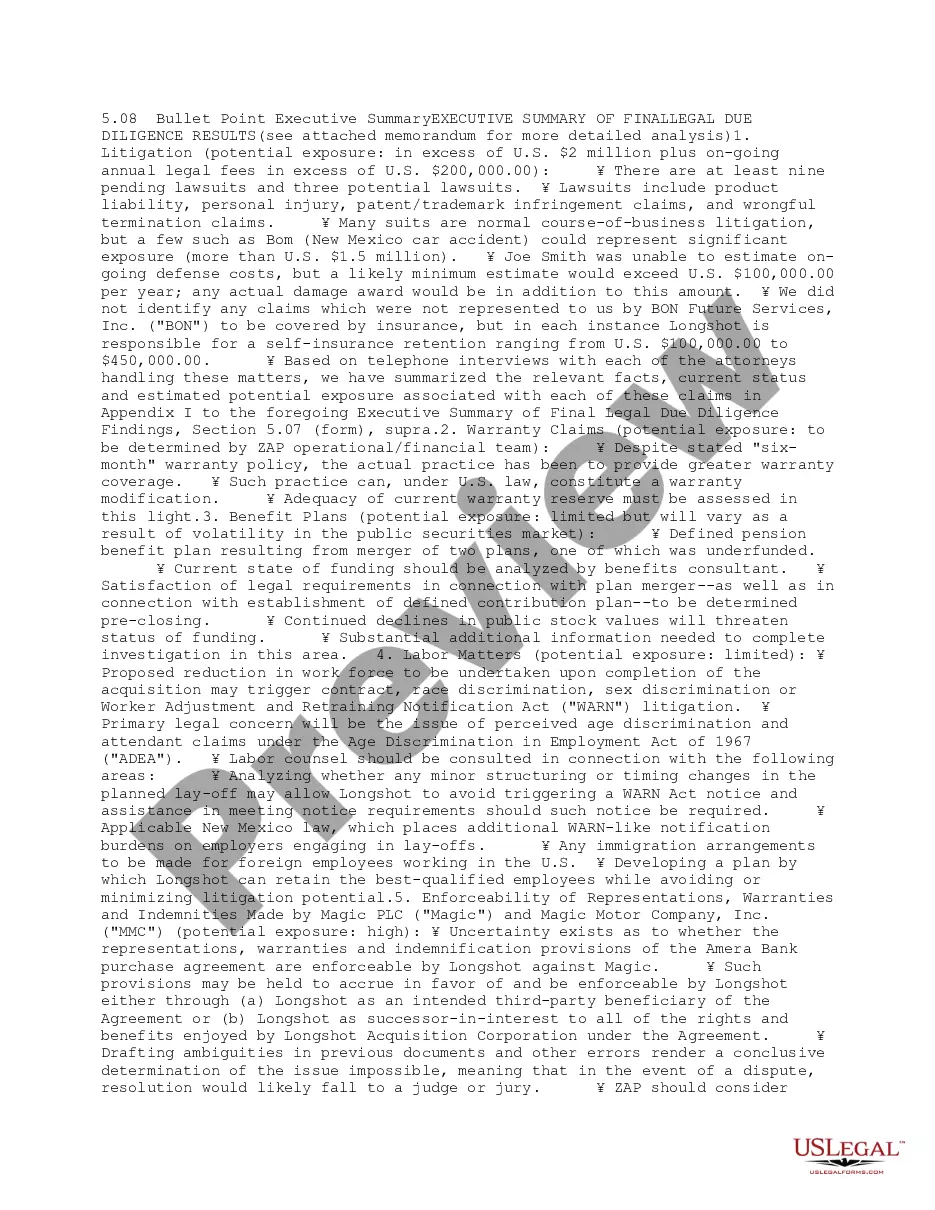
This form is a memorandum summarizes the results of a due diligence investigation relating to the possible acquisition of a company.
North Carolina Executive Summary of Preliminary Due Diligence Findings
Category:
State:
Multi-State
Control #:
US-DD0506
Format:
Word;
PDF;
Rich Text
Instant download
Description
Free preview
How to fill out Executive Summary Of Preliminary Due Diligence Findings?
US Legal Forms - one of the most prominent collections of legal documents in the United States - offers a diverse selection of legal document templates that you can download or print.
While using the website, you can access thousands of forms for business and personal purposes, organized by categories, states, or keywords. You can find the latest versions of forms such as the North Carolina Executive Summary of Preliminary Due Diligence Findings in a matter of seconds.
If you have a subscription, Log In and download the North Carolina Executive Summary of Preliminary Due Diligence Findings from the US Legal Forms library. The Download button will appear on every form you view. You can access all previously obtained forms in the My documents tab in your account.
Process the purchase. Use a Visa or Mastercard or PayPal account to complete the transaction.
Select the format and download the form to your device. Make edits. Fill out, modify, print, and sign the downloaded North Carolina Executive Summary of Preliminary Due Diligence Findings. Each template added to your account has no expiration date and belongs to you permanently. So, if you want to download or print another copy, simply go to the My documents section and click on the form you need. Access the North Carolina Executive Summary of Preliminary Due Diligence Findings with US Legal Forms, one of the most extensive libraries of legal document templates. Utilize a vast array of professional and state-specific templates that meet your business or personal needs and requirements.
- Ensure you have selected the correct form for your state/region.
- Click the Review button to examine the form's content.
- Read the form description to make sure you have chosen the correct document.
- If the form does not meet your needs, use the Search field at the top of the screen to find one that does.
- If you are satisfied with the form, confirm your selection by clicking the Purchase now button.
- Then, choose the pricing plan you prefer and provide your information to register for an account.
Form popularity
FAQ
The 4 P's of due diligence refer to People, Process, Product, and Property. People involve assessing the management team’s capability, process pertains to understanding operational workflows, product relates to the company's offerings, and property includes reviewing physical assets and real estate. When analyzing these areas, creating a North Carolina Executive Summary of Preliminary Due Diligence Findings can be immensely beneficial for presenting your insights.
Completing due diligence requires a structured approach. Start by identifying the key areas of inquiry, such as financials, legal compliance, and market conditions. Collect data, analyze it, and document your findings systematically. Conclusively, a carefully prepared North Carolina Executive Summary of Preliminary Due Diligence Findings can serve as a valuable tool for stakeholders involved in the decision-making process.
To fill out a due diligence form, gather all necessary documentation pertinent to your investigation. Carefully review each question, providing accurate and complete information about the subject of your due diligence. This may include financial data, legal agreements, and property details. Ensuring thoroughness will contribute to a robust North Carolina Executive Summary of Preliminary Due Diligence Findings.
In North Carolina, the amount of due diligence to offer can vary by transaction but typically ranges from a few thousand to tens of thousands of dollars. It is essential to assess the property's market value and your investment strategy when determining this amount. Crafting a comprehensive North Carolina Executive Summary of Preliminary Due Diligence Findings can help you support your offer with factual evidence.
To write a due diligence report, start by outlining the project’s purpose and scope. Gather all relevant information regarding financial records, legal documents, and operational details. Then, summarize your findings in clear sections, concluding with an executive summary that highlights key insights. A well-prepared North Carolina Executive Summary of Preliminary Due Diligence Findings will ensure all important aspects are covered.
The due diligence period in North Carolina typically lasts for 30 to 60 days, depending on what the buyer and seller agree upon. This timeframe allows buyers to evaluate the property thoroughly, ensuring they make informed decisions. The North Carolina Executive Summary of Preliminary Due Diligence Findings outlines the key components of this evaluation period, helping to streamline the process. You can find valuable resources on platforms like USLegalForms to guide you through your due diligence.
In North Carolina, due diligence is not strictly mandatory, but it is highly recommended when purchasing real estate. Conducting due diligence provides critical insights into property conditions, zoning regulations, and any potential liabilities. Moreover, the North Carolina Executive Summary of Preliminary Due Diligence Findings helps buyers understand what information they should seek during this process. Utilizing platforms like USLegalForms simplifies gathering this essential information.
To obtain due diligence findings in North Carolina, you should first consult with a qualified attorney who specializes in real estate or business law. They can help you gather the necessary documents and conduct a detailed review of your situation. Additionally, using platforms like USLegalForms can simplify the process by providing templates for requests and reports. This ensures that you create a comprehensive North Carolina Executive Summary of Preliminary Due Diligence Findings.
In North Carolina, due diligence is strongly encouraged, especially in real estate transactions. The North Carolina Executive Summary of Preliminary Due Diligence Findings serves as a comprehensive tool for encapsulating all relevant findings. While not mandated by law, completing this process can significantly safeguard your interests and provide peace of mind. Thus, it’s wise to approach due diligence seriously in this state.
Due diligence is not a strict legal requirement, but it plays a critical role in protecting your investment. In the context of the North Carolina Executive Summary of Preliminary Due Diligence Findings, conducting thorough investigations can prevent future legal troubles. By understanding potential risks before finalizing a deal, you ensure that you are making a sound investment choice. Thus, while not required, due diligence is highly advisable.