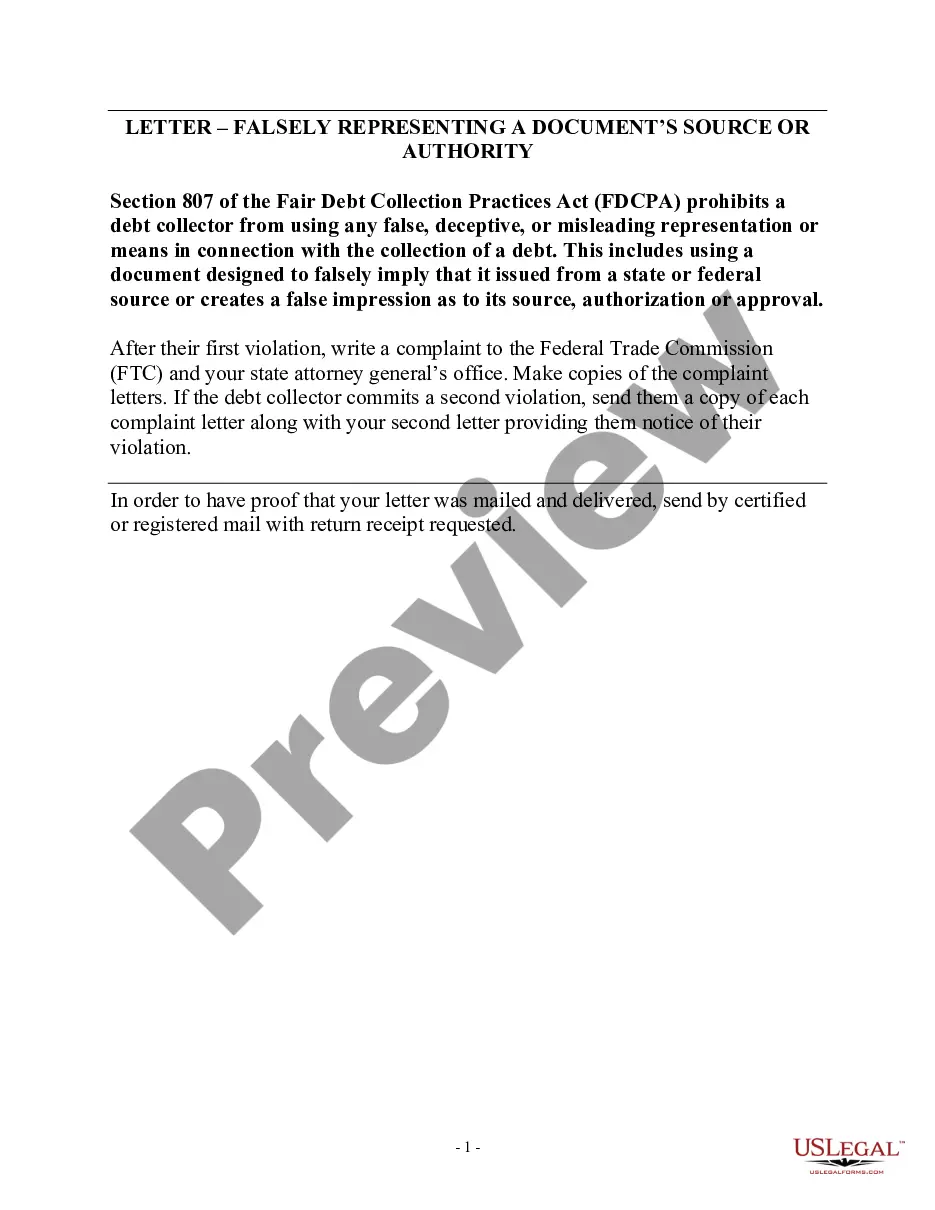
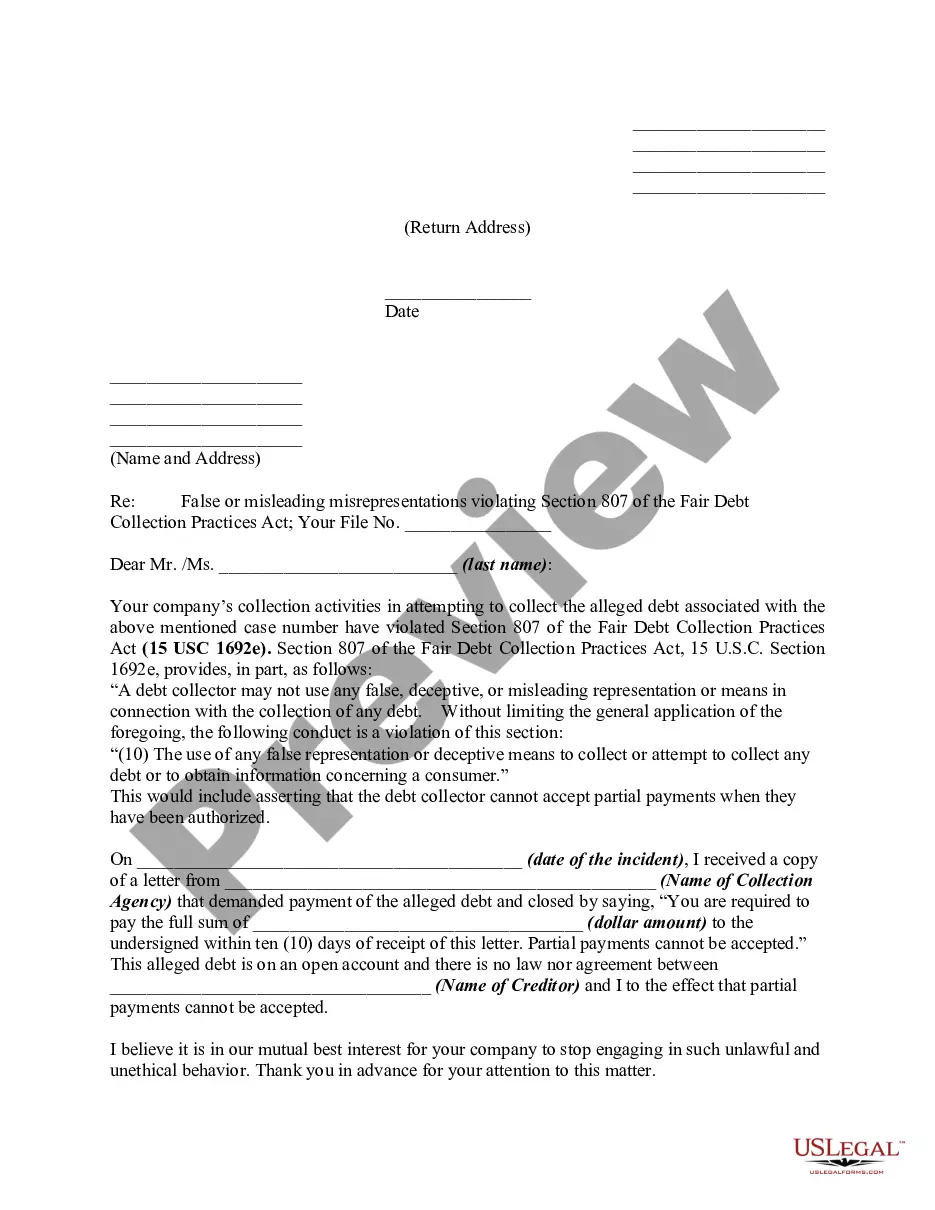
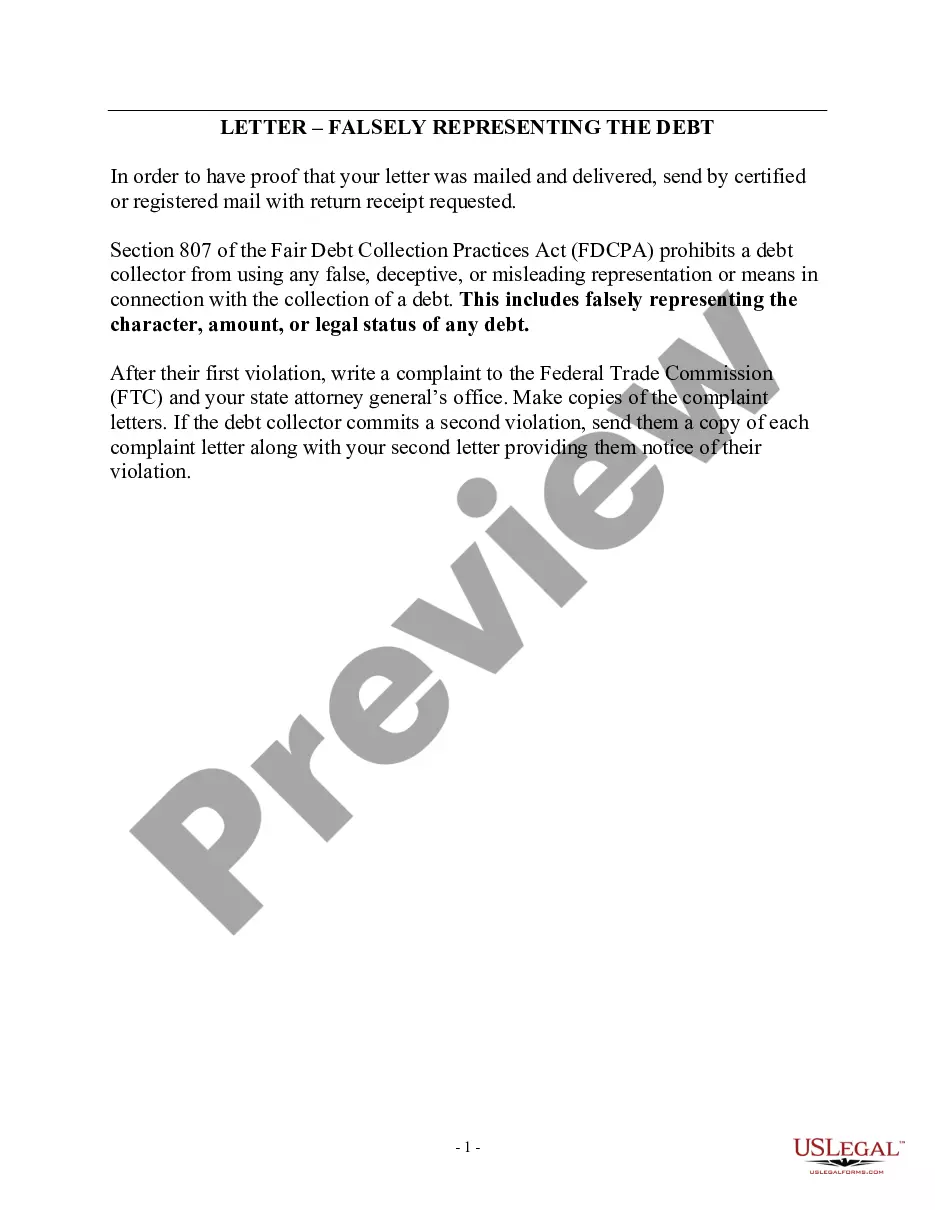
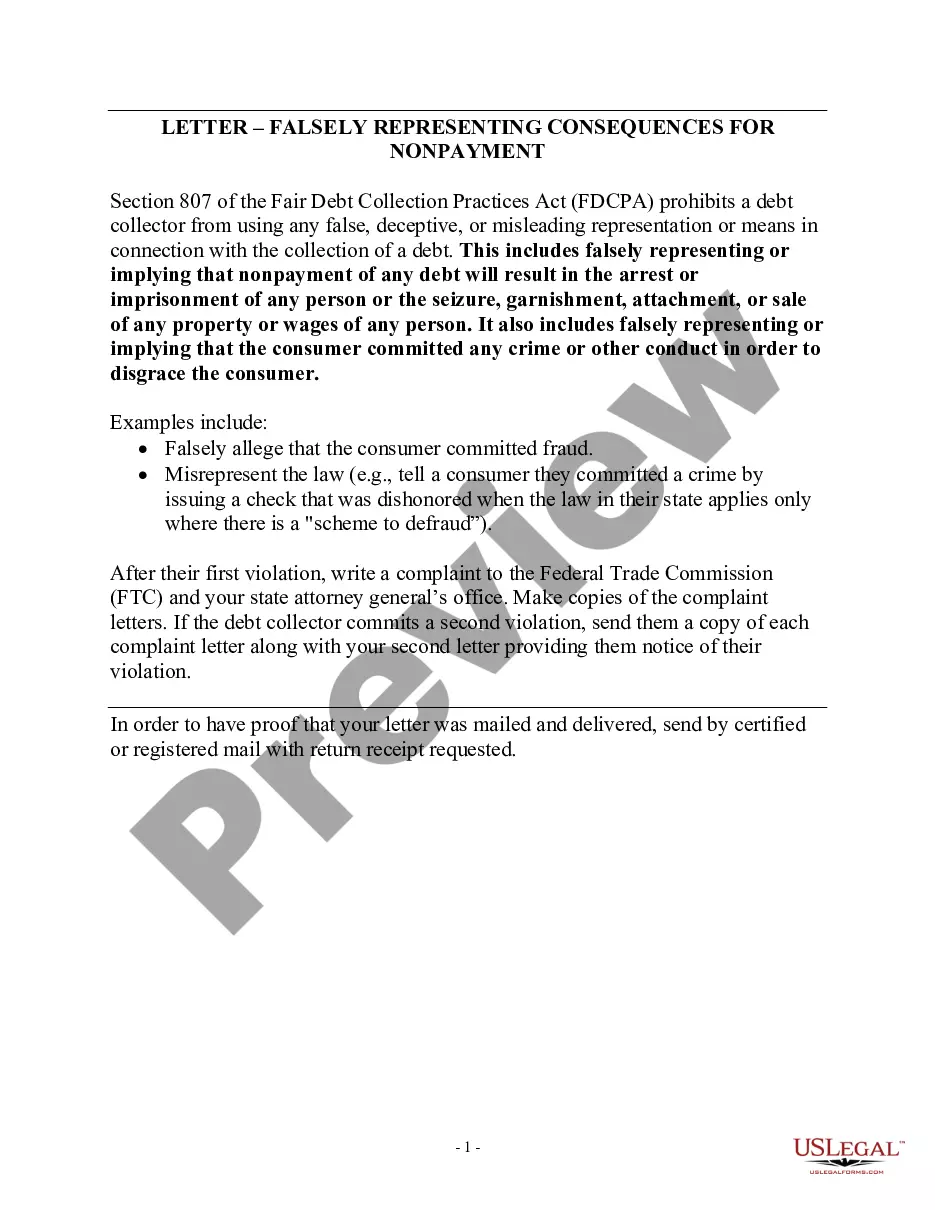
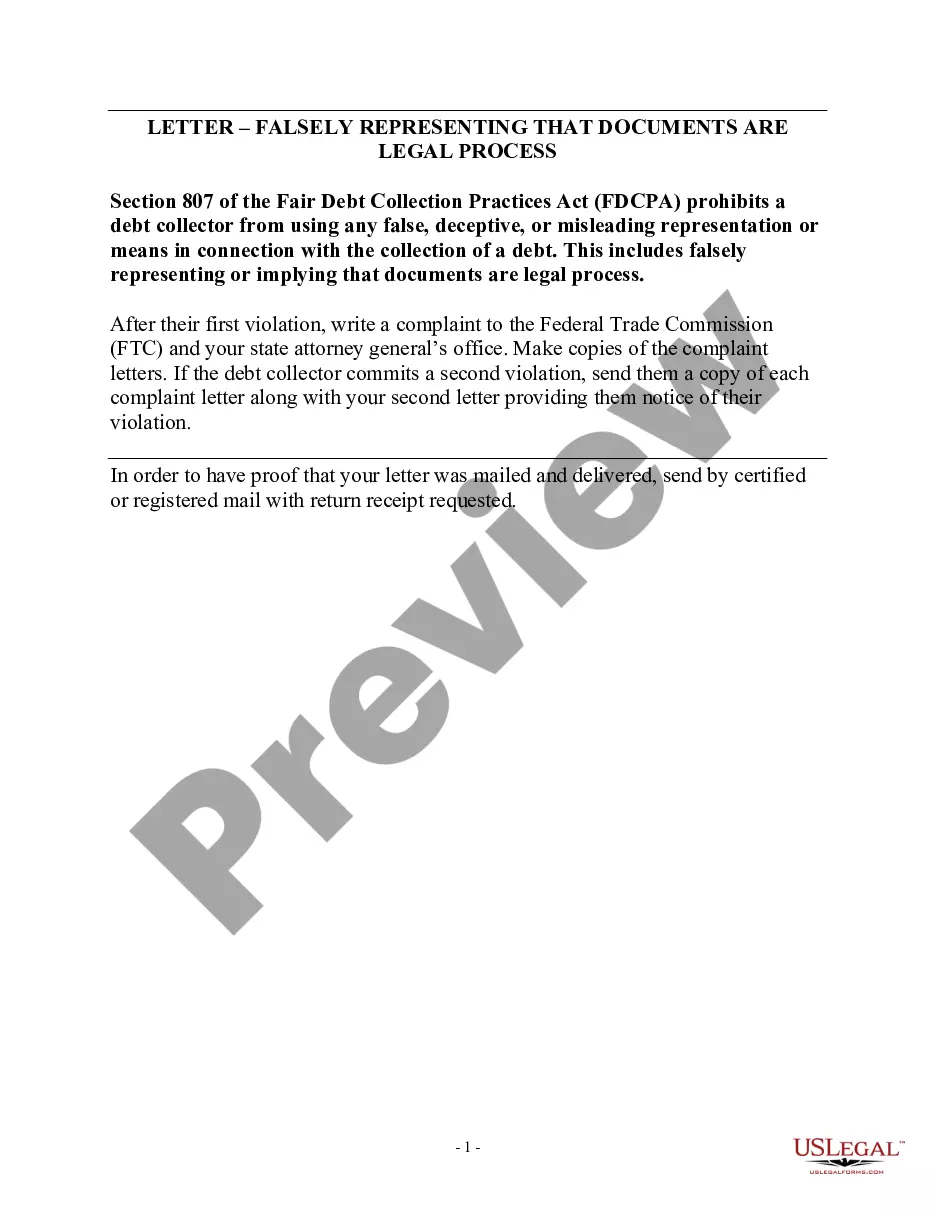
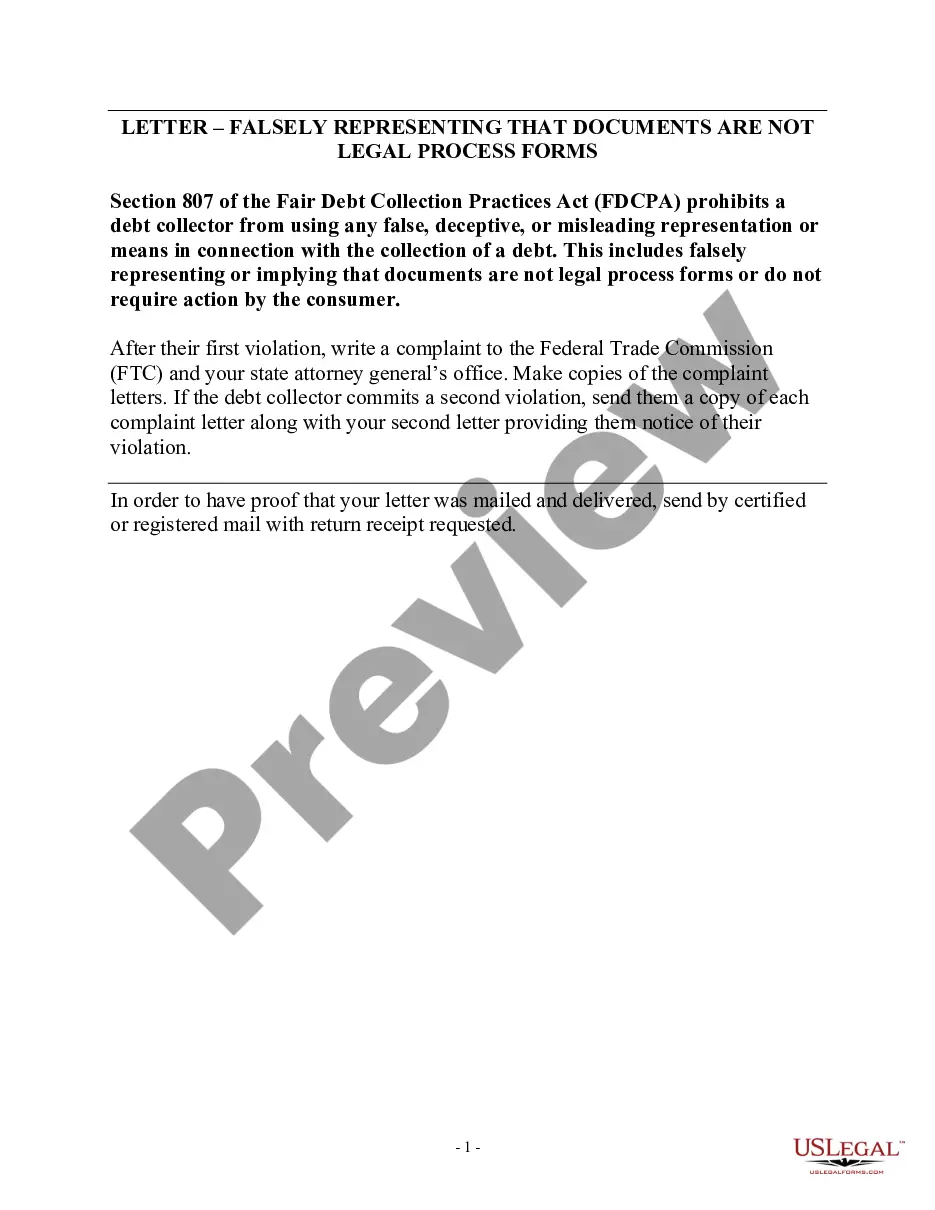
A debt collector may not use any false, deceptive, or misleading representation or means in connection with the collection of a debt. This includes using a document designed to falsely imply that it issued from a state or federal source or creates a false impression as to its source, authorization or approval.
North Carolina Notice to Debt Collector - Falsely Representing a Document's Authority
Category:
State:
Multi-State
Control #:
US-DCPA-39
Format:
Word;
Rich Text
Instant download
Description
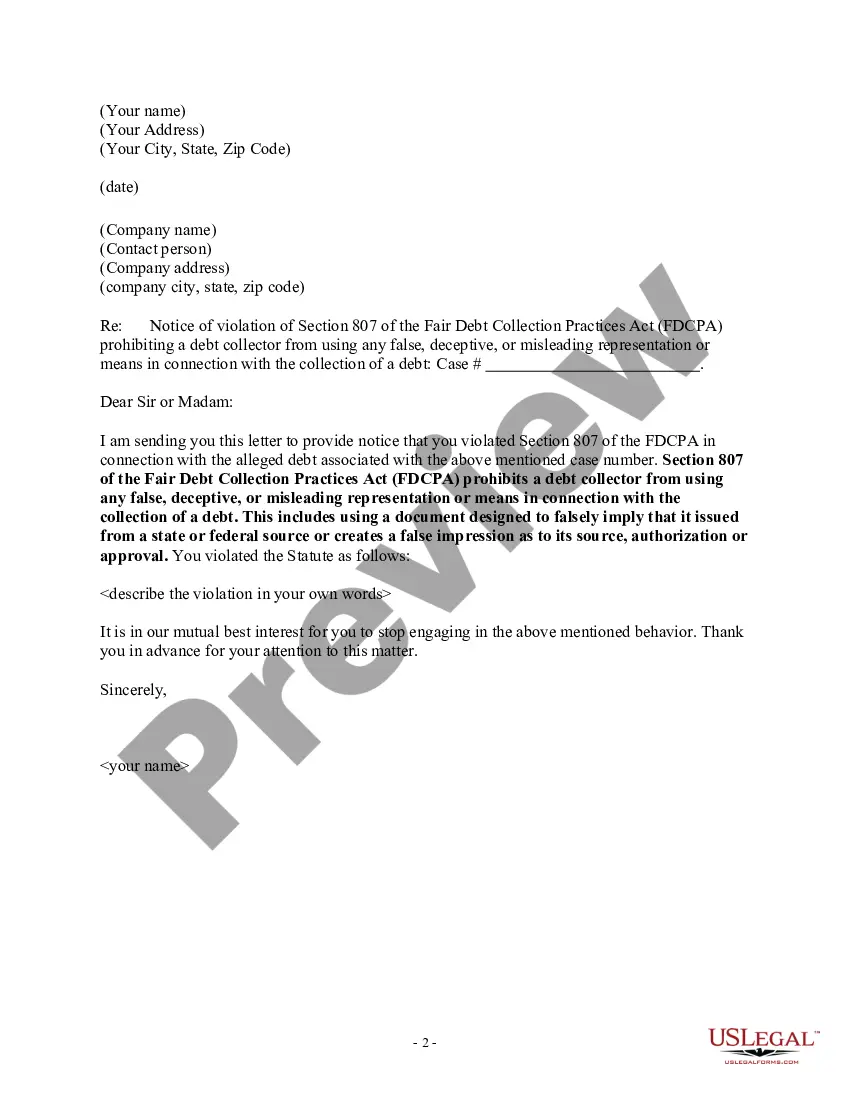
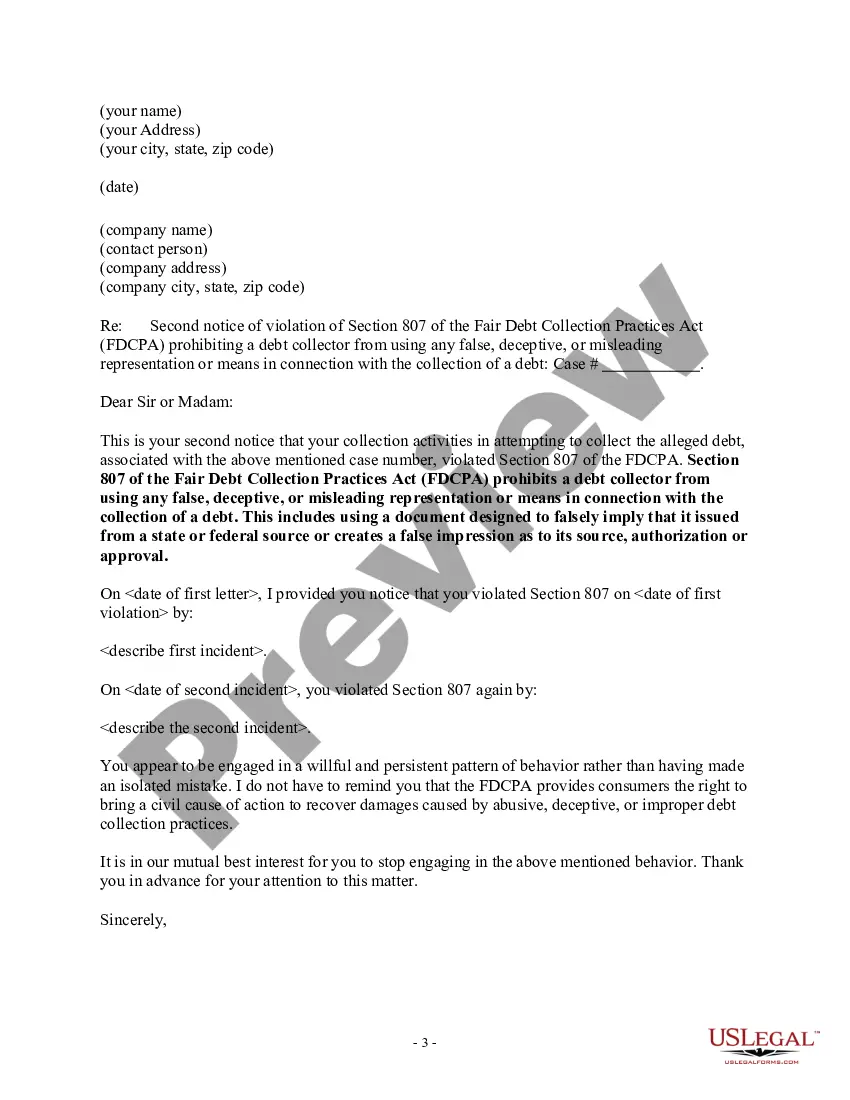
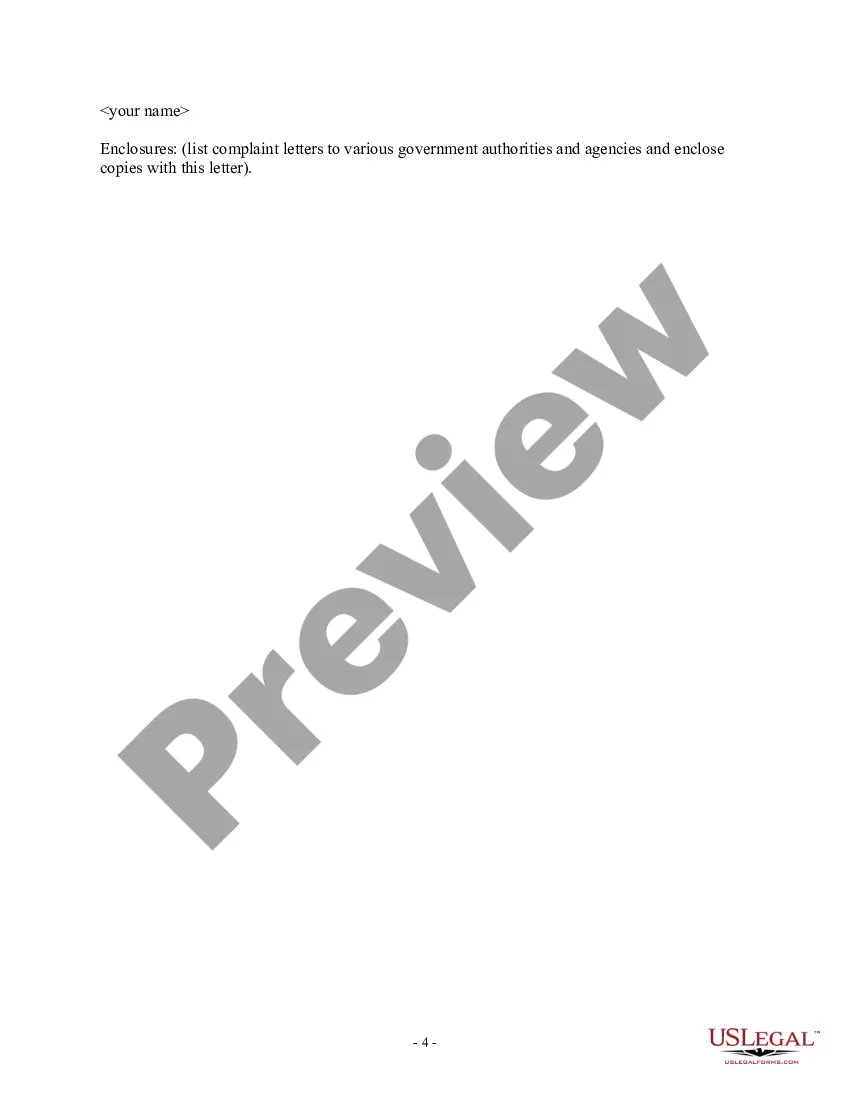
Use this form to notify a debt collector they violated the Fair Debt Collection Practices Act (FDCPA). Receiving notice from a consumer makes it more likely a debt collector will comply with the FDCPA. If they don't comply after receiving notice, your notice letter may help prove that their actions were intentional.
Free preview
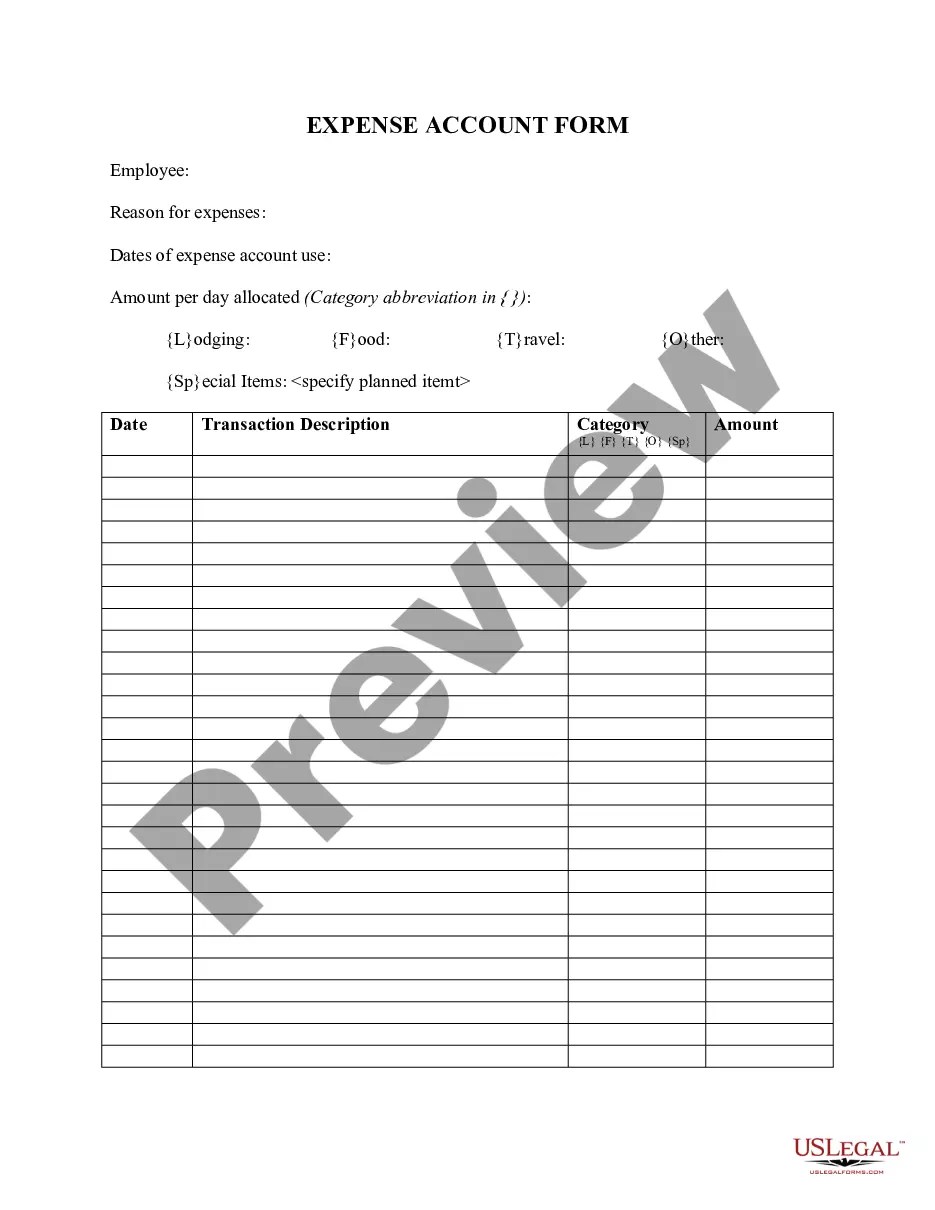
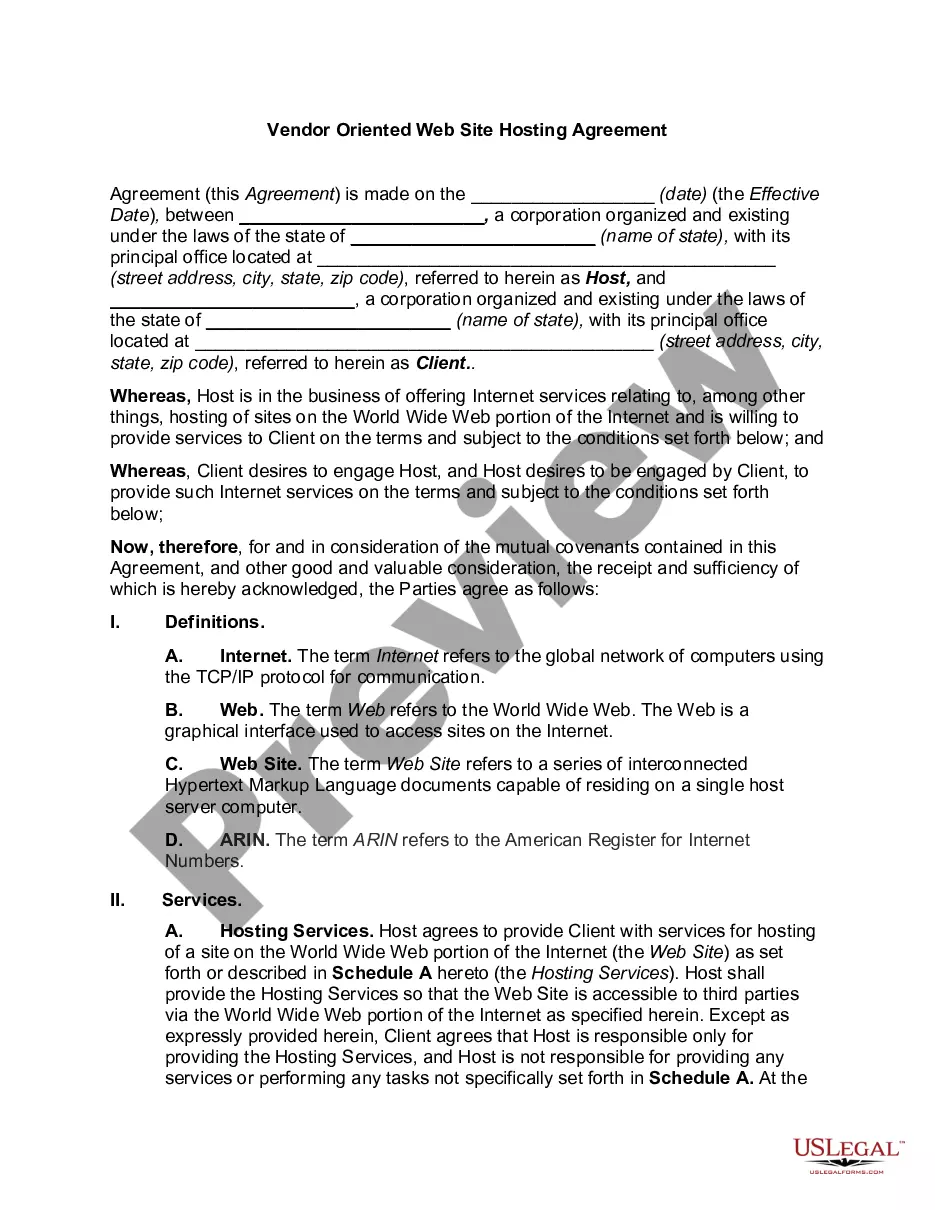
How to fill out Notice To Debt Collector - Falsely Representing A Document's Authority?
Are you currently in a location where you frequently require paperwork for either business or personal purposes? There are numerous legal document templates accessible online, but finding reliable ones can be challenging.
US Legal Forms provides a vast array of form templates, including the North Carolina Notice to Debt Collector - Falsely Representing a Document's Authority, designed to comply with federal and state regulations.
If you are already familiar with the US Legal Forms website and have an account, simply Log In. After that, you can download the North Carolina Notice to Debt Collector - Falsely Representing a Document's Authority template.
Choose a convenient file format and download your copy.
You can find all the document templates you have purchased in the My documents section. You can download another copy of the North Carolina Notice to Debt Collector - Falsely Representing a Document's Authority whenever necessary. Just access the required form to download or print the document template. Use US Legal Forms, the most extensive collection of legal forms, to save time and avoid mistakes. This service offers professionally drafted legal document templates that can be utilized for various purposes. Create your account on US Legal Forms and start simplifying your life.
- If you do not have an account and wish to start using US Legal Forms, follow these steps.
- Find the form you need and ensure it is for the correct city/county.
- Use the Preview button to examine the form.
- Check the description to confirm that you have selected the right form.
- If the form is not what you're looking for, use the Search field to find the form that suits your needs.
- Once you locate the correct form, click Buy now.
- Select the pricing plan you require, fill out the necessary information to create your account, and purchase the order with your PayPal or credit card.
Form popularity
FAQ
You are not obliged let a debt collector into your home and they don't have the right to take goods away. It's very important to understand that a debt collector is not the same as an enforcement agent or bailiff. Debt collectors have no special legal powers.
Debt collection agencies don't have any special legal powers. They can't do anything different to the original creditor. Collection agencies will use letters and phone calls to contact you. They may contact by other means too, such as text or email.
Many people are surprised to learn that debt collectors can sue debtors for the balance of any outstanding debt. Many times, debt collection agencies will bring a lawsuit for breach of contract because when individuals don't pay the debt they agreed to pay.
Yes, you may be able to sue a debt collector or a debt collection agency if it engages in abusive, deceptive, or unfair behavior. A debt collector is generally someone who buys a debt from a creditor who, for whatever reason, has been unable to collect from a consumer.
Write a dispute letter and send it to each credit bureau. Include information about each of the disputed itemsaccount numbers, listed amounts and creditor names. Write a similar letter to each collection agency, asking them to remove the error from your credit reports.
9 Ways to Outsmart Debt CollectorsDon't Get Emotional.Make Sure the Debt Is Really Yours.Ask for Proof.Resist the Scare Tactics.Be Wary of Fees.Negotiate.Call In Backup.Know the Time Limits.More items...?
North Carolina Statute of Limitations on Debt Collections If you are living in North Carolina, consumer debt has a statute of limitations of three years. This is one of the shortest lengths of the statute of limitations in the country, with most ranging from four to six years.
The creditor has to prove who the borrower is These include: Where there is a dispute as to the identity of the borrower or hirer or as to the amount of the debt, it is for the firm (and not the customer) to establish, as the case may be, that the customer is the correct person in relation to the debt.
Your dispute should be made in writing to ensure that the debt collector has to send you verification of the debt. If you're having trouble with debt collection, you can submit a complaint with the CFPB online or by calling (855) 411-CFPB (2372).
Here are a few suggestions that might work in your favor:Write a letter disputing the debt. You have 30 days after receiving a collection notice to dispute a debt in writing.Dispute the debt on your credit report.Lodge a complaint.Respond to a lawsuit.Hire an attorney.