North Carolina Employee Evaluation Form for Police Officer
Description
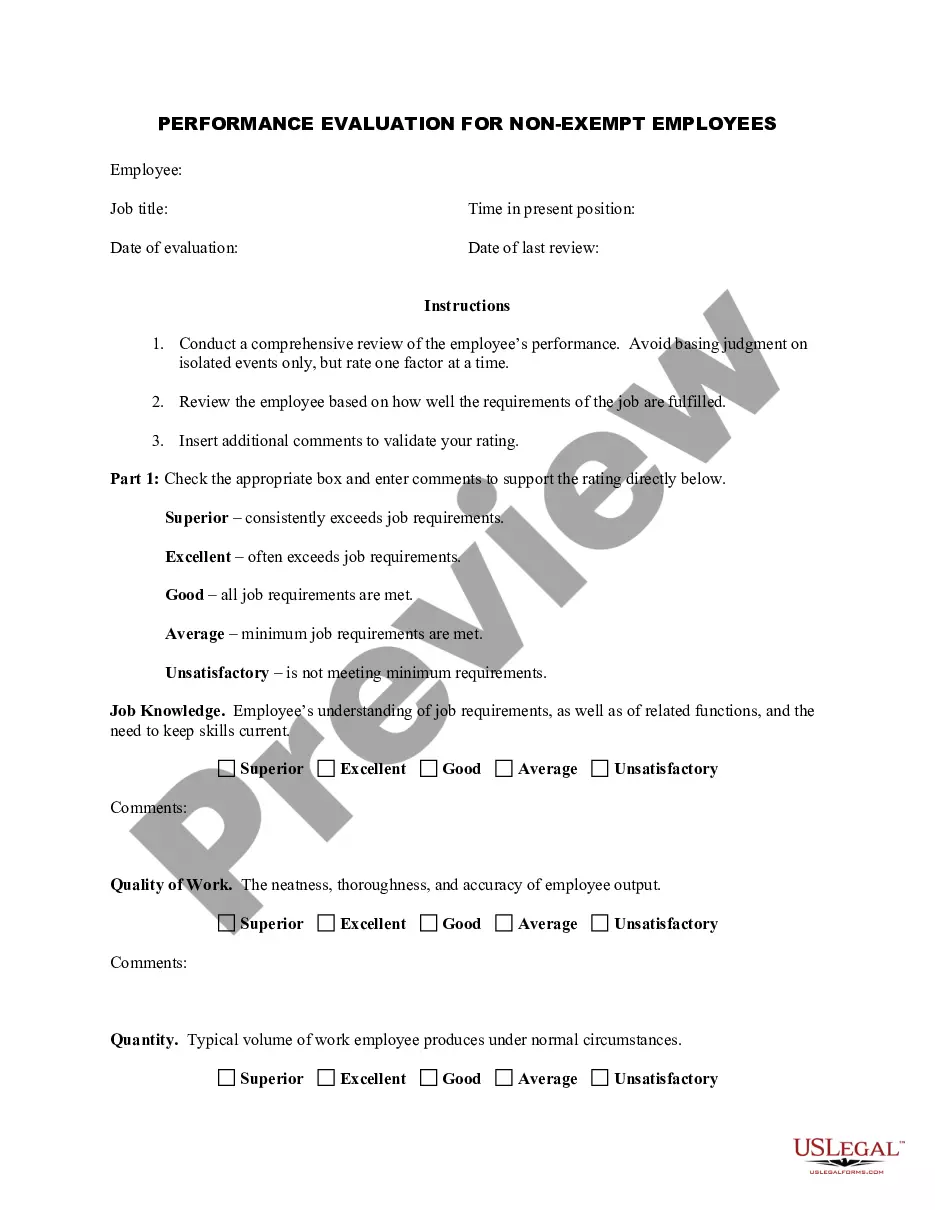
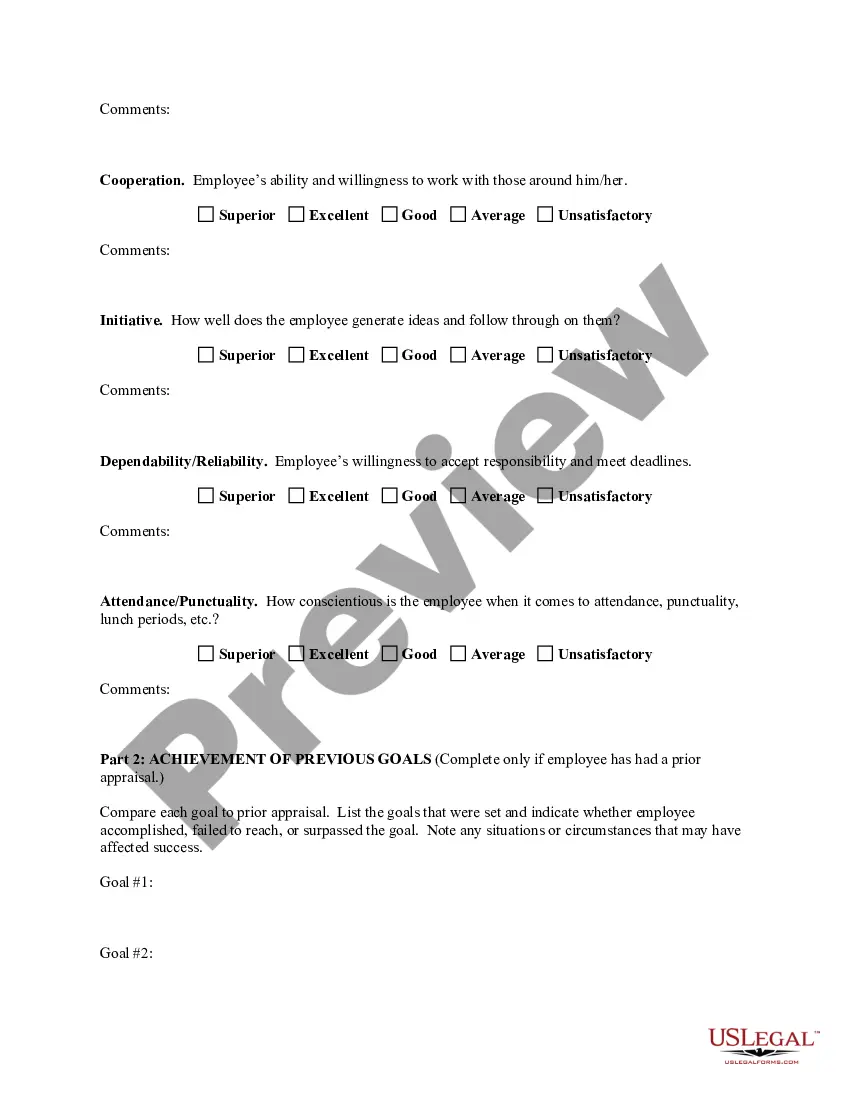
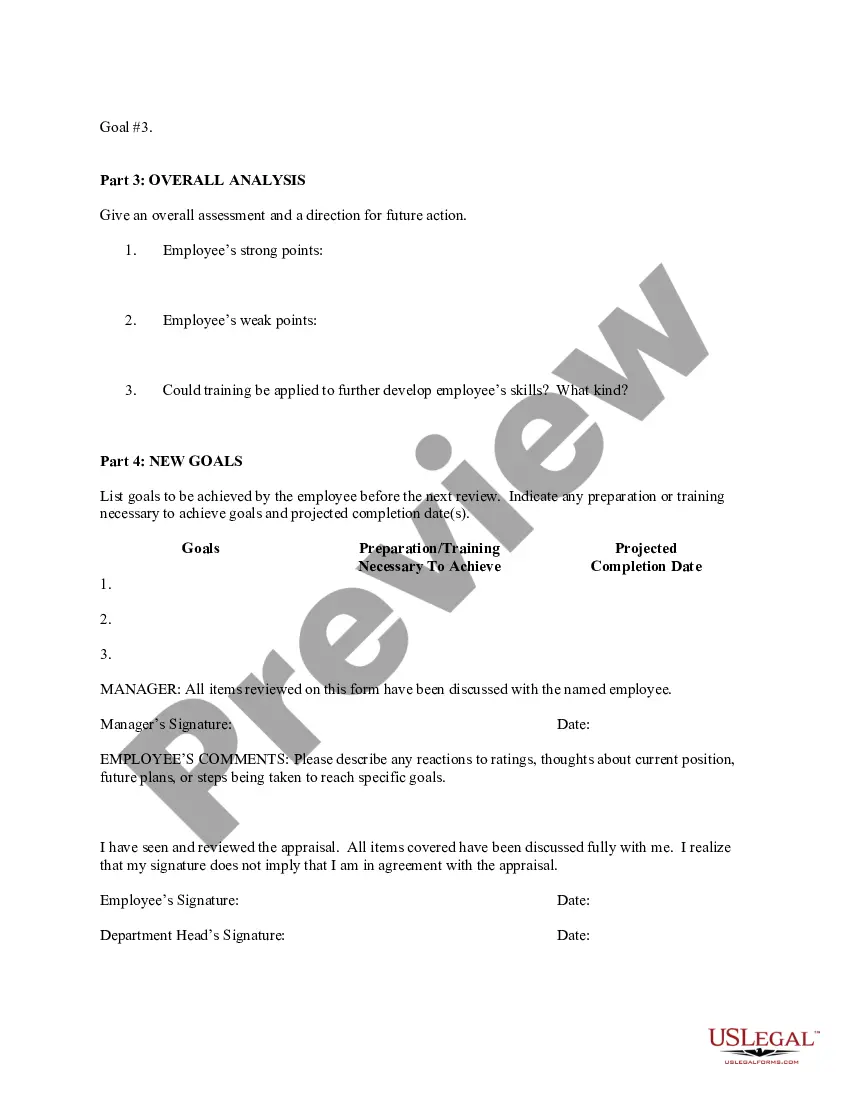
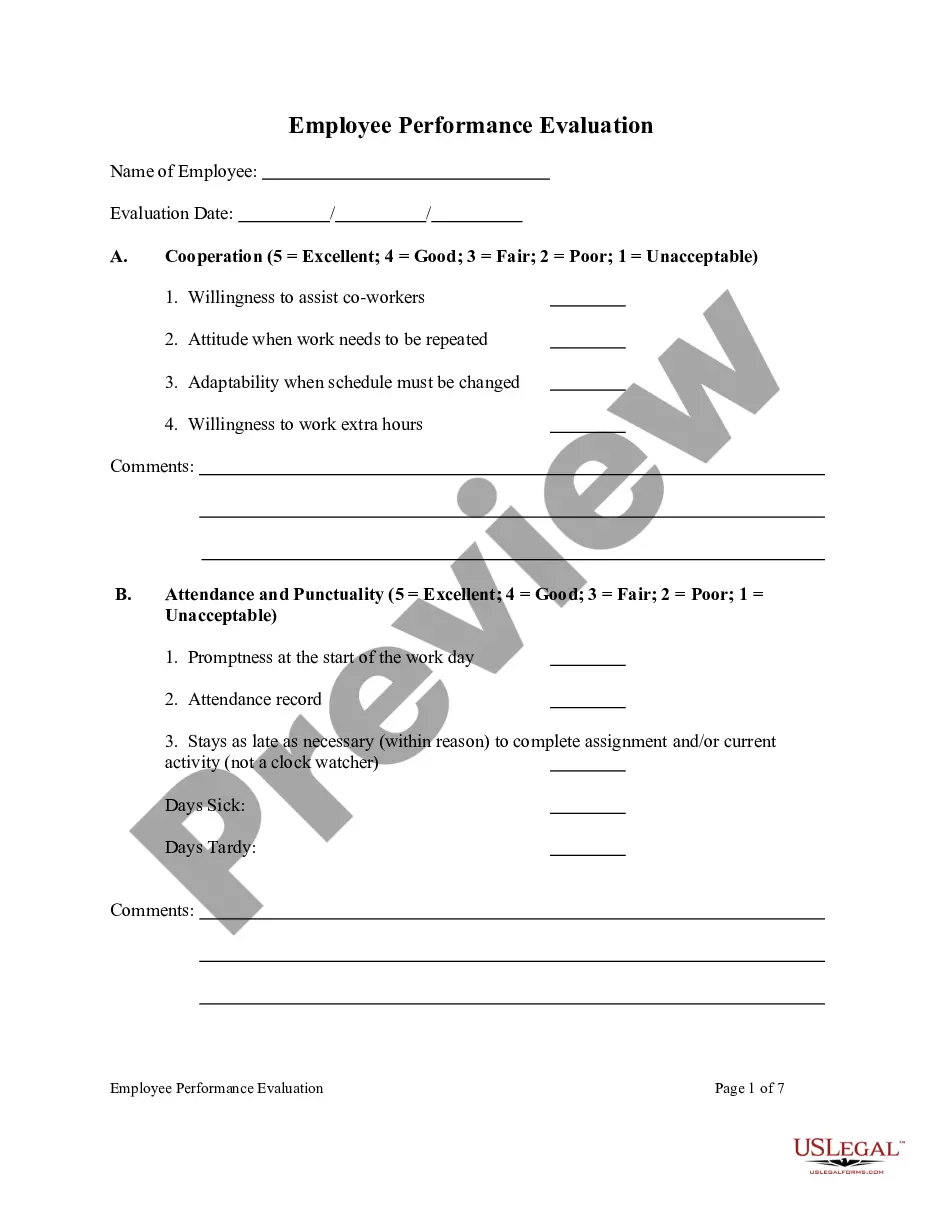
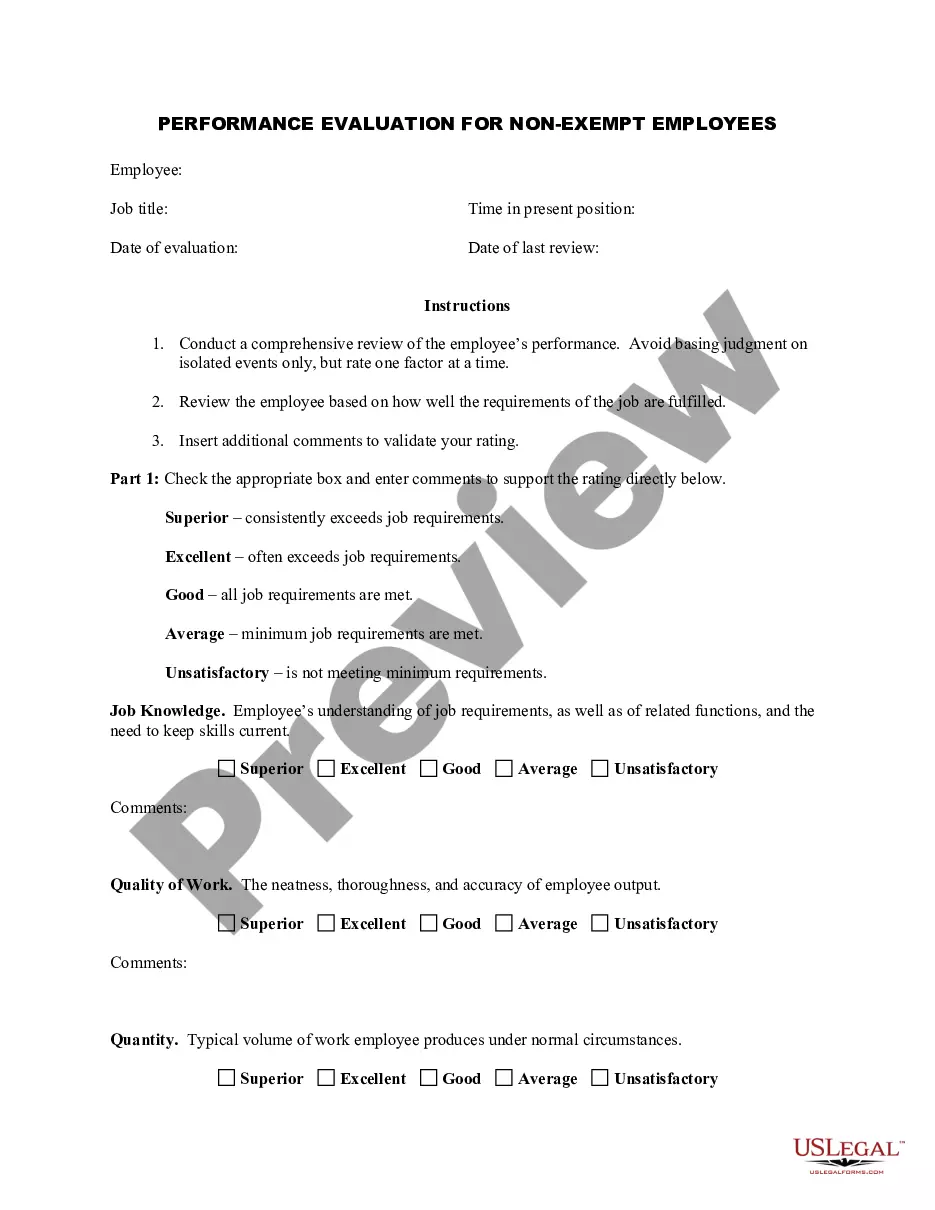
How to fill out Employee Evaluation Form For Police Officer?
US Legal Forms - one of the largest collections of legal templates in the United States - offers a range of legal document templates that you can download or generate.
By using the website, you can access thousands of templates for business and personal use, categorized by type, state, or keywords.
You can find the latest templates such as the North Carolina Employee Evaluation Form for Police Officer in just minutes.
If the form does not meet your needs, use the Search bar at the top of the screen to find one that does.
When you are satisfied with the form, confirm your selection by clicking the Purchase now button. Next, choose the pricing plan you prefer and provide your information to register for the account.
- If you already have a membership, Log In and download the North Carolina Employee Evaluation Form for Police Officer from the US Legal Forms library.
- The Download button will be available on every form you view.
- You can access all previously downloaded forms in the My documents section of your account.
- If it’s your first time using US Legal Forms, here are simple steps to get started.
- Ensure you have selected the correct form for your locality/county.
- Click the Preview button to review the form's details.
Form popularity
FAQ
Various factors could hinder your ability to become a police officer in North Carolina. These include failing background checks, issues with drug use, or lack of required educational qualifications. Understanding these barriers empowers you to prepare effectively. If you aim for a career in law enforcement, ensure you address these concerns well before starting the process.
To become a police officer in North Carolina, candidates must meet specific educational and personal eligibility criteria. This includes being at least 20 years old, having a high school diploma or equivalent, and passing various background checks. Meeting these requirements is essential for a successful application process. Utilizing resources like the North Carolina Employee Evaluation Form for Police Officer may help clarify the path to becoming qualified.
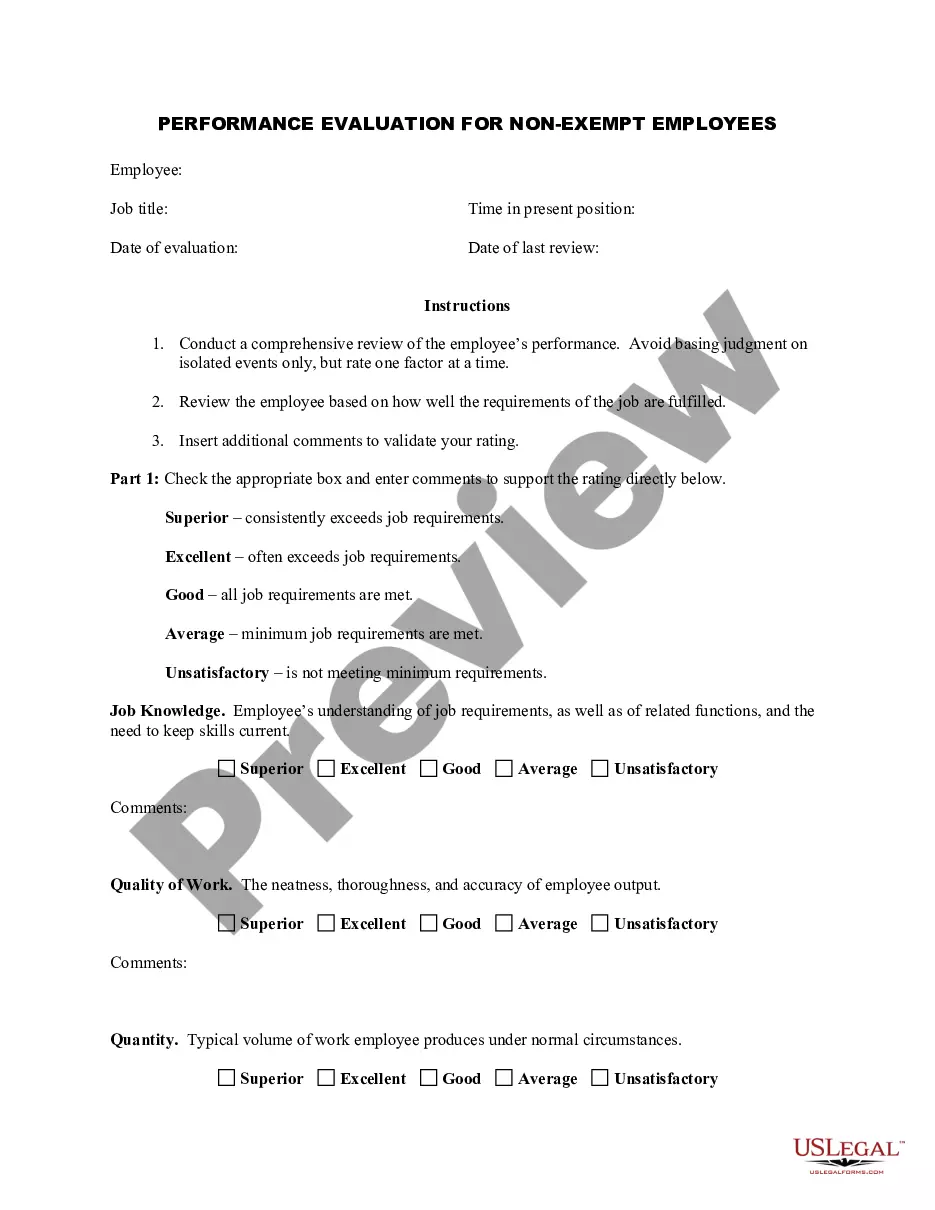
Filling out the North Carolina Employee Evaluation Form for Police Officer requires clarity and precision. Begin by reviewing the officer's overall performance, referencing specific examples to support your evaluations. Incorporate both strengths and areas for improvement, using direct language. A comprehensive evaluation not only aids development but also enhances communication within the department.
The NC F3 form is a crucial document used in the hiring process for police officers in North Carolina. It gathers essential information about an applicant's background, including employment history and qualifications. By understanding the NC F3 form, you can better prepare for the application process. Using the North Carolina Employee Evaluation Form for Police Officer alongside the F3 can streamline your evaluations.
The five foundational words for a performance review are goals, strengths, areas, feedback, and development. Each term plays a crucial role in providing a balanced and thorough evaluation. When using the North Carolina Employee Evaluation Form for Police Officer, these words guide the assessment process and foster constructive discussions. Incorporating them can greatly enhance the evaluation's effectiveness.
Several factors can disqualify an individual from becoming a police officer in North Carolina. These include significant criminal history, dishonorable discharge from the military, and substance abuse issues. Understanding these disqualifiers can help aspiring officers prepare better and avoid potential pitfalls. Always review the latest guidelines or consult appropriate resources before applying.
When completing a North Carolina Employee Evaluation Form for Police Officer, avoid vague feedback that offers little guidance. Don't include personal opinions or make moral judgments about the officer's character. Focus instead on concrete performance metrics, observable behaviors, and outcomes. Clear and constructive criticism helps promote professional growth.
The physical requirements for Basic Law Enforcement Training (BLET) in North Carolina are comprehensive. Candidates must demonstrate strength, endurance, and agility through various physical tests, which are crucial for police work. The North Carolina Employee Evaluation Form for Police Officer can help assess how well candidates meet these requirements and support them in their training journey.
The NC sales tax exemption certificate form allows certain organizations to make tax-exempt purchases in North Carolina. This form is vital for non-profits and government entities, including law enforcement agencies, which can save funds on necessary equipment. To maintain efficiency in budget planning, utilizing the North Carolina Employee Evaluation Form for Police Officer can help track expenditures related to training and evaluations.
The NC 3 form is used for employment verification in North Carolina. This form assists employers in validating the work history and qualifications of potential employees, including police candidates. A thorough review process, supported by the North Carolina Employee Evaluation Form for Police Officer, can enhance hiring practices and ensure qualified personnel.