North Carolina Employment Offer Letter Exempt or Non-Exempt
Description
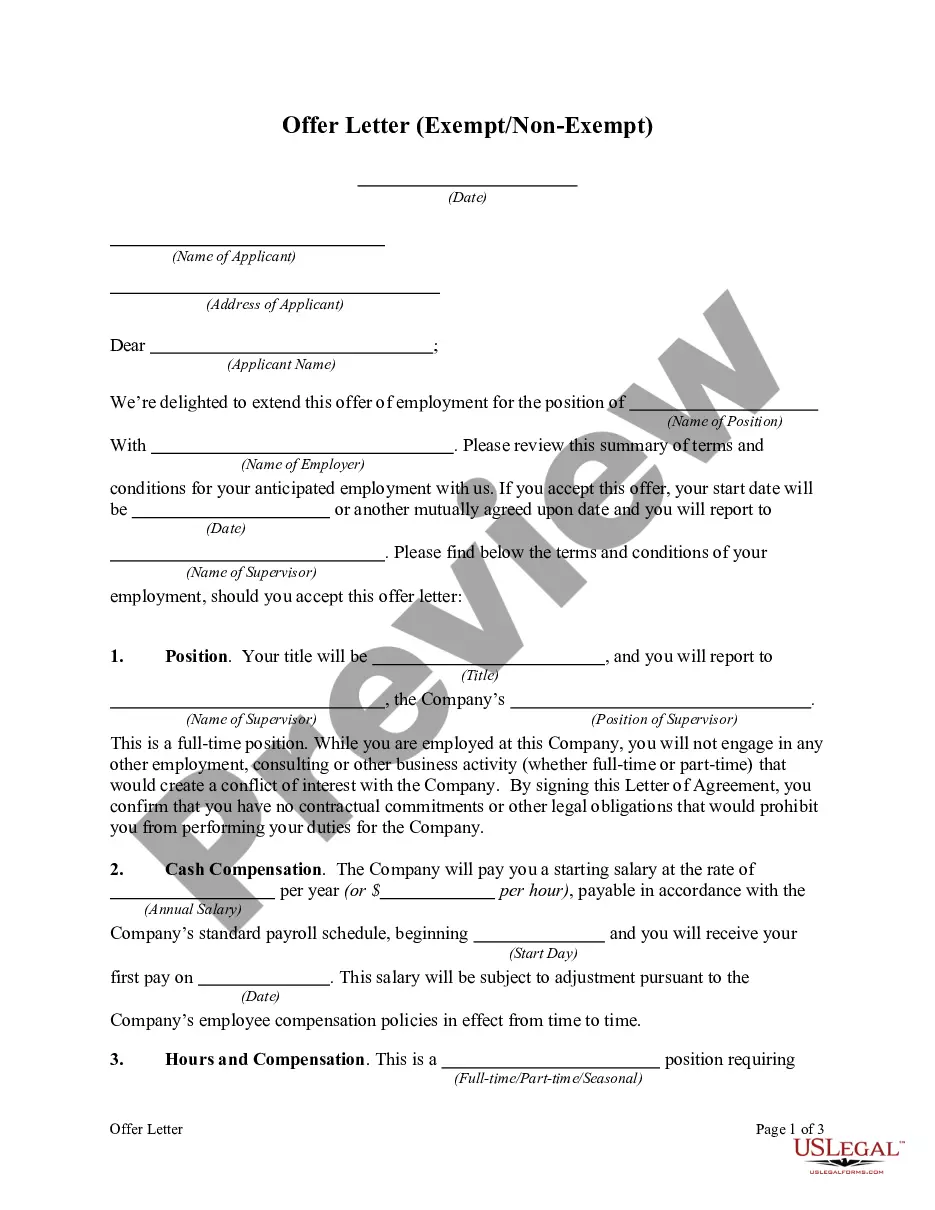


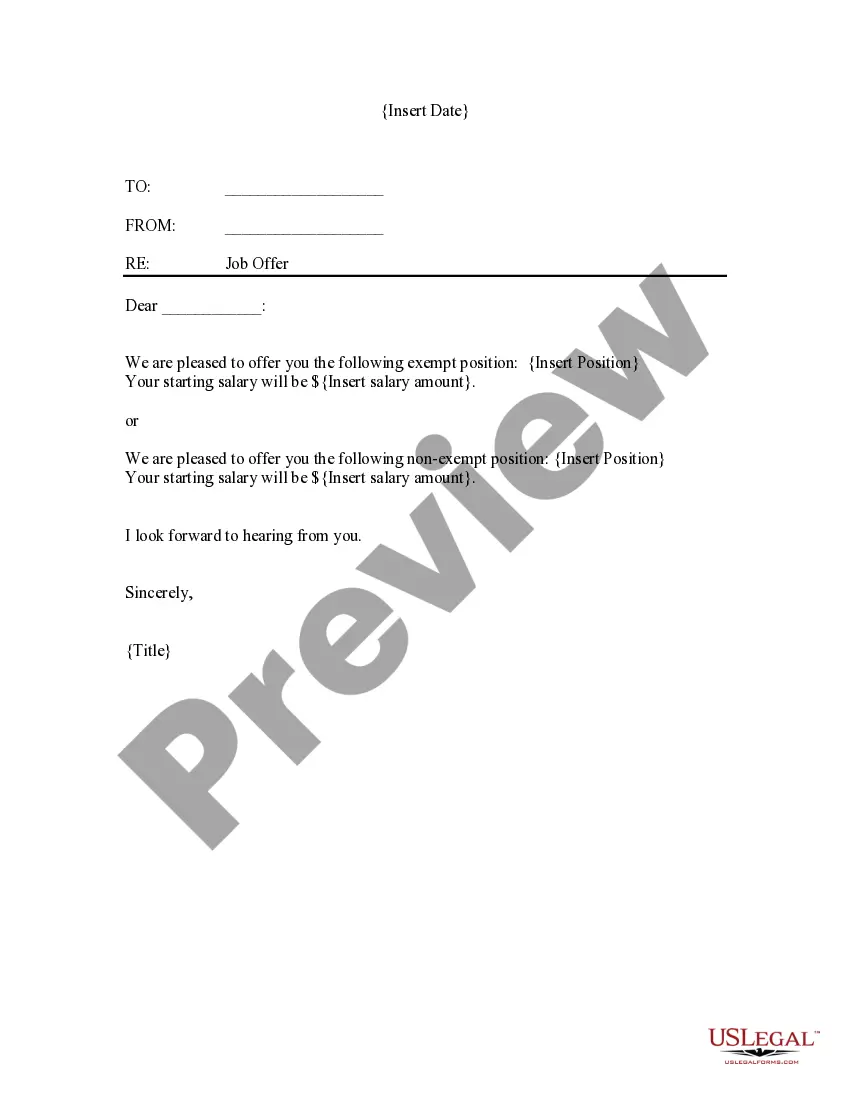
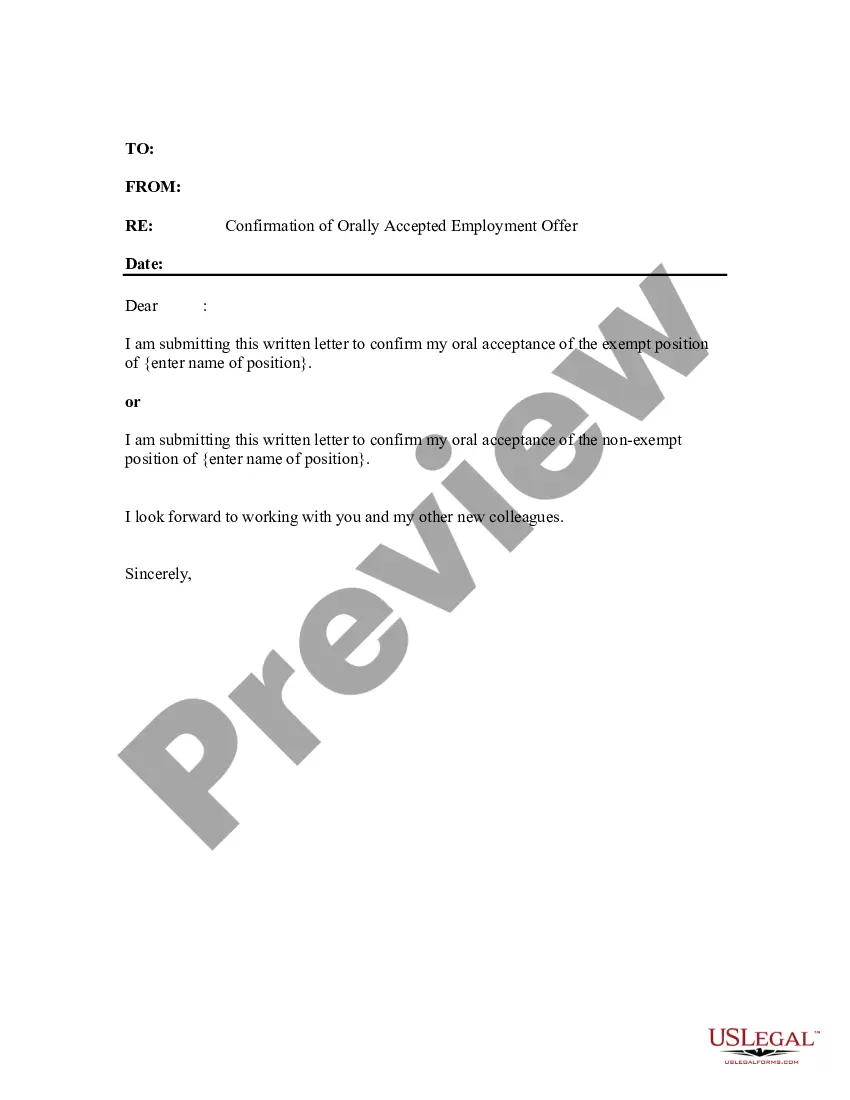
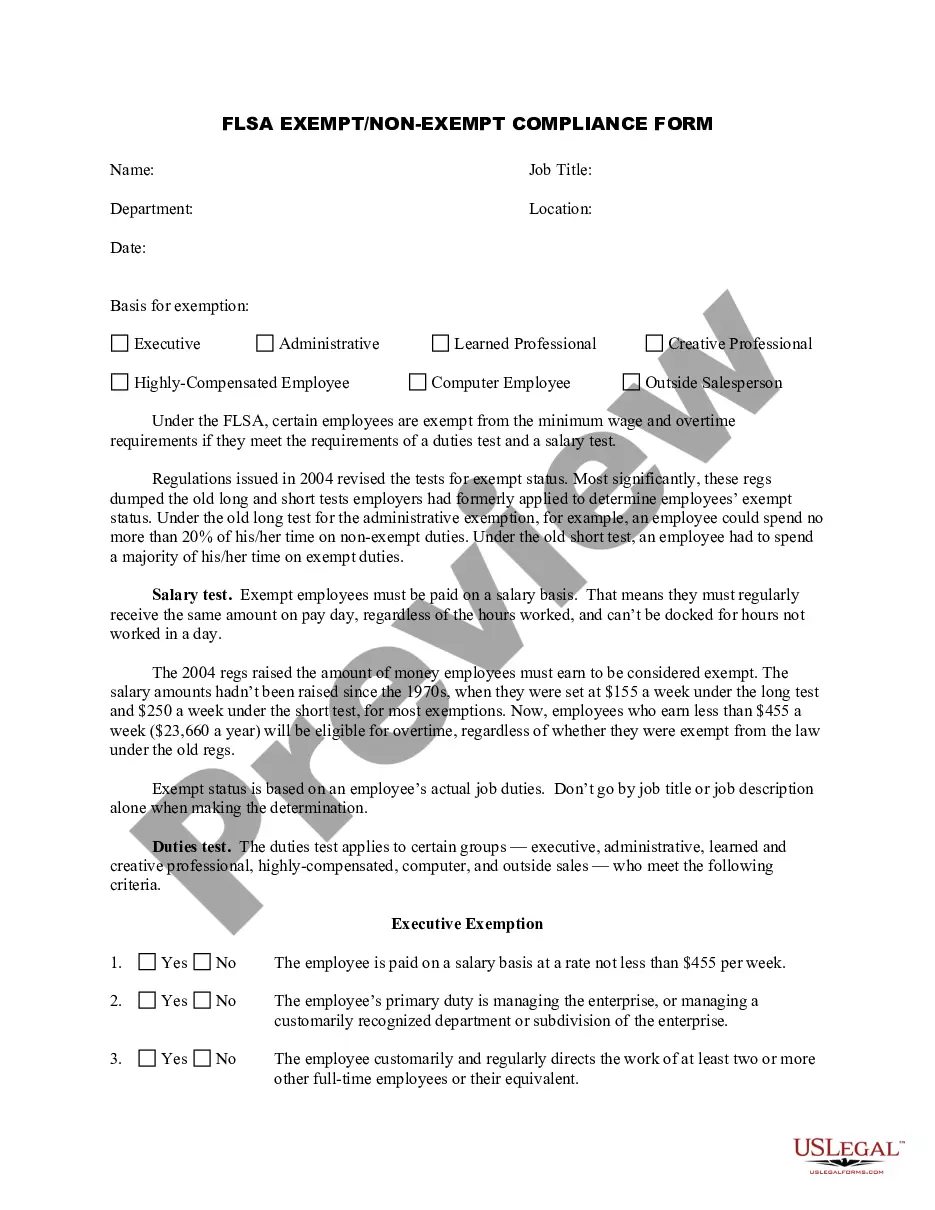
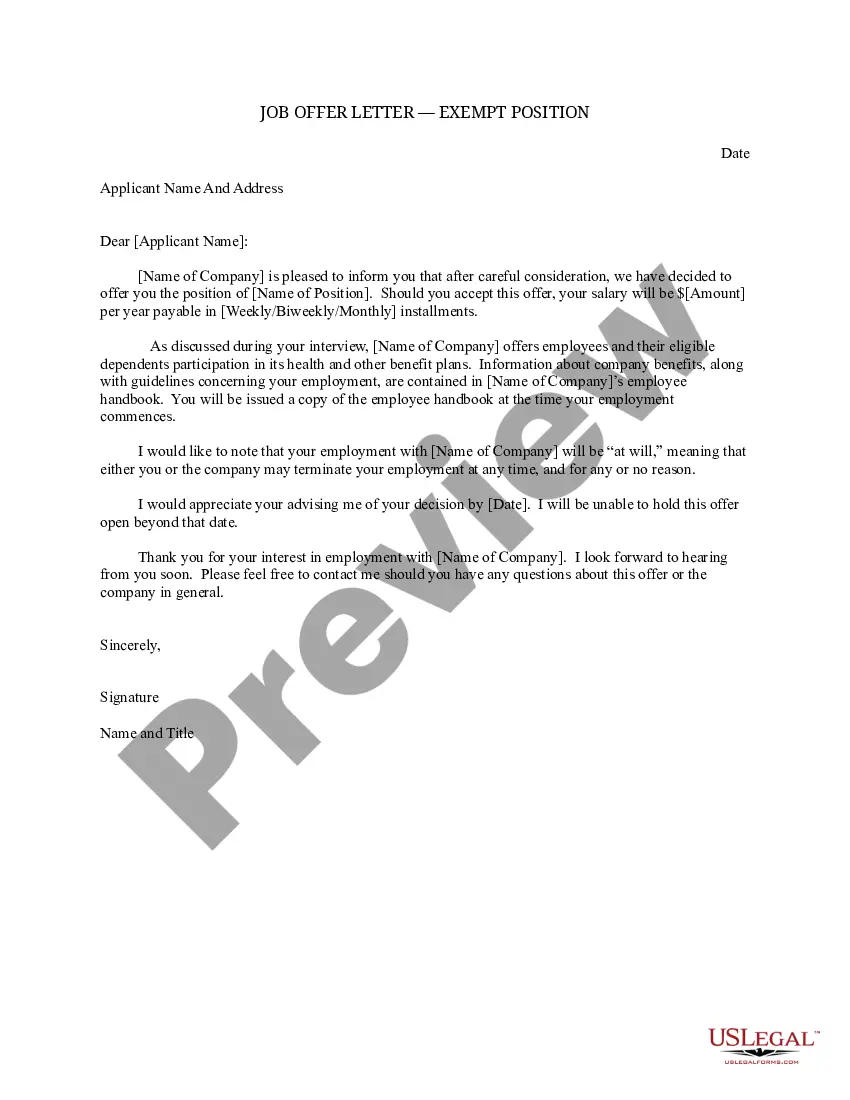
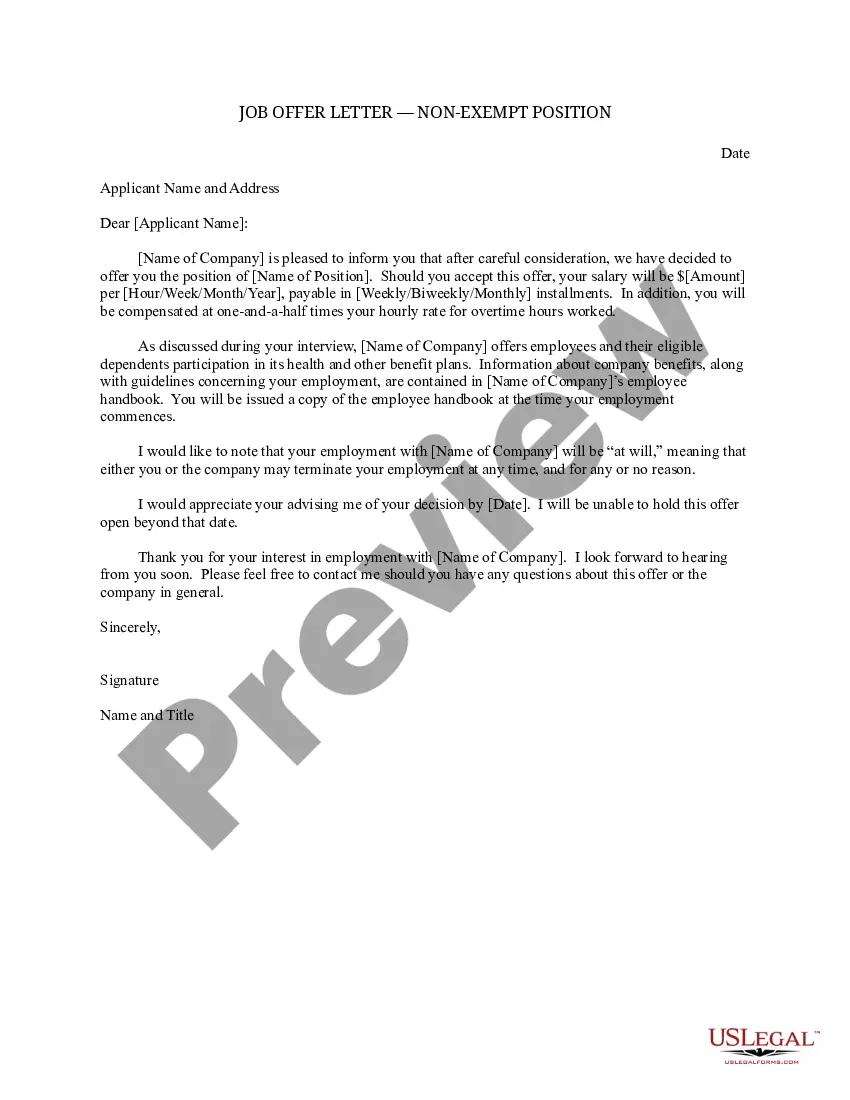
Get your form ready online
Our built-in tools help you complete, sign, share, and store your documents in one place.
Make edits, fill in missing information, and update formatting in US Legal Forms—just like you would in MS Word.
Download a copy, print it, send it by email, or mail it via USPS—whatever works best for your next step.
Sign and collect signatures with our SignNow integration. Send to multiple recipients, set reminders, and more. Go Premium to unlock E-Sign.
If this form requires notarization, complete it online through a secure video call—no need to meet a notary in person or wait for an appointment.
We protect your documents and personal data by following strict security and privacy standards.

Make edits, fill in missing information, and update formatting in US Legal Forms—just like you would in MS Word.

Download a copy, print it, send it by email, or mail it via USPS—whatever works best for your next step.

Sign and collect signatures with our SignNow integration. Send to multiple recipients, set reminders, and more. Go Premium to unlock E-Sign.

If this form requires notarization, complete it online through a secure video call—no need to meet a notary in person or wait for an appointment.

We protect your documents and personal data by following strict security and privacy standards.
Looking for another form?
How to fill out Employment Offer Letter Exempt Or Non-Exempt?
Have you been in a situation where you require documentation for various corporate or individual events almost all the time.
There are countless legal form templates accessible online, yet finding ones you can trust is challenging.
US Legal Forms offers a vast array of form templates, including the North Carolina Employment Offer Letter Exempt or Non-Exempt, designed to comply with both state and federal regulations.
Once you find the appropriate form, click Buy now.
Choose the payment plan you prefer, enter the necessary details for payment, and make the purchase using your PayPal or Visa or Mastercard.
- If you are already familiar with the US Legal Forms website and possess an account, simply Log In.
- Then, you can download the North Carolina Employment Offer Letter Exempt or Non-Exempt template.
- If you do not have an account and wish to start using US Legal Forms, follow these instructions.
- Select the form you need and ensure it is applicable to the correct city/county.
- Utilize the Preview button to review the form.
- Read the description carefully to ensure you have selected the correct document.
- If the form does not meet your criteria, use the Search box to find the form that fits your needs.
Form popularity
FAQ
Exempt/Nonexempt Classification. Offer letters to nonexempt employees should state that they must record their hours worked and they will be paid overtime (as pre-approved by their supervisor), and describe available meal and rest periods.
The offer was sent from a personal email The biggest giveaway is the email address that the job offer has been sent from. If it's been sent from a free e-mail account like 'google.com or hotmail.com' then you should know that it's fake. Authentic job offers are sent from company registered e-mails.
The offer letter should provide details on the salary and pay periods. Employee compensation should be stated in an hourly, a weekly or a per-pay-period salary amount to avoid the expectation of receiving the full annual salary if the employee is terminated midyear.
The law categorizes all employees as exempt or non-exempt. Non-exempt employees are entitled to overtime pay, whereas exempt employees are not. There are certain types of employees that are more likely to be non-exempt.
DO state that the offer is subject to the employee's provision of I-9 documentation, as well as any other contingencies required for the job, such as reference checks, drug tests and/or background checks. DON'T include promises about promotions, pay raises or bonuses in the offer letter.
Some important details about an offer letter are: It is NOT a legally binding contract. It does NOT include promises of future employment or wages. It includes an employment at-will statement.
One of the general requirements is that the salaried-exempt employee must be paid a guaranteed salary of at least $684 a workweek (no salary test for outside sales), which would also be the promised rate of pay for the employee.
With that, every job offer letter should include the following terms:A job title and description.Important dates.Compensation, benefits, and terms.Company policies and culture.A statement of at-will employment.An employee confidentiality agreement and noncompete clause.A list of contingencies.
Highly-compensated: Any employee who primarily performs non-manual labor and regularly performs at least one exempt administrative, executive, or professional duty, and makes $100,000 or more per year (including at least $455 per week on salary), can be exempt from overtime.
The FLSA includes these job categories as exempt: professional, administrative, executive, outside sales, and computer-related. The details vary by state, but if an employee falls in the above categories, is salaried, and earns a minimum of $684 per week or $35,568 annually, then they are considered exempt.