North Carolina Land Trust Agreement

State:
Multi-State
Control #:
US-02093BG
Format:
Word; 
Rich Text
Instant download

Description

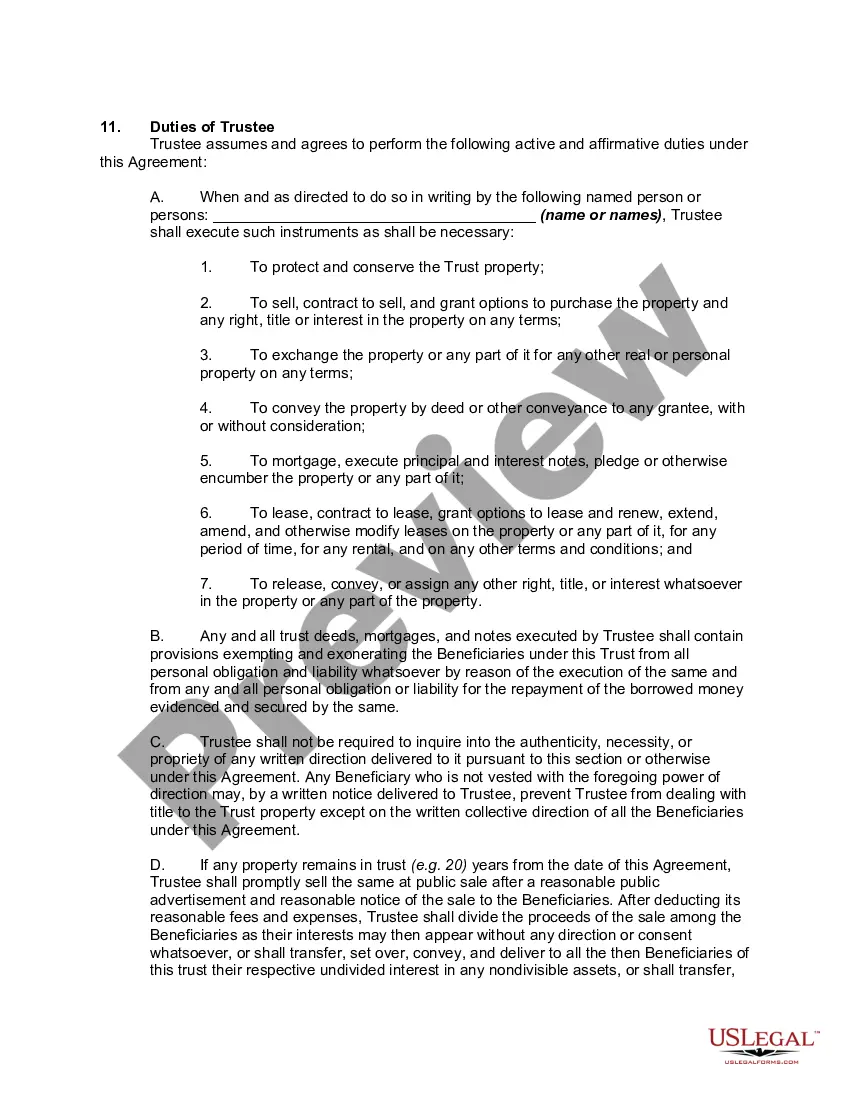
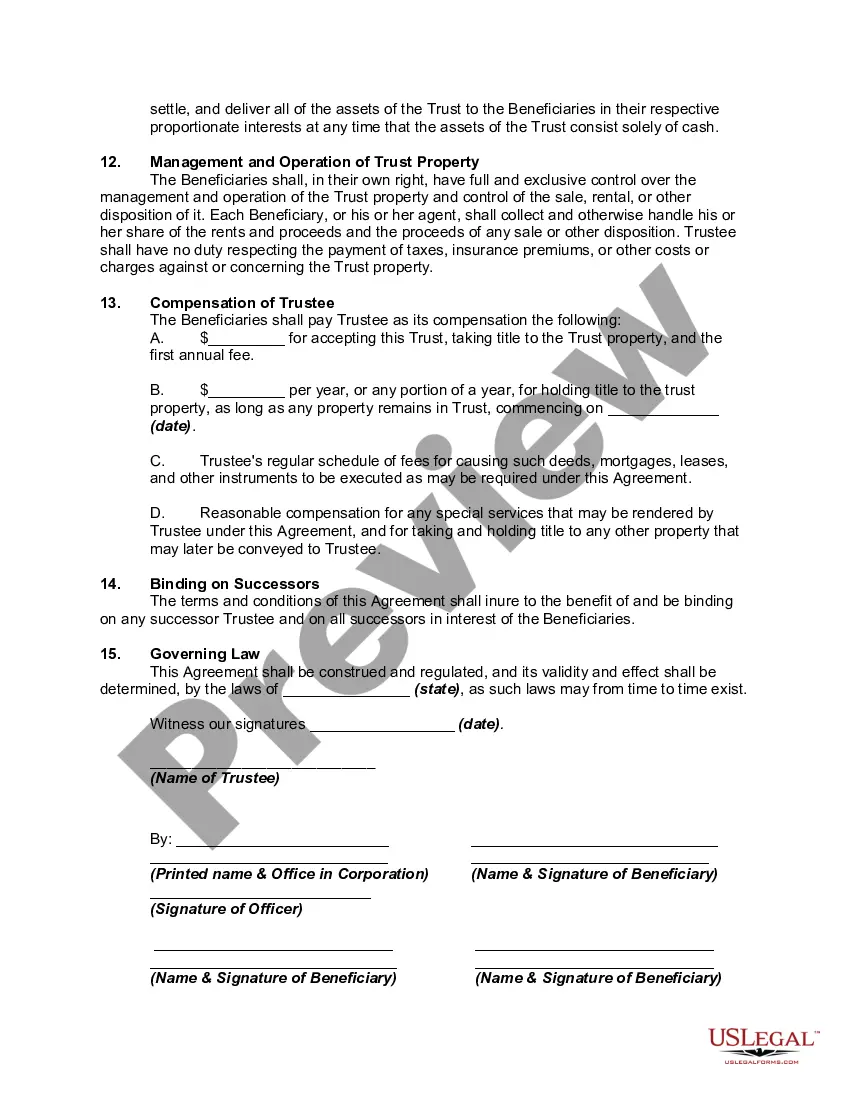
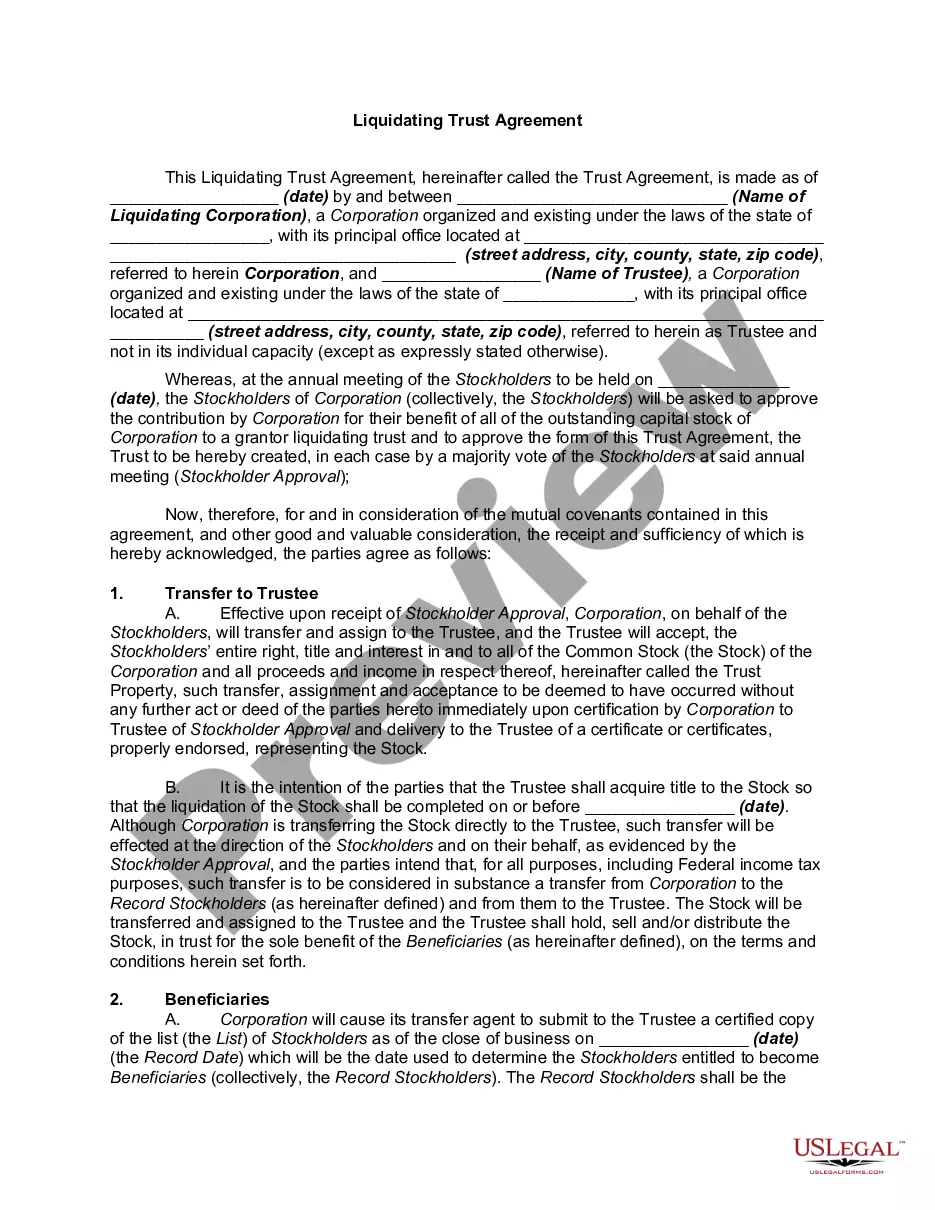
There are two basic instruments required to establish a land trust. One is a deed in trust conveying the real estate to a trustee. The other is a trust agreement defining the rights and duties of the trustee and the beneficiaries, which is mentioned in the deed of trust but is not recorded. The deed in trust should convey title to real property to a trustee and confer complete trust powers on the trustee so that the trustee can deal with third parties without reference to the trust agreement. Restrictions on the trustee's powers should be set forth in the trust agreement.


This form is a generic example that may be referred to when preparing such a form for your particular state. It is for illustrative purposes only. Local laws should be consulted to determine any specific requirements for such a form in a particular jurisdiction.
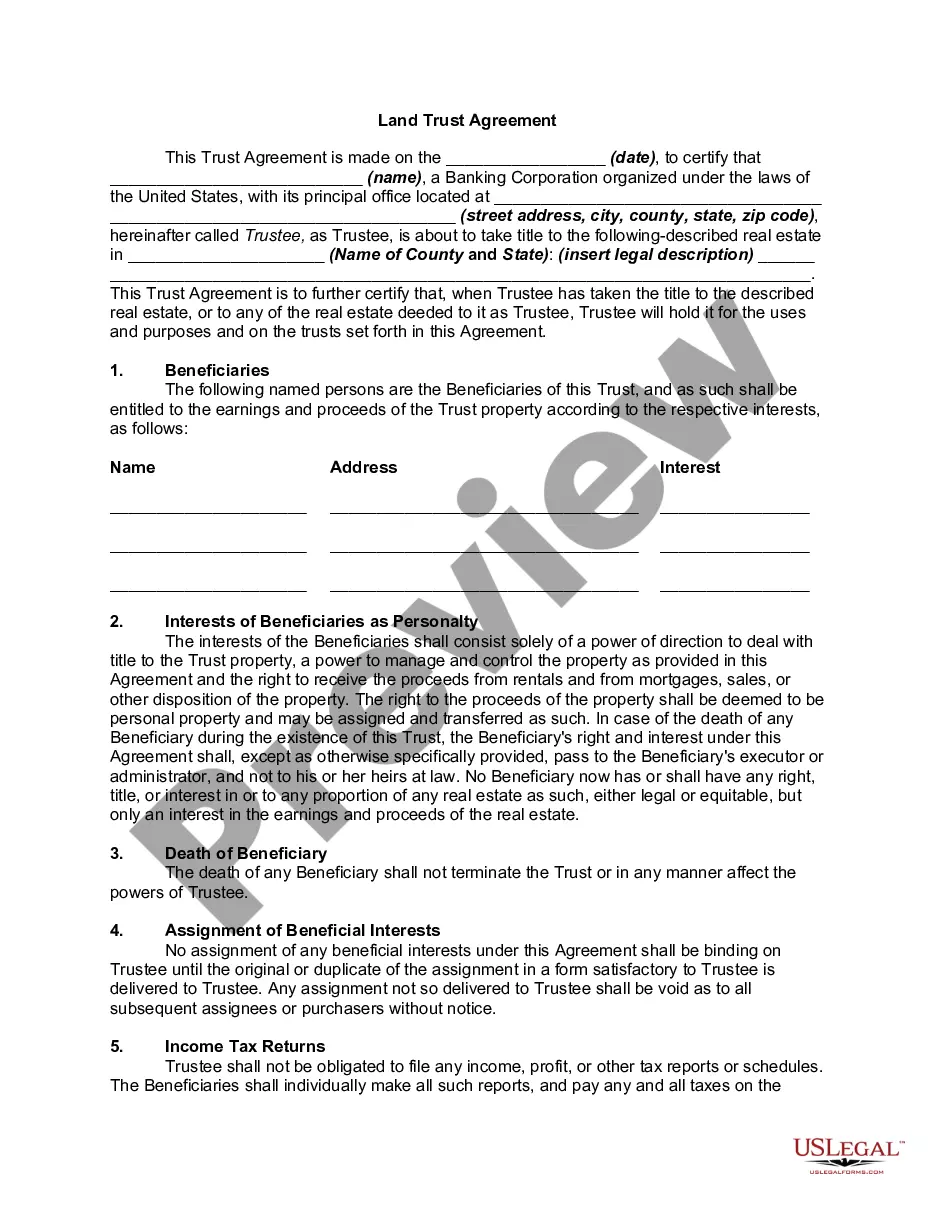
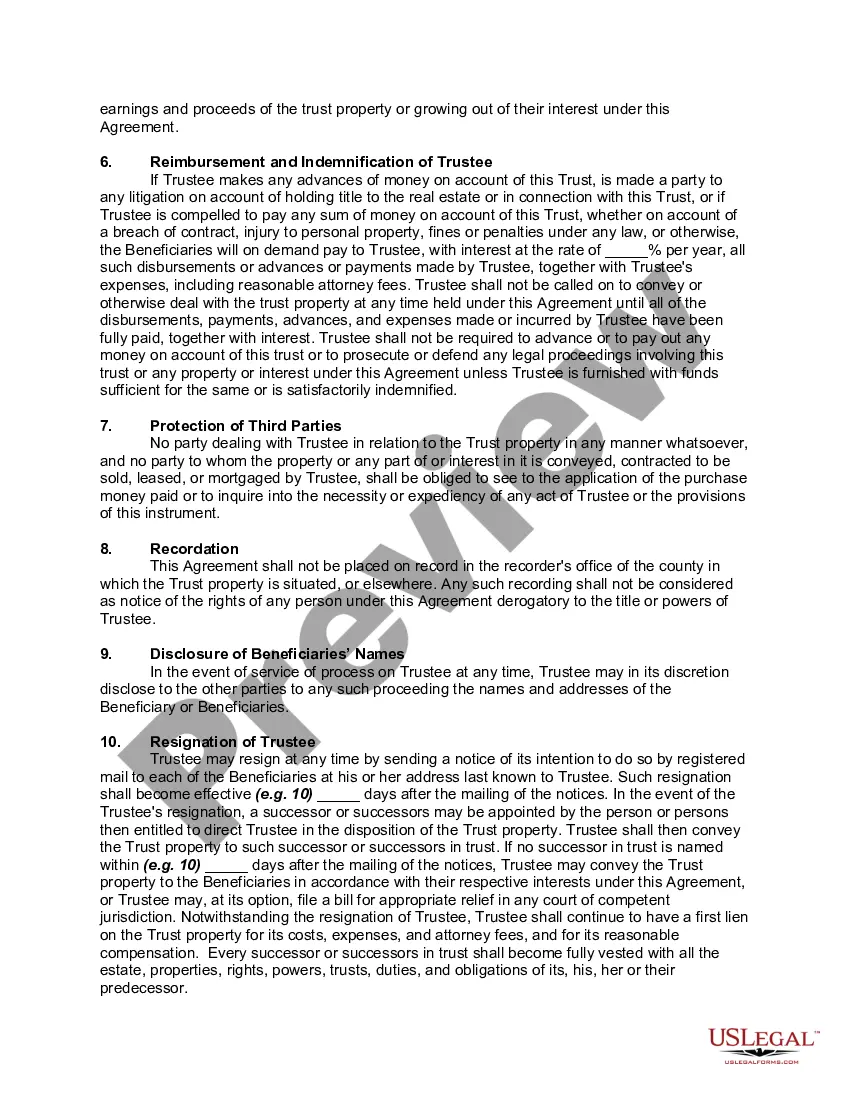
Free preview
  • Preview Land Trust Agreement
  • Preview Land Trust Agreement
  • Preview Land Trust Agreement
  • Preview Land Trust Agreement
  • Preview Land Trust Agreement

How to fill out Land Trust Agreement?

Are you currently in a situation where you require documents for both business or personal purposes every single day.

There are numerous legal document templates accessible online, but finding ones you can trust isn’t simple.

US Legal Forms offers a vast selection of form templates, such as the North Carolina Land Trust Agreement, which can be filled out to meet federal and state requirements.

Once you find the correct form, click Buy now.

Choose the payment plan you want, complete the required information to create your account, and pay for the order using your PayPal or credit card.

  1. If you are already acquainted with the US Legal Forms website and have an account, simply sign in.
  2. Then, you can download the North Carolina Land Trust Agreement template.
  3. If you do not have an account and wish to start using US Legal Forms, follow these steps.
  4. Obtain the form you need and ensure it is for your specific city/county.
  5. Utilize the Preview function to review the form.
  6. Examine the details to ensure that you have selected the right type.
  7. If the form isn’t what you’re looking for, use the Search area to find the form that fits your needs and requirements.

Form popularity

FAQ

In a North Carolina Land Trust Agreement, the responsibility for taxes typically falls on the beneficiaries of the trust. Generally, land trust beneficiaries are responsible for paying property taxes on the real estate held in trust. However, it's important to understand that the specifics can vary based on the terms outlined in the trust agreement. To ensure clarity and compliance, consult a legal expert or utilize resources like USLegalForms to create a tailored North Carolina Land Trust Agreement.

Setting up a trust in North Carolina begins with choosing the right type of trust that suits your needs. You will need to create a North Carolina Land Trust Agreement that outlines the terms and conditions, as well as the parties involved. It is important to decide who the trustee will be, as this person will manage the trust assets. Additionally, using platforms like US Legal Forms can provide you with templates and guidance to ensure your trust is set up correctly and legally.

To set up a trust in North Carolina, start by drafting a North Carolina Land Trust Agreement that outlines the terms and conditions. You can choose to use online resources, like US Legal Forms, to obtain the necessary documents and guidance. Once completed, you need to transfer the property title to the trust and ensure compliance with state laws.

Typically, the beneficial owner of the property covered under a North Carolina Land Trust Agreement is responsible for property taxes. Even though the trust holds the title, the tax obligations fall to the individuals who benefit from the trust. Therefore, it's crucial to understand the tax implications before establishing the trust.

Disadvantages of a trust in North Carolina include complexities in management and potential tax implications. Establishing a North Carolina Land Trust Agreement may result in increased administrative responsibilities and fees. You might also face limitations when accessing or utilizing the property, depending on the specific terms of the trust.

One disadvantage of a land trust is that it may limit your control over the property. When you establish a North Carolina Land Trust Agreement, you transfer ownership to the trust, which can restrict your ability to make decisions about the land. Additionally, the costs associated with creating and maintaining the trust can be significant, impacting your budget.

Individuals often use land trusts to protect their assets and achieve specific goals. A North Carolina Land Trust Agreement allows landowners to preserve their land for future generations while minimizing taxes and additional liabilities. Moreover, this approach can facilitate smoother transitions in property ownership, making it an attractive option for many.

A land trust in North Carolina is a specific legal structure designed to hold and manage land for various purposes, including conservation and estate planning. Under a North Carolina Land Trust Agreement, property ownership is transferred to a trustee, ensuring that the land is preserved according to the owner's wishes. This structure can provide significant tax benefits and help maintain the land's value.

Putting land in a trust can have some disadvantages. You may face restrictions on how you can use the land, given the trust’s purpose and terms. Furthermore, costs related to setting up and maintaining the trust can add up. Thus, it is essential to carefully review the specifics of a North Carolina Land Trust Agreement before proceeding.

Filing a trust in North Carolina involves several steps. First, you need to draft a North Carolina Land Trust Agreement that outlines the terms of the trust, including the trustee and beneficiaries. After creating the agreement, you should sign it and may want to consider having it notarized. Once complete, it's advisable to keep the document in a safe place and possibly register it with the county to give it legal effect.

Trusted and secure by over 3 million people of the world’s leading companies

North Carolina Land Trust Agreement