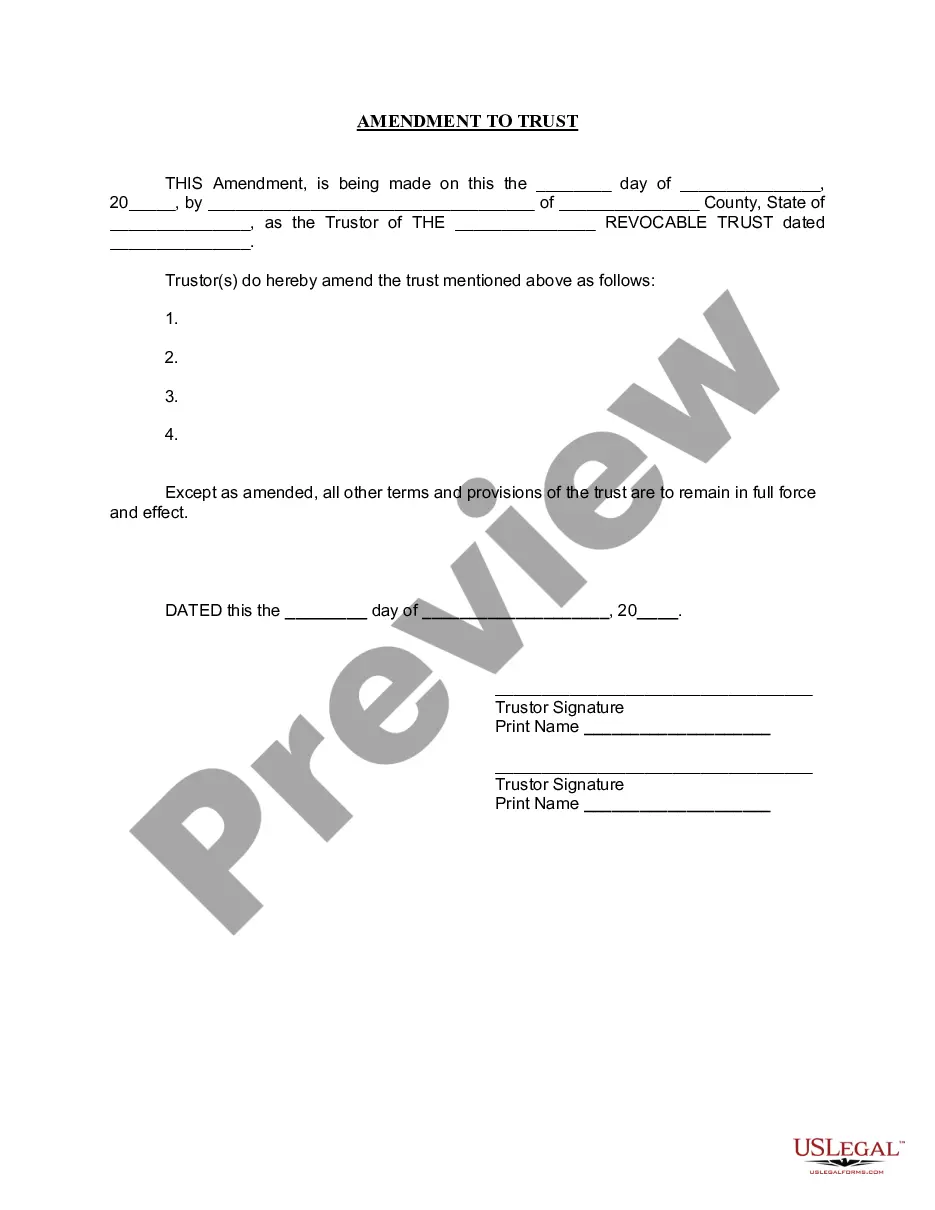
North Carolina Amendment to Living Trust

What this document covers
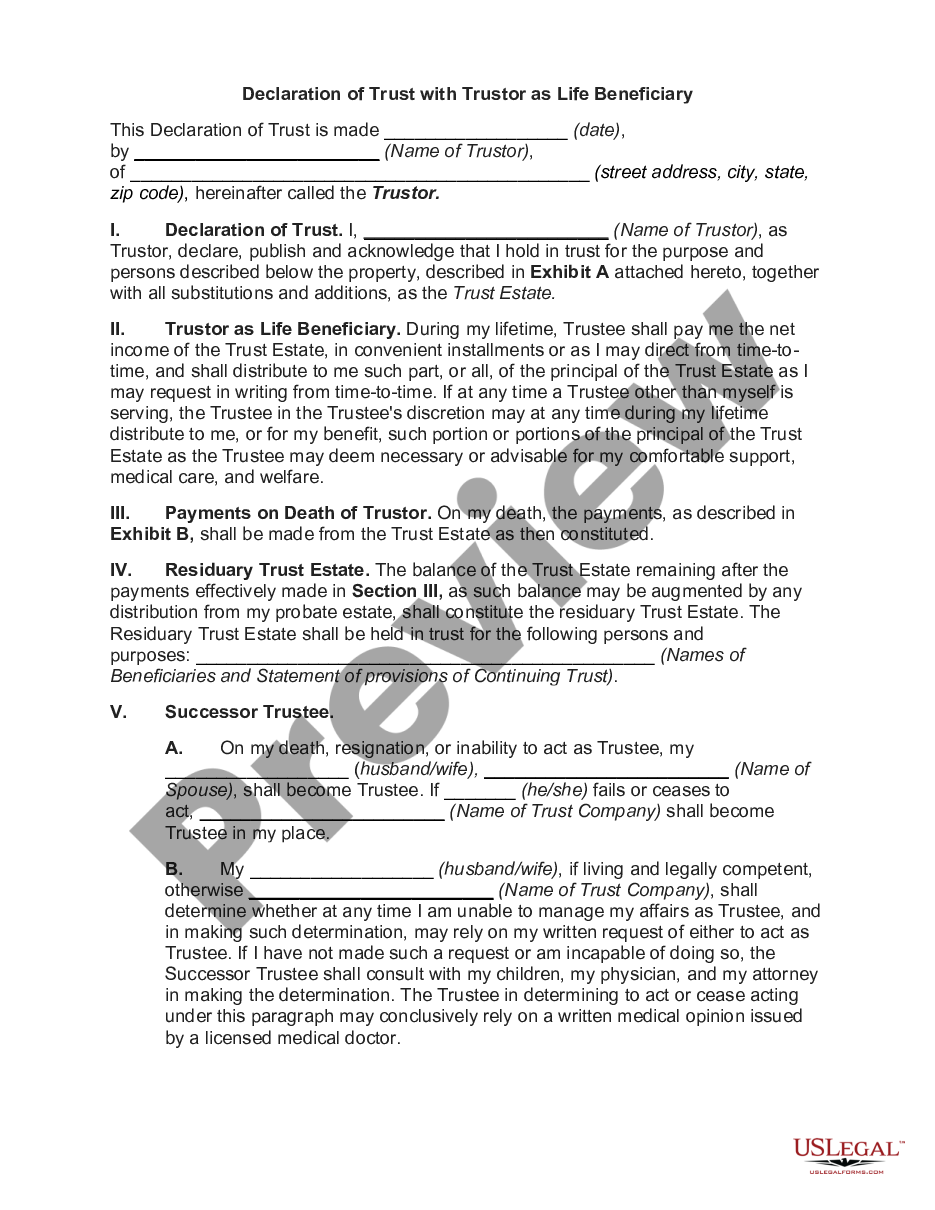
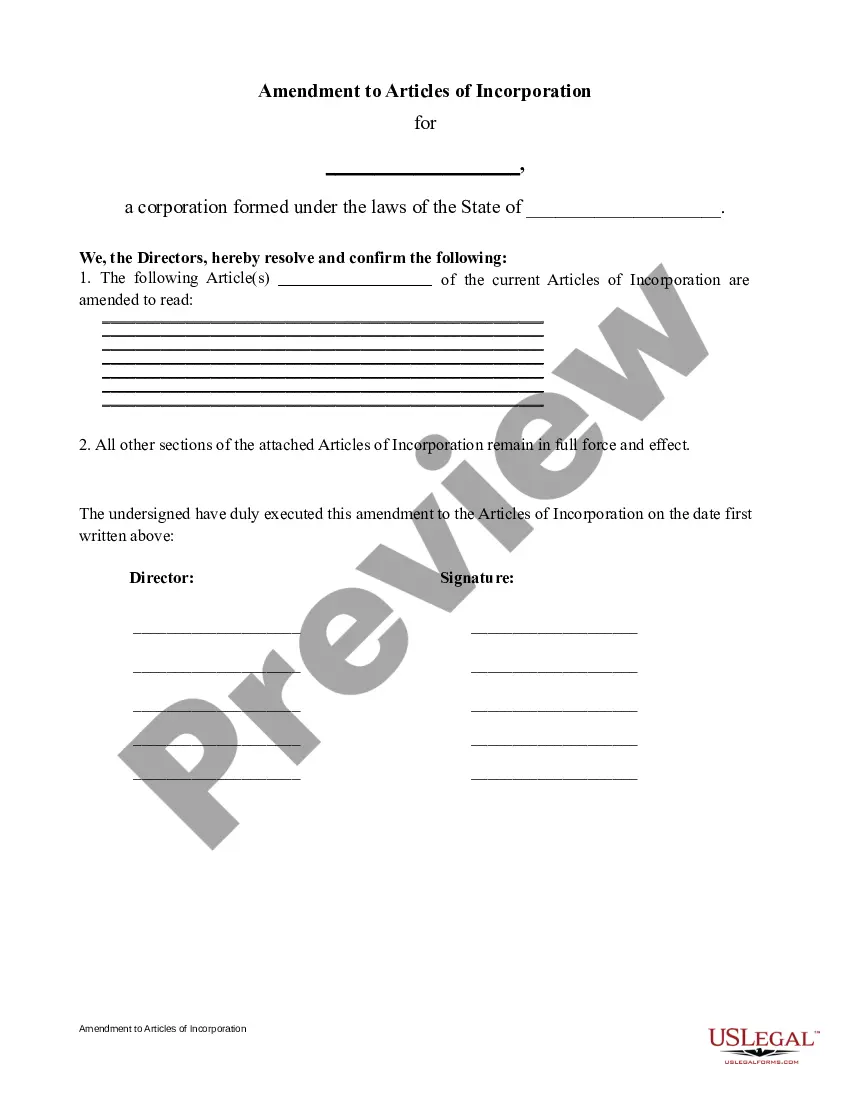
The Amendment to Living Trust is a legal document that allows the Trustor to make changes to an existing living trust. A living trust is a financial arrangement created during a personâs lifetime to manage their assets. This amendment form enables modifications to specific provisions of the trust while ensuring that the overall purpose and nature of the trust remain intact. Unlike creating a new trust, this form allows for updates without starting the estate planning process from scratch.
Key components of this form
- Date of amendment
- Identification of the Trustor and trust details
- Specific amendments being made
- Trustor signatures
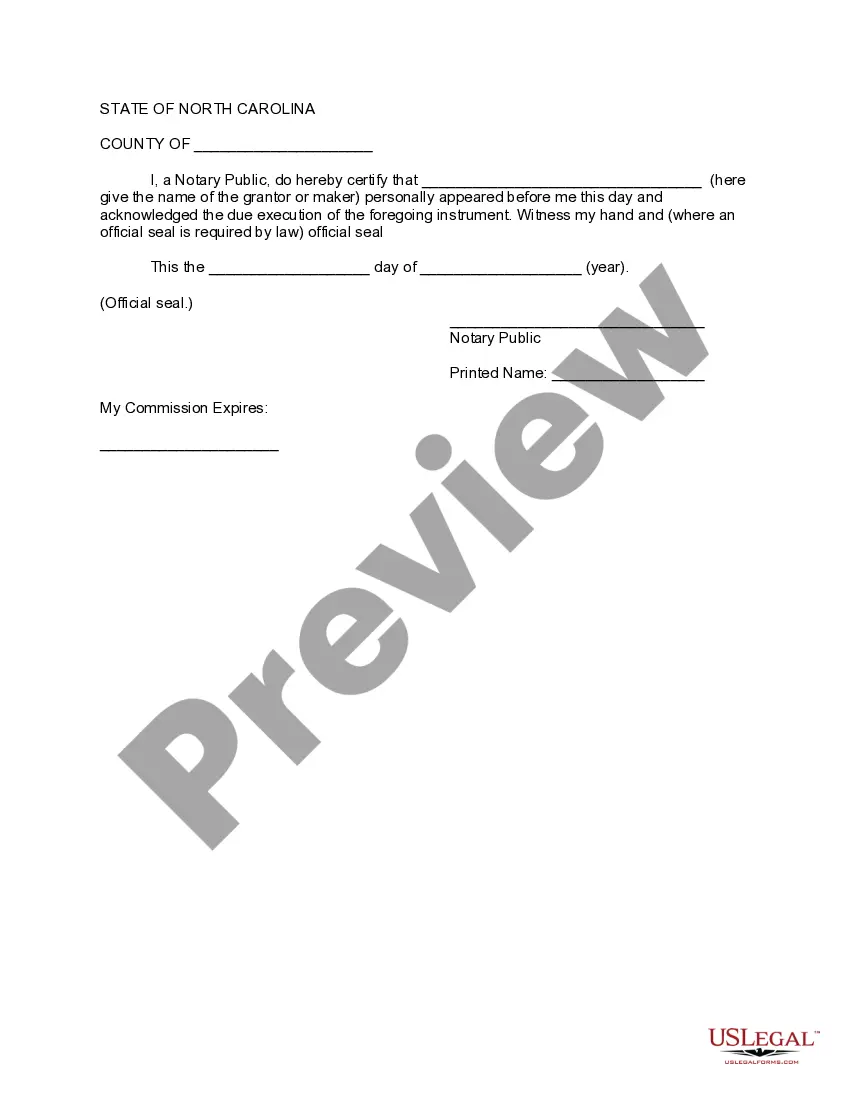
- Notary public certification section


When to use this document
This form should be used when a Trustor needs to update or modify specific terms or provisions of their living trust. Common scenarios include adding or removing beneficiaries, changing the trustee, or updating asset details due to new acquisitions or disposals. It is essential to ensure that the changes do not conflict with the original intent of the trust.
Who should use this form
- Individuals who have established a living trust and need to make adjustments.
- Beneficiaries or trustees who require official documentation of changes.
- Those involved in estate planning who seek to maintain the accuracy of their assets and beneficiaries.
Completing this form step by step
- Identify the date the amendment is being executed.
- Provide the full name and address of the Trustor.
- Specify the name of the original living trust and its date of creation.
- Clearly outline the amendments being made.
- Both Trustor signatures must be provided in designated spaces.
- Have the form notarized by a licensed notary public.
Does this form need to be notarized?
Yes, this form must be notarized to be legally valid. This ensures the authenticity of the signatures and the identity of the Trustor. US Legal Forms offers integrated online notarization, which provides secure video calls with licensed notaries 24/7, eliminating the need for travel.
Get your form ready online
Our built-in tools help you complete, sign, share, and store your documents in one place.
Make edits, fill in missing information, and update formatting in US Legal Forms—just like you would in MS Word.
Download a copy, print it, send it by email, or mail it via USPS—whatever works best for your next step.
Sign and collect signatures with our SignNow integration. Send to multiple recipients, set reminders, and more. Go Premium to unlock E-Sign.
If this form requires notarization, complete it online through a secure video call—no need to meet a notary in person or wait for an appointment.
We protect your documents and personal data by following strict security and privacy standards.

Make edits, fill in missing information, and update formatting in US Legal Forms—just like you would in MS Word.

Download a copy, print it, send it by email, or mail it via USPS—whatever works best for your next step.

Sign and collect signatures with our SignNow integration. Send to multiple recipients, set reminders, and more. Go Premium to unlock E-Sign.

If this form requires notarization, complete it online through a secure video call—no need to meet a notary in person or wait for an appointment.

We protect your documents and personal data by following strict security and privacy standards.
Common mistakes to avoid
- Failing to include the date of the amendment.
- Not clearly specifying the changes being made.
- Omitting one or both Trustor signatures.
- Not having the document notarized when required.
- Using outdated information about the trust.
Benefits of completing this form online
- Convenient access to customizable templates at any time.
- Easy editing to suit individual needs.
- Reliable legal backing from templates created by licensed attorneys.
- Immediate downloading capability to start your changes right away.
What to keep in mind
- The Amendment to Living Trust is essential for updating existing trust provisions.
- Ensure that all changes reflect your current intentions regarding asset management.
- Always have the form notarized to validate your amendments.
- Review state-specific requirements to ensure compliance.
Looking for another form?
Form popularity
FAQ
Figure out the type of trust you'll need. Are you single? Take inventory of everything you own. Pick your trustee. Draw up the trust document, either by yourself or with a lawyer. Sign the trust document in front of a notary. Fund the trust this means putting your property into the trust.
A "living trust" (also called an "inter vivos" trust by lawyers who can't give up Latin) is simply a trust you create while you're alive, rather than one that is created at your death under the terms of your will. The beneficiaries you name in your living trust receive the trust property when you die.
It is true that in some states (such as California) probate administration can be lengthy and expensive. North Carolina is not one of those states. The maximum court cost that can be saved in North Carolina by using a funded living trust is $3,000, and those costs are generally much less in most estates.
In North Carolina, any person 18-years of age and older can make a will or living trust, and that will or trust will be recognized by law. Whatever debts you owe upon your death, whether it is a car loan or fees owed for personal services, this will come from the assets of your estate.