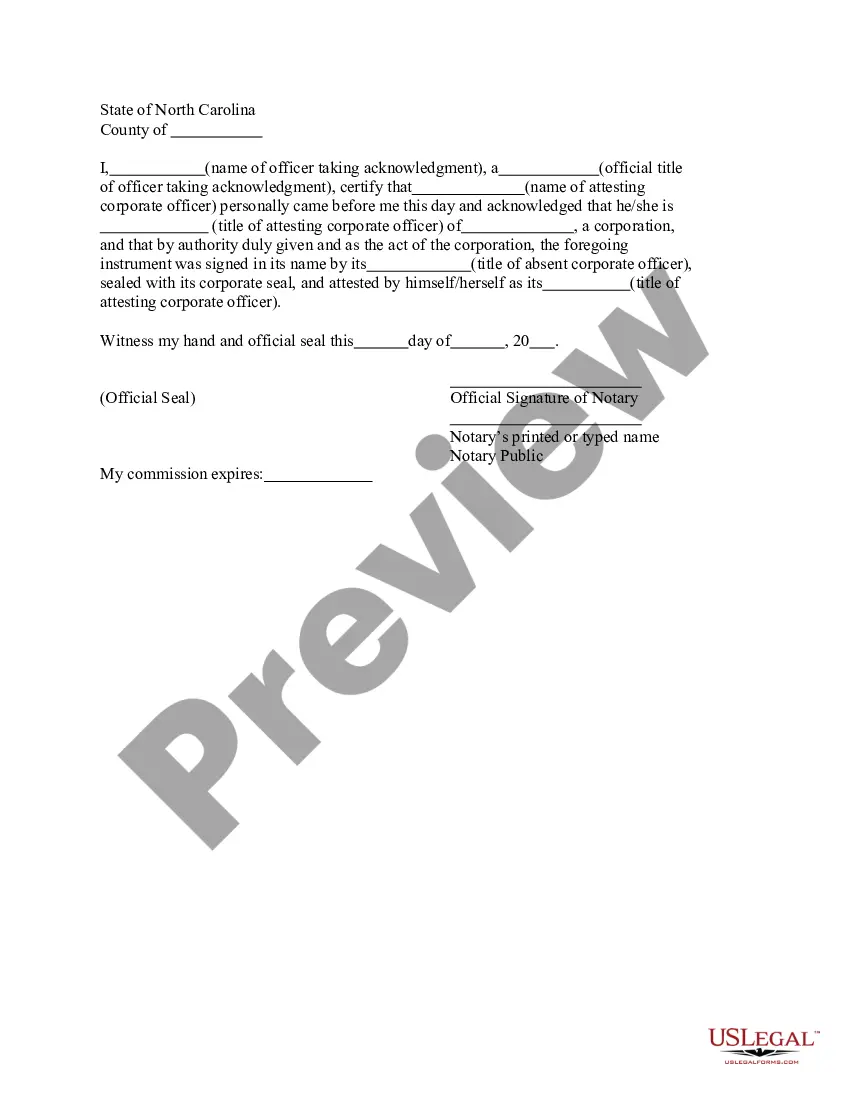
North Carolina Acknowledgment for other forms of probate for corporate conveyances
What is this form?
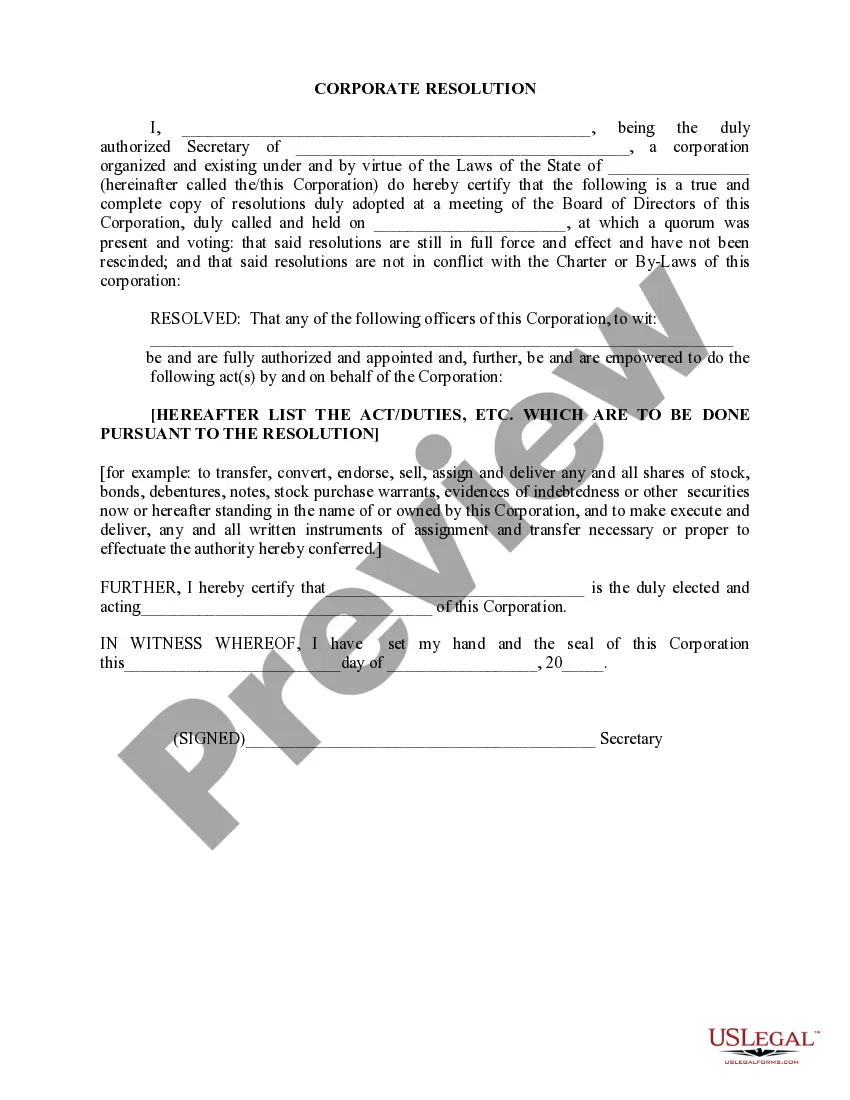
The Acknowledgment for other forms of probate for corporate conveyances is a legal document used to certify the authenticity of corporate transactions. This form serves as an acknowledgment by an officer of the corporation regarding the signing of documents related to probate matters. It is distinct from individual probate acknowledgment forms, as it pertains specifically to corporate entities and their respective officers.
Form components explained
- Identification of the officer taking the acknowledgment.
- Certification of the corporate officerâs presence and acknowledgment of their authority.
- Details regarding the act performed on behalf of the corporation.
- Official signature and seal of acknowledgment by a notary.
- Expiration date of the notary's commission.

Common use cases
This form is needed when a corporate entity is processing probate-related documents that require validation from a corporate officer. It ensures proper representation and authority in the execution of fiscal and legal responsibilities, especially in transferring assets or property of the corporation that may be subject to probate proceedings.
Who needs this form
- Corporate officers tasked with signing documents for probate matters.
- Legal representatives of corporations involved in probate sales or transfers.
- Notaries public verifying corporate acknowledgments in probate contexts.
How to complete this form
- Identify the name and title of the officer taking the acknowledgment.
- Enter the name of the corporate officer who is attesting the transaction.
- Fill in the title and name of the absent corporate officer as needed.
- Complete the date and official seal fields.
- Obtain the signature of a notary public to finalize the acknowledgment.
Does this form need to be notarized?
Yes, this form must be notarized to be legally valid. The notary public's role is crucial in confirming the authenticity of the acknowledgment and ensuring that the signing officer's authority is legitimate. US Legal Forms offers integrated online notarization services that are available 24/7 via secure video calls, providing legal equivalence without the need for in-person visits.
Get your form ready online
Our built-in tools help you complete, sign, share, and store your documents in one place.
Make edits, fill in missing information, and update formatting in US Legal Forms—just like you would in MS Word.
Download a copy, print it, send it by email, or mail it via USPS—whatever works best for your next step.
Sign and collect signatures with our SignNow integration. Send to multiple recipients, set reminders, and more. Go Premium to unlock E-Sign.
If this form requires notarization, complete it online through a secure video call—no need to meet a notary in person or wait for an appointment.
We protect your documents and personal data by following strict security and privacy standards.

Make edits, fill in missing information, and update formatting in US Legal Forms—just like you would in MS Word.

Download a copy, print it, send it by email, or mail it via USPS—whatever works best for your next step.

Sign and collect signatures with our SignNow integration. Send to multiple recipients, set reminders, and more. Go Premium to unlock E-Sign.

If this form requires notarization, complete it online through a secure video call—no need to meet a notary in person or wait for an appointment.

We protect your documents and personal data by following strict security and privacy standards.
Mistakes to watch out for
- Failing to include the corporate officer's title, which may invalidate the acknowledgment.
- Not having the form notarized when required.
- Leaving fields blank instead of writing "N/A" if not applicable.
Why use this form online
- Easy access to reliable and professionally drafted documents.
- Ability to download and edit the form according to specific needs.
- Secure storage and retrieval of important legal documents.
Looking for another form?

Form popularity
FAQ
The probate process begins at the Clerk of Superior Court in the deceased's county of residence. An application is submitted to the clerk by either the executor/executrix named in a will or, if there is no will or the person named in the will is not able or willing to serve, a person qualified to be an administrator.
Those fees will generally run between $2,000 and $10,000 depending on the size of the estate, and the nature of the assets and claims against the estate. Most lawyers perform that work on an hourly rate.
In North Carolina, you can make a living trust to avoid probate for virtually any asset you ownreal estate, bank accounts, vehicles, and so on. You need to create a trust document (it's similar to a will), naming someone to take over as trustee after your death (called a successor trustee).
Probate is generally required in North Carolina only when a decedent owned property in their name alone. Assets that were owned with a spouse, for which beneficiaries were named outside of a will, or held in revocable living trusts, generally do not need to go through probate.
You should expect it to take a minimum of six months to a year to settle an estate because of the legal notice requirements and time that creditors have to submit claims against the estate. Creditors have 90 days from the first publication date of the notice of probate.
The amount of time it takes to get through formal probate can vary dramatically; however, it will take a minimum of about four months in North Carolina because creditors of the estate have 90 days from the date of publication of the notice of probate to file claims against the estate.