Louisiana Revocable LivingTrust
Understanding this form
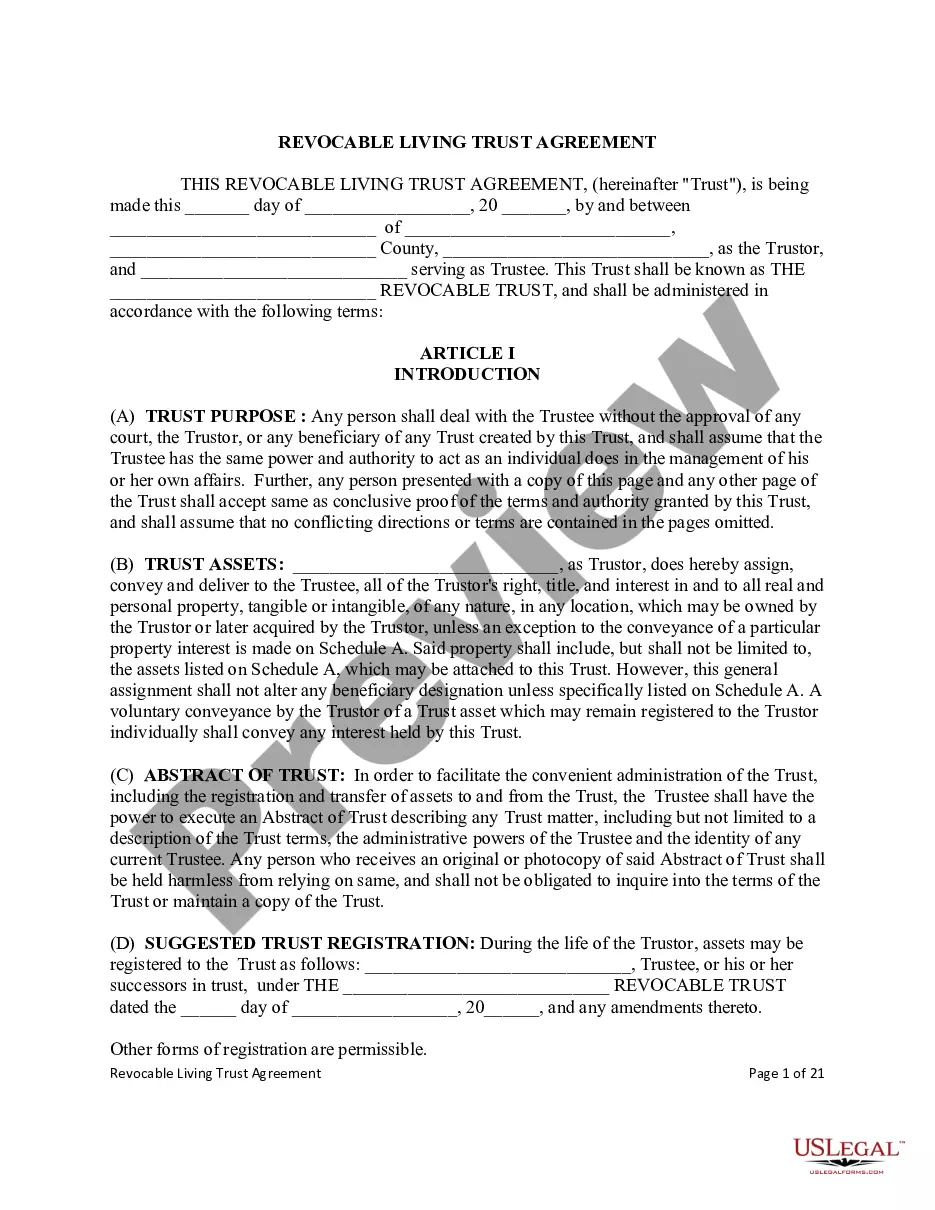
The Louisiana Revocable Living Trust is a legal document that allows individuals to manage their assets during their lifetime and define how they will be distributed after death. Unlike a Last Will and Testament, this trust helps avoid probate, offers privacy for the beneficiaries, and allows the grantor to maintain control over their assets as long as they are alive. This form is essential for anyone looking to streamline their estate planning in Louisiana.
Key components of this form
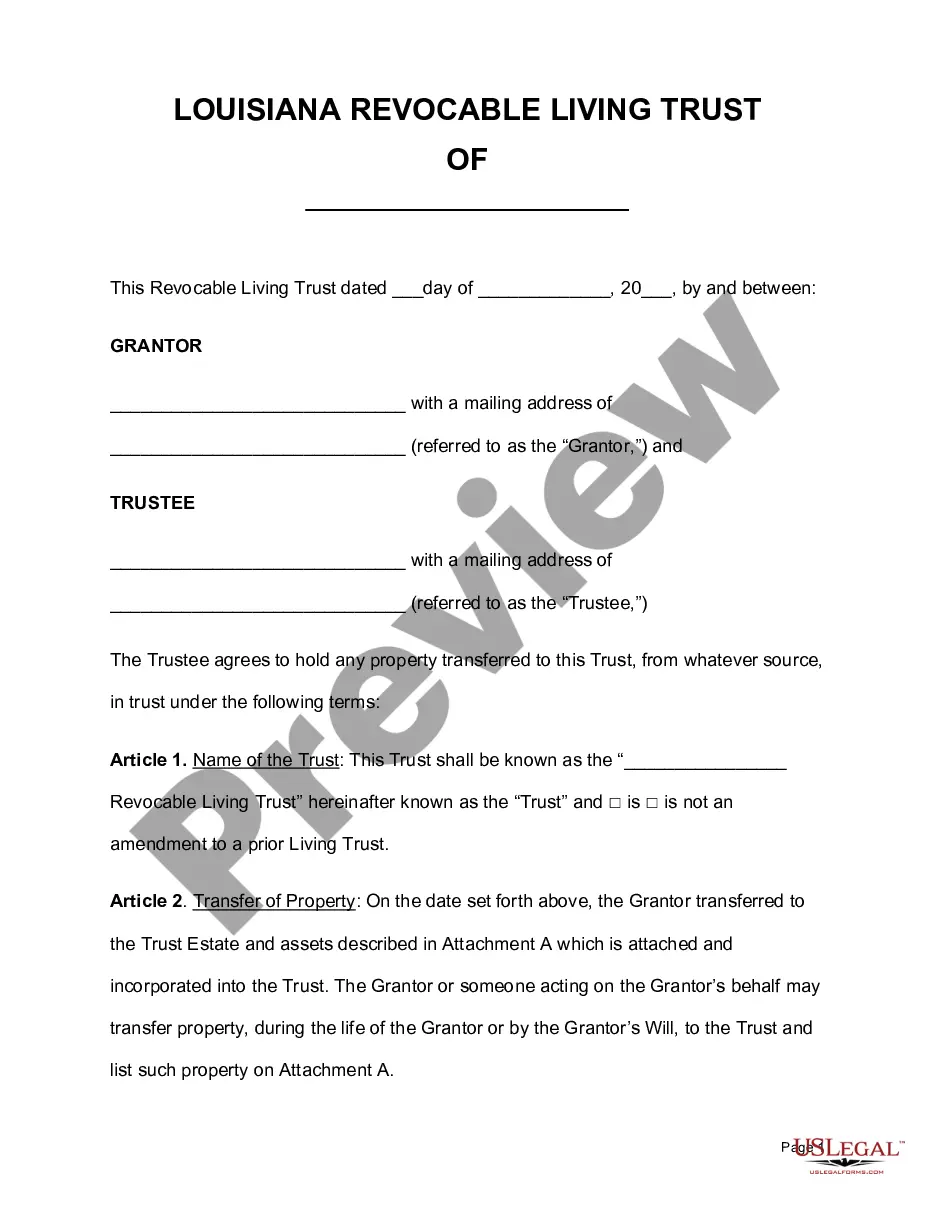
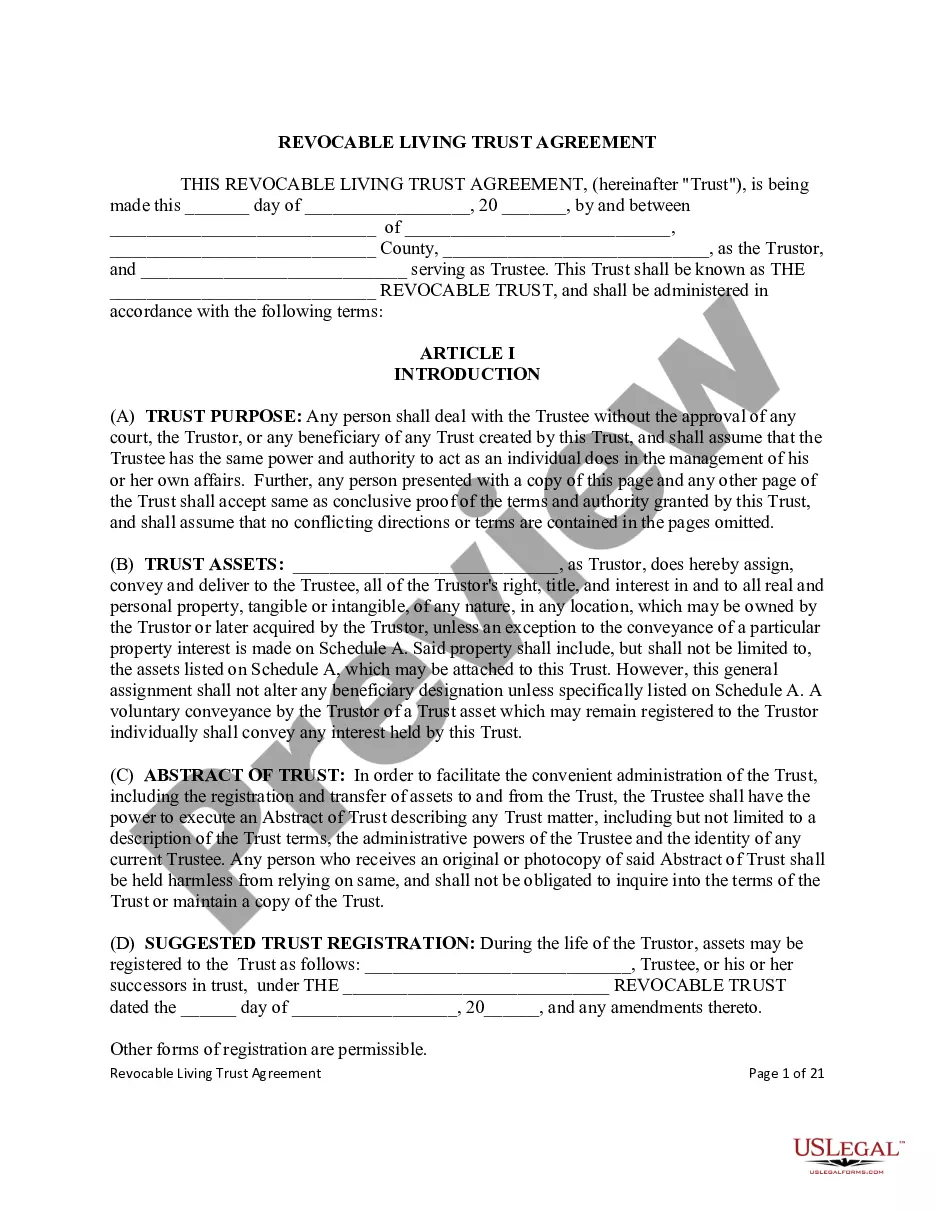
- Grantor and Trustee identification: Specifies the names and addresses of the individual establishing the trust and the appointed trustee.
- Transfer of assets: Details how assets can be transferred into the trust and indicates the property included.
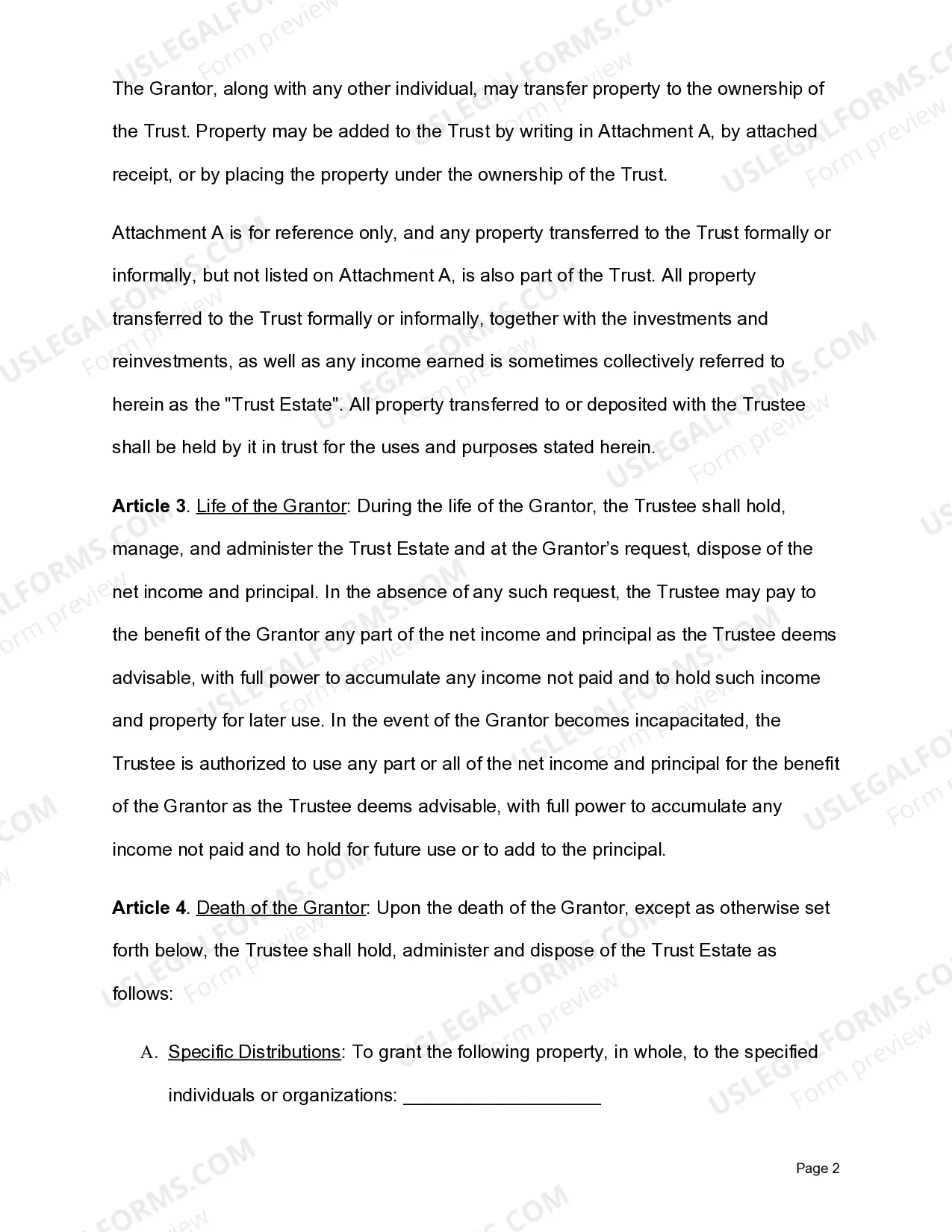
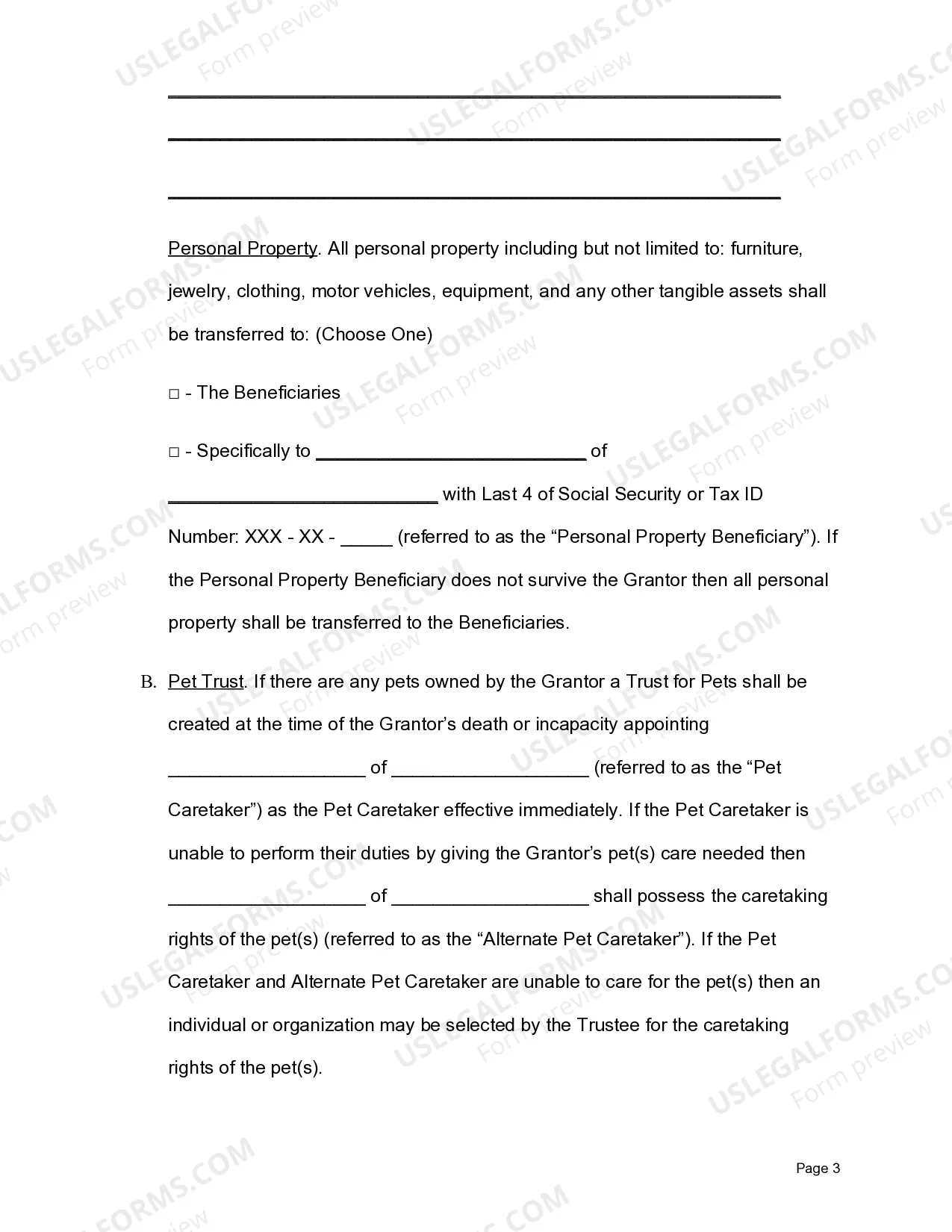
- Distribution upon death: Outlines how the trust estate will be administered and distributed after the grantor's death.
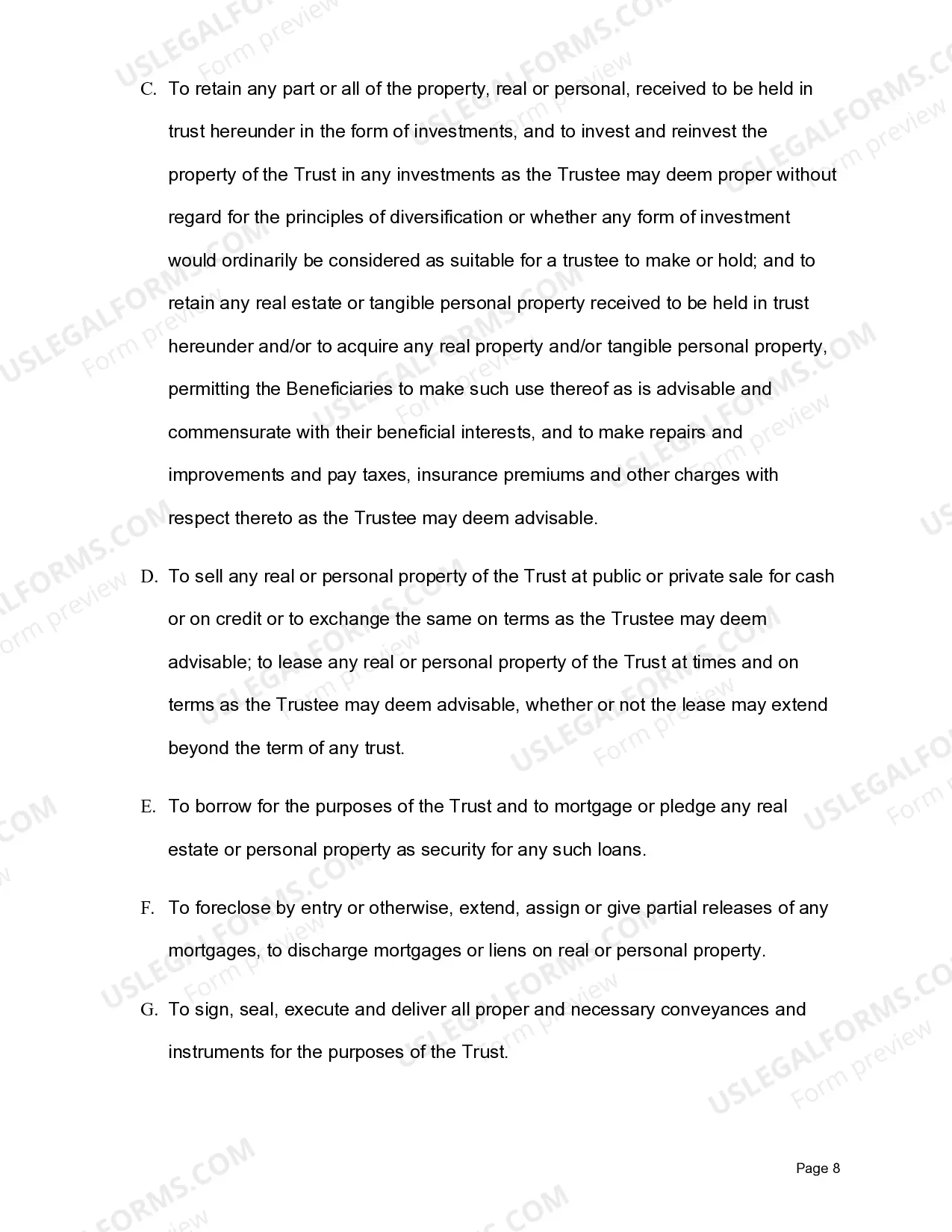
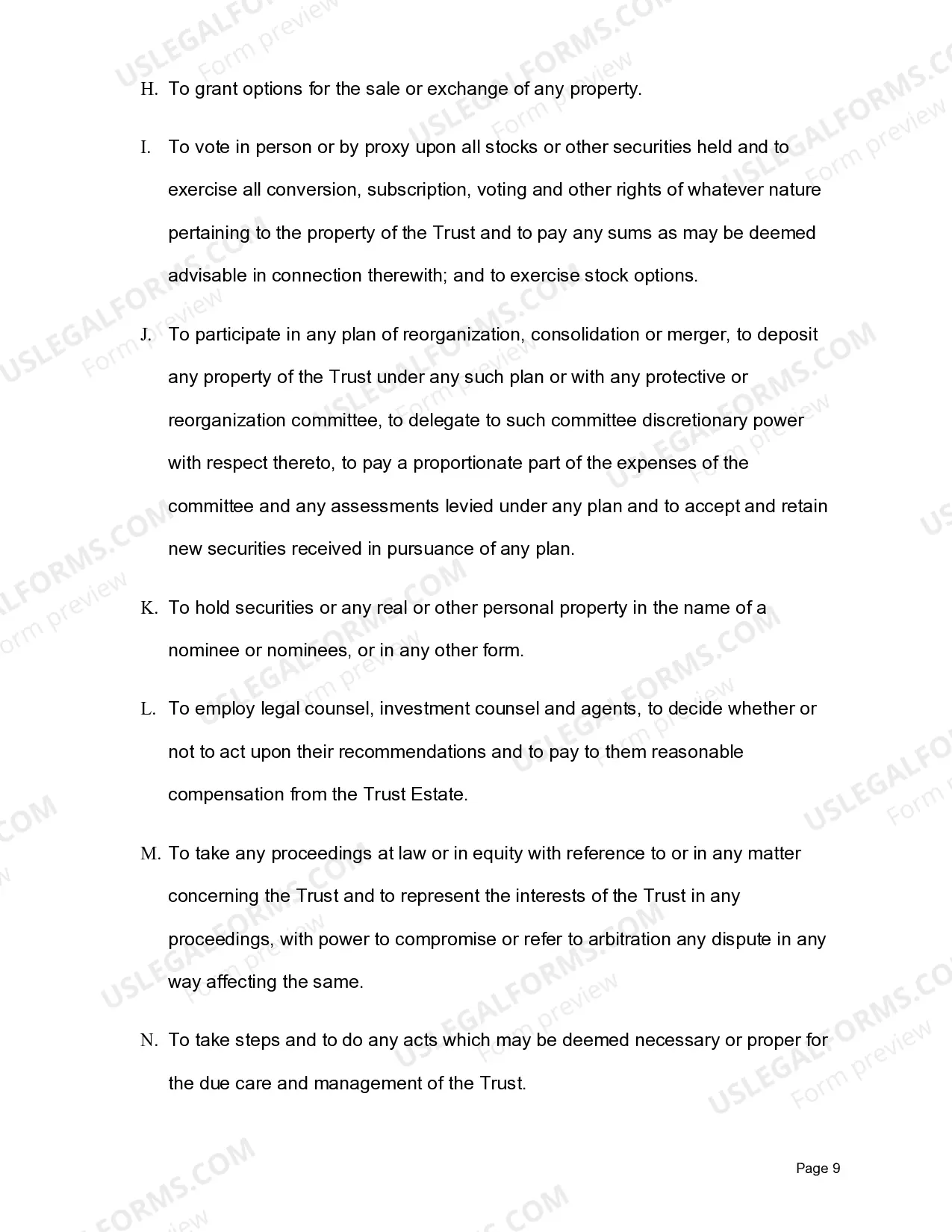
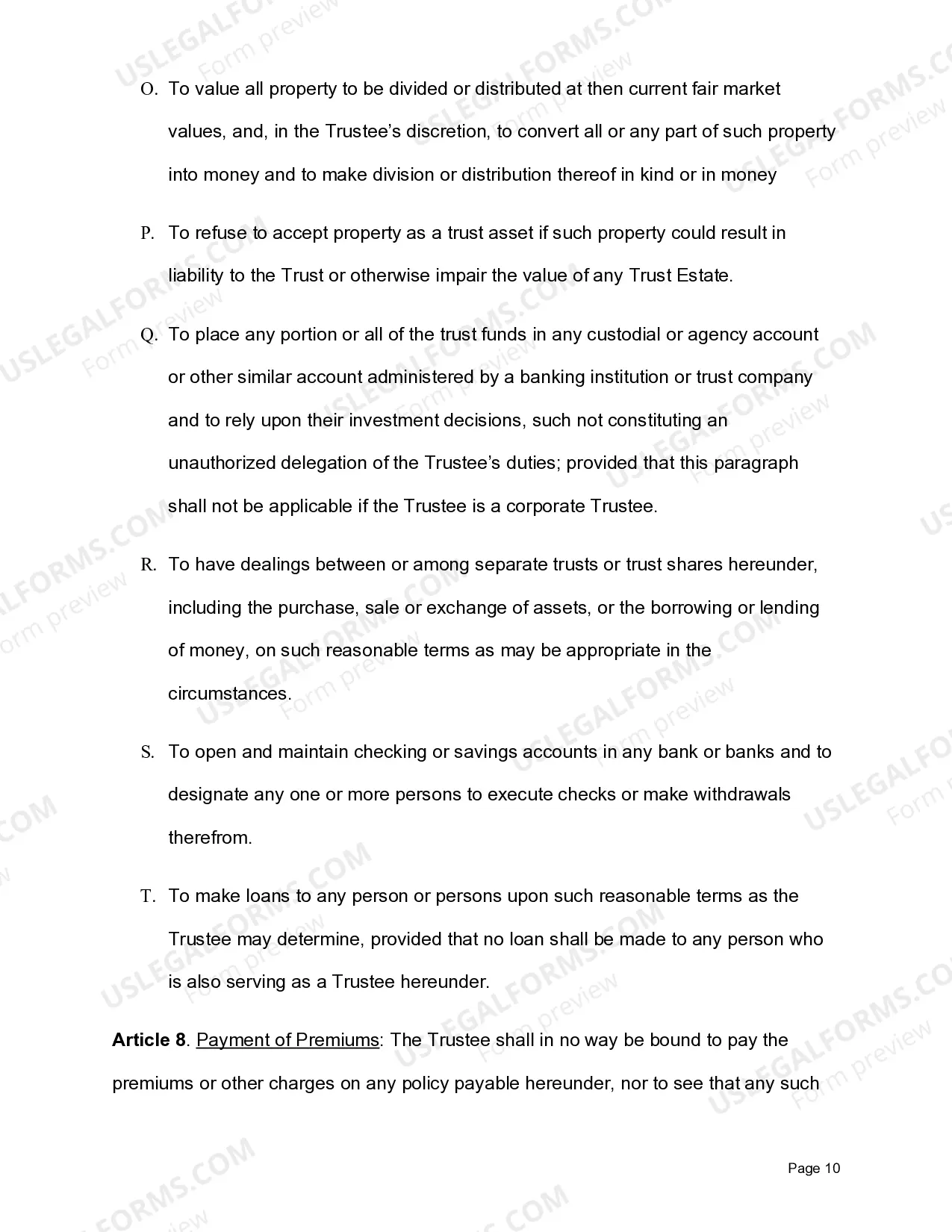
- Trustee powers: Lists the authorities granted to the trustee for managing and distributing trust assets.
- Notice of incapacity: Specifies the procedures to follow if the grantor becomes incapacitated.
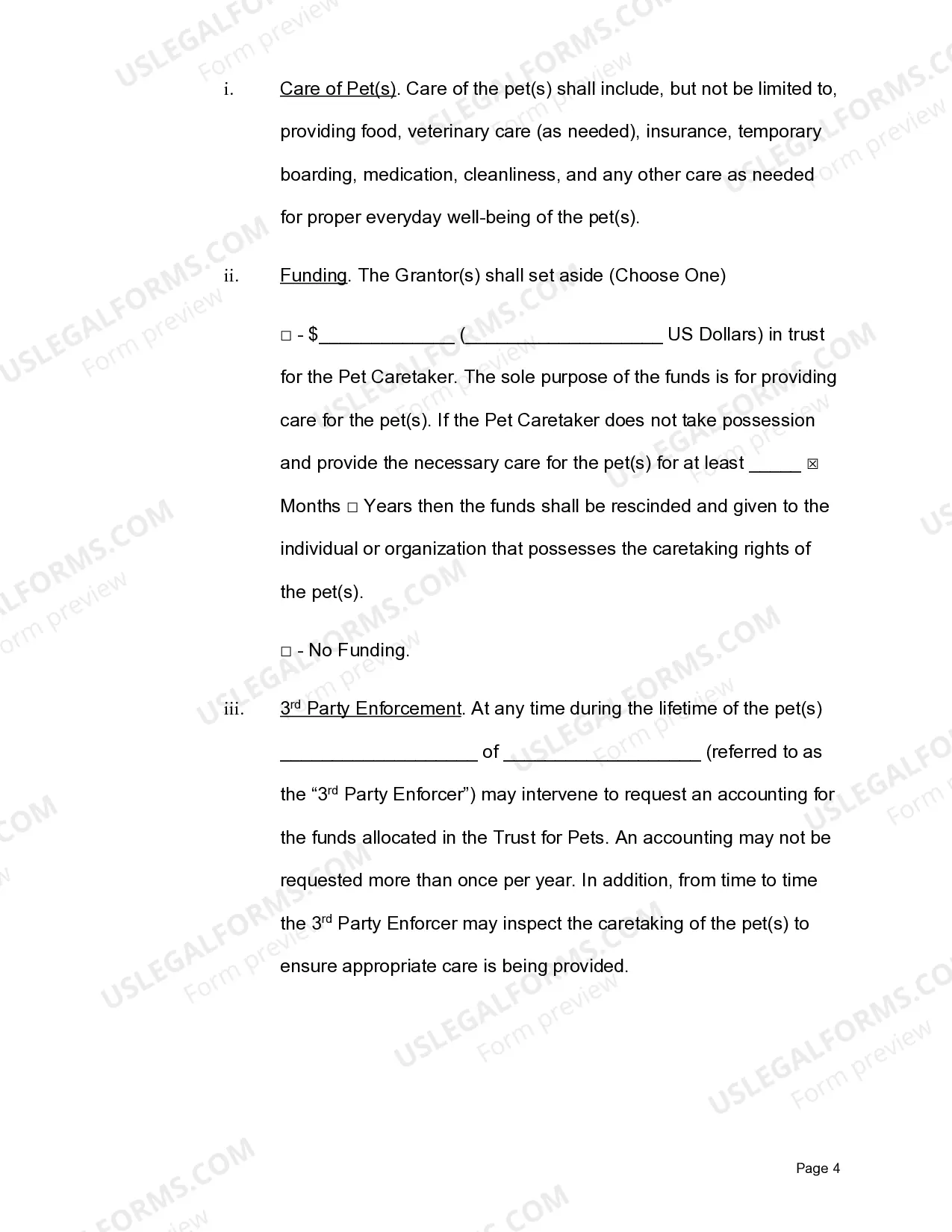
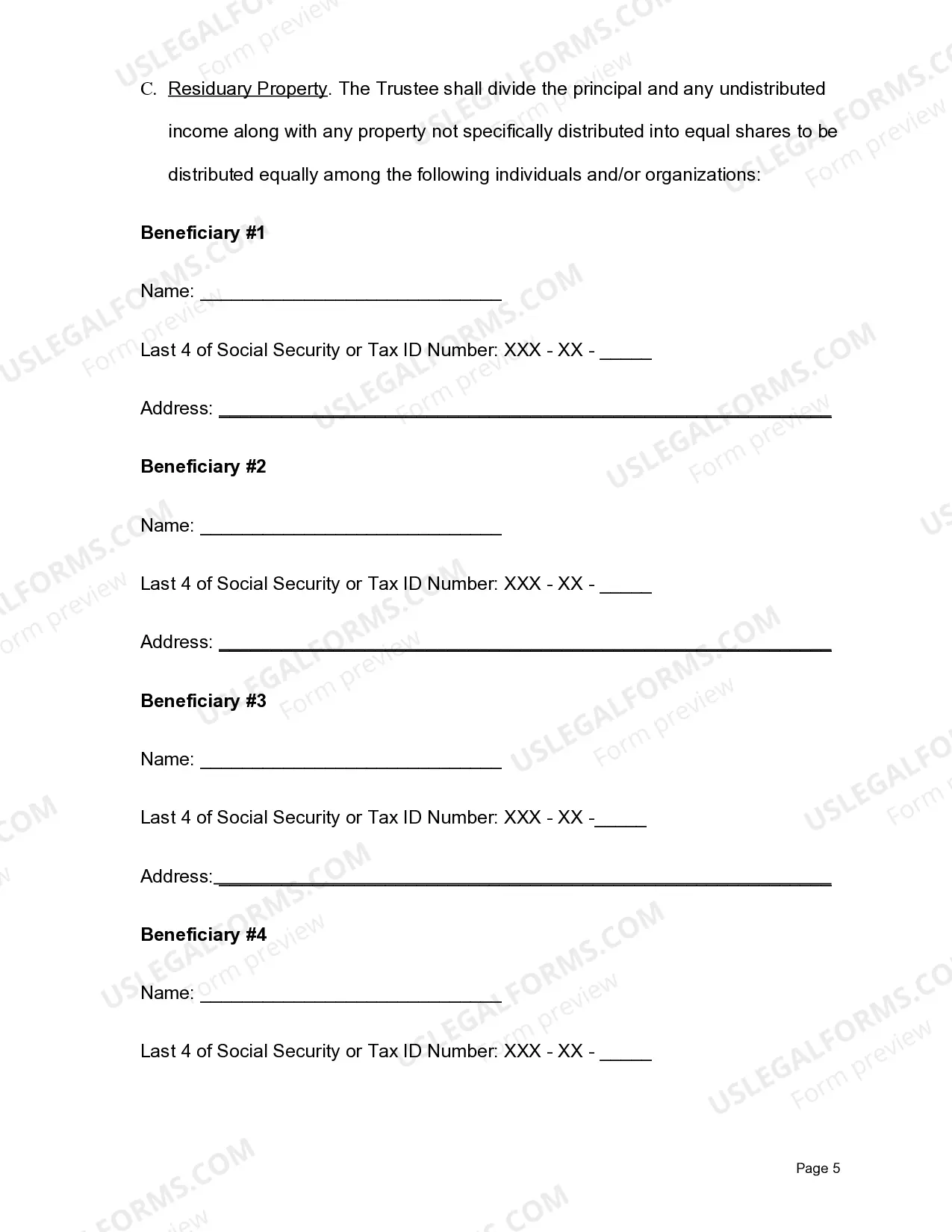
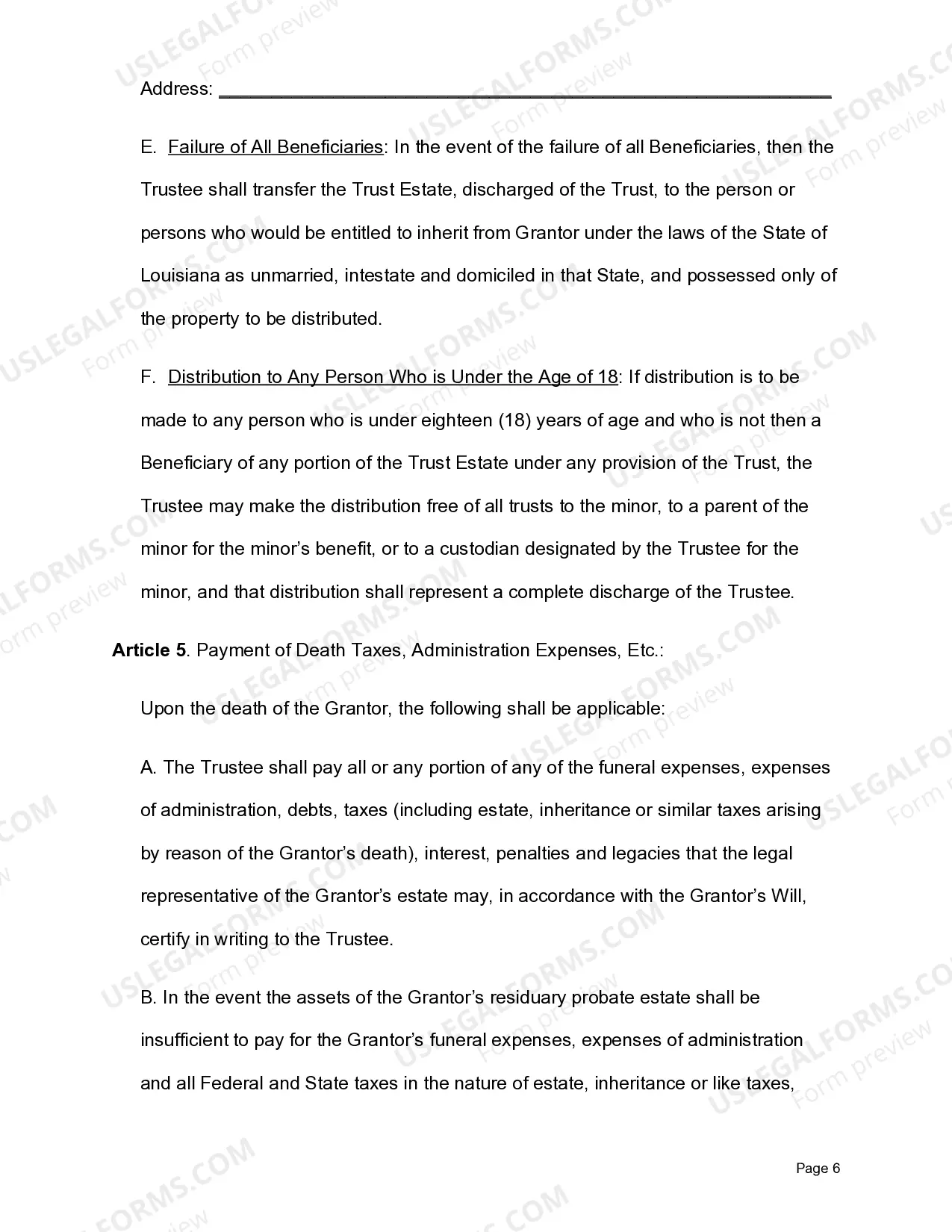
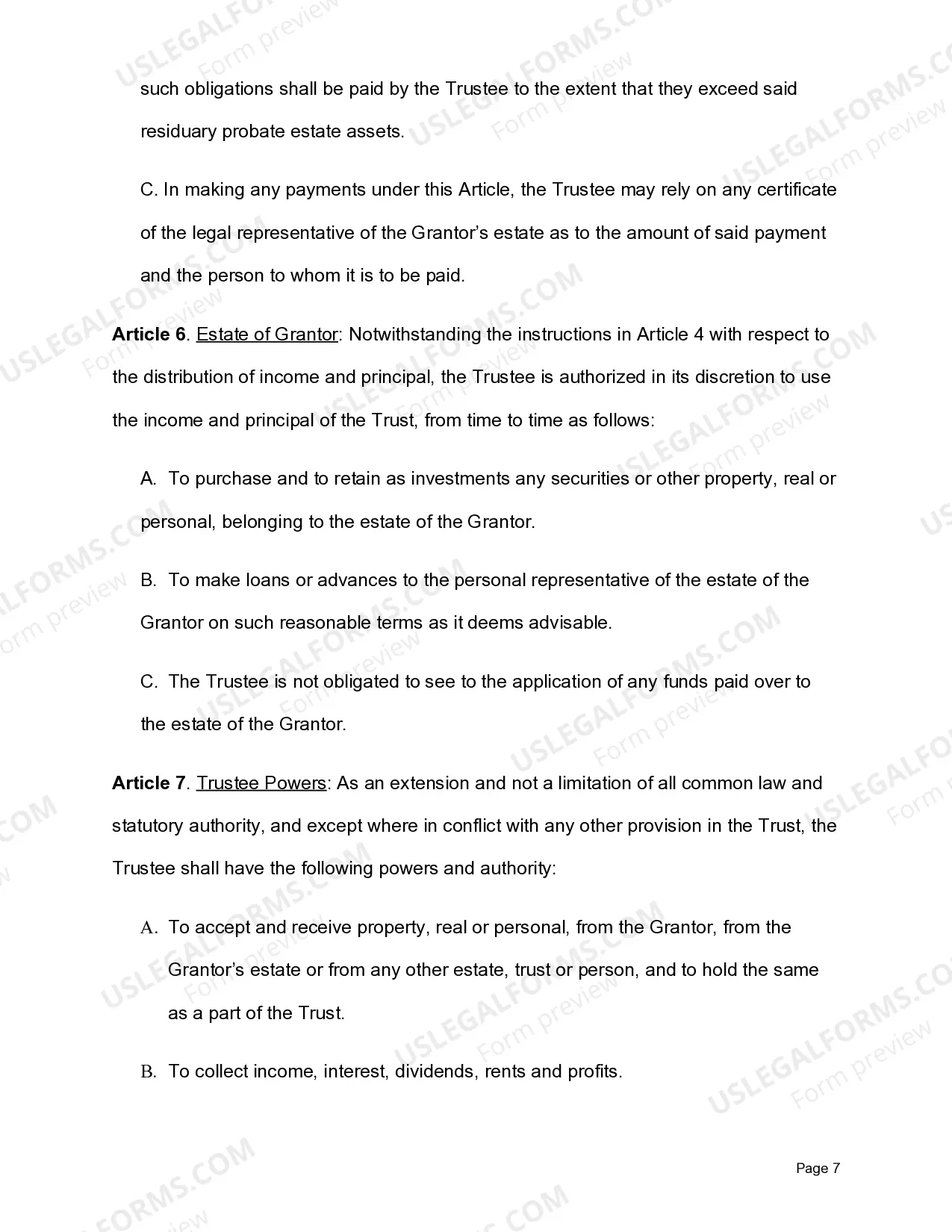

When to use this form
This form is ideal for individuals in Louisiana who wish to plan for the management of their assets during their lifetime and designate their distribution after death. It is particularly useful for those wanting to avoid probate, provide for dependents or pets, and outline specific gifts to individuals or organizations. Situations where a revocable living trust may be beneficial include second marriages, blended families, or wishes for specific charitable contributions.
Who can use this document
- Individuals who want to manage their assets effectively during their lifetime.
- Those looking to protect their assets from probate court proceedings after their death.
- Anyone with minor children, pets, or dependents requiring care after death.
- People in Louisiana seeking to provide specific distributions to beneficiaries.
Instructions for completing this form
- Identify the parties: Clearly enter the name and address of the grantor and trustee.
- Specify the property: List all assets being transferred to the trust in Attachment A.
- Outline distributions: Indicate how assets will be distributed to beneficiaries upon the grantor's death.
- Signatures: Ensure all necessary parties sign the document to validate the trust.
- Complete any necessary notarization, if required, to further ensure legal validity.
Notarization guidance
This form does not typically require notarization unless specified by local law. However, having it notarized can enhance its legal validity and help prevent disputes regarding the authenticity of the signatures.
Get your form ready online
Our built-in tools help you complete, sign, share, and store your documents in one place.
Make edits, fill in missing information, and update formatting in US Legal Forms—just like you would in MS Word.
Download a copy, print it, send it by email, or mail it via USPS—whatever works best for your next step.
Sign and collect signatures with our SignNow integration. Send to multiple recipients, set reminders, and more. Go Premium to unlock E-Sign.
If this form requires notarization, complete it online through a secure video call—no need to meet a notary in person or wait for an appointment.
We protect your documents and personal data by following strict security and privacy standards.

Make edits, fill in missing information, and update formatting in US Legal Forms—just like you would in MS Word.

Download a copy, print it, send it by email, or mail it via USPS—whatever works best for your next step.

Sign and collect signatures with our SignNow integration. Send to multiple recipients, set reminders, and more. Go Premium to unlock E-Sign.

If this form requires notarization, complete it online through a secure video call—no need to meet a notary in person or wait for an appointment.

We protect your documents and personal data by following strict security and privacy standards.
Mistakes to watch out for
- Failing to transfer assets into the trust after it is created.
- Not clearly identifying beneficiaries or their respective shares.
- Neglecting to review and update the trust as personal circumstances change.
- Overlooking the importance of having the trust notarized if required.
Why complete this form online
- Convenience: Easily create and download the form from home at any time.
- Editability: Fill out the form digitally and make adjustments as needed.
- Reliability: Trust the professionally drafted templates, ensuring legal compliance.
Looking for another form?
Form popularity
FAQ
The main disadvantage of a revocable living trust is that it does not protect you from creditors or lawsuits. Because you have control of everything in your trust and have access to the assets, you can still be sued for liability.
Some of the Cons of a Revocable Trust Shifting assets into a revocable trust won't save income or estate taxes. No asset protection. Although assets held in an irrevocable trust are generally beyond the reach of creditors, that's not true with a revocable trust.
Among the rigid set of qualifications that must be met for a see-through trust to take effect, the account must be valid and legal under state law, the trust must be irrevocable upon the plan owner's death, and all beneficiaries must be easily identifiable, eligible, and named.
The price of making a living trust depends on the method you use to form it. One way is to use an online program and create the trust document yourself. This will cost you a few hundred dollars or so. You can also use the services of a lawyer, for which you'll probably pay more than $1,000.
One of the most notable disadvantages of bloodline trusts includes the fact that the assets held within the trust can only be used for the beneficiaries' health, education, maintenance and/or support.
A Louisiana living trust passes the assets in the trust to your beneficiaries without going through probate, the process in which a will is verified and enacted by a court. Probate can take many months and incurs the expense of an executor and attorney as well as court fees.
Revocable living trusts have a few key benefits, like avoiding probate, privacy protection and protection in the case of incapacitation. However, revocable living trusts can be expensive, don't have direct tax benefits, and don't protect against creditors.
An irrevocable trust offers your assets the most protection from creditors and lawsuits. Assets in an irrevocable trust aren't considered personal property. This means they're not included when the IRS values your estate to determine if taxes are owed.