North Carolina Plumbing Contract for Contractor
What this document covers
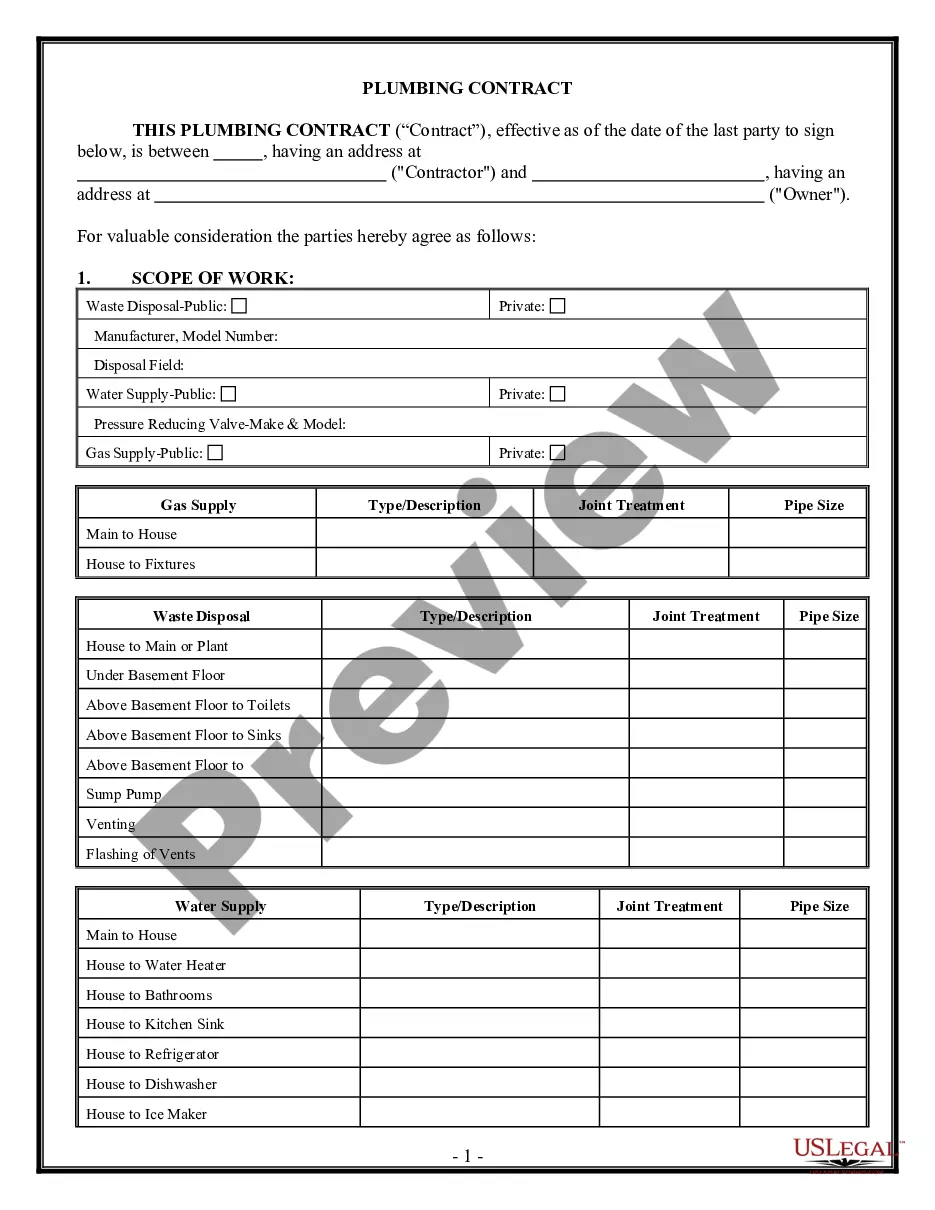
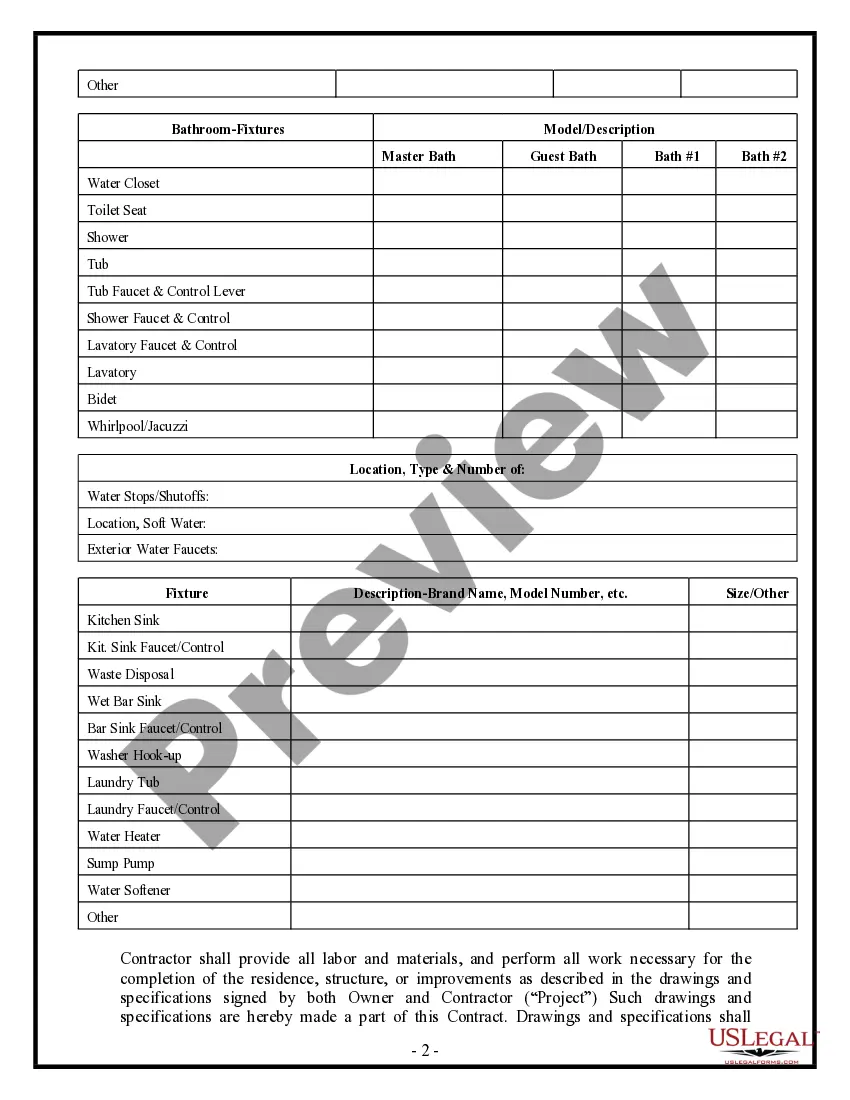
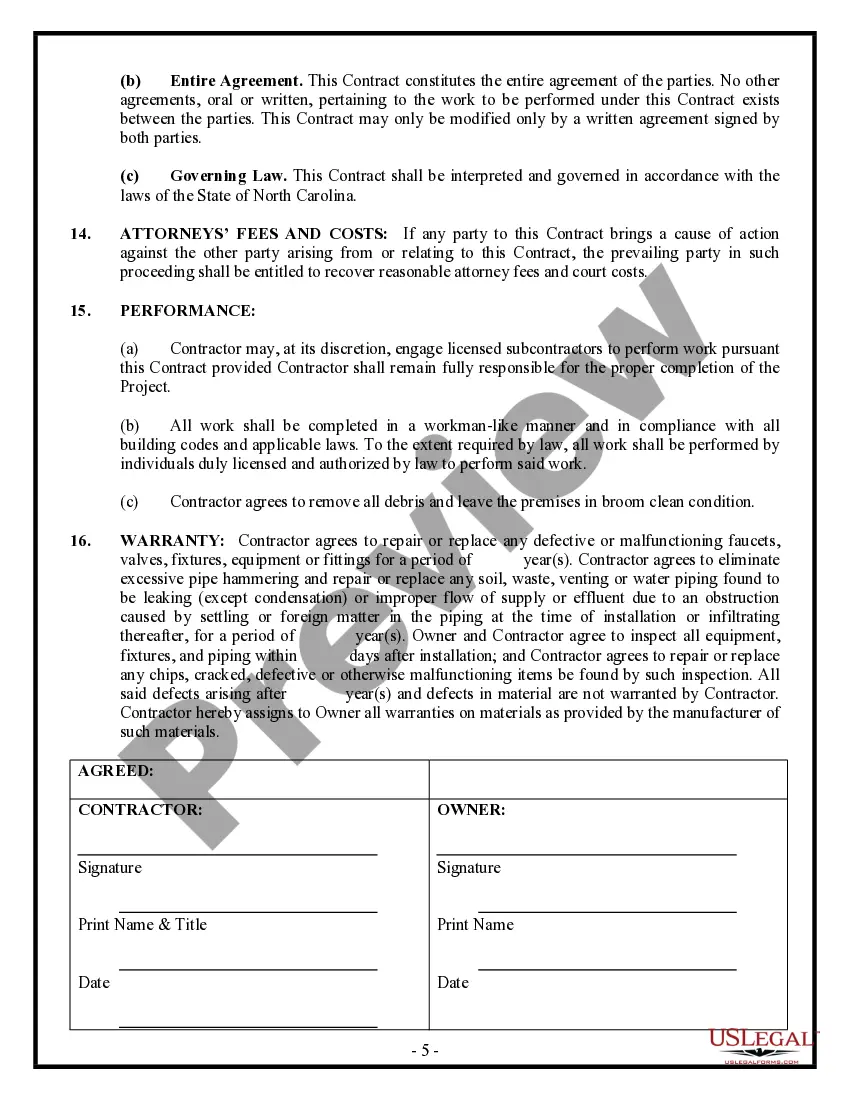
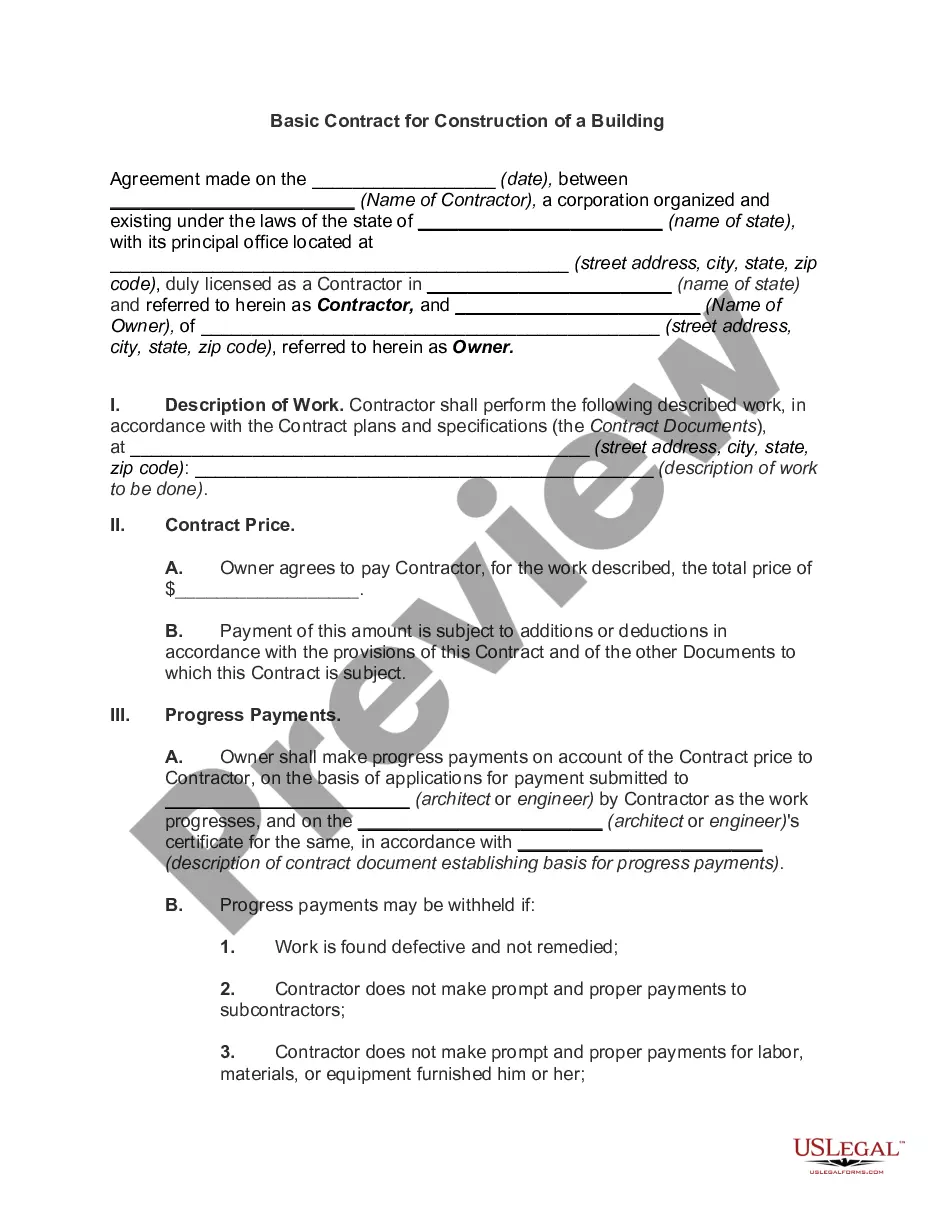
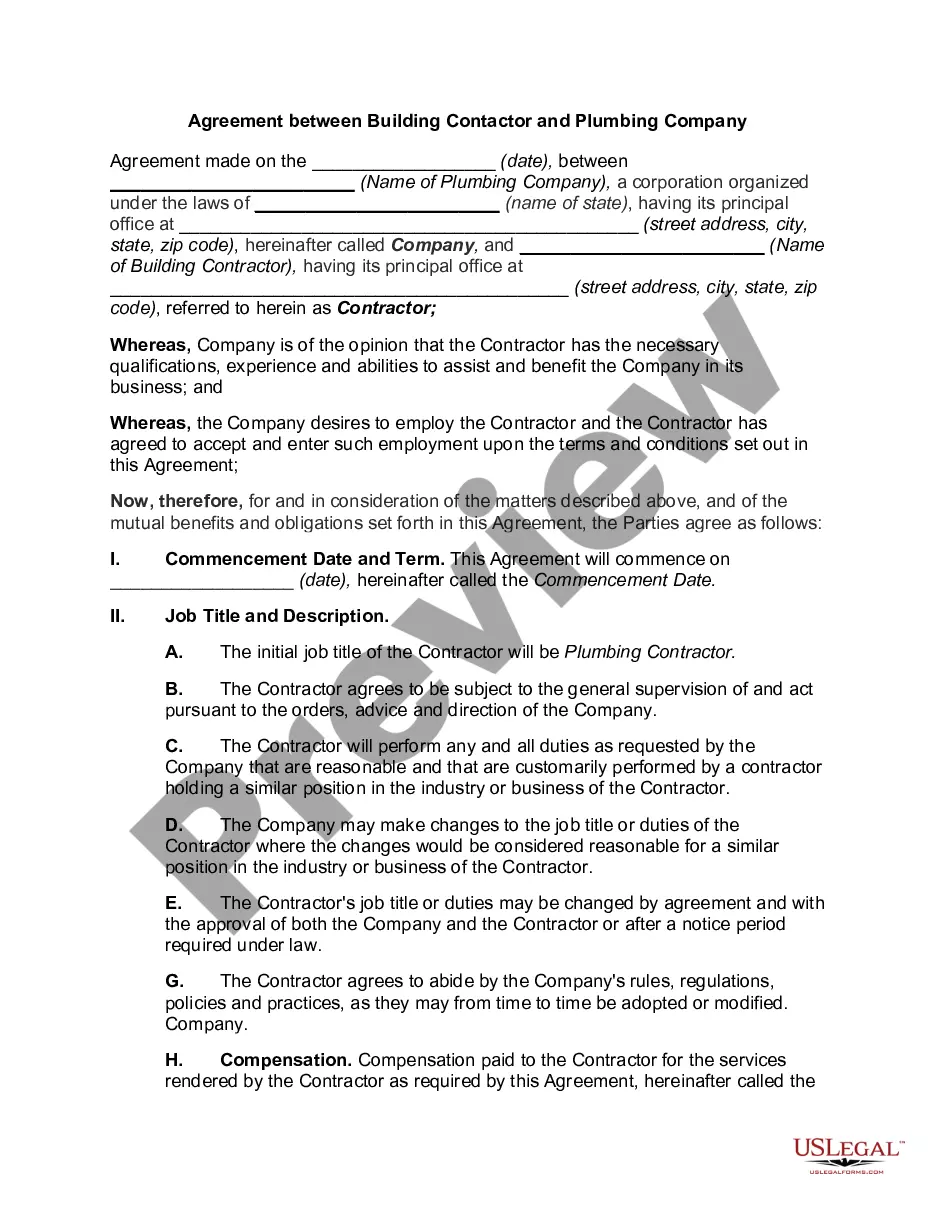
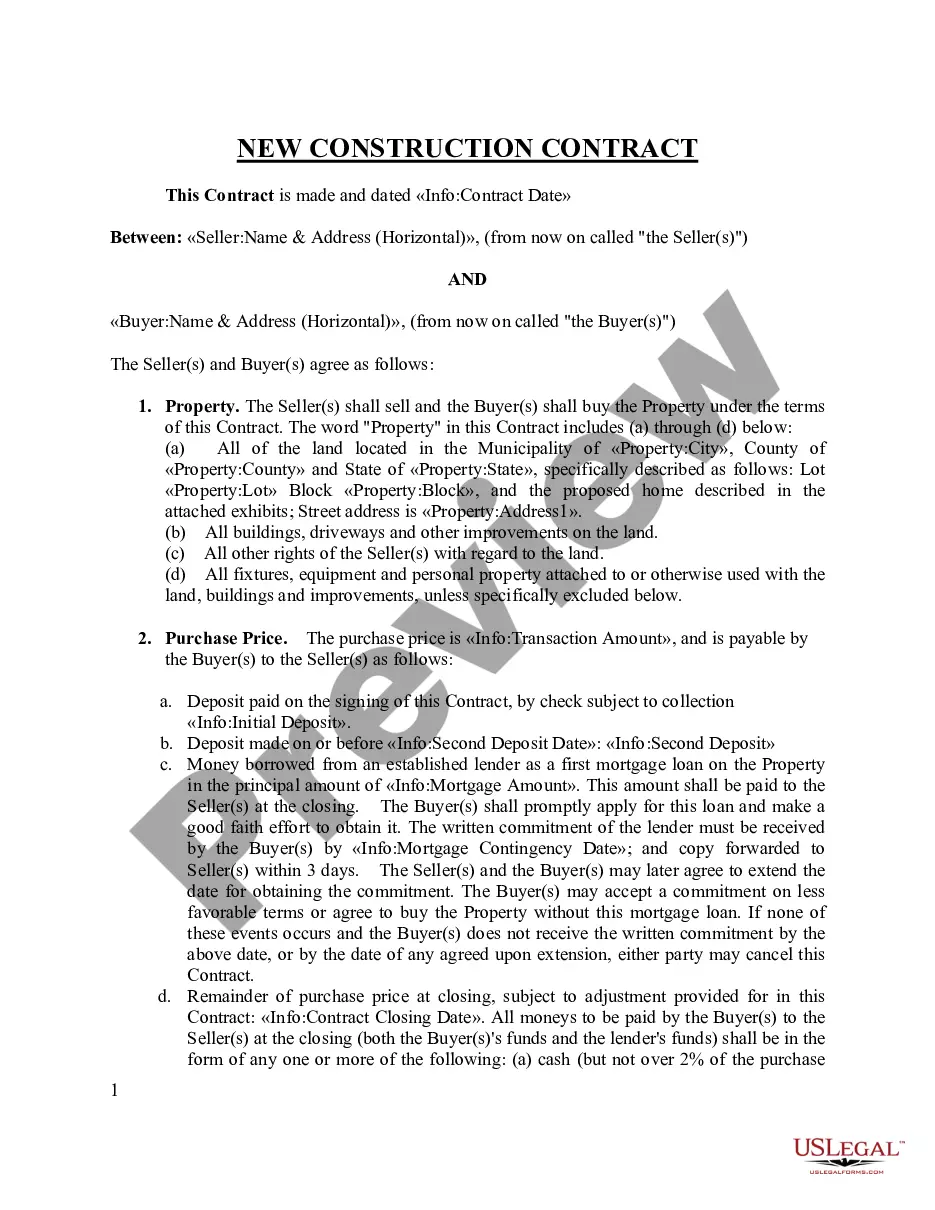
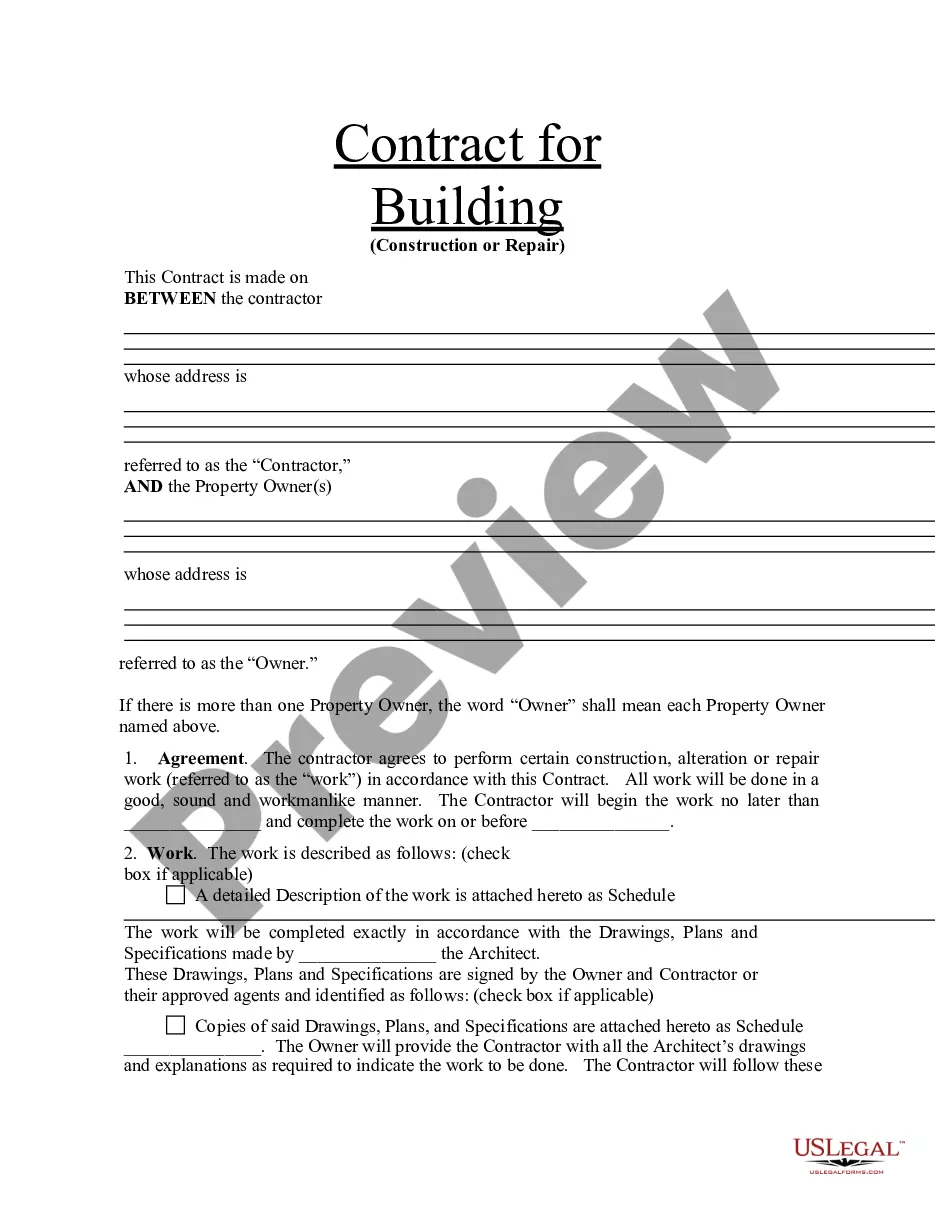
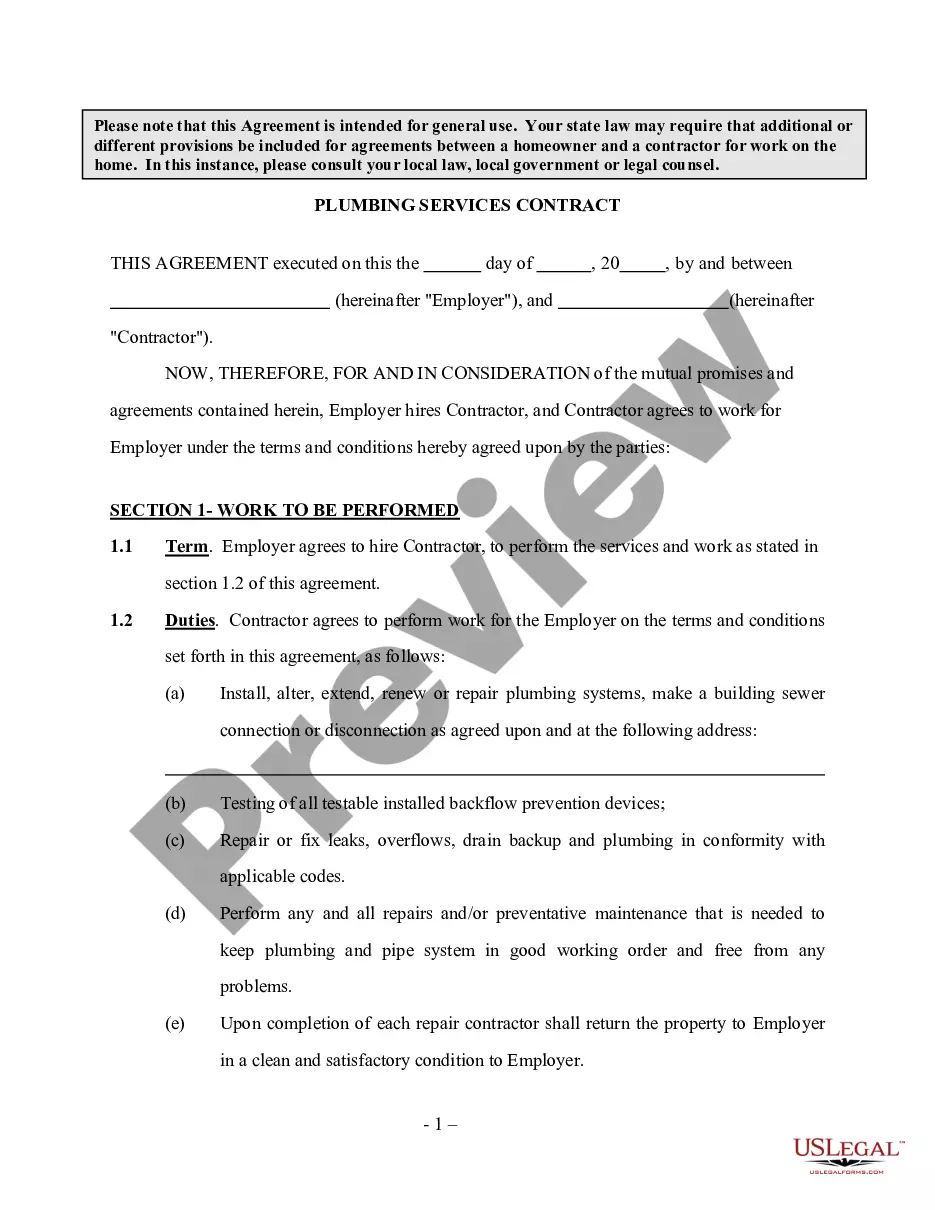
The Plumbing Contract for Contractor is a legally binding document designed for use between plumbing contractors and property owners. This contract outlines the terms of agreement for plumbing work, including payment arrangements, scope of work, and responsibilities of both parties. It is specifically drafted to comply with the laws of North Carolina and ensures clarity and protection for both the contractor and the owner throughout the project.
What’s included in this form
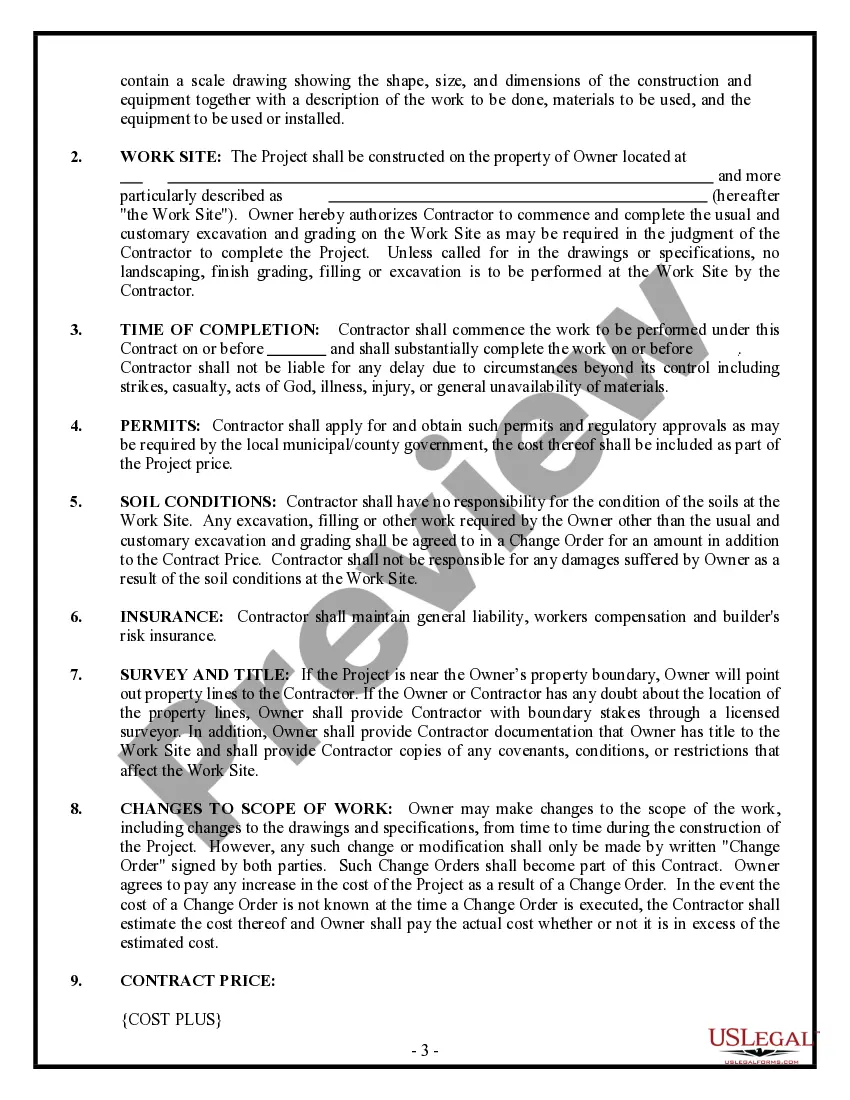
- Permits: Contractor's responsibility to obtain necessary permits and regulatory approvals.
- Soil Conditions: Clarifies that the contractor is not liable for soil condition issues at the work site.
- Insurance: Requirement for the contractor to maintain various types of insurance coverage.
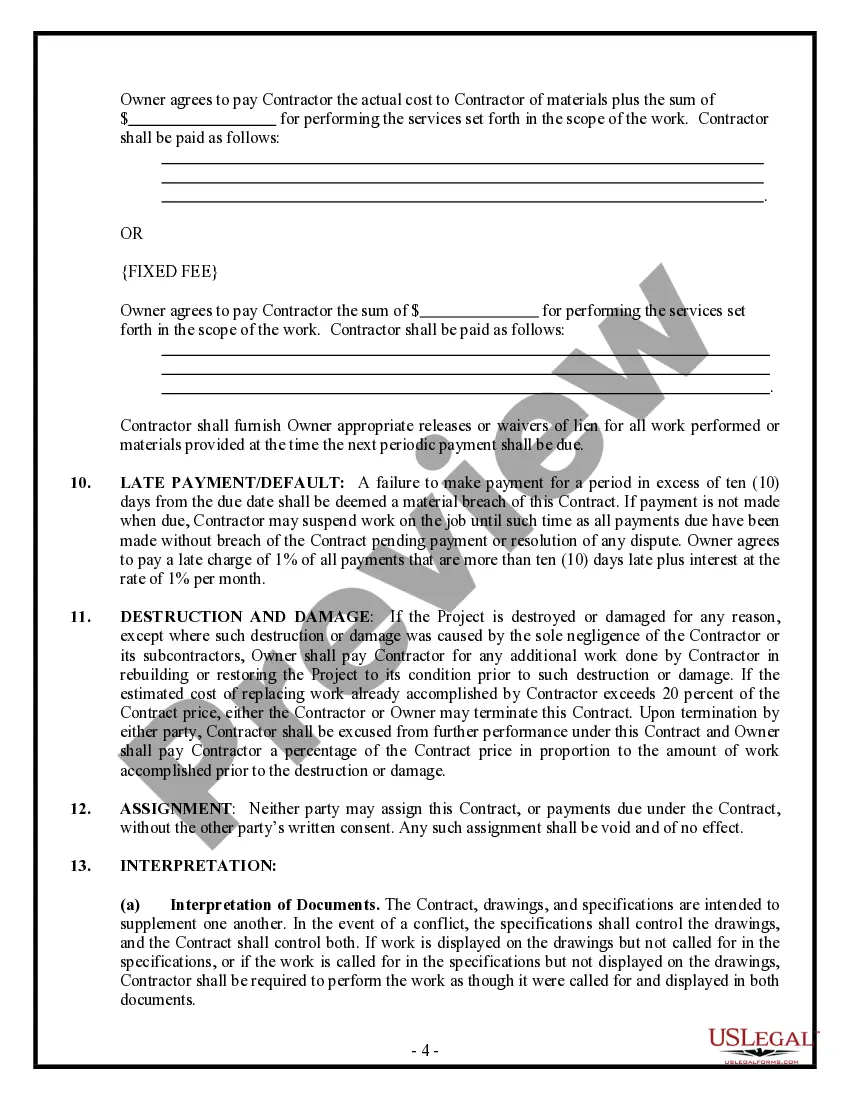
- Change Orders: Process for handling modifications to the scope of work and associated costs.
- Payment Terms: Includes conditions on late payment and consequences of default.
- Termination: Conditions under which the contract may be terminated due to project destruction or damage.

When this form is needed
This Plumbing Contract should be used when a plumbing contractor and a property owner agree on a project involving plumbing work. It is essential when the terms, costs, and conditions of the project must be documented to avoid misunderstandings or disputes. This form serves as a safeguard, clearly defining responsibilities and expectations for both parties involved in the job.
Who can use this document
- Property owners hiring a plumbing contractor for repairs or new installations.
- Licensed plumbing contractors seeking a formal agreement with clients.
- Individuals negotiating specific project terms to clarify the payment structure and work scope.
How to complete this form
- Identify the parties: Clearly enter the names and contact information of the contractor and property owner.
- Specify the project details: Provide a description of the plumbing work to be completed.
- Determine the payment structure: Indicate whether the contract is cost plus or fixed fee.
- Outline change order protocols: Include how changes to the scope of work will be managed.
- Enter dates and signatures: Ensure all parties sign the document and include the date of signing.
Does this form need to be notarized?
This form does not typically require notarization unless specified by local law. It is recommended to consult local regulations to confirm any notarization requirements for your specific situation.
Get your form ready online
Our built-in tools help you complete, sign, share, and store your documents in one place.
Make edits, fill in missing information, and update formatting in US Legal Forms—just like you would in MS Word.
Download a copy, print it, send it by email, or mail it via USPS—whatever works best for your next step.
Sign and collect signatures with our SignNow integration. Send to multiple recipients, set reminders, and more. Go Premium to unlock E-Sign.
If this form requires notarization, complete it online through a secure video call—no need to meet a notary in person or wait for an appointment.
We protect your documents and personal data by following strict security and privacy standards.

Make edits, fill in missing information, and update formatting in US Legal Forms—just like you would in MS Word.

Download a copy, print it, send it by email, or mail it via USPS—whatever works best for your next step.

Sign and collect signatures with our SignNow integration. Send to multiple recipients, set reminders, and more. Go Premium to unlock E-Sign.

If this form requires notarization, complete it online through a secure video call—no need to meet a notary in person or wait for an appointment.

We protect your documents and personal data by following strict security and privacy standards.
Mistakes to watch out for
- Failing to specify the payment terms clearly.
- Not including all necessary project details and specifications.
- Overlooking the need for signatures from both parties.
- Neglecting to address change orders in the contract.
Why complete this form online
- Convenient access: Easily download and fill out the contract at your convenience.
- Editability: Modify sections of the contract to meet specific project needs.
- Reliability: Form is prepared by licensed attorneys to ensure legal compliance.
Legal use & context
- This contract serves as a binding agreement between the contractor and owner to protect the rights of both parties.
- It outlines key responsibilities, reducing the likelihood of disputes during the project.
- Understanding the components can ensure compliance with North Carolina laws, which govern contracts within the state.
Quick recap
- Utilize the Plumbing Contract for Contractor to ensure clear expectations between parties.
- Adhere to the specific legal requirements of North Carolina to safeguard your interests.
- Complete the form accurately to avoid common mistakes that could impact project success.
Looking for another form?



Form popularity
FAQ
You shouldn't pay more than 10 percent of the estimated contract price upfront, according to the Contractors State License Board.
The state of North Carolina allows homeowners to do their own wiring in their homes, provided the homeowner will personally will reside in the home, and that it is not for rent or intended for sale within one year after you complete the electrical installation.
Failing to obtain a permit when required may result in substantial fines or being ordered to remove the offending project or incur costs to certify compliance with the applicable codes; it depends. What may surprise licensees is how many seemingly minor improvements/repairs may require a permit.
The maximum allowed is $10,000. Also, contractors that have provided materials and labor to property may have lien rights against the real property.
Since the licensure statute requires a license only for projects that cost $30,000 or more, there is arguably a fourth tier which is sometimes known as the "handyman exception"for construction projects that cost under $30,000, no license is required.
Homeowners may perform their own plumbing or heating work if they own the land and will personally occupy the structure for 12 months after completion. Permits required by and associated with the North Carolina Fire Prevention Code are enforced by the Alamance County Fire Marshal's Office.
Current Law: North Carolina law currently requires any building construction or alteration project costing $30,000 or more to be superintended (supervised and managed) by a general contractor licensed in this state.This duty can only be delegated to a general contractor licensed in this state.
North Carolina requires that anyone who contracts with another person or entity to construct or make improvements to any building, highway, or public utilities, including grading, or who undertakes to superintend or manage such activities, be licensed as a general contractor if the work costs $30,000 or more.