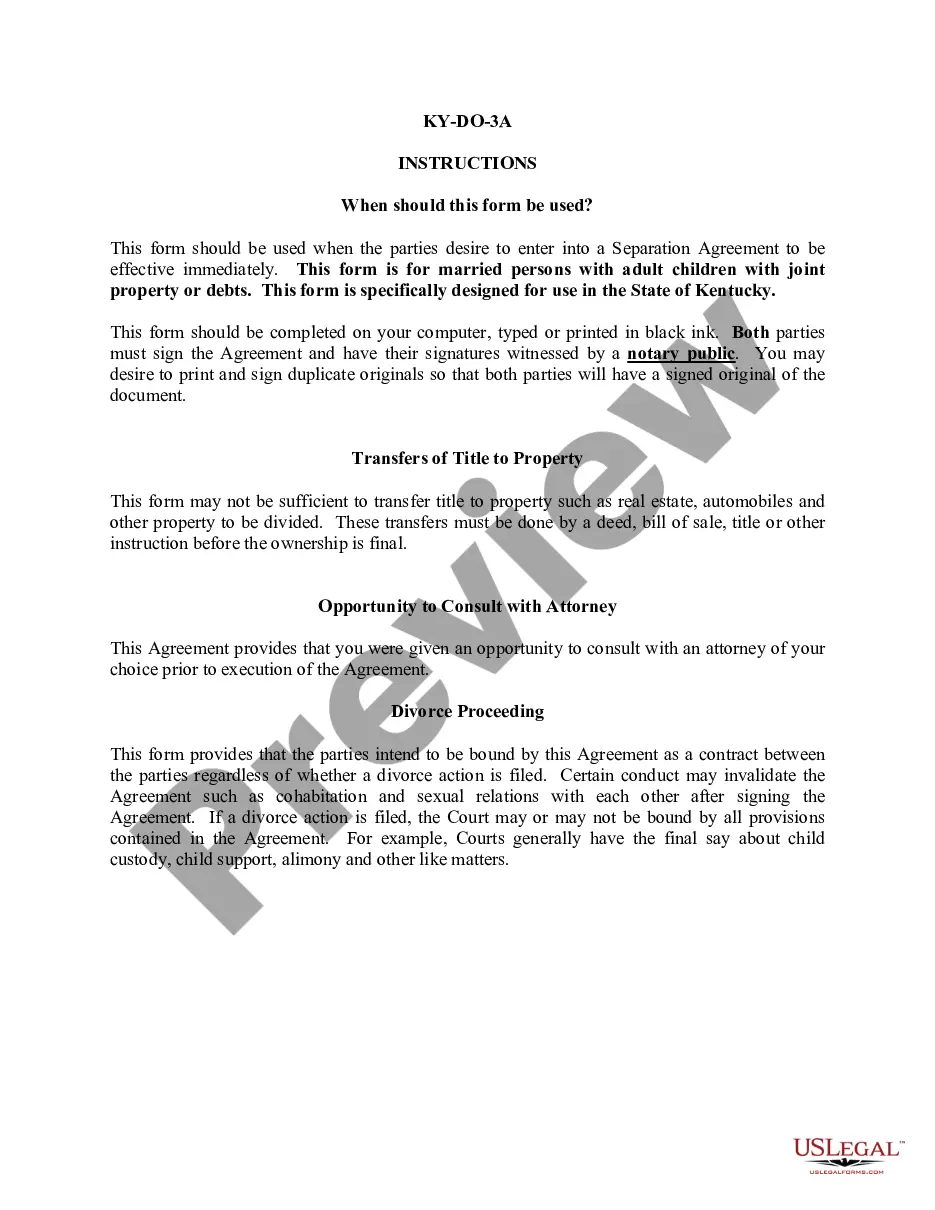
North Carolina Authorization for Release of Medical Information for Criminal Cases
Understanding this form
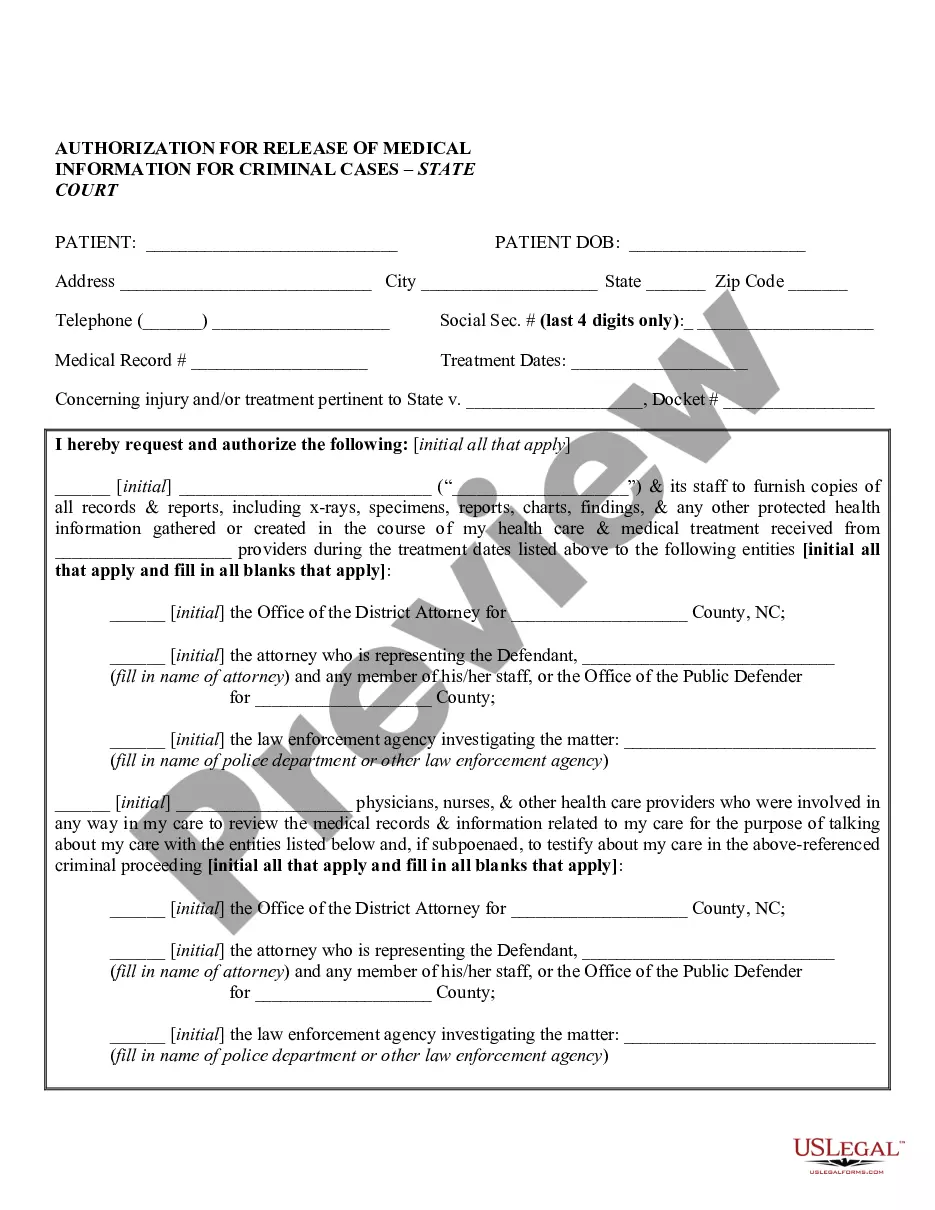
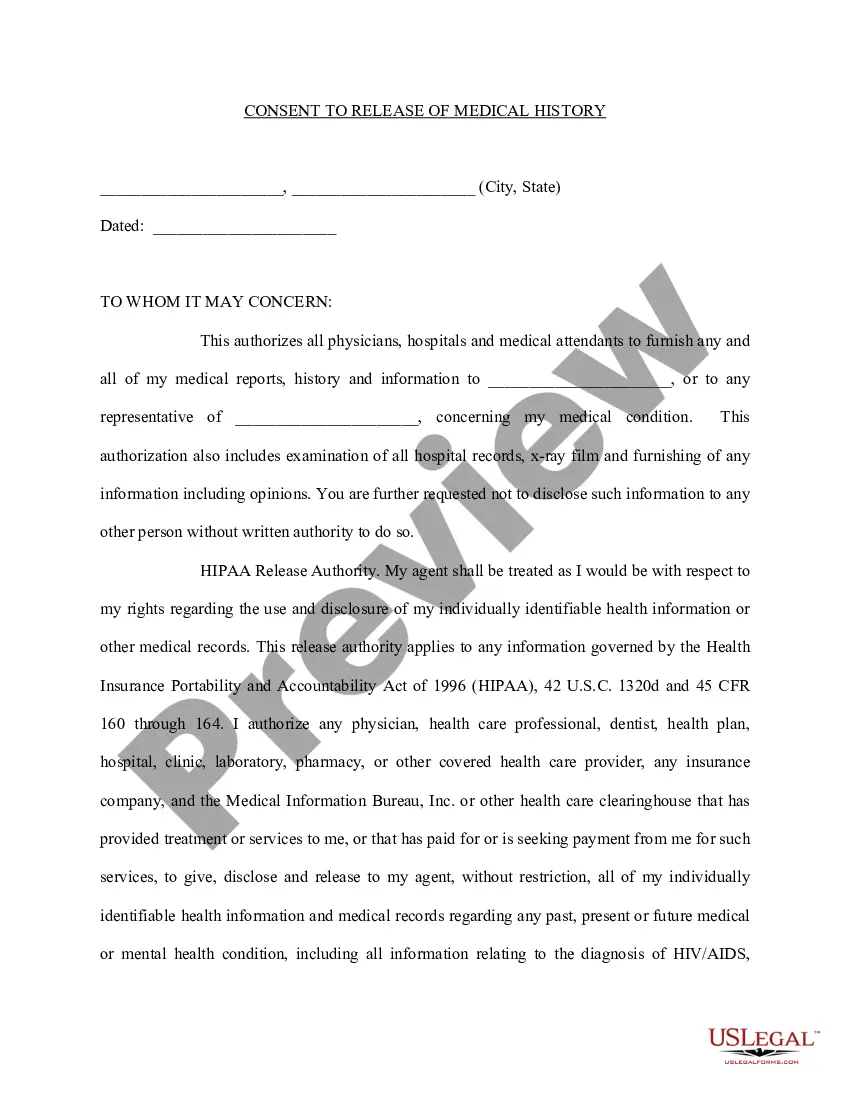
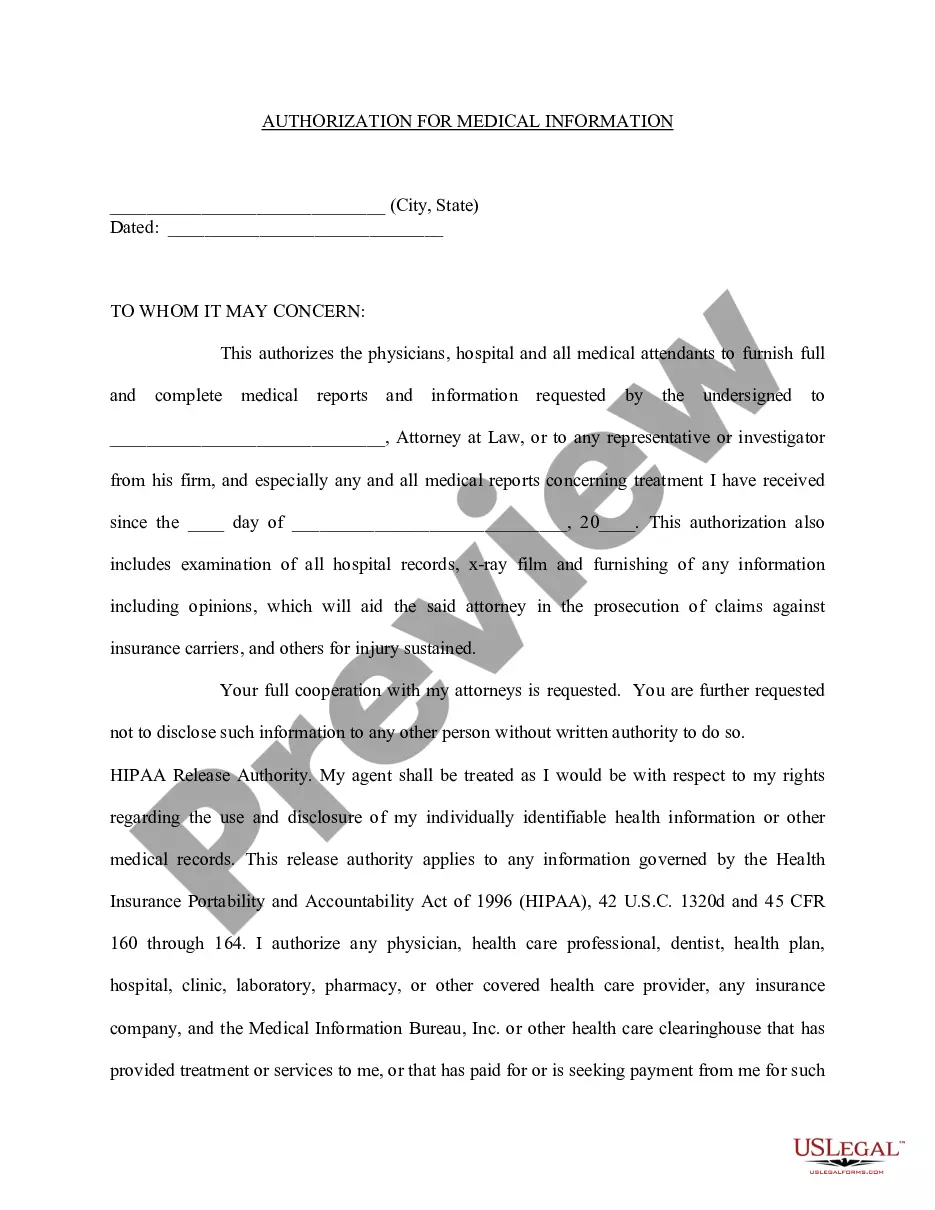
The Authorization for Release of Medical Information for Criminal Cases is a legal document allowing healthcare providers to release a patient's medical records relevant to a criminal case. This form is crucial for ensuring that necessary medical information is accessible to legal representatives and law enforcement involved in the case. It is specifically tailored for situations involving criminal proceedings in state courts, differing from standard medical release forms by its focus on criminal cases and the specific authorized recipients of the information.
Key components of this form
- Patient's personal information, including name, date of birth, address, and contact details.
- Medical record number and treatment dates associated with the relevant injury.
- Identification of the criminal case, including the title and docket number.
- Sections for the patient to authorize specific entities to receive medical records.
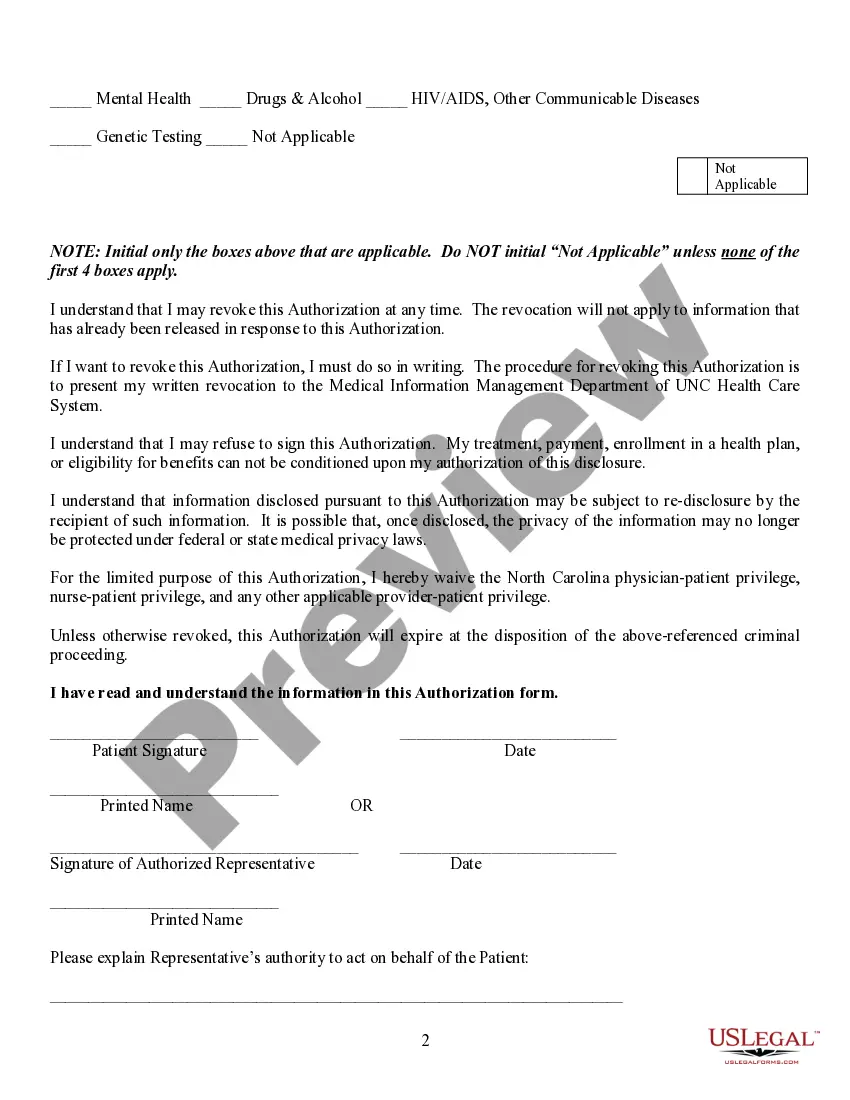
- Acknowledgment of potential inclusion of sensitive medical information.
- Revocation clause allowing the patient to withdraw their consent at any time.

Situations where this form applies
This form should be used when a patient has sustained an injury or received treatment that is pertinent to an ongoing criminal case. It allows for the necessary sharing of medical information between healthcare providers and legal representatives, ensuring that all parties involved in the case have access to relevant medical records that may impact legal proceedings.
Intended users of this form
- Patients seeking to authorize the release of their medical records related to a criminal case.
- Attorneys representing defendants or victims in criminal cases where medical information is relevant.
- District attorneys or prosecutors involved in the investigation or prosecution of criminal cases.
- Law enforcement agencies needing access to medical records for investigative purposes.
Instructions for completing this form
- Provide patient information, including full name, date of birth, address, and contact details.
- Enter the medical record number and the treatment dates relevant to the criminal case.
- Specify the criminal case details, including the case title and docket number.
- Initial the boxes to authorize the release of records to specific entities as needed.
- Sign and date the form, ensuring you understand the implications of releasing your medical information.
Is notarization required?
This form does not typically require notarization unless specified by local law. However, it is essential to keep in mind that all parties involved must understand the legal implications of the release of medical information.
Get your form ready online
Our built-in tools help you complete, sign, share, and store your documents in one place.
Make edits, fill in missing information, and update formatting in US Legal Forms—just like you would in MS Word.
Download a copy, print it, send it by email, or mail it via USPS—whatever works best for your next step.
Sign and collect signatures with our SignNow integration. Send to multiple recipients, set reminders, and more. Go Premium to unlock E-Sign.
If this form requires notarization, complete it online through a secure video call—no need to meet a notary in person or wait for an appointment.
We protect your documents and personal data by following strict security and privacy standards.

Make edits, fill in missing information, and update formatting in US Legal Forms—just like you would in MS Word.

Download a copy, print it, send it by email, or mail it via USPS—whatever works best for your next step.

Sign and collect signatures with our SignNow integration. Send to multiple recipients, set reminders, and more. Go Premium to unlock E-Sign.

If this form requires notarization, complete it online through a secure video call—no need to meet a notary in person or wait for an appointment.

We protect your documents and personal data by following strict security and privacy standards.
Common mistakes
- Failing to include all relevant treatment dates.
- Not specifying the correct recipient of the medical information.
- Initialing the "Not Applicable" box when it should not be marked.
- Leaving required fields blank or incomplete.
- Not signing the form or using a check mark instead of initials where required.
Advantages of online completion
- Convenience of accessing and completing the form from anywhere at any time.
- Ability to edit the form easily, ensuring all information is accurate before submission.
- Guaranteed compliance with legal requirements, as these forms are drafted by licensed attorneys.
Looking for another form?
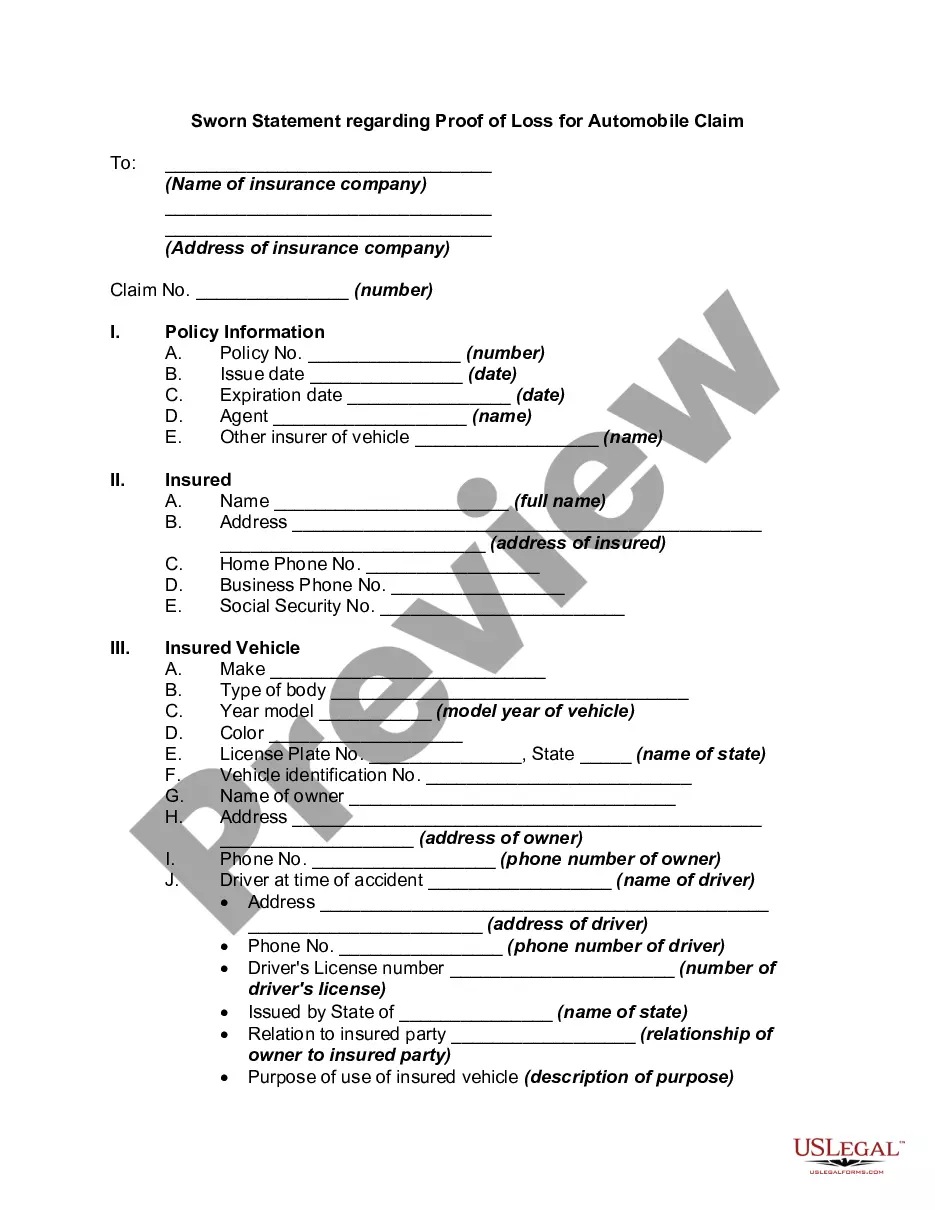
Form popularity
FAQ
Include signature, printed name, date, and records desired. Release a copy only, not the original. The physician may prepare a summary of the medical record, if acceptable to the patient.
In general, under the provisions of the FOIA and Privacy Act, access to information about private individuals cannot be given to unauthorized third parties without the individual's written consent. If you provide authorization, your request will be processed with the greatest possible access.
In North Carolina you have the right to: See and get a copy of your medical record. you a copy of it within 30 days after they receive your request. In most cases, your health care provider is allowed to charge you a reasonable, cost-based fee for copying your record.
The physician may photocopy and send all records, or may send a summary. The patient must sign an authorization to release records.
The Health Insurance Portability and Accountability Act of 1996 was put in place to help ensure privacy and yet ease of access to your medical records. A HIPAA Authorization Form is a document that allows a medical provider to share specific health information with another person or group.
The law generally bars health care professionals from sharing a patient's medical records without receiving written permission from the patient. When you start seeing a new medical provider, the provider will ask you to sign a release form that grants permission for certain staff members to access your record.
The custodian must determine whether to release the record, what portions of the record should be released, and whether the record is admissible as evidence. However, the custodian of an EHR has several additional concerns when an EHR is involved in litigation.