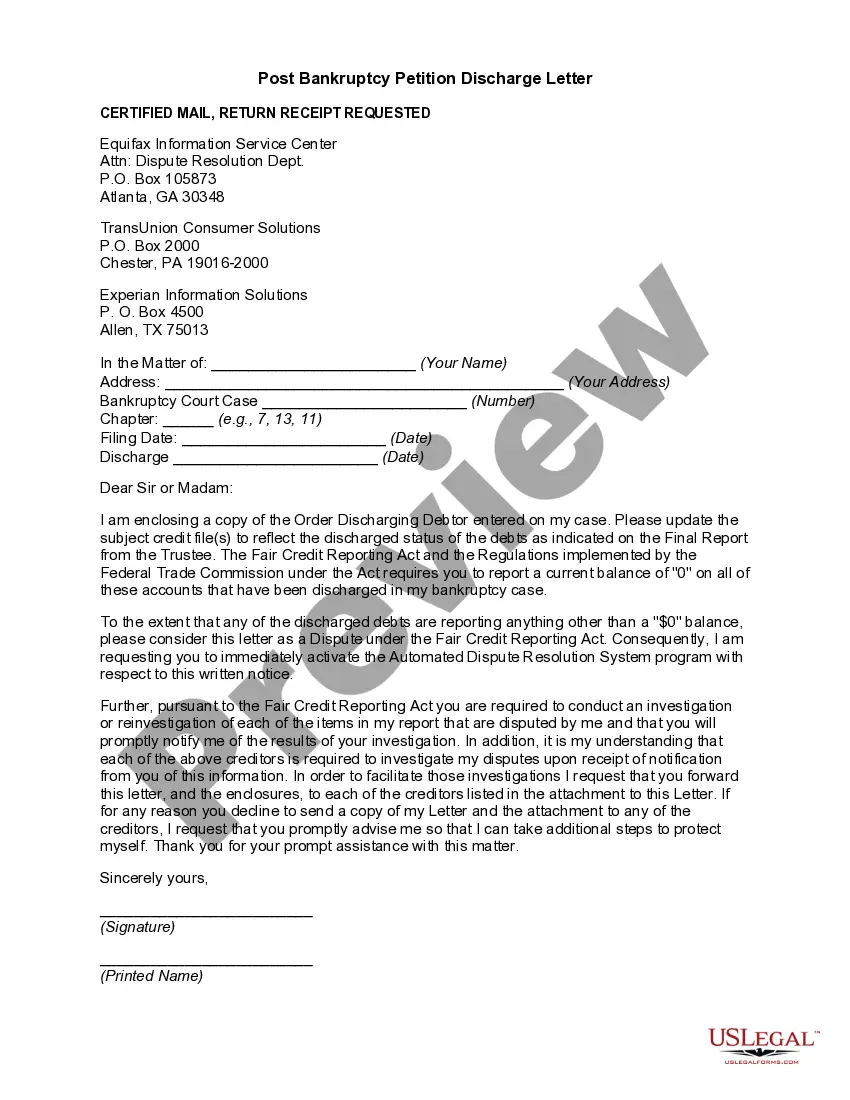
Montana Post Bankruptcy Petition Discharge Letter
Description
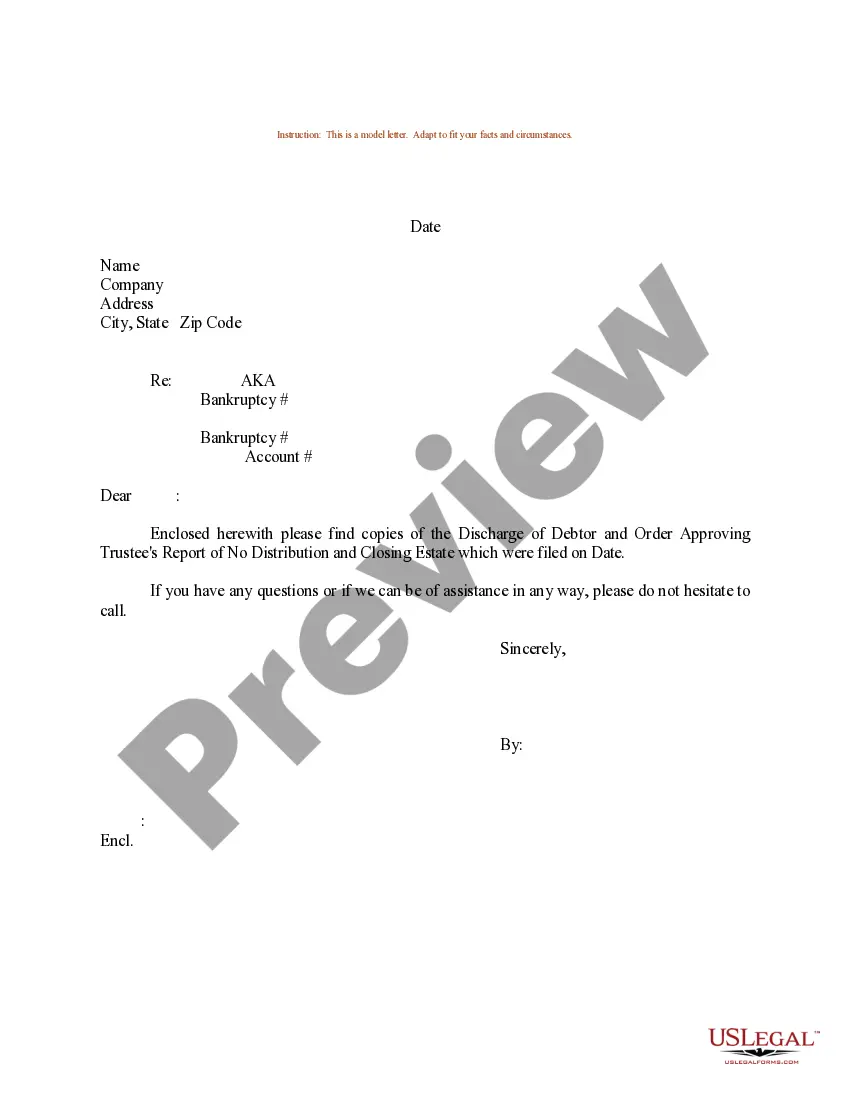
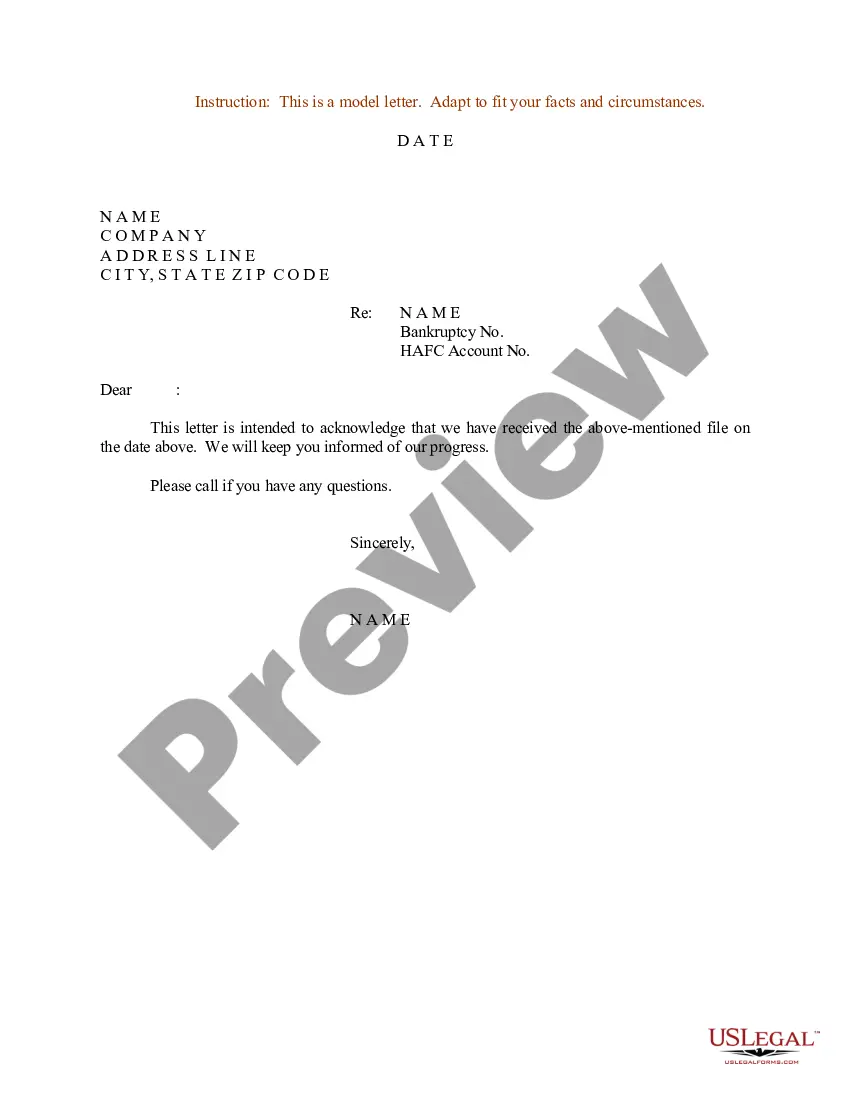
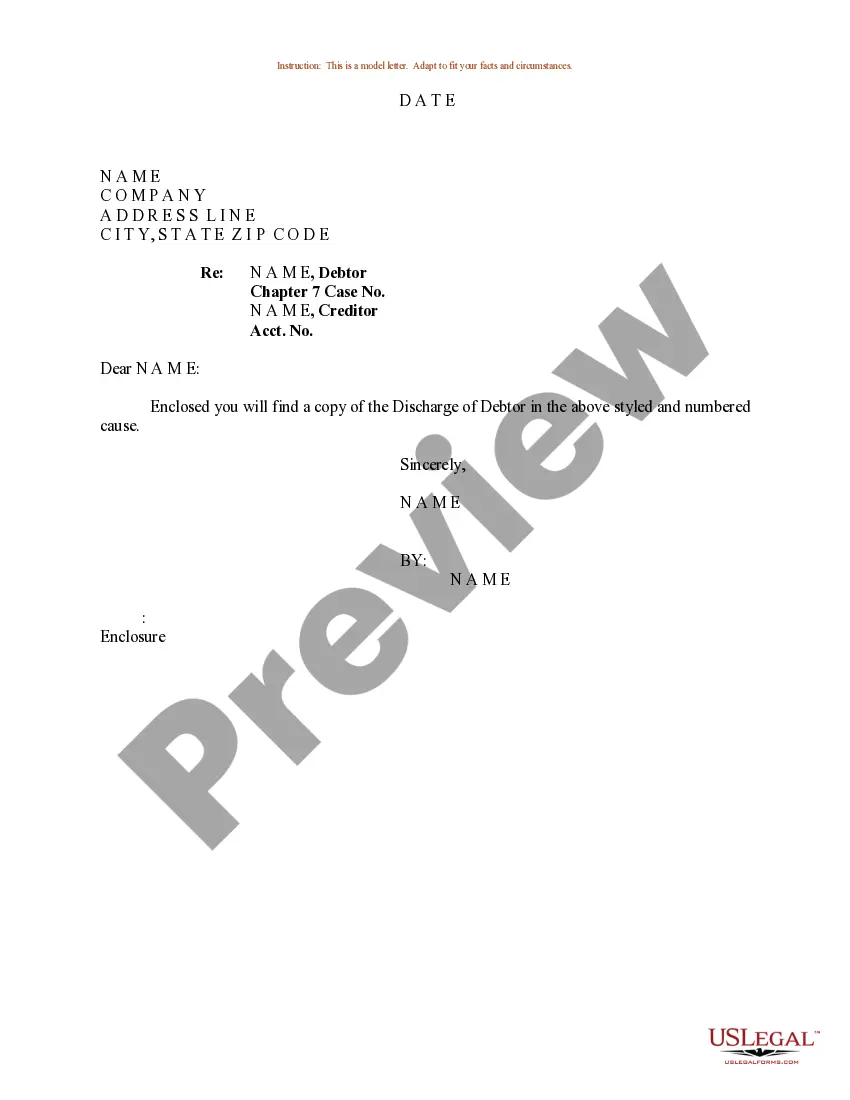

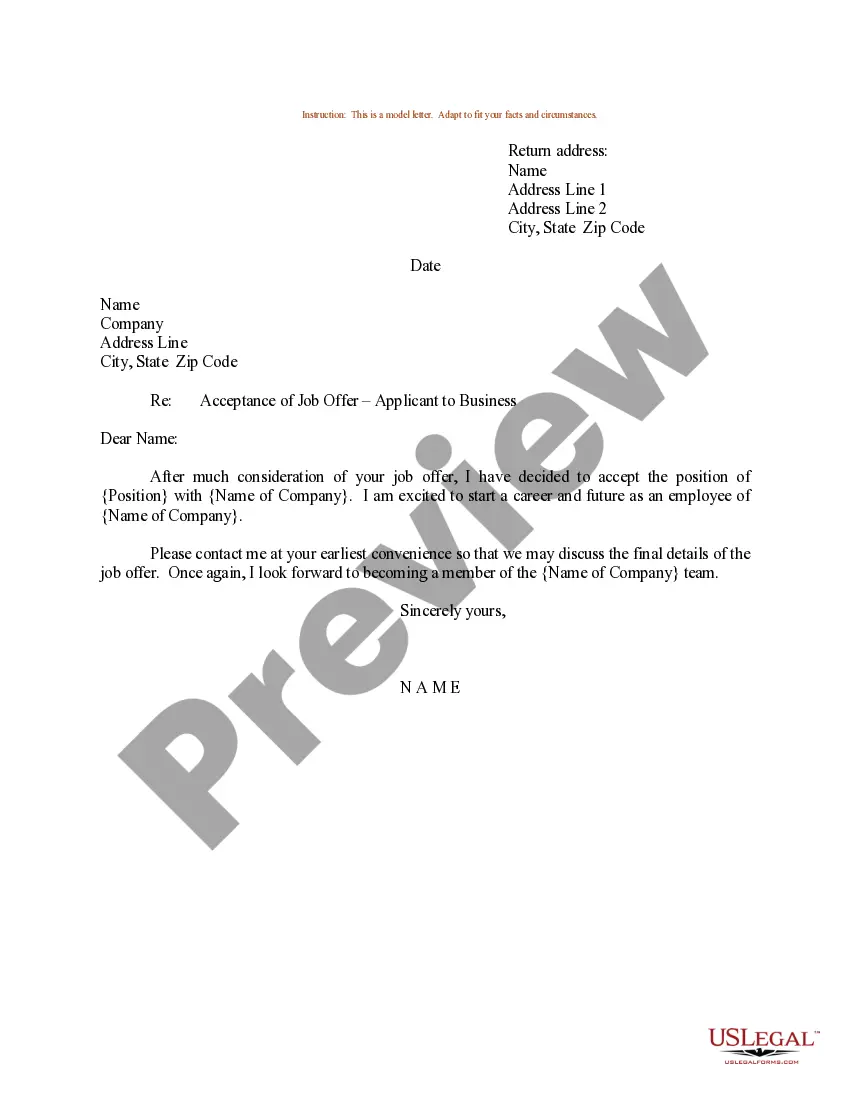


How to fill out Post Bankruptcy Petition Discharge Letter?
If you require to sum up, get, or print authorized document templates, utilize US Legal Forms, the largest collection of legal forms that are available online.
Employ the site's straightforward and user-friendly search function to find the documents you need.
Various templates for business and personal uses are categorized by types and states, or by keywords.
Each legal document template you obtain is yours permanently.
You have access to every form you downloaded in your account. Click on the My documents section and select a form to print or download again.
- Utilize US Legal Forms to access the Montana Post Bankruptcy Petition Discharge Letter with just a few clicks.
- If you are currently a US Legal Forms user, Log In to your account and click the Get button to retrieve the Montana Post Bankruptcy Petition Discharge Letter.
- You can also access forms you previously downloaded from the My documents tab in your account.
- If you are using US Legal Forms for the first time, follow the instructions outlined below.
- Step 1. Ensure you have chosen the form for the correct city/state.
- Step 2. Use the Preview option to review the content of the form. Don't forget to check the description.
- Step 3. If you are not satisfied with the form, use the Search field at the top of the screen to discover other versions of the legal form template.
- Step 4. Once you have located the form you require, click the Get now button. Select the pricing plan that suits you and provide your details to register for an account.
- Step 5. Process the transaction. You can utilize your credit card or PayPal account to complete the purchase.
- Step 6. Choose the format of the legal form and download it to your device.
- Step 7. Fill out, modify and print or sign the Montana Post Bankruptcy Petition Discharge Letter.
Form popularity
FAQ
Discharge Violations Once your bankruptcy case is settled, the court issues a decree stating that your debtors can never again attempt to collect debts that were discharged by your debt. Once that decree is granted, your creditors can no longer legally sell the discharged debts.
What is an Automatic Stay. Once you file for bankruptcy, an automatic stay goes into effect. An automatic stay specifically states that creditors cannot contact you to collect debts after you've filed for bankruptcy. It protects you from harassing phone calls, emails, and letters.
Assuming that everything goes according to schedule, you can expect to receive your bankruptcy discharge (the court order that wipes out your debts) about 60 days after your 341 meeting of creditors hearing, plus a few days for mailing.
A "discharge letter" is a term used to describe the order that the bankruptcy court mails out toward the end of the case. The order officially discharges (wipes out) qualifying debt, such as credit card and utility bill balances, medical debt, and personal loans.
The bankruptcy is reported in the public records section of your credit report. Both the bankruptcy and the accounts included in the bankruptcy should indicate they are discharged once the bankruptcy has been completed. To verify this, the first step is to get a copy of your personal credit report.
Closing a Chapter 7 Bankruptcy After DischargeA Chapter 7 case will remain open after the discharge if the Chapter 7 trustee appointed to the matter needs additional time to sell assets or if the case involves litigation.
Since a chapter 12 or chapter 13 plan may provide for payments to be made over three to five years, the discharge typically occurs about four years after the date of filing.
The bankruptcy is reported in the public records section of your credit report. Both the bankruptcy and the accounts included in the bankruptcy should indicate they are discharged once the bankruptcy has been completed. To verify this, the first step is to get a copy of your personal credit report.
A bankruptcy discharge, also known as a discharge in bankruptcy, refers to a permanent court order that releases a debtor from personal liability for certain types of debts. It is sometimes referred to simply as a discharge and comes at the end of a bankruptcy.
Can a debt collector try to collect on a debt that was discharged in bankruptcy? Debt collectors cannot try to collect on debts that were discharged in bankruptcy. Also, if you file for bankruptcy, debt collectors are not allowed to continue collection activities while the bankruptcy case is pending in court.