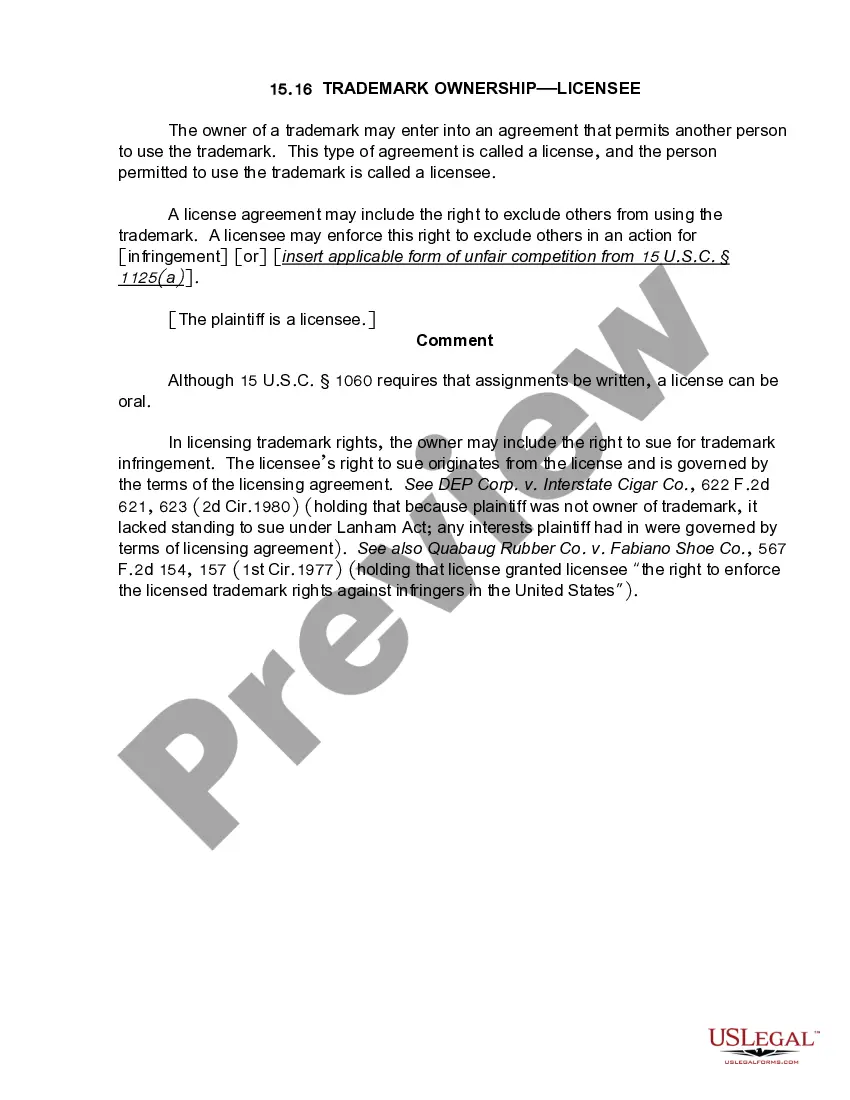
Montana Plaintiff's Motion in Limine to Prohibit Evidence on the Issue of Performance, Productivity, and / or Efficiency
Description
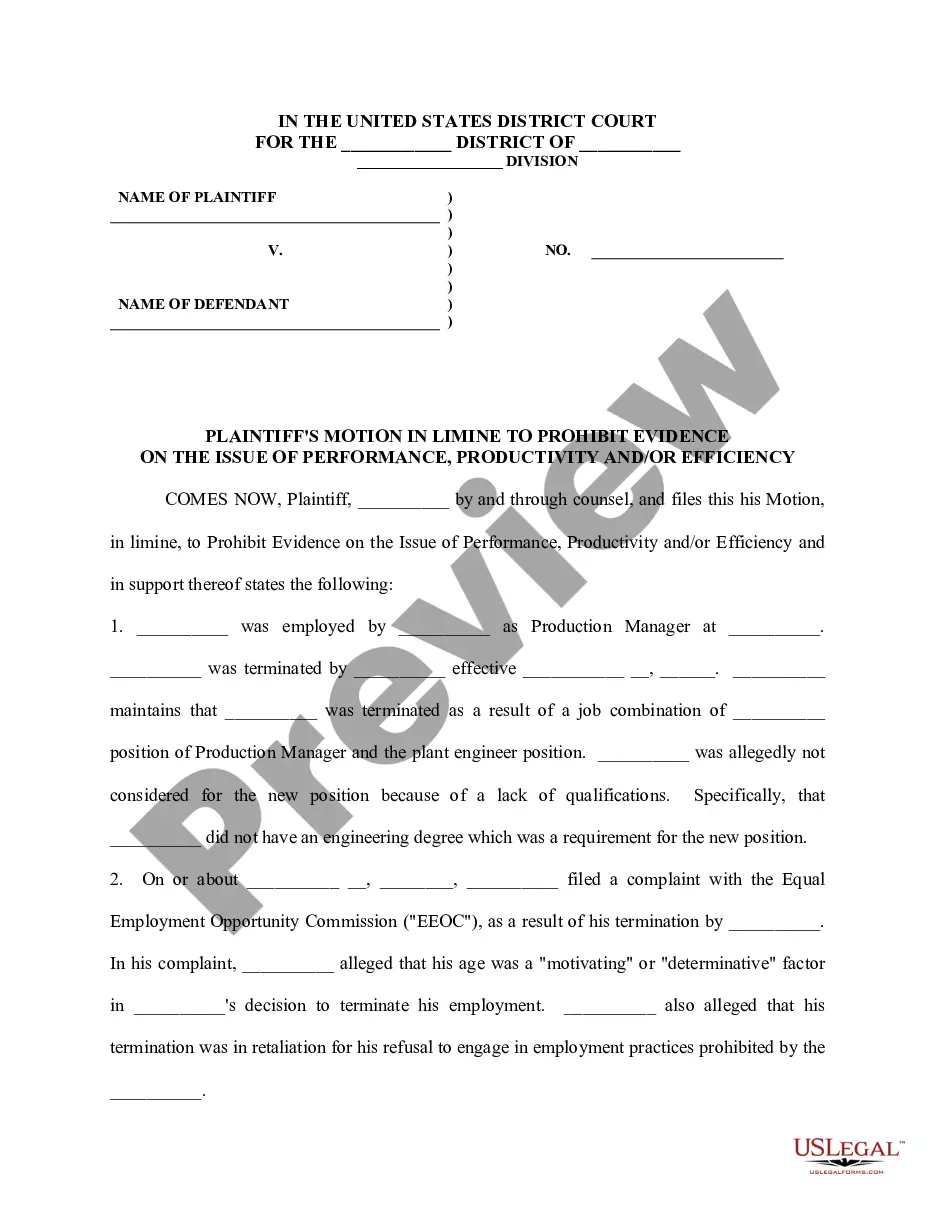
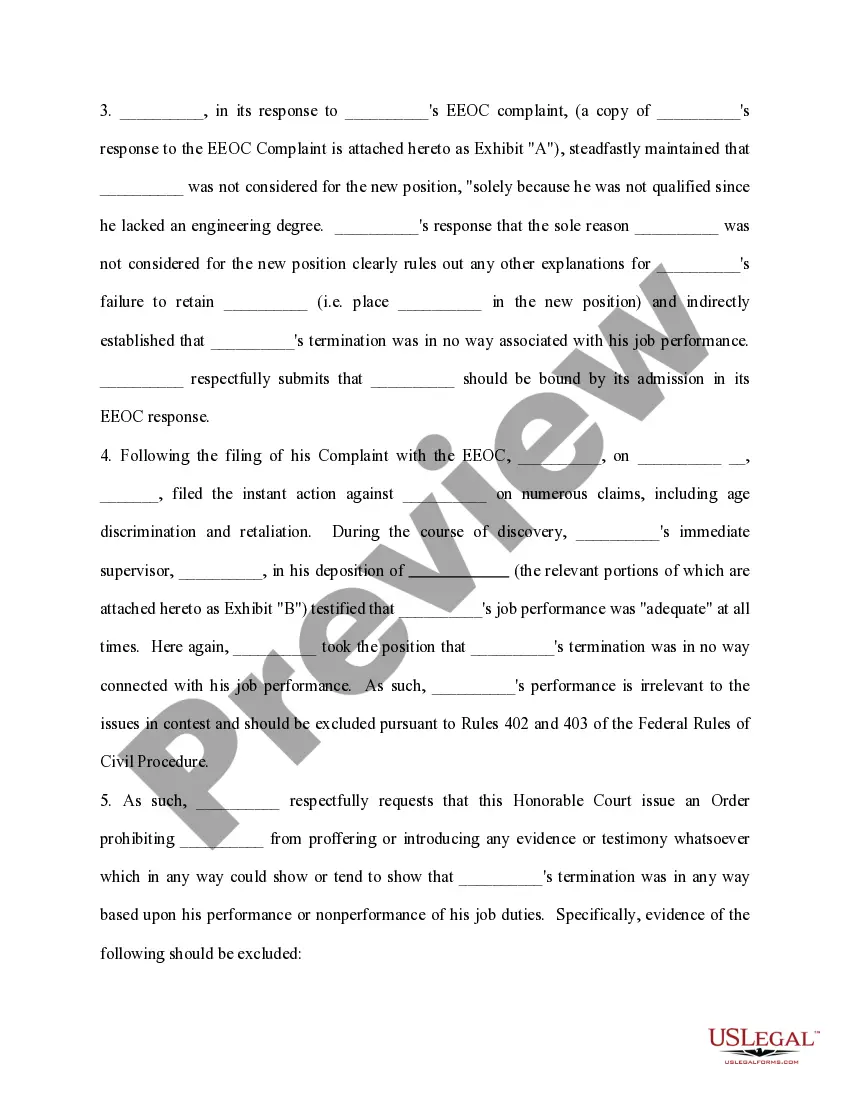
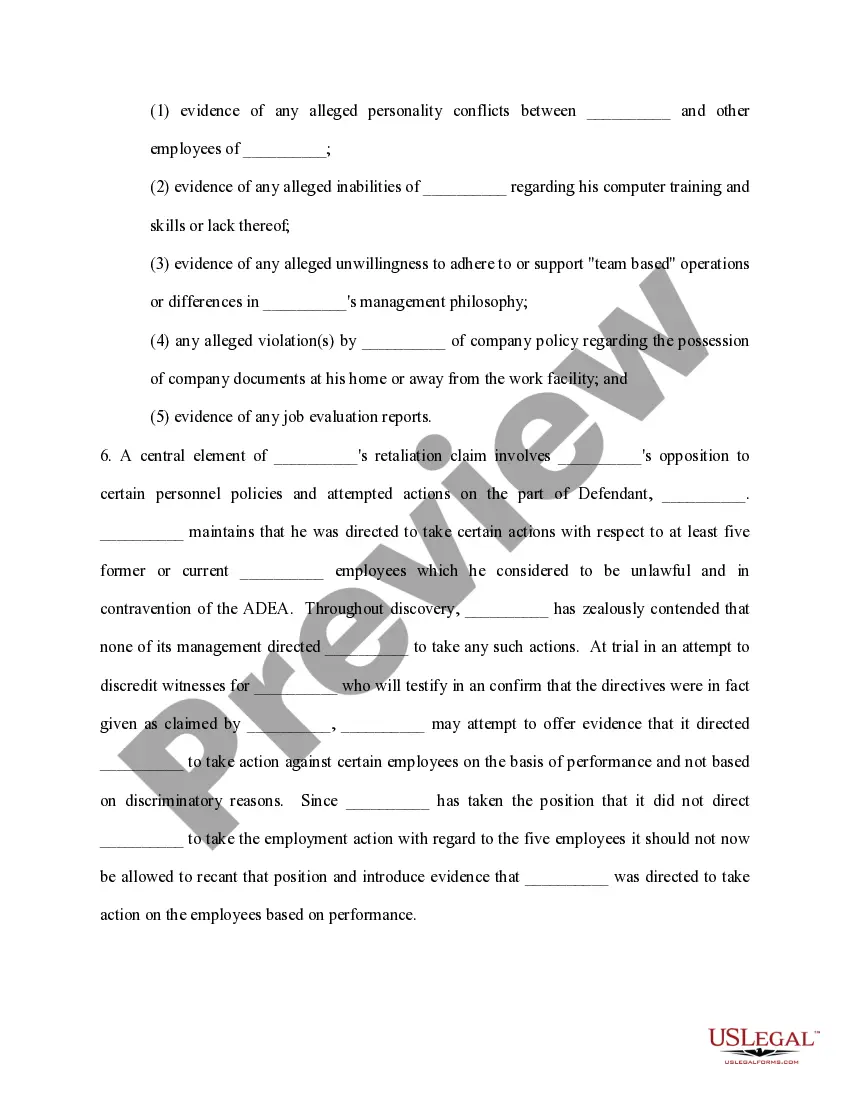
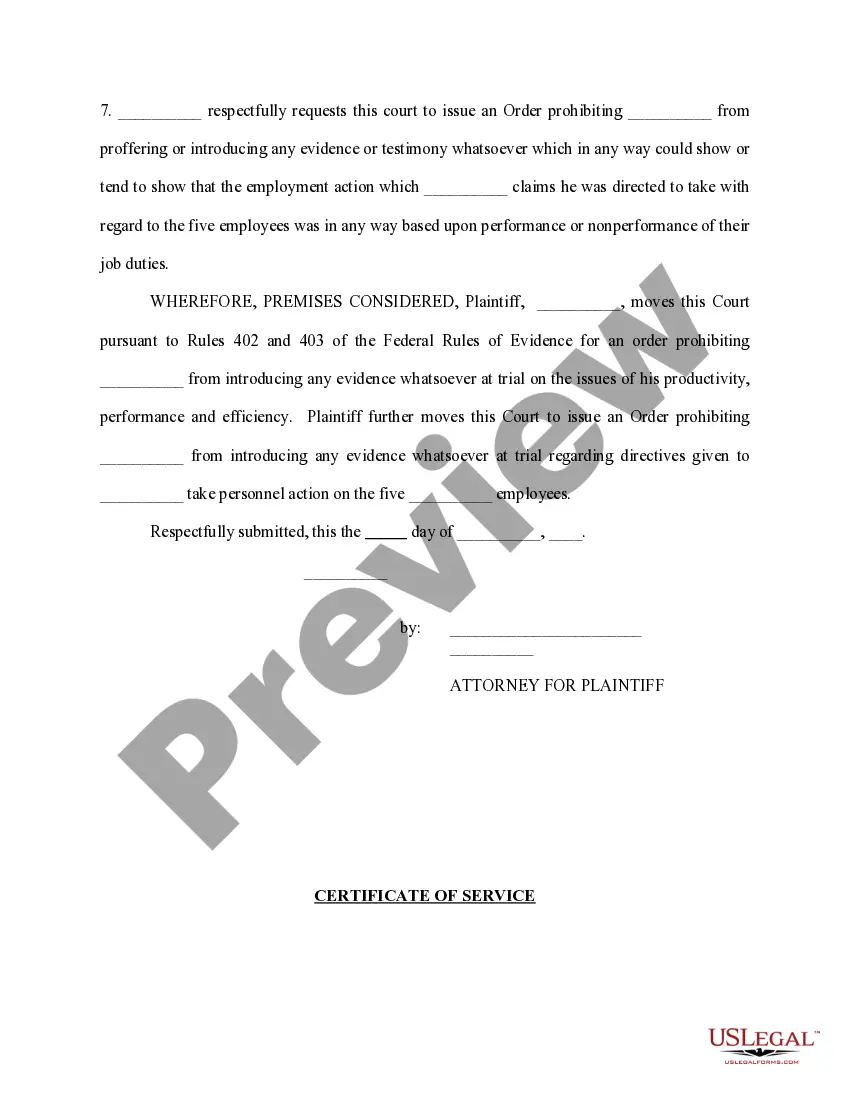
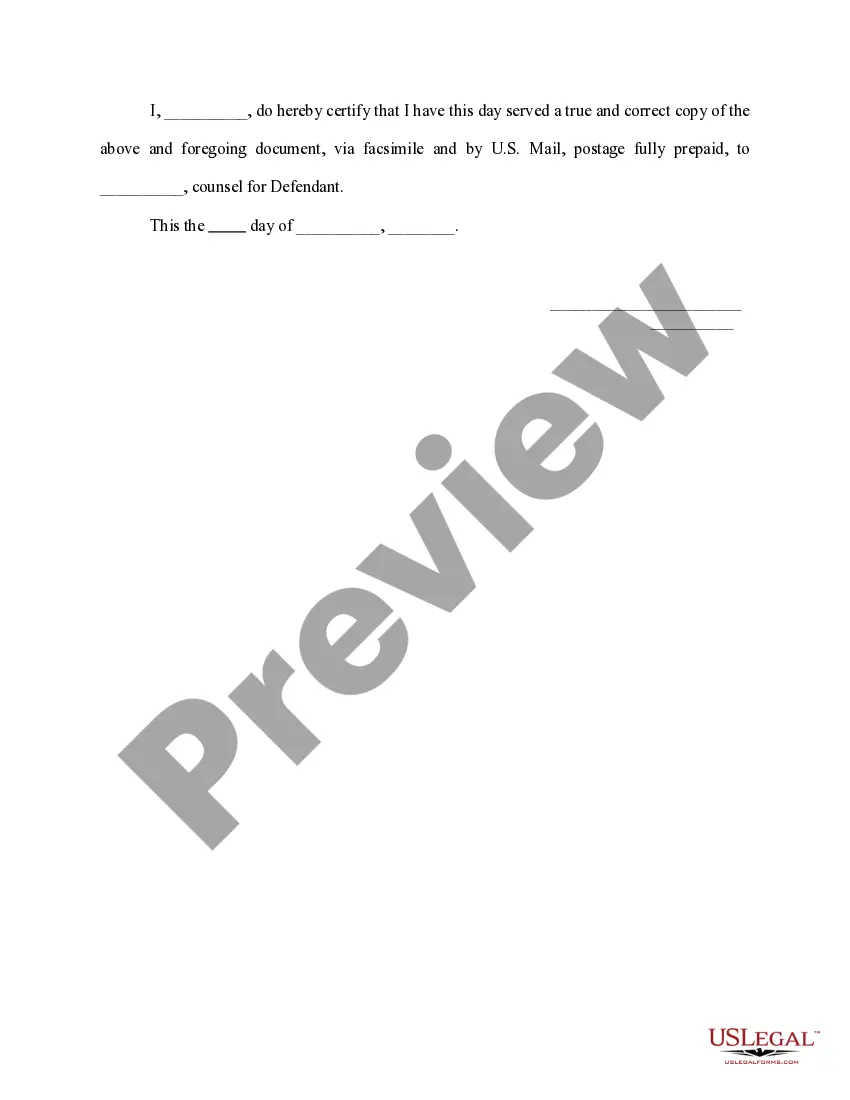
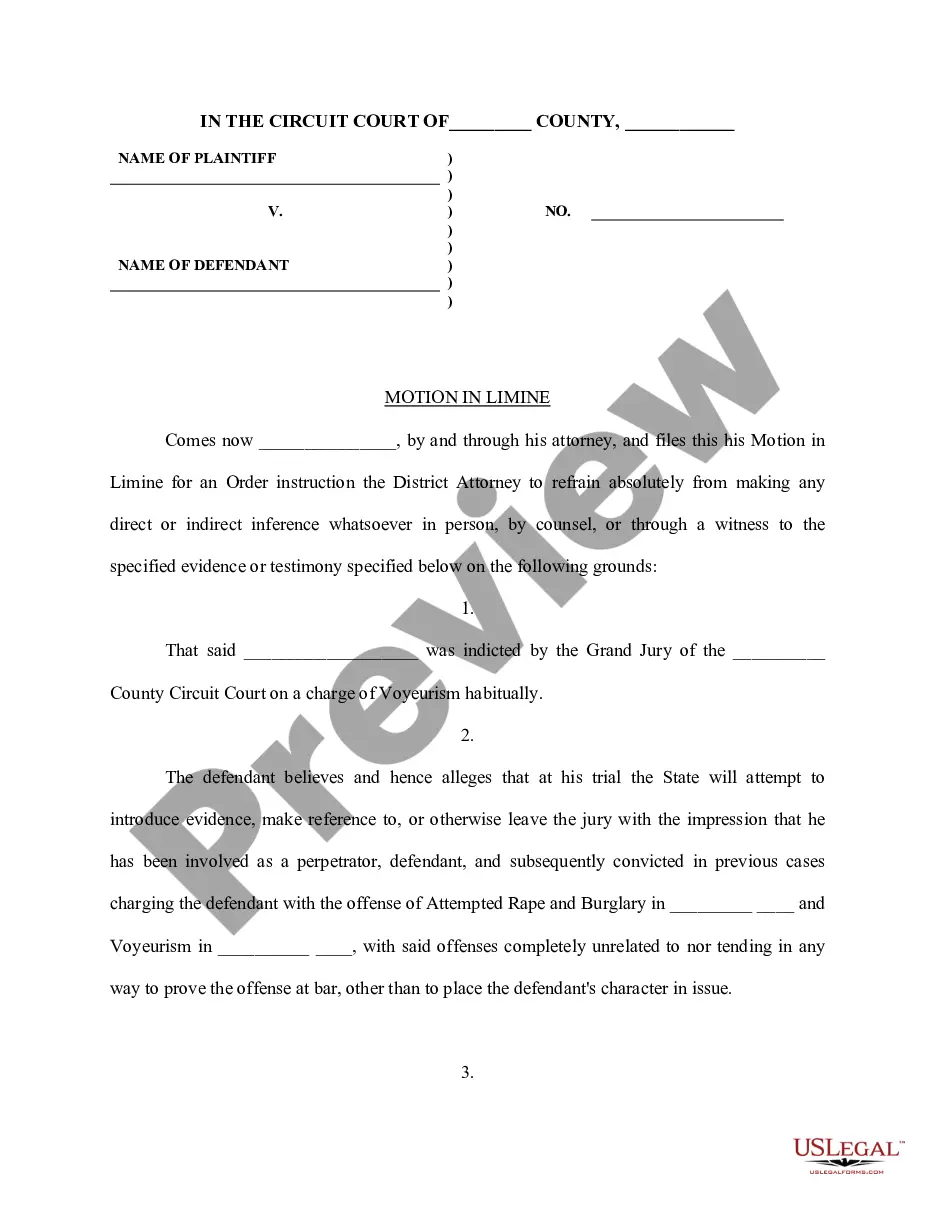
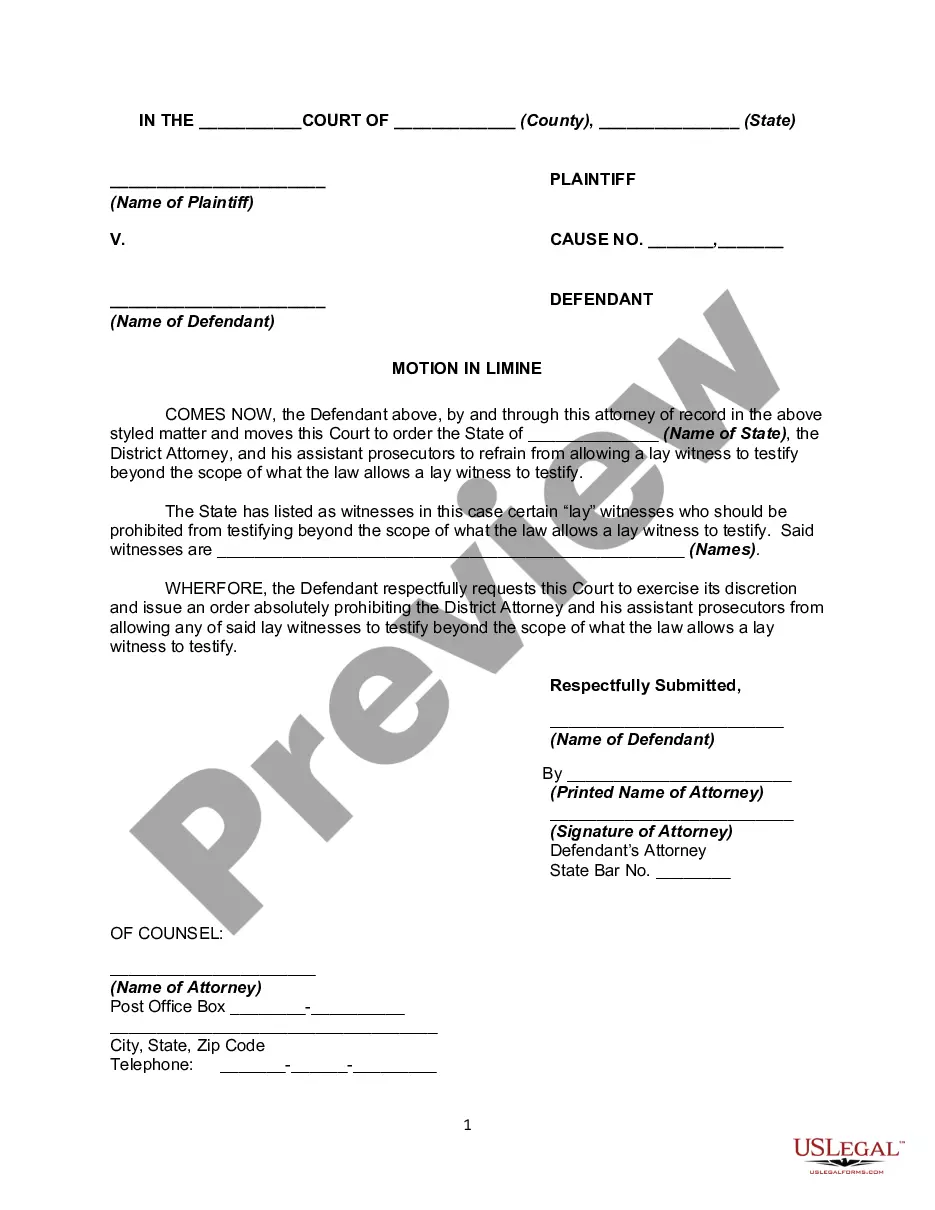
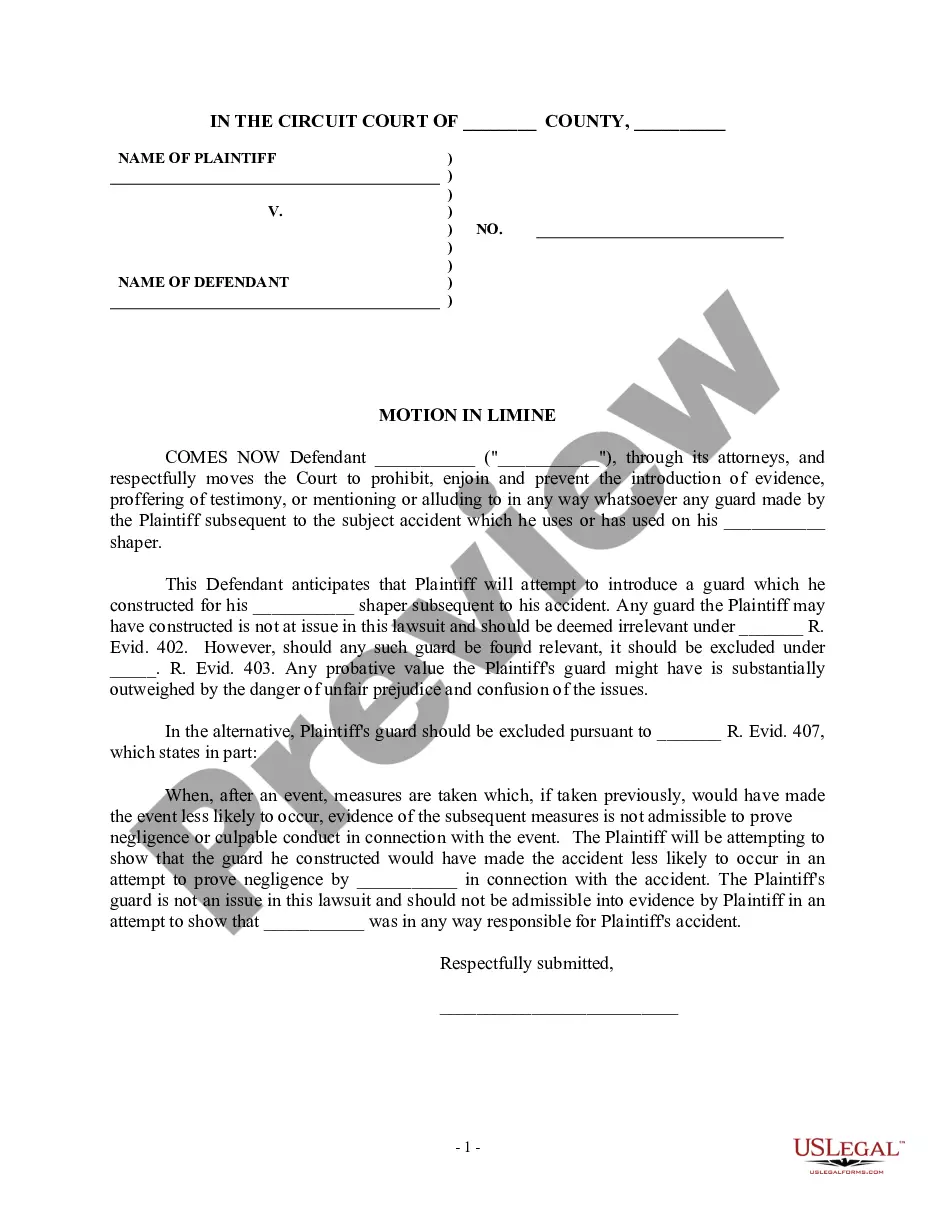
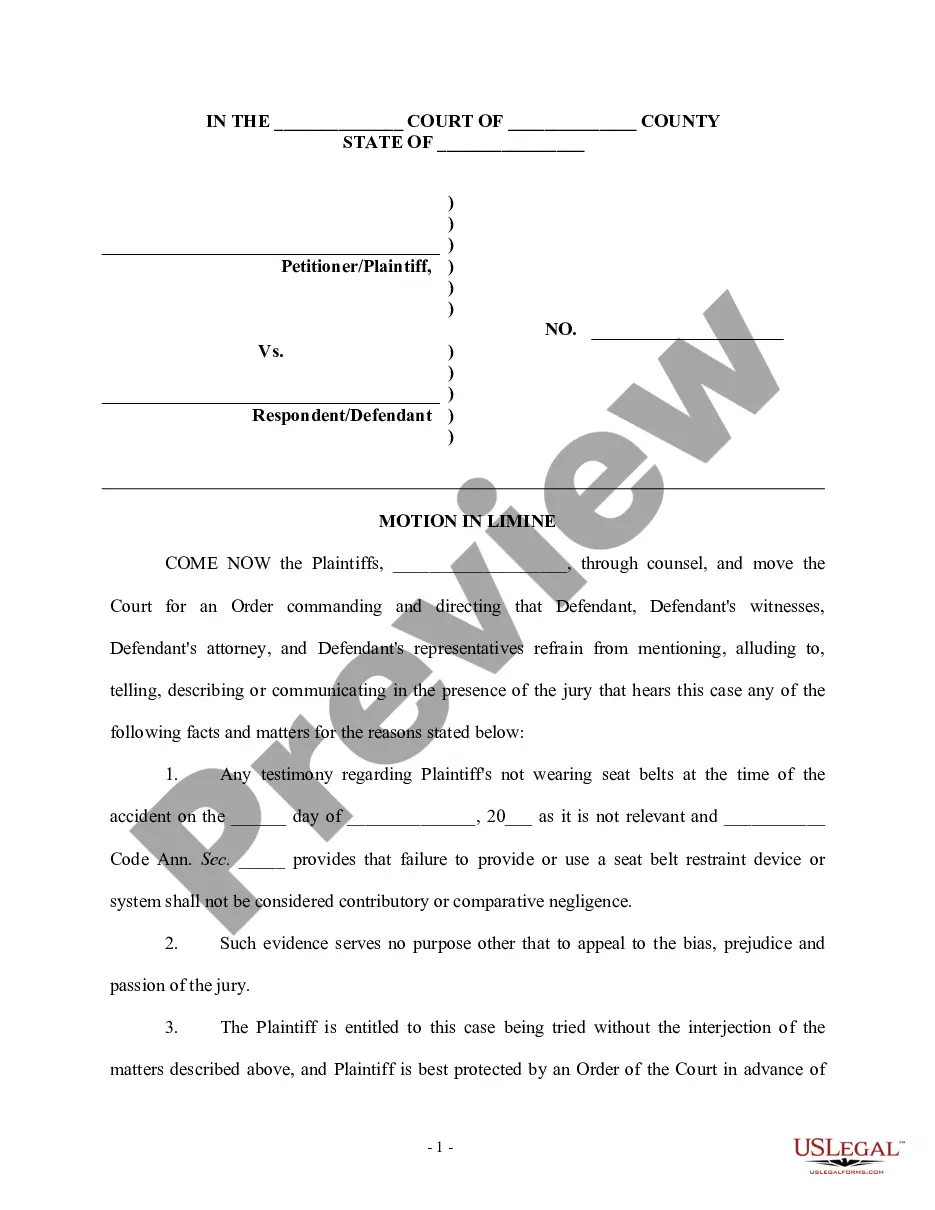
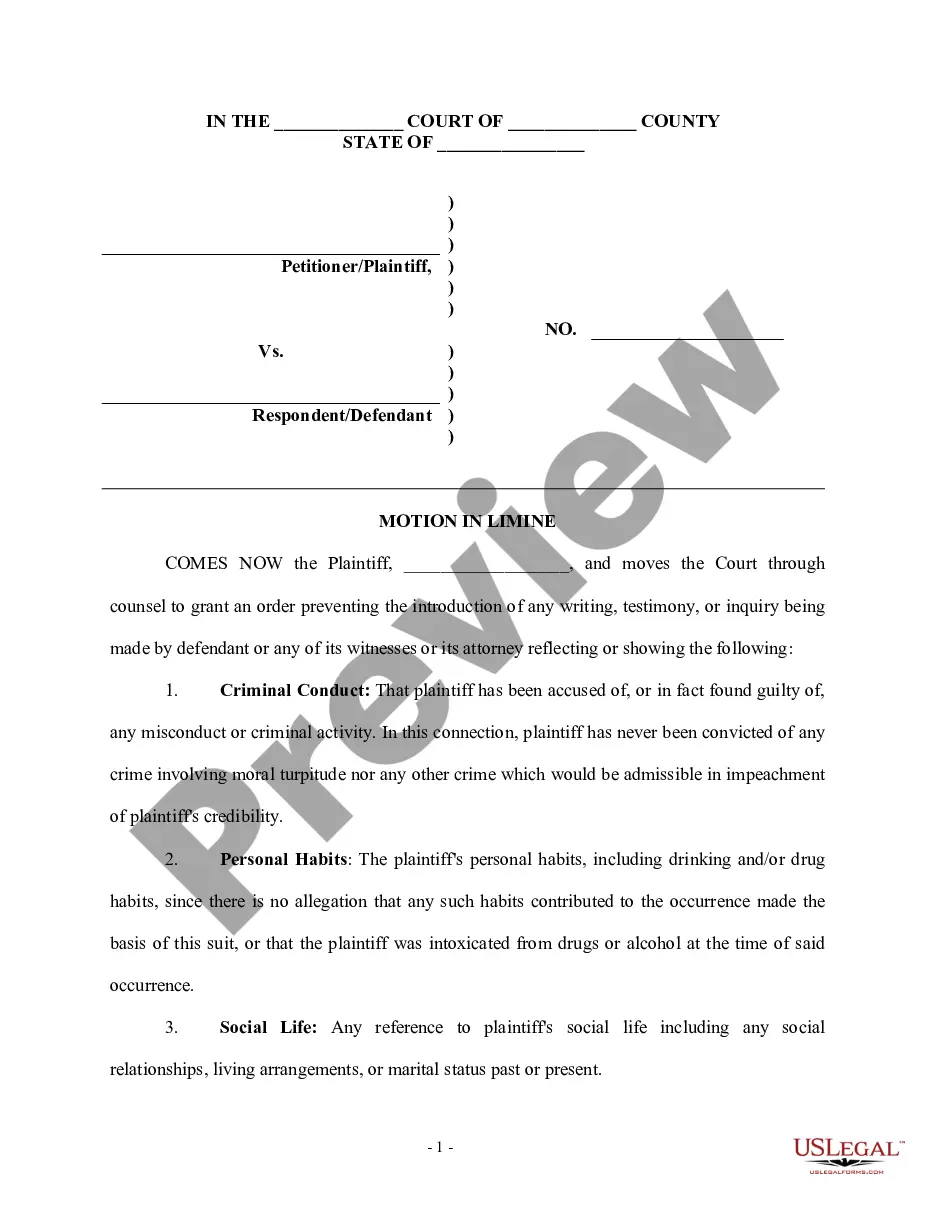


How to fill out Plaintiff's Motion In Limine To Prohibit Evidence On The Issue Of Performance, Productivity, And / Or Efficiency?
US Legal Forms - one of the largest collections of legal documents in the United States - offers a broad selection of legal document templates that you can download or print. By using the website, you can access thousands of forms for commercial and personal purposes, organized by categories, claims, or keywords. You can find the latest versions of forms such as the Montana Plaintiff's Motion in Limine to Prohibit Evidence on the Issue of Performance, Productivity, and/or Efficiency within moments.
If you have a monthly subscription, Log In and download the Montana Plaintiff's Motion in Limine to Prohibit Evidence on the Issue of Performance, Productivity, and/or Efficiency from your US Legal Forms account. The Download option will appear on every form you view. You can access all previously downloaded forms in the My documents section of your account.
If you are using US Legal Forms for the first time, here are some simple steps to get you started: Ensure you have selected the correct form for your area/state. Click the Review button to check the content of the form. Review the form description to confirm that you have chosen the right document. If the form does not meet your needs, use the Search box at the top of the screen to find one that does. If you are satisfied with the form, confirm your selection by clicking the Get now button. Then, choose the payment plan you prefer and provide your credentials to register for an account. Process the payment. Use your credit card or PayPal account to complete the transaction. Select the format and download the form onto your device. Make edits. Fill out, modify, print, and sign the downloaded Montana Plaintiff's Motion in Limine to Prohibit Evidence on the Issue of Performance, Productivity, and/or Efficiency. Every template you save in your account has no expiration date and is yours indefinitely. Thus, to download or print another copy, simply go to the My documents section and click on the form you need.
- Access the Montana Plaintiff's Motion in Limine to Prohibit Evidence on the Issue of Performance, Productivity, and/or Efficiency with US Legal Forms, the most extensive collection of legal document templates.
- Utilize a vast number of professional and state-specific templates that meet your business or personal needs and requirements.
Form popularity
FAQ
There are many ways that a motion in limine could cause an off-ramp to the criminal procedure. One way is if the motion is granted and the evidence is excluded from trial. This could lead to the prosecution and defense negotiating a plea deal.
Motions to Suppress Evidence - California Penal Code Section 1538.5. A Penal Code 1538.5 motion to suppress evidence is a pretrial motion asking the court to exclude evidence obtained by illegal search and seizure. In the United States, everyone is subject to the rule of law, including law enforcement.
A Daubert motion is a specific type of motion in limine raised before or during trial to exclude the testimony of an expert witness.
A motion in limine is decided by the judge outside of the presence of the jury. The purpose of a motion in limine is to address potentially prejudicial, irrelevant, or inadmissible information that could unduly influence a jury or hinder the fair administration of justice.
Exclusion of evidence in a motion to suppress is based on a violation of either the United States or Ohio Constitutions. By contrast, exclusion of evidence in a motion in limine is based on a violation of the Rules of Evidence or a statute.
A motion to exclude evidence that is based on rules of evidence, in advance of the trial, is more commonly called a motion in limine. In federal courts, Rule 41(h) of the Federal Rules of Criminal Procedure governs motions to suppress.
A common motion in limine is the motion to exclude evidence not disclosed or produced during discovery. This motion is usually broadly stated to exclude all documents and evidence not produced in discovery.
While in general, on a motion to suppress, the defendant has the burden of proving, by a preponderance of the evidence, that the material in question was seized in violation of his constitutional rights, there are several situations where the burden shifts to the government.