Montana Motion in Limine
Description
Get your form ready online
Our built-in tools help you complete, sign, share, and store your documents in one place.
Make edits, fill in missing information, and update formatting in US Legal Forms—just like you would in MS Word.
Download a copy, print it, send it by email, or mail it via USPS—whatever works best for your next step.
Sign and collect signatures with our SignNow integration. Send to multiple recipients, set reminders, and more. Go Premium to unlock E-Sign.
If this form requires notarization, complete it online through a secure video call—no need to meet a notary in person or wait for an appointment.
We protect your documents and personal data by following strict security and privacy standards.

Make edits, fill in missing information, and update formatting in US Legal Forms—just like you would in MS Word.

Download a copy, print it, send it by email, or mail it via USPS—whatever works best for your next step.

Sign and collect signatures with our SignNow integration. Send to multiple recipients, set reminders, and more. Go Premium to unlock E-Sign.

If this form requires notarization, complete it online through a secure video call—no need to meet a notary in person or wait for an appointment.

We protect your documents and personal data by following strict security and privacy standards.
Looking for another form?
How to fill out Motion In Limine?
Selecting the optimal authorized document template can be challenging.
Of course, there are countless designs accessible online, but how can you locate the official template you need.
Utilize the US Legal Forms website. This platform provides an extensive collection of templates, including the Montana Motion in Limine, suitable for both business and personal purposes.
You can preview the form using the Preview button and review the form description to confirm it is the right one for you. If the form does not meet your requirements, use the Search field to find the appropriate form. Once you are confident the form is suitable, click the Purchase now button to acquire the form. Choose the payment plan you prefer and enter the necessary information. Create your account and pay for your order using your PayPal account or credit card. Select the file format and download the legal document template to your device. Fill out, modify, print, and sign the received Montana Motion in Limine. US Legal Forms is the largest repository of legal forms where you can find a variety of document templates. Utilize this service to download professionally crafted documents that adhere to state requirements.
- All forms are reviewed by professionals and meet federal and state regulations.
- If you are already registered, Log In to your account and click on the Download button to obtain the Montana Motion in Limine.
- You can use your account to review the legal forms you have previously acquired.
- Navigate to the My documents tab in your account to download another copy of the document you need.
- If you are a new user of US Legal Forms, here are some straightforward steps for you to follow.
- First, ensure you have selected the correct form for your state/region.
Form popularity
FAQ
(a) Whenever an attorney representing a party to an action, or in another civil proceeding of any kind, is removed, withdraws, or ceases to act as such, the attorney must inform the court and all other parties of the full name and address of the attorney's client and any other information which the court may find ...
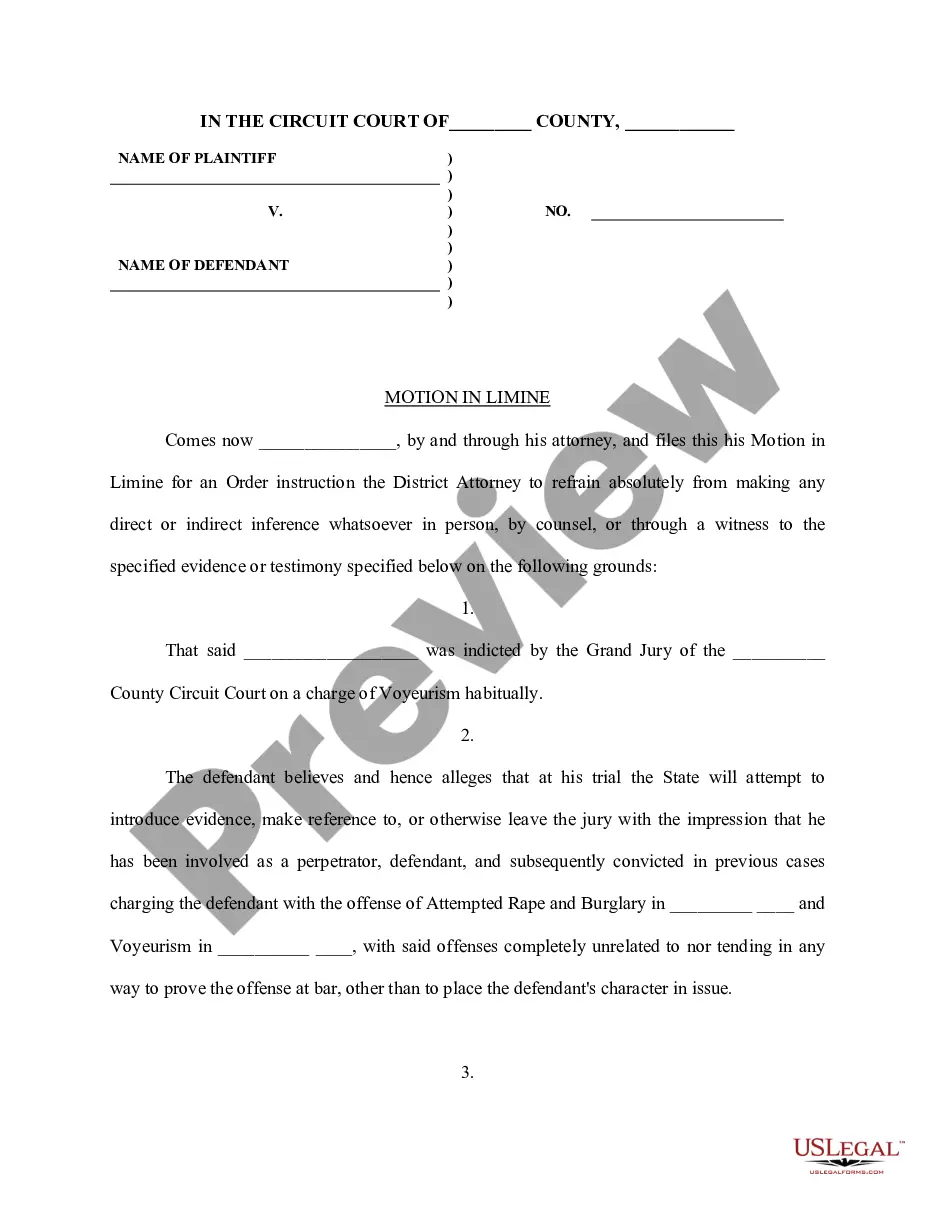
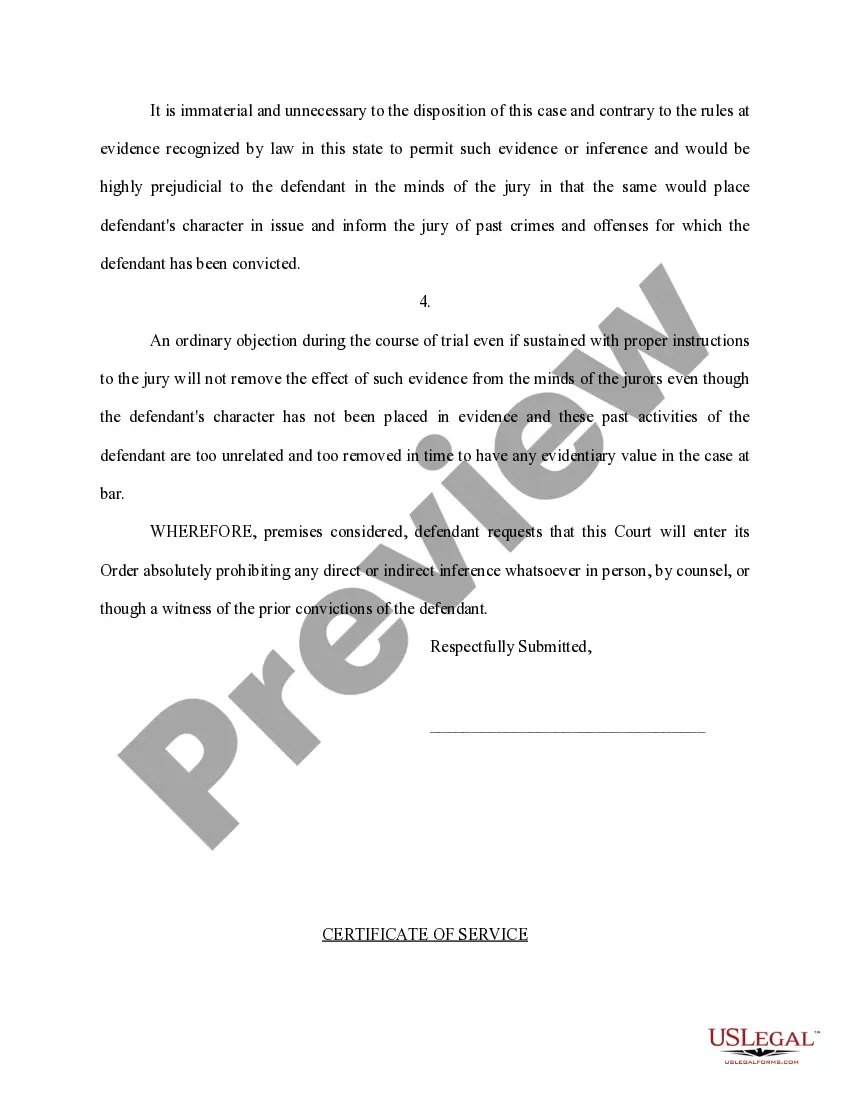
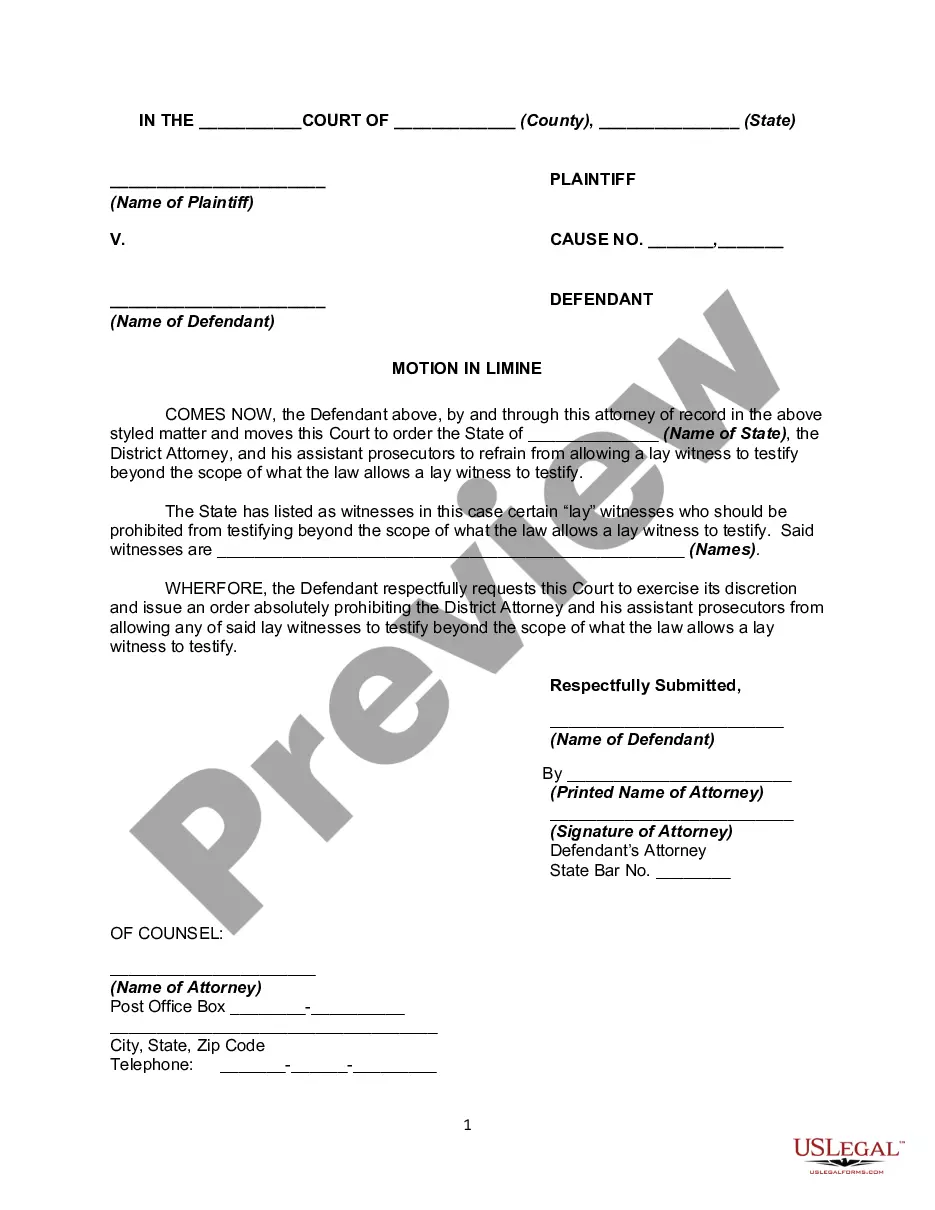
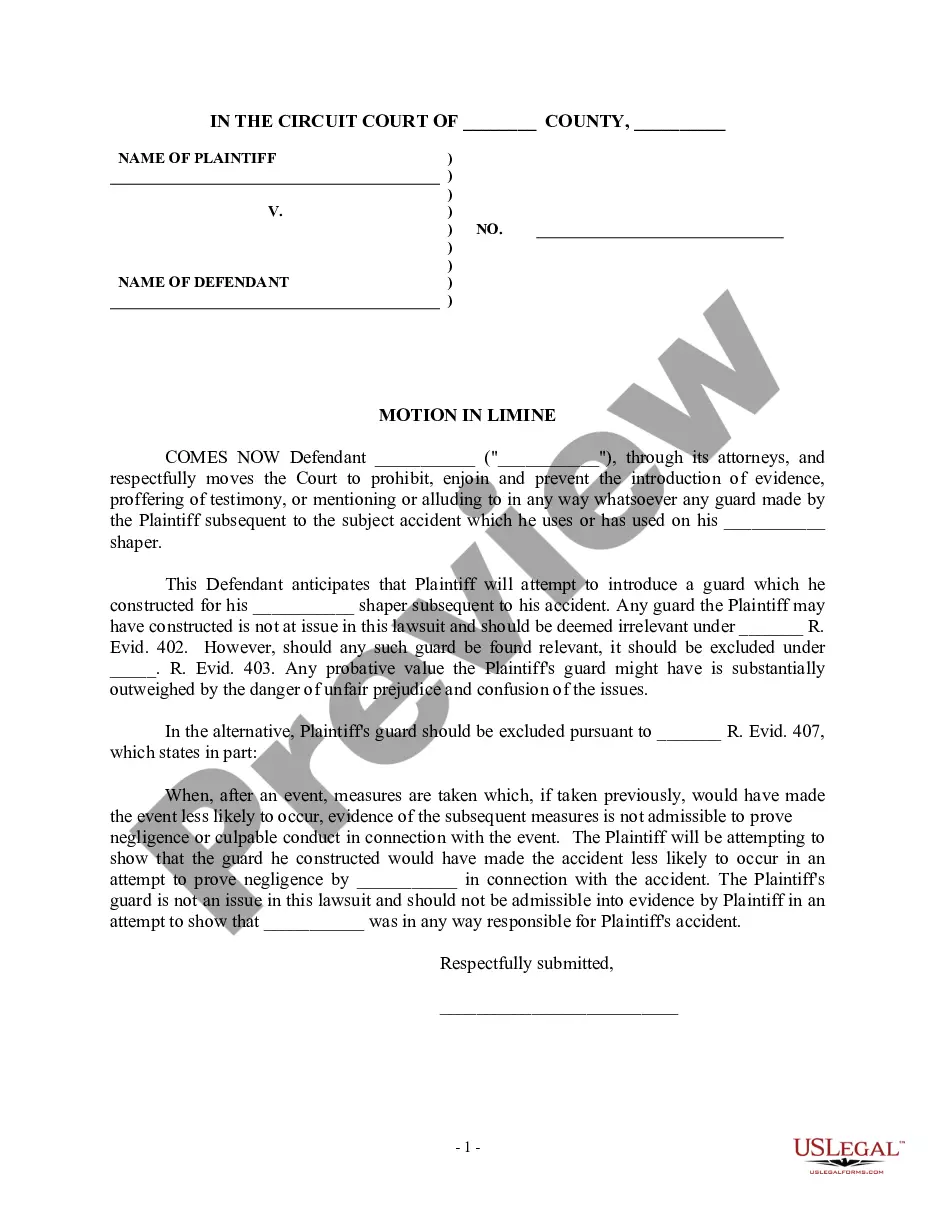
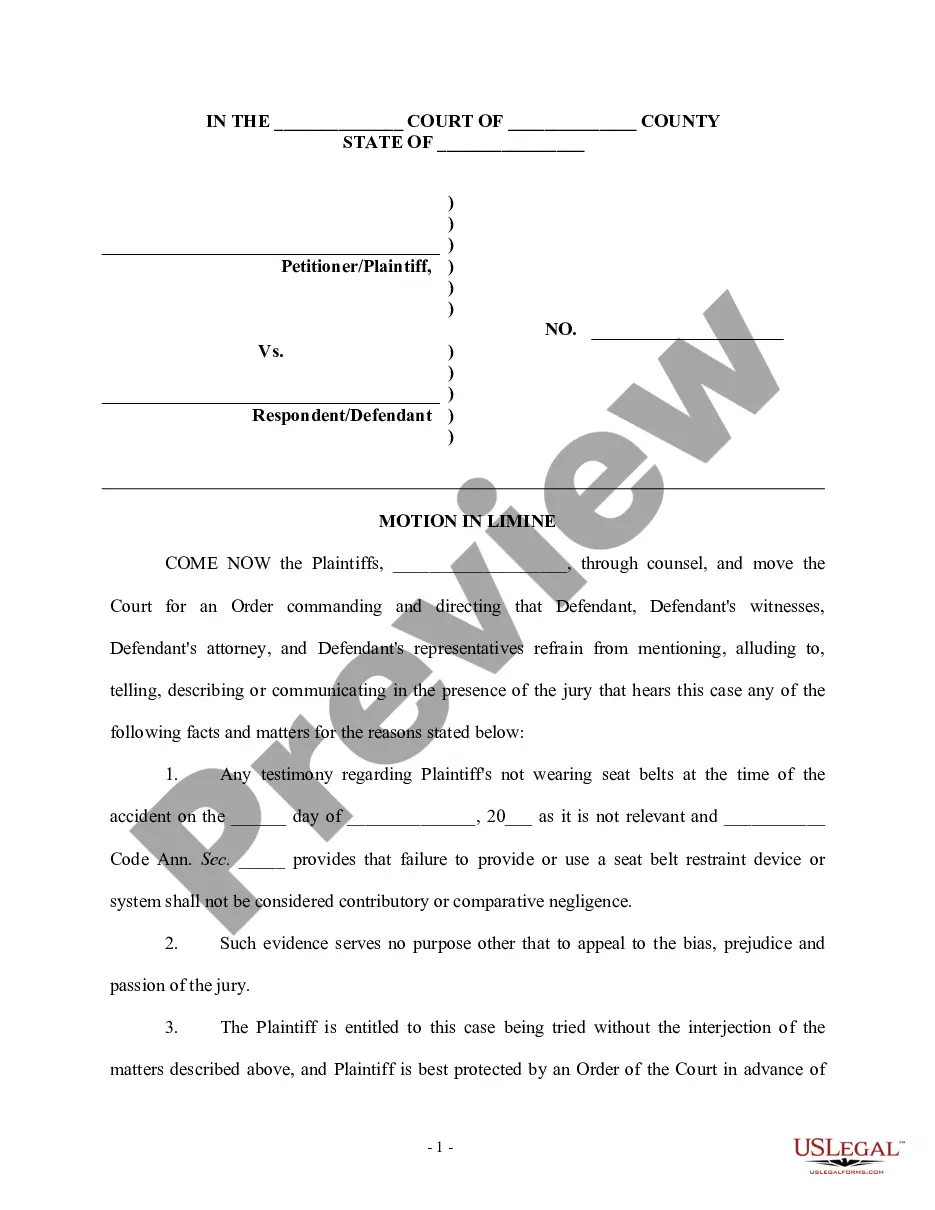
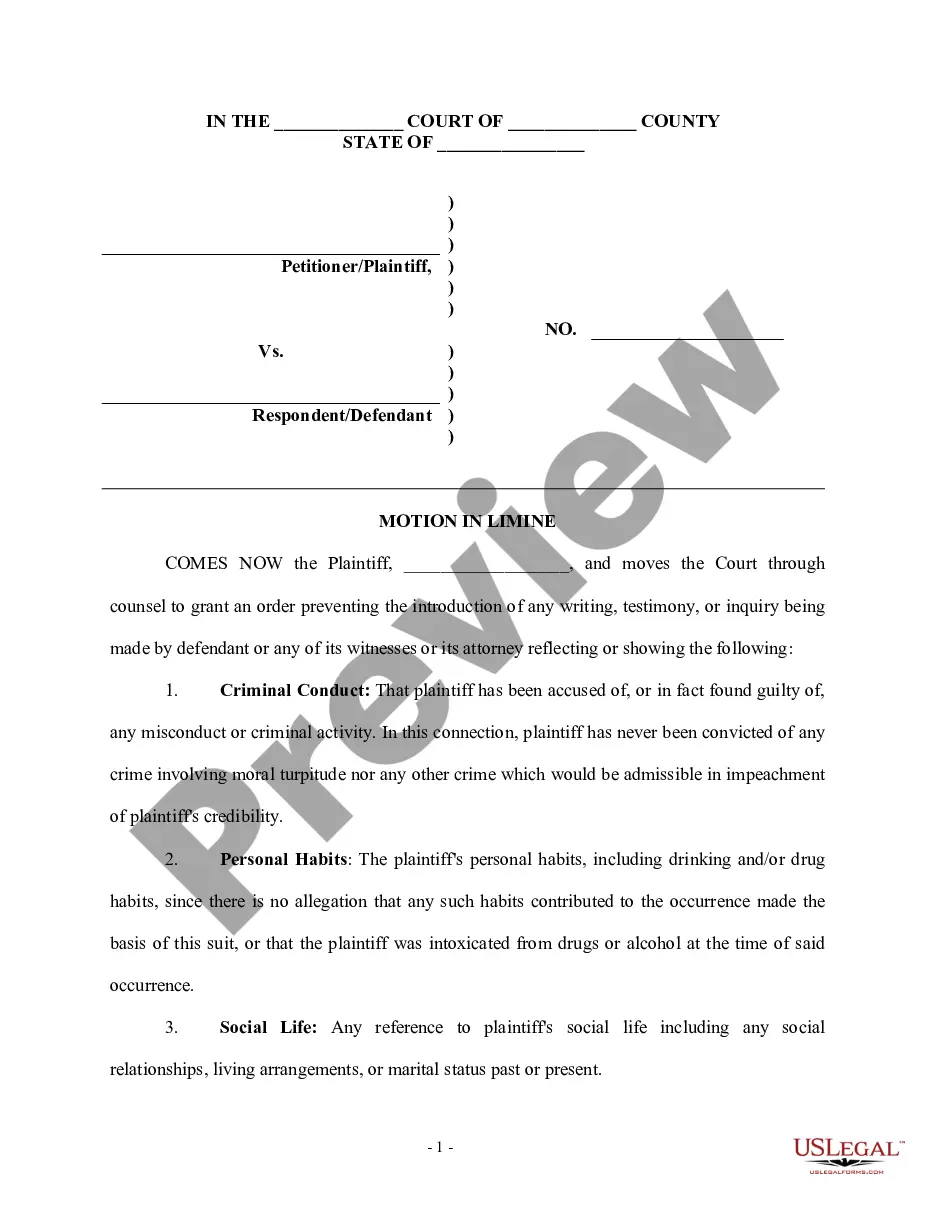
The purpose of a motion in limine is to determine whether certain evidence may be presented to the jury, in any form and at any stage. See Lapasinskas, supra, and 63 ALR 3d 311. Generally, a motion in limine is used to exclude evidence that a party believes to be irrelevant or unfairly prejudicial.
Rule 1 ? Form of Papers Presented for Filing. The word ?papers? as used in this Rule includes all documents and copies except exhibits and records on appeal from lower courts.
The summary judgment procedure under Rule 56, Federal Rules of Civil Procedure, which is identical to Rule 56, Montana Rules of Civil Procedure, was intended to provide a method of promptly disposing of actions in which there is no genuine issue of any material fact.
(i) Responses to motions to dismiss, for judgment on the pleadings, or for summary judgment must be filed within 21 days after the motion was filed. (ii) Responses to all other motions must be filed within 14 days after the motion was filed.
Rule 2 ? Motions. Except as provided in M. R. Civ. P. 56(c), within fourteen days after service of the movant's brief, the opposing party shall file an answer brief which also may be accompanied by appropriate supporting Page 2 2 documents.
If a pleading sets out a claim for relief that does not require a responsive pleading, an opposing party may assert at trial any defense to that claim. No defense or objection is waived by joining it with one or more other defenses or objections in a responsive pleading or in a motion.
Your motion in limine should be broken into two sections: (1) Factual Background and (2) Argument. The ?Factual Background? section of your Memorandum should include all of the facts necessary for the judge to resolve every issue raised in your motion. appropriate, include procedural posture, as well.