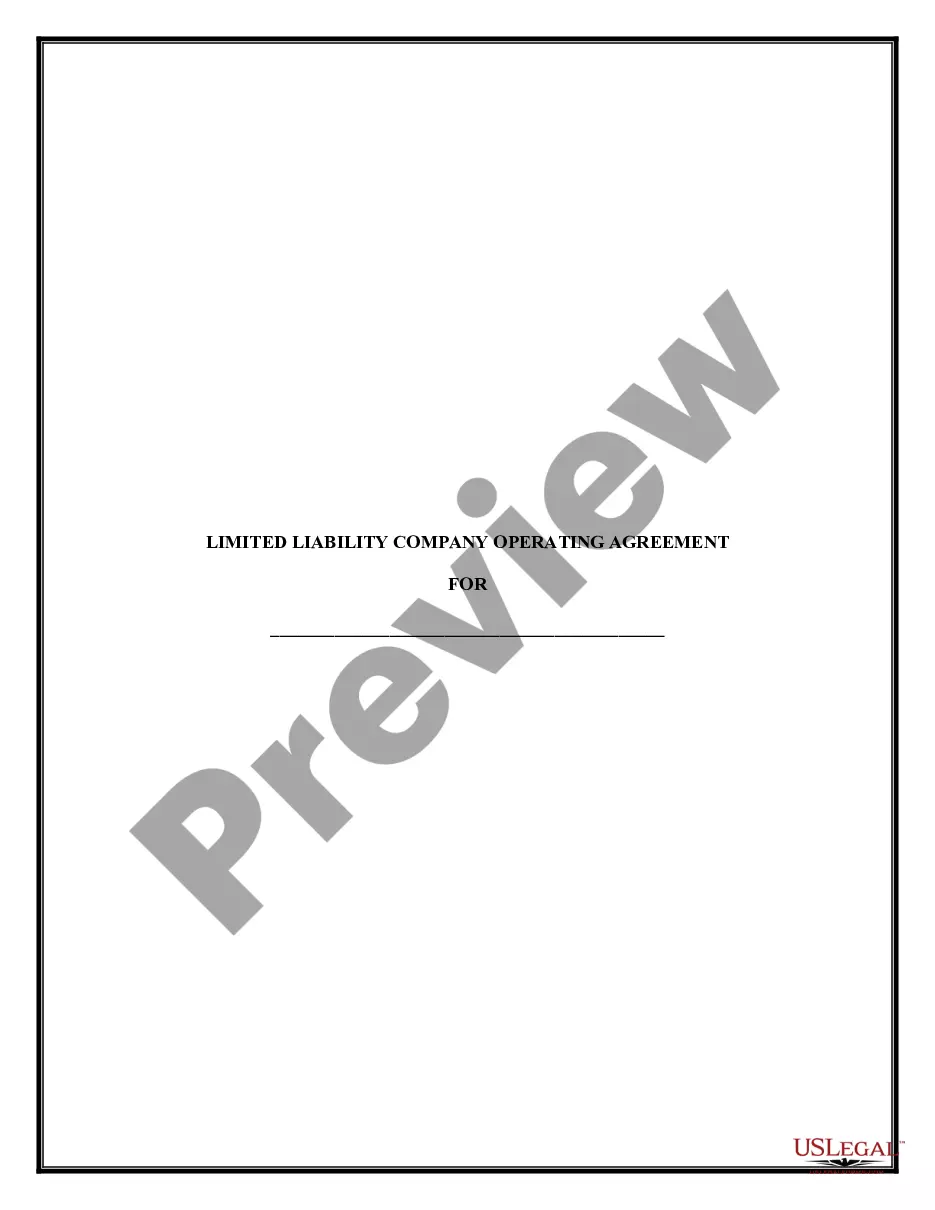
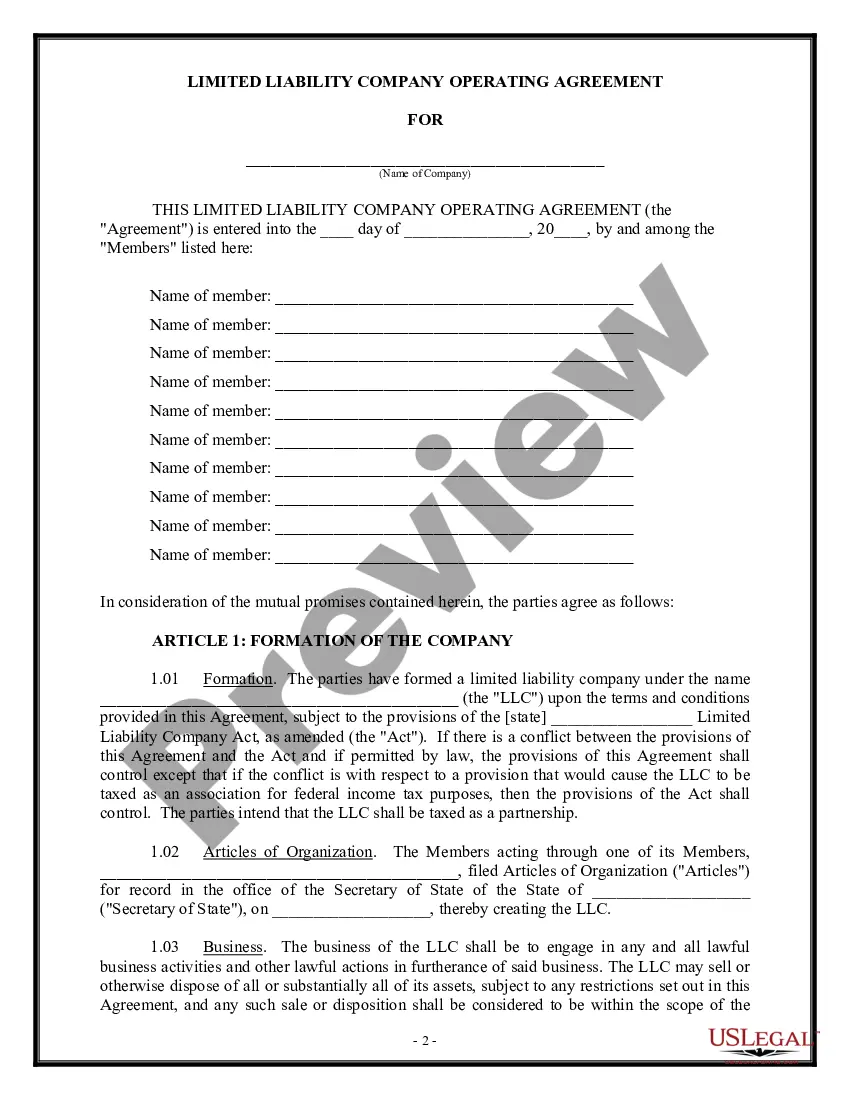
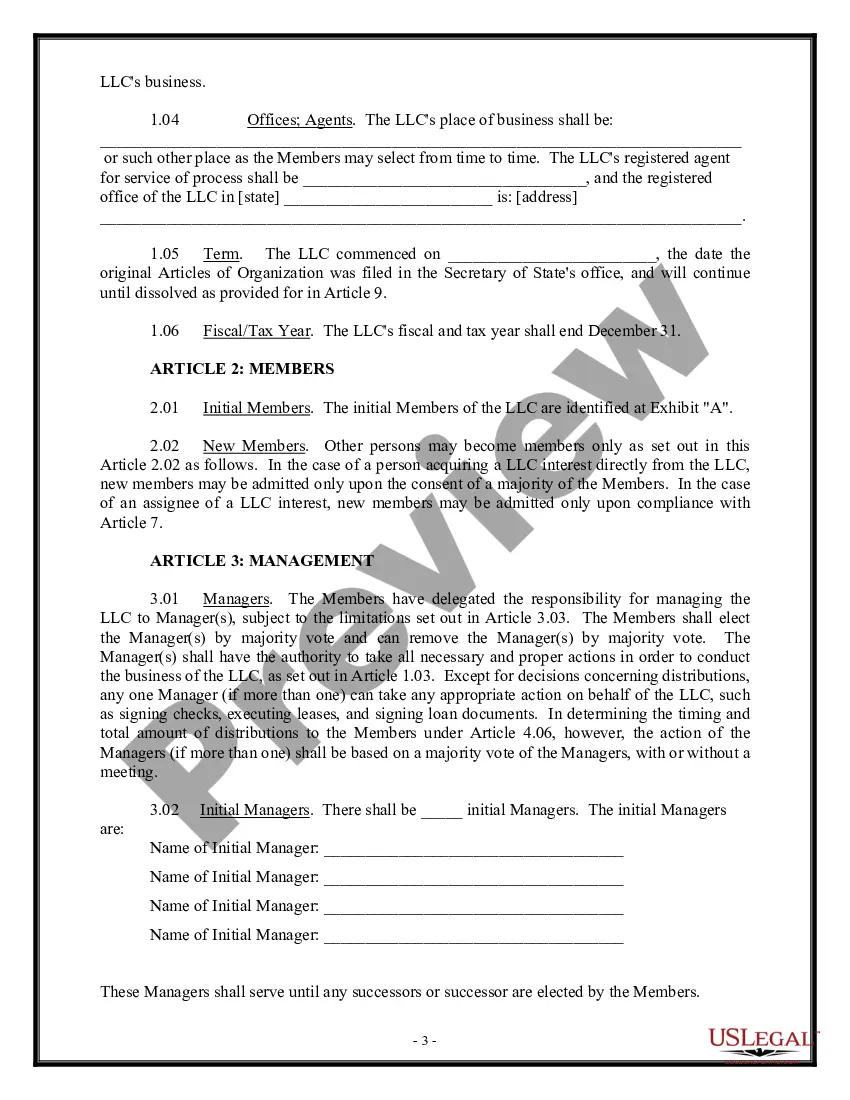
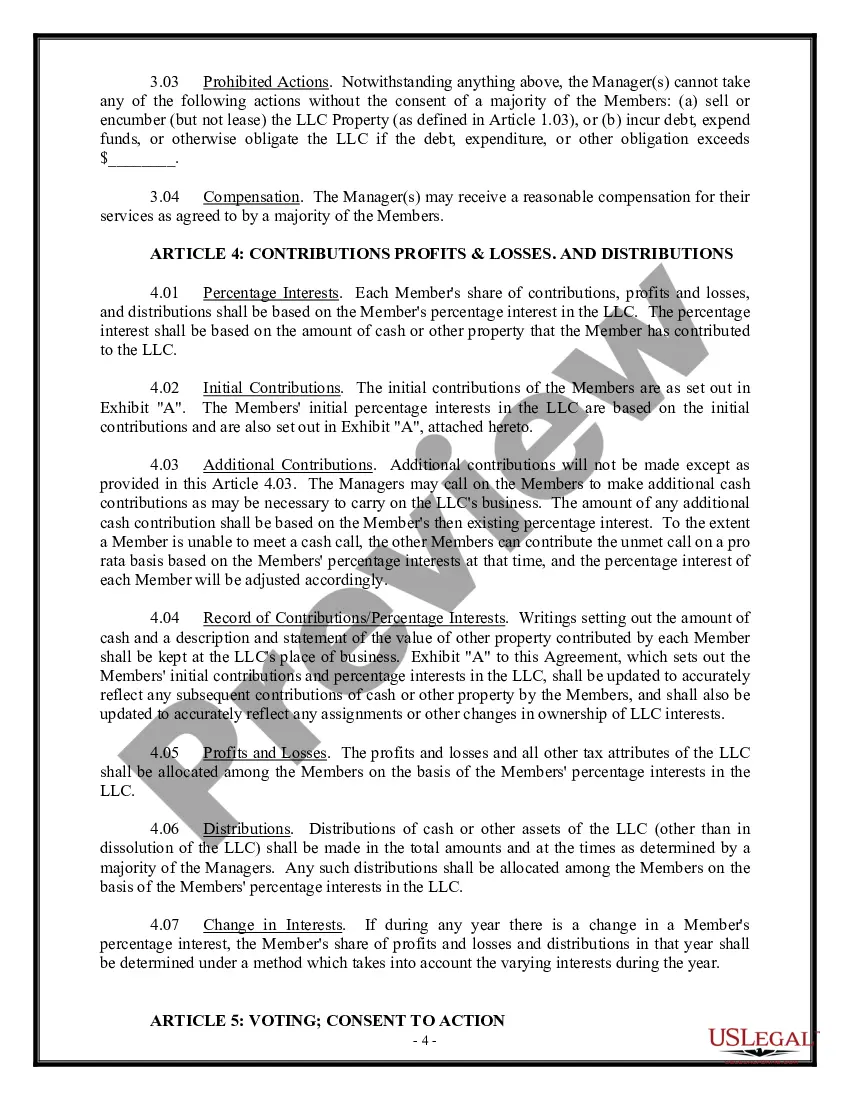
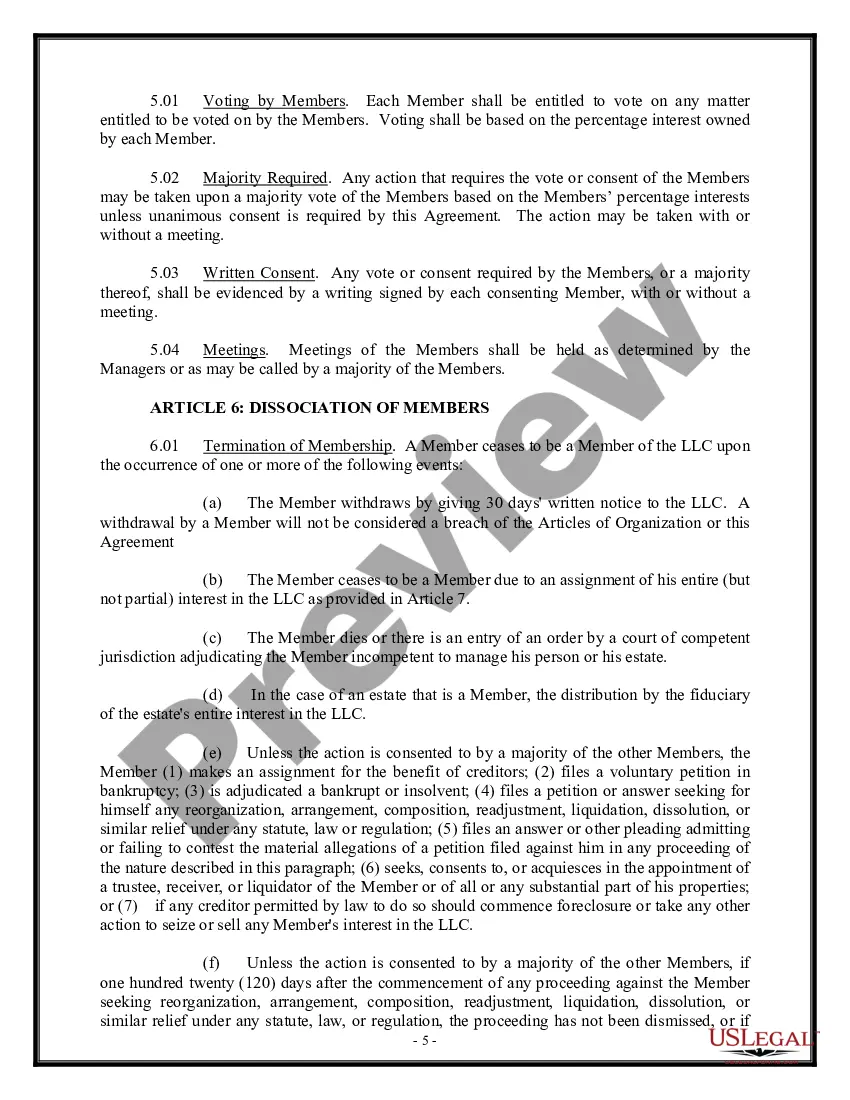
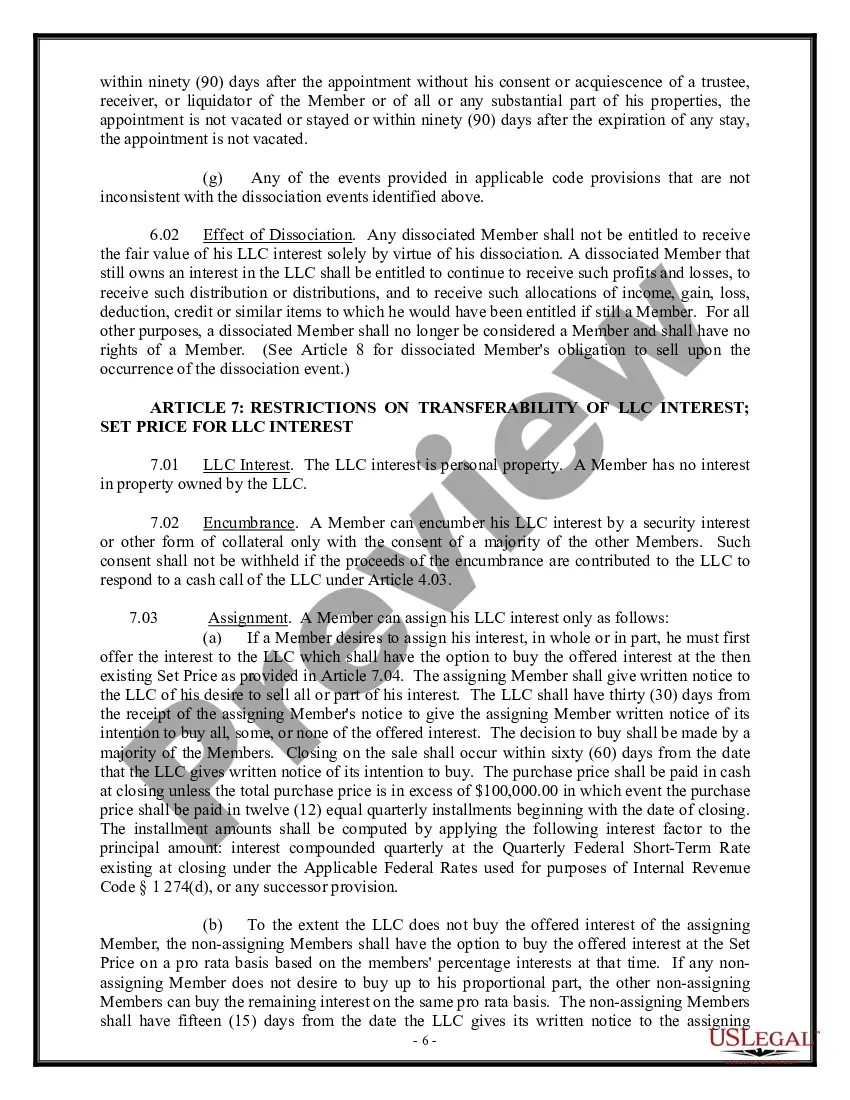
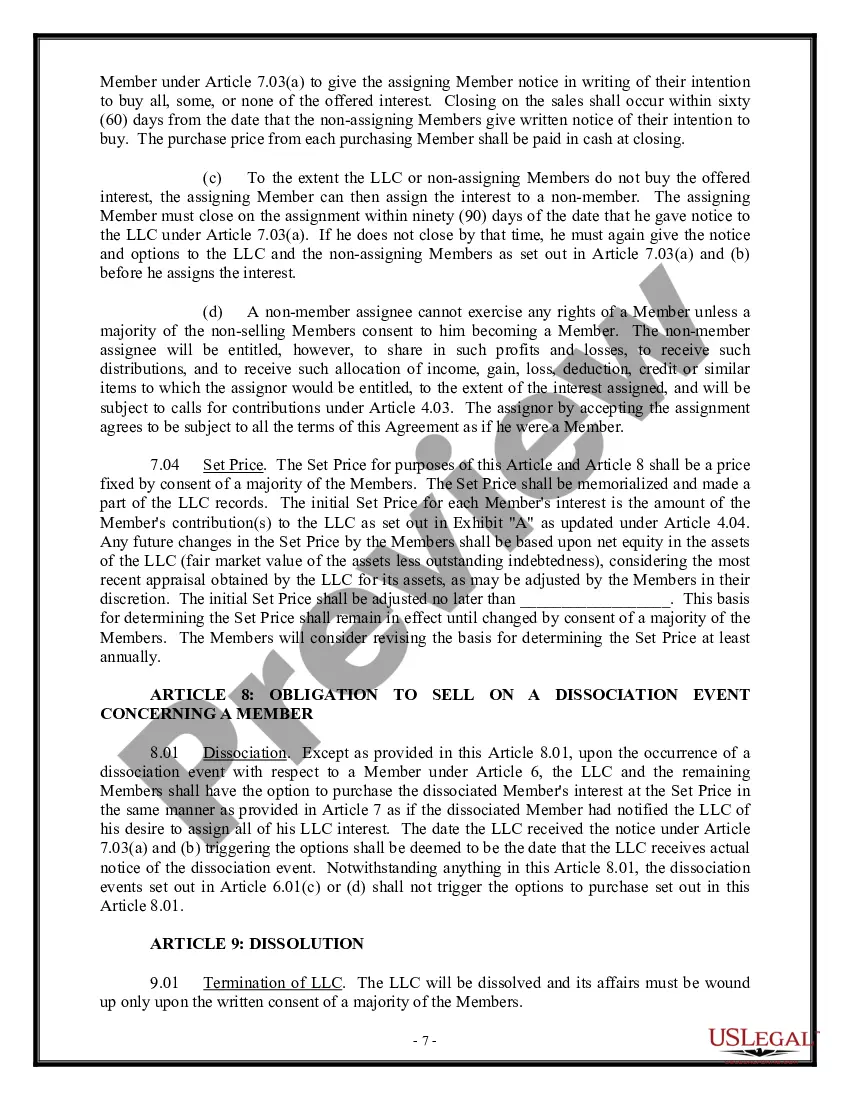
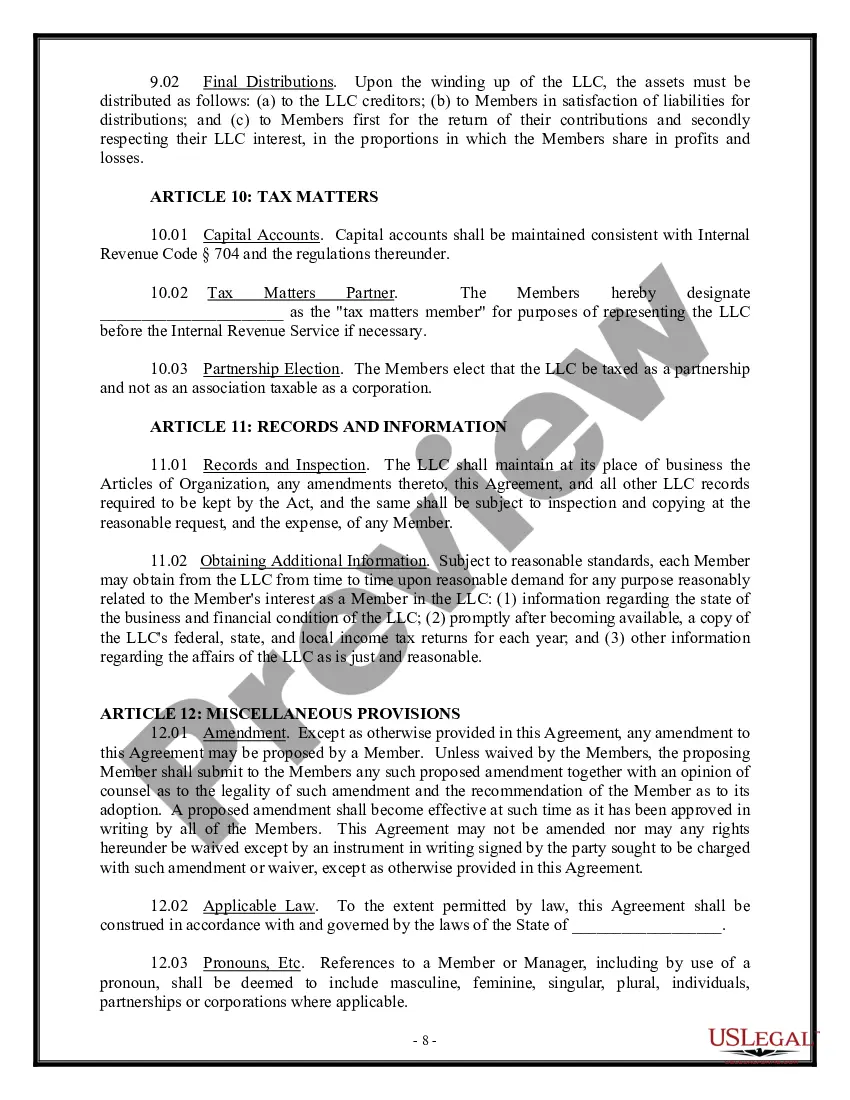
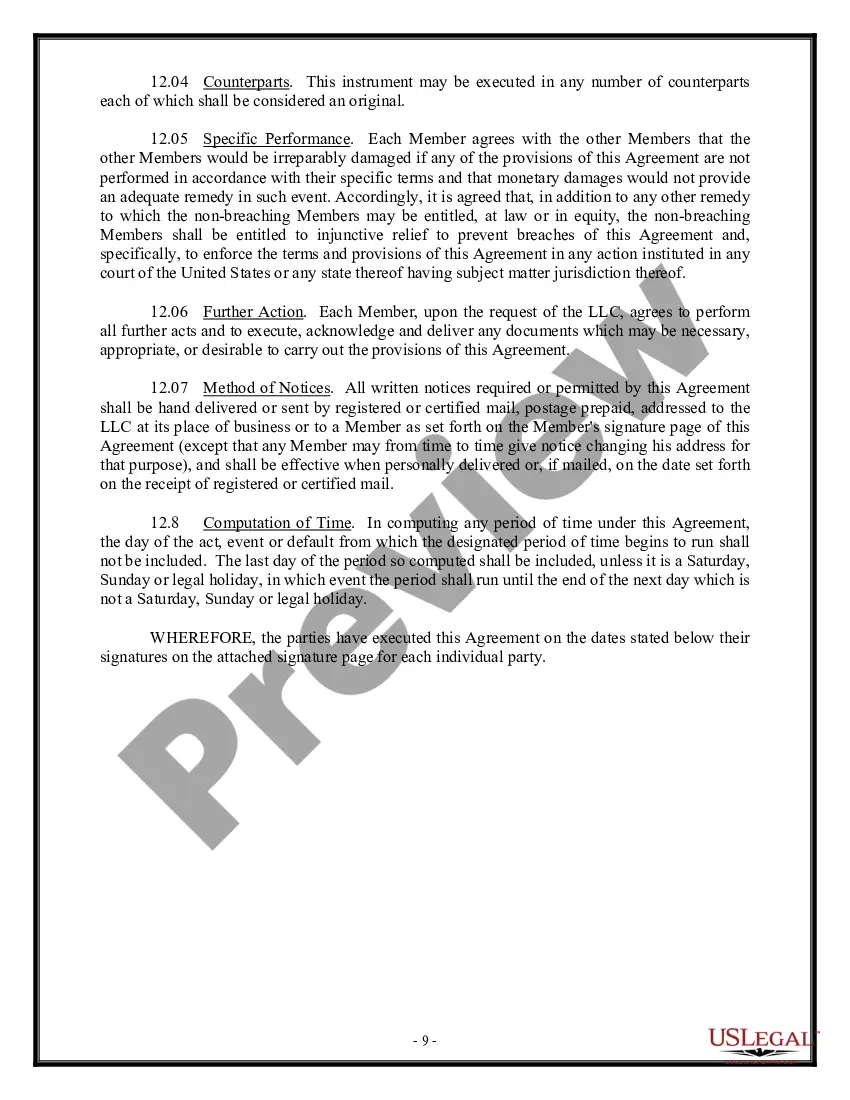
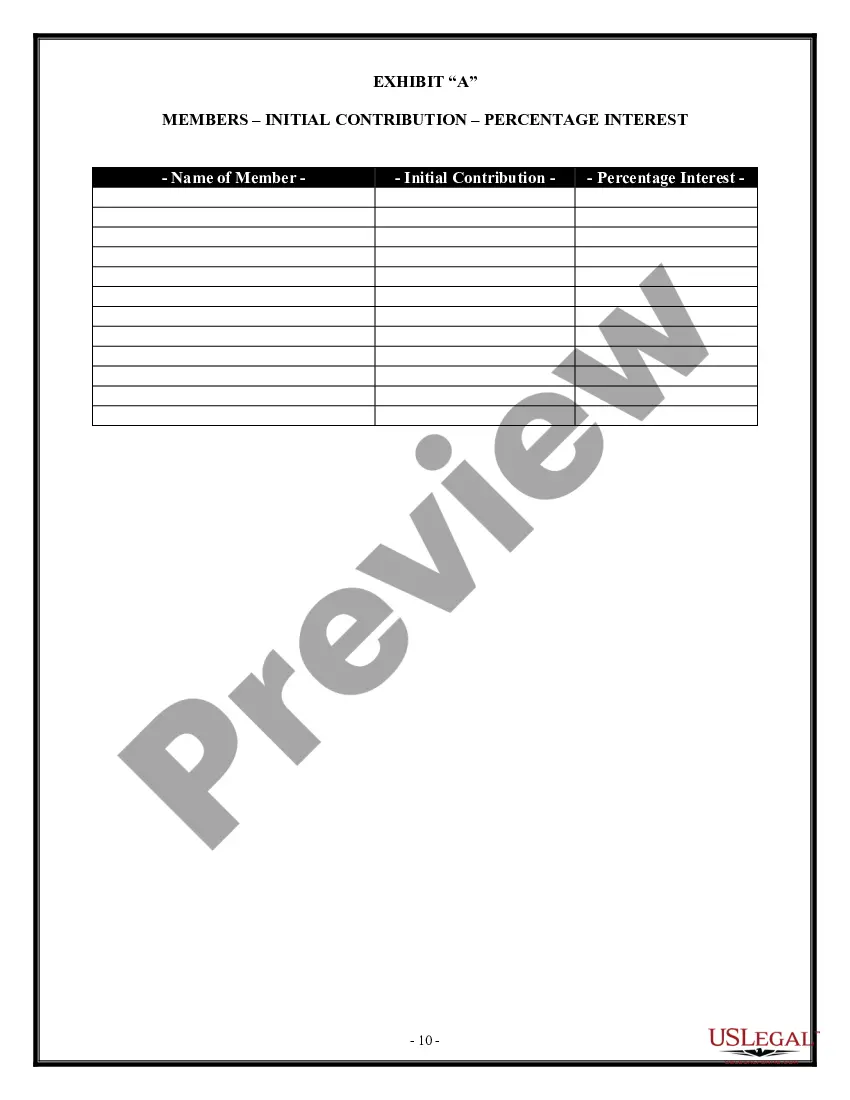
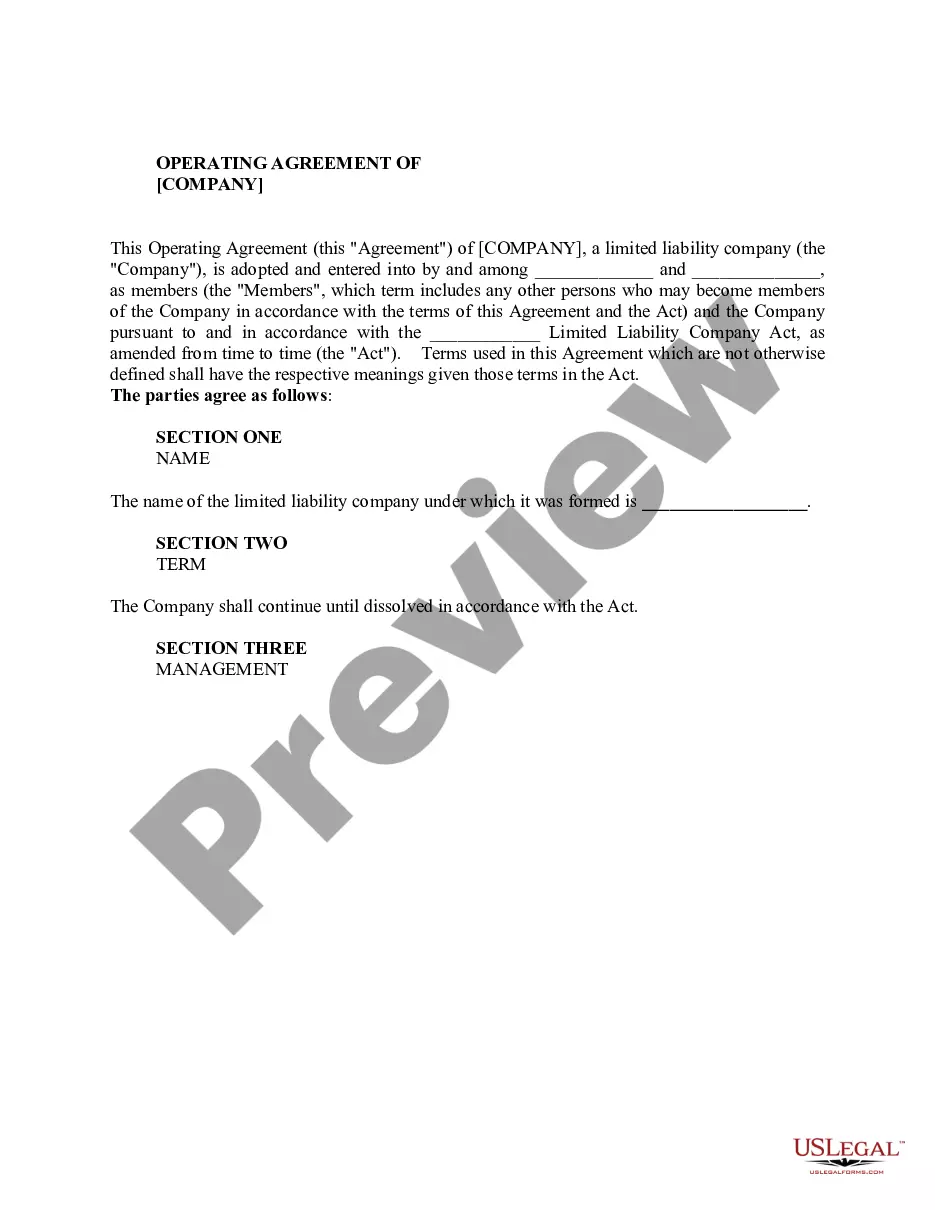
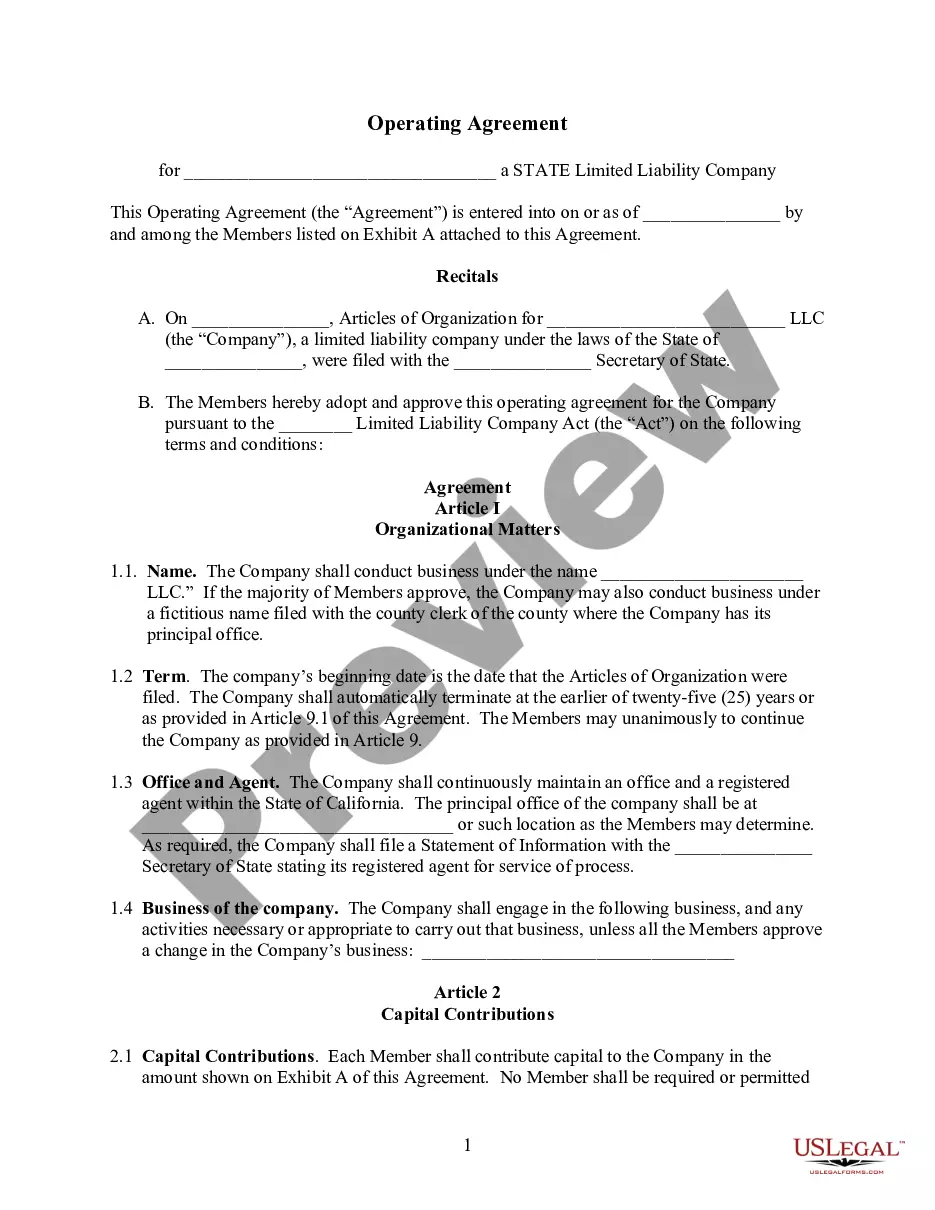
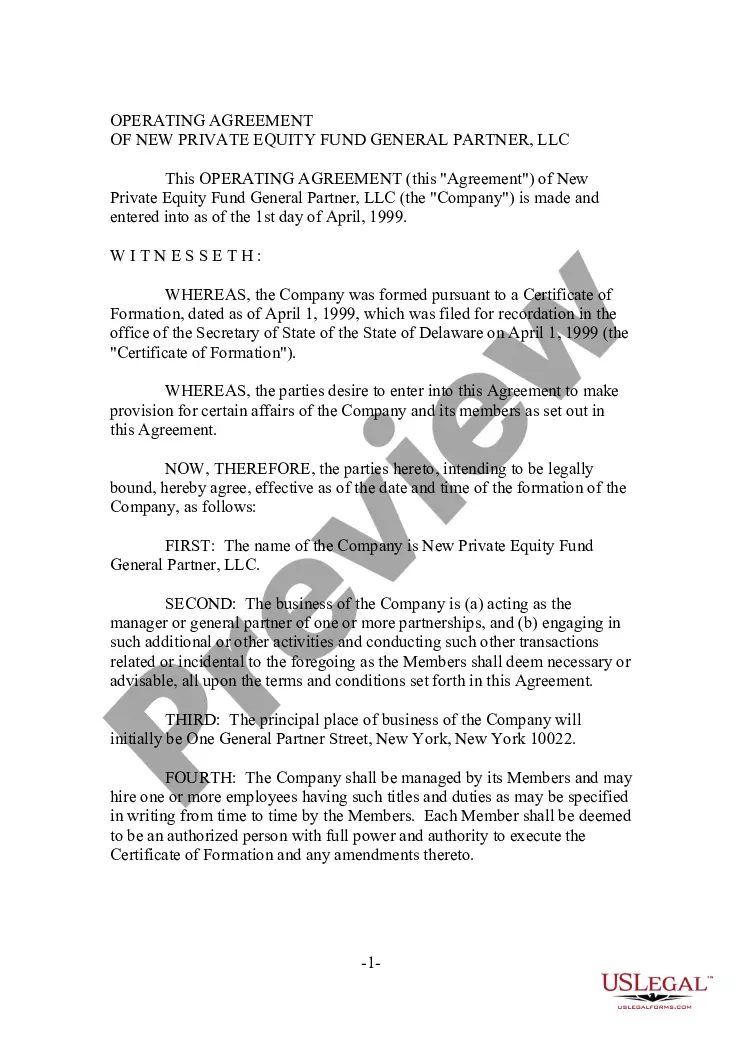
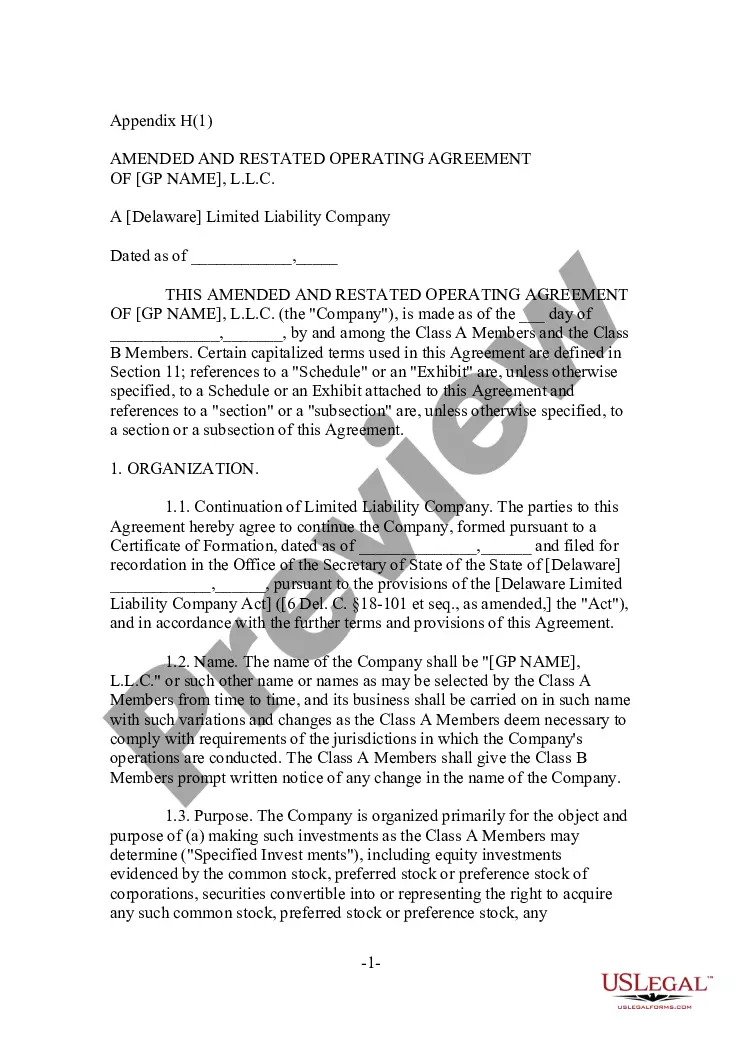
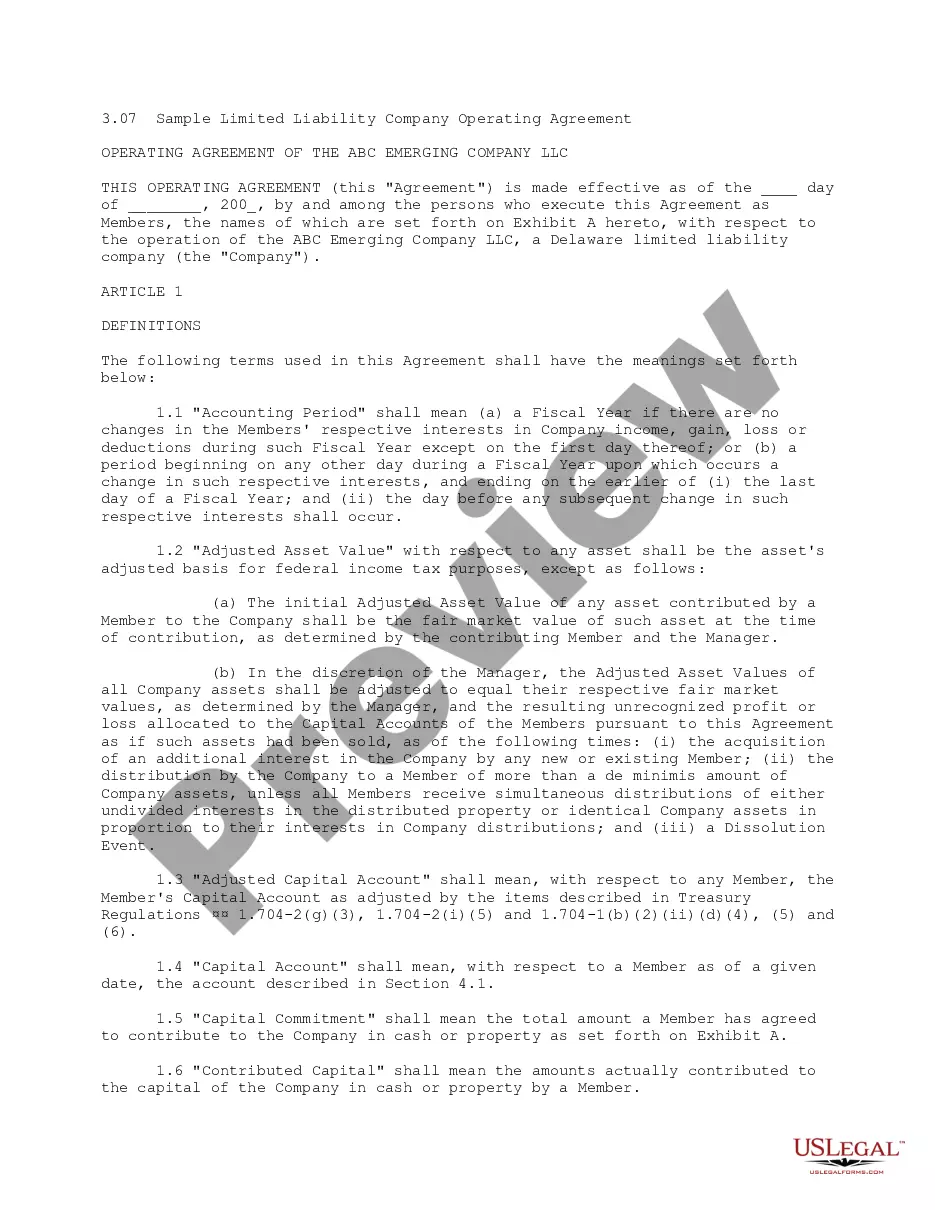
This form is a Limited Liability Company Agreement. The parties have agreed to form a limited liability company upon the terms listed in the agreement. However, the form also lists the actions or events which would result in the termination of membership in the limited liability company.
Montana Limited Liability Company LLC Operating Agreement
State:
Multi-State
Control #:
US-00580
Format:
Word;
Rich Text
Instant download
Description
Free preview

Get your form ready online
Our built-in tools help you complete, sign, share, and store your documents in one place.
Built-in online Word editor
Make edits, fill in missing information, and update formatting in US Legal Forms—just like you would in MS Word.
Export easily
Download a copy, print it, send it by email, or mail it via USPS—whatever works best for your next step.
E-sign your document
Sign and collect signatures with our SignNow integration. Send to multiple recipients, set reminders, and more. Go Premium to unlock E-Sign.
Notarize online 24/7
If this form requires notarization, complete it online through a secure video call—no need to meet a notary in person or wait for an appointment.
Store your document securely
We protect your documents and personal data by following strict security and privacy standards.

Make edits, fill in missing information, and update formatting in US Legal Forms—just like you would in MS Word.

Download a copy, print it, send it by email, or mail it via USPS—whatever works best for your next step.

Sign and collect signatures with our SignNow integration. Send to multiple recipients, set reminders, and more. Go Premium to unlock E-Sign.

If this form requires notarization, complete it online through a secure video call—no need to meet a notary in person or wait for an appointment.

We protect your documents and personal data by following strict security and privacy standards.
Looking for another form?
How to fill out Limited Liability Company LLC Operating Agreement?
Are you in the situation where you need documents for either business or personal reasons almost all the time.
There are numerous legal document templates accessible online, but discovering ones you can trust is not simple.
US Legal Forms provides a wide array of form templates, including the Montana Limited Liability Company LLC Operating Agreement, that are designed to meet state and federal requirements.
Once you find the appropriate form, click on Purchase now.
Select the payment plan you prefer, complete the required information to create your account, and pay for the transaction using your PayPal or credit card.
- If you are already acquainted with the US Legal Forms website and have an account, simply Log In.
- Then, you can download the Montana Limited Liability Company LLC Operating Agreement template.
- If you do not have an account and want to start using US Legal Forms, follow these steps.
- Locate the form you need and verify it is for the correct city/county.
- Utilize the Review option to inspect the form.
- Read the description to ensure you have selected the correct form.
- If the form isn’t what you’re searching for, use the Search field to find the form that meets your needs.
Form popularity
FAQ
To start a Montana LLC, you must appoint a Montana registered agent service. The agent receives service of process (notice of a lawsuit), as well as other important business mail and legal notices, on behalf of the Montana LLC. All documents are received, signed for, and immediately forwarded to the client.
No, Montana's statutes don't explicitly state that Montana LLCs are required to have an operating agreement. However, you'll need an operating agreement for several important aspects of your business, including opening a business bank account.
Montana does not require you to have an operating agreement when you form an LLC; however, even as the sole owner of the company, it's in your best interest to file an operating agreement when you create your LLC.
Wyoming LLC Operating Agreement Laws Wyoming Statutes § 17-29-110: Though Wyoming does not legally require an operating agreement for an LLC, having one is strongly recommended. This document includes provisions for the regulation of business affairs of the company and its members, as well as managers.
Starting an LLC in Montana will include the following steps: #1: Name Your Business. #2: Appoint a Registered Agent. #3: Submit Montana LLC Articles of Organization. #4: Apply for a Federal Employer Identification Number (EIN) #5: Draft an Operating Agreement.
An operating agreement is a key document used by LLCs because it outlines the business' financial and functional decisions including rules, regulations and provisions. The purpose of the document is to govern the internal operations of the business in a way that suits the specific needs of the business owners.
Common pitfalls of a poorly drafted Operating Agreement include failing to: (i) specify what authority managers or members have; (ii) carve out key decisions that require a higher approval threshold (e.g., dissolution, sale of all or substantially all of the assets of the LLC, etc.); (iii) address how deadlocks in the ...