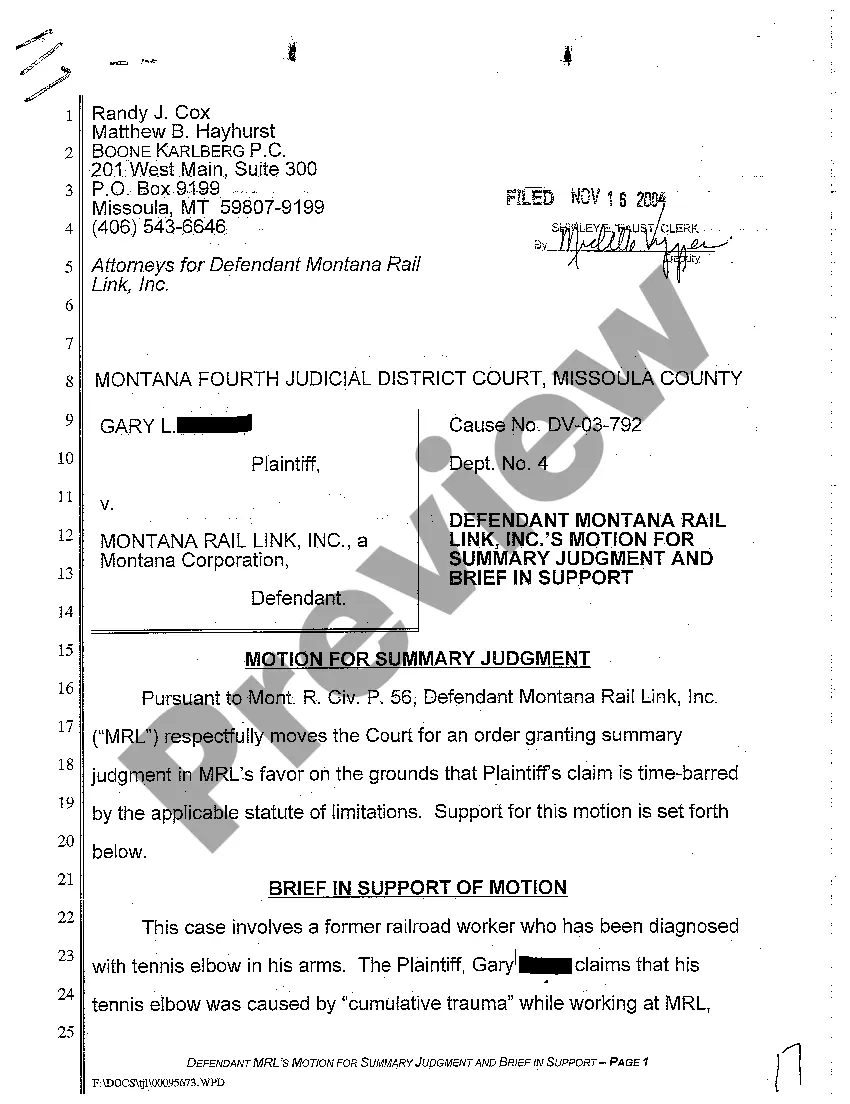
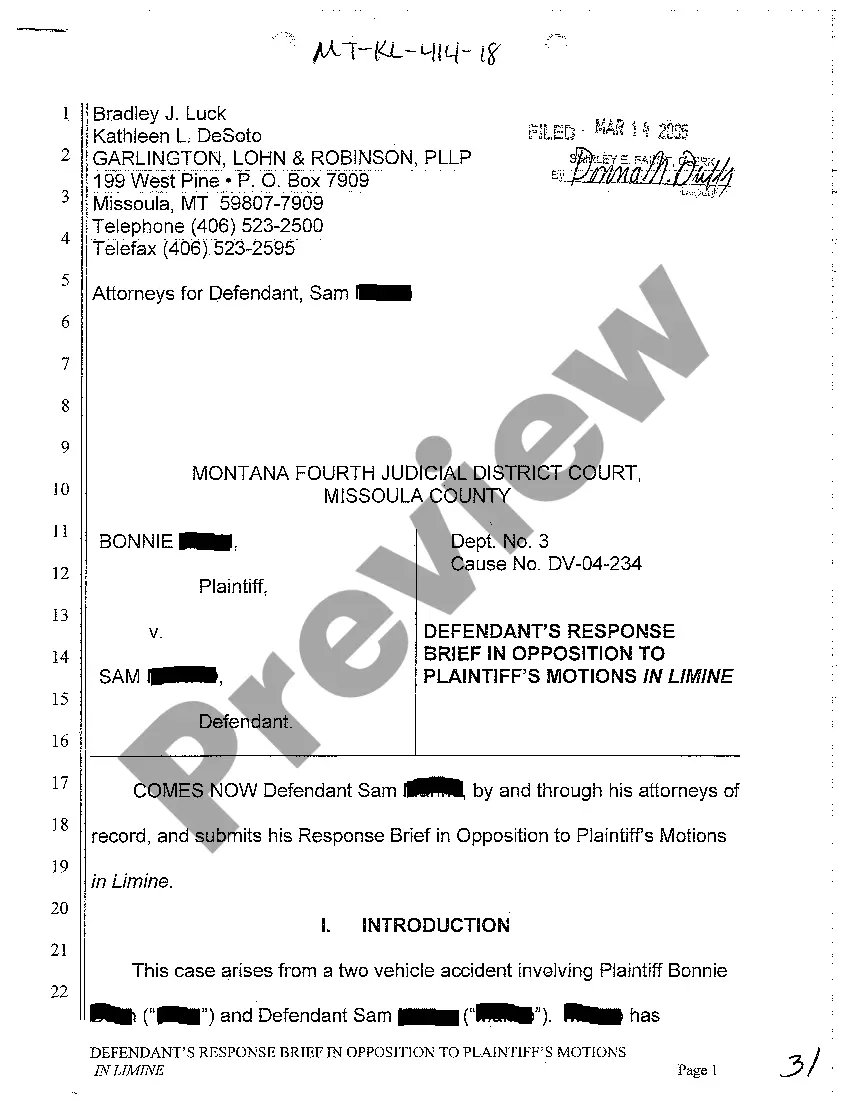
Montana Plaintiff's Brief in Opposition to Defendant's Motion for Summary Judgment
Description
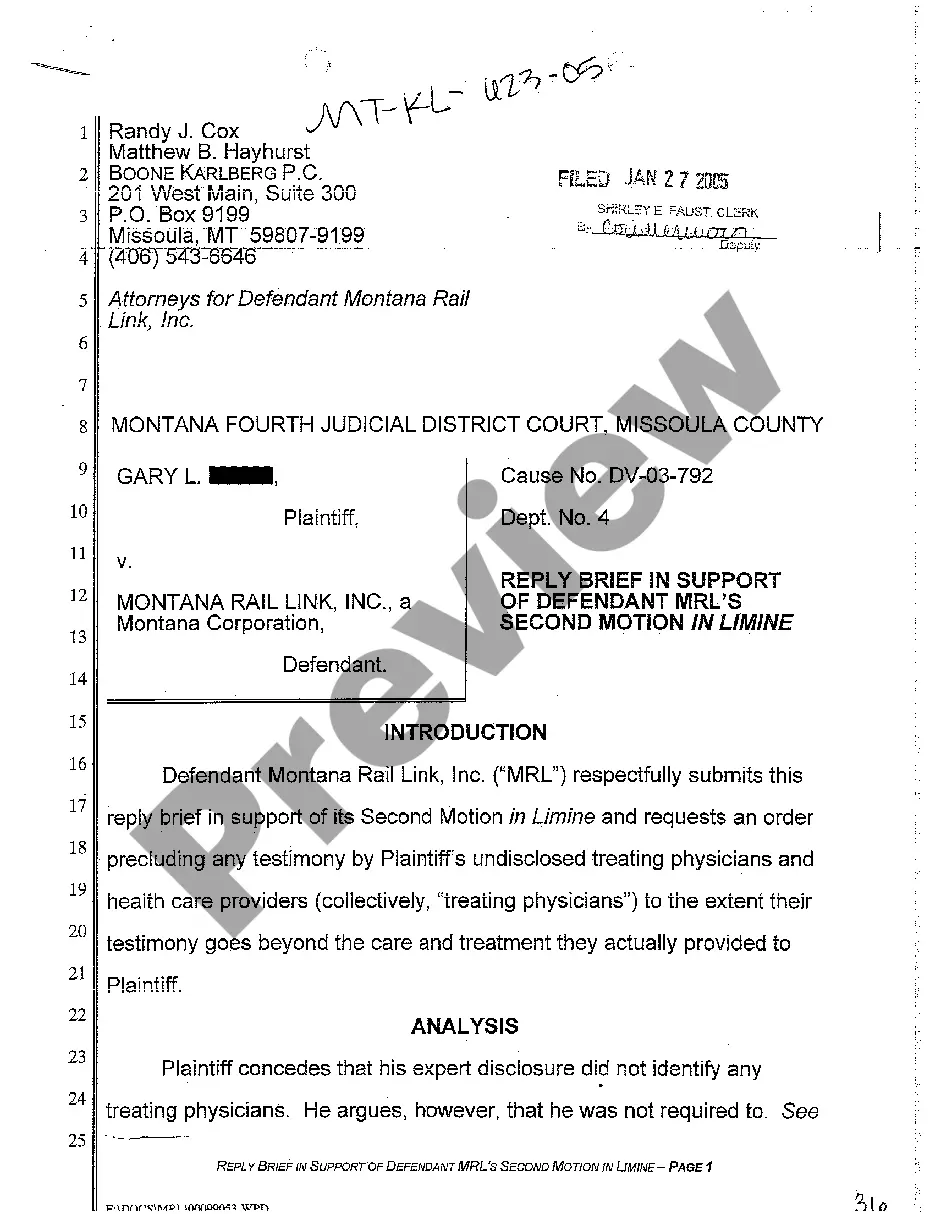
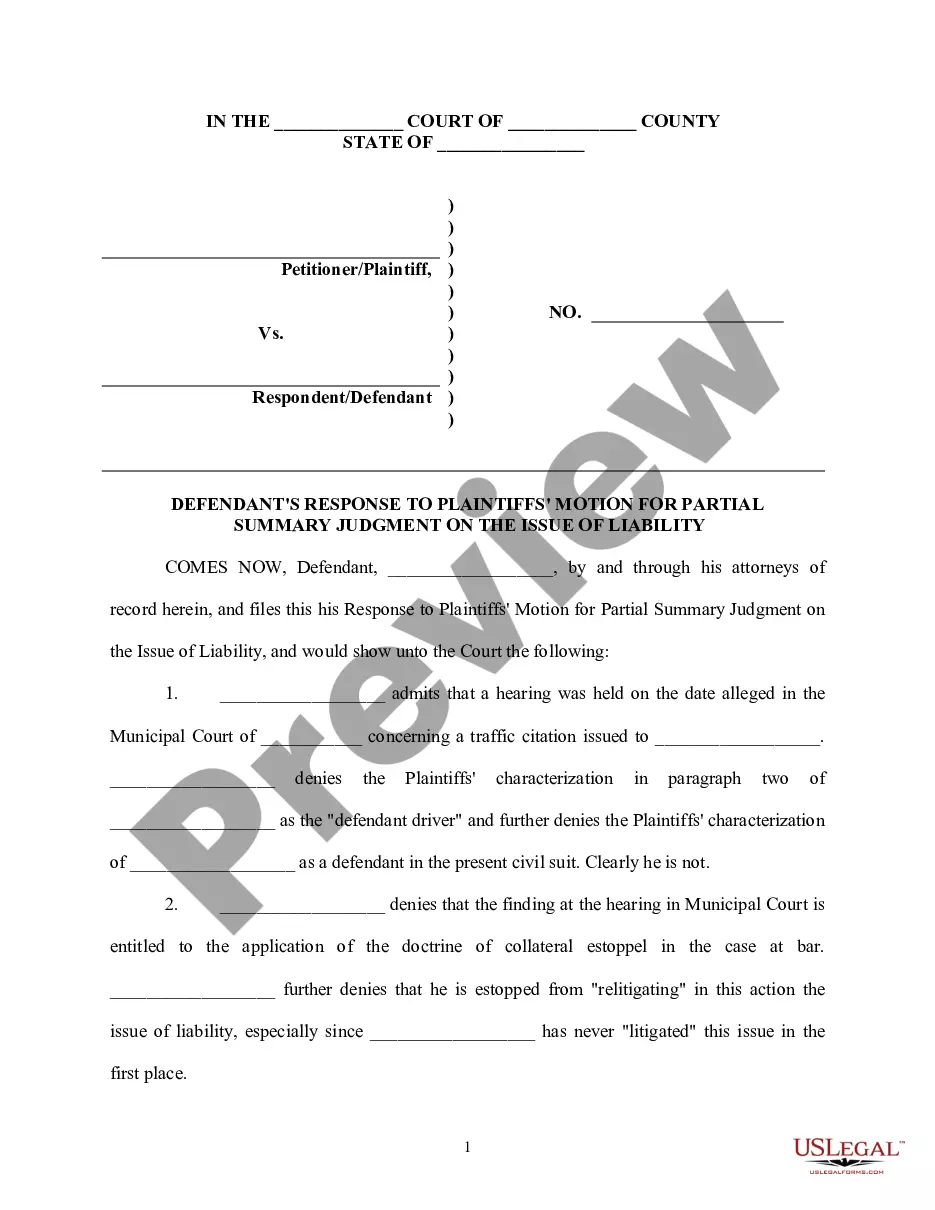
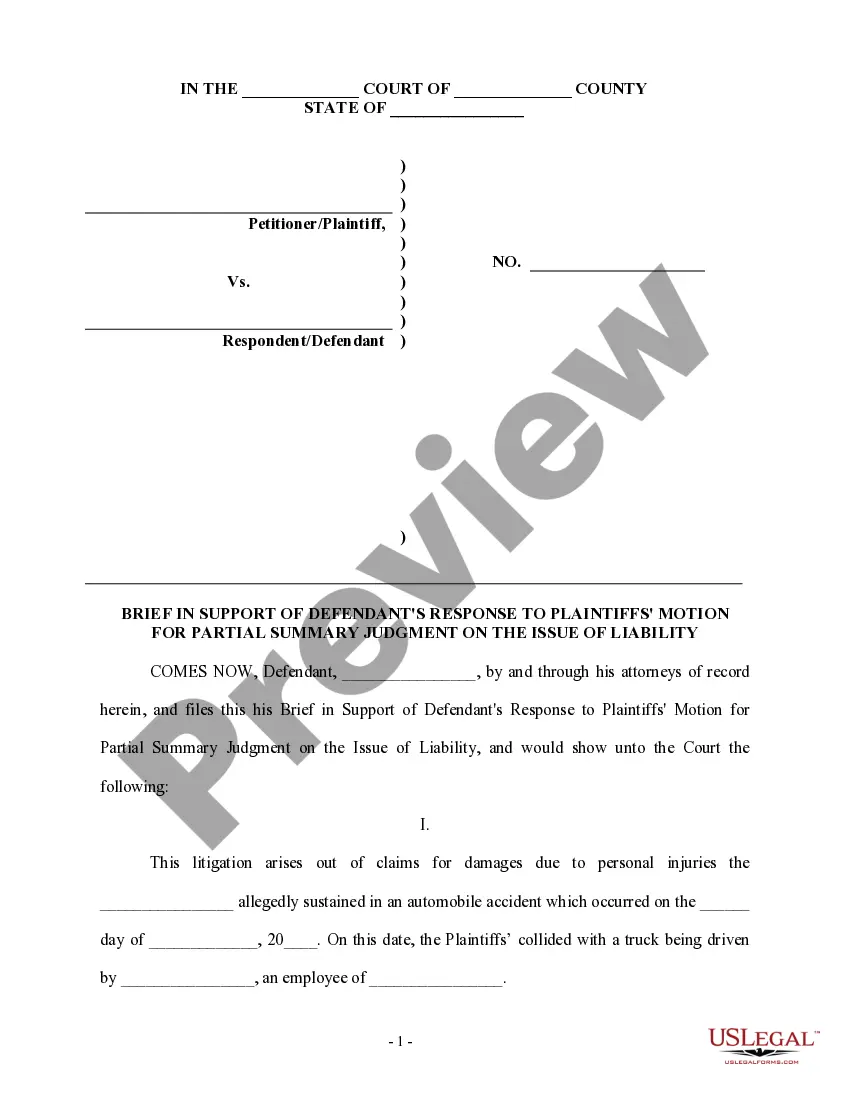
How to fill out Montana Plaintiff's Brief In Opposition To Defendant's Motion For Summary Judgment?
Acquire a printable Montana Plaintiff's Brief in Response to Defendant's Motion for Summary Judgment with just a few clicks in the largest collection of legal electronic documents.
Locate, download, and print professionally crafted and certified templates on the US Legal Forms website. US Legal Forms has been the leading provider of affordable legal and tax documents for US citizens and residents online since 1997.
After downloading your Montana Plaintiff's Brief in Response to Defendant's Motion for Summary Judgment, you can fill it out in any online editor or print it and complete it manually. Use US Legal Forms to access 85,000 professionally drafted, state-specific documents.
- Users with a subscription must Log In to their US Legal Forms account, download the Montana Plaintiff's Brief in Response to Defendant's Motion for Summary Judgment, and find it saved in the My documents section.
- Users without a subscription should follow these guidelines.
- Make sure your template complies with your state’s regulations.
- If available, read the form’s description for additional information.
- If provided, preview the document to view more details.
- Once you’re certain the template fits your needs, click on Buy Now.
- Create a personal account.
- Choose a plan.
- Make a payment via PayPal or credit card.
- Download the document in Word or PDF format.
Form popularity
FAQ
You've written a motion and submitted it to the court. The court has set it for oral argument - now what? Read the rules. Know the judge. Review your written motion. Shepardize your cases again. Review opposing counsel's written motion. Note cases that are directly opposed to your argument. Prepare your argument.
A response must be in writing and include the same supporting documents as a motion for summary judgment. The opposition to the motion for summary judgment should also include a statement of facts showing the dispute and supporting documents.
Overview. If one party to a case has filed a motion with the court, the other side can file an opposition. An opposition is a written statement explaining to the judge why the other side is not entitled to whatever he is asking for in his motion. It is your opportunity to oppose the other side's request.
Rule 56 of the Federal Rules of Civil Procedure governs summary judgment for federal courts. Under Rule 56, in order to succeed in a motion for summary judgment, a movant must show 1) that there is no genuine dispute as to any material fact, and 2) that the movant is entitled to judgment as a matter of law.
You do not have to file a response. However, you would be wise to do so as a motion to dsmiss , if granted, could end your suit. Motions to dimiss for failure to state a claim are rarely granted.
You simply need to request that the court deny the defendant's motion to dismiss. For example, you could write the following: For the foregoing reasons and all the others discussed in Plaintiff's Complaint, the present Motion to Dismiss should be denied.
The key to defeating a motion for summary judgment is to show the court that there are still facts in dispute. Summary judgment is only appropriate if none of the facts are disputed.
If a defendant refuses to produce documents or witnesses for depositions, you can oppose the summary-judgment motion by submitting your declaration and showing that facts essential to justify your opposition may exist but cannot for reasons stated be presented to the court.
When it comes to summary judgment, plaintiff lawyers are often guilty of forgetting the fact that either party can file one. If you have solid evidence that can't be disputed, you may very well be able to prove your claim without going to trial.