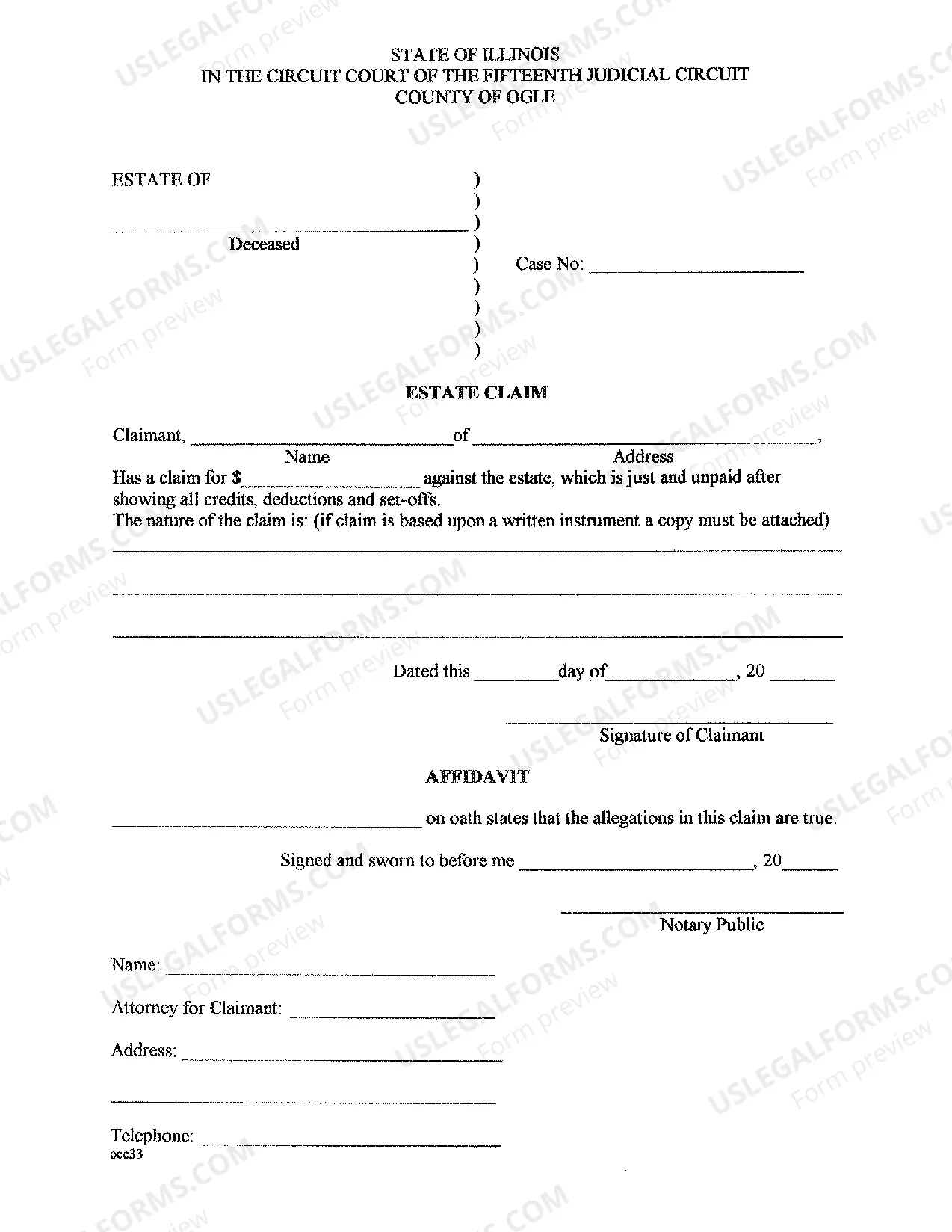
Montana Notice and Information to Heirs and Devisees
Description
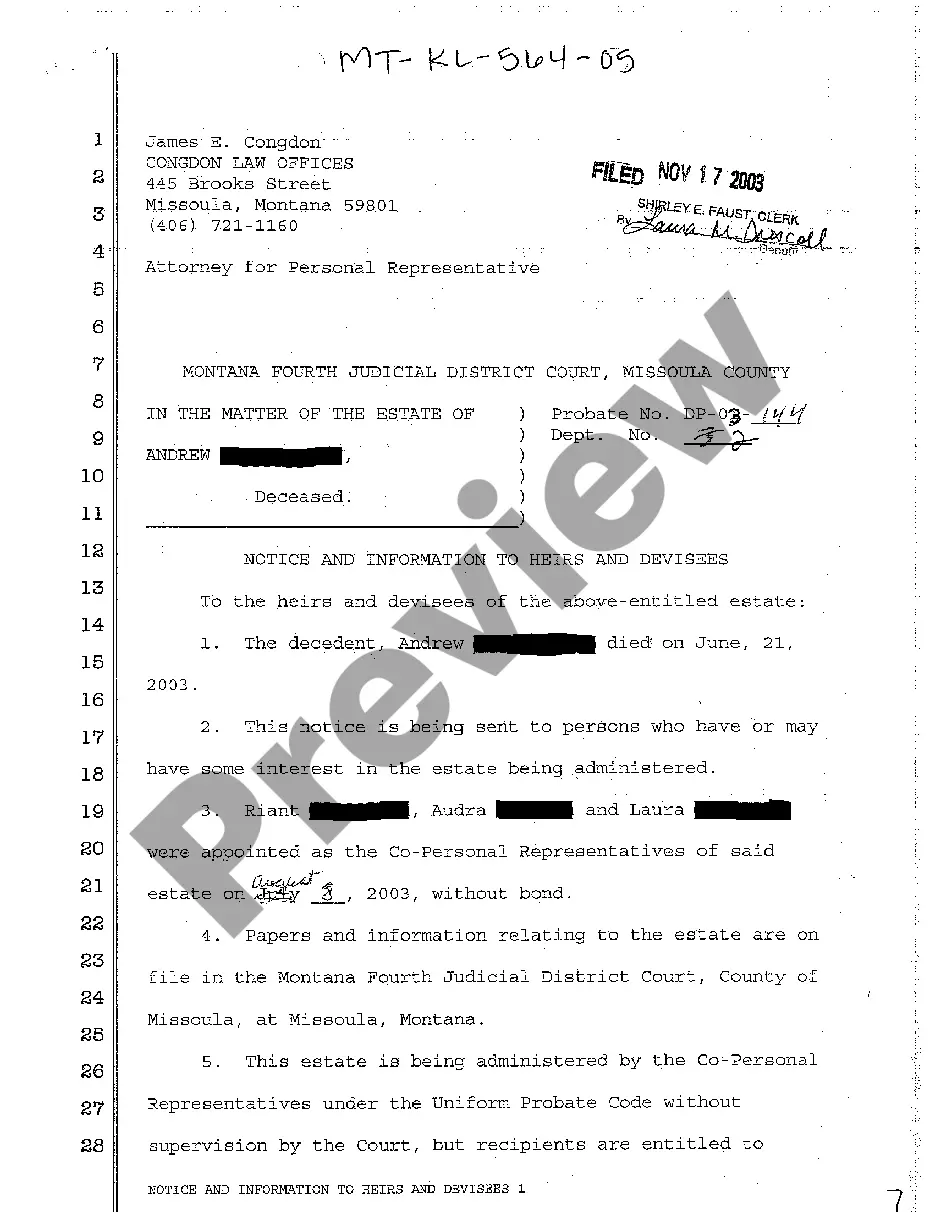
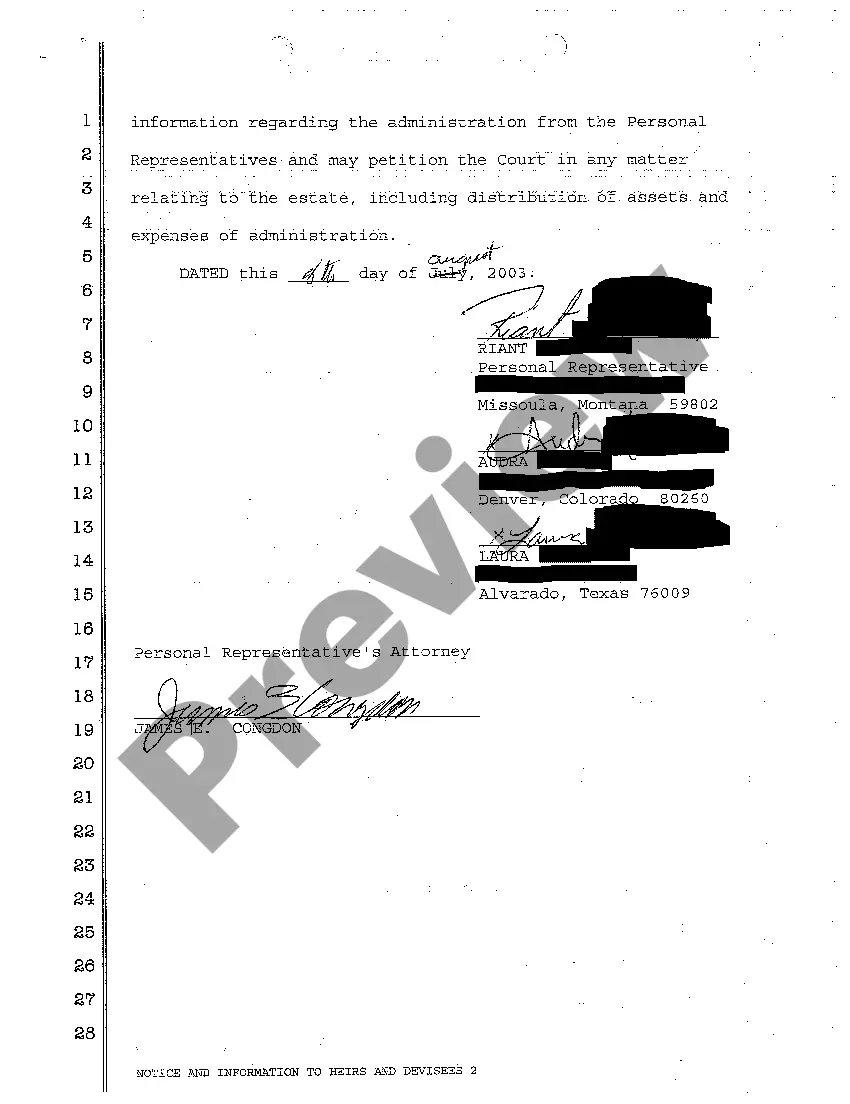
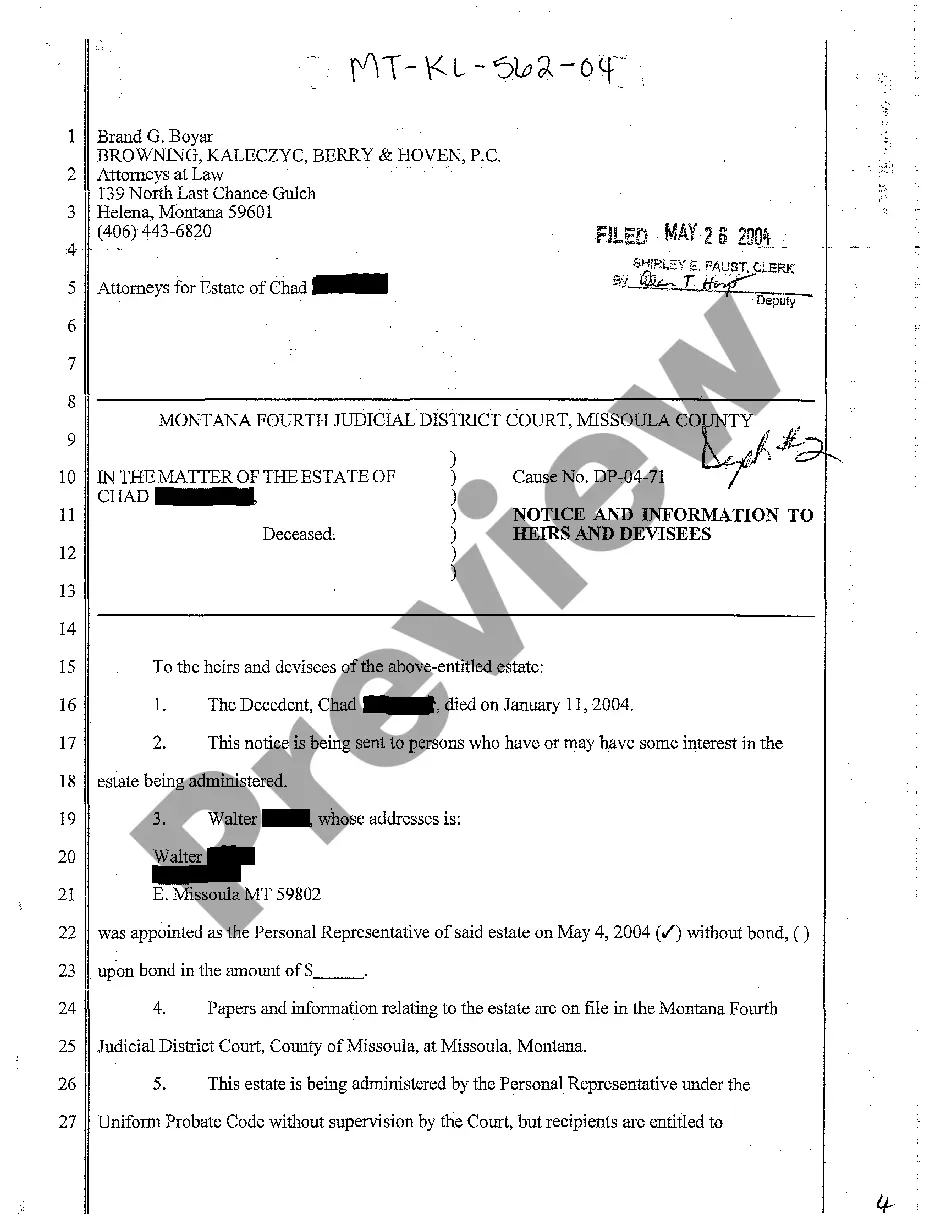
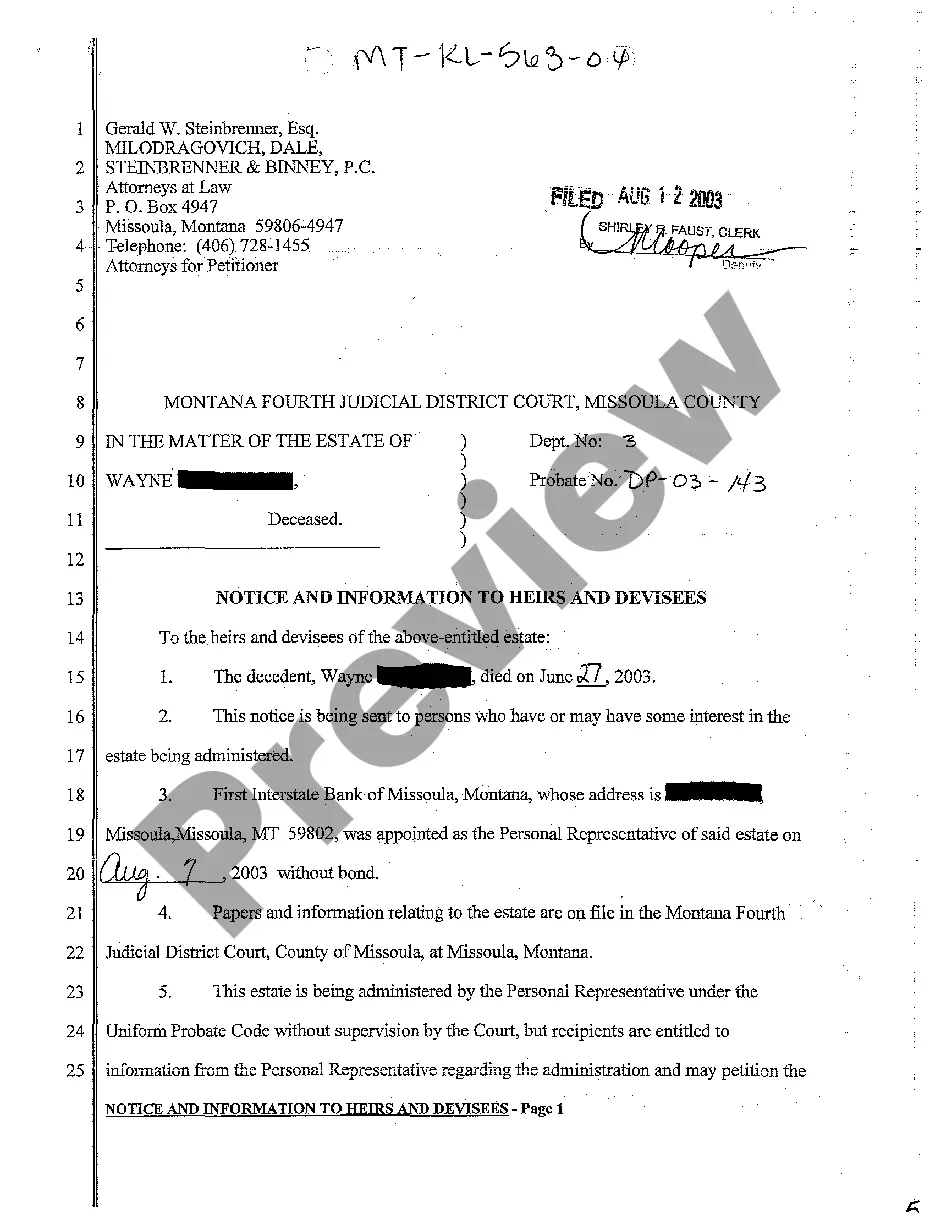
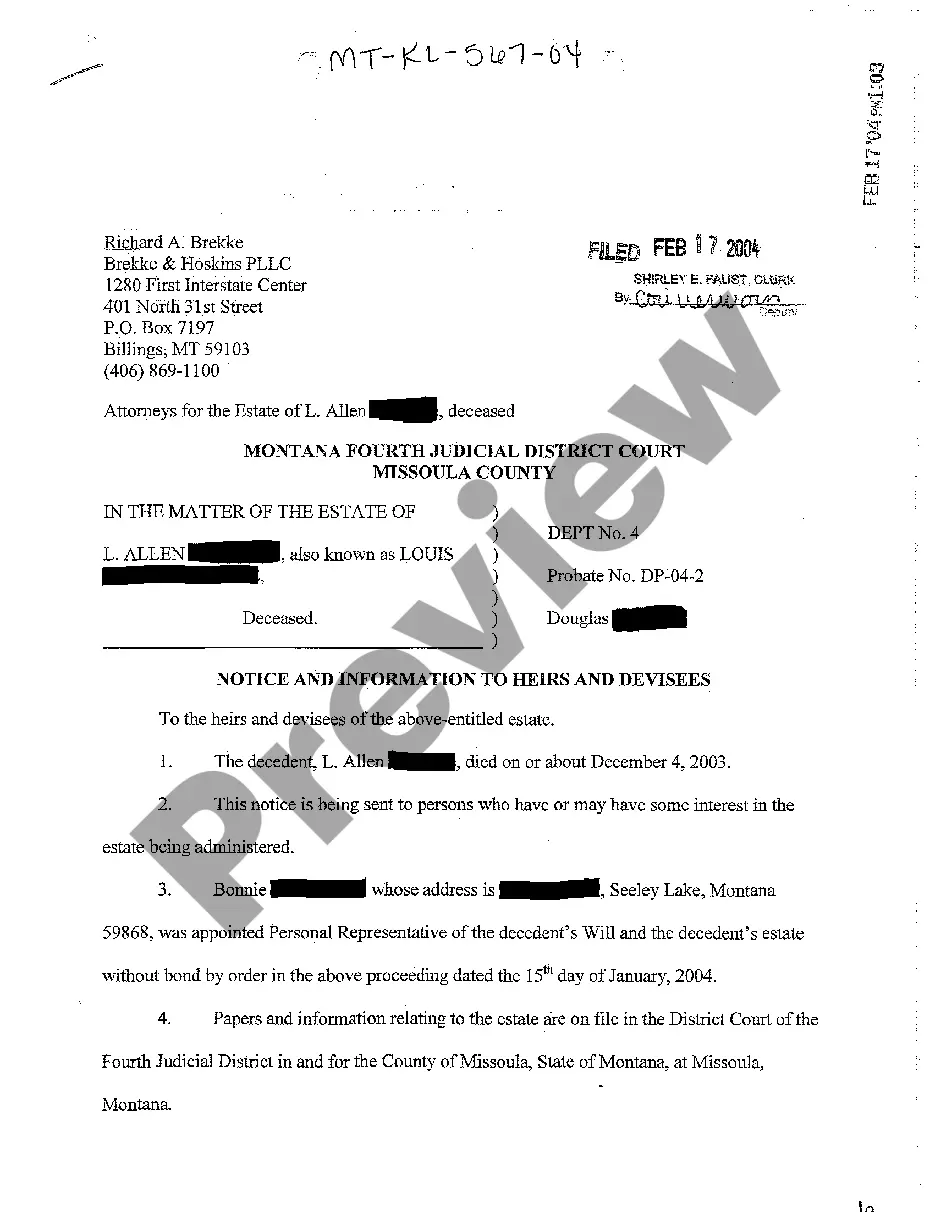
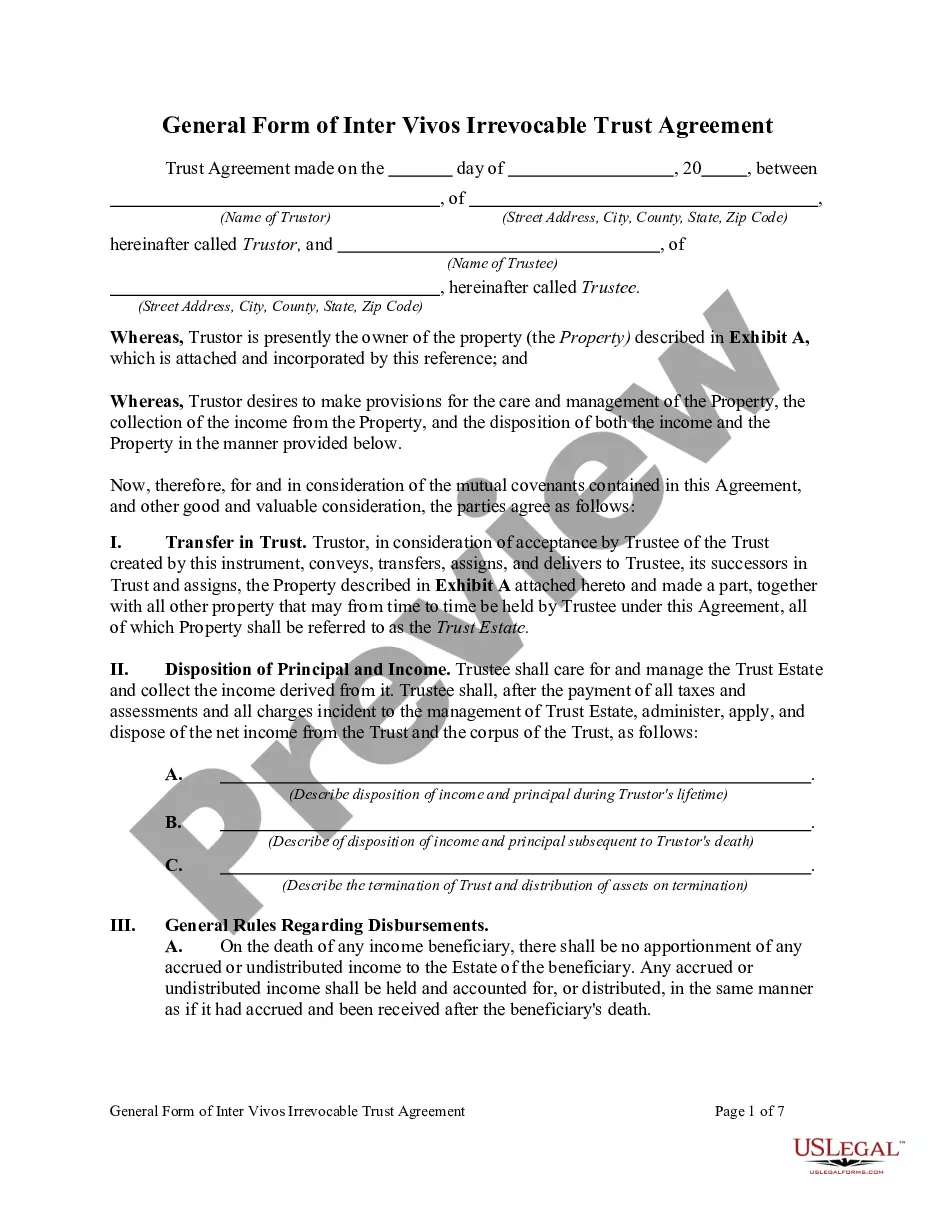
How to fill out Montana Notice And Information To Heirs And Devisees?
Acquire a printable Montana Notice and Information to Heirs and Devisees in merely a few clicks from the most extensive repository of legal electronic documents.
Locate, download and print professionally composed and verified examples on the US Legal Forms platform. US Legal Forms has been the top provider of affordable legal and tax documents for US citizens and residents online since 1997.
After you’ve downloaded your Montana Notice and Information to Heirs and Devisees, you can complete it in any online editor or print it out and fill it by hand. Utilize US Legal Forms to access 85,000 expertly drafted, state-specific forms.
- Customers who already possess a subscription must Log In directly into their US Legal Forms account, download the Montana Notice and Information to Heirs and Devisees and find it saved in the My documents section.
- Ensure your template complies with your state’s regulations.
- If possible, review the form’s description for additional information.
- If available, preview the document to examine more content.
- When you’re confident the form suits your requirements, simply click Buy Now.
- Establish a personal account.
- Choose a subscription plan.
- Make a payment through PayPal or credit card.
- Download the document in Word or PDF format.
Form popularity
FAQ
As an heir, you are entitled to a copy of the Will, whether you are named as a beneficiary or not. If there is a probate estate, then you should receive a copy of the Will. If you do not, you can always get it from the court. If there is no probate estate, then the Will is not going to do anything.
This law states that no matter what your will says, your spouse has a right to inherit one-third or one-half (depending on the state and sometimes depending on the length of the marriage) of your total estate. To exercise this right, your spouse has to petition the probate court to enforce the law.
Give the letter a personal touch and address each of your heirs and beneficiaries personally. Tell them any last wishes you may have or any hopes you have for their future. Write as clearly as possible. Use specific details and avoid using shorthand.
An heir is a person who is legally entitled to collect an inheritance, when a deceased person did not formalize a last will and testament. Generally speaking, heirs who inherit the property are children, descendants or other close relatives of the decedent.
The right of inheritance is passing the titles, rights, debts, property, and obligations to another person on the death of an individual. Considering how priceless real estate assets are currently, legal heirs must safeguard the property/asset after the death of the person in whose name the property was registered.
Heirs are entitled to receive their inheritance.In legal terms, heirs are the next of kin and are the people who would normally benefit if the person died without leaving a will (died intestate.) The succession of intestate heirs is based on direct descendants, such as children or grandchildren.
An heir-at-law is anyone who's entitled to inherit from someone who dies without leaving a last will and testament or other estate plans. This status can be an important factor not only in settling an estate but in determining who might be entitled to challenge or contest a will when the deceased does leave one.
Mention the obvious and that you wish to change the current beneficiary to a new one. Provide accurate details of the new beneficiary and double check the spelling. Specify that if any documentation or details not included are needed that you may be contacted with contact information enclosed.
An heir is a person who is legally entitled to collect an inheritance, when a deceased person did not formalize a last will and testament. Generally speaking, heirs who inherit the property are children, descendants or other close relatives of the decedent.