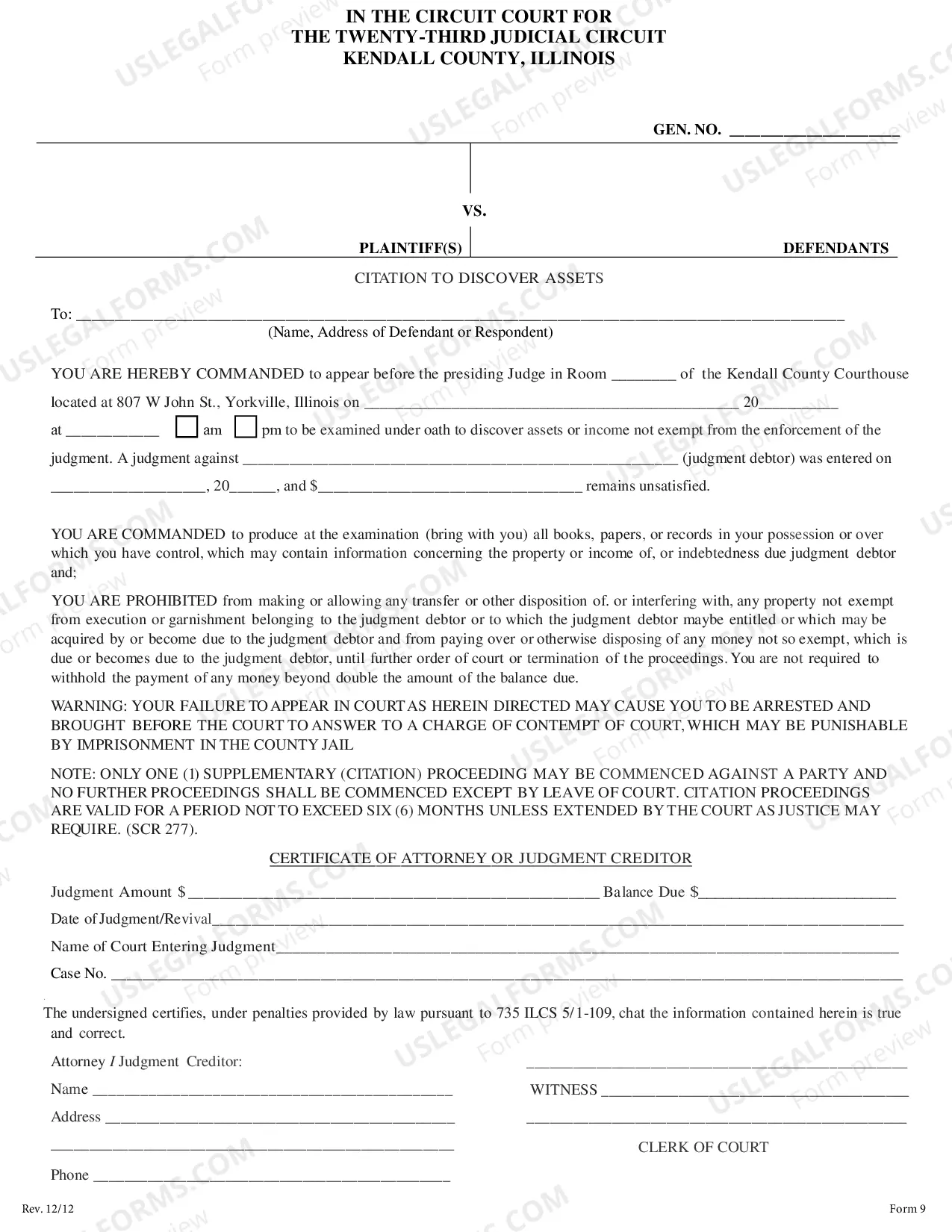
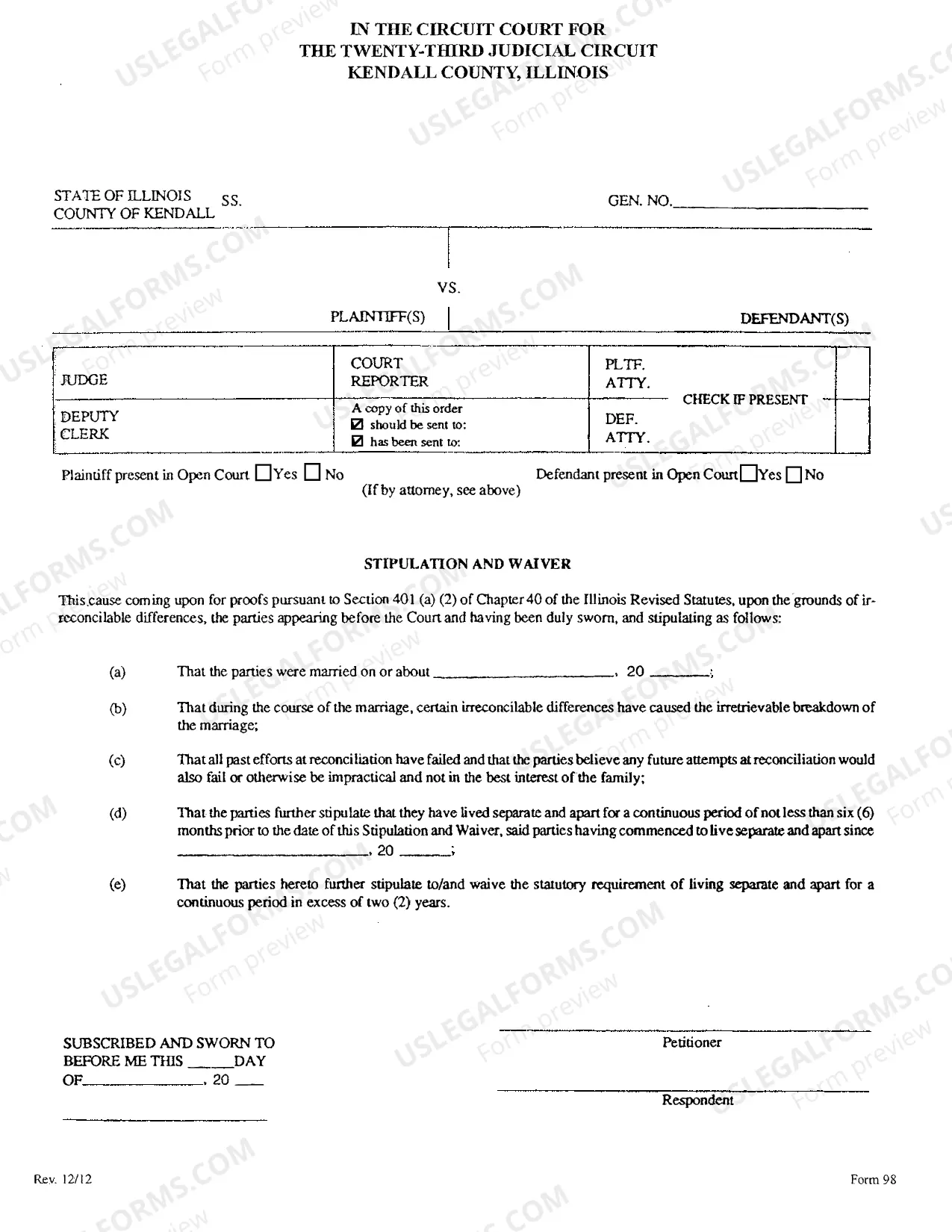
Montana Order Appointing Temporary Guardian and Conservator and Order to Show Cause
Description
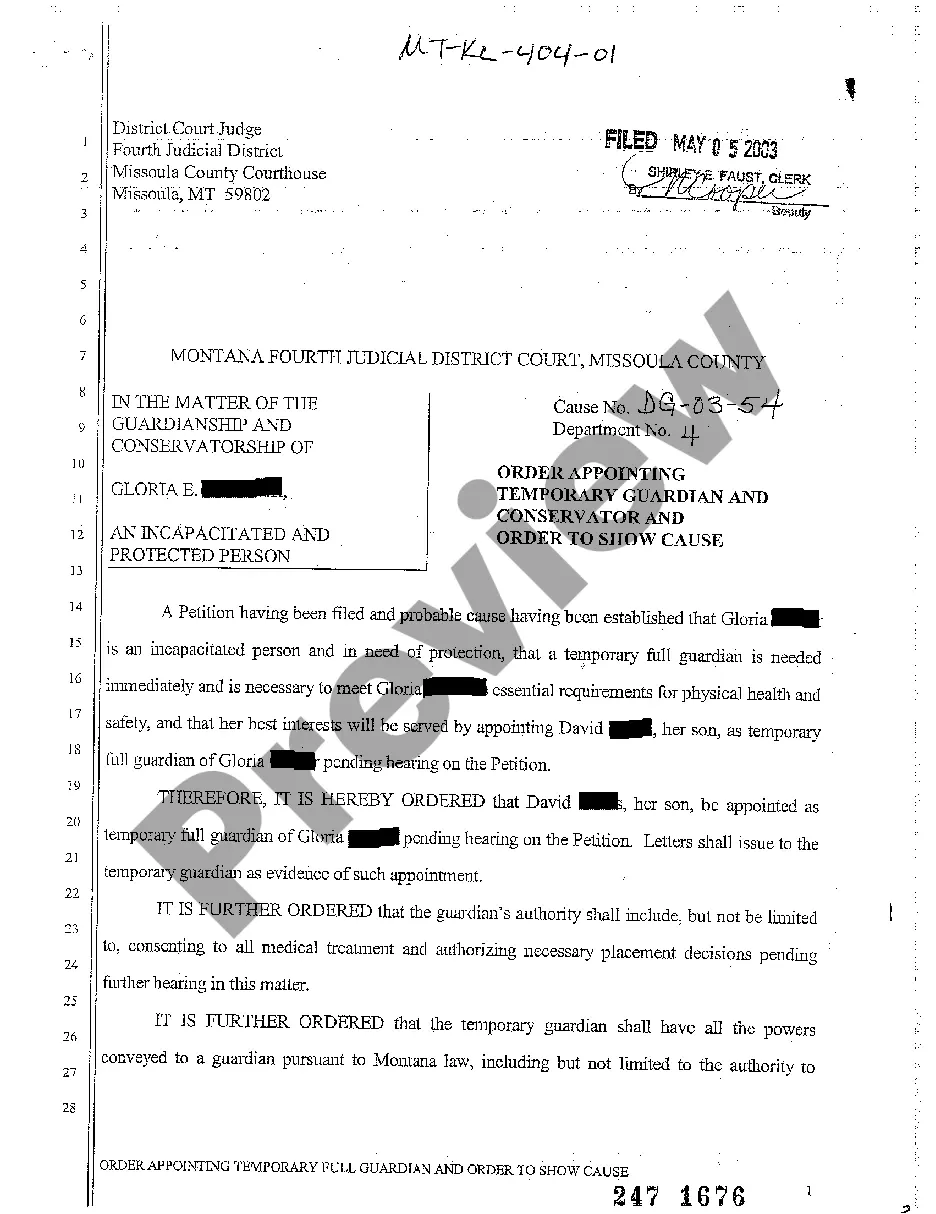
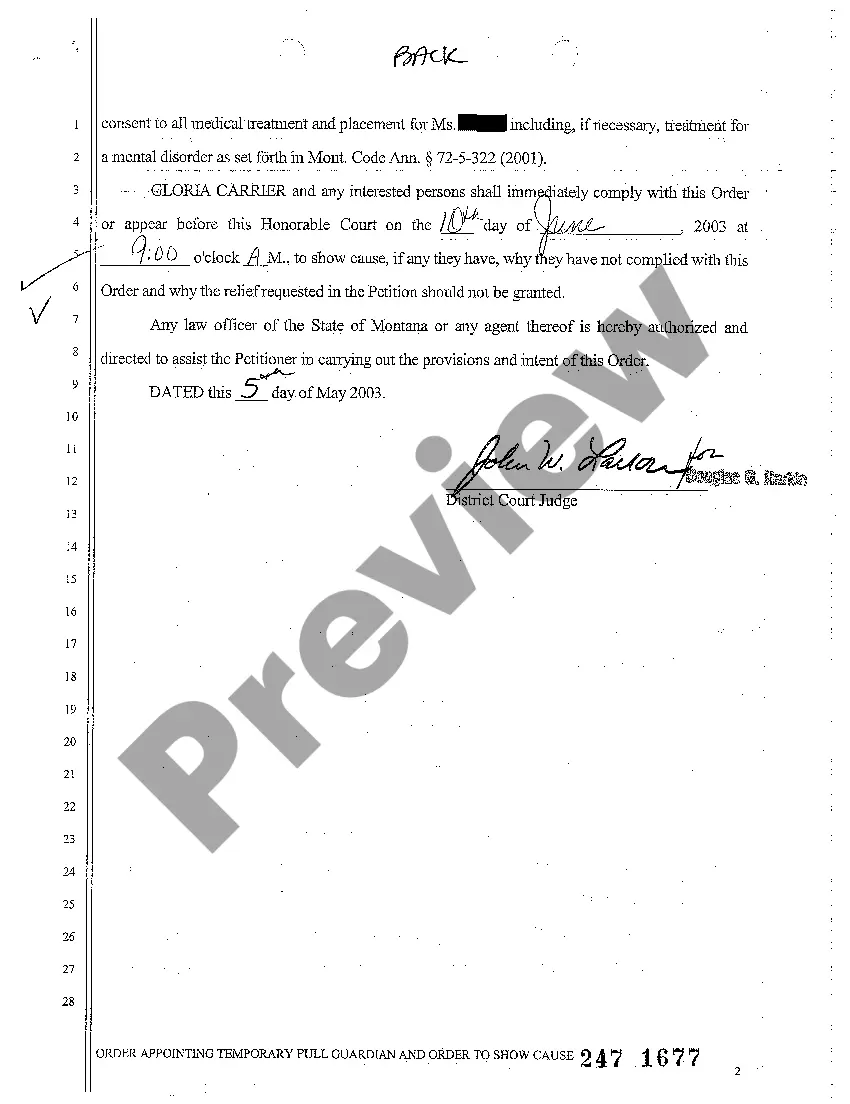
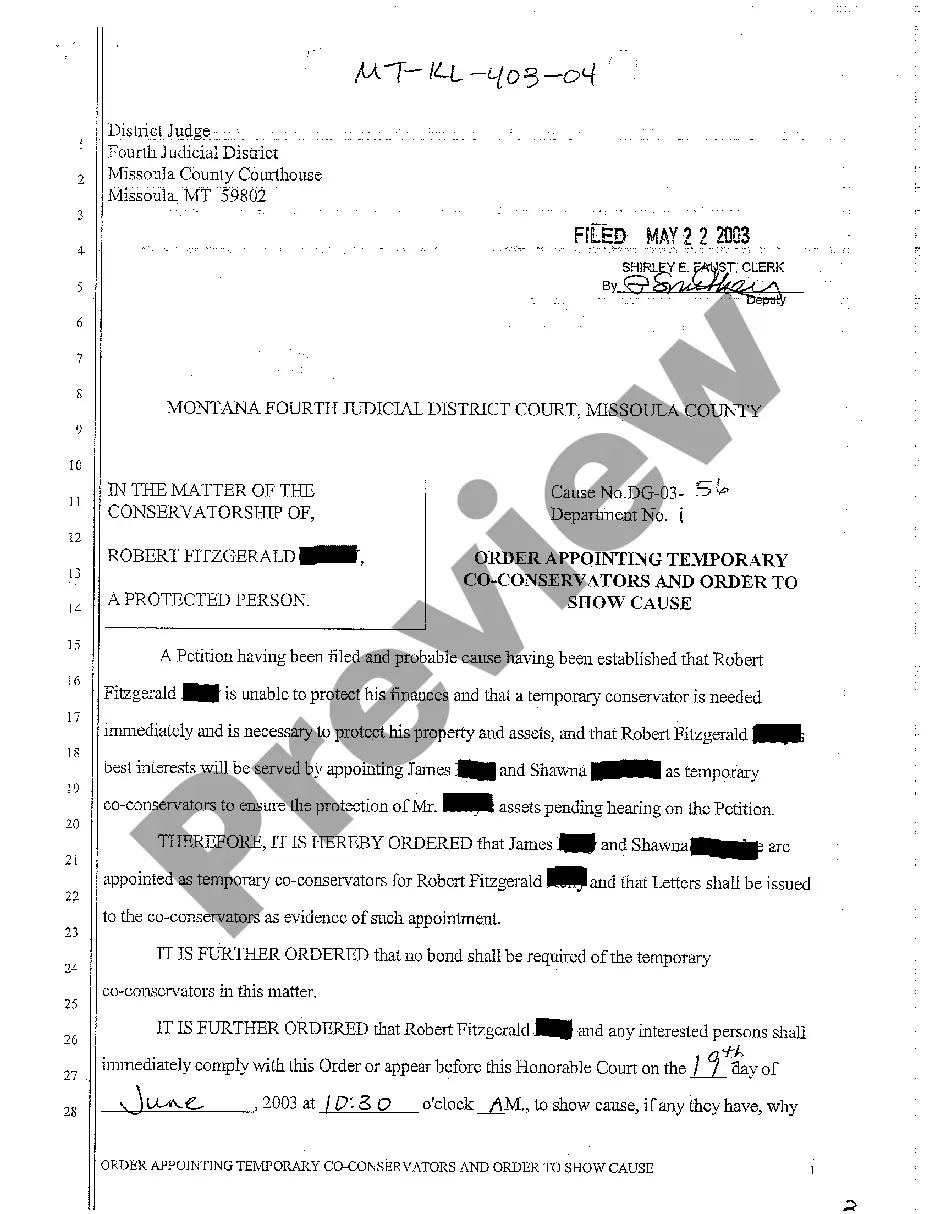
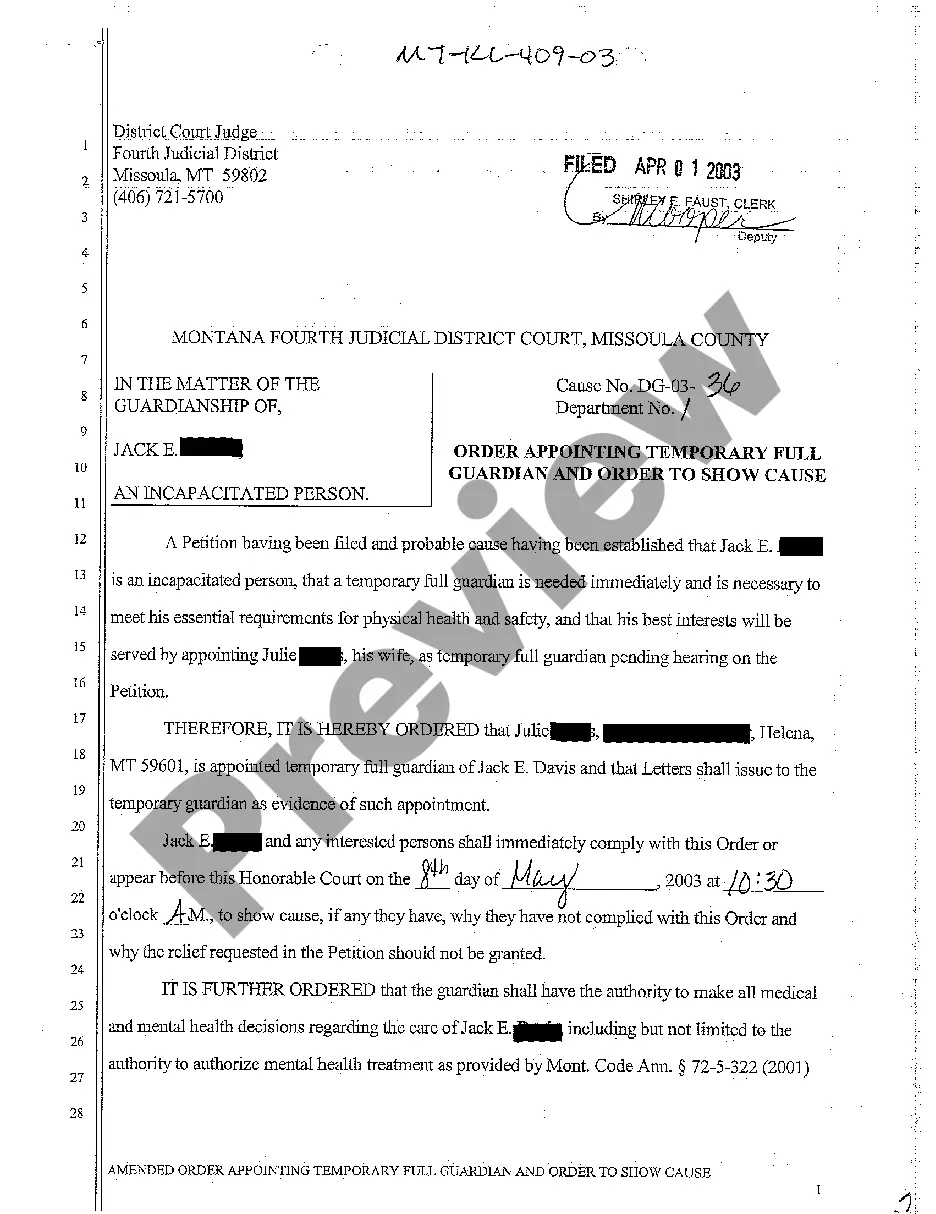
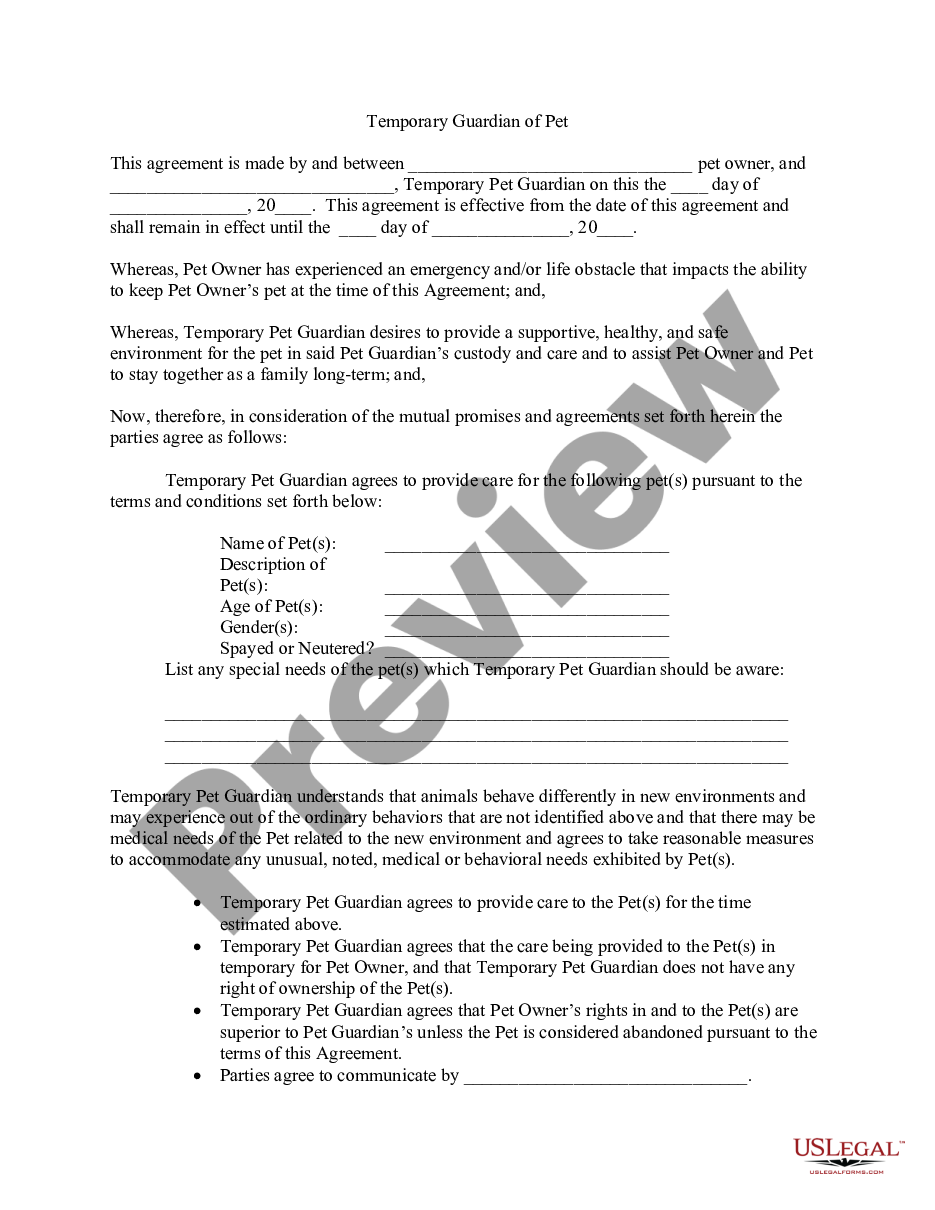



How to fill out Montana Order Appointing Temporary Guardian And Conservator And Order To Show Cause?
Acquire a printable Montana Order Appointing Temporary Guardian and Conservator and Order to Show Cause in just a few clicks from the most extensive collection of legal electronic documents.
Locate, download, and print professionally prepared and verified examples on the US Legal Forms site. US Legal Forms has been the leading provider of economical legal and tax templates for US citizens and residents online since 1997.
After downloading your Montana Order Appointing Temporary Guardian and Conservator and Order to Show Cause, you can complete it in any online editor or print it out and fill it in manually. Utilize US Legal Forms to access 85,000 professionally drafted, state-specific documents.
- Users with an existing subscription should Log In directly to their US Legal Forms account, download the Montana Order Appointing Temporary Guardian and Conservator and Order to Show Cause, and find it stored in the My documents section.
- Users without a subscription must follow the steps outlined below.
- Verify that your form complies with your state's regulations.
- If possible, read the form's description to gain further insight.
- If available, examine the form to view additional details.
- Once you are confident that the template suits your needs, simply click Buy Now.
- Establish a personal account.
- Select a subscription plan.
- Pay via PayPal or credit card.
- Download the form in Word or PDF format.
Form popularity
FAQ
A conservatorship may be established after a relative, friend, or public official petitions the court for appointment of a conservator. The petition must contain information on why the individual cannot manage his or her financial affairs or make appropriate decisions concerning his or her personal care.
A temporary conservator is usually appointed for a fixed time period, usually 30 to 60 days. These conservatorships can be of the person, of the estate, or both. The main role of the temporary conservator is to ensure the temporary care, protection, and support of the conservatee.
A guardian is responsible for an elder or minor ward's personal care, providing them with a place to live, and with ensuring their medical needs are met. Guardians make sure that their ward has a place to live, such as the guardian's home, with a caretaker, or in an assisted living or full care facility.
A guardian is also prohibited from making gifts from the ward's estate. Generally, a guardian cannot tie up the ward's money by purchasing real estate, but can lend the money to someone else buying real estate if the property is sufficient security for the loan.
A legal guardian is someone who has the legal authority to take care of a child should anything happen to the parents. Guardians are responsible for taking all parental decisions and can also be responsible for managing a child's property and inheritance.
The guardian is responsible for deciding where the ward's liquid assets will be held and who will be responsible for overseeing the investments. If the ward owns any real estate, the guardian is responsible for paying all of the bills for maintaining the property such as taxes, mortgages and insurance.
If a child needs a legal guardian during a parent's lifetime, the parent or any other interested person must file a petition to have the court appoint a guardian. If you're not the parent, you can file a petition requesting that the court appoint you as the child's guardian.
A conservatorship is a court case where a judge appoints a responsible person or organization (called the conservator) to care for another adult (called the conservatee) who cannot care for himself or herself or manage his or her own finances.
Under certain circumstances, a Guardian may be personally liable for improper distributions, and may be compelled by a Court to make a distribution at the Ward's or Interested Person's request.