Montana Guaranty Attachment to Lease for Guarantor or Cosigner
What this document covers
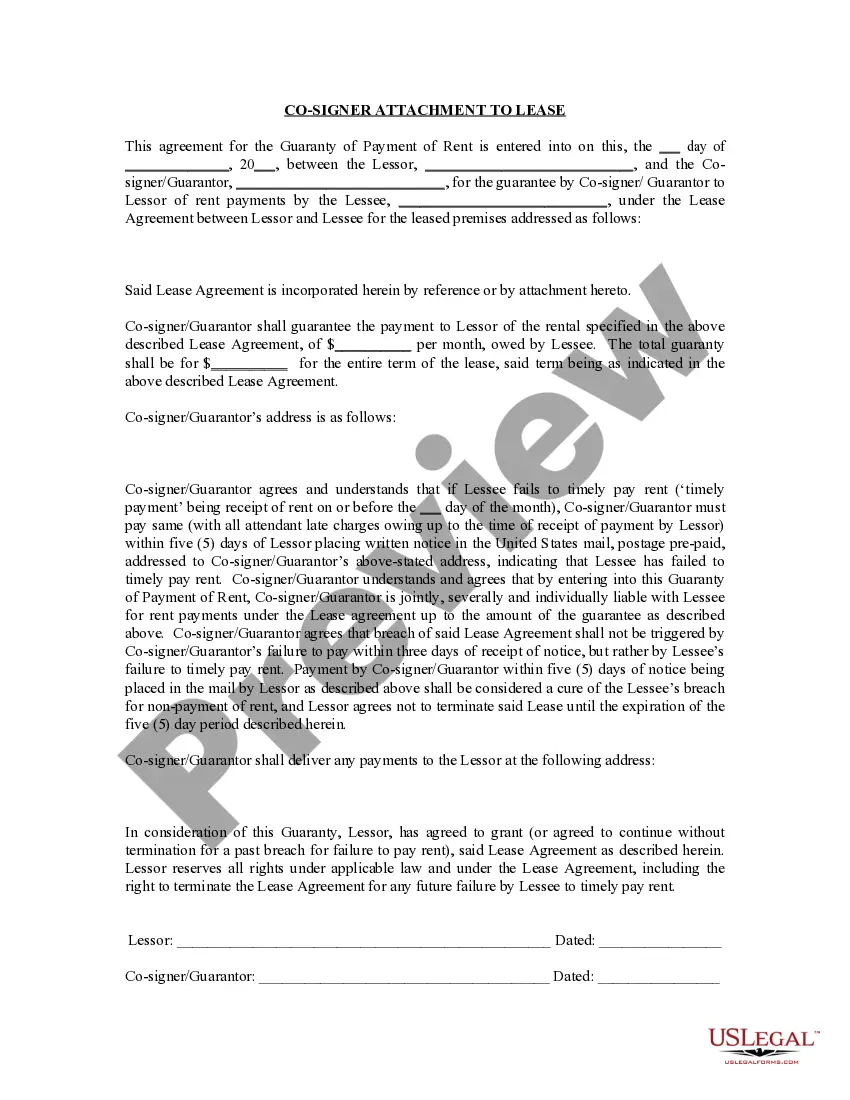
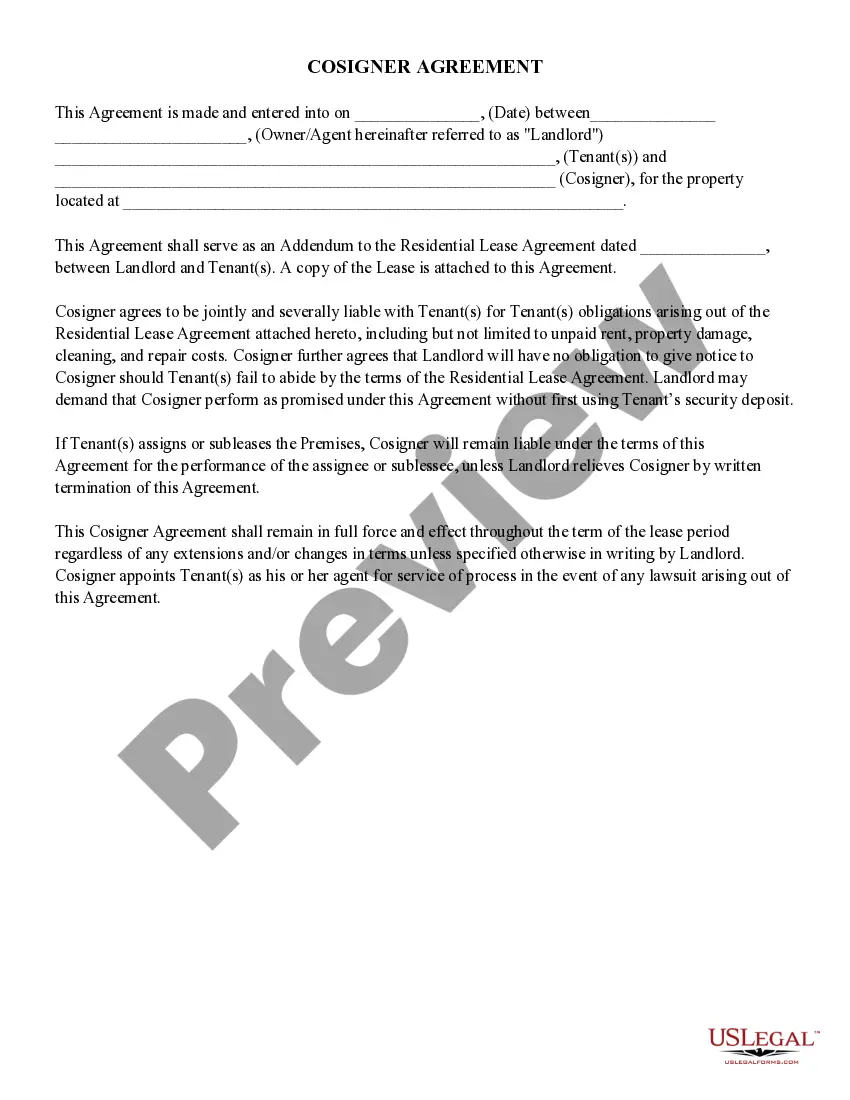
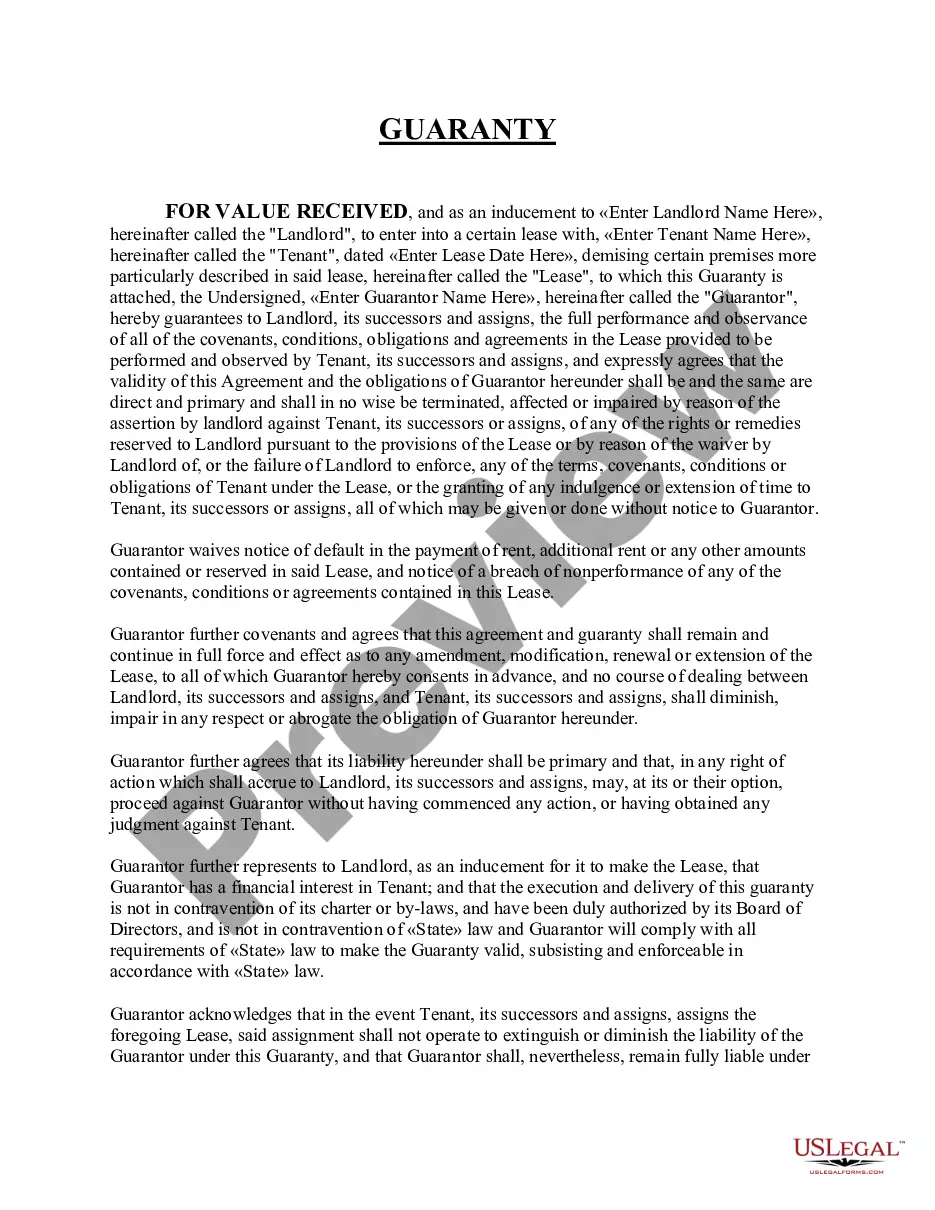
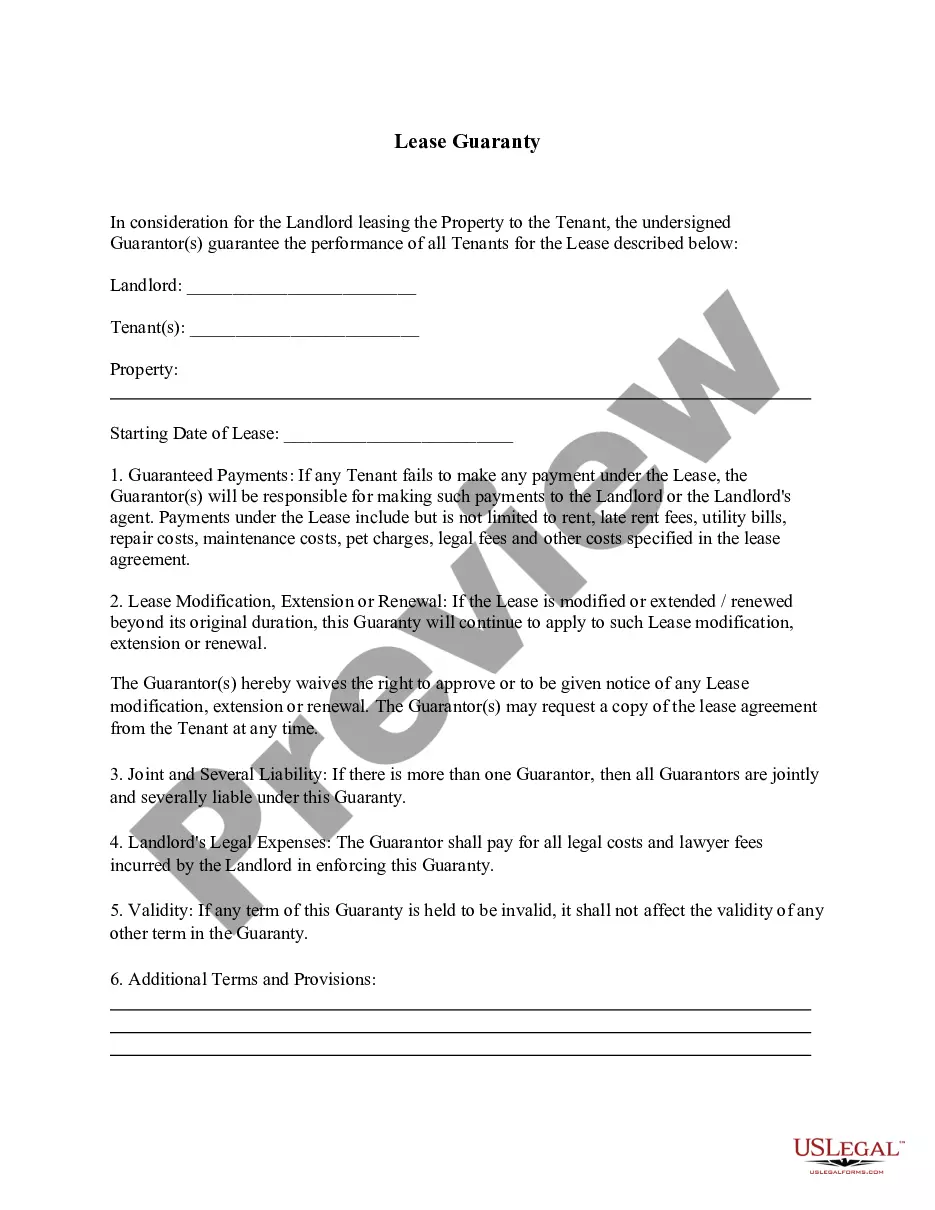
The Guaranty Attachment to Lease for Guarantor or Cosigner is a legal document that allows a third party to co-sign a lease agreement. The co-signer, referred to as the guarantor, agrees to take on the responsibility for rent payments if the primary tenant fails to meet their obligations. This form establishes a clear understanding of the guarantor's role, distinguishing it from standard lease agreements by explicitly outlining the third party's financial commitment to the lease.
What’s included in this form
- Guarantor's information: Includes the personal details of the co-signer.
- Lessor's information: Specifies the landlord or property owner's details.
- Agreement dates: Indicates when the guaranty is effective.
- Signatures: Both the guarantor and lessor must sign and date the document to validate the agreement.
When to use this form
This form is essential in situations where a potential tenant is unable to establish sufficient credit or income on their own to secure a lease. It is commonly used in rental agreements for residential properties, such as apartments or houses, where landlords require additional security to mitigate the risk of unpaid rent. The guaranty provides landlords with an extra layer of assurance that rent will be paid on time.
Who should use this form
This form is intended for:
- Tenants seeking to lease a property but lacking adequate credit history.
- Individuals willing to act as guarantors, providing assurance of rent payment for the tenant.
- Landlords or property managers who require additional security for leases.
Instructions for completing this form
- Identify the parties: Fill in the names and addresses of both the lessor and the guarantor.
- Specify the property: Clearly indicate the rental property being leased.
- Enter the dates: Include the effective date of the guaranty agreement.
- Sign and date: Both the guarantor and the lessor must sign the document to make it legally binding.
Does this document require notarization?
This form does not typically require notarization unless specified by local law.
Get your form ready online
Our built-in tools help you complete, sign, share, and store your documents in one place.
Make edits, fill in missing information, and update formatting in US Legal Forms—just like you would in MS Word.
Download a copy, print it, send it by email, or mail it via USPS—whatever works best for your next step.
Sign and collect signatures with our SignNow integration. Send to multiple recipients, set reminders, and more. Go Premium to unlock E-Sign.
If this form requires notarization, complete it online through a secure video call—no need to meet a notary in person or wait for an appointment.
We protect your documents and personal data by following strict security and privacy standards.

Make edits, fill in missing information, and update formatting in US Legal Forms—just like you would in MS Word.

Download a copy, print it, send it by email, or mail it via USPS—whatever works best for your next step.

Sign and collect signatures with our SignNow integration. Send to multiple recipients, set reminders, and more. Go Premium to unlock E-Sign.

If this form requires notarization, complete it online through a secure video call—no need to meet a notary in person or wait for an appointment.

We protect your documents and personal data by following strict security and privacy standards.
Common mistakes to avoid
- Failing to include complete contact information for the guarantor and lessor.
- Not properly dating the agreement, which can lead to confusion about its validity.
- Skipping signatures or having them signed by only one party.
Advantages of online completion
- Convenience: Access the form anytime and from anywhere.
- Editability: Easily make changes and tailor the form to your specific situation.
- Reliability: Ensure that you are using a legally compliant form drafted by attorneys.
Legal use & context
- The guaranty form is a binding contract that holds the guarantor legally accountable for the tenant's obligations.
- It ensures landlords have recourse for financial recovery in case of tenant default.
- Both parties should understand that the guarantor's liability is usually secondary to that of the tenant.
What to keep in mind
- The Guaranty Attachment to Lease secures the landlord's interests by assigning a third-party guarantor for rent payments.
- The form is crucial for tenants with insufficient credit history.
- Completing the form accurately is essential to ensure its validity and enforceability.
Looking for another form?

Form popularity
FAQ
A lease guarantee is an official agreement signed by the landlord, tenant, and in addition, a third party who meets the monetary requirements of the landlord. A lease guarantor serves as a financial intermediary and is responsible for the tenant's defaults, which protects the tenant from eviction.
It's very common for a guarantee to last as long as the tenancy lasts. So, if the tenant remains in the property for four years, you will continue to be responsible for any arrears or damages during that entire period. Most tenancies will run for a fixed term and will then continue on a month-by-month basis.
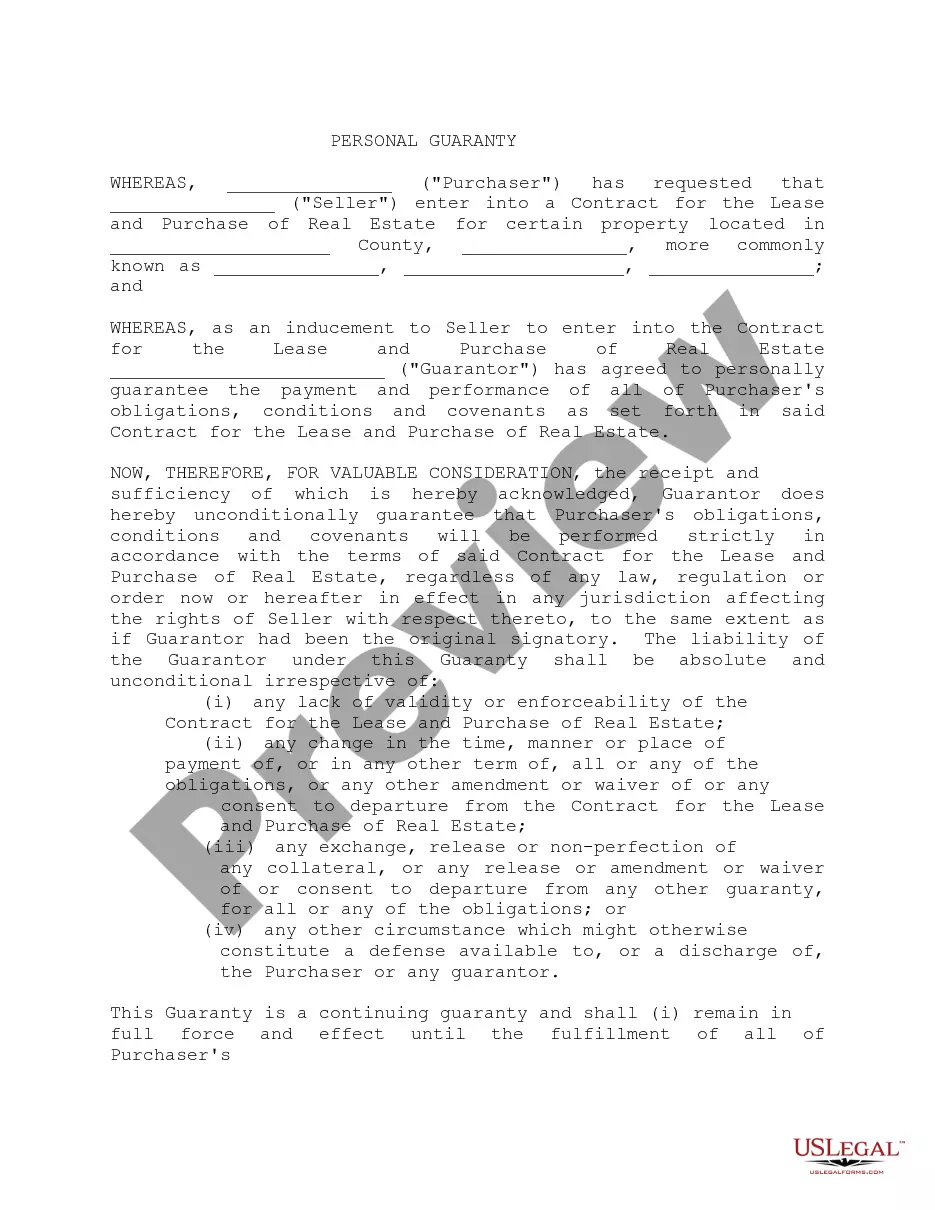
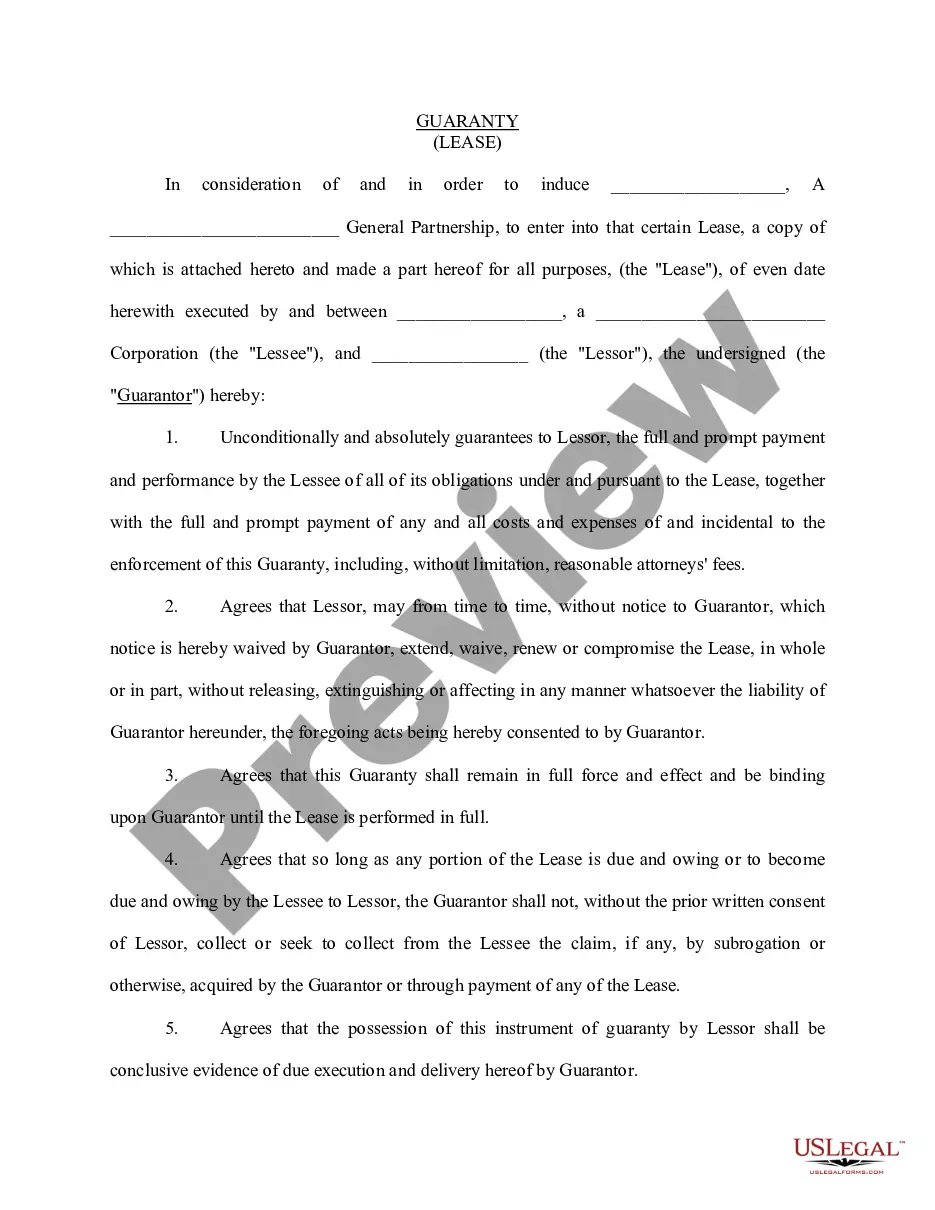
A guaranty of lease is a covenant by the guarantor to be responsible for the obligations of the tenant.In these examples, a selective landlord would not enter into the lease without the tenant offering a creditworthy guarantor.
Does being a guarantor affect my credit rating? Providing the borrower keeps up with their repayments your credit score won't be affected. However, should they fail to make their payments and the loan/mortgage falls into default, it will be added to your credit report.
This is a short agreement to bring in a guarantor to a residential tenancy agreement. The guarantor provides a promise to pay rent unpaid by one or more of the tenants and also for any loss or damage caused by the tenant.
One approach is as follows: a landlord and tenant agree that the guarantor is to be fully responsible for the performance of all tenant obligations and payment of all charges due under the lease for the entire term; if, however, the tenant does not default under any of the terms of the lease during some initial portion
Ask for an amendment to the lease after 12-24 months. Ask for the guarantee to expire after 12-24 months as long as you have paid rent payments on time. Try to renegotiate the guarantee terms.
Business owners are often required to give a personal guarantee to get a business loan or to lease commercial space for their business. Most business advisors say you should keep business and personal financial matters separate, and the loan is for the business, not for the individual.