Montana Mutual Wills or Last Will and Testaments for Man and Woman living together, not Married with Minor Children
What this document covers
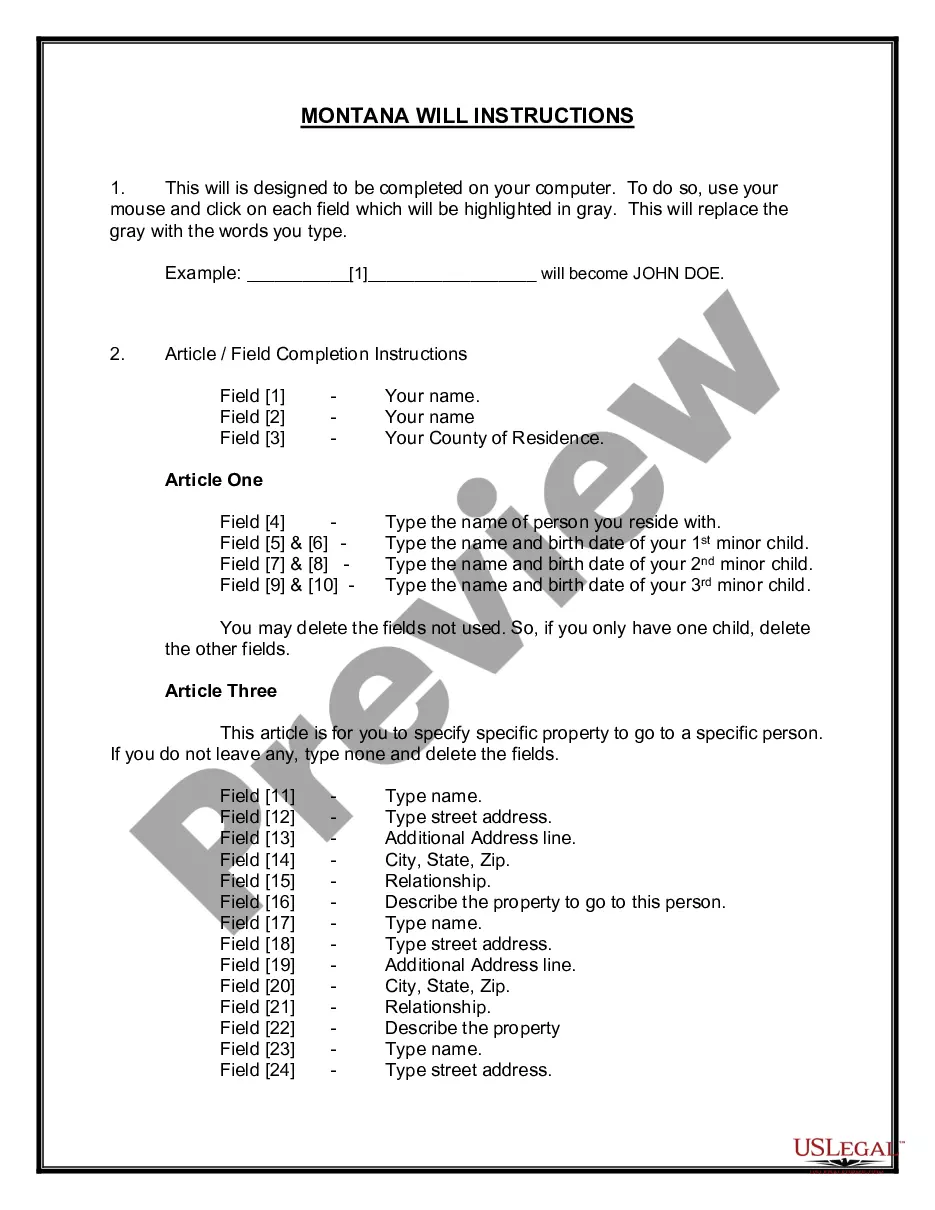
The Mutual Wills for Man and Woman Living Together, Not Married with Minor Children package includes two legally binding wills designed specifically for couples who are cohabitating but not married, and have minor children. Unlike standard wills, these mutual wills allow both partners to leave property to each other while ensuring that their minor children are considered beneficiaries. This form package provides not only the wills but also explicit instructions for proper completion and execution.
Key parts of this document
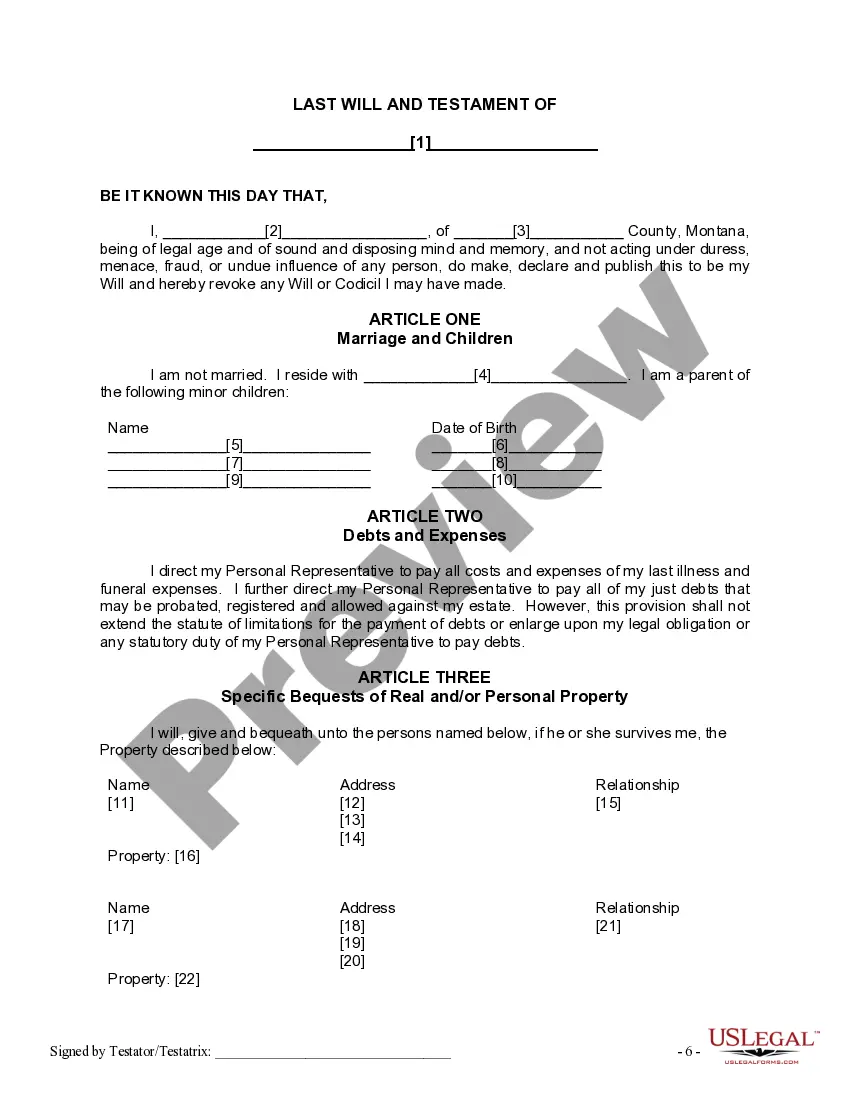
- Article One: Declares marital status, cohabitant details, and lists minor children.
- Article Two: Addresses payment of debts and funeral expenses.
- Article Three: Outlines specific bequests of property to selected individuals.
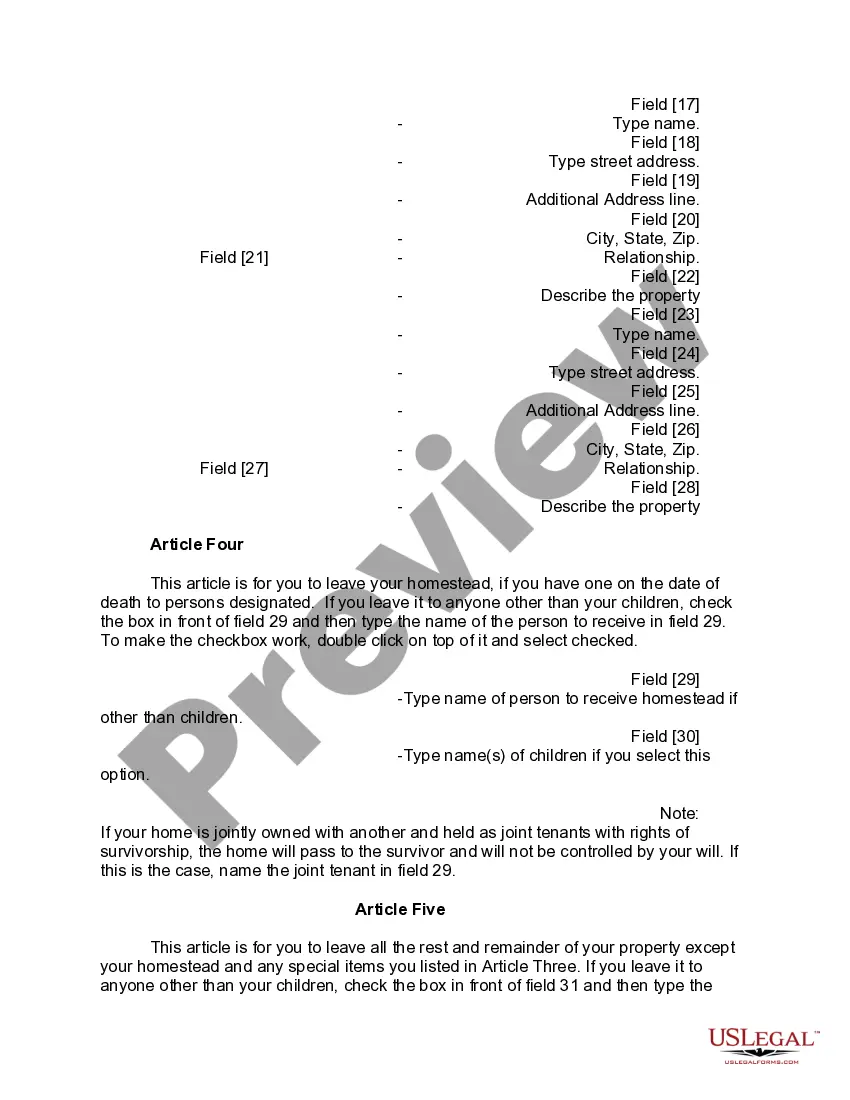
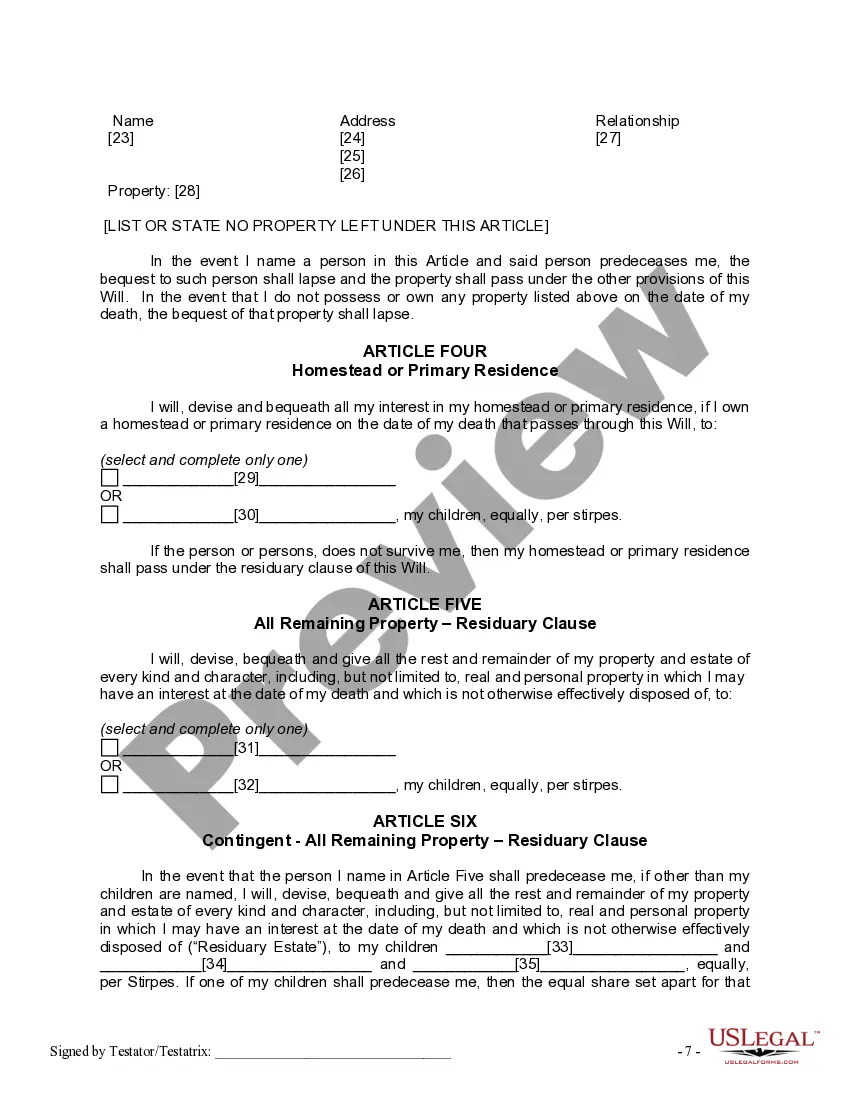
- Article Four: Determines the disposition of the homestead or primary residence.
- Article Five: Covers all remaining property not explicitly mentioned in prior articles.
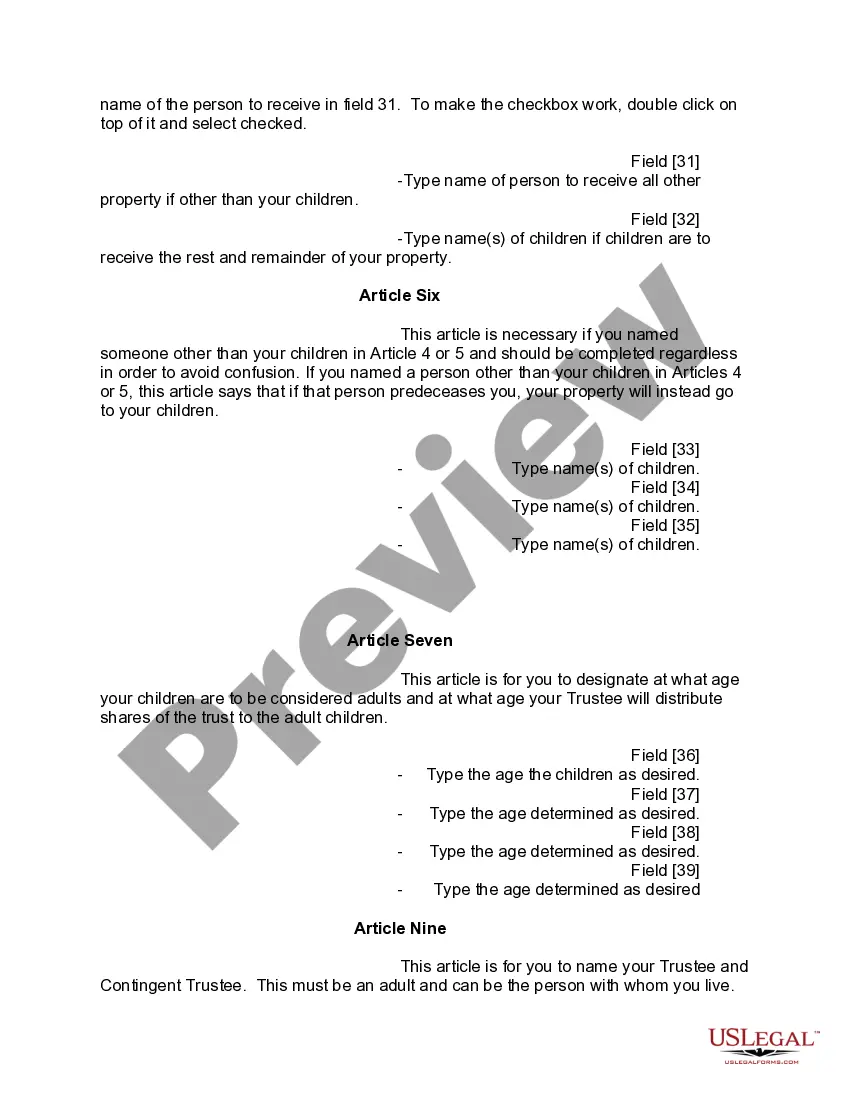
- Article Six: Specifies contingencies if a named beneficiary predeceases the testator.
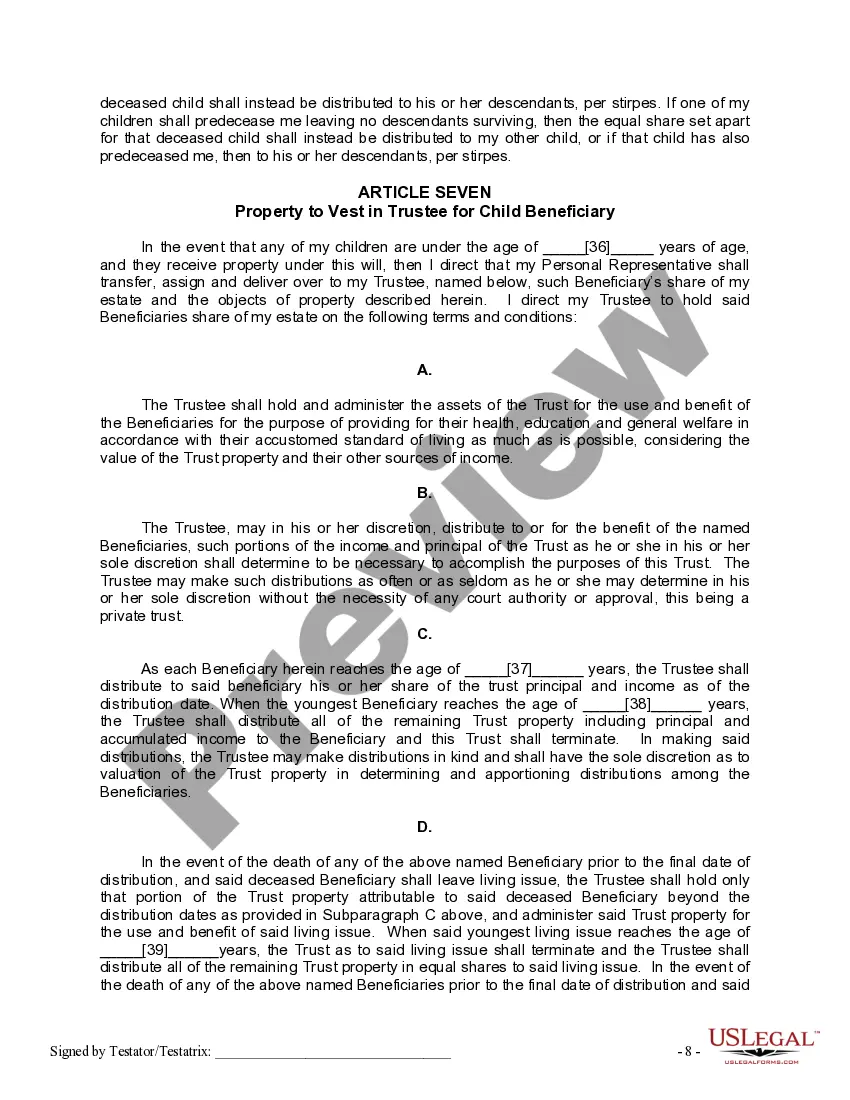
- Article Seven: Allows for property management in trust for minor children until they reach certain ages.



Common use cases
This form is pertinent when two individuals are living together in a non-marital relationship and wish to formalize their estate planning arrangements, particularly when they have minor children. It ensures both partners can assure each other that their assets will be left to one another while outlining how their children will be cared for. This is especially useful if the couple has assets that may otherwise be subject to intestate succession laws.
Who this form is for
This form is intended for:
- Cohabitating couples who are not legally married.
- Individuals who want to create a will that specifically addresses their relationship and parental responsibilities.
- Parents of minor children who need to establish guardianship and asset distribution for their children.
How to prepare this document
To complete this form, follow these steps:
- Identify and enter your name and county of residence in the initial fields.
- List the name of your cohabitant and details of your minor children.
- Specify any particular property you wish to leave to designated beneficiaries.
- Fill out the sections regarding your homestead and remaining property.
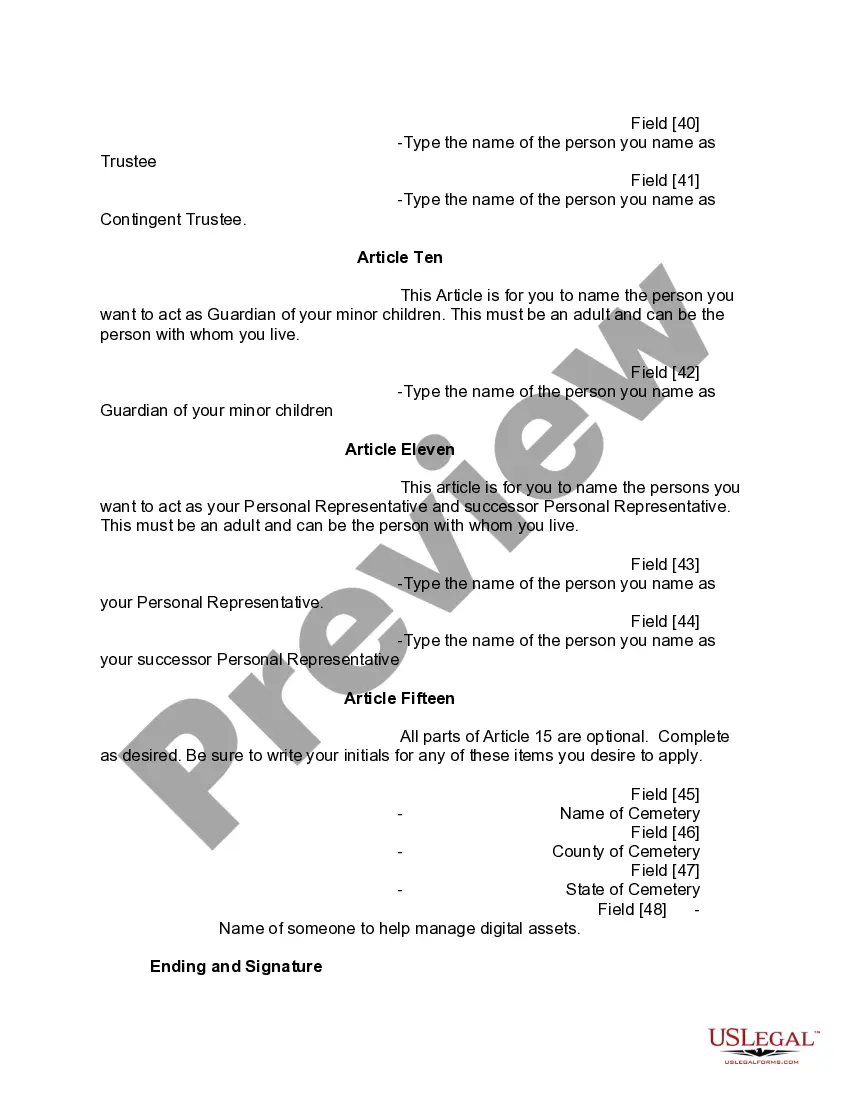
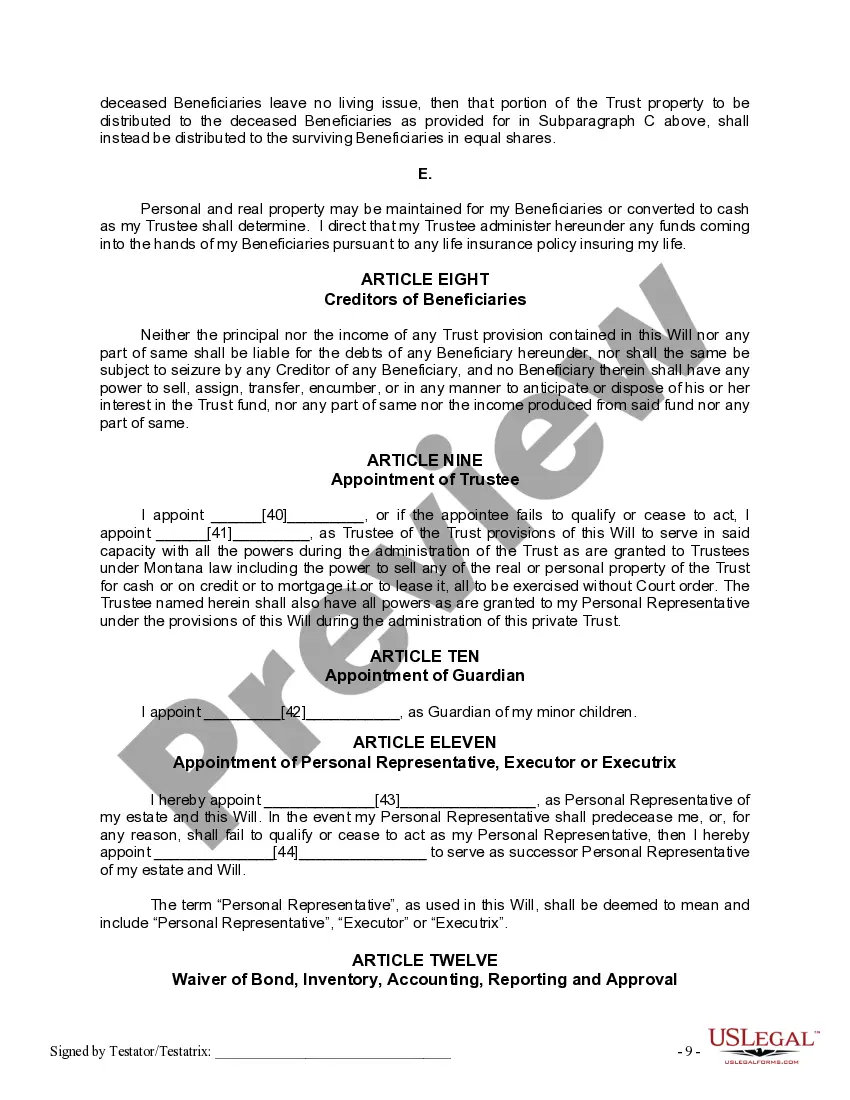
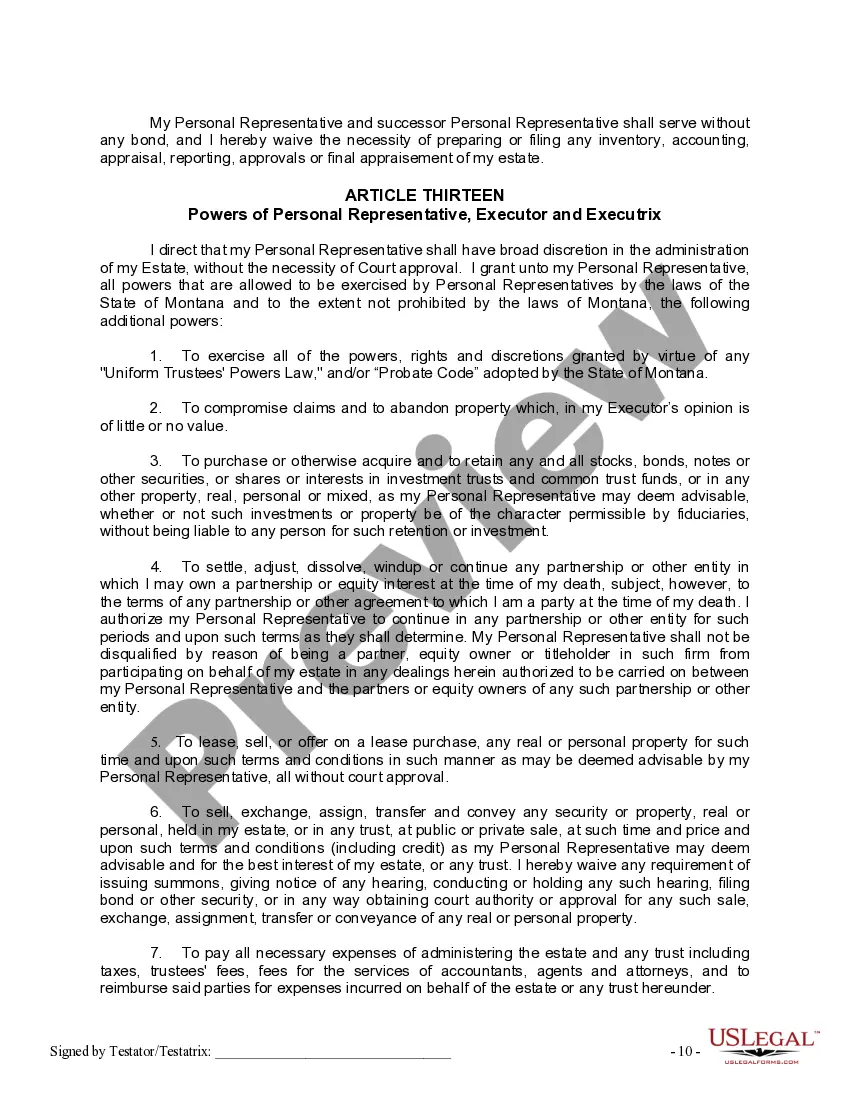
- Designate guardians for your minor children and appoint a personal representative for your estate.
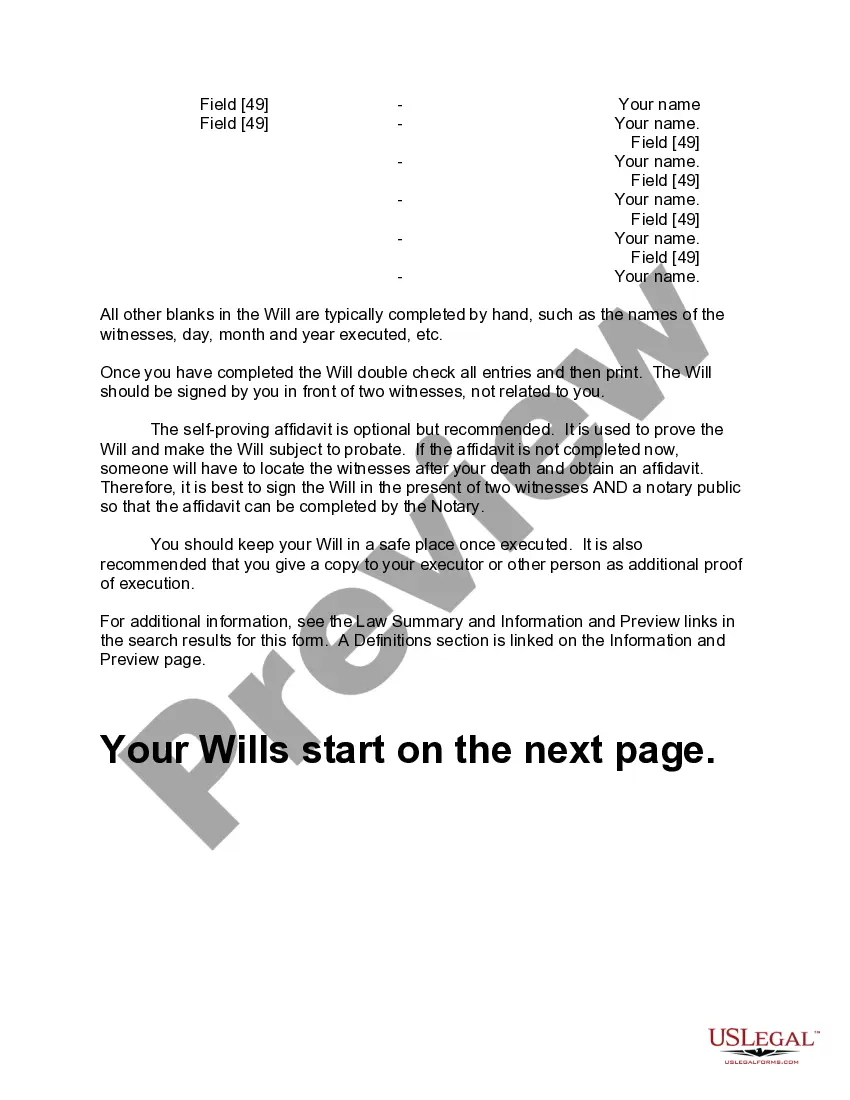
- Ensure the wills are signed in front of two witnesses and notarized if required.
Does this document require notarization?
Yes, this form must be notarized to be legally valid. After completing the wills, it is essential to sign them in front of two witnesses who are not named in the wills, and then have the wills notarized. US Legal Forms offers integrated online notarization for your convenience, allowing you to securely finalize your documents via a video call without needing to travel.
Get your form ready online
Our built-in tools help you complete, sign, share, and store your documents in one place.
Make edits, fill in missing information, and update formatting in US Legal Forms—just like you would in MS Word.
Download a copy, print it, send it by email, or mail it via USPS—whatever works best for your next step.
Sign and collect signatures with our SignNow integration. Send to multiple recipients, set reminders, and more. Go Premium to unlock E-Sign.
If this form requires notarization, complete it online through a secure video call—no need to meet a notary in person or wait for an appointment.
We protect your documents and personal data by following strict security and privacy standards.

Make edits, fill in missing information, and update formatting in US Legal Forms—just like you would in MS Word.

Download a copy, print it, send it by email, or mail it via USPS—whatever works best for your next step.

Sign and collect signatures with our SignNow integration. Send to multiple recipients, set reminders, and more. Go Premium to unlock E-Sign.

If this form requires notarization, complete it online through a secure video call—no need to meet a notary in person or wait for an appointment.

We protect your documents and personal data by following strict security and privacy standards.
Typical mistakes to avoid
- Failing to properly sign and date the wills in the presence of two witnesses.
- Neglecting to include a self-proving affidavit if required by state law.
- Omitting the designation of a guardian for minor children.
- Forgetting to list all minor children to ensure their inclusivity in the will.
Advantages of online completion
- Clear, legally binding structure for cohabitating couplesâ assets.
- Provides peace of mind knowing that both partners' wishes are respected and honored.
- Ensures minor children are accounted for and protected financially.
- Easy to edit and download from a secure online platform.
Looking for another form?


Form popularity
FAQ
If you are unmarried and die without a valid will and last testament in Montana, then your entire estate goes to any surviving children in equal shares, or grandchildren if you don't have any surviving children. If you die intestate unmarried and with no children, then by law, your parents inherit your entire estate.
Under Montana statute, where as estate is valued at less than $50,000, an interested party may, thirty (30) days after the death of the decedent, issue a small estate affidavit to to demand payment on any debts owed to the decedent.
In Montana, you can make a living trust to avoid probate for virtually any asset you ownreal estate, bank accounts, vehicles, and so on. You need to create a trust document (it's similar to a will), naming someone to take over as trustee after your death (called a successor trustee).
Write a Living Trust. The most straightforward way to avoid probate is simply to create a living trust. Name Beneficiaries on Your Retirement and Bank Accounts. For some, a last will is often a better fit than a trust because it is a more straightforward estate planning document. Hold Property Jointly.
You can legally prepare your own will, it can even be handwritten. This type of will is known as a "holographic will." In Montana, your handwritten will must be signed by you. Your signature must also be located on any material provisions, and no witnesses will need to be present for the signing of your will.
Retirement accountsIRAs or 401(k)s, for examplefor which a beneficiary was named. Life insurance proceeds (unless the estate is named as beneficiary, which is rare) Property held in a living trust. Funds in a payable-on-death (POD) bank account.
Joint tenancy with right of survivorship. Property owned in joint tenancy automatically passes, without probate, to the surviving owner(s) when one owner dies. Tenancy by the entirety. Community property with right of survivorship.
Choose an online legal services provider or locate a will template. Carefully consider your distribution wishes. Identify a personal representative/executor. Understand the requirements to make your will legal. Make sure someone else knows about your will. Consult a lawyer if you have a more complicated estate.
No, in Montana, you do not need to notarize your will to make it legal. However, Montana allows you to make your will "self-proving" and you'll need to go to a notary if you want to do that. A self-proving will speeds up probate because the court can accept the will without contacting the witnesses who signed it.