Mississippi Waiver and Release From Liability For Minor Child for Parasailing
Description
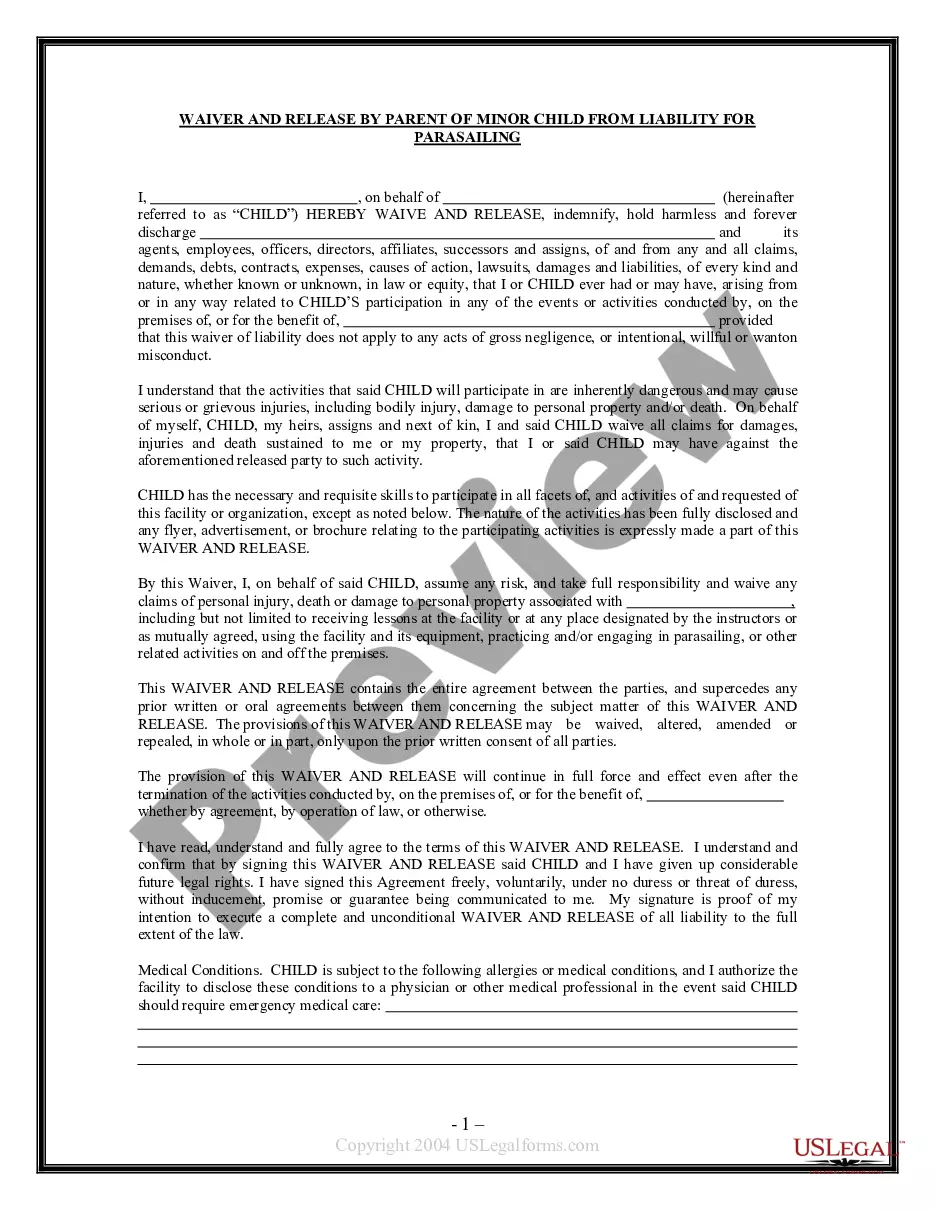
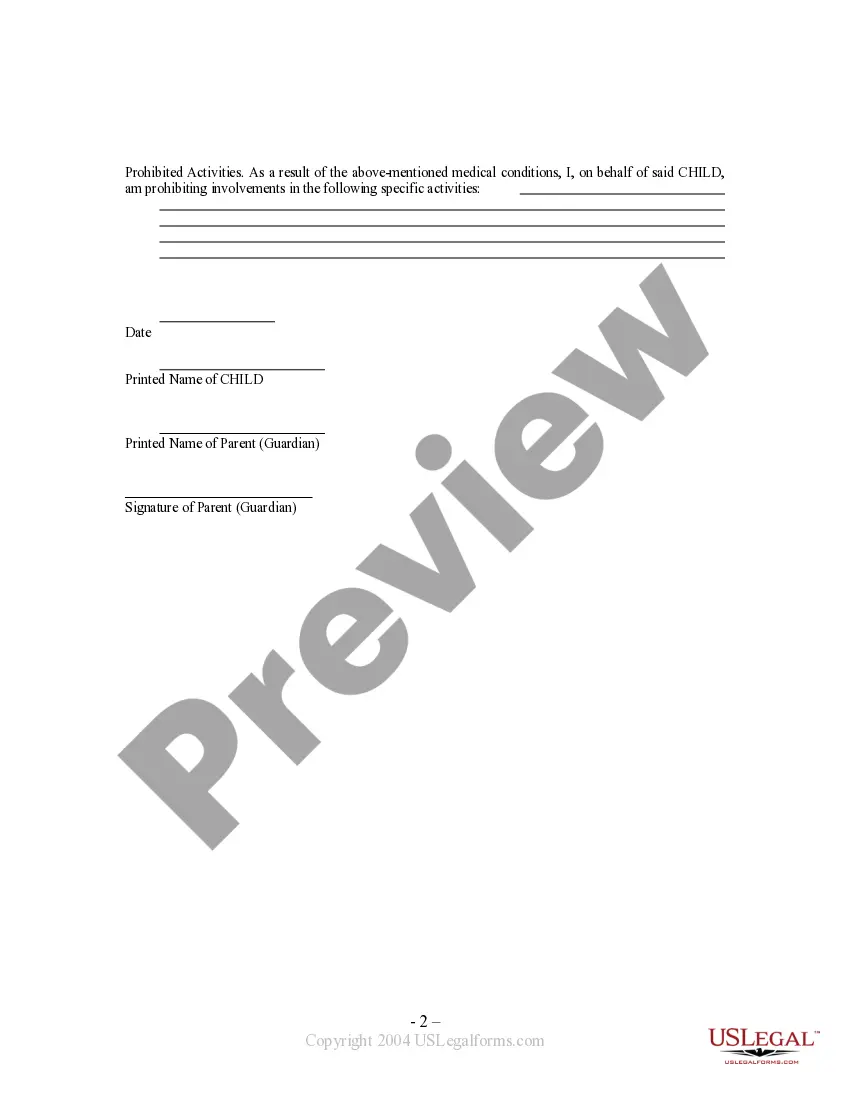
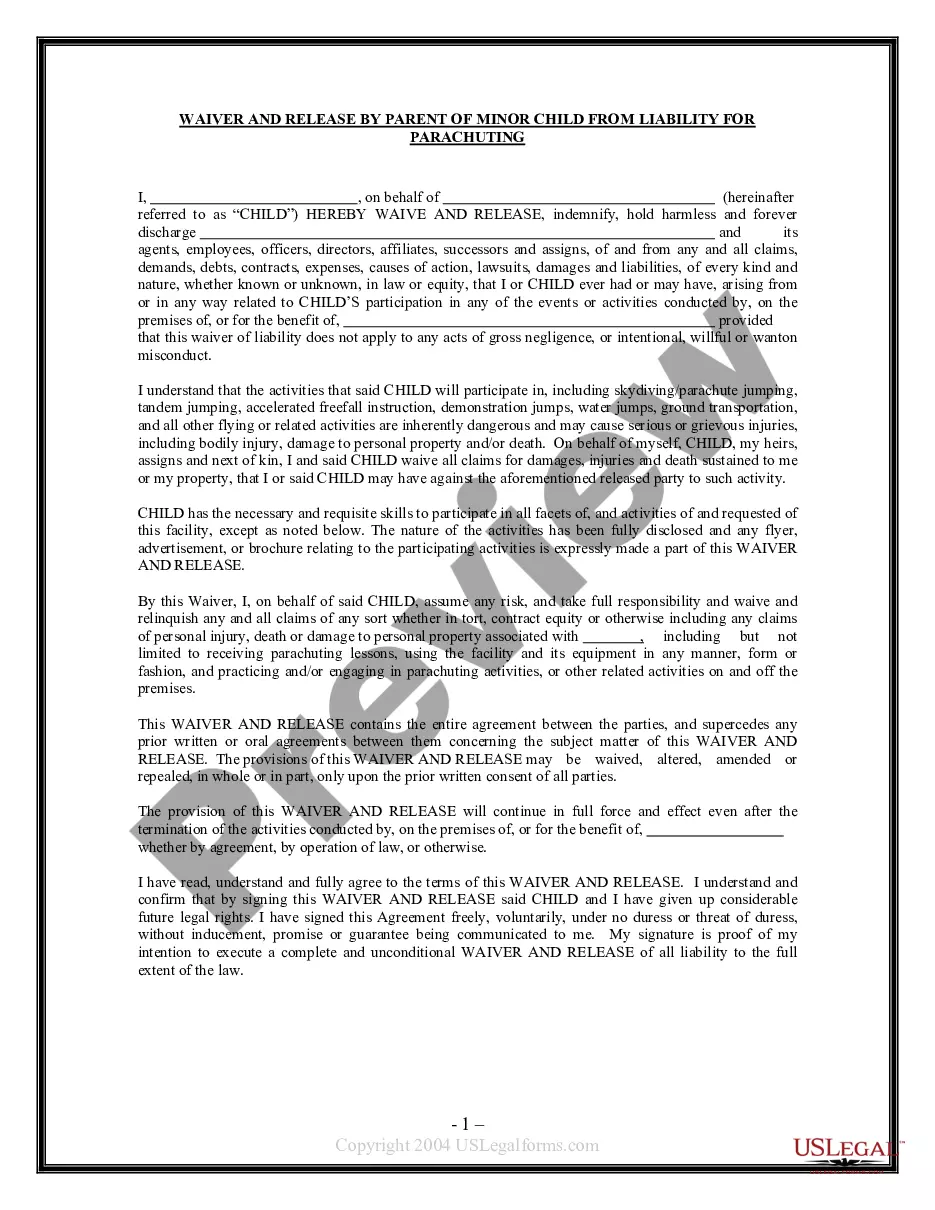
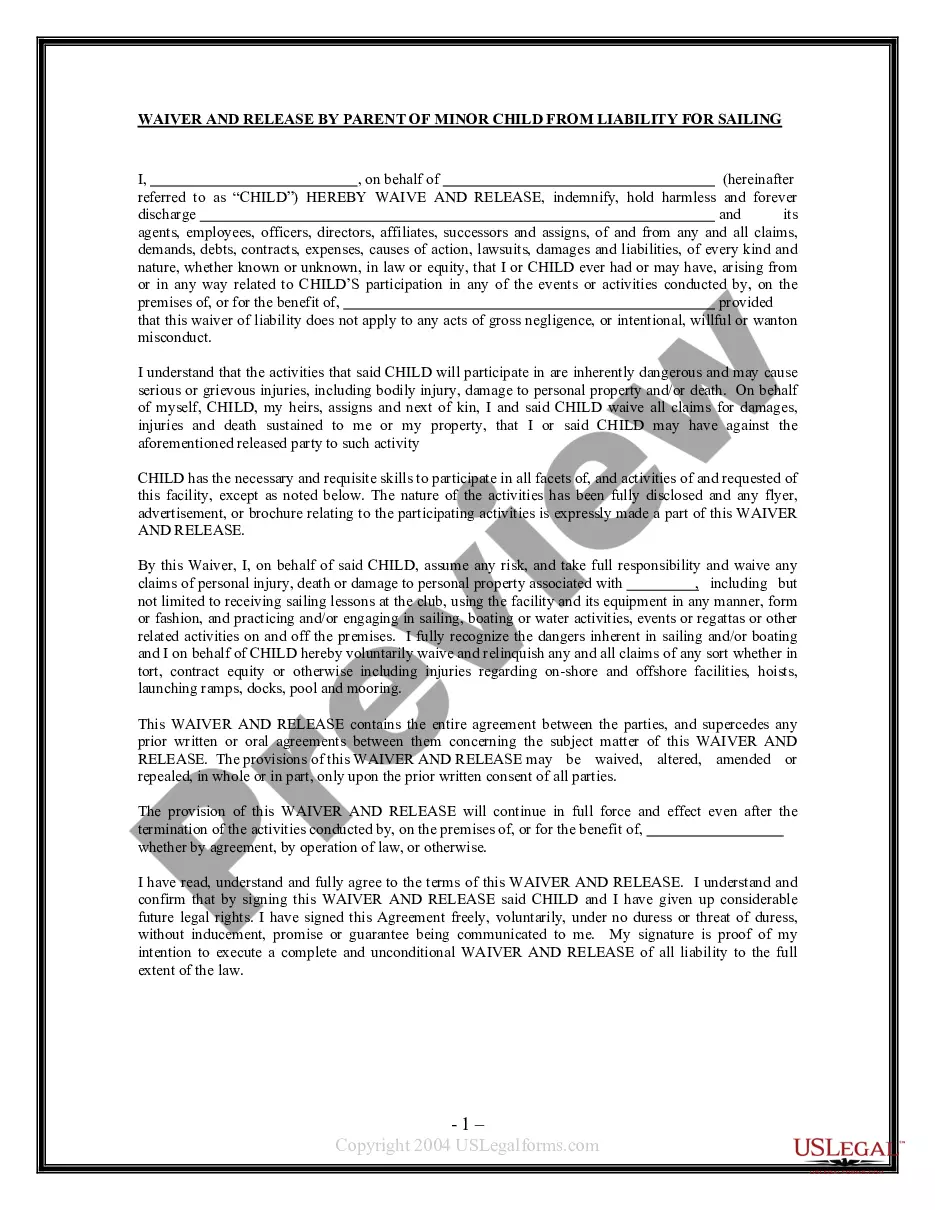
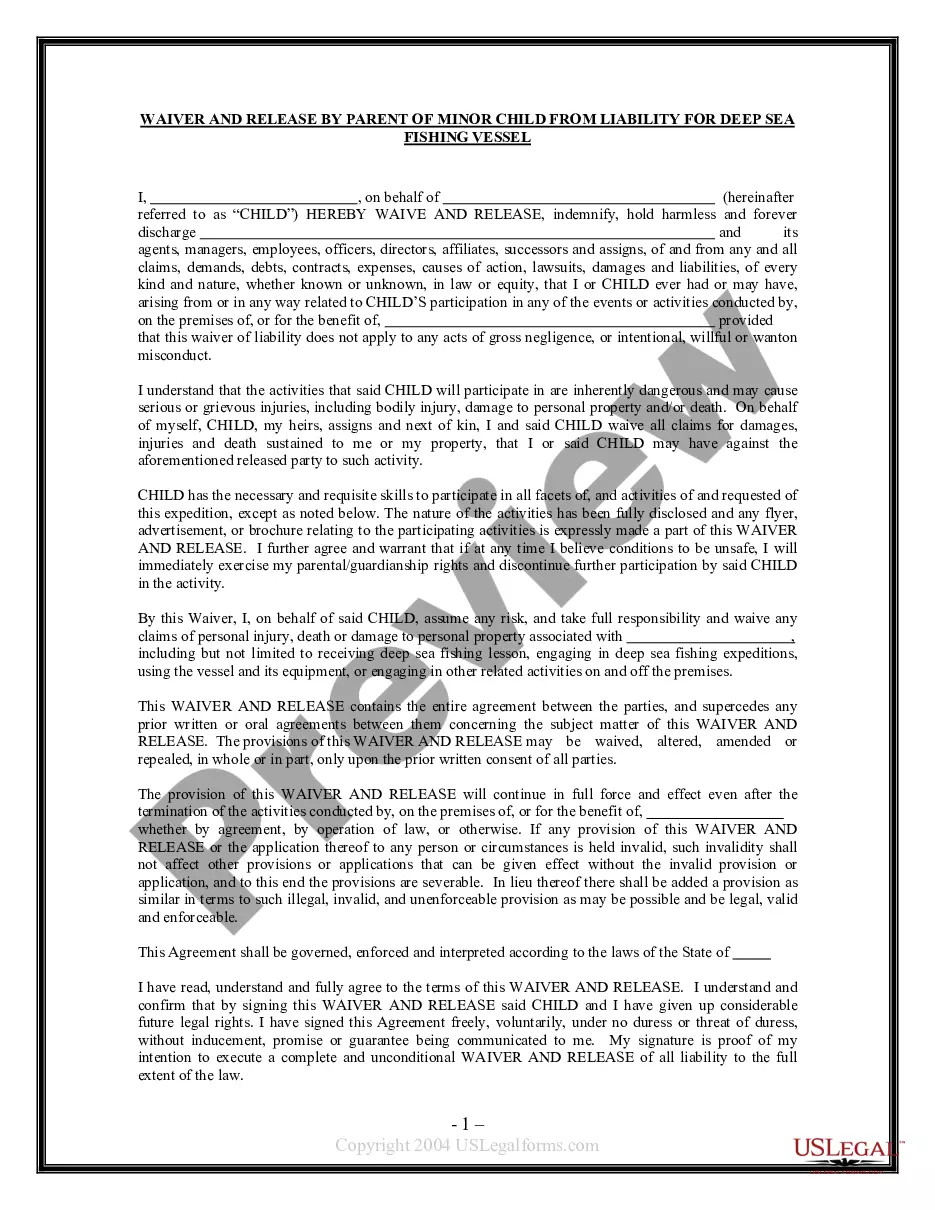
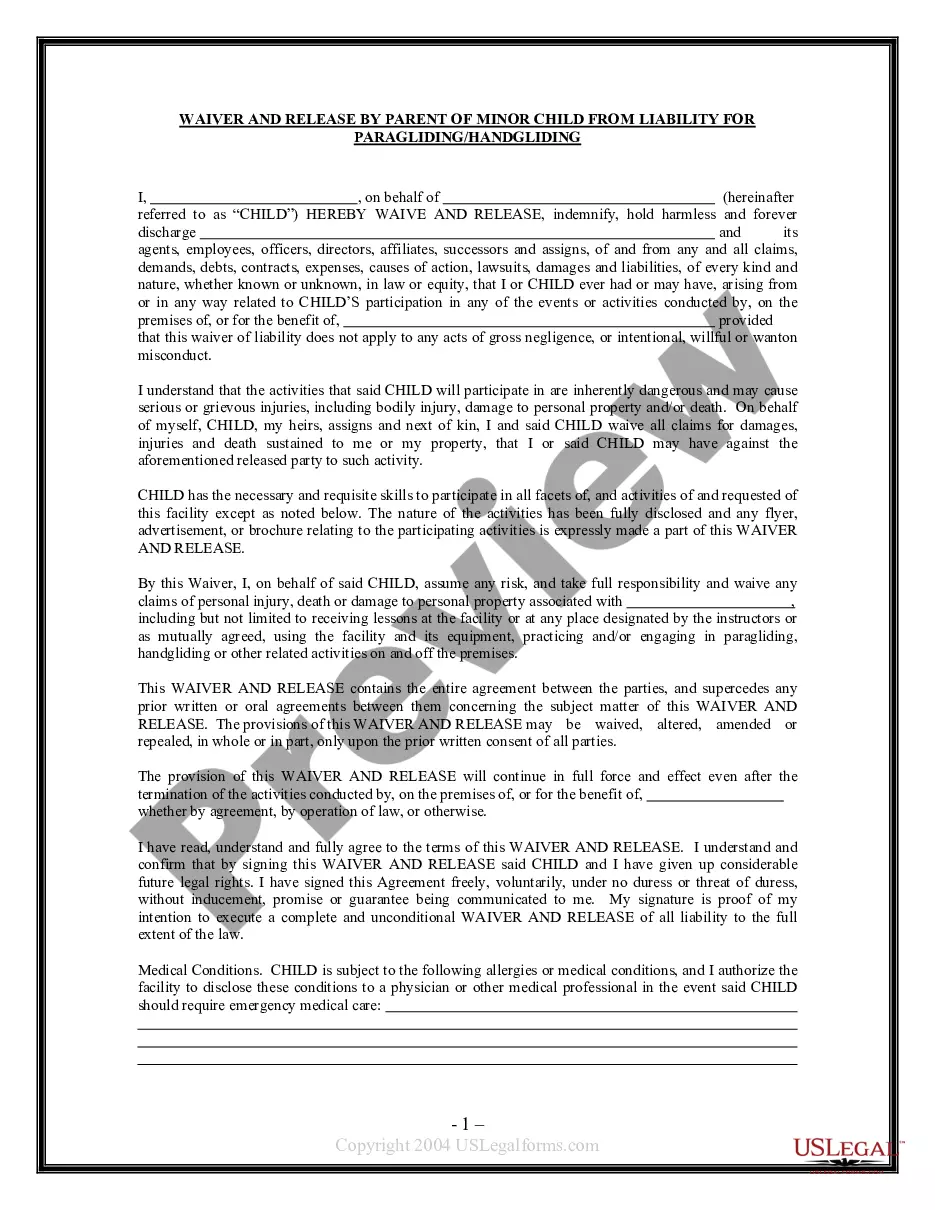
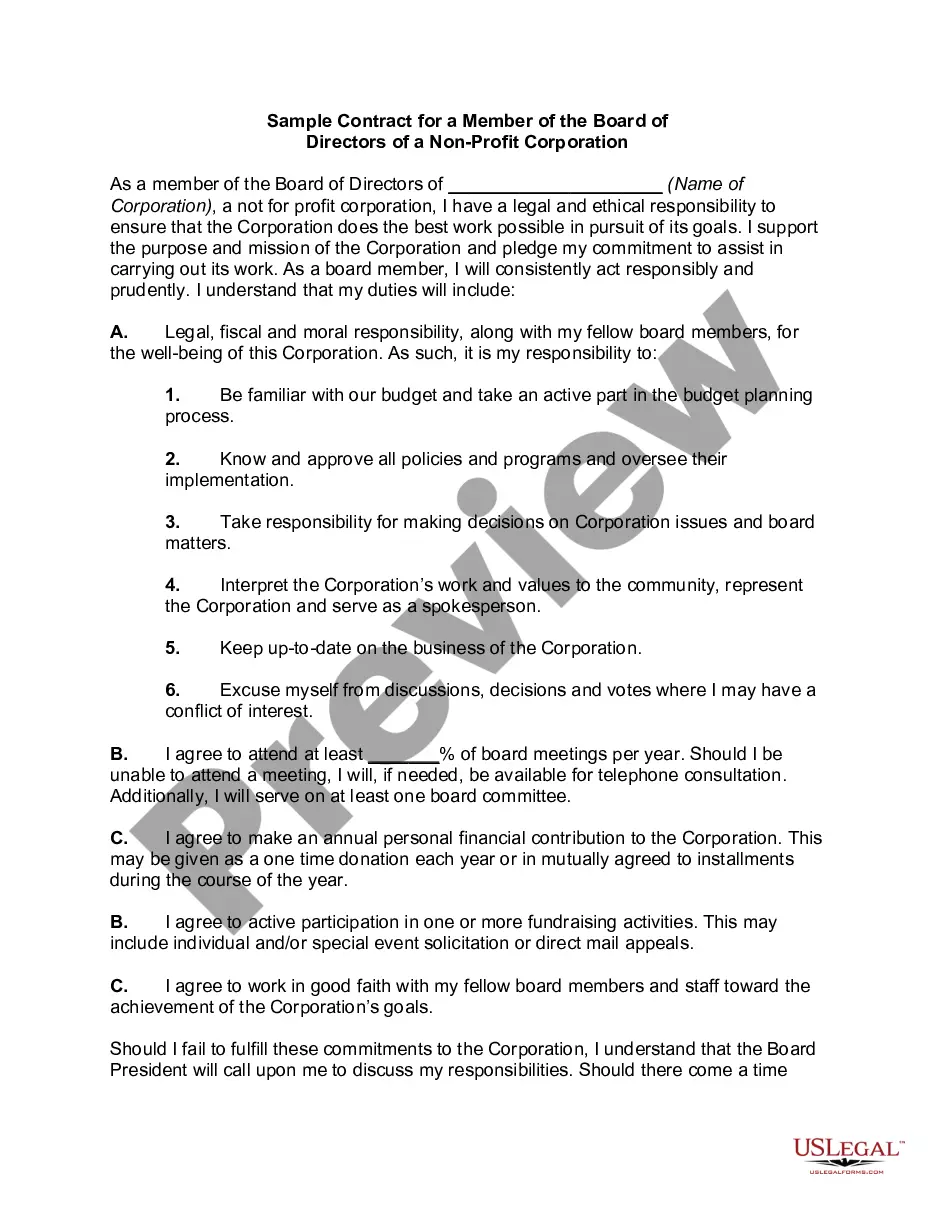
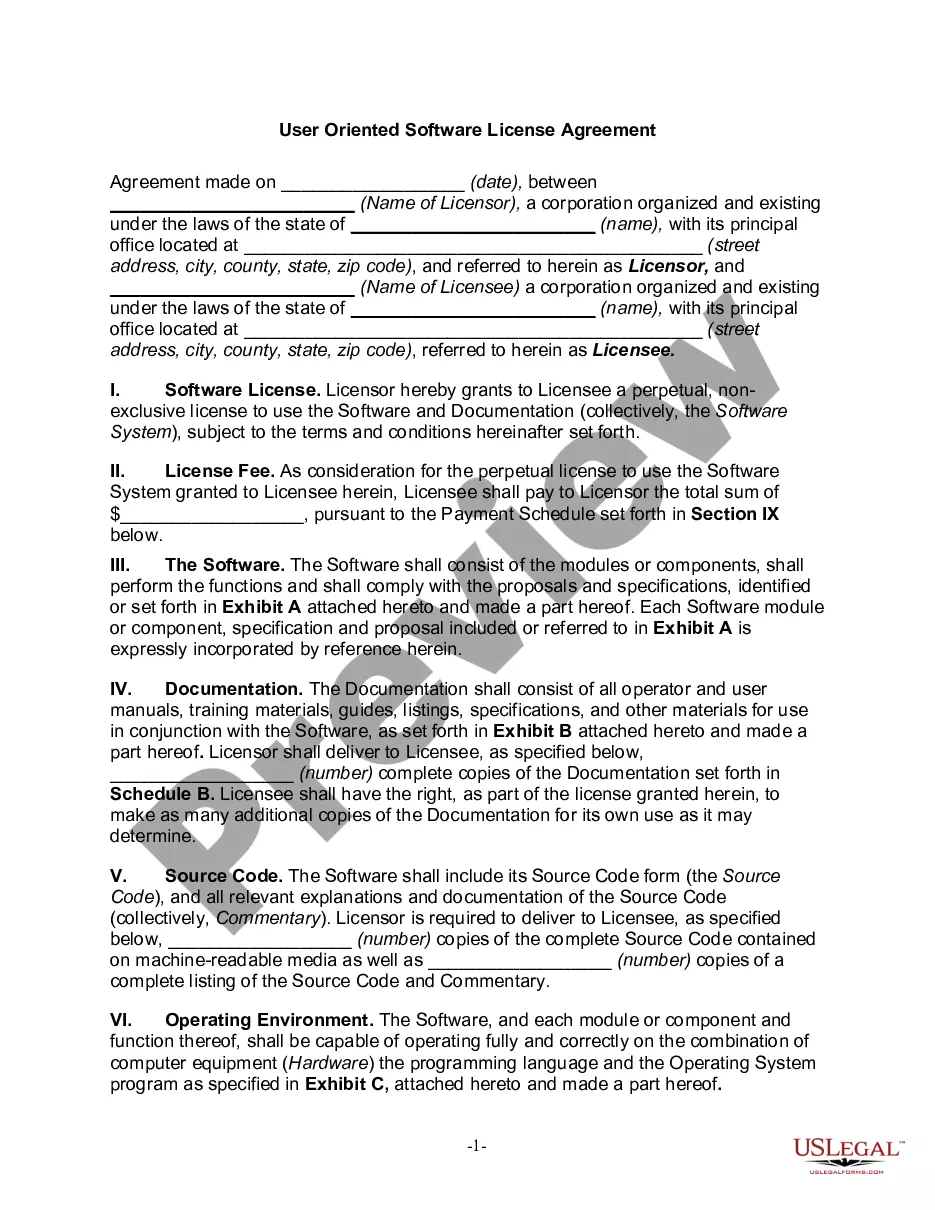
How to fill out Waiver And Release From Liability For Minor Child For Parasailing?
Selecting the finest legal document template can be a challenge. Of course, there are numerous templates available online, but how do you find the legal form you require? Utilize the US Legal Forms website. The service offers thousands of templates, such as the Mississippi Waiver and Release From Liability For Minor Child for Parasailing, which can be used for business and personal needs. All of the forms are reviewed by professionals and comply with federal and state regulations.
If you are already registered, Log In to your account and click the Acquire button to obtain the Mississippi Waiver and Release From Liability For Minor Child for Parasailing. Use your account to review the legal forms you have purchased previously. Visit the My documents tab in your account and download another copy of the document you need.
If you are a new user of US Legal Forms, here are simple instructions for you to follow: First, ensure you have selected the correct form for your city/state. You can examine the form using the Preview button and review the form description to confirm it is suitable for you. If the form does not meet your requirements, utilize the Search field to find the appropriate form. Once you are confident that the form is correct, click the Purchase now button to acquire the form. Choose the pricing plan you need and enter the required information. Create your account and pay for the order using your PayPal account or credit card. Select the file format and download the legal document template to your device. Finally, complete, revise, print, and sign the received Mississippi Waiver and Release From Liability For Minor Child for Parasailing.
Utilize the US Legal Forms platform for all your legal document needs.
- US Legal Forms is the largest collection of legal forms.
- You will find various document templates.
- Use the service to download correctly crafted papers.
- Ensure compliance with state regulations.
- Access a wide range of legal resources.
- Easily manage your documents online.
Form popularity
FAQ
An indemnity and a liability waiver serve different purposes, though they both aim to limit legal responsibility. A liability waiver, like the Mississippi Waiver and Release From Liability For Minor Child for Parasailing, prevents parents from suing for injuries. In contrast, an indemnity agreement may require one party to compensate another for losses or damages. Understanding these differences can help parents make informed decisions regarding their child's participation in activities.
A hold harmless agreement for youth sports protects organizations and coaches from legal claims arising from injuries. This agreement ensures that parents understand the risks involved in activities like parasailing. By signing the Mississippi Waiver and Release From Liability For Minor Child for Parasailing, parents agree not to hold the organization responsible for any accidents. This document helps everyone involved feel secure while enjoying the sport.
The main difference between releases and waivers is the transferring of ownership. When rights are released, they are transferred to another party. When rights are waived, they are gone altogether.
Liability waivers are enforceable in California solely to the extent they shift to the customer the risk of ordinary negligence. Under California law, a liability waiver cannot excuse an injury caused by a defendant's gross negligence, recklessness or intentionally wrongful act.
So, if an accident happens and injury occurs, is a Waiver effective in protecting the institution from liability and preventing a lawsuit from the injured party? The answer is that, if properly worded and signed, the Waiver is likely valid and will preclude legal claims for injuries.
A liability waiver is a legal document that a person who participates in an activity may sign to acknowledge the risks involved in their participation. By doing so, the company attempts to remove legal liability from the business or person responsible for the activity.
Here is all that pertains writing an effective liability waiver:Get help. Writing a waiver should not be complicated.Use the correct structure.Proper formatting.Include a subject line.Include a caution!Talk about the activity risks.Do not forget an assumption of risk.Hold harmless.More items...?
A liability waiver, or release waiver, is a legal document that a company or organization requires members of the public to sign in order to protect their organization from being sued if you sustain an injury.
Generally, a liability waiver document is a legally binding agreement that relinquishes the right of one party to pursue legal remedy for injuries accrued on the property, regardless of fault involved.
A release of liability, also known as a liability waiver or a hold harmless agreement, is a contract in which one party agrees not to hold another party liable for damages or injury. These contracts are common in fields that involve some risk to property, finances, or health.