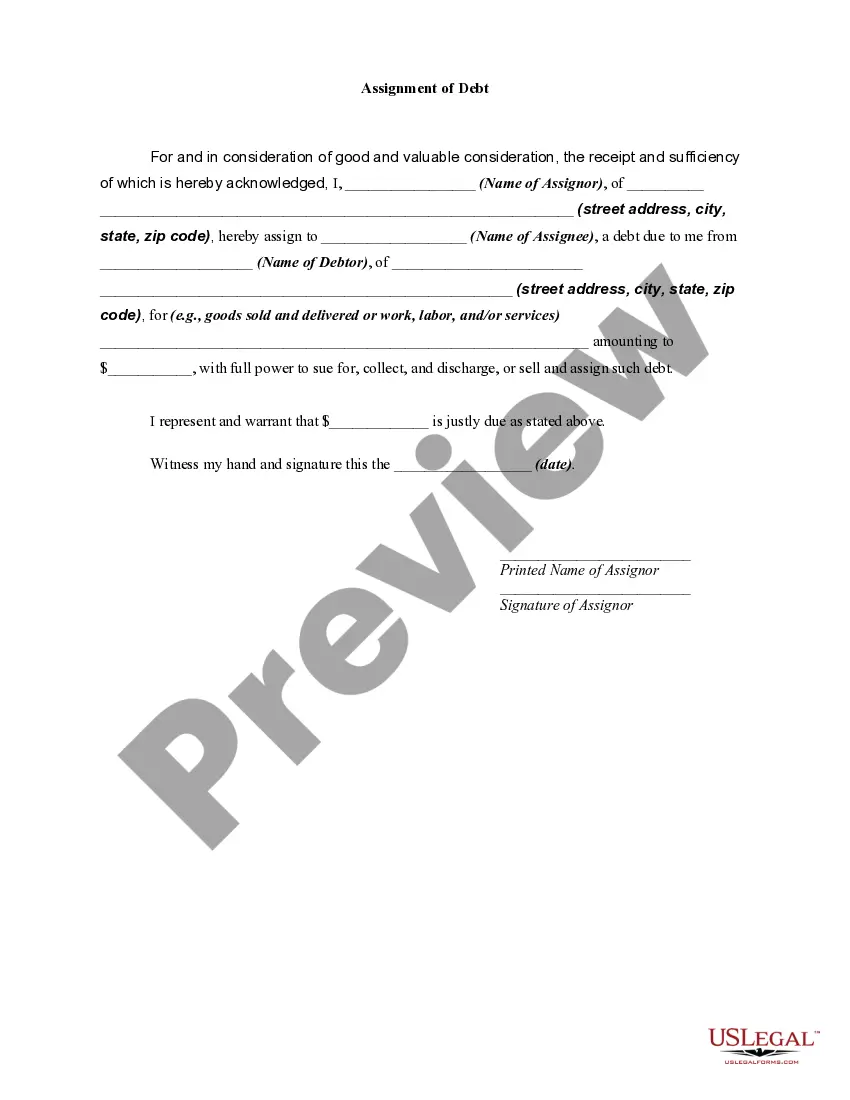
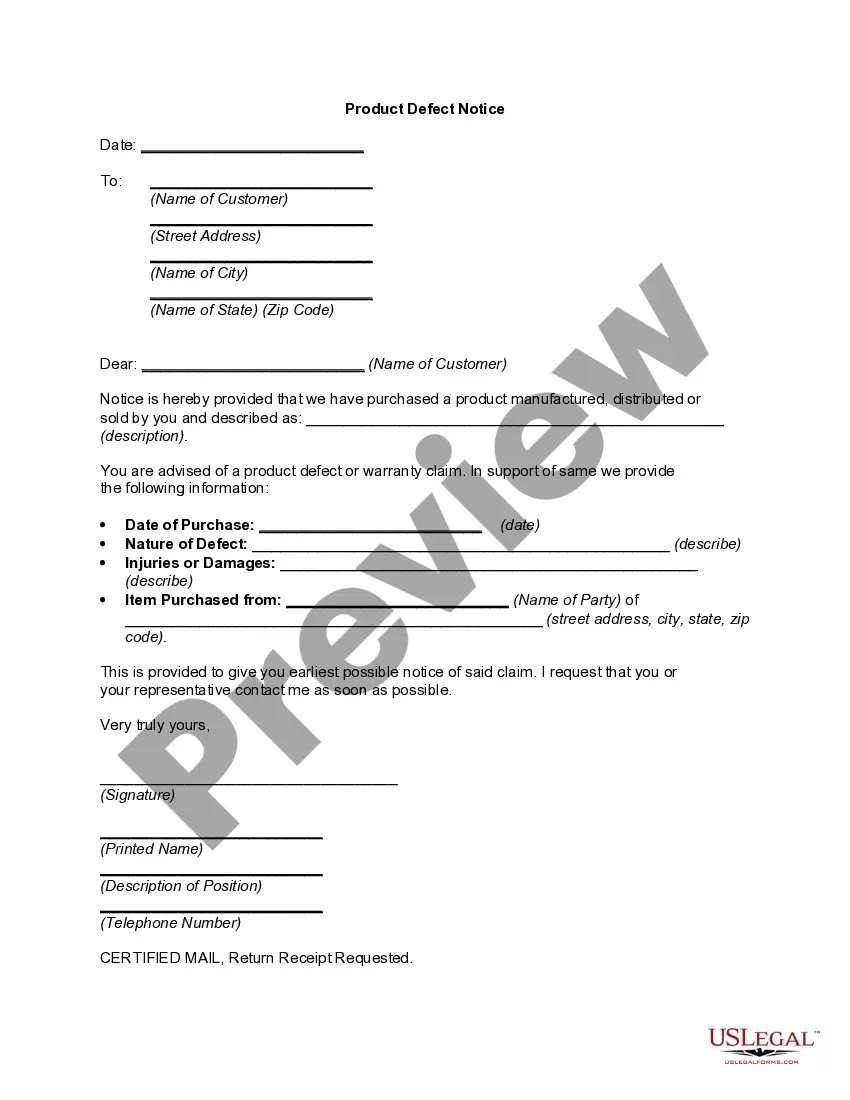
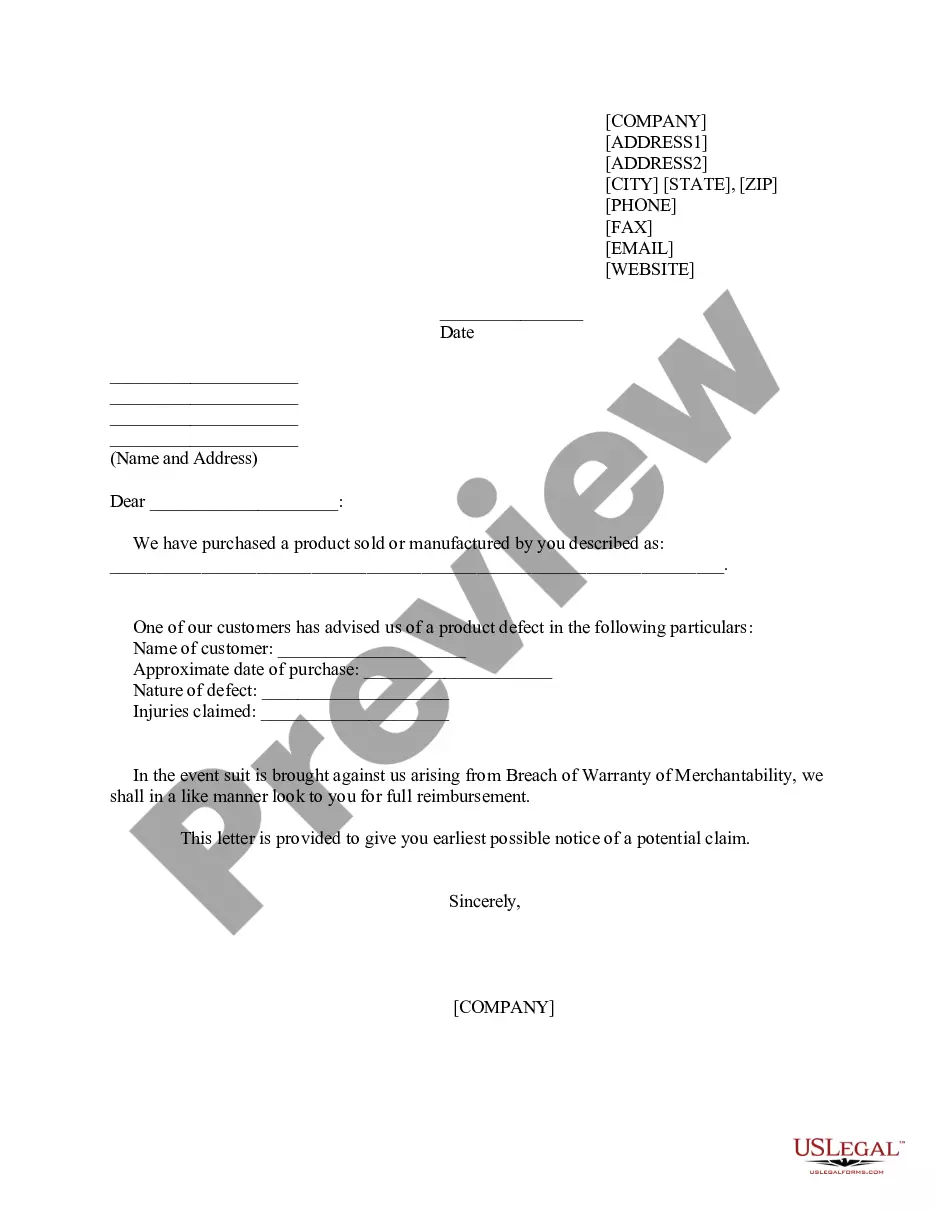
Mississippi Product Defect Notice
Description
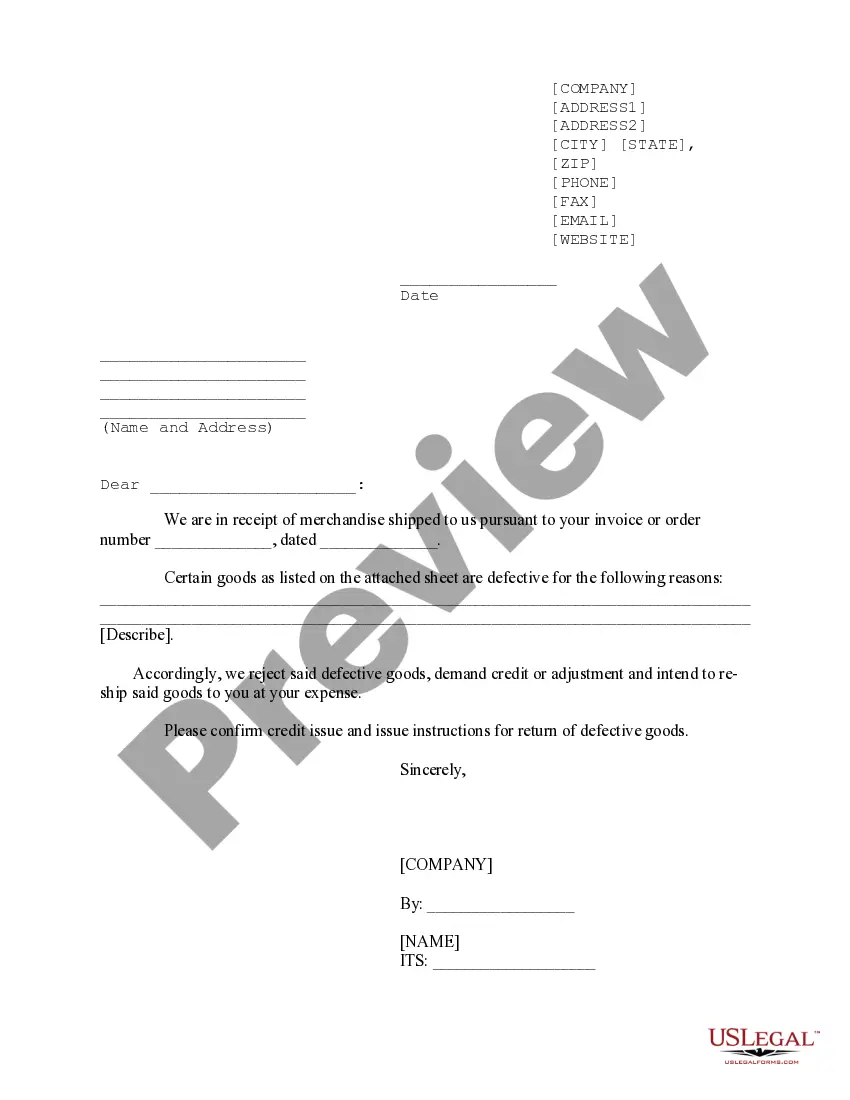
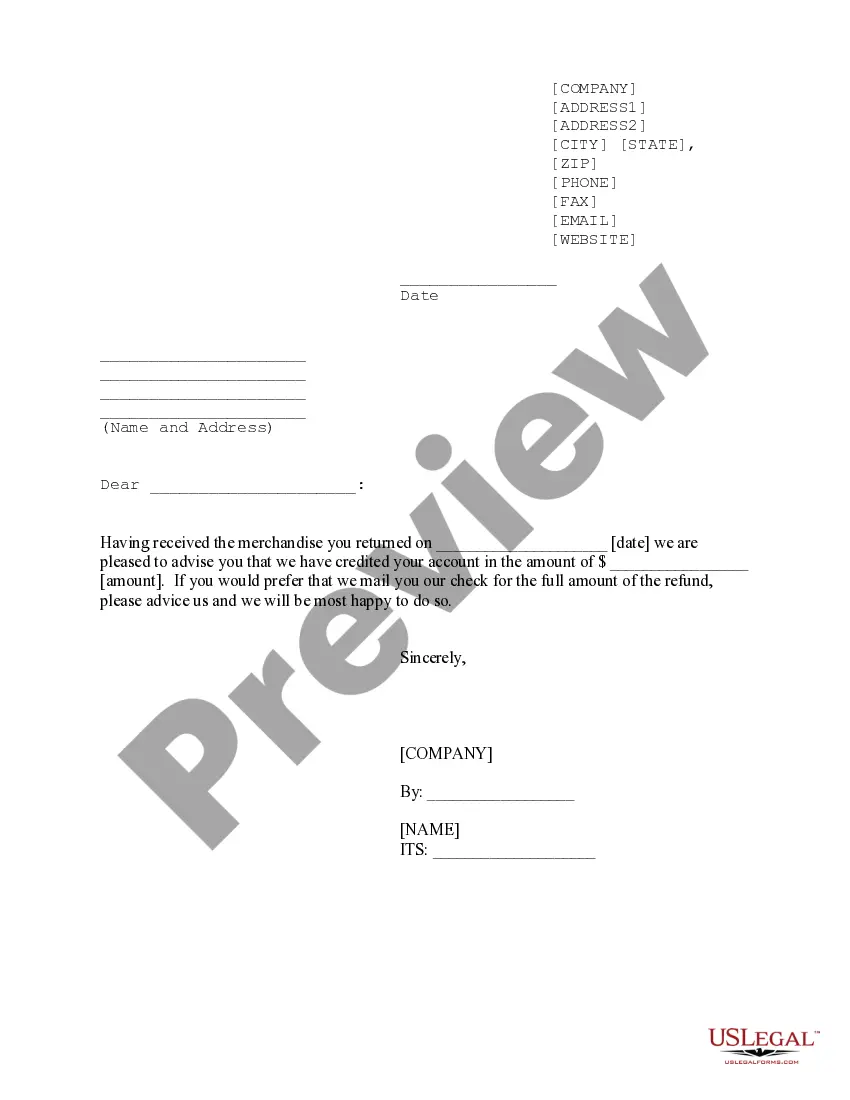
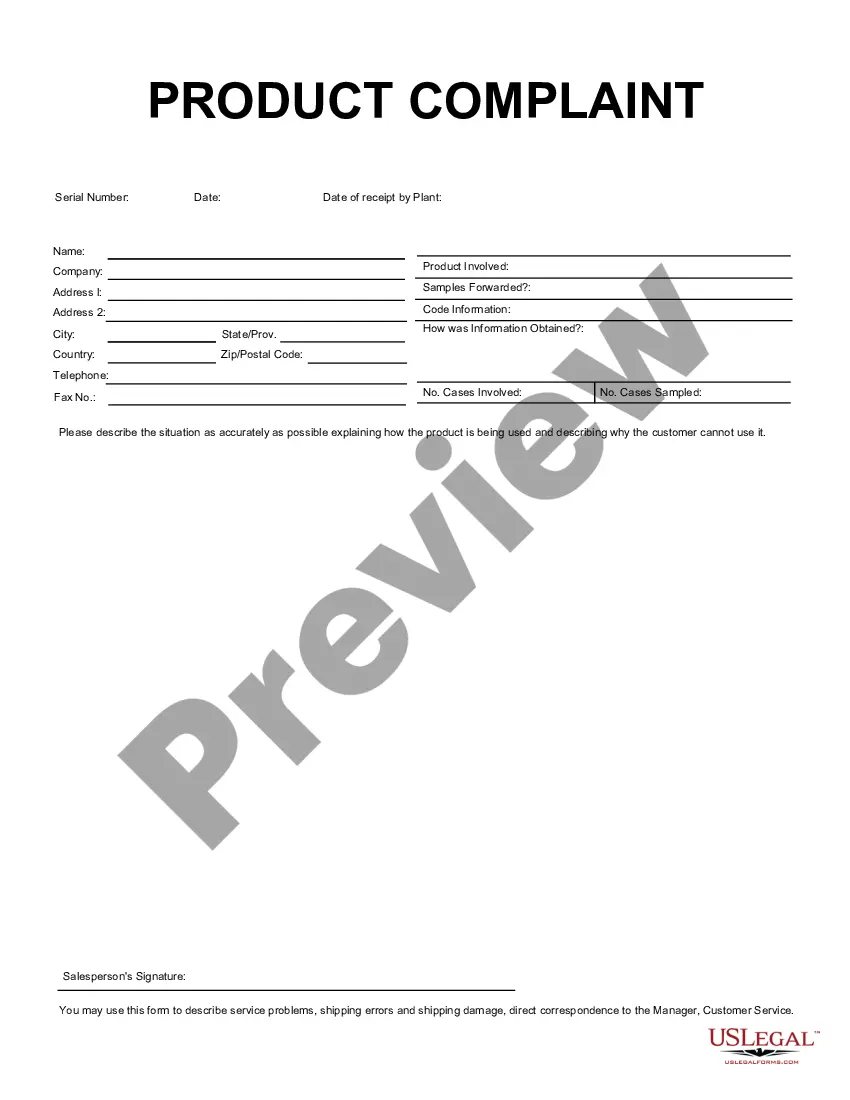
Get your form ready online
Our built-in tools help you complete, sign, share, and store your documents in one place.
Make edits, fill in missing information, and update formatting in US Legal Forms—just like you would in MS Word.
Download a copy, print it, send it by email, or mail it via USPS—whatever works best for your next step.
Sign and collect signatures with our SignNow integration. Send to multiple recipients, set reminders, and more. Go Premium to unlock E-Sign.
If this form requires notarization, complete it online through a secure video call—no need to meet a notary in person or wait for an appointment.
We protect your documents and personal data by following strict security and privacy standards.

Make edits, fill in missing information, and update formatting in US Legal Forms—just like you would in MS Word.

Download a copy, print it, send it by email, or mail it via USPS—whatever works best for your next step.

Sign and collect signatures with our SignNow integration. Send to multiple recipients, set reminders, and more. Go Premium to unlock E-Sign.

If this form requires notarization, complete it online through a secure video call—no need to meet a notary in person or wait for an appointment.

We protect your documents and personal data by following strict security and privacy standards.
Looking for another form?






How to fill out Product Defect Notice?
You can allocate time online looking for the proper legal document template that meets federal and state requirements you require.
US Legal Forms offers a vast array of legal forms that have been evaluated by experts.
You can easily download or print the Mississippi Product Defect Notice from the service.
Once you have found the template you want, click on Acquire now to proceed.
- If you already have a US Legal Forms account, you can Log In and click the Obtain button.
- Then, you can complete, modify, print, or sign the Mississippi Product Defect Notice.
- Each legal document template you acquire is yours indefinitely.
- To obtain an additional copy of the downloaded form, visit the My documents tab and click the appropriate button.
- If you are using the US Legal Forms site for the first time, follow the simple instructions below.
- First, make sure you have selected the correct document template for your county/city of choice.
- Check the form details to confirm you have selected the correct document.
- If available, use the Preview button to review the document template as well.
- If you want to find an additional version of your form, use the Lookup section to locate the template that suits your needs and requirements.
Form popularity
FAQ
Defective Product is an imperfection in a product that has a manufacturing or design defect, or is faulty because of inadequate instructions or warnings. A product is in a defective condition if it is unreasonably dangerous to the user or to consumer who purchases the product and causes physical harm.
In order to establish negligence, you must be able to prove four elements: a duty, a breach of that duty, causation and damages.
One of the most straightforward ways to find out if you have a defective product is to pay attention to product recalls. Unfortunately, manufacturers do not always do a very good job of broadcasting their recalls, so consumers need to take a proactive approach to discovering if they have any defective products.
Defining defective A defective product is one that does not perform as it should or one that causes unexpected injuries. It could cause damages because of a defective design or manufacturing flaw, or it could be defective because there were insufficient warnings to consumers about the risks of using the product.
To be more specific, a defective product is a product that causes injury to a person to due either a design defect, a manufacturing defect, or a marketing defect. Some of the most common examples of defective products include food items, medical devices, and children's toys.
To be considered defective, a product should fall under one or more of four general categories: The product is unfit for its intended use. For example, a helmet that collapses upon slight impact would be unfit for intended use. The product does not include proper or adequate instructions for use.
Dangerous or otherwise defective products cause injury to countless numbers of consumers each year. If you purchase a product that simply does not perform as advertised, causing no actual injury, then you may be covered by a warranty or at the very least have the option of returning it for a refund or exchange.
If you make a defective product claim, there are four elements of your claim you must prove:You were using the product as intended.The product was defective.You were injured or otherwise suffered harm.The product's defect caused you harm.
With regard to products liability, a defendant is liable when the plaintiff proves that the product is defective, regardless of the defendant's intent. It is irrelevant whether the manufacturer or supplier exercised great care; if there is a defect in the product that causes harm, he or she will be liable for it.