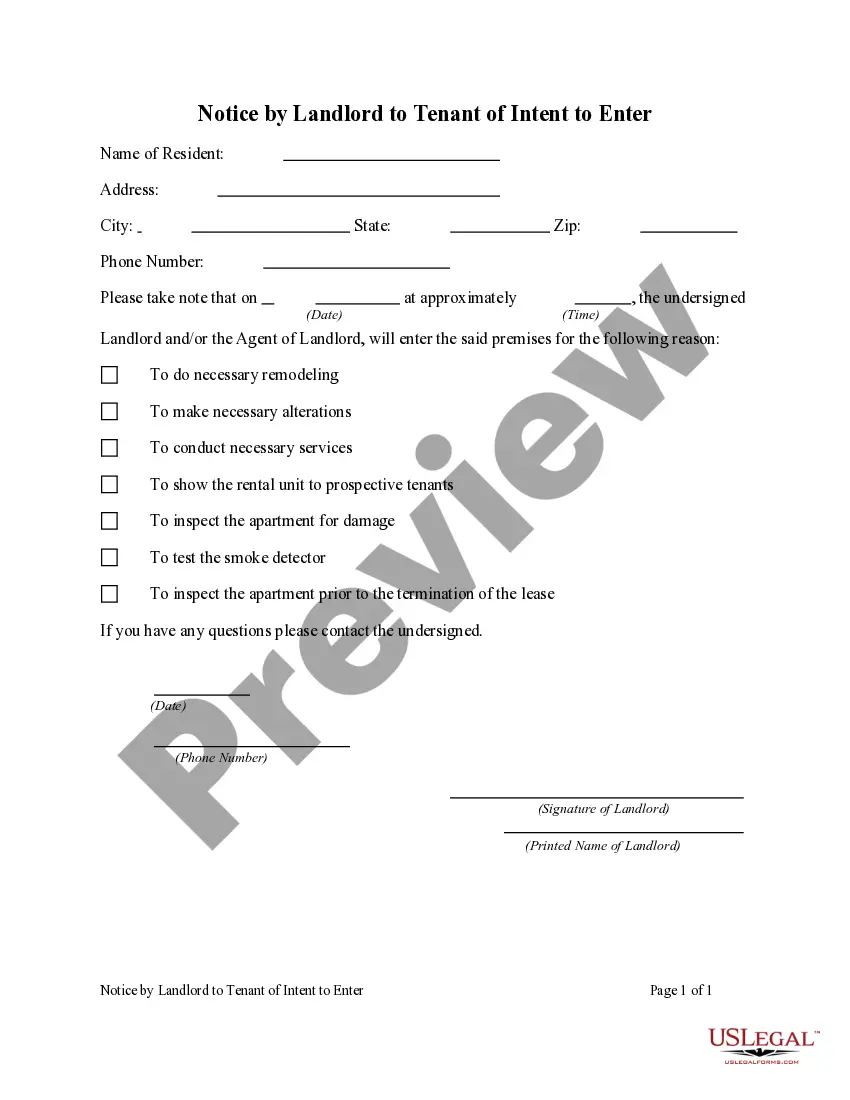
Mississippi Notice by Landlord to Tenant of Intent to Enter
Description
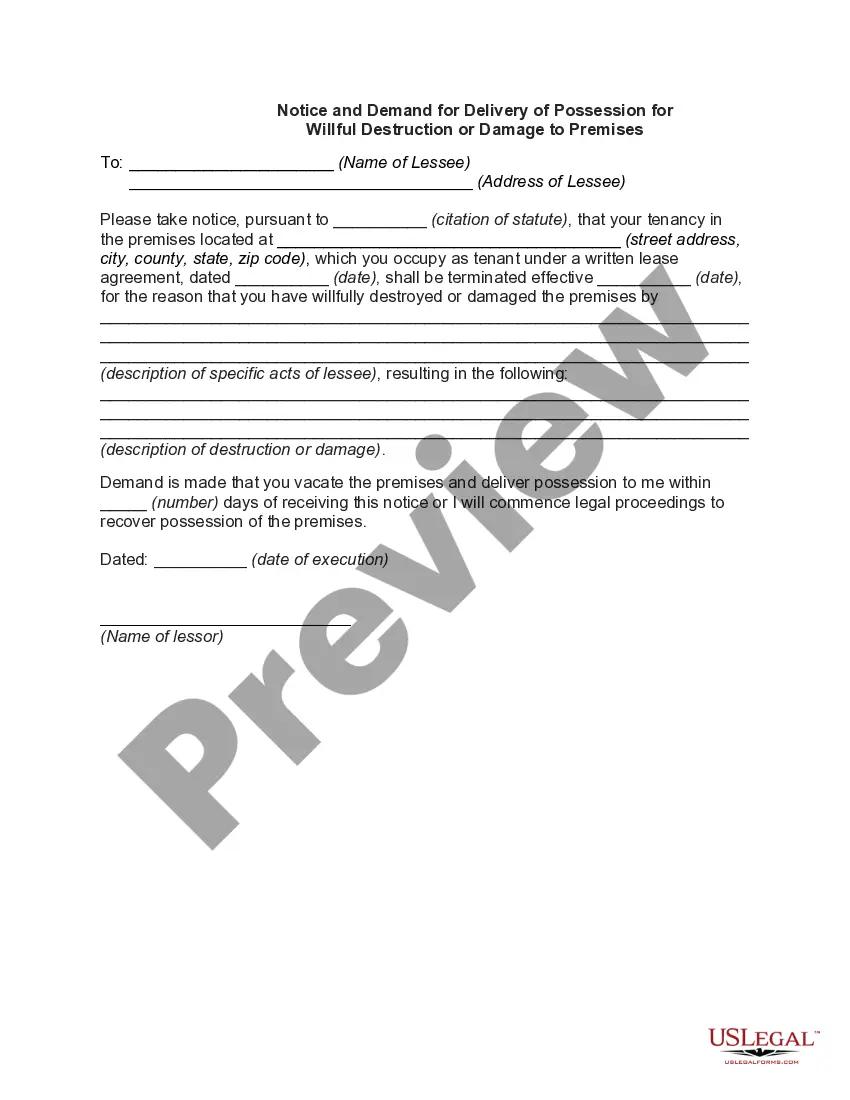
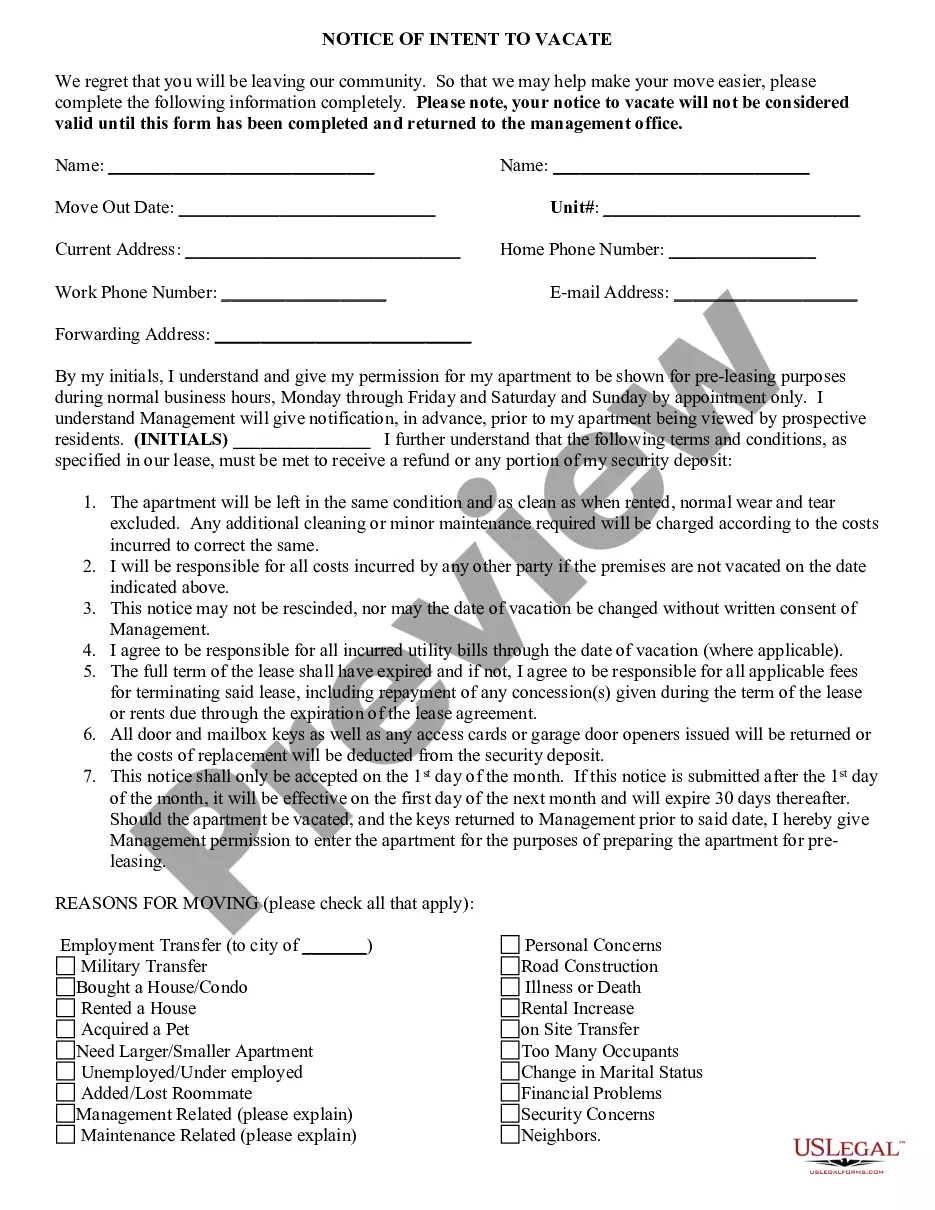
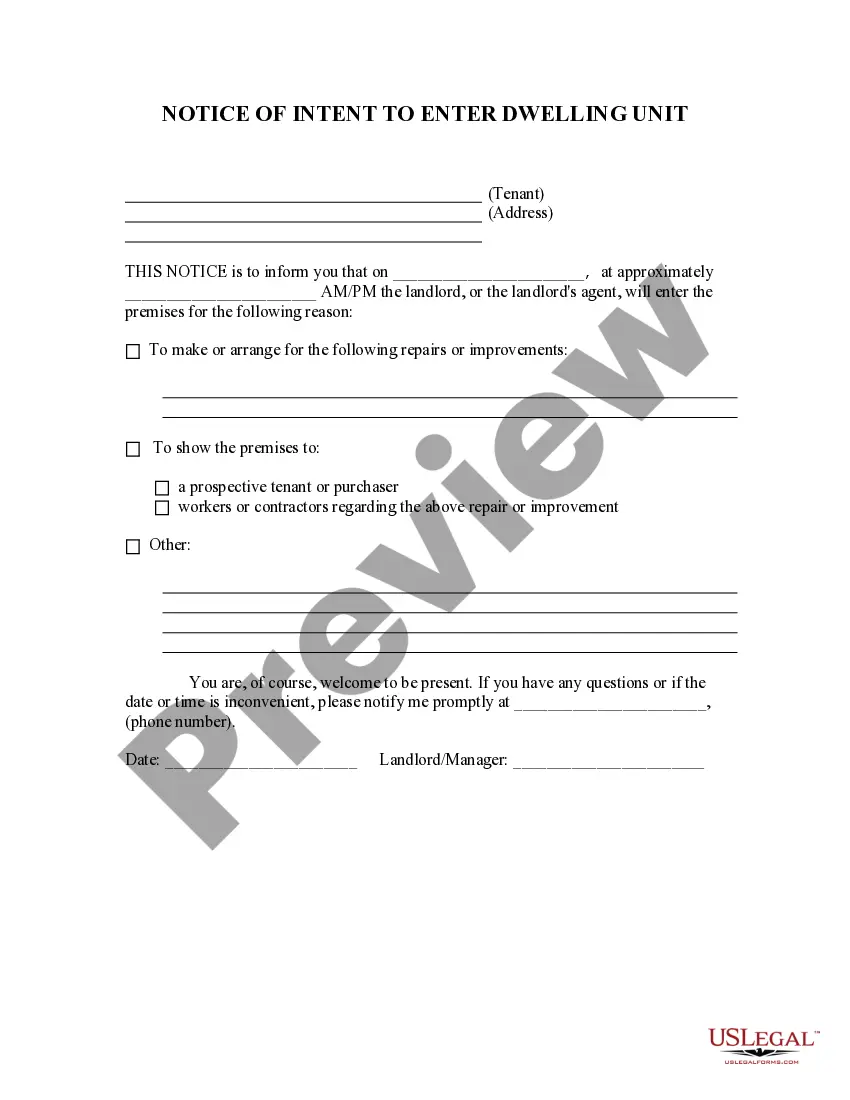

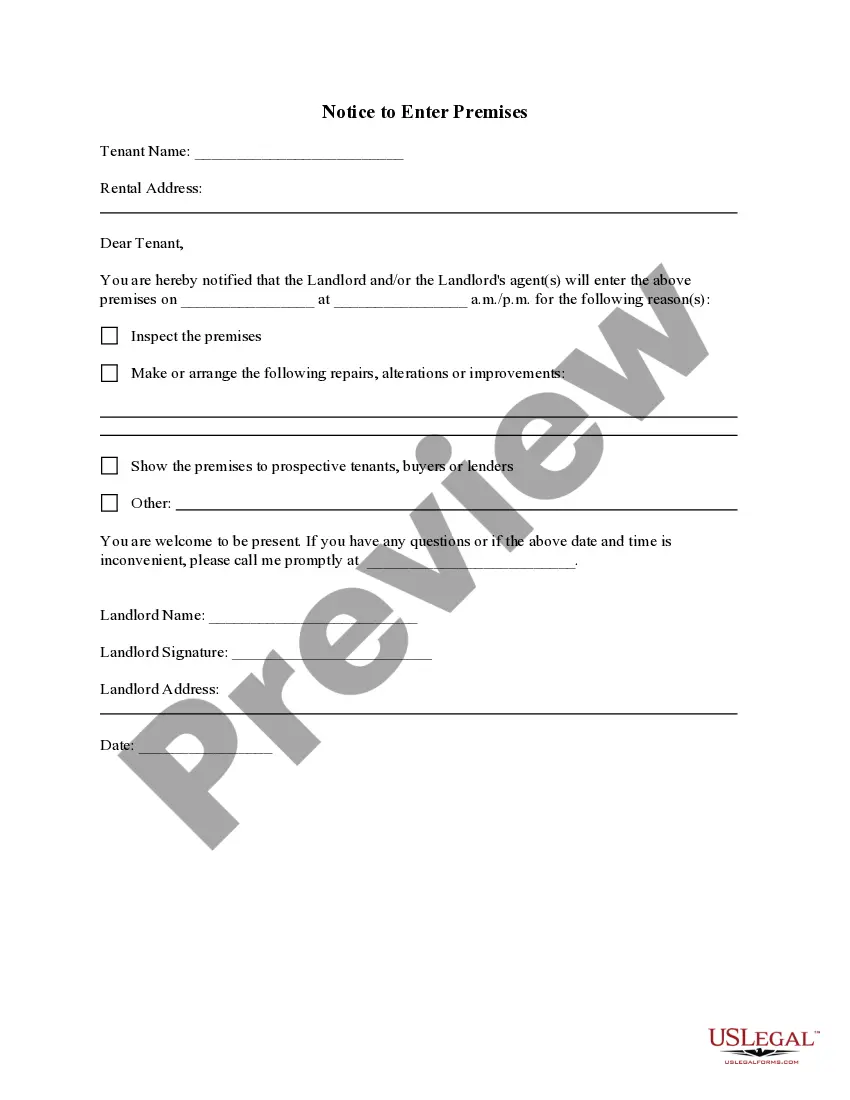
How to fill out Notice By Landlord To Tenant Of Intent To Enter?
You might spend time online trying to locate the official document template that satisfies the state and federal requirements you need.
US Legal Forms provides thousands of official forms that are evaluated by experts.
You can easily obtain or create the Mississippi Notice by Landlord to Tenant of Intent to Enter through the service.
If available, use the Preview option to browse through the document template as well.
- If you already have a US Legal Forms account, you can Log In and click the Download option.
- After that, you can complete, modify, print, or sign the Mississippi Notice by Landlord to Tenant of Intent to Enter.
- Each official document template you purchase is yours for years.
- To get another copy of any purchased form, visit the My documents tab and click the appropriate option.
- If you are using the US Legal Forms website for the first time, follow the simple instructions below.
- First, ensure that you have selected the correct document template for your preferred county/region.
- Review the form description to confirm you have picked the right form.
Form popularity
FAQ
A letter of intent for a tenant is a formal communication that outlines the tenant's intentions regarding the rental agreement. In Mississippi, this often relates to the Notice by Landlord to Tenant of Intent to Enter, where tenants are informed of when and why the landlord will enter their unit. Using a structured letter ensures that tenants remain aware of their rights and responsibilities.
A letter of intent serves to inform your landlord or tenant about important matters regarding the property. Specifically, in the context of the Mississippi Notice by Landlord to Tenant of Intent to Enter, it provides notification before entering the residence for necessary reasons. This process helps maintain transparency and ensures both parties understand the intentions behind the entry.
To give notice to your landlord, you may start by writing a clear and concise letter that states your intentions. Include the date, your address, and the specific reasons for the notice, such as repairs or inspections. Utilizing a template from uslegalforms can help you easily create a professional-looking Mississippi Notice by Landlord to Tenant of Intent to Enter, ensuring you cover all necessary points.
While you can draft a letter of intent on your own, consulting a lawyer can provide clarity on the legal aspects involved. The Mississippi Notice by Landlord to Tenant of Intent to Enter requires specific details that a lawyer can help you navigate. They can also ensure that your rights are protected and that the notice complies with state laws, giving you peace of mind.
In Mississippi, landlords cannot enter a tenant’s property without notice, change locks without consent, or retaliate against tenants for asserting their rights. They also cannot discriminate based on race, gender, or familial status. Familiarizing yourself with tenant rights can help prevent misunderstandings, and platforms like uslegalforms offer resources to navigate these issues.
When writing a notice letter to your tenant, start with a clear statement identifying it as a Mississippi Notice by Landlord to Tenant of Intent to Enter. Include the purpose for entry, the specific date and time, and contact information. Keep the tone professional and concise, as this fosters a better landlord-tenant relationship.
To write a notice of entry, include essential details such as the date, time, and purpose of the entry. Make sure to label it as a Mississippi Notice by Landlord to Tenant of Intent to Enter. This notice should be given to the tenant in accordance with Mississippi laws, ensuring you respect their privacy and legal rights.
Yes, you can refuse a landlord entry if they do not follow the required procedures, such as providing a Mississippi Notice by Landlord to Tenant of Intent to Enter. You have the right to ensure that any access is reasonable and respects your privacy. If a landlord attempts to enter without proper notice, you can legally deny them access.
In Mississippi, a landlord cannot enter your home without permission unless there is an emergency. A proper Mississippi Notice by Landlord to Tenant of Intent to Enter must be given in advance to inform you of their intent to enter. This protects your right to privacy and ensures that any entry is justified and communicated appropriately.
Yes, you can sue your landlord if they enter your apartment without proper notice or consent, as this violates your privacy rights. In Mississippi, the law requires landlords to provide tenants with a Mississippi Notice by Landlord to Tenant of Intent to Enter. If they fail to comply, you may have grounds for legal action, especially if you incur damages or suffer emotional distress.