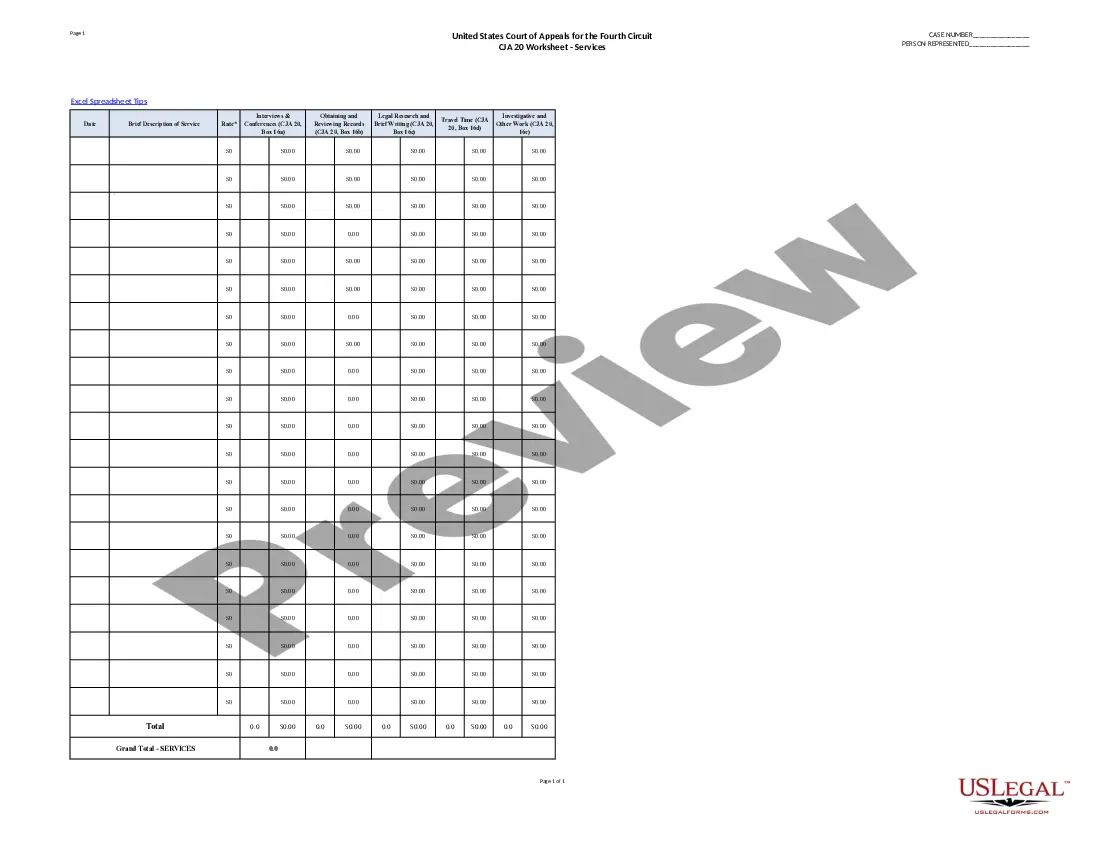
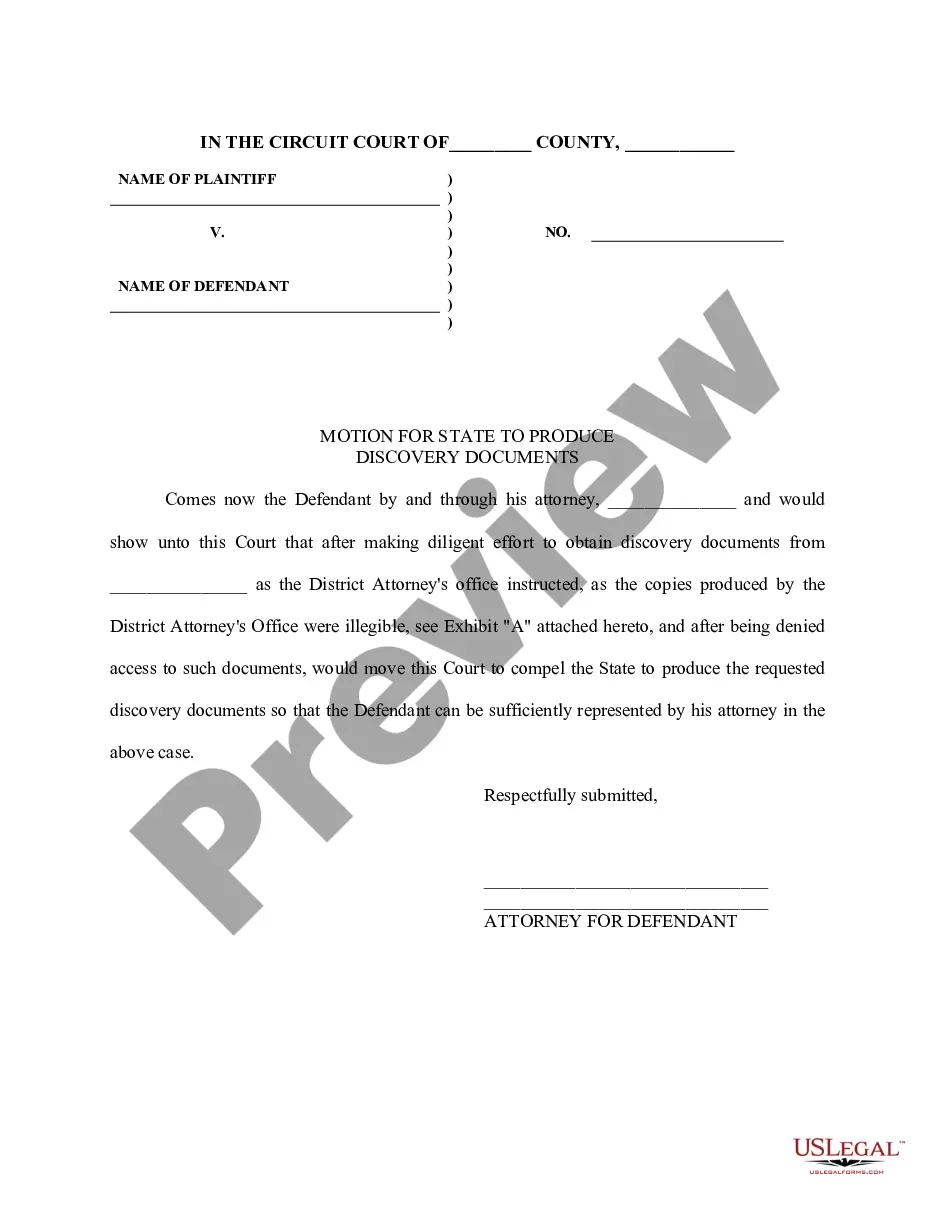
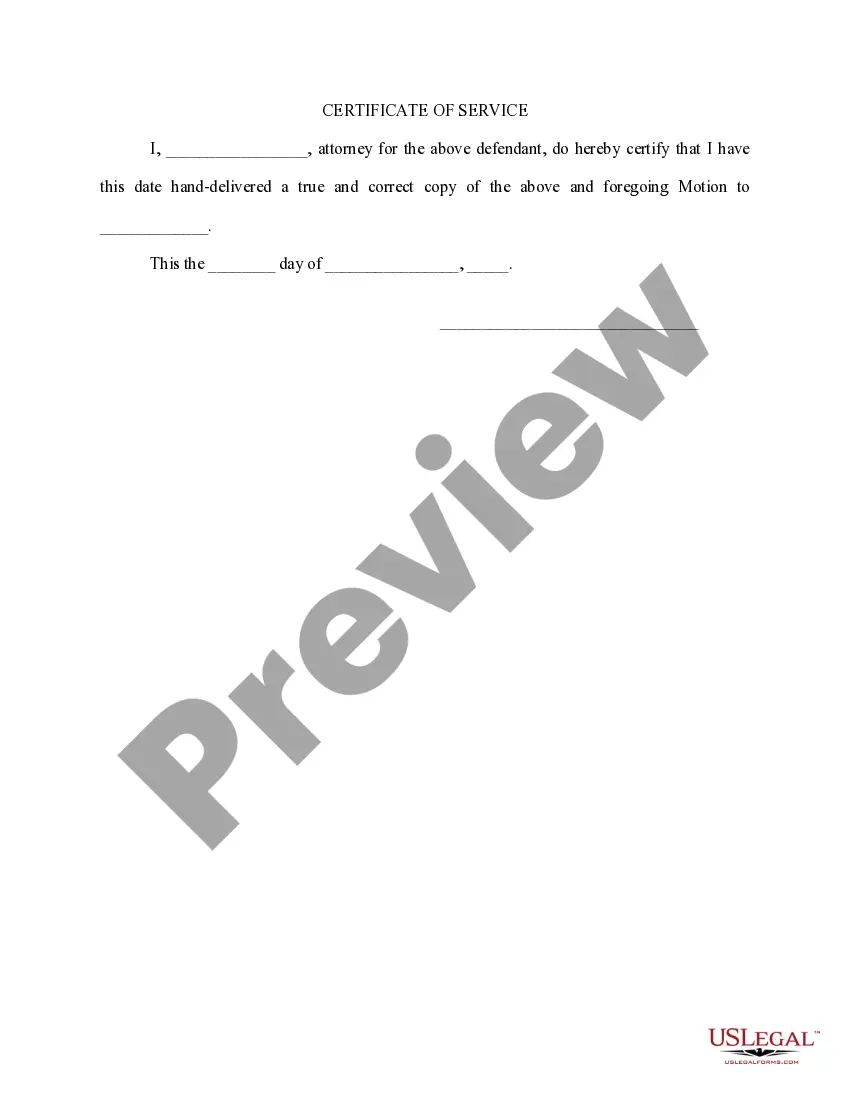
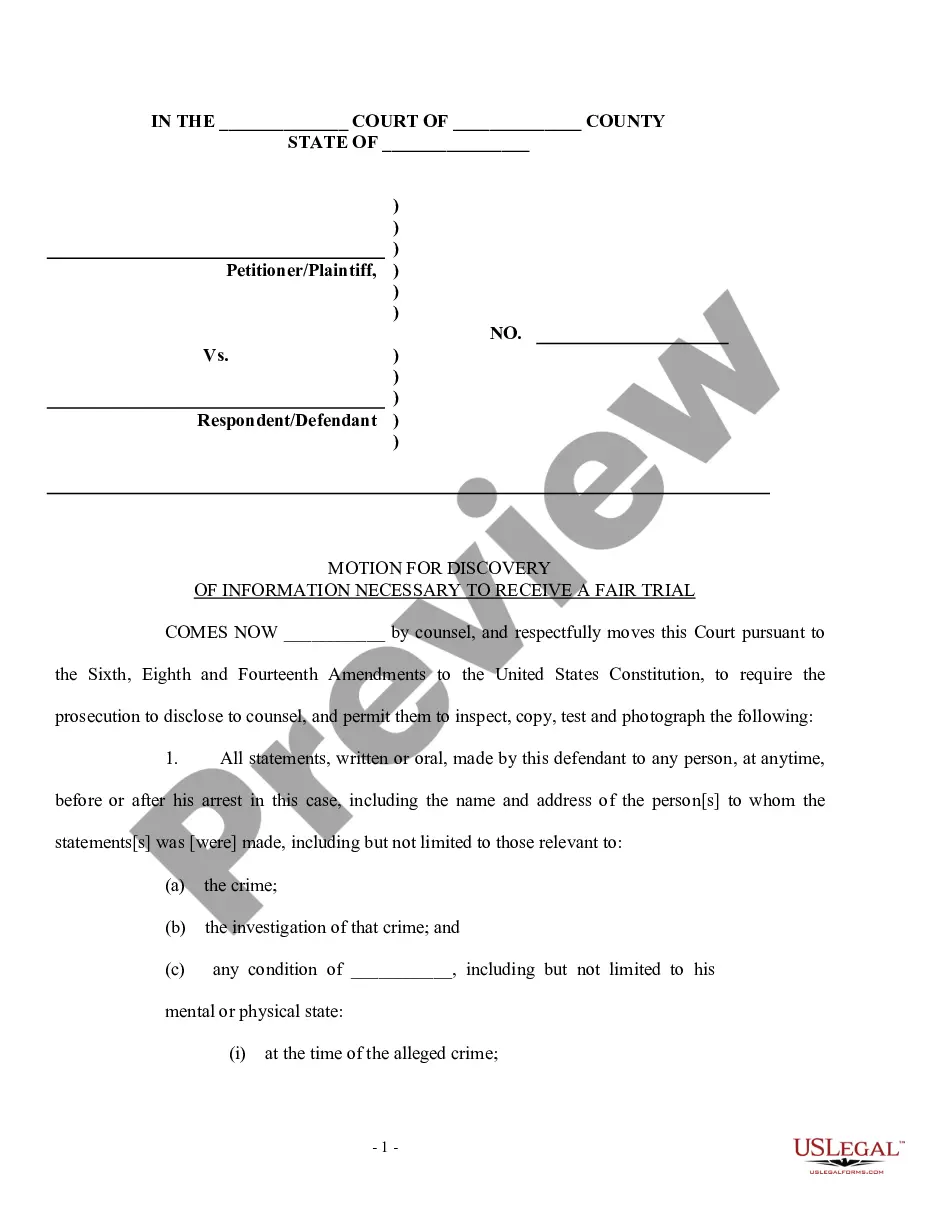
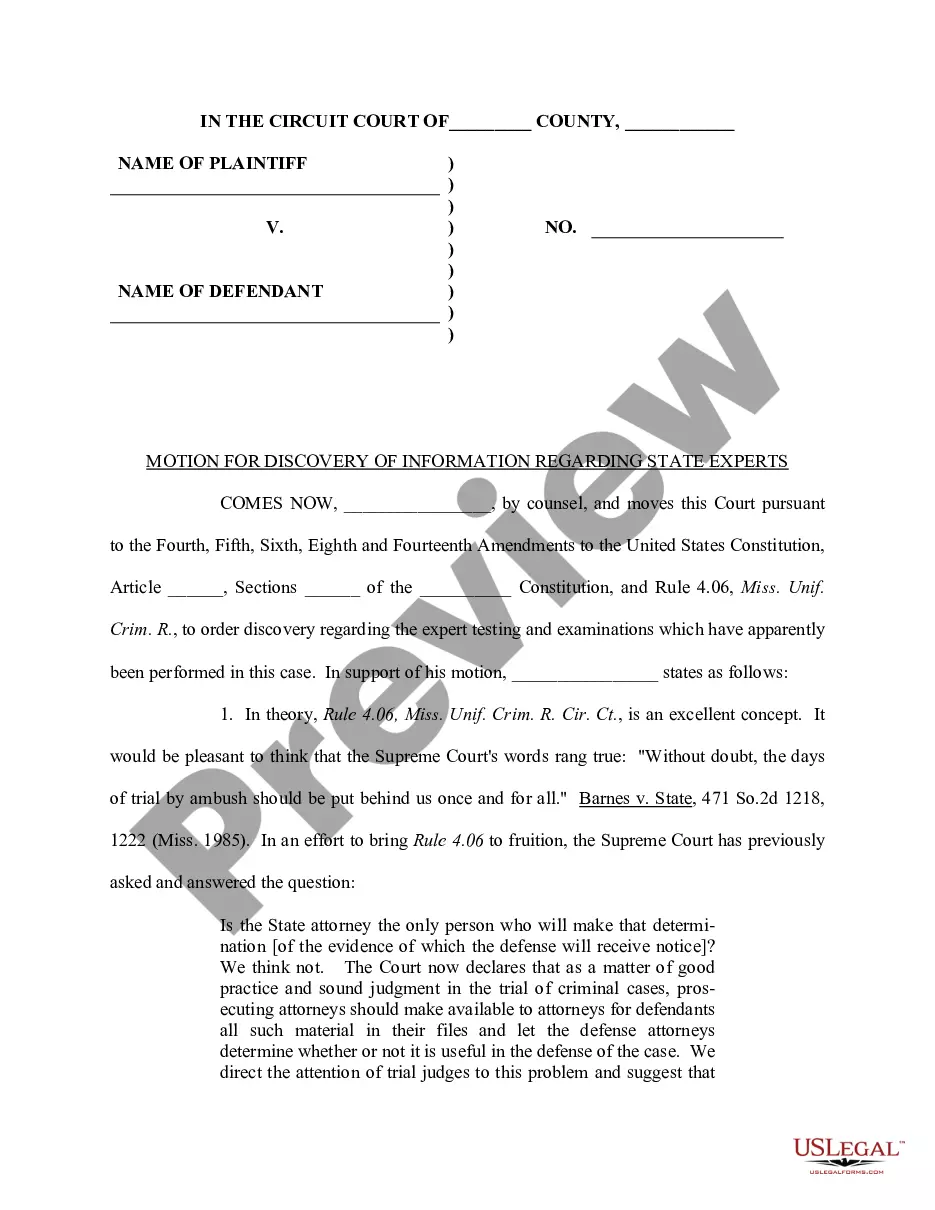
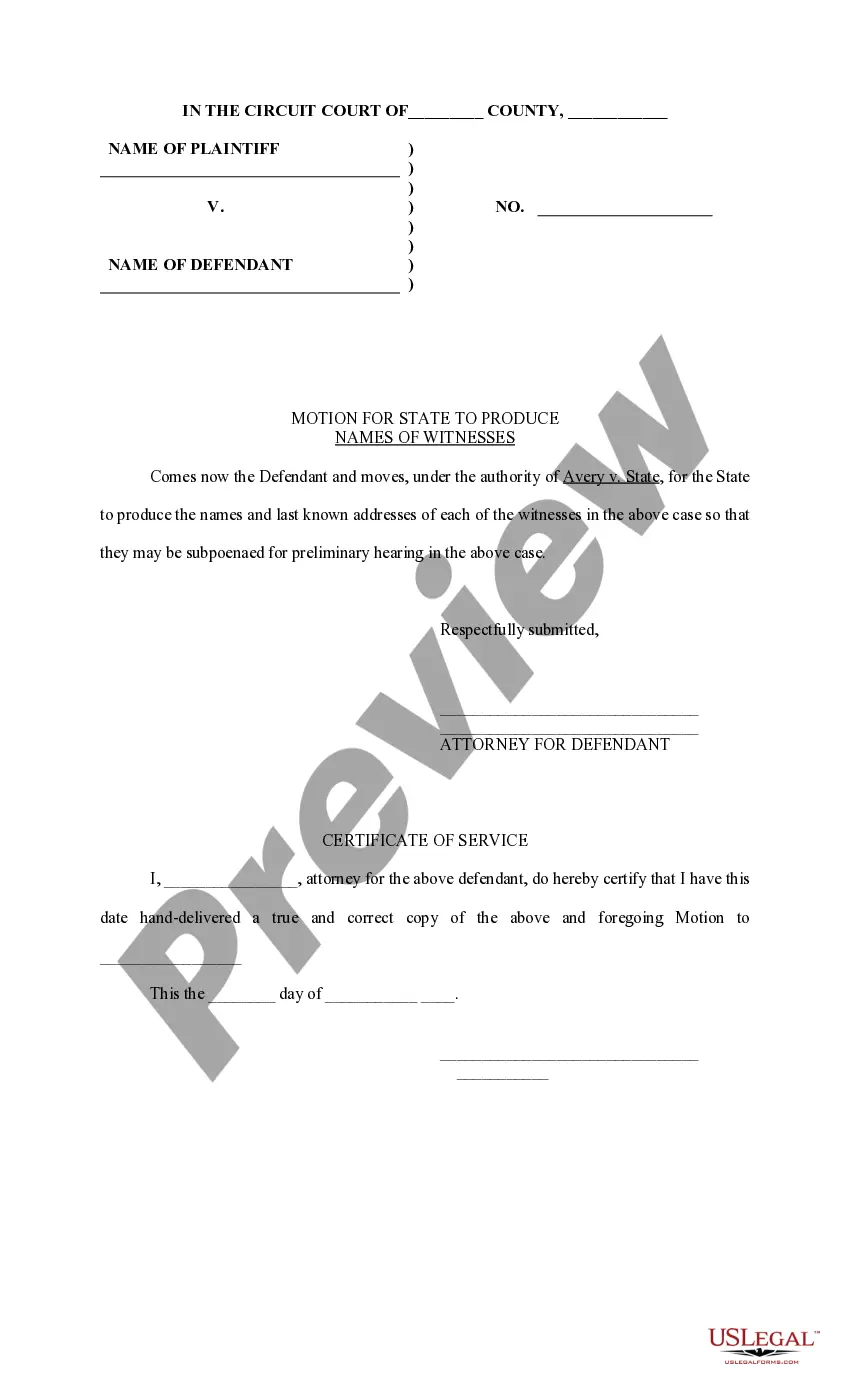
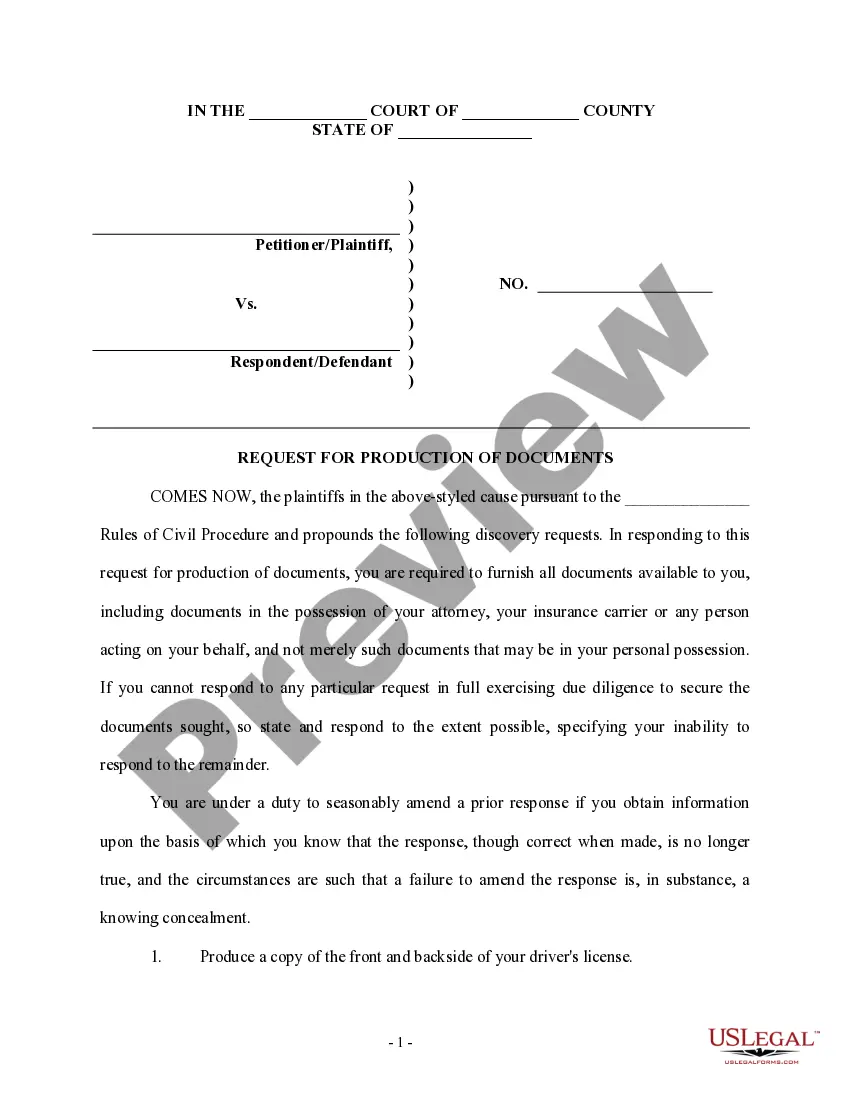
Mississippi Motion for State to Produce Discovery Document
Description
Get your form ready online
Our built-in tools help you complete, sign, share, and store your documents in one place.
Make edits, fill in missing information, and update formatting in US Legal Forms—just like you would in MS Word.
Download a copy, print it, send it by email, or mail it via USPS—whatever works best for your next step.
Sign and collect signatures with our SignNow integration. Send to multiple recipients, set reminders, and more. Go Premium to unlock E-Sign.
If this form requires notarization, complete it online through a secure video call—no need to meet a notary in person or wait for an appointment.
We protect your documents and personal data by following strict security and privacy standards.

Make edits, fill in missing information, and update formatting in US Legal Forms—just like you would in MS Word.

Download a copy, print it, send it by email, or mail it via USPS—whatever works best for your next step.

Sign and collect signatures with our SignNow integration. Send to multiple recipients, set reminders, and more. Go Premium to unlock E-Sign.

If this form requires notarization, complete it online through a secure video call—no need to meet a notary in person or wait for an appointment.

We protect your documents and personal data by following strict security and privacy standards.
Looking for another form?





How to fill out Motion For State To Produce Discovery Document?
Are you in a situation where you need documentation for either business or personal reasons almost every day.
There are numerous legal document templates accessible online, but locating ones you can rely on is not easy.
US Legal Forms offers thousands of form templates, such as the Mississippi Motion for State to Produce Discovery Document, that are designed to comply with federal and state regulations.
Choose a convenient file format and download your copy.
Access all the document templates you have purchased in the My documents section. You can download another copy of the Mississippi Motion for State to Produce Discovery Document at any time if needed. Just navigate through the necessary form to download or produce the document template.
- If you are already familiar with the US Legal Forms website and have an account, simply Log In.
- Then, you can download the Mississippi Motion for State to Produce Discovery Document template.
- If you do not have an account and wish to start using US Legal Forms, follow these steps.
- Obtain the form you need and ensure it is for the correct city/region.
- Utilize the Preview button to review the form.
- Check the description to confirm that you have chosen the right form.
- If the form is not what you are looking for, use the Lookup field to find the form that meets your needs.
- Once you have the correct form, click Purchase now.
- Select the payment plan you prefer, fill out the necessary information to create your account, and pay for the order using your PayPal or credit card.
Form popularity
FAQ
What is the discovery rule? Generally speaking, the discovery rule means a statute of limitation does not begin to run until the injured party knows, or should have known, that he had a cause of action.
Motion to dismiss the complaint is NOT part of the discovery process in civil litigation.
Rule 26 of the Mississippi Rules of Civil Procedure allows a party to obtain this information by using an interrogatory. An interrogatory is simply a written question. The rule also allows a party to seek a court order to take the deposition of the expert under oath.
Lack of realization could cause you to miss the statute of limitations; however, Mississippi has a discovery rule. The discovery rule extends the statute of limitations in specific circumstances where the victim did not immediately discover the injury.
Any party may serve as a matter of right upon any other party written interrogatories not to exceed thirty in number to be answered by the party served or, if the party served is a public or private corporation or a partnership or association or governmental agency, by any officer or agent, who shall furnish such ...
We don't like Motions to Compel. Judges don't like them, and neither do the opposing parties we bring them against. But they are, sometimes, required to be brought in cases where you need information to make sure you know what facts, witnesses and documents are in a case prior to going to going to trial.
Discovery: A procedure designed to allow disclosure of information between Plaintiffs and Defendants. Written questions, oral questioning, document production and admissions requests are generally allowed.
All discovery must be completed within ninety days from service of an answer by the applicable defendant.