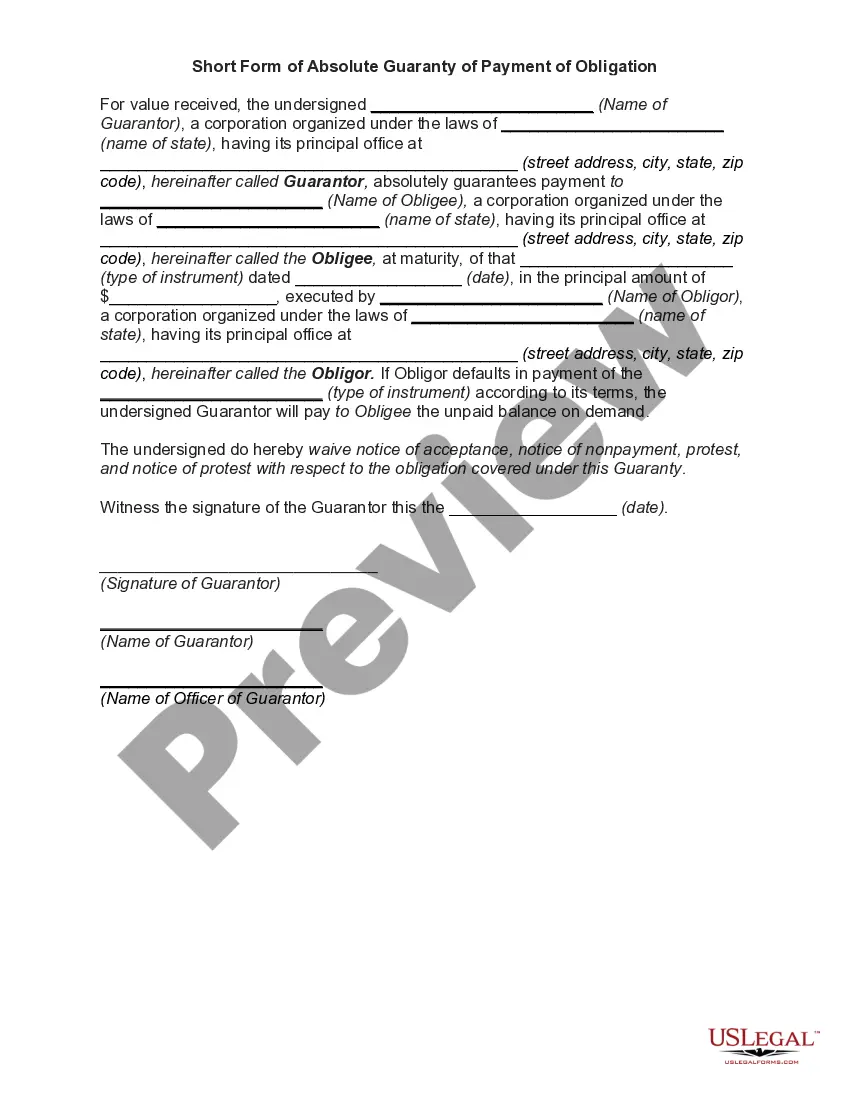
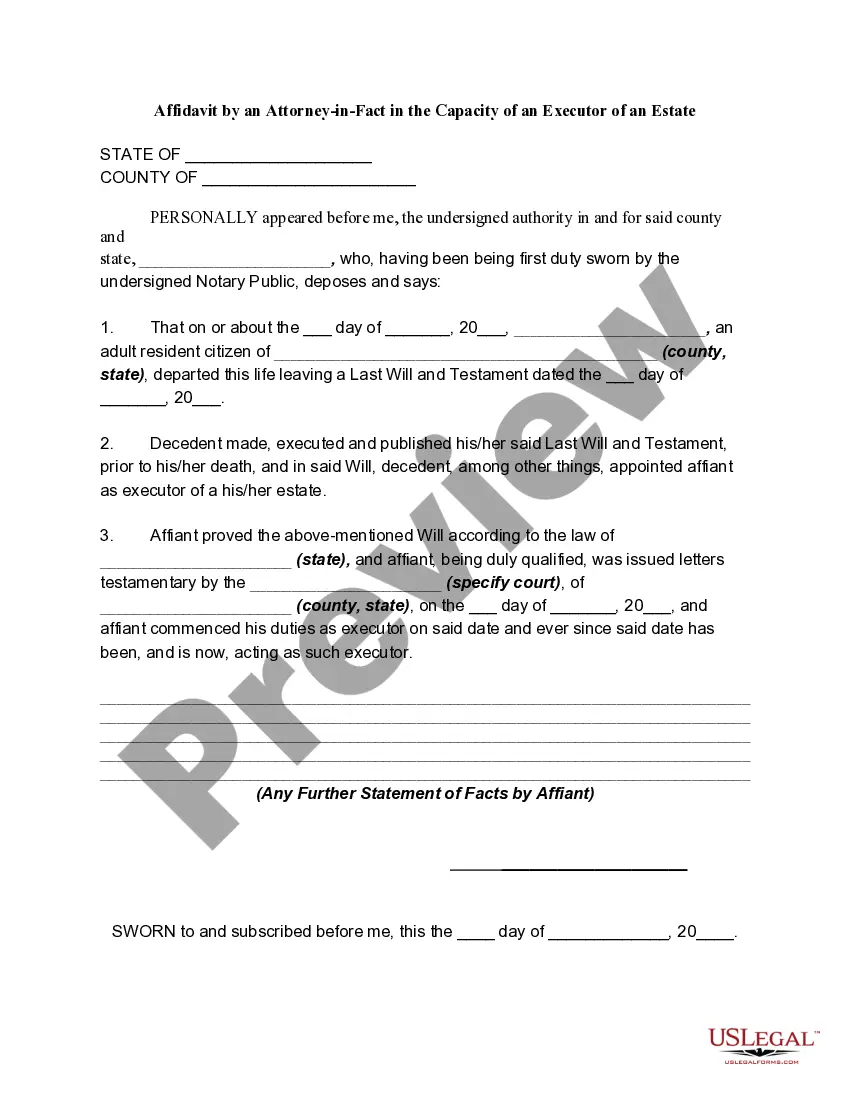
Mississippi Affidavit by an Attorney-in-Fact in the Capacity of an Executor of an Estate
Description

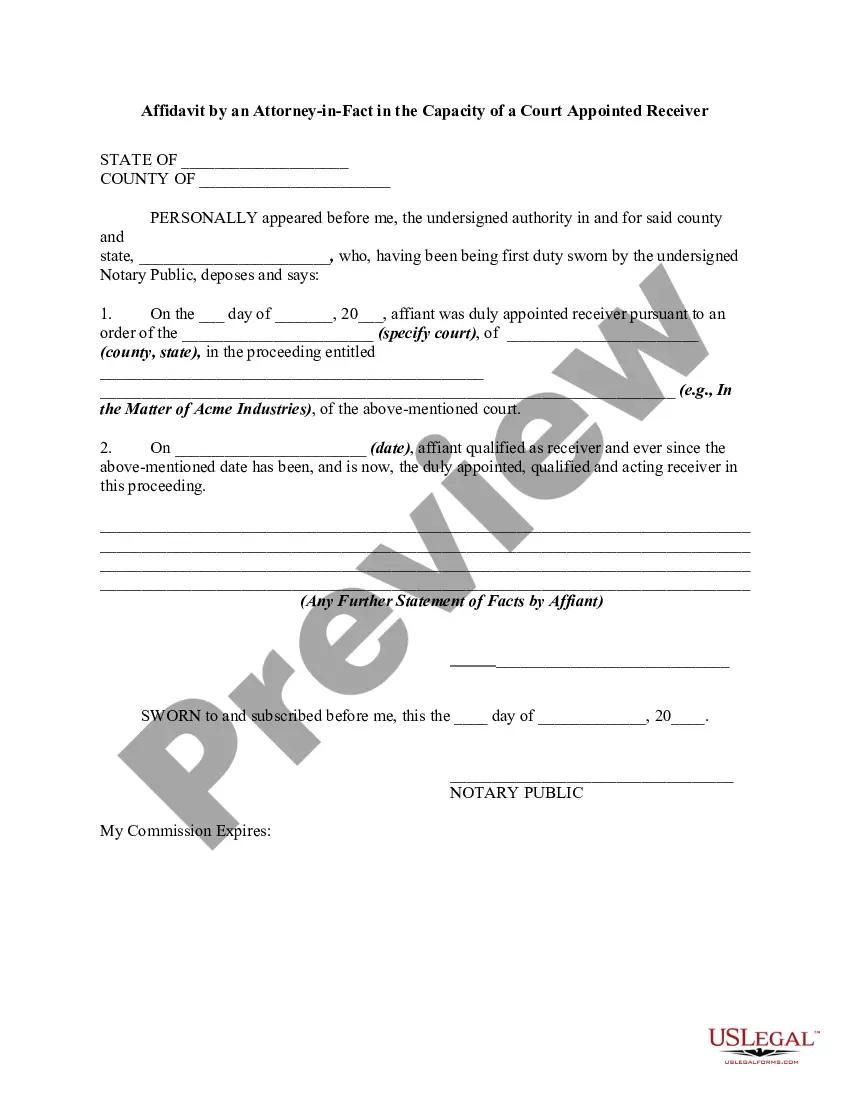
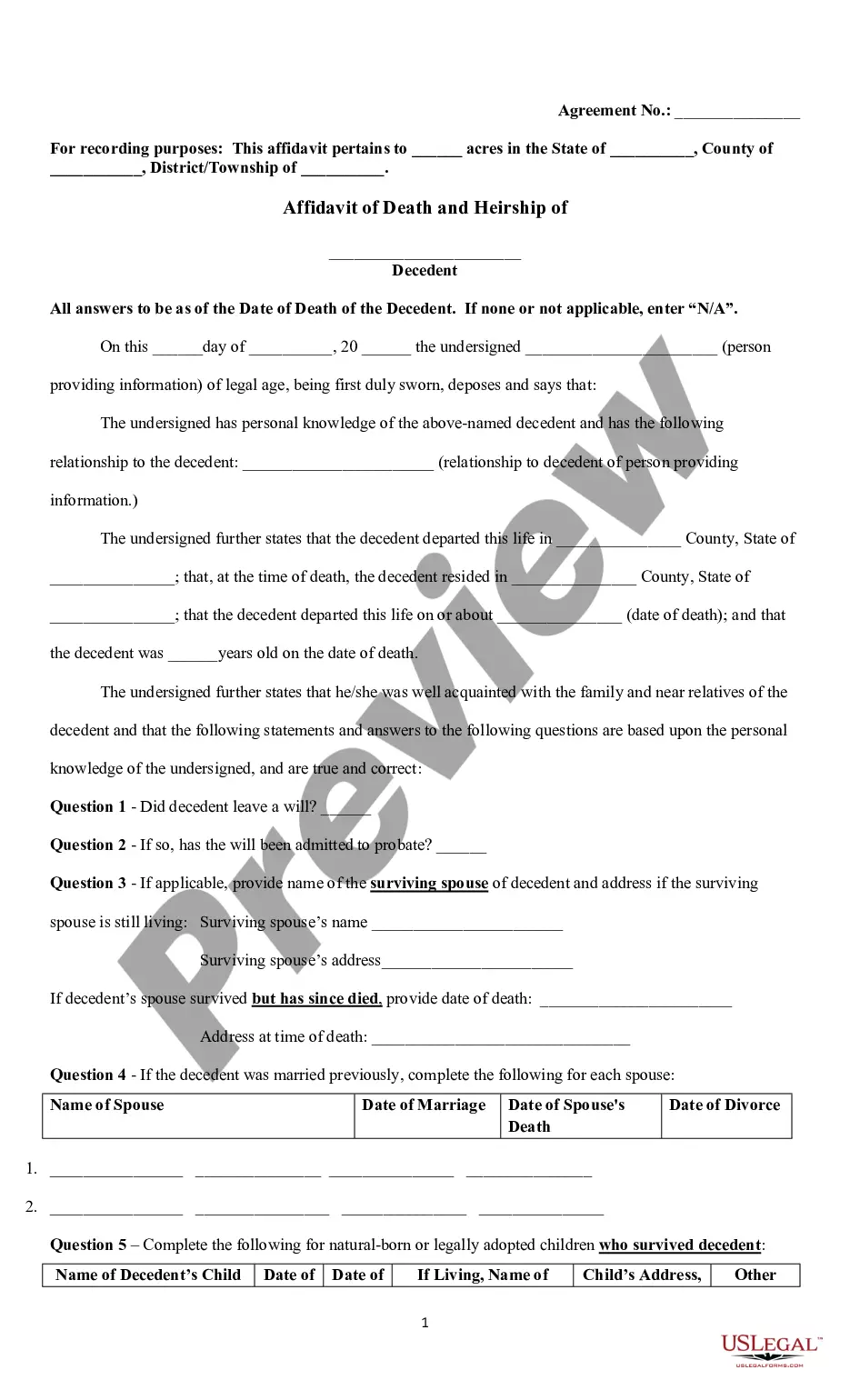
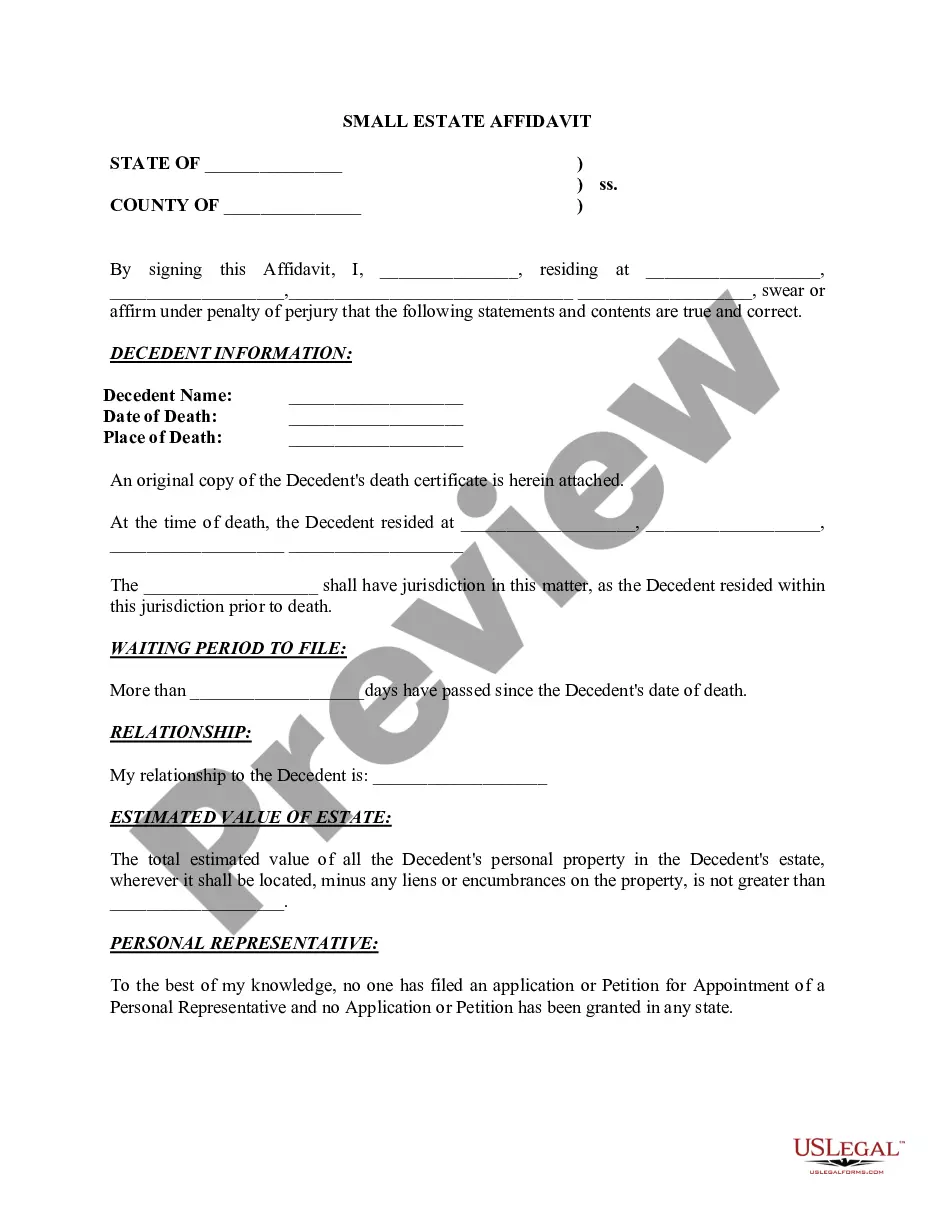
How to fill out Affidavit By An Attorney-in-Fact In The Capacity Of An Executor Of An Estate?
US Legal Forms - one of the largest repositories of authentic documents in the United States - offers a variety of legal form templates that you can download or print. While using the site, you can find a vast number of forms for business and personal use, organized by categories, states, or keywords.
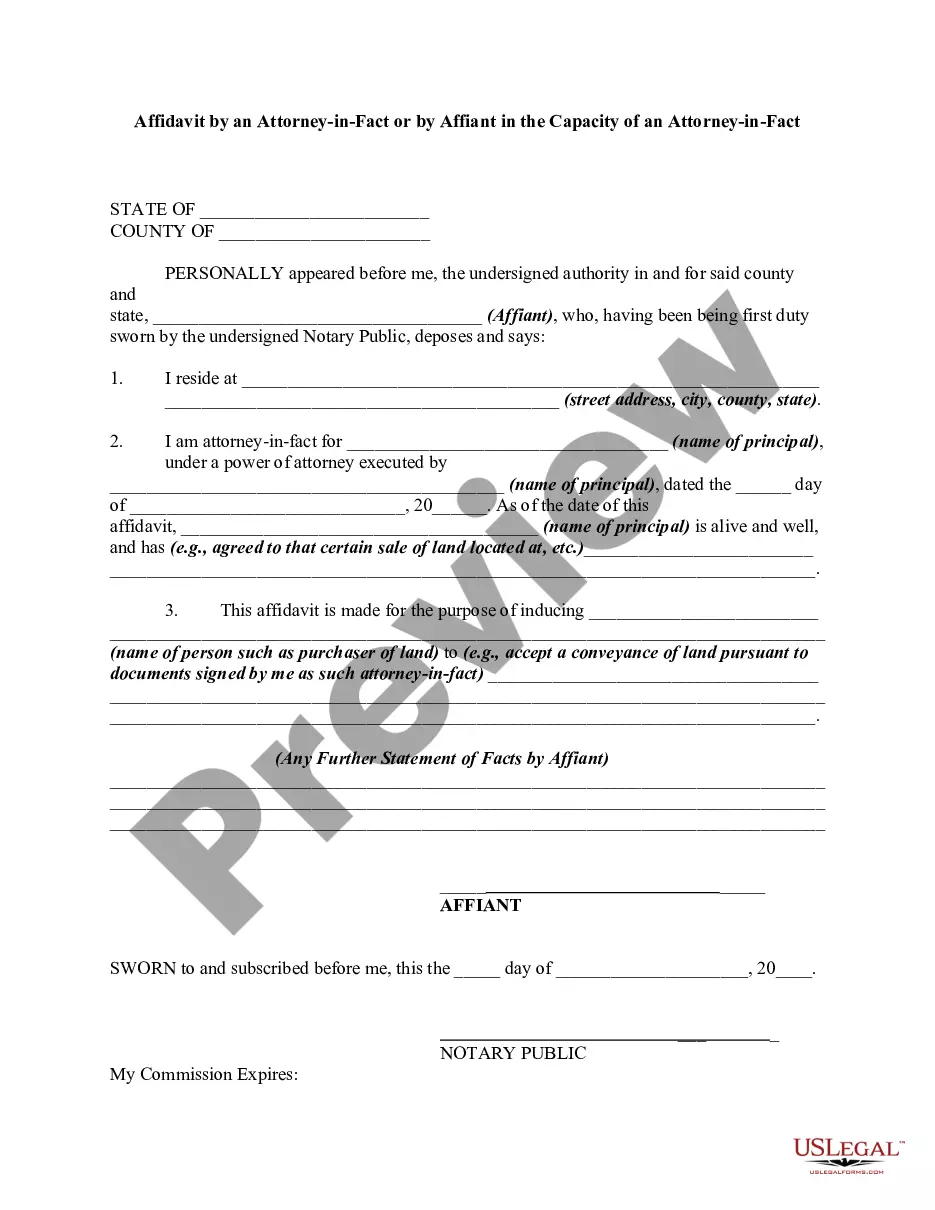
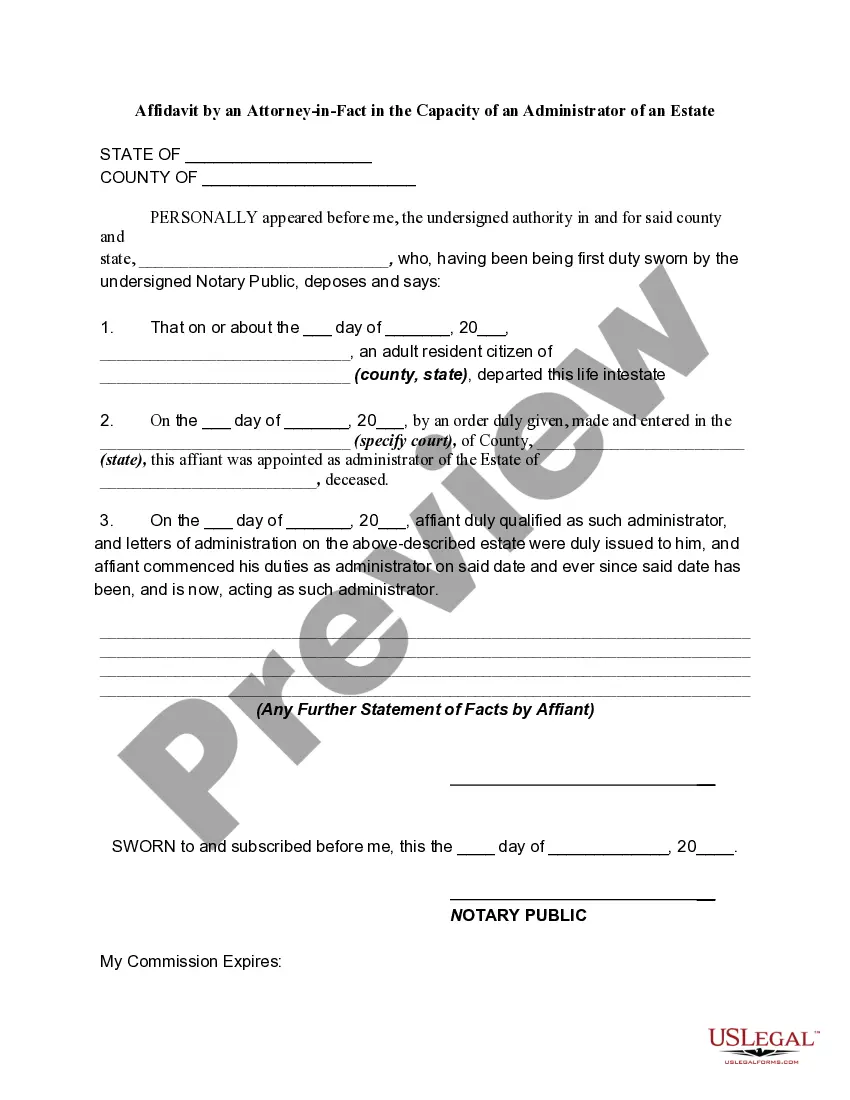
You can access the latest versions of forms such as the Mississippi Affidavit by an Attorney-in-Fact in the Role of an Executor of an Estate within minutes. If you have a subscription, Log In and download the Mississippi Affidavit by an Attorney-in-Fact in the Role of an Executor of an Estate from your US Legal Forms library. The Download button will appear on every form you view. You can find all previously downloaded forms in the My documents section of your account.
If you are using US Legal Forms for the first time, here are simple instructions to help you get started: Ensure you have selected the correct form for your city/county. Click the Preview button to review the form’s details. Check the form summary to confirm you have selected the right form. If the form does not meet your requirements, use the Search field at the top of the page to find one that does. If you are satisfied with the form, confirm your choice by clicking the Purchase now button. Then, choose the payment plan you prefer and provide your details to register for an account. Complete the transaction. Use your credit card or PayPal account to finalize the payment. Select the format and download the form to your device. Make edits. Fill out, modify, print, and sign the downloaded Mississippi Affidavit by an Attorney-in-Fact in the Role of an Executor of an Estate. Each template you added to your account has no expiration date and is yours indefinitely. Therefore, if you wish to download or print another copy, simply navigate to the My documents section and click on the form you need.
- Gain access to the Mississippi Affidavit by an Attorney-in-Fact in the Role of an Executor of an Estate with US Legal Forms, the most extensive collection of legal document templates.
- Utilize a multitude of professional and state-specific templates that meet your business or personal requirements and demands.
Form popularity
FAQ
A Mississippi small estate affidavit is a legal statement used to obtain the property and financial assets of a deceased person without intervention from the court. Mississippi law states that a small estate affidavit is applicable when the total value of the decedent's assets is $75,000 or less.
Under Mississippi's Affidavit of Successor (Small Estate Affidavit) procedure, personal property owed to a deceased person with a value of up to $50,000 may be delivered to his or her heirs or successors by affidavit. The affidavit can be made at any time after 30 days have passed since the person's death.
In Mississippi, the executor typically has 90 days from the date of their appointment to submit this inventory to the court. Communicating with Creditors: Once the estate has been inventoried, the executor must then notify all known creditors of the deceased's passing.
A Mississippi small estate affidavit presents a claim on an estate by an heir or beneficiary. This process helps claimants avoid probate court in the state of Mississippi, but can only be utilized if the estate is worth no more than $75,000.
Muniment of Title in a Nutshell Requires a Last Will and Testament that leaves real estate to someone else. Assets Covered: Real estate only. Dollar Limitations: The value of the decedent's personal estate in the state of Mississippi at the time of death cannot exceed $10,000.00.
Explanation of Mississippi Heirship Affidavit An affidavit of heirship is a sworn statement of one or more family members and at least two unrelated parties that identifies the decedent's legal heirs. These affidavits are sometimes used as an alternative to probate of real estate.
Testamentary capacity in Mississippi requires (1) that the testator understand and appreciate the nature of the act of executing a will, (2) know the beneficiaries of his bounty and their relation to him, and (3) that he be capable of determining how he desires to dispose of this property.
Wait Thirty (30) Days. A filing will be accepted no earlier than thirty (30) days after the death of the decedent. Complete Documents. Complete and gather these documents: Affidavit of Small Estate. ... File With the Holder of Property. Take these documents to the individual or entity holding the property in question.