Mississippi Final Domestic Abuse Protective Order
What this document covers
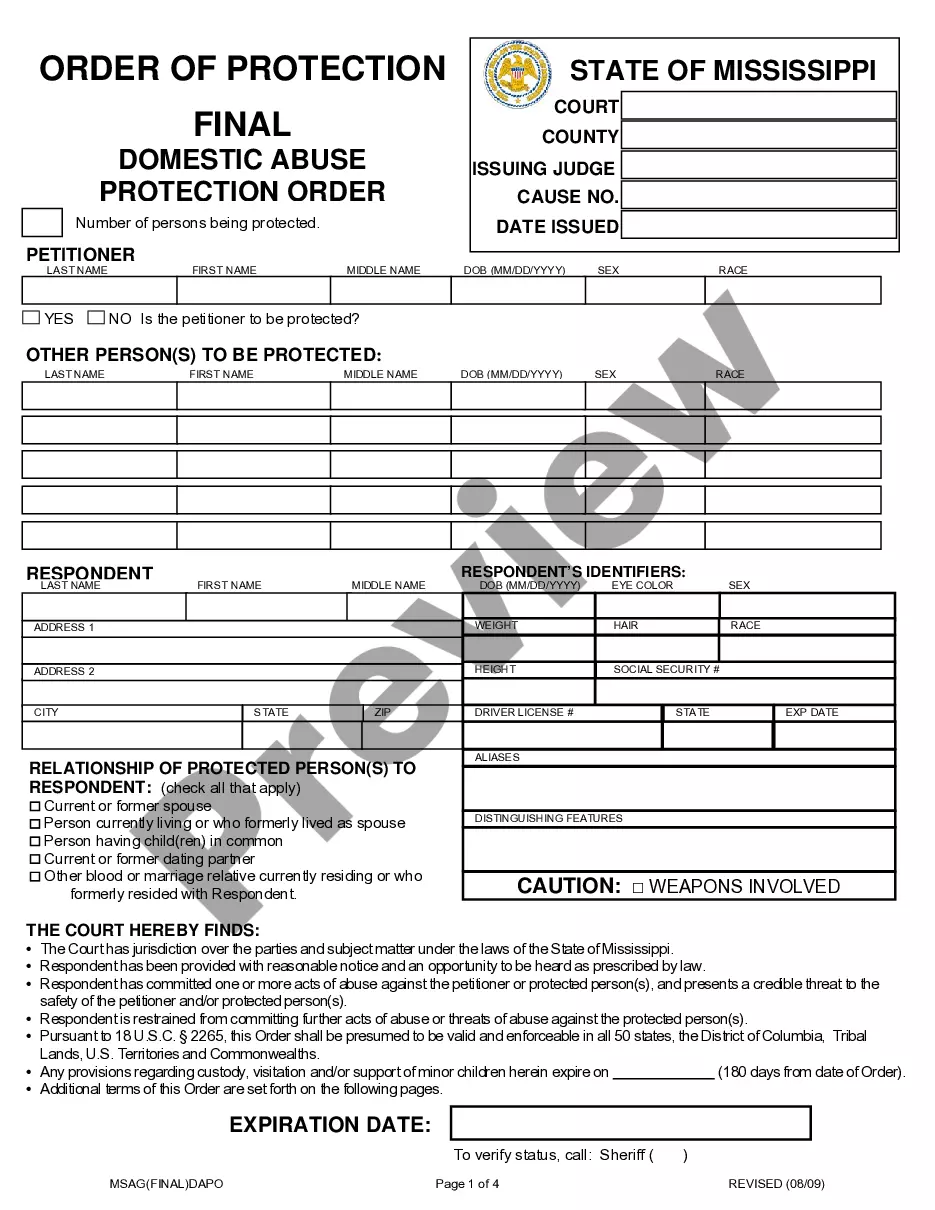
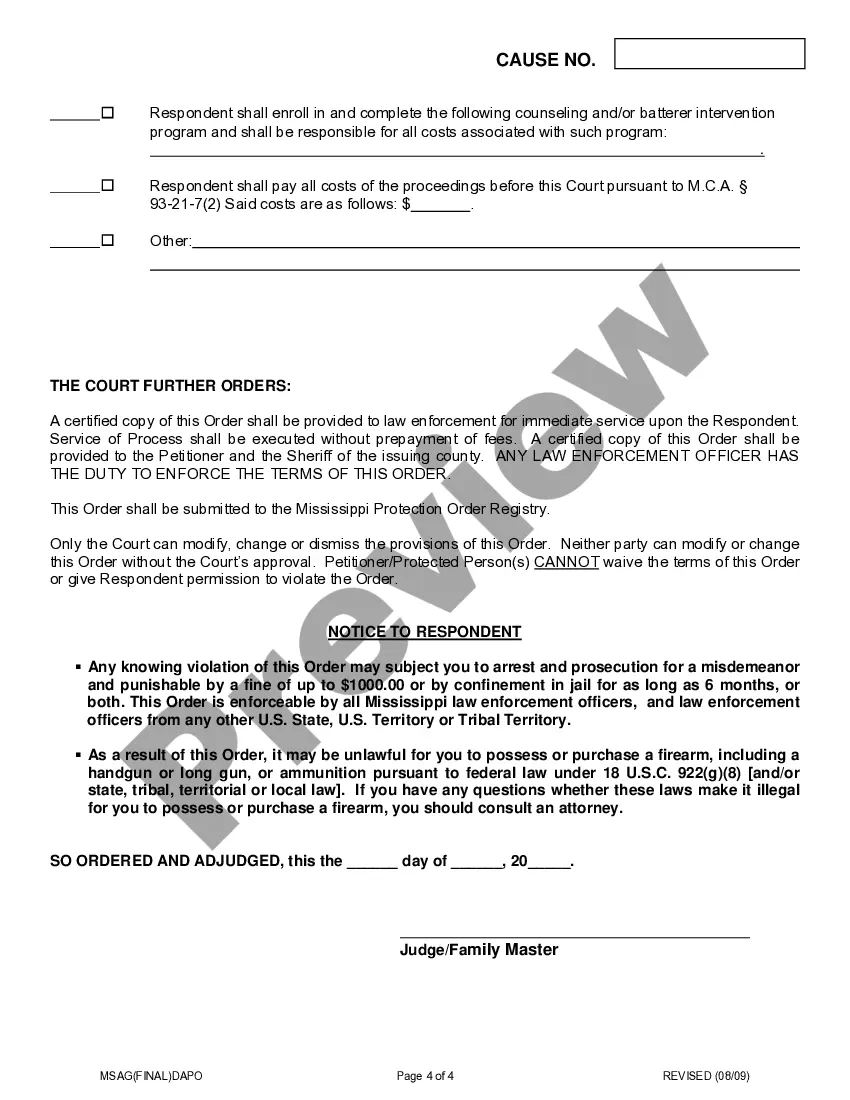
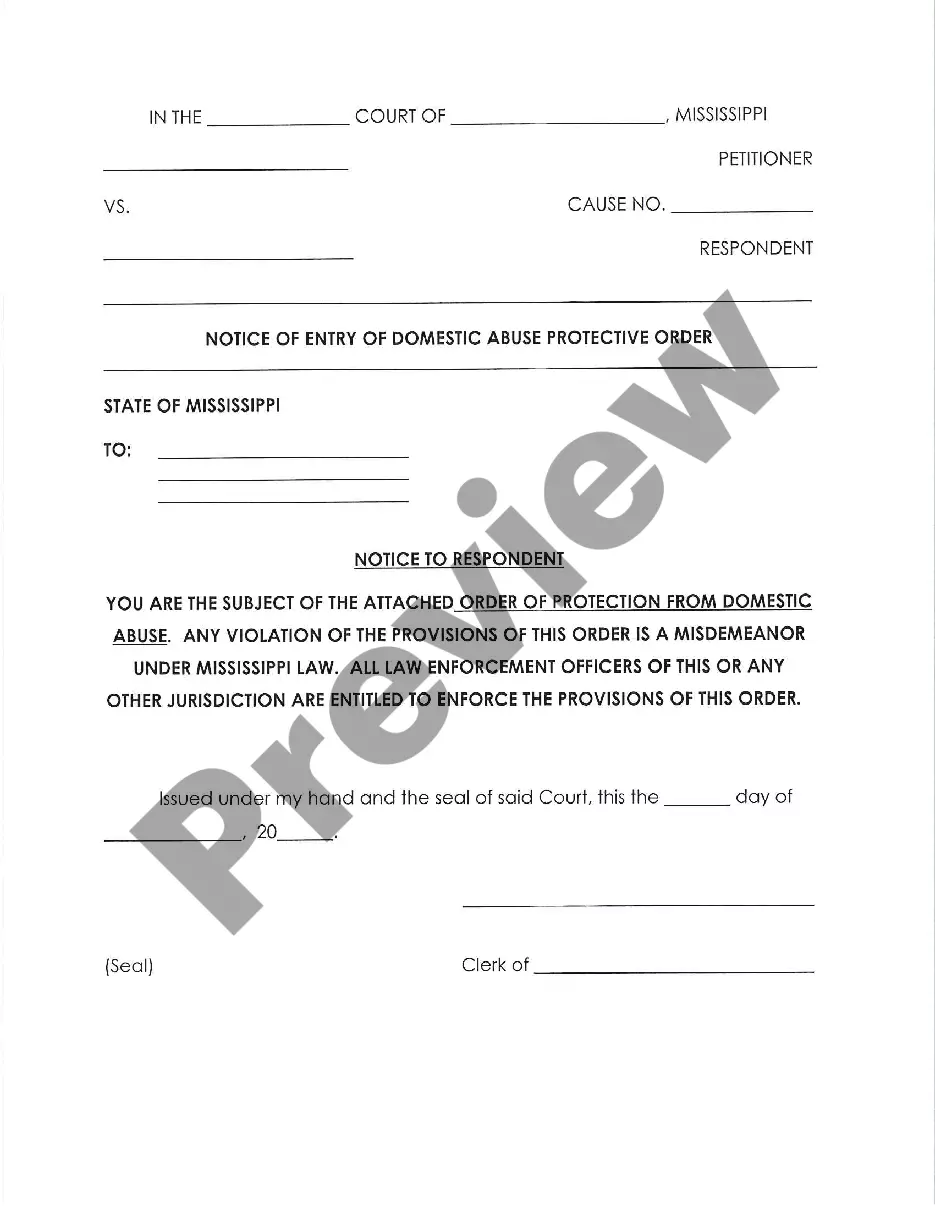
The Final Domestic Abuse Protective Order is a legal document issued by county, circuit, or chancery courts in Mississippi. This order aims to protect individuals from abuse or threats by a specified respondent. It sets legally binding restrictions intended to ensure the safety of the protected person or persons, differentiating it from temporary protective orders, which may not carry the same level of enforceability.
Main sections of this form
- Identification of protected persons and respondents.
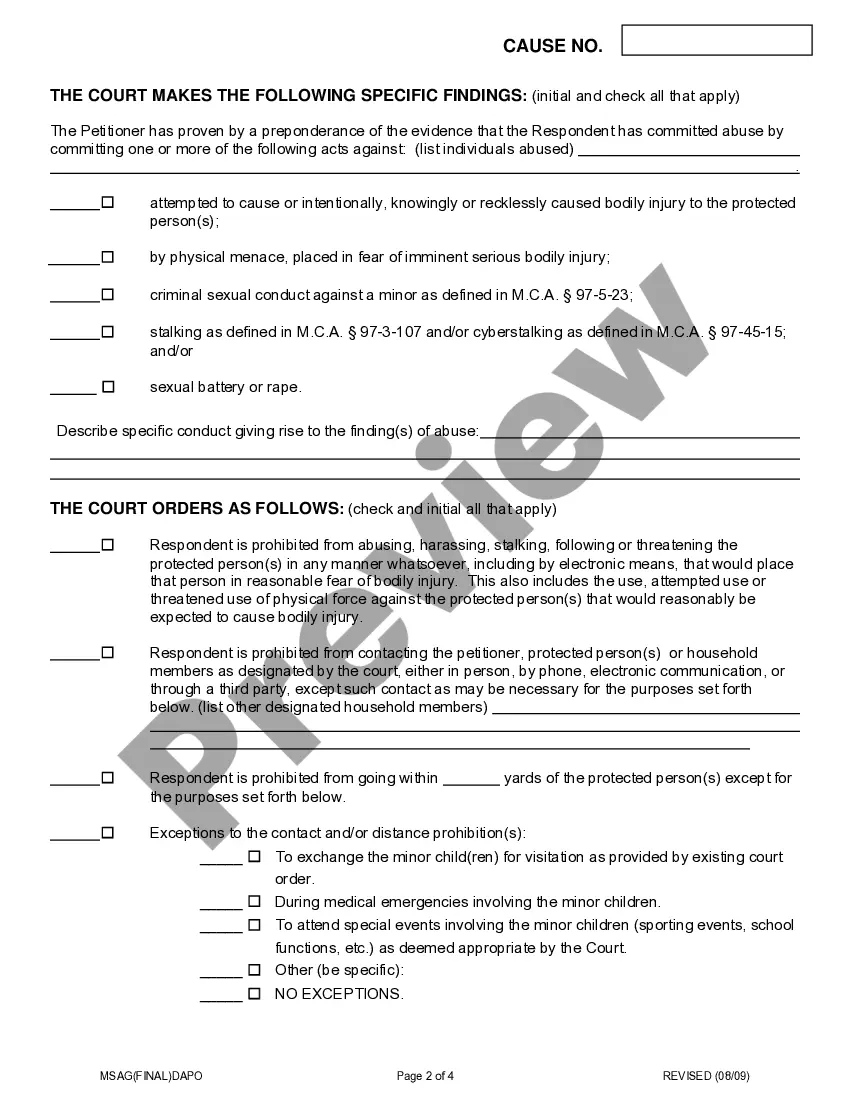
- Court findings and the respondent's obligation regarding abuse.
- Specific prohibitions against harassment or contact.
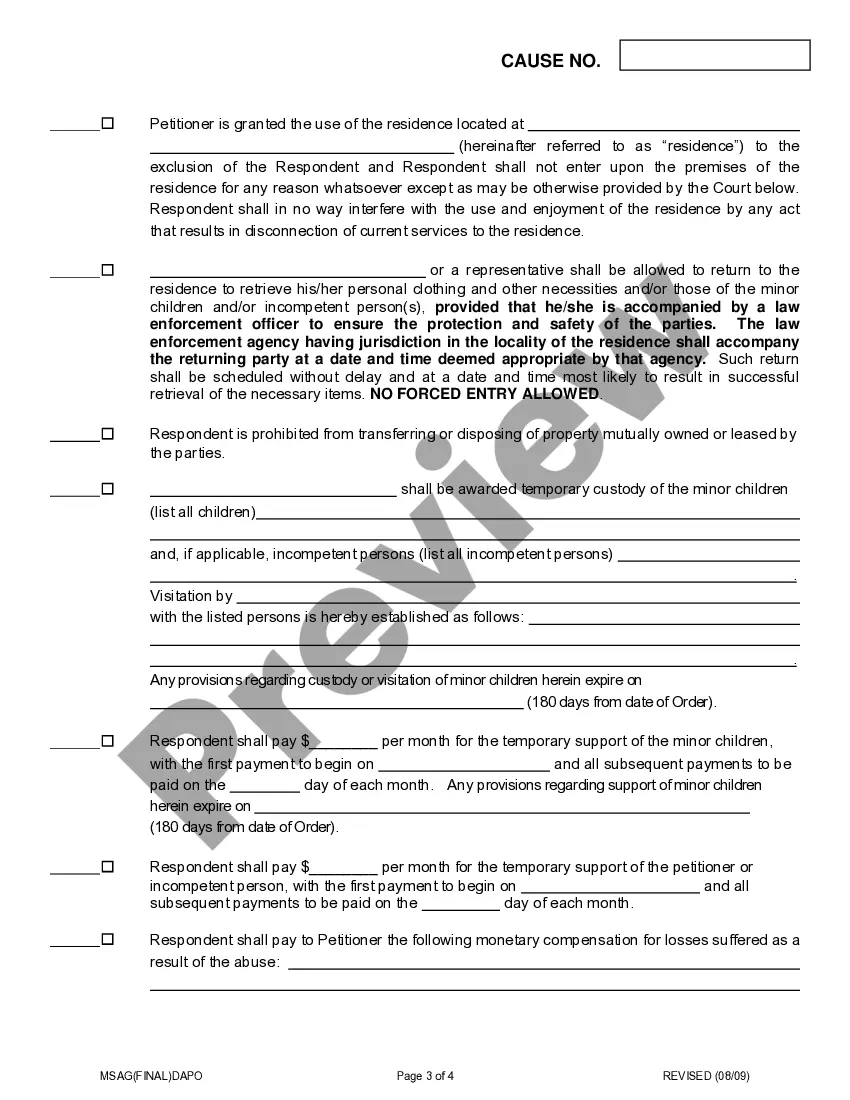
- Custody arrangements for minor children, if applicable.
- Details regarding support payments for children or the petitioner.
- Enforcement provisions under state and federal law.
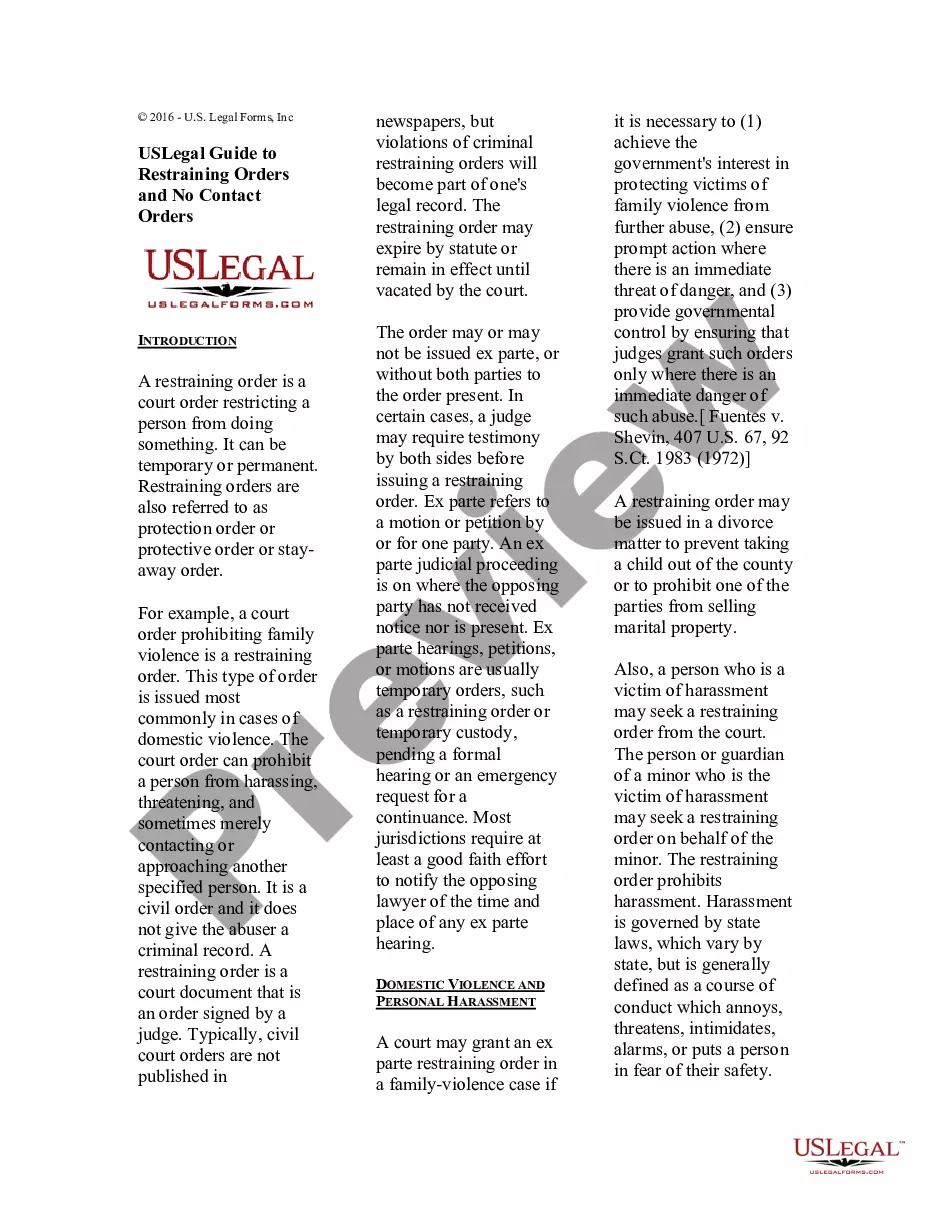
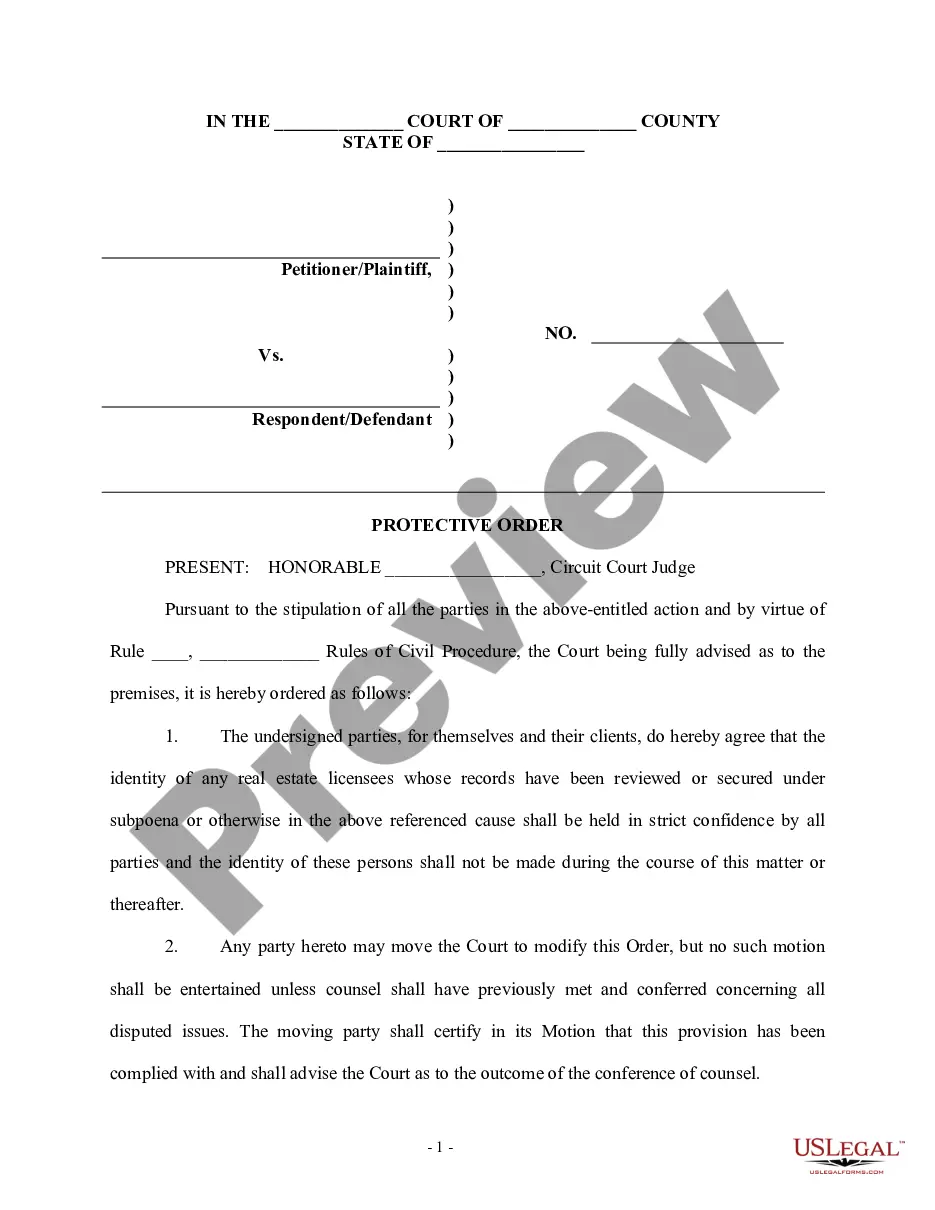
When this form is needed
This form should be used when an individual is seeking long-term protection from an abuser in situations of domestic violence. It is ideal for cases where the petitioner has experienced threats, physical abuse, or harassment and requires legal backing to prevent further incidents. Once a temporary protective order has been issued, this final order helps solidify protective measures and ensures compliance with court mandates.
Who this form is for
- Individuals who have experienced domestic abuse.
- Victims seeking a formal order of protection against a former or current partner.
- Parents requiring custody arrangements in the context of domestic violence.
- Anyone needing to secure legal documentation to enforce safety measures against a specific individual.
How to prepare this document
- Identify and enter the names and details of all parties involved, including the petitioner and respondent.
- Specify the relationship between the protected person(s) and the respondent.
- Detail incidents of abuse and provide necessary evidence supporting the claims.
- Check and initial relevant orders concerning harassment, contact limitations, and custody arrangements.
- Ensure the order is signed and dated by the judge to validate its enforceability.
Is notarization required?
This form does not typically require notarization unless specified by local law. It is crucial to verify any additional requirements from the court where the form will be filed.
Get your form ready online
Our built-in tools help you complete, sign, share, and store your documents in one place.
Make edits, fill in missing information, and update formatting in US Legal Forms—just like you would in MS Word.
Download a copy, print it, send it by email, or mail it via USPS—whatever works best for your next step.
Sign and collect signatures with our SignNow integration. Send to multiple recipients, set reminders, and more. Go Premium to unlock E-Sign.
If this form requires notarization, complete it online through a secure video call—no need to meet a notary in person or wait for an appointment.
We protect your documents and personal data by following strict security and privacy standards.

Make edits, fill in missing information, and update formatting in US Legal Forms—just like you would in MS Word.

Download a copy, print it, send it by email, or mail it via USPS—whatever works best for your next step.

Sign and collect signatures with our SignNow integration. Send to multiple recipients, set reminders, and more. Go Premium to unlock E-Sign.

If this form requires notarization, complete it online through a secure video call—no need to meet a notary in person or wait for an appointment.

We protect your documents and personal data by following strict security and privacy standards.
Avoid these common issues
- Failing to accurately identify the respondentâs information.
- Not providing detailed descriptions of the abusive incidents.
- Overlooking signatures or dates from required parties.
- Neglecting to outline the specific protections required in the order.
Advantages of online completion
- Convenience of downloading the form at any time.
- Editability allows for the customization of details relevant to individual cases.
- Access to attorney-drafted content ensures legal compliance and accuracy.
Looking for another form?


Form popularity
FAQ
The court is looking for a description of your relationship to the respondent, when, where, what happened, and who did what to whom. Using the facts of the incident only, keep your statement brief and to the point. Briefly describe the most recent incident of abuse and/or threats of abuse or other behaviors.
Under section 93-21-7(2) of the Mississippi Code, there is no cost to file for a protection order. . temporary restraining order. the clerk will fill out the information for you.
A civil harassment restraining order is a court order that helps protect people from violence, stalking, serious harassment, or threats of violence. You can ask for a civil harassment restraining order if: A person has abused (or threatened to abuse), sexually assaulted, stalked, or seriously harassed you, and.
It does not cost anything to file for an order of protection. Many orders of protection cases are handled without a lawyer however it can often be helpful to have one represent you in court.If you are going to be in court without a lawyer, our Preparing for Court By Yourself section may be useful to you.
Usually yes, but sometimes no. Temporary restraining orders will appear so law enforcement officers can see it.But if the hearing results in a permanent restraining order, it goes on your record. But even restraining orders that should be expunged sometimes stay in the system longer.
Typically, either the victim or the defendant can ask the court to lift the restraining order. This is usually completed by filing a motion with the court, such as a Motion to Modify Conditions of Pretrial Release or a Motion to Lift Restraining Order. This legal motion must usually identify the parties.
If the judge is satisfied, he or she will issue a temporary protective order that will last ten days, but which can be extended upon request, up to the maximum length of one year, but can only last 30 days where the victim has minor children with the abuser.
These are orders to stop specific acts against everyone named in the restraining order as a protected person. Some of the things that the restrained person can be ordered to stop are: Contacting, calling, or sending any messages (including e-mail);
If you believe the protection order was granted improperly or that it is no longer needed, you can file a motion asking the court to dissolve (terminate or cancel) the protection order. After you file the motion, the court will decide whether or not to schedule a hearing.