Mississippi Response to Affirmative Matter
What is this form?
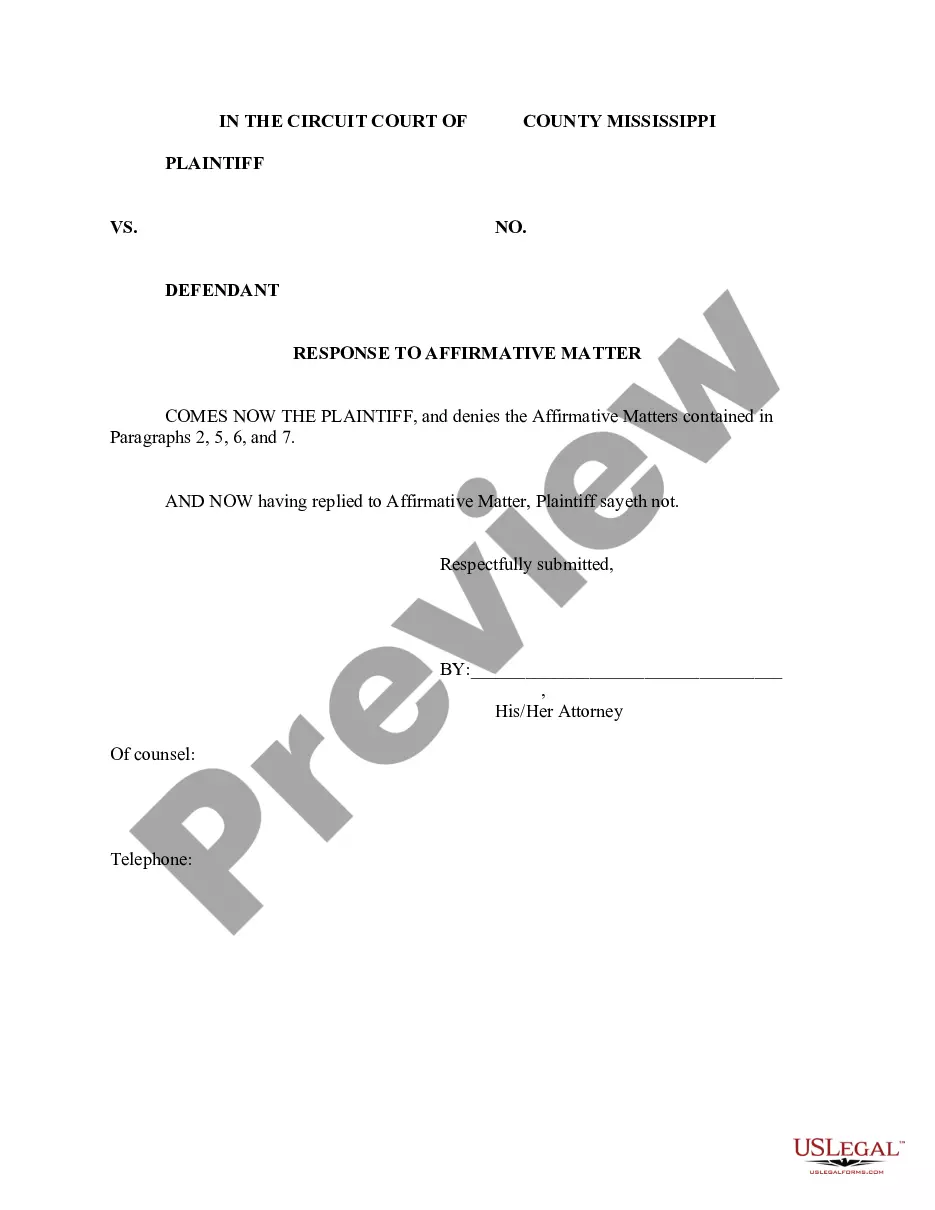
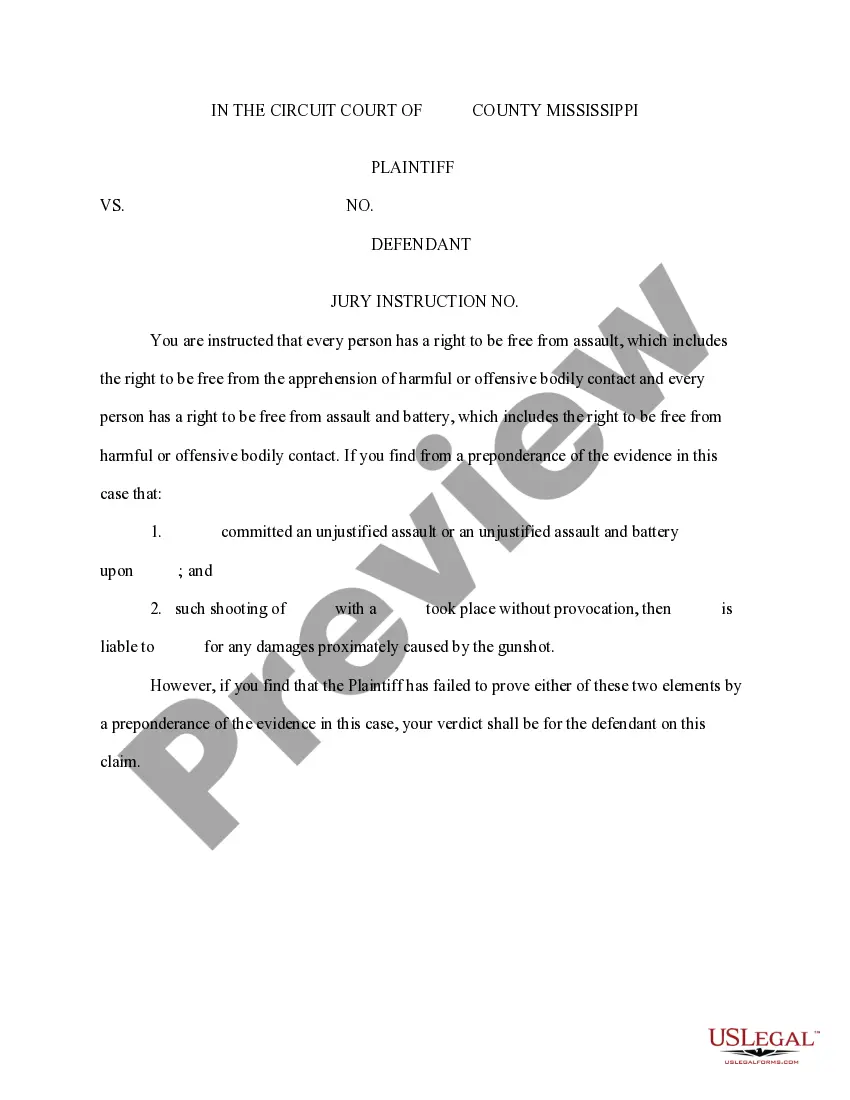
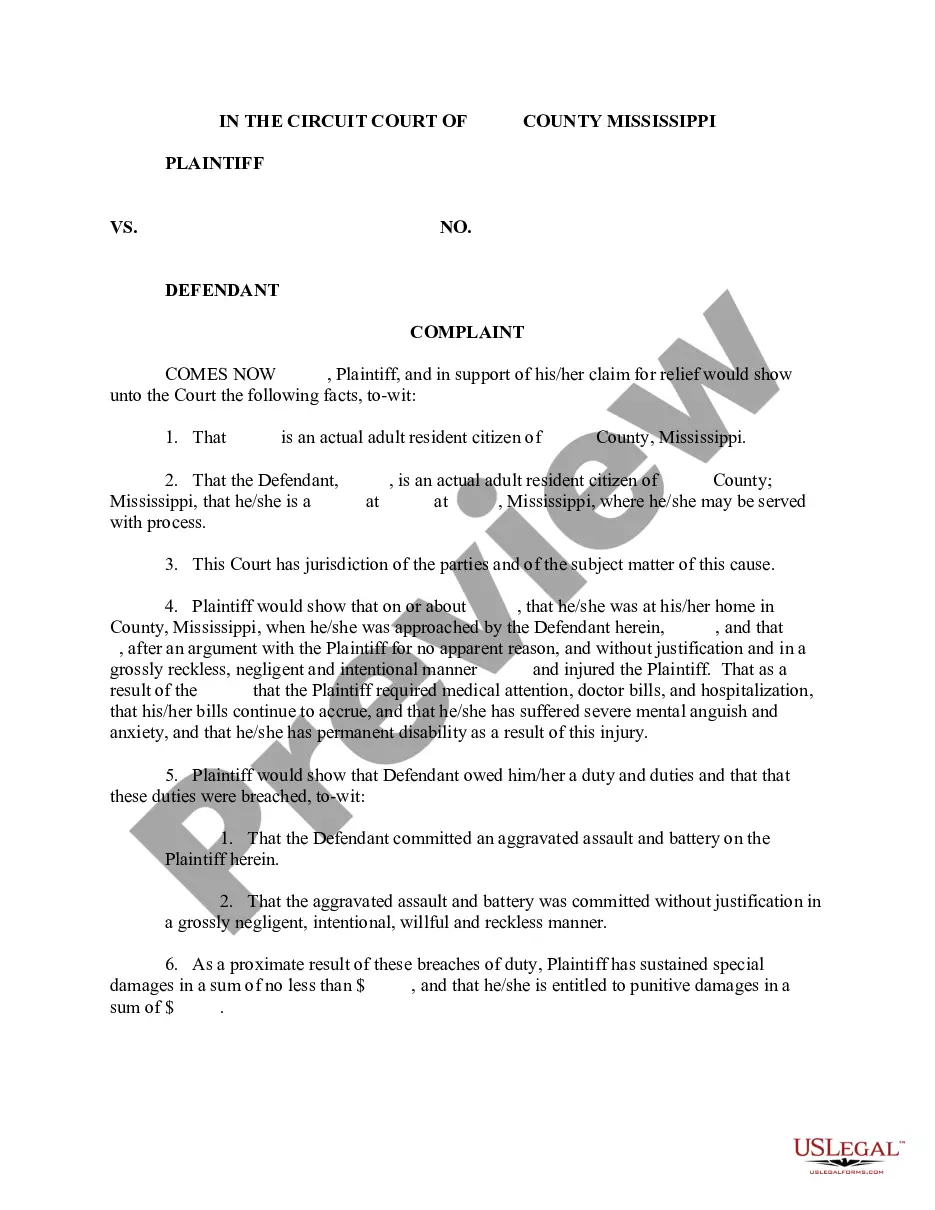
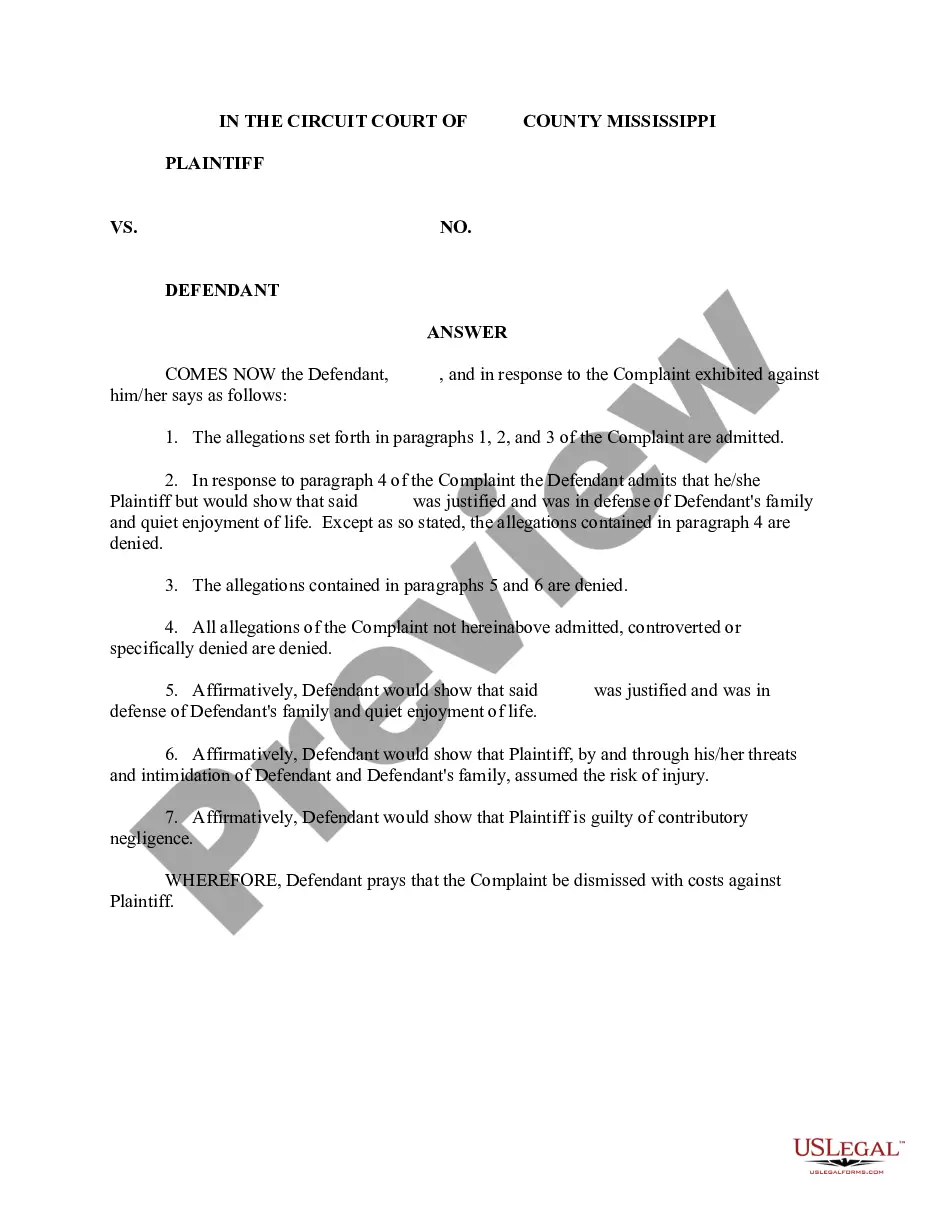
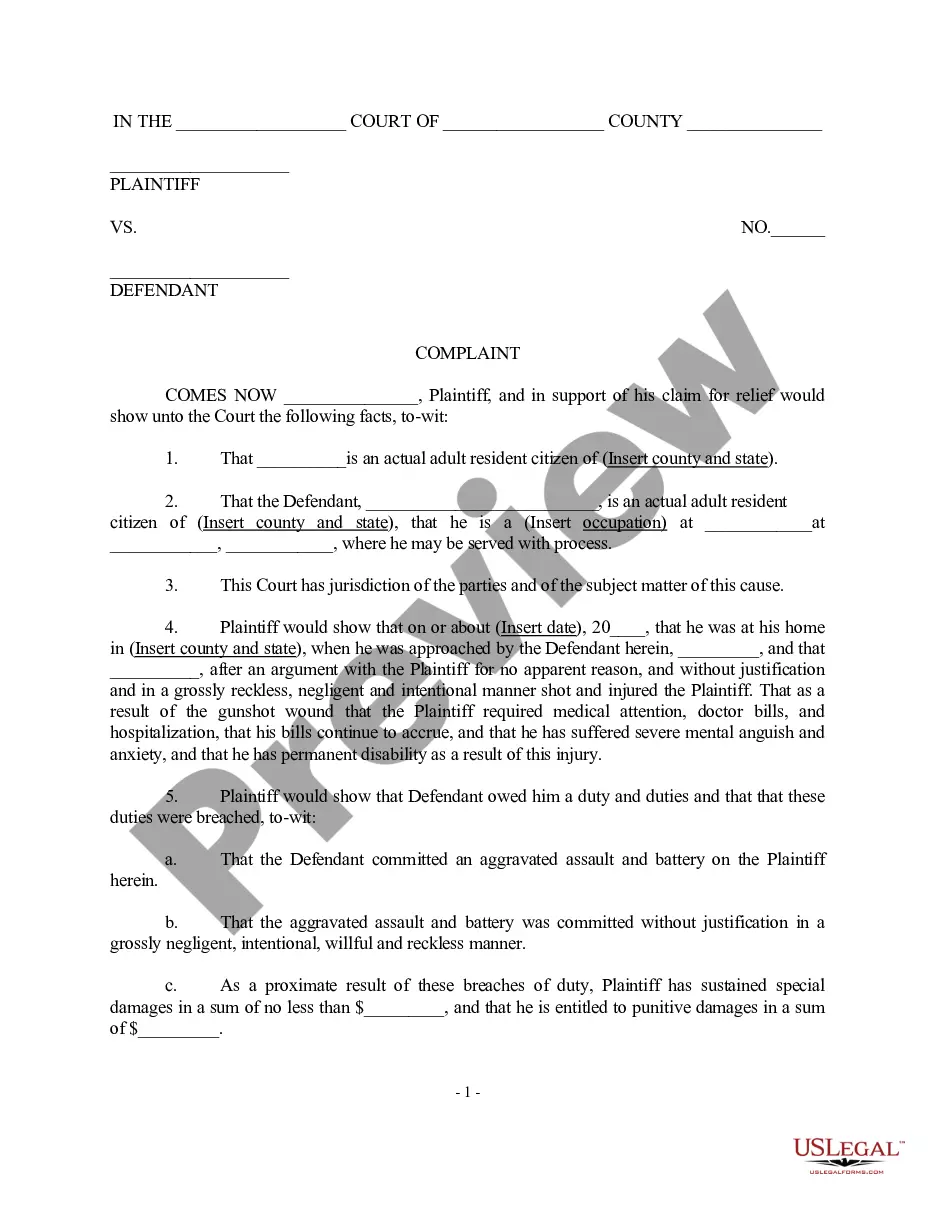
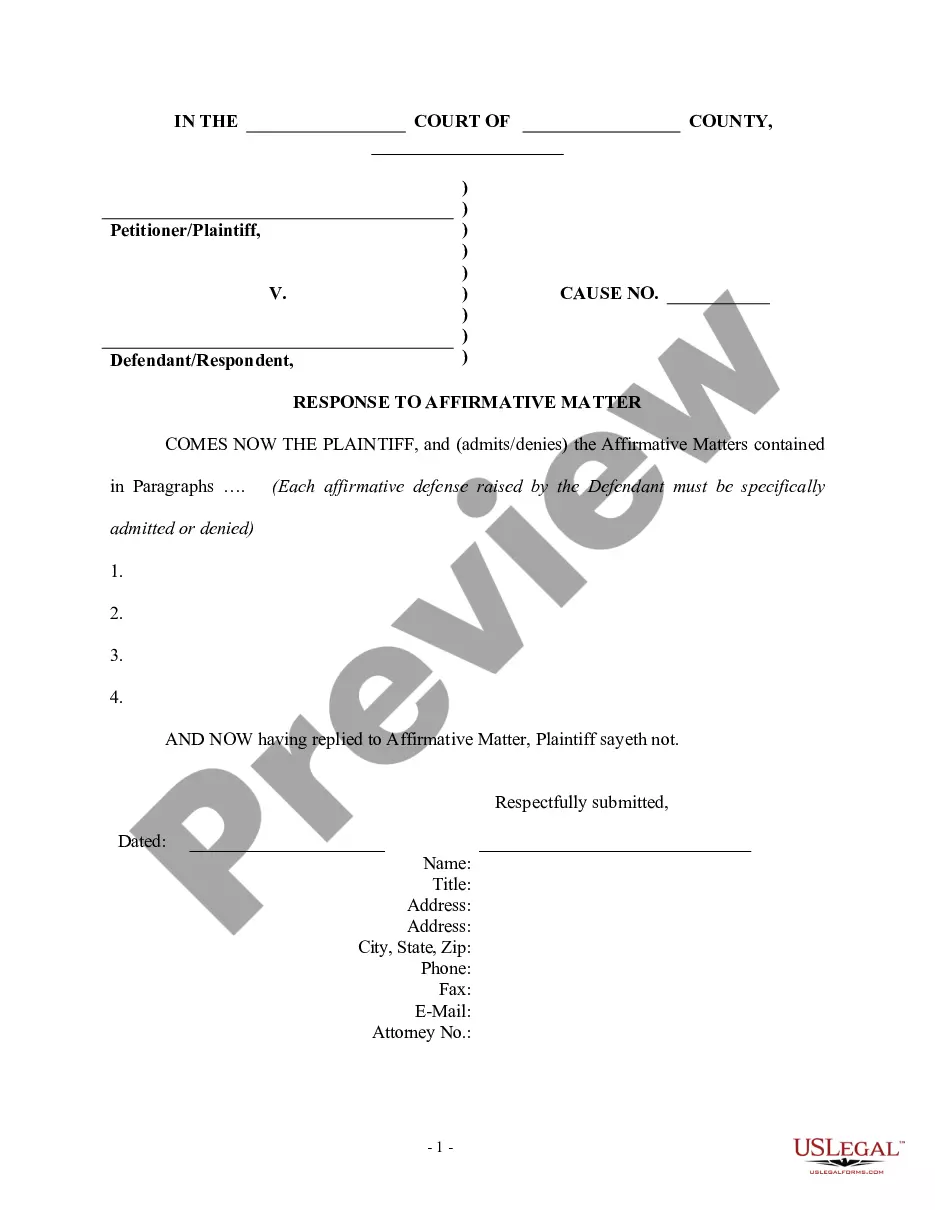
The Response to Affirmative Matter is a legal document used to formally reply to specific claims made by another party in a legal dispute. This form is essential for ensuring that your position is communicated effectively and helps you to defend against affirmative defenses raised by the opposing party. Unlike other response forms, it specifically addresses affirmative matters, which are claims that provide a potential defense to the opposing party's assertions.
Main sections of this form
- Identification of parties involved in the dispute.
- Clear articulation of your responses to each affirmative matter raised.
- Spaces for any additional comments or explanations you wish to include.
- Signature lines for you or your attorney to validate the document.
When this form is needed
This form should be used when you receive a legal complaint containing affirmative defenses that you wish to contest. It is crucial to file this response within the specified timeframe to protect your rights and interests. Situations may include civil lawsuits where the opposing party asserts defenses that require your rebuttal.
Who can use this document
- Individuals or entities involved in a lawsuit who need to respond to affirmative defenses.
- Defendants who wish to provide a formal answer to claims against them.
- Legal representatives preparing a response on behalf of their clients.
How to prepare this document
- Identify all parties involved by entering their names and contact information.
- Review each affirmative matter listed in the original complaint.
- Clearly articulate your specific responses to each affirmative matter.
- Provide any necessary explanations or additional comments as needed.
- Sign the document and include the date to ensure it is legally valid.
Does this form need to be notarized?
This form does not typically require notarization unless specified by local law. Make sure to check your jurisdiction's rules for any additional requirements.
Get your form ready online
Our built-in tools help you complete, sign, share, and store your documents in one place.
Make edits, fill in missing information, and update formatting in US Legal Forms—just like you would in MS Word.
Download a copy, print it, send it by email, or mail it via USPS—whatever works best for your next step.
Sign and collect signatures with our SignNow integration. Send to multiple recipients, set reminders, and more. Go Premium to unlock E-Sign.
If this form requires notarization, complete it online through a secure video call—no need to meet a notary in person or wait for an appointment.
We protect your documents and personal data by following strict security and privacy standards.

Make edits, fill in missing information, and update formatting in US Legal Forms—just like you would in MS Word.

Download a copy, print it, send it by email, or mail it via USPS—whatever works best for your next step.

Sign and collect signatures with our SignNow integration. Send to multiple recipients, set reminders, and more. Go Premium to unlock E-Sign.

If this form requires notarization, complete it online through a secure video call—no need to meet a notary in person or wait for an appointment.

We protect your documents and personal data by following strict security and privacy standards.
Avoid these common issues
- Failing to respond to all affirmative matters presented.
- Missing the deadline for filing the response.
- Not signing the form or including the date.
- Using ambiguous language that may confuse your position.
Why use this form online
- Easy access to a professionally drafted template ready for download.
- Customizable to fit your specific needs and legal context.
- Allows for quick completion and file submission.
- Reliable and secure, ensuring your information is protected.
What to keep in mind
- The Response to Affirmative Matter is essential for responding to specific claims.
- Completing the form accurately protects your legal rights.
- Adhering to state-specific requirements is crucial for validity.
Looking for another form?



Form popularity
FAQ
(1) Unless a different time is prescribed in a statute of Florida, a defendant shall serve an answer within 20 days after service of original process and the initial pleading on the defendant, or not later than the date fixed in a notice by publication.
An affirmative defense operates to prevent conviction even when the prosecutor has proof beyond a reasonable doubt as to every element of the crime. Some jurisdictions place the burden on the defendant to prove the defense, while others require that the prosecution disprove the defense beyond a reasonable doubt.
31 Affirmative Defenses And How To Assert Them.
The Answer. The defendant's response to a complaint is called the answer. The answer contains the defendant's version of the events leading to the lawsuit and may be based on the contents of the complaint. The filing of the answer is one option that the defendant has in deciding how to respond to the complaint.
While the availability of an affirmative defense will depend on the state, there are generally two categories of affirmative defenses, justifications and excuses.
When any type of legal action is being taken against you - whether it be that you are being formally sued (i.e. served with a complaint, or counter-complaint or cross-complaint) or if you are the recipient of a notice of adverse action in public employment or you received an accusation seeking to revoke your license -
13 (When pleadings deemed denied and put in issue). Under the codes the pleadings are generally limited. A reply is sometimes required to an affirmative defense in the answer.In other jurisdictions no reply is necessary to an affirmative defense in the answer, but a reply may be ordered by the court.
The defendant may also raise counterclaims or affirmative defenses. If a defendant does raise counterclaims in her answer, the plaintiff must respond to those counterclaims with a pleading called an "answer to a counterclaim." The form and content of an "answer to a counterclaim" is similar to that of an answer.
Courts have developed a three part test in examining the affirmative defenses subject to a motion to strike: (1) the matter must be properly pleaded as an affirmative defense; (2) the matter must be adequately pleaded under the requirements of Federal Rules of Civil Procedure 8 and 9; and (3) the matter must withstand