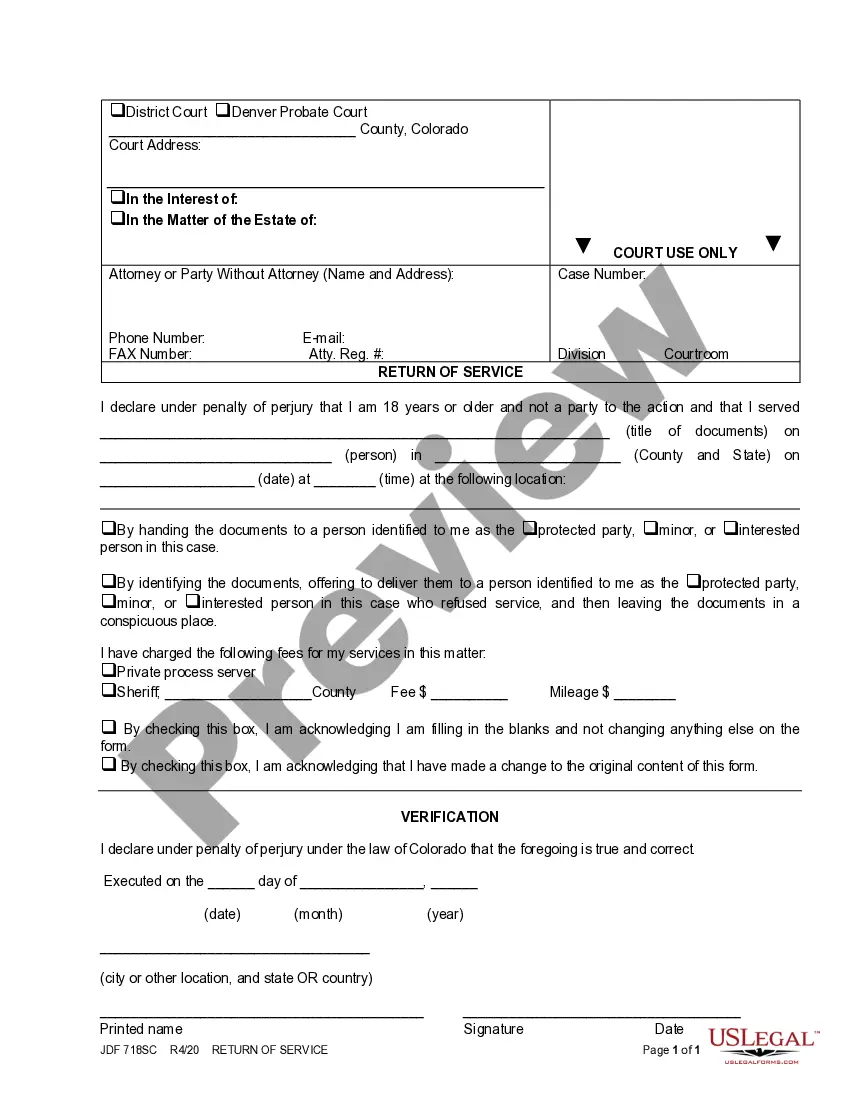
Mississippi Jury Instruction - Product Warnings
What this document covers
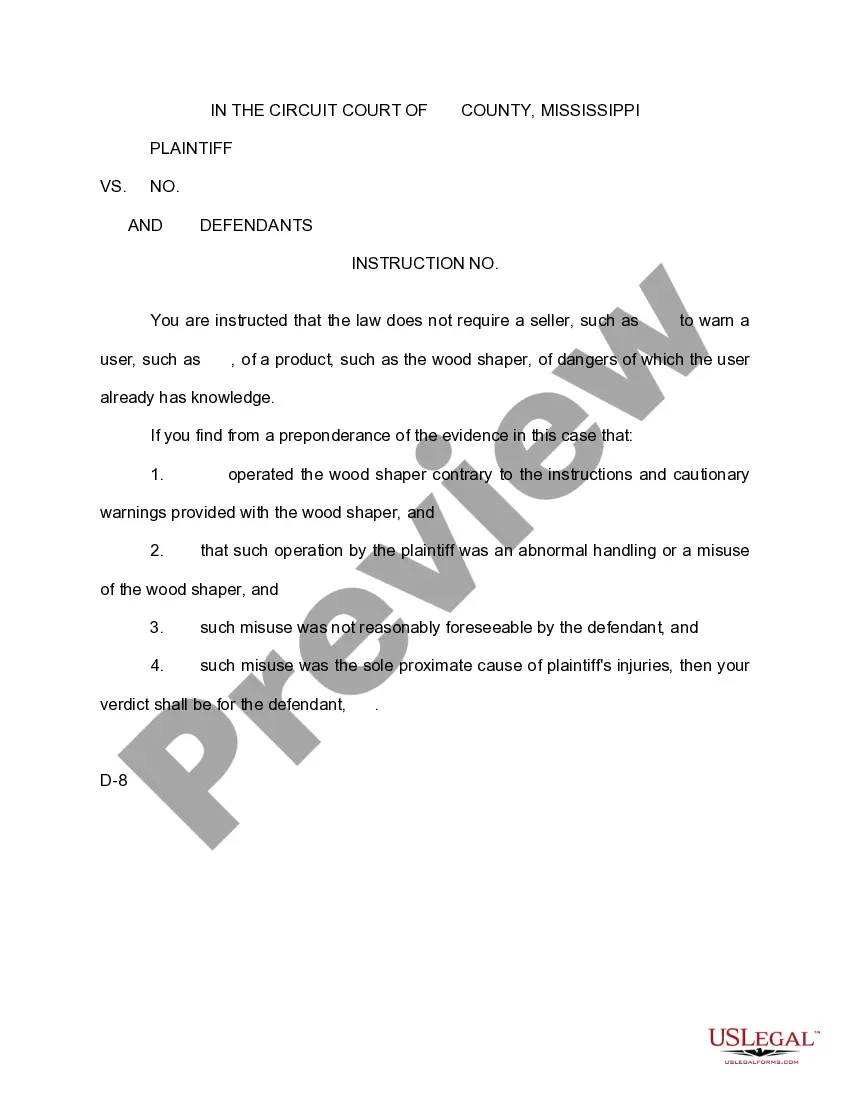
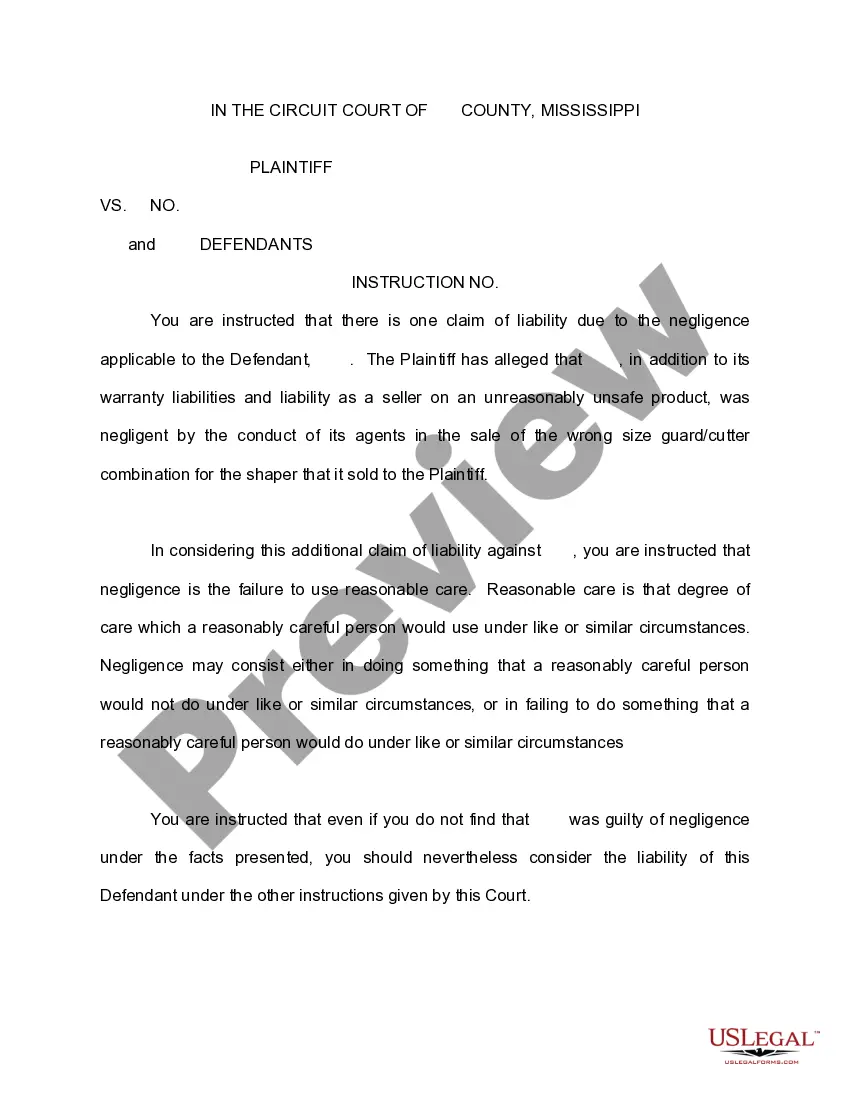
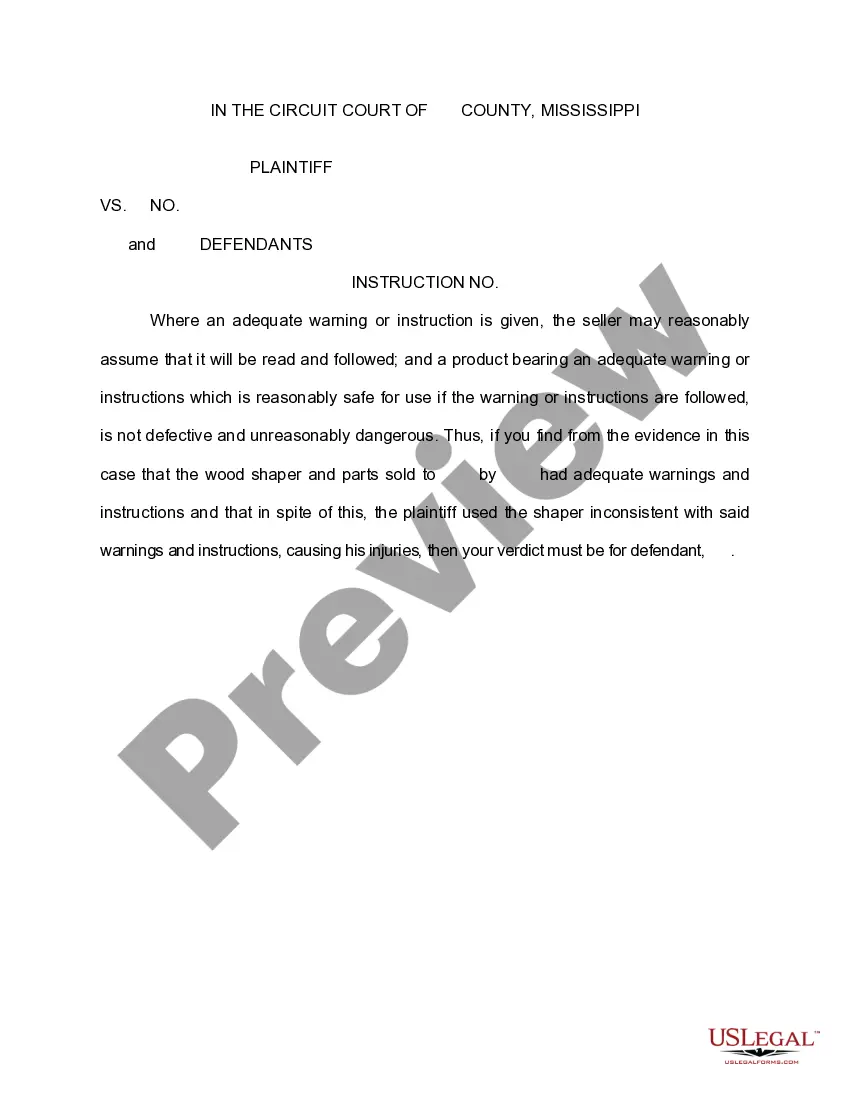
This form is a jury instruction related to product warnings, specifically tailored for use in Mississippi. It serves to guide jurors in understanding their obligations regarding the requirement for sellers to warn users of potential dangers associated with products. This instruction outlines the specific criteria that must be met for a defendant to be found not liable based on the misuse of a product by the plaintiff. Unlike other legal documents, this jury instruction is designed to be used within the courtroom setting during product liability cases.
Form components explained
- Case parties: Identifies the plaintiff and defendant involved in the trial.
- Instruction criteria: Specifies conditions under which a seller is not required to provide warnings.
- Misuse definition: Clarifies what constitutes "abnormal handling" or misuse of a product.
- Burden of proof: Details the requirement for jurors to find evidence of misuse to determine the verdict.
When to use this document
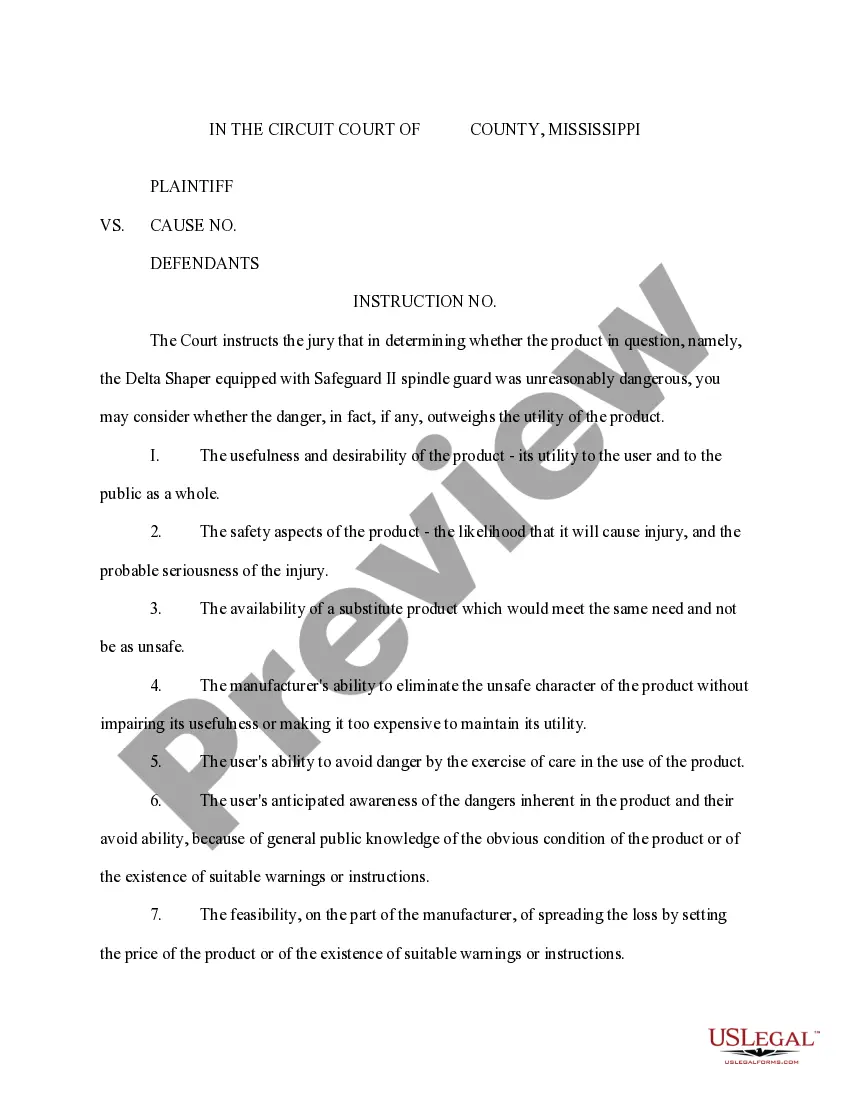
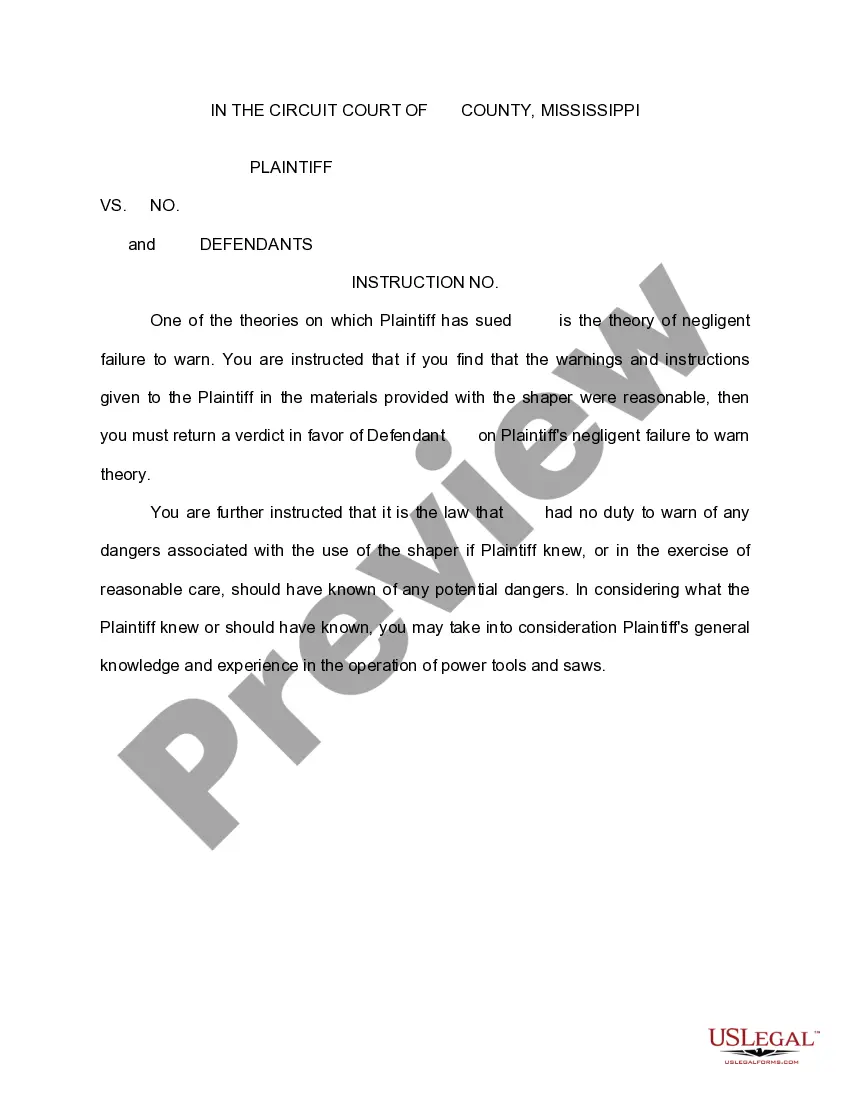
This jury instruction should be used in Mississippi product liability cases where the defense claims that the plaintiff misused the product in question. It becomes particularly relevant when the defense is asserting that the plaintiff was already aware of the product's dangers or that their misuse was not foreseeable by the seller. This form aids in clarifying the legal expectations for jurors as they deliberate the case.
Who should use this form
- Attorneys representing defendants in product liability cases in Mississippi.
- Judges overseeing trials that involve product misuse claims.
- Legal educators or professionals seeking a standard jury instruction for training or reference.
How to complete this form
- Identify the parties by filling in the names of the plaintiff and defendant.
- Define the product in question, providing a brief description.
- Outline the specific circumstances of how the plaintiff misused the product.
- Ensure that all criteria listed in the instruction are covered clearly for juror understanding.
Does this document require notarization?
In most cases, this form does not require notarization. However, some jurisdictions or signing circumstances might. US Legal Forms offers online notarization powered by Notarize, accessible 24/7 for a quick, remote process.
Get your form ready online
Our built-in tools help you complete, sign, share, and store your documents in one place.
Make edits, fill in missing information, and update formatting in US Legal Forms—just like you would in MS Word.
Download a copy, print it, send it by email, or mail it via USPS—whatever works best for your next step.
Sign and collect signatures with our SignNow integration. Send to multiple recipients, set reminders, and more. Go Premium to unlock E-Sign.
If this form requires notarization, complete it online through a secure video call—no need to meet a notary in person or wait for an appointment.
We protect your documents and personal data by following strict security and privacy standards.

Make edits, fill in missing information, and update formatting in US Legal Forms—just like you would in MS Word.

Download a copy, print it, send it by email, or mail it via USPS—whatever works best for your next step.

Sign and collect signatures with our SignNow integration. Send to multiple recipients, set reminders, and more. Go Premium to unlock E-Sign.

If this form requires notarization, complete it online through a secure video call—no need to meet a notary in person or wait for an appointment.

We protect your documents and personal data by following strict security and privacy standards.
Mistakes to watch out for
- Failing to tailor the language of the instruction to reflect the specifics of the case.
- Not verifying compliance with current Mississippi law before presenting the instruction.
- Overlooking the need to thoroughly explain the concept of misuse to jurors.
Benefits of completing this form online
- Convenient access to a professionally drafted jury instruction template.
- Easy customization based on case-specific details.
- Immediate availability for use in court, reducing preparation time.
- Reliability from a trusted source that adheres to legal standards.
Legal use & context
- This jury instruction aids jurors in determining liability based on product warnings and user knowledge.
- It serves as a legal safeguard for defendants against claims of liability for known risks.
- The instruction must align with the jurisprudence of Mississippi to be effective and enforceable.
Looking for another form?
Form popularity
FAQ
Safety and warning labels are a necessity for keeping consumers and employees aware of any dangerous situations that may arise. Whether it's unsafe aspects of work equipment or a product itself, clearly identified and legible safety and warning labels will keep those susceptible, aware of the potential hazards.
Be specific. Being as clear and concise as possible is important, but make sure that this doesn't take away from the specificity needed on a warning label. Use understood symbols. Place it where it will be seen. Next steps.
Document verbal warnings first. Track all verbal warnings and disciplinary measures in writing at the time they are given. Determine tone. Consult with manager. Formalities. State company policy. Describe what happened. State expectations. Outline consequences.
Though there are numerous instances in which a defective product could injure a person, defects that give rise to supplier, seller, or manufacturer liability are categorized by three types of product defects: design defects, manufacturing defects, and marketing defects.
A warning defect, or a warning label defect, is a particular type of legal theory used as the basis of some defective products liability lawsuits. Essentially, a warning defect can occur when a manufacturer of a product fails to include sufficient warnings for the product.
Type the label "Caution" follow it with a colon, and bold both the label and the colon. Skip one line and begin the text of the caution aligned with the start of the caution label. Singlespace the text of the caution; skip one line above and below the notice.
A defective product can be defined as any product that is unreasonably dangerous when being used for its intended purpose, without any alterations or interference.Some of the most common examples of defective products include food items, medical devices, and children's toys.
Even though many companies choose to include warnings with their products regardless of the danger, warnings are not actually required in every case. Warnings are generally required when: Thank you for subscribing!
A warning label is a label attached to a product, or contained in a product's instruction manual, warning the user about risks associated with its use, and may include restrictions by the manufacturer or seller on certain uses.