Mississippi Jury Instruction - For Plaintiff
Overview of this form
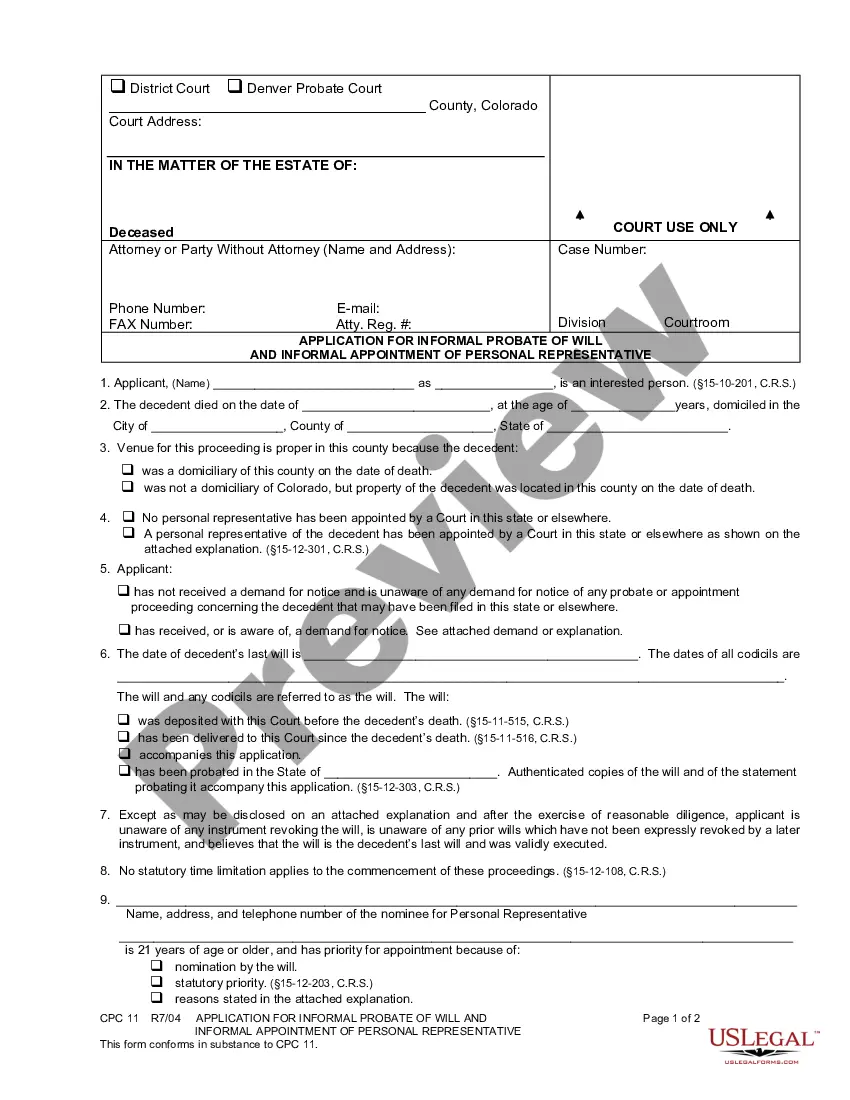
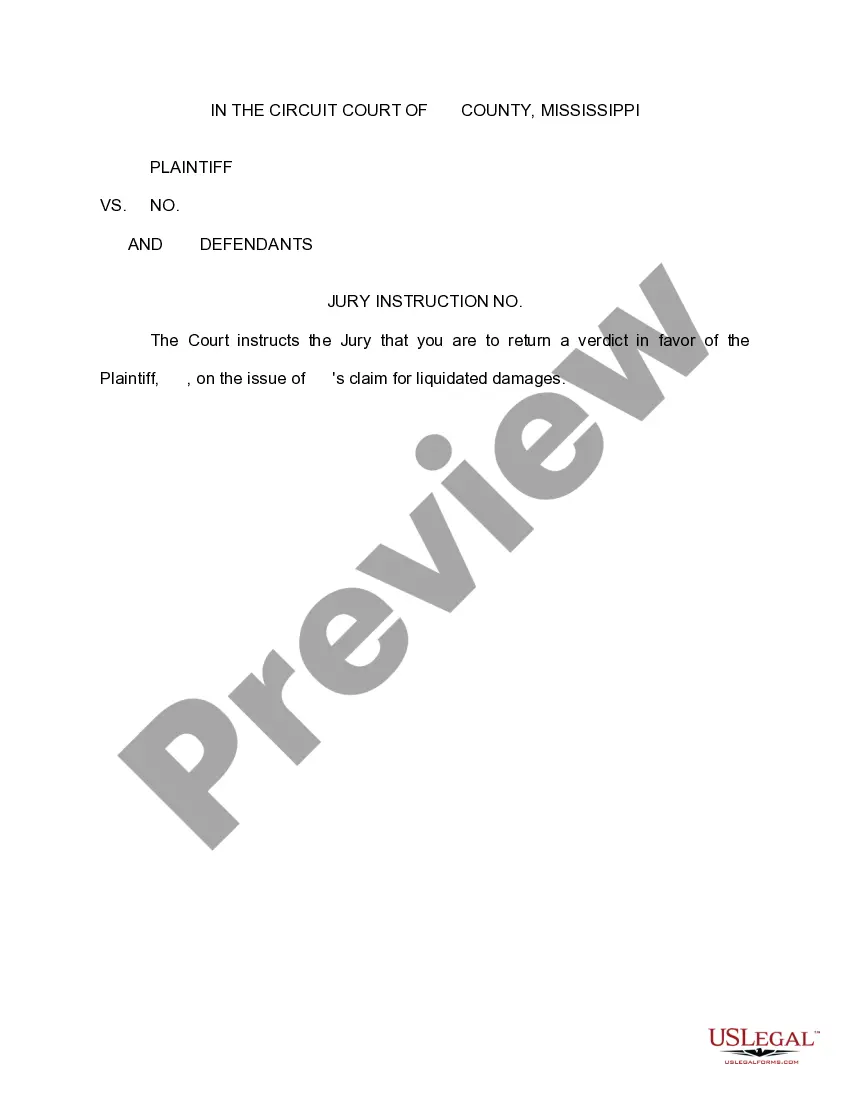
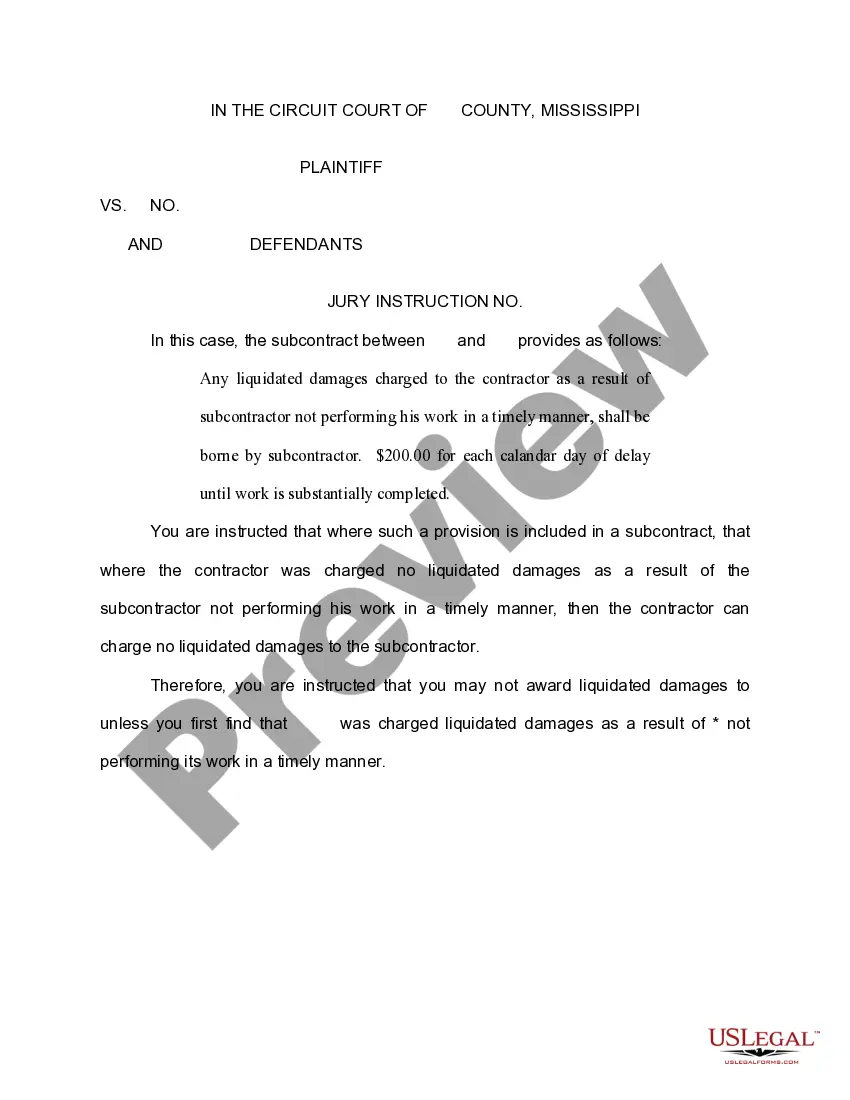
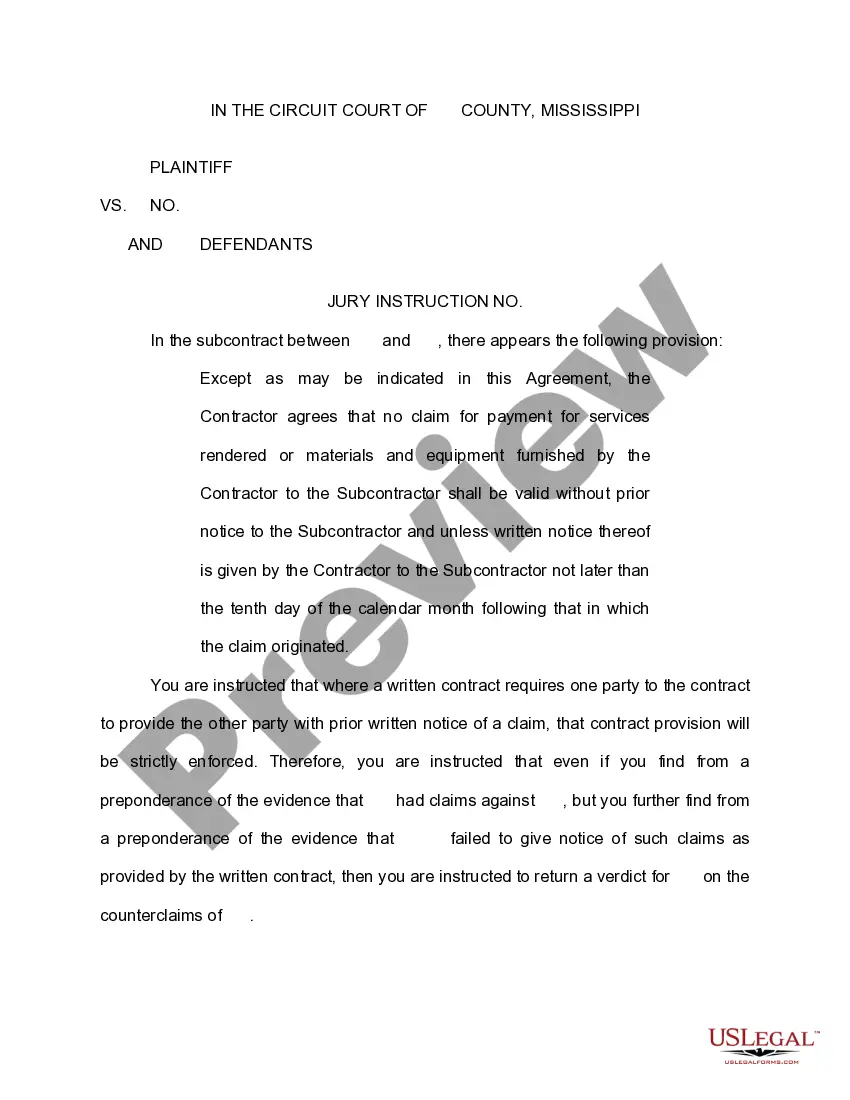
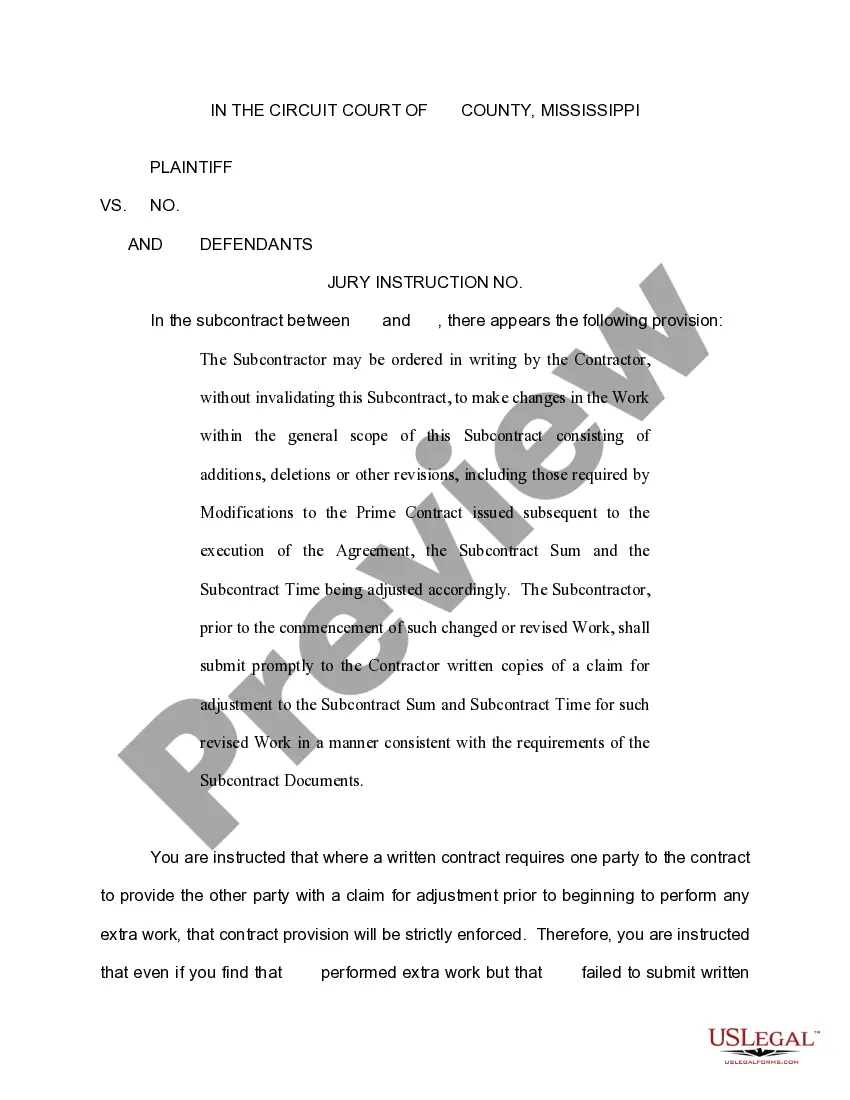
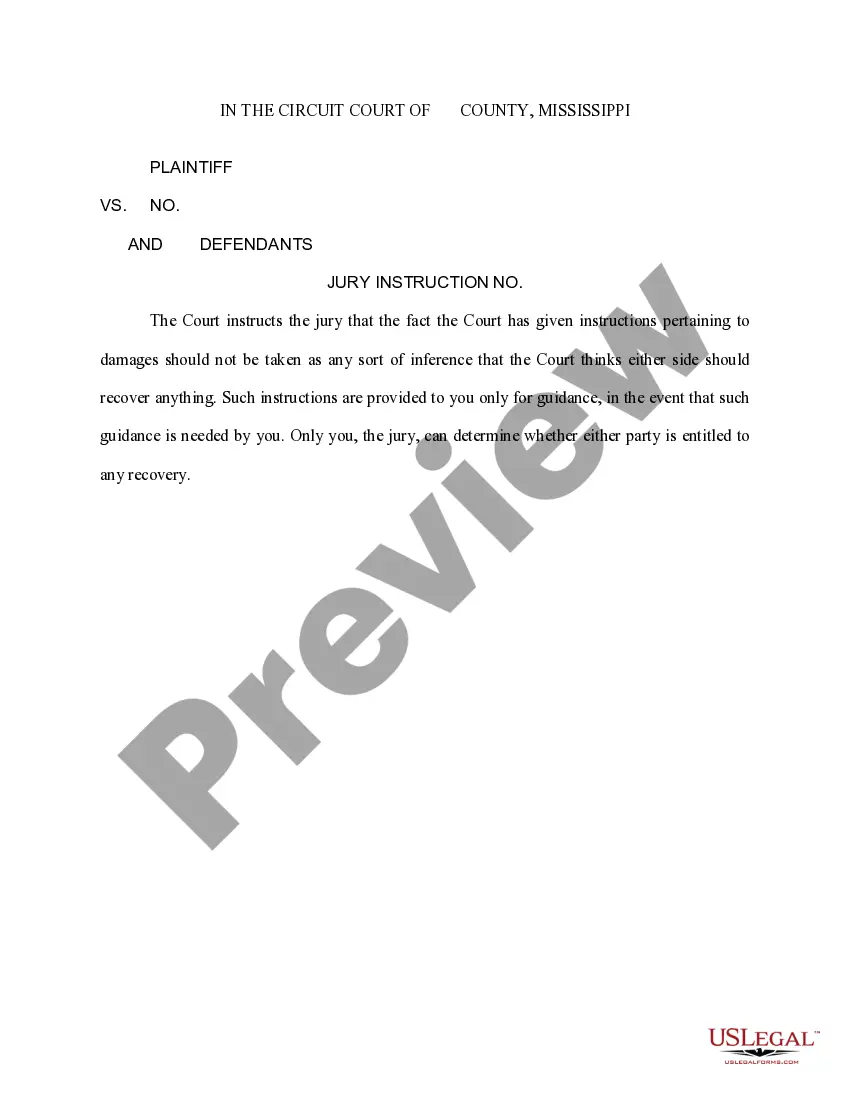
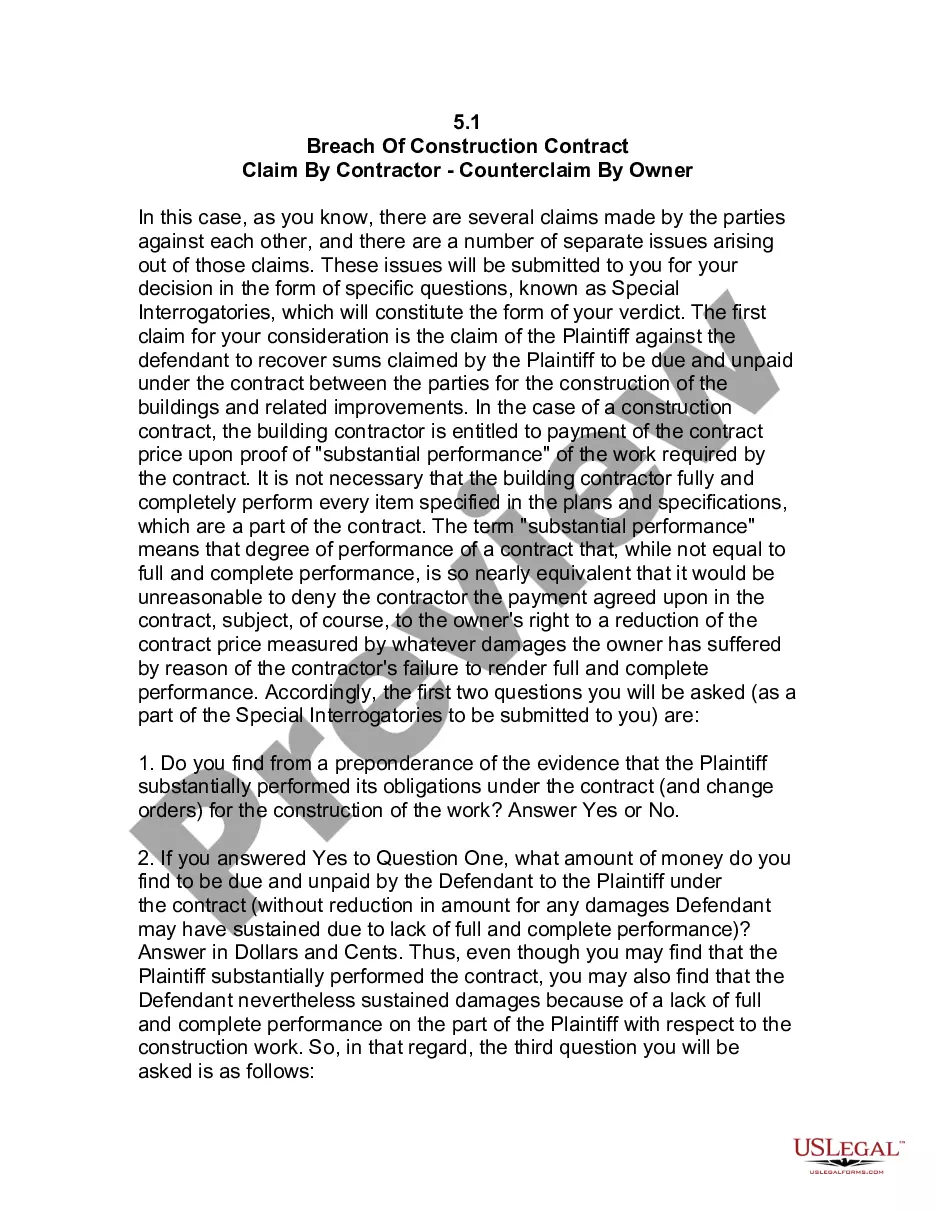
The Jury Instruction - For Plaintiff is a specific legal document used in Mississippi court cases. It serves to instruct the jury on how to consider the claims made by the plaintiff, particularly in regards to liquidated damages. This form provides clear guidance to jurors during deliberations and ensures that they understand the legal standards applicable to the case.
Main sections of this form
- Case title: Identifies the parties involved in the lawsuit.
- Case number: A unique identifier for the legal case.
- Jury instruction number: Specific reference number for the instruction.
- Plaintiff's claim for liquidated damages: The key issue that the jury is instructed to decide upon.
- Verdict direction: Clear instruction for the jury to return a verdict in favor of the plaintiff if applicable.
When to use this document
This form should be used during civil trials in Mississippi when the jury needs specific instructions on how to address the plaintiff's claim for liquidated damages. It is relevant in cases where the damages have been predetermined and need to be clearly outlined for the juryâs consideration.
Who this form is for
- Attorneys representing plaintiffs in civil lawsuits.
- Judges who need to provide jury instructions during trial.
- Legal professionals seeking standard language for jury instructions related to liquidated damages.
How to prepare this document
- Fill in the names of the plaintiff and defendants at the top of the form.
- Enter the case number for proper identification.
- Provide the specific jury instruction number as needed.
- Clearly articulate the plaintiff's claim for liquidated damages.
- Finalize the instruction by directing the jury to return a favorable verdict if the evidence supports it.
Does this document require notarization?
This form does not typically require notarization unless specified by local law. Always check the specific requirements for your jurisdiction to ensure compliance.
Get your form ready online
Our built-in tools help you complete, sign, share, and store your documents in one place.
Make edits, fill in missing information, and update formatting in US Legal Forms—just like you would in MS Word.
Download a copy, print it, send it by email, or mail it via USPS—whatever works best for your next step.
Sign and collect signatures with our SignNow integration. Send to multiple recipients, set reminders, and more. Go Premium to unlock E-Sign.
If this form requires notarization, complete it online through a secure video call—no need to meet a notary in person or wait for an appointment.
We protect your documents and personal data by following strict security and privacy standards.

Make edits, fill in missing information, and update formatting in US Legal Forms—just like you would in MS Word.

Download a copy, print it, send it by email, or mail it via USPS—whatever works best for your next step.

Sign and collect signatures with our SignNow integration. Send to multiple recipients, set reminders, and more. Go Premium to unlock E-Sign.

If this form requires notarization, complete it online through a secure video call—no need to meet a notary in person or wait for an appointment.

We protect your documents and personal data by following strict security and privacy standards.
Avoid these common issues
- Failing to include all parties' names correctly.
- Omitting the case number, leading to identification issues.
- Not articulating the claim for damages clearly, which may confuse jurors.
- Using outdated language that may not comply with current case law.
Why complete this form online
- Convenience of immediate access from any device.
- Editability to customize specific details for your case.
- Reliability from templates created by licensed attorneys.
- Access to updated legal language complying with state laws.
Quick recap
- The Jury Instruction for Plaintiff is essential for guiding jurors in liquidated damages cases in Mississippi.
- Accuracy and clarity in completing this form are crucial to ensure a fair verdict.
- Utilizing this form can streamline the jury instruction process, enhancing legal efficiency.
Looking for another form?
Form popularity
FAQ
The judge instructs the jury about the relevant laws that should guide its deliberations. (In some jurisdictions, the court may instruct the jury at any time after the close of evidence.The judge reads the instructions to the jury. This is commonly referred to as the judge's charge to the jury.
These are civil or criminal jury instructions approved by a state court, bench committee, or bar association. They are commonly used by courts in the relevant jurisdiction, as they ease the process of drafting fair jury instructions and theoretically do not have errors.
A jury instruction is given by the judge to the jury to explain what is happening in the court, to explain the points of law relevant to the case, to explain certain aspects of the evidence presented and to assist the jurors in understanding their duties in reaching a verdict.
Instructions to the Jury The judge instructs the jury about the relevant laws that should guide its deliberations. (In some jurisdictions, the court may instruct the jury at any time after the close of evidence. This sometimes occurs before closing arguments.) The judge reads the instructions to the jury.
Jury instructions, directions to the jury, or judge's charge are legal rules that jurors should follow when deciding a case.
A judgment notwithstanding the verdict (or JNOV) is an order by a judge after a jury has returned its verdict. The judge can overturn the jury's verdict if he or she feels it cannot reasonably be supported by the evidence or if it contradicts itself.
On the average, jurors serve approximately 1-3 days during a one month term of service. The Judge will adjourn the jury each evening and will instruct you on what time you must return the following morning. You must check in with the Jury Department each morning.
Jury Instructions. instructions that are given by the trial judge that specifically state what the defendant can be found guilty of and what the prosecution or plaintiff has to prove in order for a guilty verdict.