Mississippi Jury Instruction - Defective Product Instruction Against Seller
What this document covers
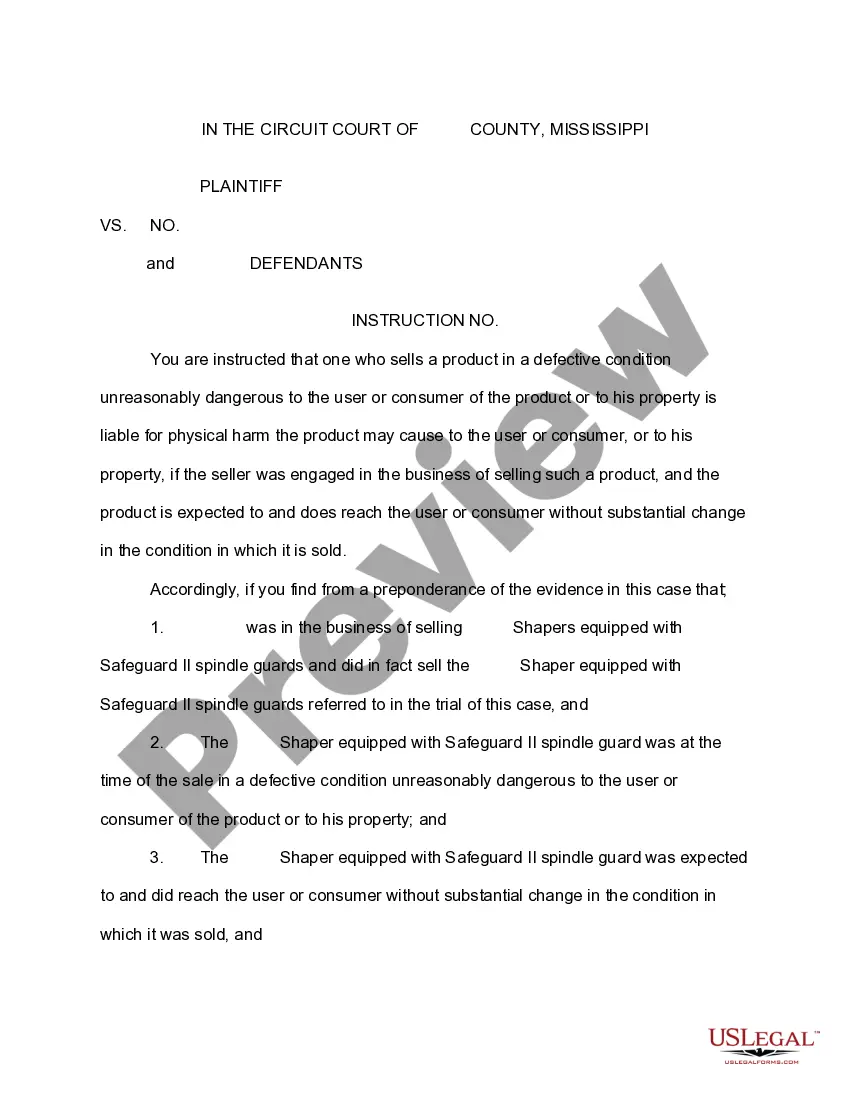
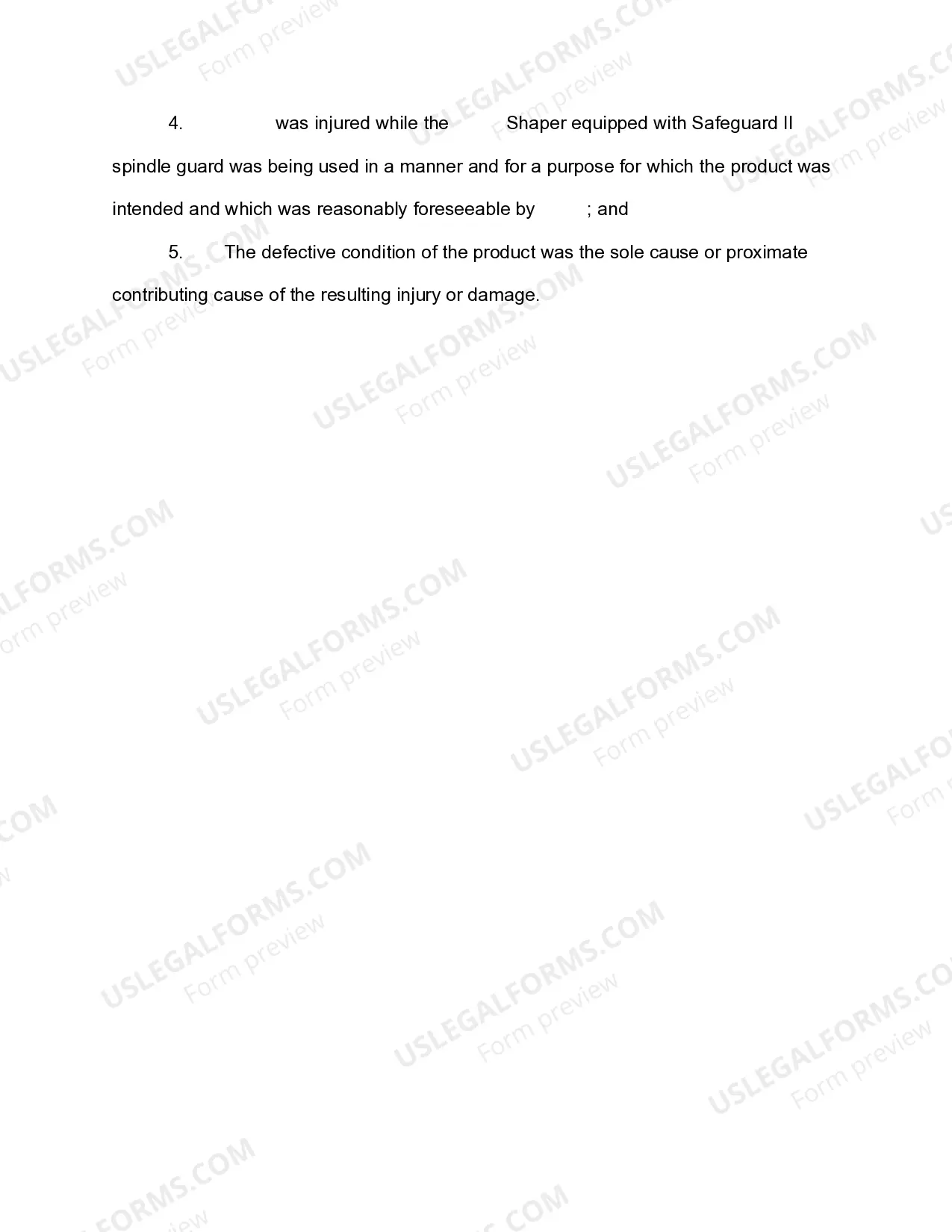
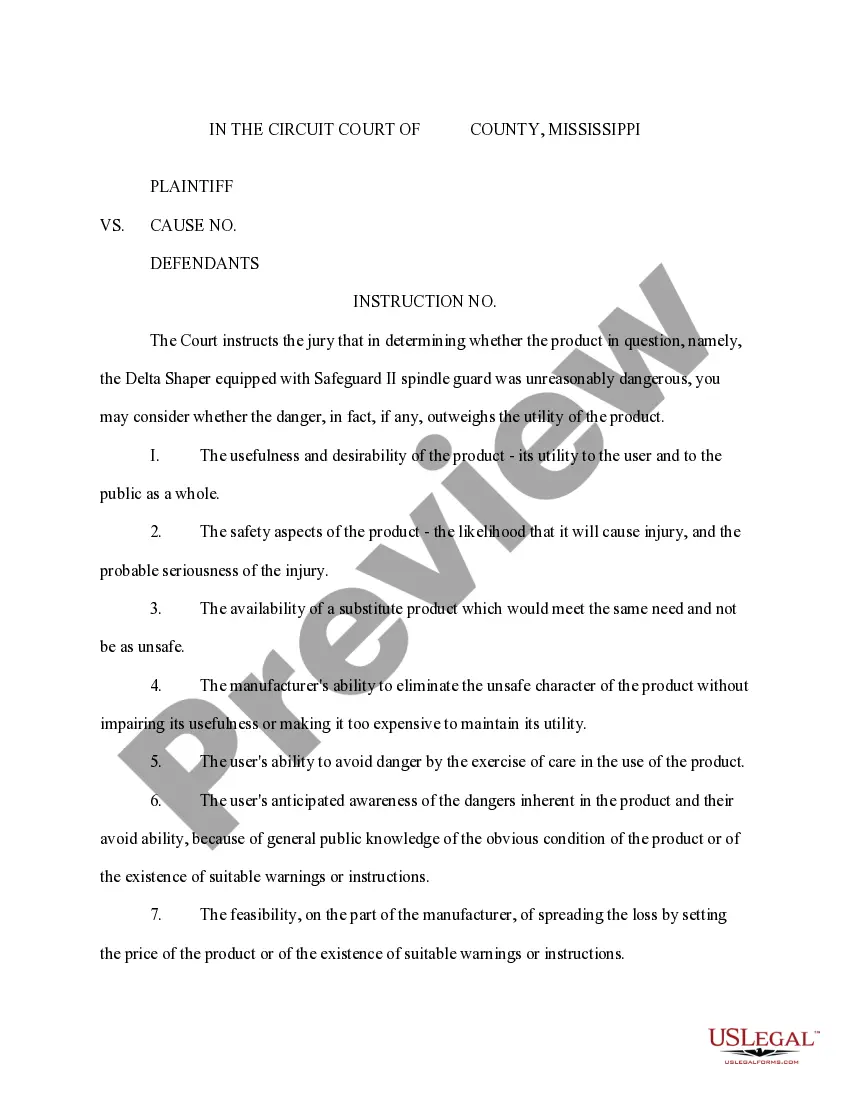
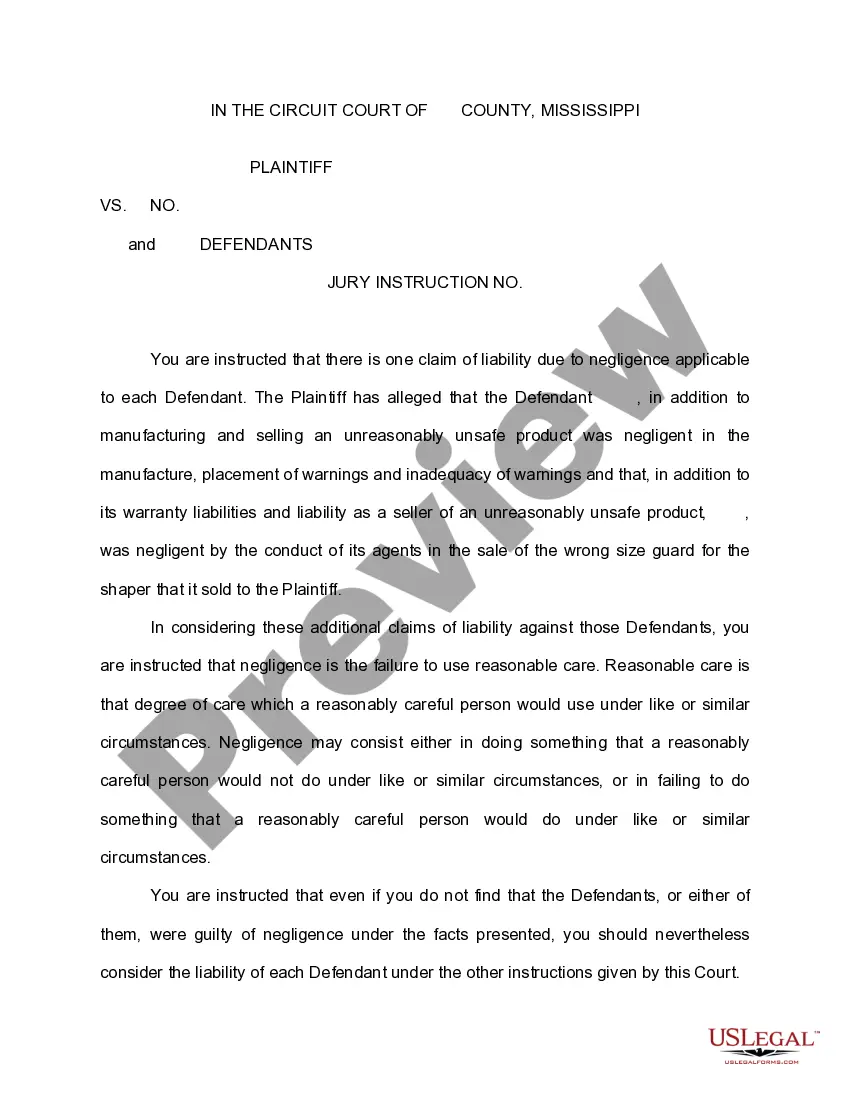
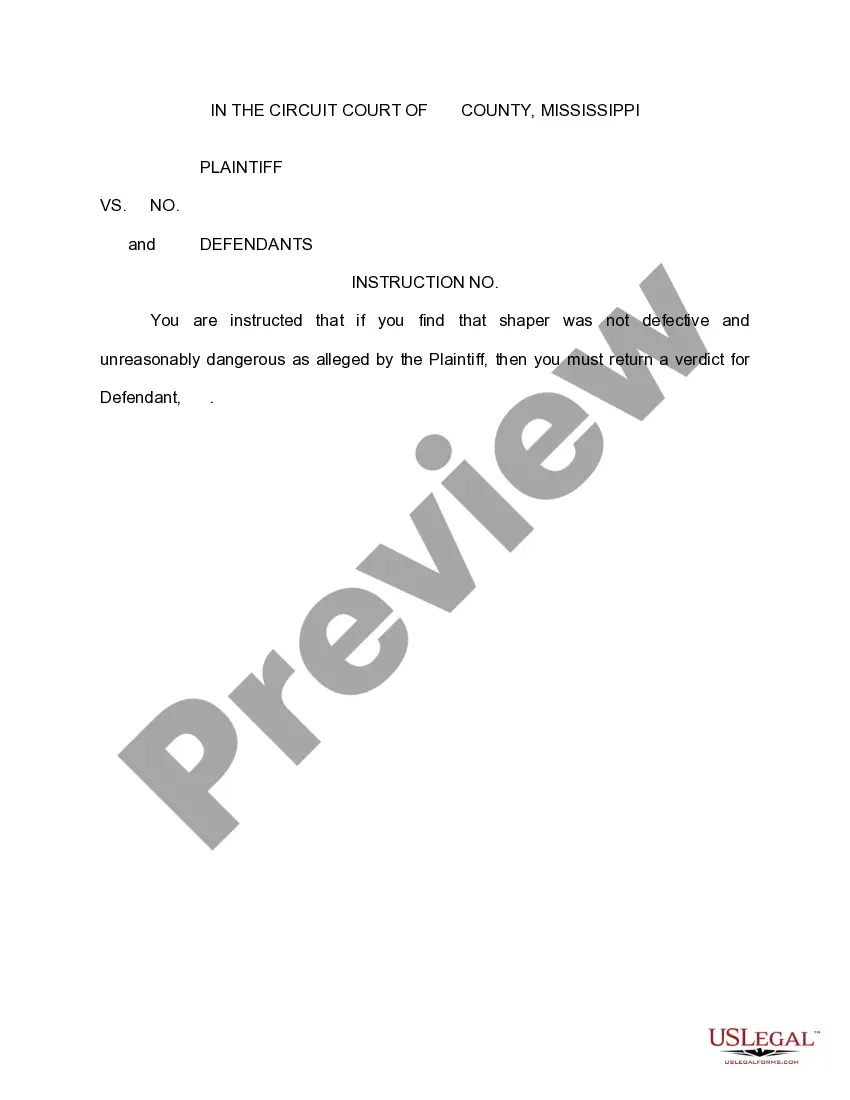
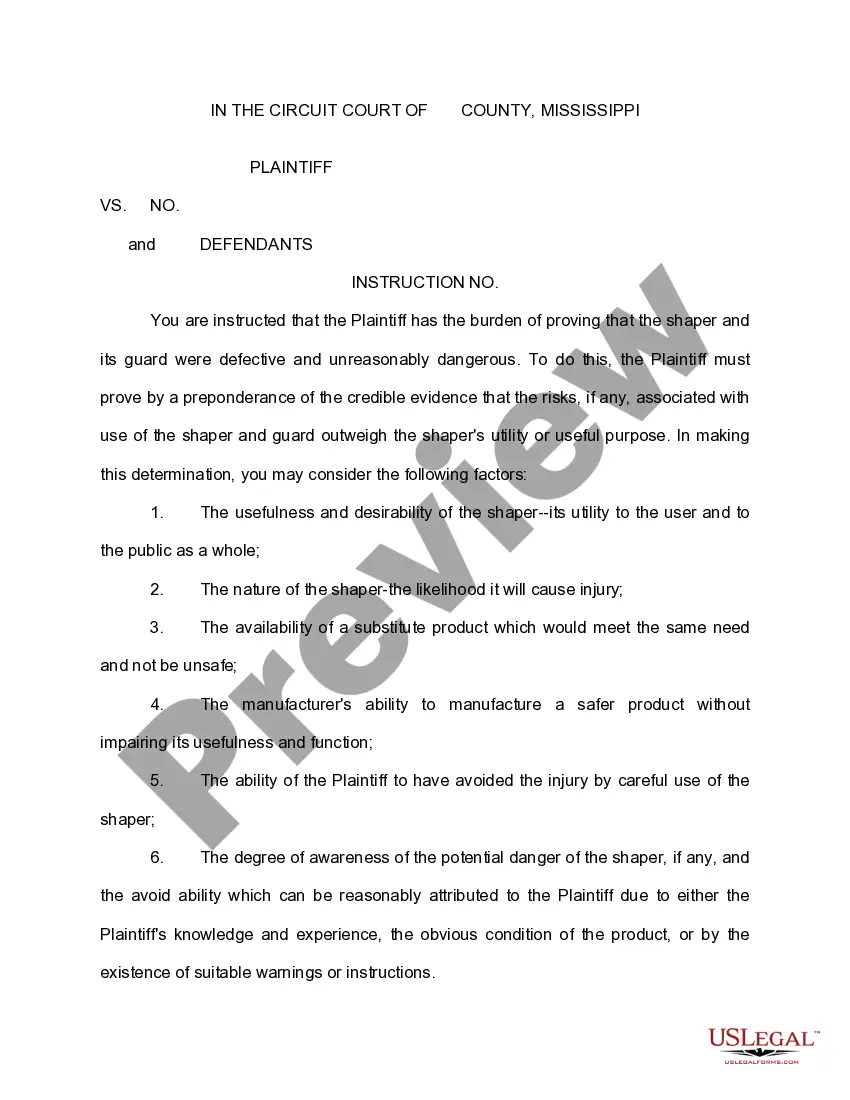
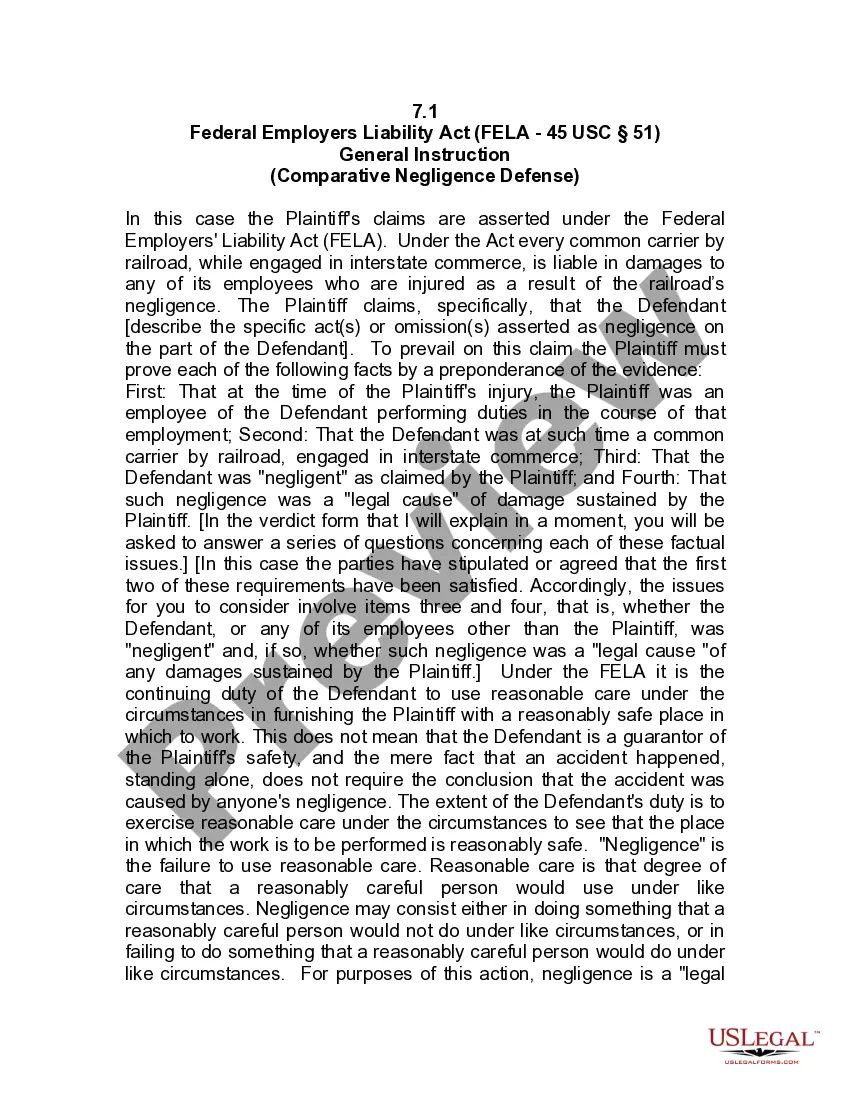
This Jury Instruction - Defective Product Instruction Against Seller is a legal template designed to guide jurors in Mississippi when deliberating on cases involving defective products sold by a seller. It presents specific instructions that outline the criteria jurors must consider when determining liability. Unlike general jury instructions, this form is tailored to address product defect claims and ensures that the jury understands the legal standards applicable in such cases.
What’s included in this form
- Clear definition of a defective product and seller liability.
- Guidance on the burden of proof required in product defect cases.
- Specific factors for jurors to consider in their deliberations.
- Instructions on the interpretation of evidence presented during the trial.
- Language tailored to comply with Mississippi legal standards.
Situations where this form applies
This form should be used during a civil trial where the jury needs to evaluate claims of product defects against a seller. It is applicable in cases where a plaintiff alleges that a product was defective and that this defect caused harm. This form becomes relevant when formal jury instructions are necessary, typically after evidence has been presented and the jury is ready to deliberate on their findings.
Who this form is for
- Attorneys representing clients in product liability cases.
- Judges who need to provide jurors with appropriate instructions.
- Legal professionals seeking to understand jury instructions in Mississippi.
- Firms preparing for trials involving defective products.
How to complete this form
- Review the full text of the instruction to understand its application.
- Identify the relevant facts of the case that support the defective product claim.
- Ensure the language is accurate and conforms to the latest legal standards.
- Present the instruction to the jury clearly and in a comprehensible manner.
- Adjust any specific details related to the case as necessary before submission.
Notarization requirements for this form
Notarization is generally not required for this form. However, certain states or situations might demand it. You can complete notarization online through US Legal Forms, powered by Notarize, using a verified video call available anytime.
Get your form ready online
Our built-in tools help you complete, sign, share, and store your documents in one place.
Make edits, fill in missing information, and update formatting in US Legal Forms—just like you would in MS Word.
Download a copy, print it, send it by email, or mail it via USPS—whatever works best for your next step.
Sign and collect signatures with our SignNow integration. Send to multiple recipients, set reminders, and more. Go Premium to unlock E-Sign.
If this form requires notarization, complete it online through a secure video call—no need to meet a notary in person or wait for an appointment.
We protect your documents and personal data by following strict security and privacy standards.

Make edits, fill in missing information, and update formatting in US Legal Forms—just like you would in MS Word.

Download a copy, print it, send it by email, or mail it via USPS—whatever works best for your next step.

Sign and collect signatures with our SignNow integration. Send to multiple recipients, set reminders, and more. Go Premium to unlock E-Sign.

If this form requires notarization, complete it online through a secure video call—no need to meet a notary in person or wait for an appointment.

We protect your documents and personal data by following strict security and privacy standards.
Common mistakes
- Using outdated or incorrect legal language that does not align with current case law.
- Failing to tailor instructions to the specific facts of the case.
- Assuming all jurors understand complex legal terminology without clarification.
- Neglecting to provide comprehensive instructions on the burden of proof.
Why use this form online
- Convenient access to legal forms that are drafted by licensed attorneys.
- Ability to download and customize the form to fit specific case needs.
- Time-saving process, allowing quick preparation for trial.
- Ensures reliability by using a form that complies with Mississippi law.
Looking for another form?


Form popularity
FAQ
Under California law, manufacturers, designers, and retailers are strictly liable for injuries that are caused to plaintiffs when they use defective products in a reasonably foreseeable way.The product's defect was the direct or proximate cause of the plaintiff's injury.
A defective product can be defined as any product that is unreasonably dangerous when being used for its intended purpose, without any alterations or interference.Some of the most common examples of defective products include food items, medical devices, and children's toys.
If a product with manufacturing defects causes injury to the intended user, then the manufacturer can be held liable. Manufacturing defect claims can be difficult to prove in court because they usually involve a limited number of products, unlike design or warning defects.
Product liability refers to a manufacturer or seller being held liable for placing a defective product into the hands of a consumer. Responsibility for a product defect that causes injury lies with all sellers of the product who are in the distribution chain.
Damages in Product Liability Cases In the event that a faulty or dangerous product causes injury to a consumer, the designer, manufacturer, or distributor can be held responsible.
Yes, in many cases a retailer can, indeed, be held liable for a defective product at least if an injury or a death resulted.
Responsibility generally lies with the producer of the product rather than supplier. That might be: the manufacturer (or the producer in the case of raw materials)
Manufacturer's liability, legal concept or doctrine that holds manufacturers or sellers responsible, or liable, for harm caused by defective products sold in the marketplace.