Mississippi Plaintiff's Response in Opposition to Motion to Dismiss
Overview of this form
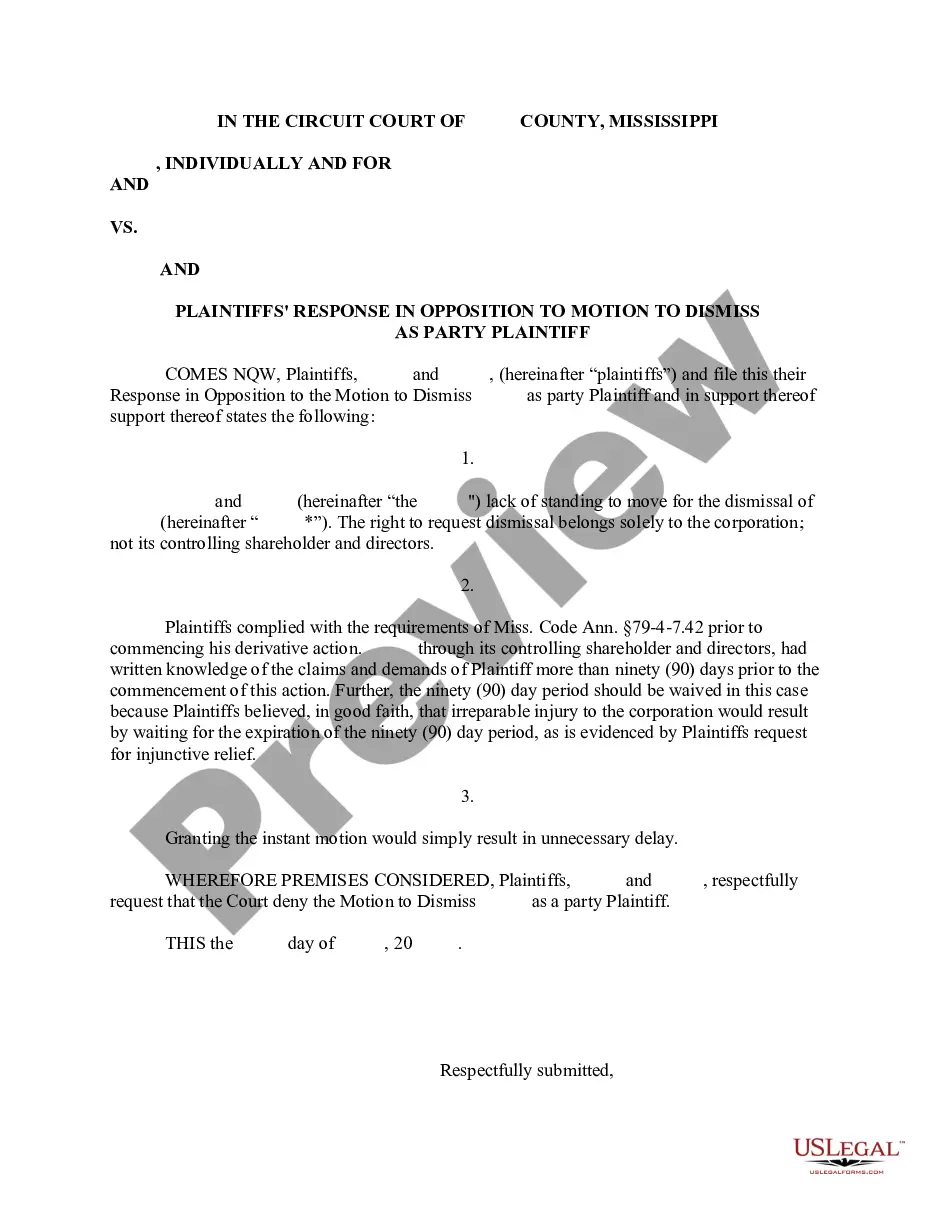
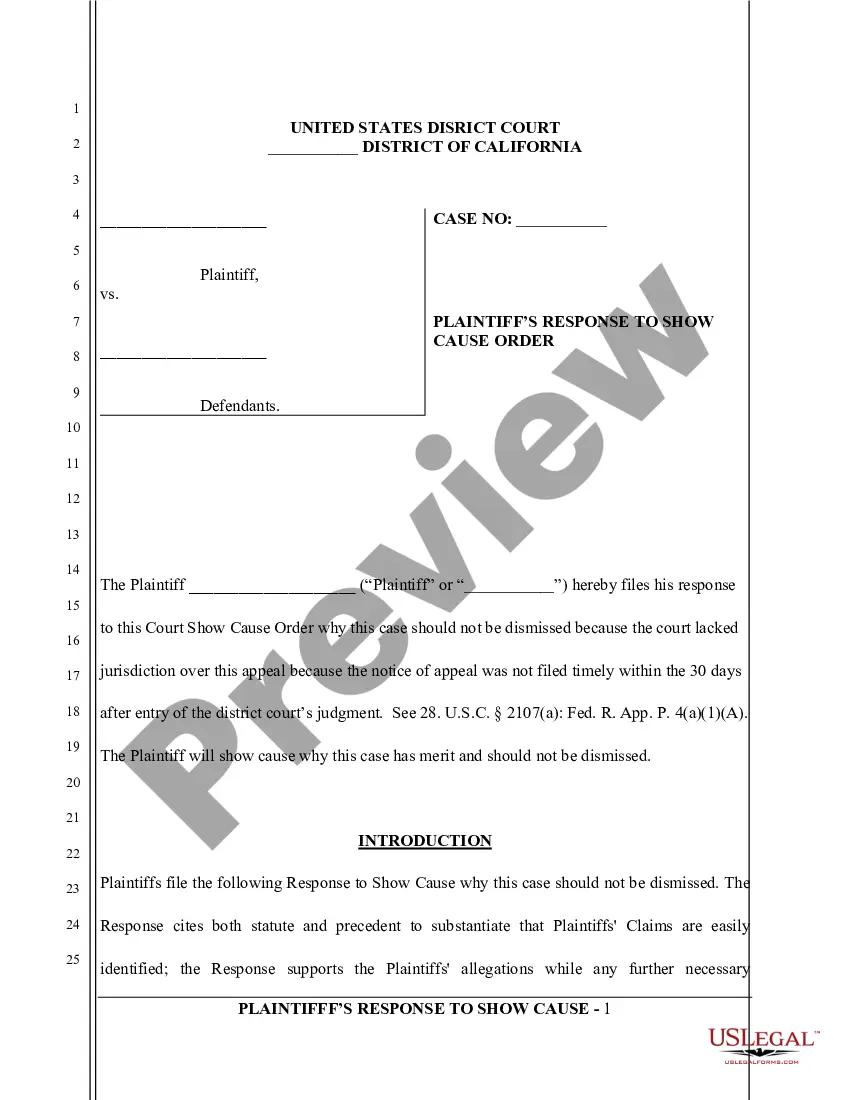
The Plaintiff's Response in Opposition to Motion to Dismiss is a legal document that allows a plaintiff to formally contest a motion filed by the defendant to dismiss the case. This response is critical in arguing against the defendant's claims and ensuring that the case proceeds in court. Unlike other legal forms, this document focuses specifically on rebutting dismissal motions, which are often pivotal in litigation.
Main sections of this form
- Caption: This section includes the court name, case number, and party names.
- Introduction: A brief statement outlining the purpose of the response.
- Argument: Detailed rebuttals addressing each point raised in the motion to dismiss.
- Conclusion: A request for the court to deny the motion and allow the case to continue.
- Signature block: Space for the plaintiff's signature and contact information.

When this form is needed
This form is used when a defendant has submitted a motion to dismiss your case. If you believe that your case has valid grounds to proceed despite the defendant's motion, you need to file this response to provide your counterarguments. It's essential to act swiftly, as there are often deadlines for filing responses to motions.
Who can use this document
- Individuals or entities serving as plaintiffs in a legal case.
- Litigants facing a motion to dismiss filed by the defendant.
- Those who need to formally present their arguments against dismissal in court.
How to prepare this document
- Identify the court: Fill in the court's name and address at the top of the form.
- List the parties: Include your name as the plaintiff and the defendant's name as it appears in the case.
- Provide your arguments: Clearly state your reasons opposing the motion to dismiss, organizing your thoughts logically.
- Sign the document: Ensure you sign the form in the designated area, verifying your commitment to the claims made.
- File the form: Submit the completed response to the court by the deadline imposed by local rules.
Does this document require notarization?
In most cases, this form does not require notarization. However, some jurisdictions or signing circumstances might. US Legal Forms offers online notarization powered by Notarize, accessible 24/7 for a quick, remote process.
Get your form ready online
Our built-in tools help you complete, sign, share, and store your documents in one place.
Make edits, fill in missing information, and update formatting in US Legal Forms—just like you would in MS Word.
Download a copy, print it, send it by email, or mail it via USPS—whatever works best for your next step.
Sign and collect signatures with our SignNow integration. Send to multiple recipients, set reminders, and more. Go Premium to unlock E-Sign.
If this form requires notarization, complete it online through a secure video call—no need to meet a notary in person or wait for an appointment.
We protect your documents and personal data by following strict security and privacy standards.

Make edits, fill in missing information, and update formatting in US Legal Forms—just like you would in MS Word.

Download a copy, print it, send it by email, or mail it via USPS—whatever works best for your next step.

Sign and collect signatures with our SignNow integration. Send to multiple recipients, set reminders, and more. Go Premium to unlock E-Sign.

If this form requires notarization, complete it online through a secure video call—no need to meet a notary in person or wait for an appointment.

We protect your documents and personal data by following strict security and privacy standards.
Typical mistakes to avoid
- Filing after the deadline, which could jeopardize your case.
- Failing to address each point raised in the motion to dismiss.
- Omitting important information or evidence that supports your arguments.
Why complete this form online
- Convenience of downloading and completing the form at your own pace.
- Easy editing features allow for customization to your specific case.
- Access to templates created by licensed attorneys ensures reliability.
Summary of main points
- The Plaintiff's Response in Opposition to Motion to Dismiss is crucial for contesting dismissal motions.
- Promptly respond to motions to preserve your right to proceed with the case.
- Ensure all responses are tailored to your specific situation and the local legal framework.
Looking for another form?

Form popularity
FAQ
You simply need to request that the court deny the defendant's motion to dismiss. For example, you could write the following: For the foregoing reasons and all the others discussed in Plaintiff's Complaint, the present Motion to Dismiss should be denied.
The plaintiff must give you responses to your request for admissions within 30 days. You do not need to do anything if you do not get a response. The plaintiff has 30 days to deny or object to the statements.
Some states have a 90 day rule but there is really no set time for a judge to make a decision. If he needs more time it usually means that the case is a very close call and the last thing you want to do is to try to hurry the judge up and anger him. Sometimes judges can take a year or more to render a ruling.
What happens if I don't file an opposition to the motion? If a motion is filed against you and you do not file a written opposition with the court, the judge could grant the other side's motion automatically.It also might mean you lose the case, depending on the motion that was filed.
Each court has different rules about how long you have to respond to this motion, but usually you will have at least two or three weeks to file an opposition to the defendant's motion to dismiss.
You have 14 days to respond to a motion to dismiss. If you do not have an attorney, I strongly recommend that you retain one. Federal courts have many rules that must be strictly adhered to.
Generally, however, a defendant must file a motion to dismiss before filing an "answer" to the complaint. If the motion to dismiss is denied, the defendant must still file their answer, usually within a shortened amount of time.The motion to dismiss must be filed with the court and served on the other party.
You simply need to request that the court deny the defendant's motion to dismiss. For example, you could write the following: For the foregoing reasons and all the others discussed in Plaintiff's Complaint, the present Motion to Dismiss should be denied.
You do not have to file a response. However, you would be wise to do so as a motion to dsmiss , if granted, could end your suit. Motions to dimiss for failure to state a claim are rarely granted.