Mississippi Order to Reduce Bond
About this form
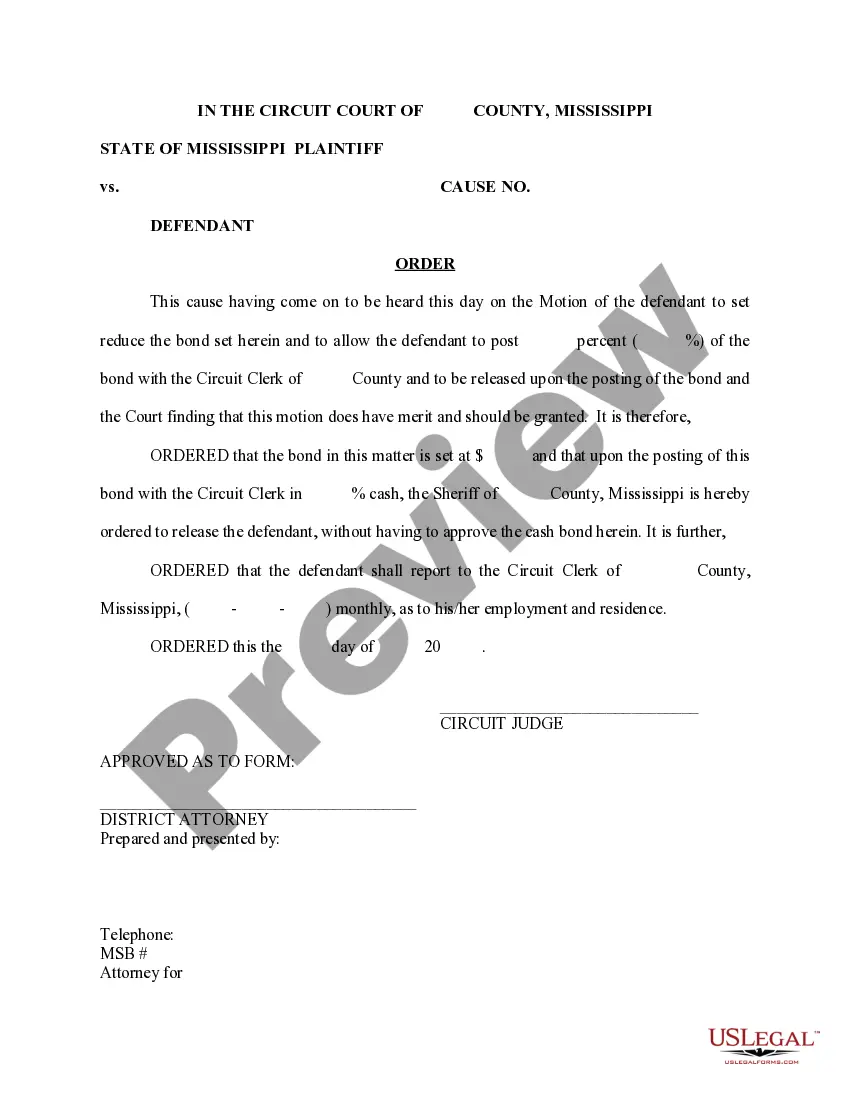
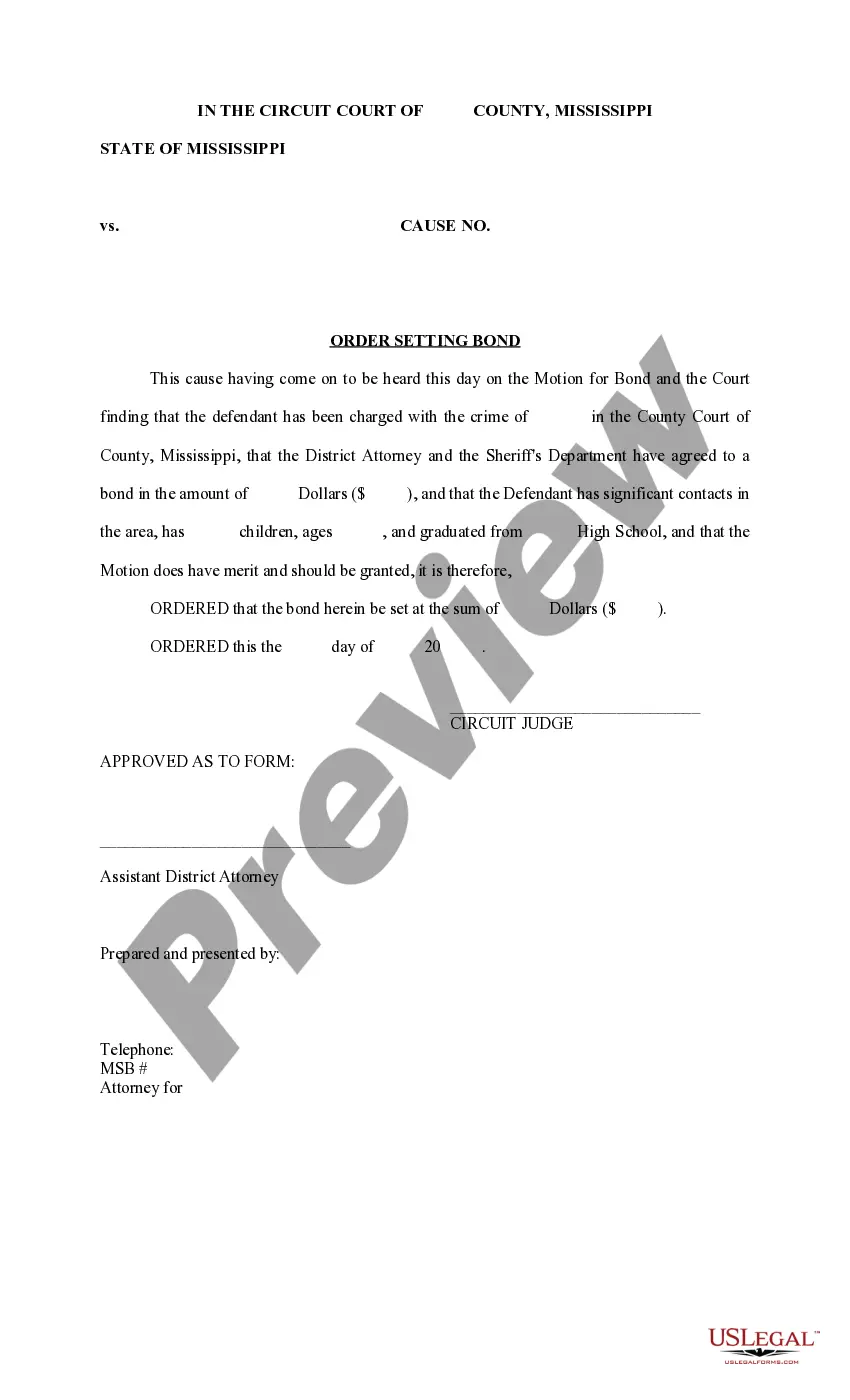
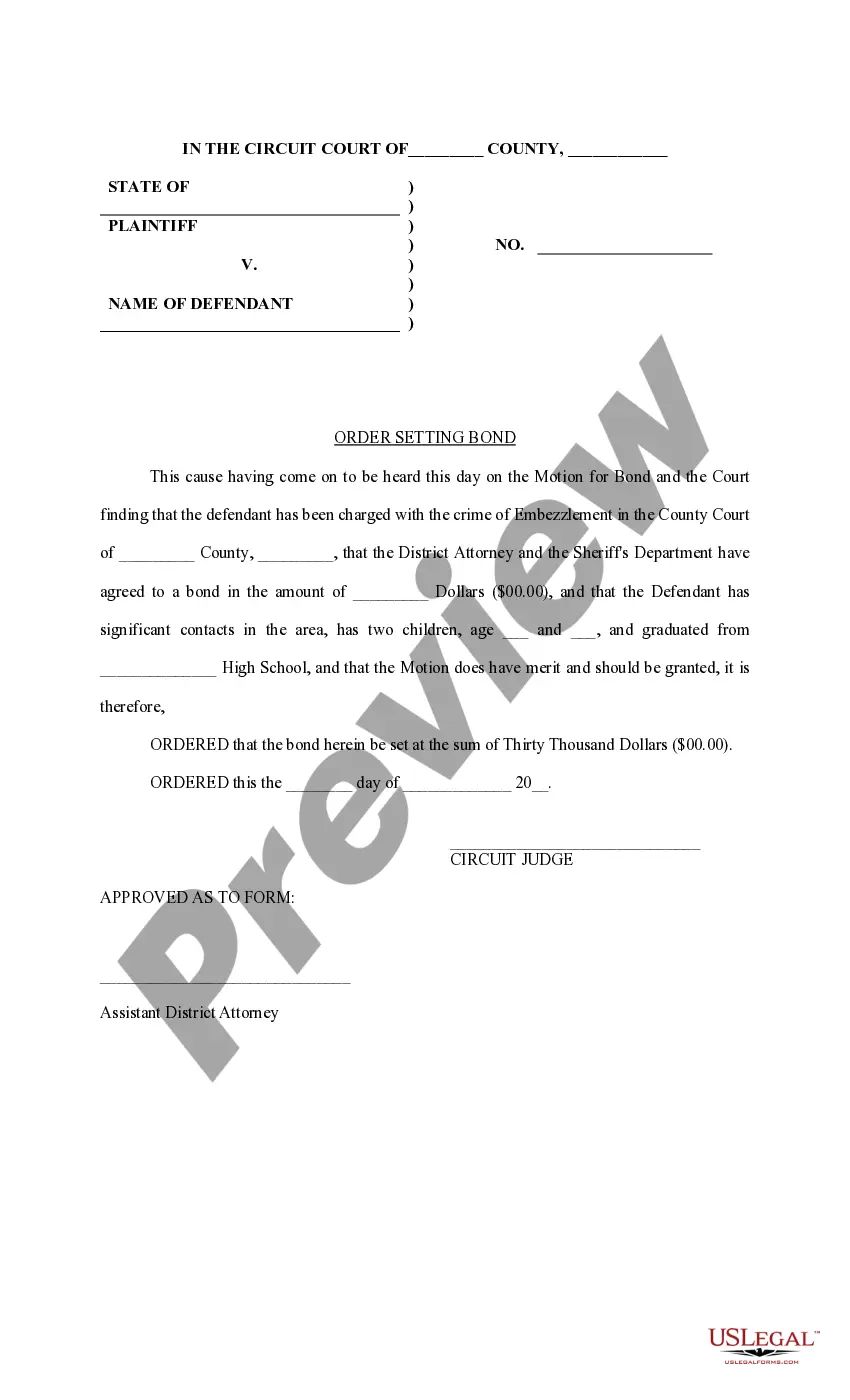
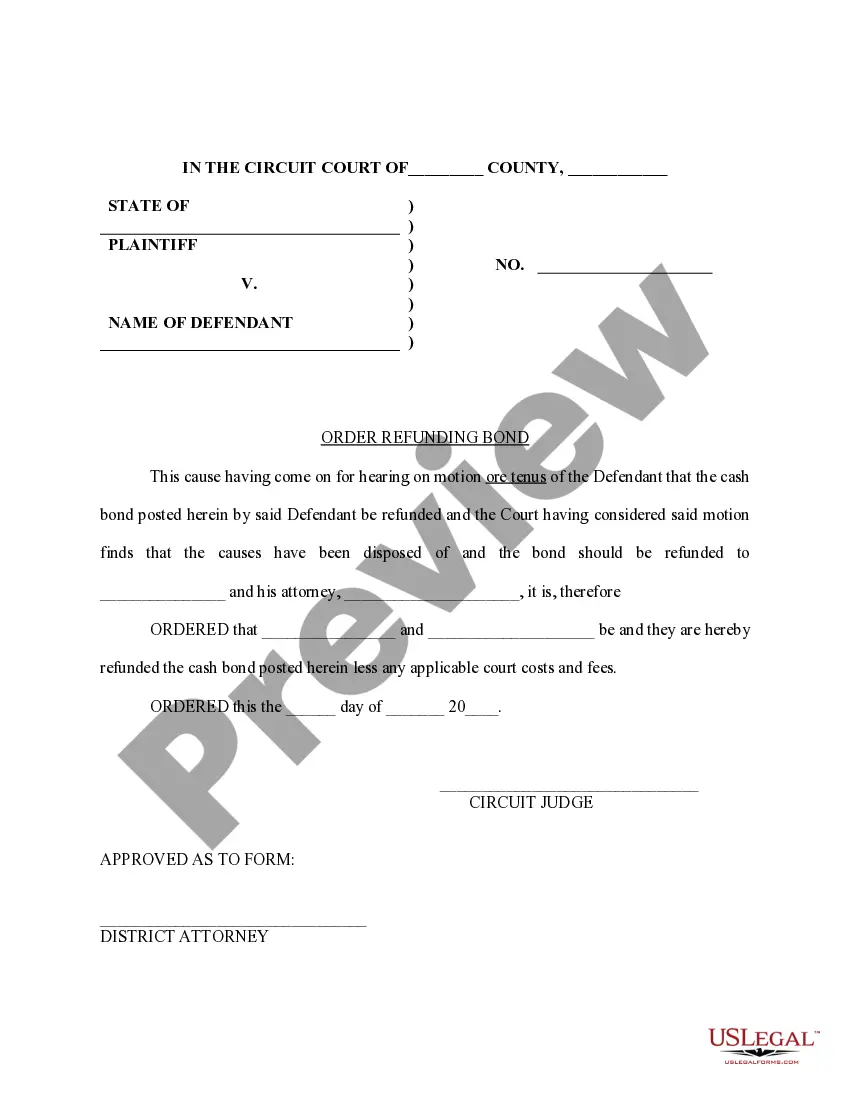
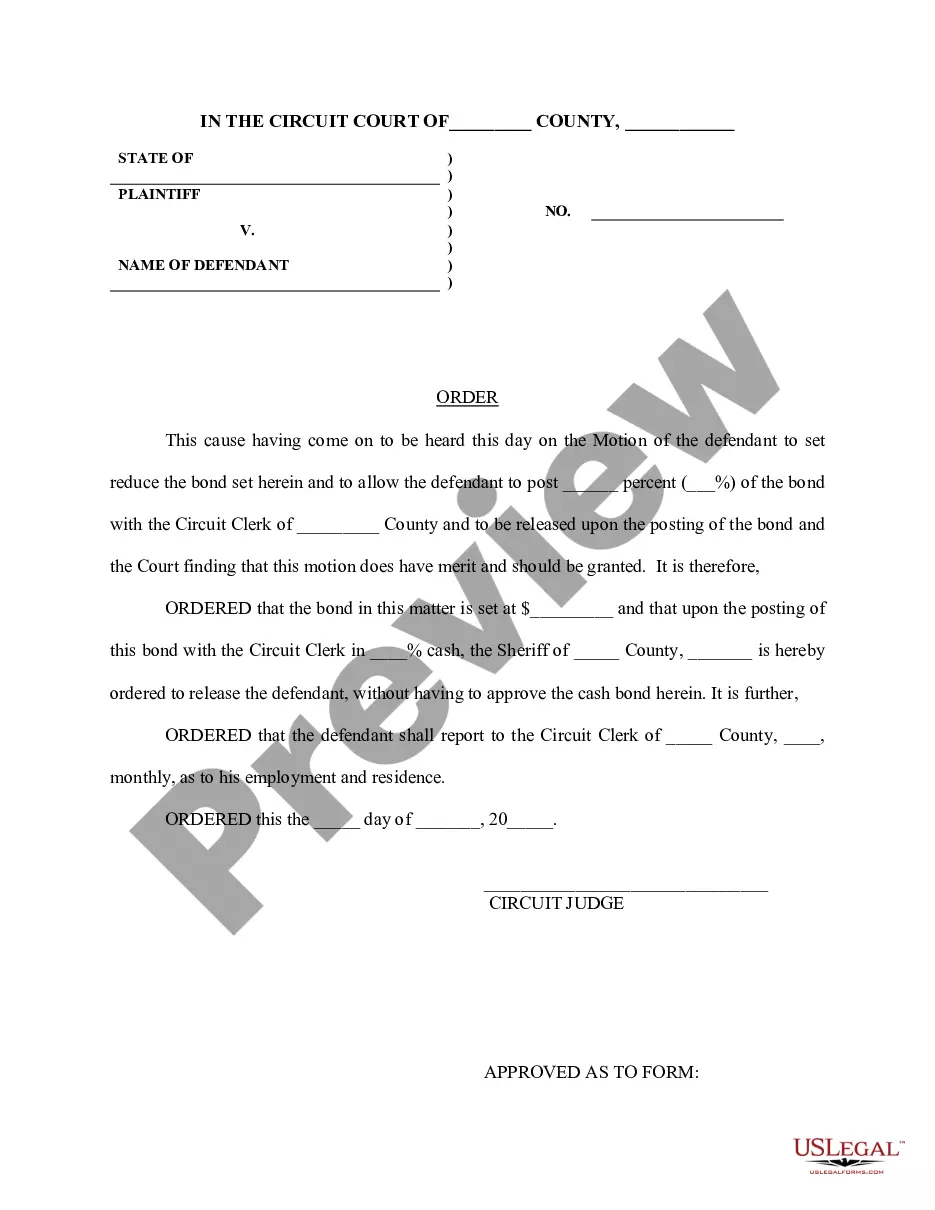
The Order to Reduce Bond is a formal document issued by the court that directs a reduction of the bond amount set in a legal case. This order is typically signed by a judge and outlines the reasons for the bond reduction. It differs from other court orders in that it specifically pertains to financial sureties required for certain legal proceedings. This form serves as a framework for requesting a modification to an existing bond and can be tailored to meet the needs of individual cases.
Key parts of this document
- Case Caption: Identifies the court and the parties involved in the case.
- Bond Details: Specifies the original bond amount and the proposed reduced amount.
- Justification Statement: Provides reasons why a reduction in the bond is warranted.
- Judgeâs Signature: Confirms the court's approval of the bond reduction.
- Date: Indicates when the order was signed by the judge.
When to use this form
This form is used when an individual or entity involved in a legal case wishes to request a lower bond amount previously set by the court. Common situations include changes in financial circumstances, the resolution of underlying issues that necessitated the bond, or when the existing bond amount is deemed excessive for the case at hand.
Who should use this form
- Individuals or businesses involved in legal proceedings requiring a bond.
- Legal representatives seeking to modify bond conditions on behalf of their clients.
- Any party that believes a reduction in bond is justified based on new circumstances.
Instructions for completing this form
- Identify the parties involved in the case and provide the case caption.
- Clearly state the original bond amount and the amount you wish to propose as a reduction.
- Include a detailed justification statement explaining the reasons for the reduction.
- Ensure the order is signed by the appropriate judge once completed.
- Include the date the order is signed to establish its validity.
Notarization requirements for this form
This form does not typically require notarization unless specified by local law. Ensure to check your jurisdiction's specific requirements before submission.
Get your form ready online
Our built-in tools help you complete, sign, share, and store your documents in one place.
Make edits, fill in missing information, and update formatting in US Legal Forms—just like you would in MS Word.
Download a copy, print it, send it by email, or mail it via USPS—whatever works best for your next step.
Sign and collect signatures with our SignNow integration. Send to multiple recipients, set reminders, and more. Go Premium to unlock E-Sign.
If this form requires notarization, complete it online through a secure video call—no need to meet a notary in person or wait for an appointment.
We protect your documents and personal data by following strict security and privacy standards.

Make edits, fill in missing information, and update formatting in US Legal Forms—just like you would in MS Word.

Download a copy, print it, send it by email, or mail it via USPS—whatever works best for your next step.

Sign and collect signatures with our SignNow integration. Send to multiple recipients, set reminders, and more. Go Premium to unlock E-Sign.

If this form requires notarization, complete it online through a secure video call—no need to meet a notary in person or wait for an appointment.

We protect your documents and personal data by following strict security and privacy standards.
Mistakes to watch out for
- Failing to provide sufficient justification for the bond reduction.
- Not including the correct case caption or party names.
- Omitting the required signatures or dates.
- Submitting the form when it is not applicable to the case situation.
Advantages of online completion
- Convenience of filling out the form from your own home.
- Ability to edit entries before finalizing the form.
- Access to attorney-drafted templates that ensure legal compliance.
Looking for another form?
Form popularity
FAQ
California law also permits courts to reduce bail following a change in circumstances. Specifically, Penal Code § 1289 authorizes a court to reduce the bail if good cause is shown. succeeds in having some charges dismissed, he or she may also be able to reduce your bail.
In a Nutshell: One can request that a judge reduce bail by explaining the individual's ties to community through employment and family, history of never failing to appear and, if applicable, tendering one's passport or visa to the court clerk.
A bail reduction hearing usually takes place within 48 hours of the request and sometimes the next day.
If your charges are dropped and you paid a bail bonds service to bail you out, you get no refund, as the bail bondsman put the full amount of bail up on your behalf.If you paid the court directly for the full bail amount, the bail money will be refunded to you once the case is dismissed.
Motions for Bond Reductions are filed in Court when a person can't afford to get out of jail. In order to get out of jail, someone must either hire a bondsman and pay them 10% of the bond amount, or actually go to the jail and pay the full amount of the bond.
A bail reduction hearing usually takes place within 48 hours of the request and sometimes the next day.
There is no rule that allows a bond reduction every 10 days. He can do a bond reduction hearing after the initial appearance in front of the assigned judge. However, after that, most judges will strike any future motions unless there is some sort of...
A bail reduction hearing usually takes place within 48 hours of the request and sometimes the next day.
A defendant can request a hearing to seek a bail reduction. At the hearing, the defendant can argue that the initial bail set by the court is so high that it is effectively a denial of bail and amounts to pretrial detention in jail, even though the defendant is not a flight risk or a threat to the public.