Mississippi Complaint for Appointment of Administrator
What this document covers
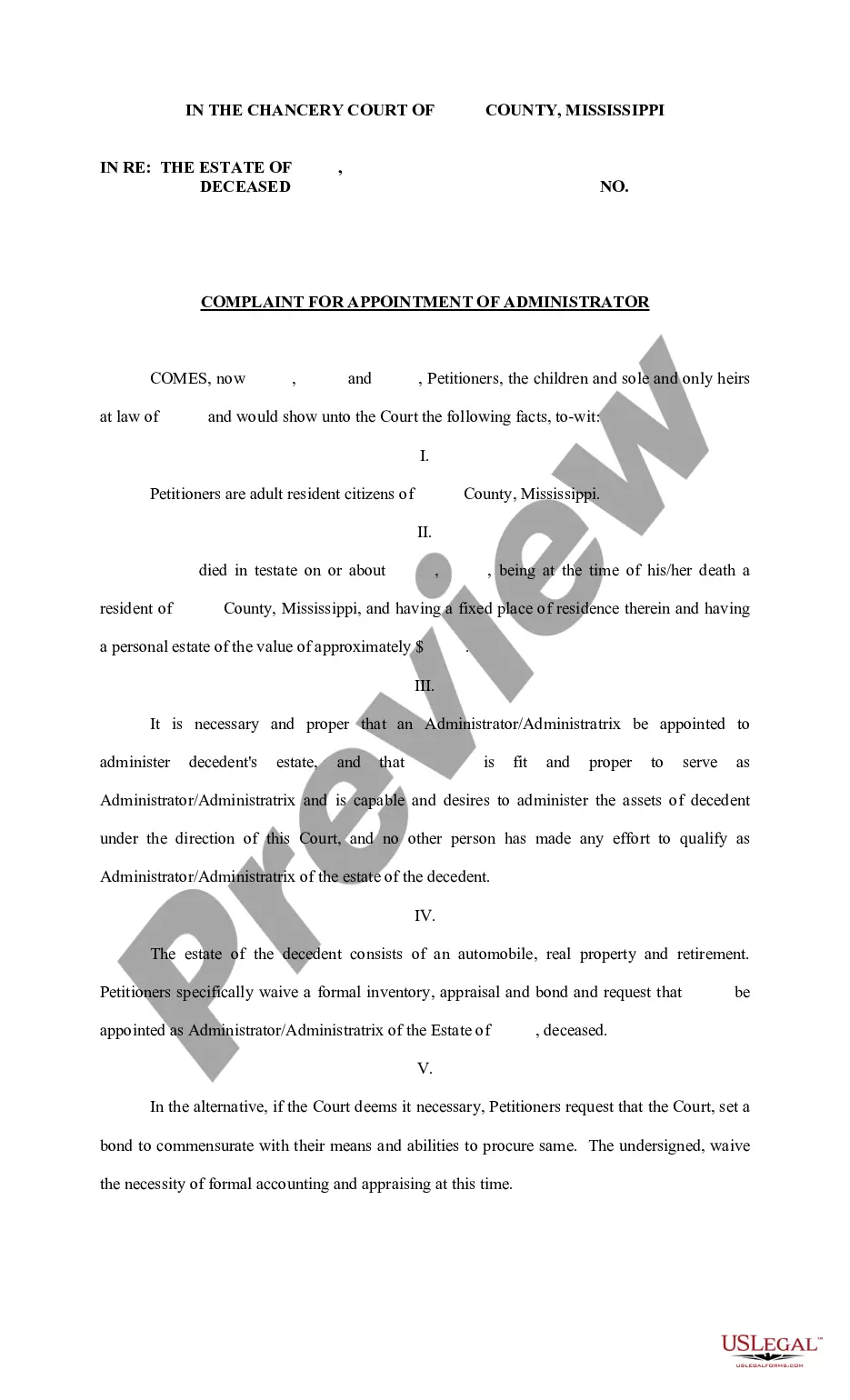
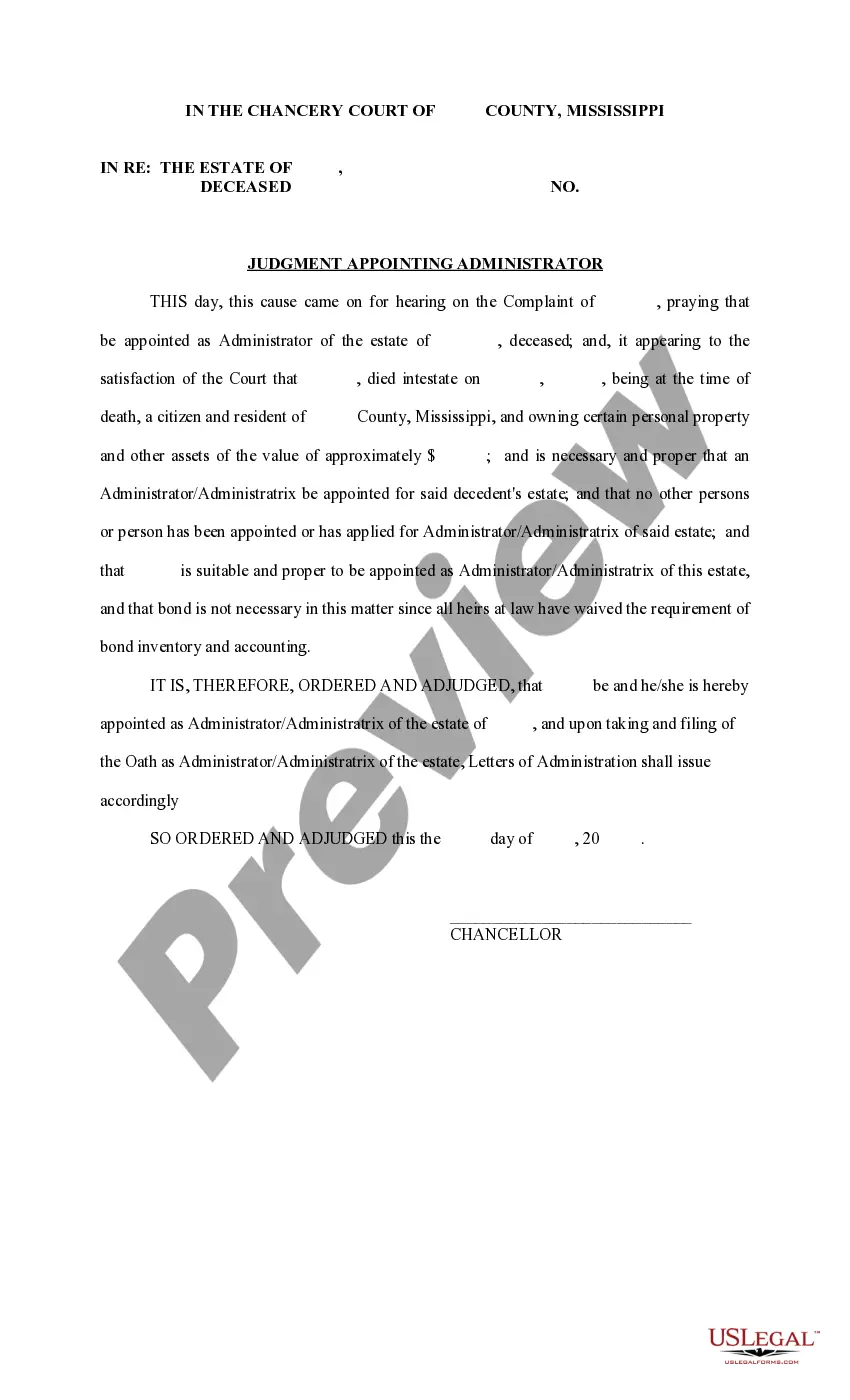
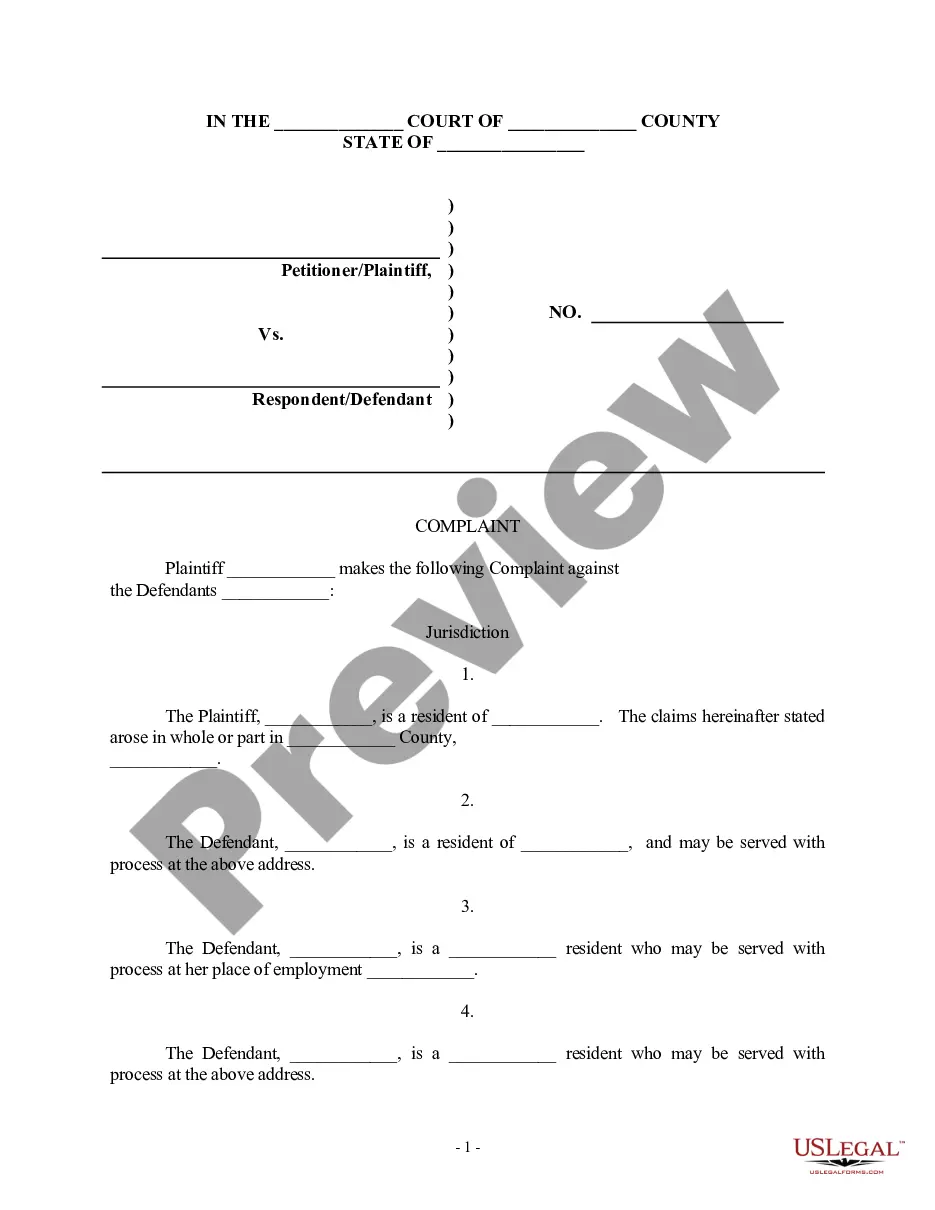
The Complaint for Appointment of Administrator is a legal document that initiates a court proceeding to appoint an administrator for an estate. This form outlines the claims made by the petitioner and the specific relief sought from the court. It differs from other legal forms, such as wills or trusts, as it specifically addresses the need for a court-appointed administrator to manage an estate when an individual has died without a will or there is no willing executor. This form is designed for easy adaptation to fit various circumstances and details relevant to the case at hand.
Form components explained
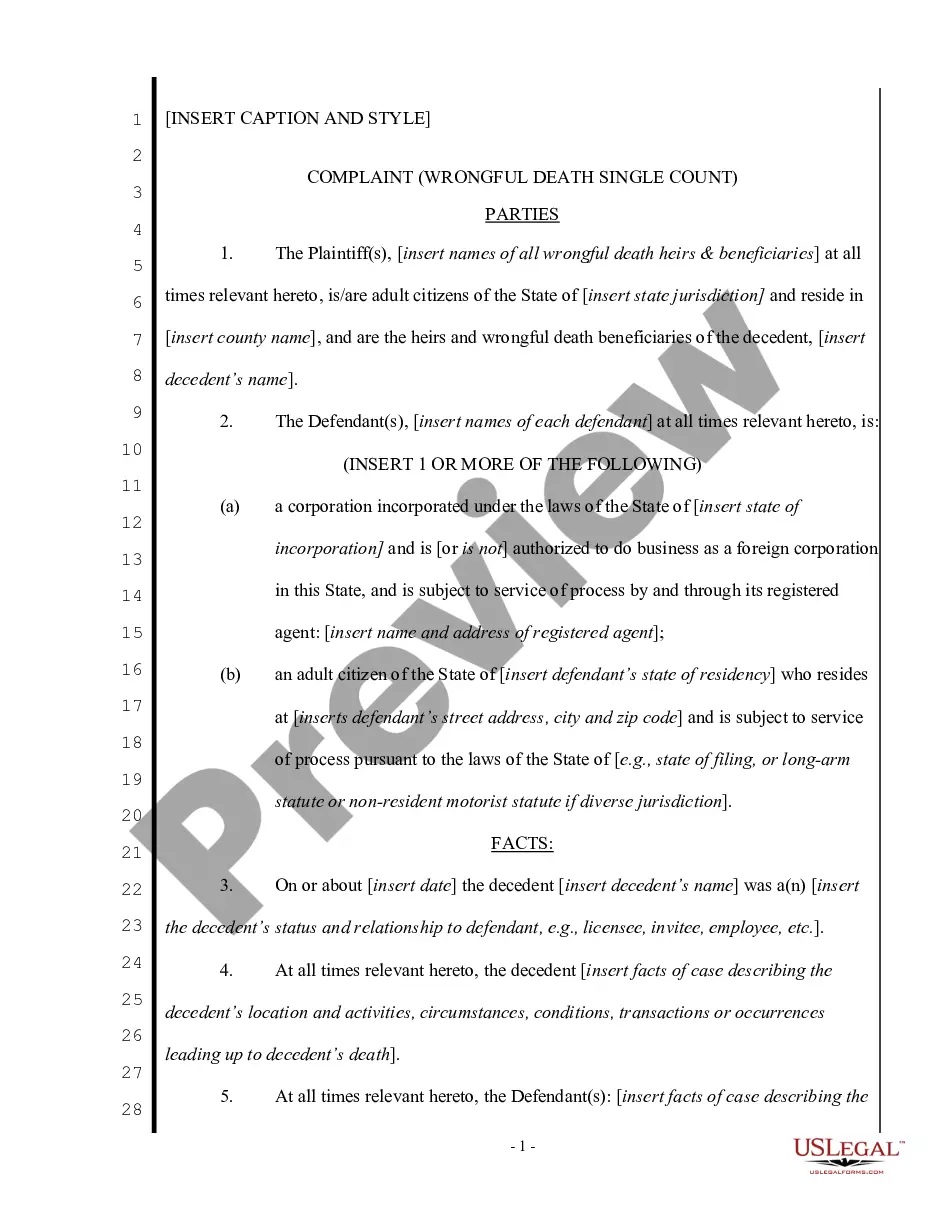
- Caption: Identifies the court and parties involved in the complaint.
- Statement of facts: Outlines the circumstances leading to the need for an administrator.
- Legal basis: Specifies the legal reasons supporting the request for an appointment.
- Relief sought: Clearly states the request to the court for appointment.
- Signature line: Provides space for the complainant's signature and date.


When to use this document
This form is used when an estate needs administration and there is no will or executor available to handle the estate affairs. It can be necessary in situations involving disputed wills, the sudden death of an individual, or cases where the previously appointed executor is unable or unwilling to serve. If you are facing such circumstances, filing a Complaint for Appointment of Administrator is an essential step to ensure estate matters are managed according to the law.
Who needs this form
This form is intended for:
- Individuals seeking to become an estate administrator in the absence of a will.
- Family members of the deceased who need to manage estate affairs.
- Legal representatives assisting clients with estate administration issues.
Instructions for completing this form
- Identify the parties involved, including the complainant and deceased.
- Provide a detailed statement of facts explaining the circumstances of the deceased's situation.
- Specify the legal grounds for requesting the appointment of an administrator.
- Clearly articulate the relief sought, including formal appointment requests.
- Sign and date the complaint, ensuring all required parties have completed their sections.
Notarization requirements for this form
Notarization is required for this form to take effect. Our online notarization service, powered by Notarize, lets you verify and sign documents remotely through an encrypted video session, available 24/7.
Get your form ready online
Our built-in tools help you complete, sign, share, and store your documents in one place.
Make edits, fill in missing information, and update formatting in US Legal Forms—just like you would in MS Word.
Download a copy, print it, send it by email, or mail it via USPS—whatever works best for your next step.
Sign and collect signatures with our SignNow integration. Send to multiple recipients, set reminders, and more. Go Premium to unlock E-Sign.
If this form requires notarization, complete it online through a secure video call—no need to meet a notary in person or wait for an appointment.
We protect your documents and personal data by following strict security and privacy standards.

Make edits, fill in missing information, and update formatting in US Legal Forms—just like you would in MS Word.

Download a copy, print it, send it by email, or mail it via USPS—whatever works best for your next step.

Sign and collect signatures with our SignNow integration. Send to multiple recipients, set reminders, and more. Go Premium to unlock E-Sign.

If this form requires notarization, complete it online through a secure video call—no need to meet a notary in person or wait for an appointment.

We protect your documents and personal data by following strict security and privacy standards.
Common mistakes to avoid
- Failing to include all necessary parties involved in the complaint.
- Omitting important details in the statement of facts.
- Not clearly stating the relief sought, leading to confusion in court.
- Submitting the form without necessary signatures or dates.
Benefits of completing this form online
- Convenient access to a comprehensive, attorney-drafted template.
- Editable format allows customization to suit individual circumstances.
- Quick download to initiate the legal process without delays.
Legal use & context
- The form initiates a legal process that must adhere to state probate laws.
- It is enforceable once filed correctly with the appropriate court.
- Failure to complete or file the form properly can delay estate administration.
Key takeaways
- The Complaint for Appointment of Administrator is essential for managing estates without wills.
- Understanding the form's components helps in preparing an effective complaint.
- Correct completion of the form plays a crucial role in facilitating estate administration.
Looking for another form?

Form popularity
FAQ
Those who are designated by the terms of a will or appointed by a court of probate to manage the assets and liabilities of the estate of the deceased. An administrator or administratrix is a person appointed by the court to administer the estate of someone who died without a will.
It usually takes about four to six weeks to appoint an administrator or executor of the estate. Once this is done, notice must be sent to all creditors of the estate. The creditors are given a minimum of four months to respond to this notice.
The simple answer is that once you have a grant of probate or letter of administration in hand, it usually takes between six and twelve months to transfer all the funds, assets and property in an estate.The Department for Work and Pensions needs to investigate the estate. The estate is bankrupt.
It is the executor's or the administrator's responsibility to collect and distribute the assets and to pay any death taxes and expenses of the decedent.
It is an administrator's job to gather all of the assets of the estate, pay the debts of the estate, and distribute the assets to the beneficiaries in accordance with the will or the laws of intestate succession.
The Executor is responsible for wrapping up the deceased person's affairs and distributing the assets to, or for the benefit of, the persons named in the will (beneficiaries). An Administrator is the person in charge of the estate when my someone dies without a Last Will and Testament.
Letters of Administration are granted by a Surrogate Court or probate registry to appoint appropriate people to deal with a deceased person's estate where property will pass under Intestacy Rules or where there are no executors living (and willing and able to act) having been validly appointed under the deceased's will
The difference between executor and administrator of estate in comes down to how the person came to be in charge of the estate. Someone who is appointed through the will of the person who died is called executor. Someone who is appointed because of any other reason is called administrator.
). The administrator usually is the spouse, domestic partner, or close relative of the dead person. ). The case must be filed in the county where the person who died lived (or if the person lived outside of California, in the California county where that person owned property).