Mississippi Interrogatories
Understanding this form
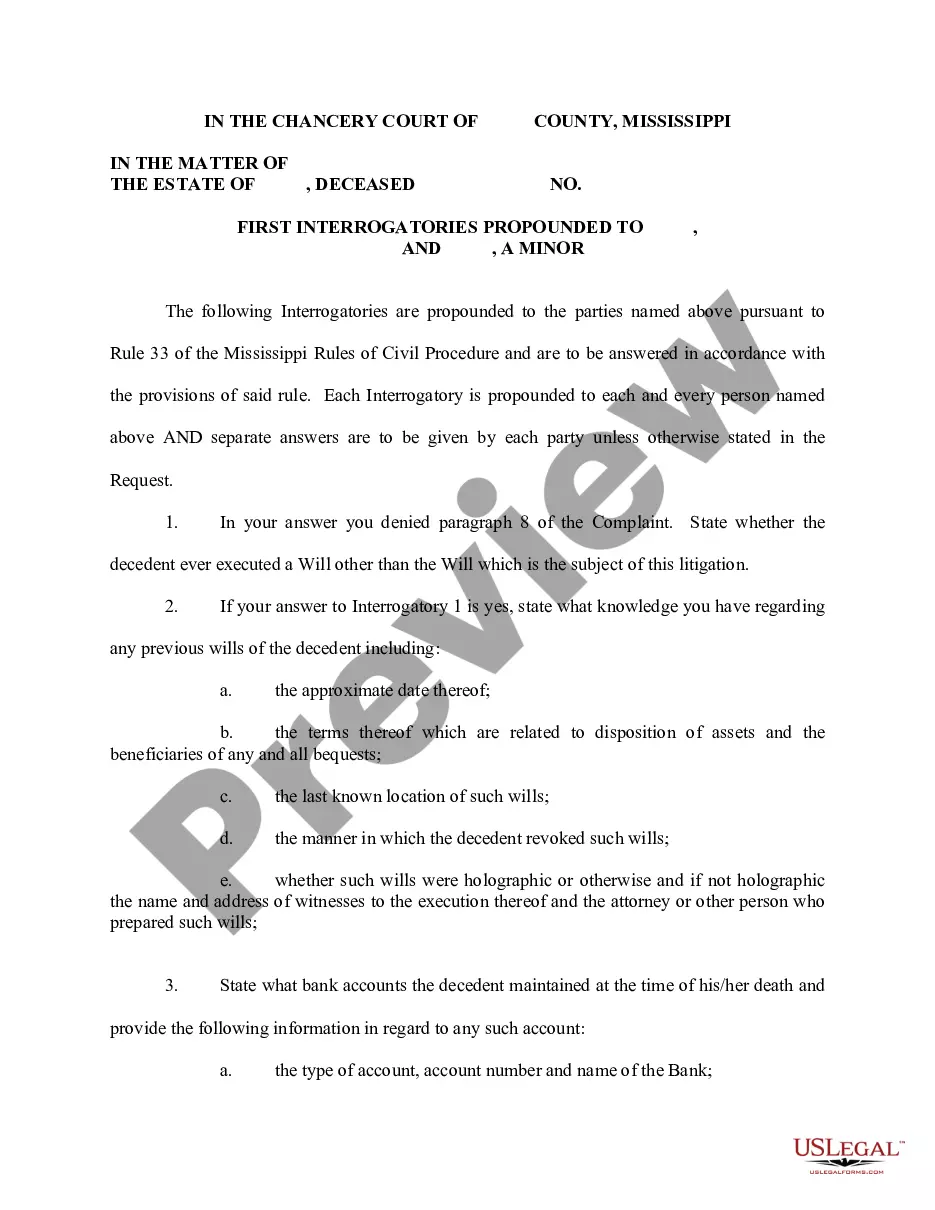
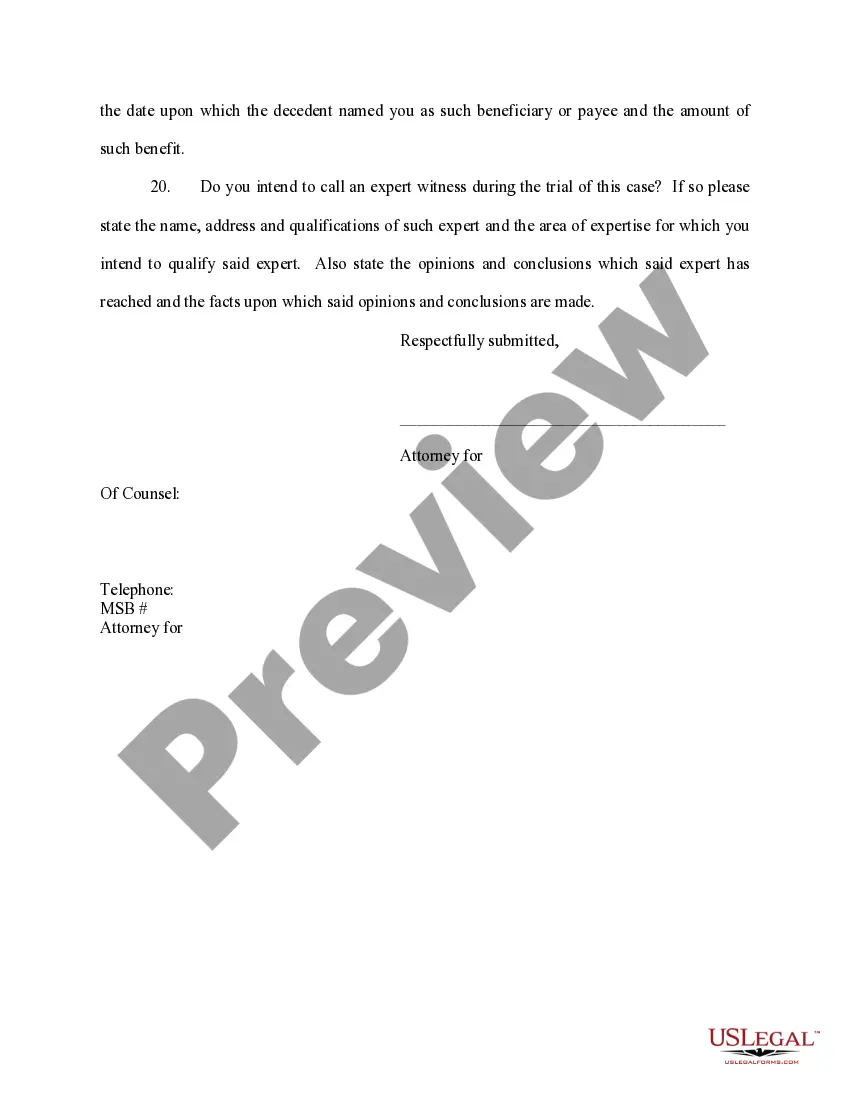
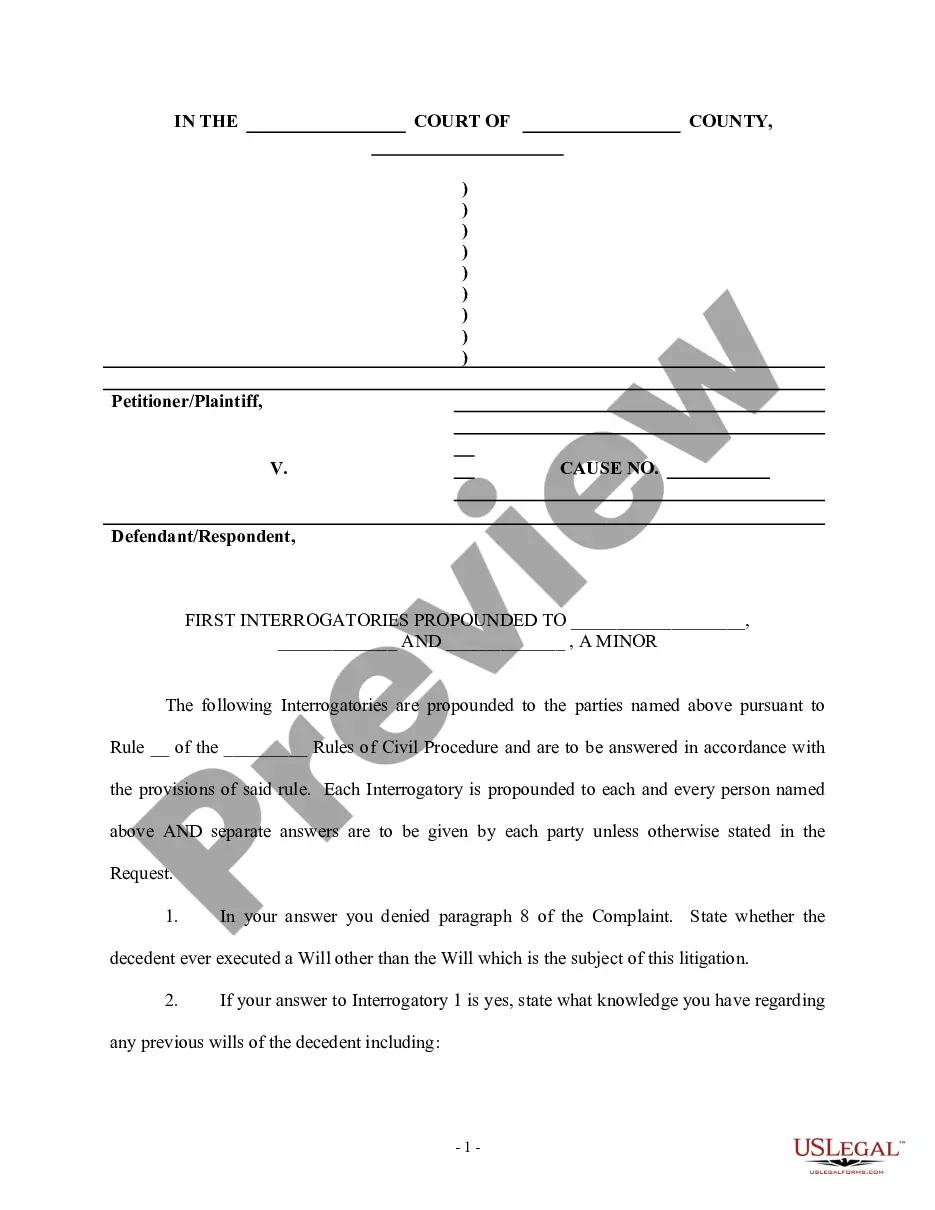
Interrogatories are written questions directed at a party involved in a lawsuit, used during the discovery process. This form allows one party to gather information and clarify issues relevant to the case. Interrogatories help in understanding the other party's position, facilitating preparation for trial. Unlike other forms, such as depositions, which involve oral questioning, interrogatories are completed in writing and require thoughtful and detailed responses.
Main sections of this form
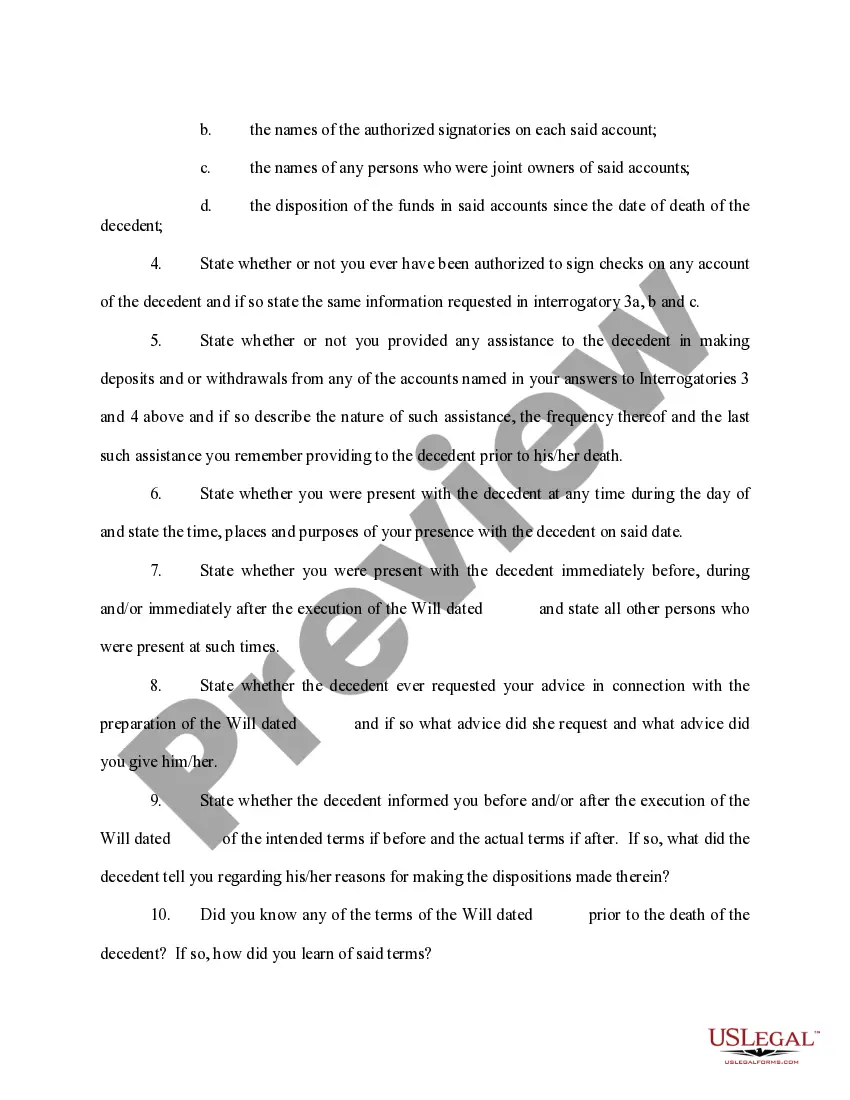
- Questions about the decedent's will and any prior wills, including their terms and locations.
- Inquiry on bank accounts held by the decedent, including account types and signatories.
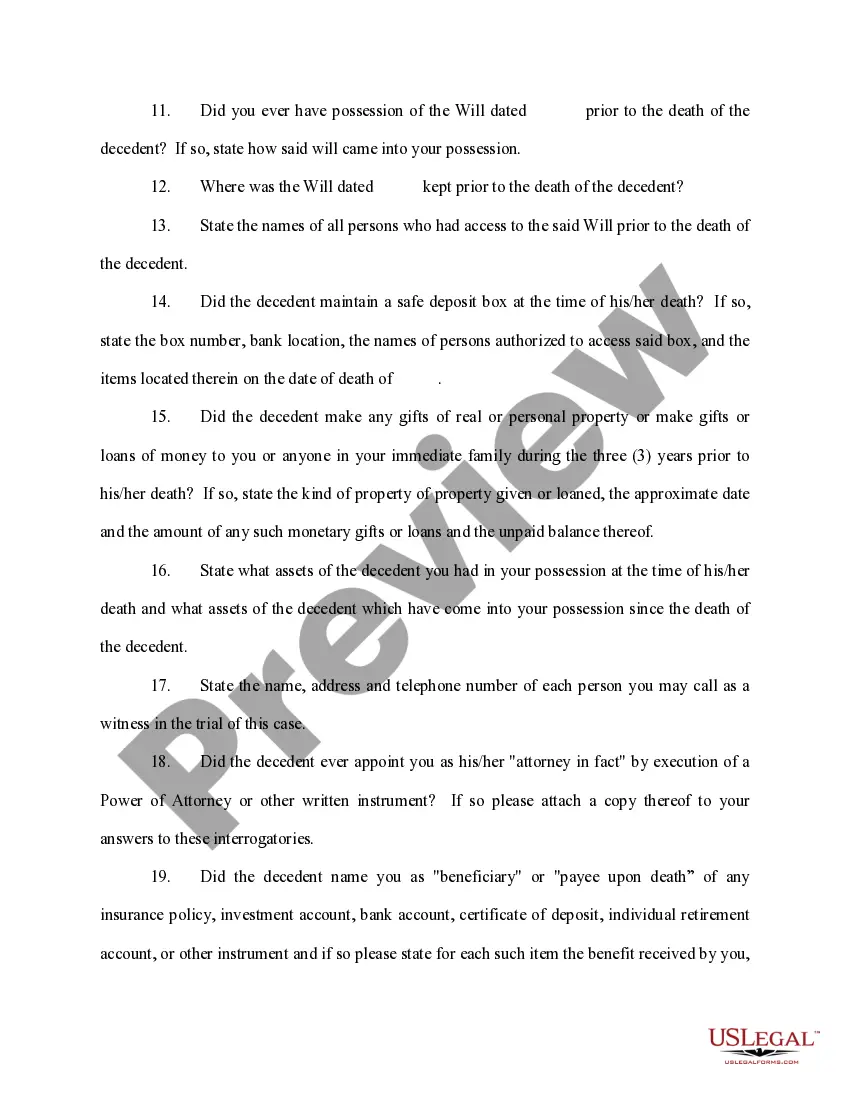
- Questions regarding gifts or loans made by the decedent within the last three years.
- Requests for information about witnesses and their contact details for the trial.
- Clarification on any Power of Attorney relationship with the decedent.

Common use cases
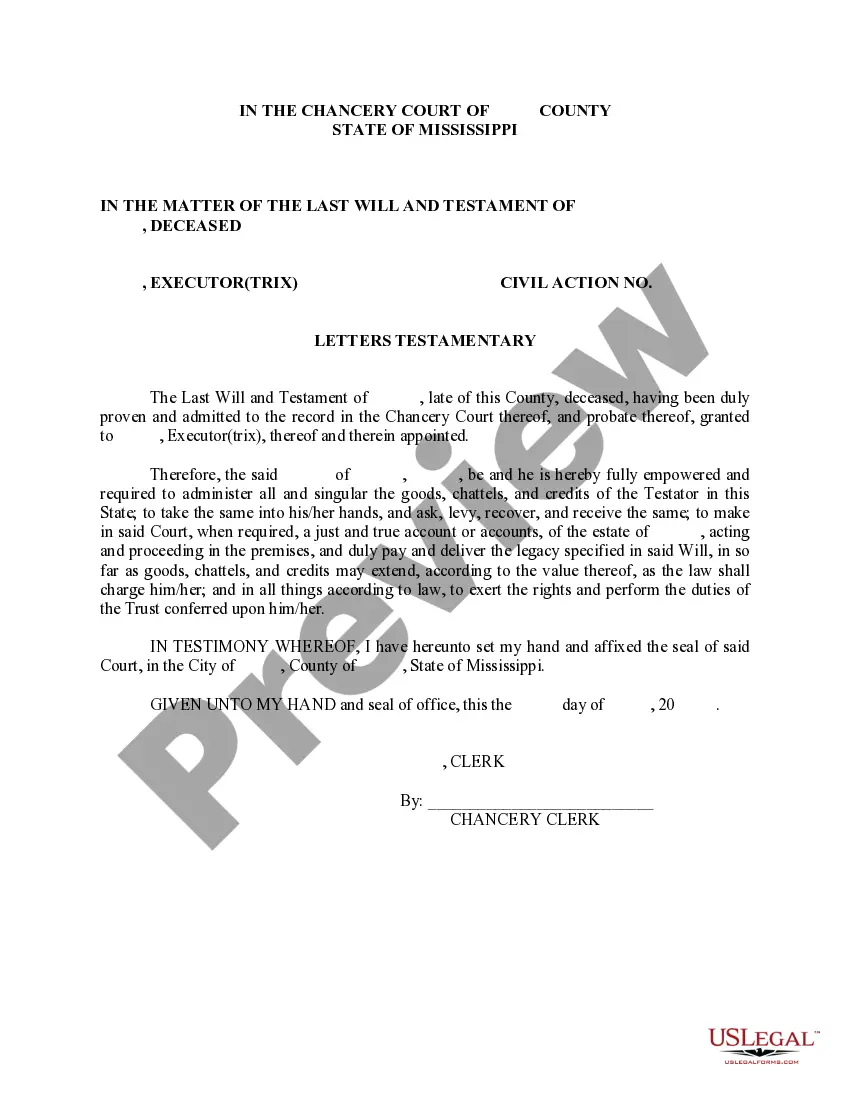
This form is essential in situations involving estate disputes, will contests, or when the assets of a deceased person are in question. Use it when you need to clarify the details of the decedentâs financial accounts, previous wills, or to understand potential claims against the estate. It ensures both parties share their knowledge under oath, promoting transparency in the legal proceedings.
Who can use this document
- Individuals engaged in a lawsuit concerning a decedent's estate.
- Parties seeking information about a decedentâs previous will or testamentary documents.
- Attorneys representing clients in estate-related legal matters.
- Beneficiaries or potential beneficiaries of the decedent's estate.
How to complete this form
- Identify the parties involved as named in the complaint.
- Respond to each interrogatory with accurate and complete information, being mindful of any time constraints for responses.
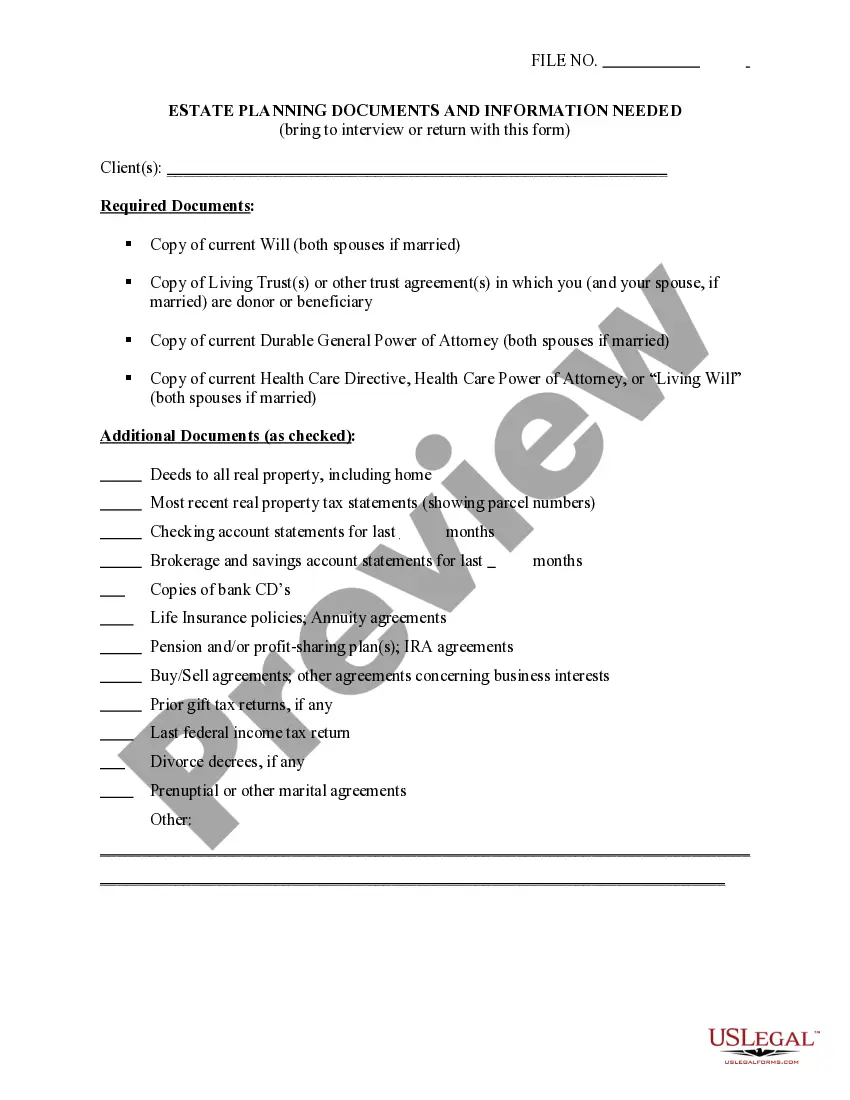
- Gather necessary documentation, such as prior wills, financial records, and information about gifts made by the decedent.
- Ensure all answers are signed and dated by the responding party.
- File the completed interrogatories with the court and serve copies to the opposing party, maintaining compliance with local rules.
Notarization requirements for this form
This form does not typically require notarization unless specified by local law. However, verifying local requirements is essential to ensure compliance.
Get your form ready online
Our built-in tools help you complete, sign, share, and store your documents in one place.
Make edits, fill in missing information, and update formatting in US Legal Forms—just like you would in MS Word.
Download a copy, print it, send it by email, or mail it via USPS—whatever works best for your next step.
Sign and collect signatures with our SignNow integration. Send to multiple recipients, set reminders, and more. Go Premium to unlock E-Sign.
If this form requires notarization, complete it online through a secure video call—no need to meet a notary in person or wait for an appointment.
We protect your documents and personal data by following strict security and privacy standards.

Make edits, fill in missing information, and update formatting in US Legal Forms—just like you would in MS Word.

Download a copy, print it, send it by email, or mail it via USPS—whatever works best for your next step.

Sign and collect signatures with our SignNow integration. Send to multiple recipients, set reminders, and more. Go Premium to unlock E-Sign.

If this form requires notarization, complete it online through a secure video call—no need to meet a notary in person or wait for an appointment.

We protect your documents and personal data by following strict security and privacy standards.
Common mistakes
- Failing to answer all interrogatories completely, which can lead to legal penalties.
- Not adhering to the specified time limits for responding to the interrogatories.
- Providing incomplete or inaccurate information that may affect the case outcome.
- Neglecting to sign and date the responses, which can render them invalid.
Advantages of online completion
- Convenient access to legal documents that can be downloaded and completed at your own pace.
- Editability allows for quick adjustments to fit specific circumstances or legal requirements.
- Reliable legal templates drafted by licensed attorneys ensure compliance with current laws.
What to keep in mind
- Interrogatories are crucial for gathering information in legal disputes.
- Ensure all responses are thorough and submitted on time to avoid penalties.
- Adapt the form to meet state-specific requirements, particularly in Mississippi.
Looking for another form?

Form popularity
FAQ
Motions to Compel If a party doesn't respond to interrogatories or requests for production, then the party seeking those answers must file a motion to compel with the court. If the court grants the motion to compel, then the party who objected or failed to answer must then do so.
You can object to an interrogatory if the information sought is known by the requesting party or available to both parties equally. For example, you should raise this objection if the answers are publicly available or in a third-party's custody or control.
Motions to Compel If a party doesn't respond to interrogatories or requests for production, then the party seeking those answers must file a motion to compel with the court. If the court grants the motion to compel, then the party who objected or failed to answer must then do so.
The number of questions included in an interrogatory is usually limited by court rule. For example, under the Federal Rules of Civil Procedure, each party may only ask each other party 25 questions via interrogatory unless the court gives permission to ask more.
(1) Number. Unless otherwise stipulated or ordered by the court, a party may serve on any other party no more than 25 written interrogatories, including all discrete subparts. Leave to serve additional interrogatories may be granted to the extent consistent with Rule 26(b)(1) and (2).
So, can you refuse to answer interrogatories? The answer is, no, you may not. You must answer a Rule 33 interrogatory within 30 days of being served with it. That answer must either permit inspection of the requested information or object to the production of the information for a specific reason.
You must answer each interrogatory separately and fully in writing under oath, unless you object to it. You must explain why you object. You must sign your answers and objections.
In most cases, a deponent cannot refuse to answer a question at a deposition unless the answer would reveal privileged or irrelevant private information or the court previously ordered that the information cannot be revealed (source). However, there are certain types of questions that do not have to be answered.
An interrogatory is part of the discovery process before the trial.The interrogatory is considered to be conducted under oath. Any information provided on it will be seriously reviewed by the court and the lawyers involved. Your lawyer can ask any question that he or she wants on the form.