Mississippi Order Dismissing Case
What this document covers
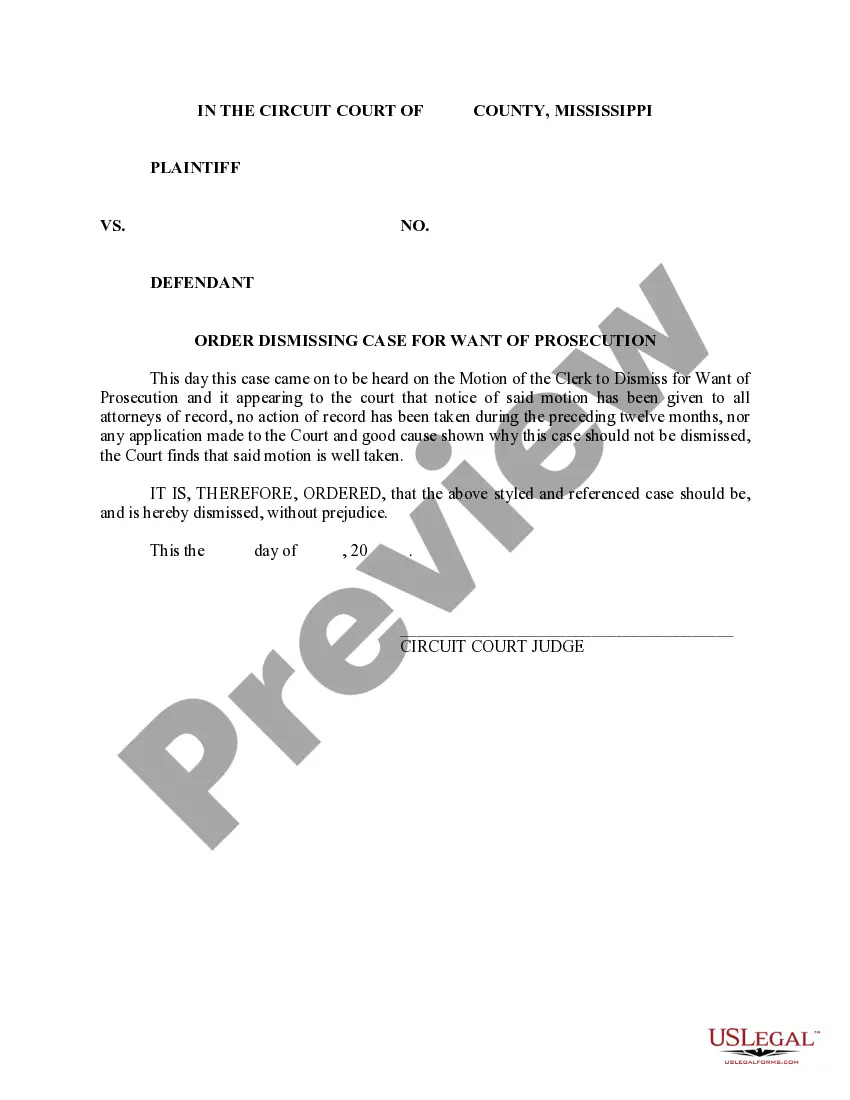
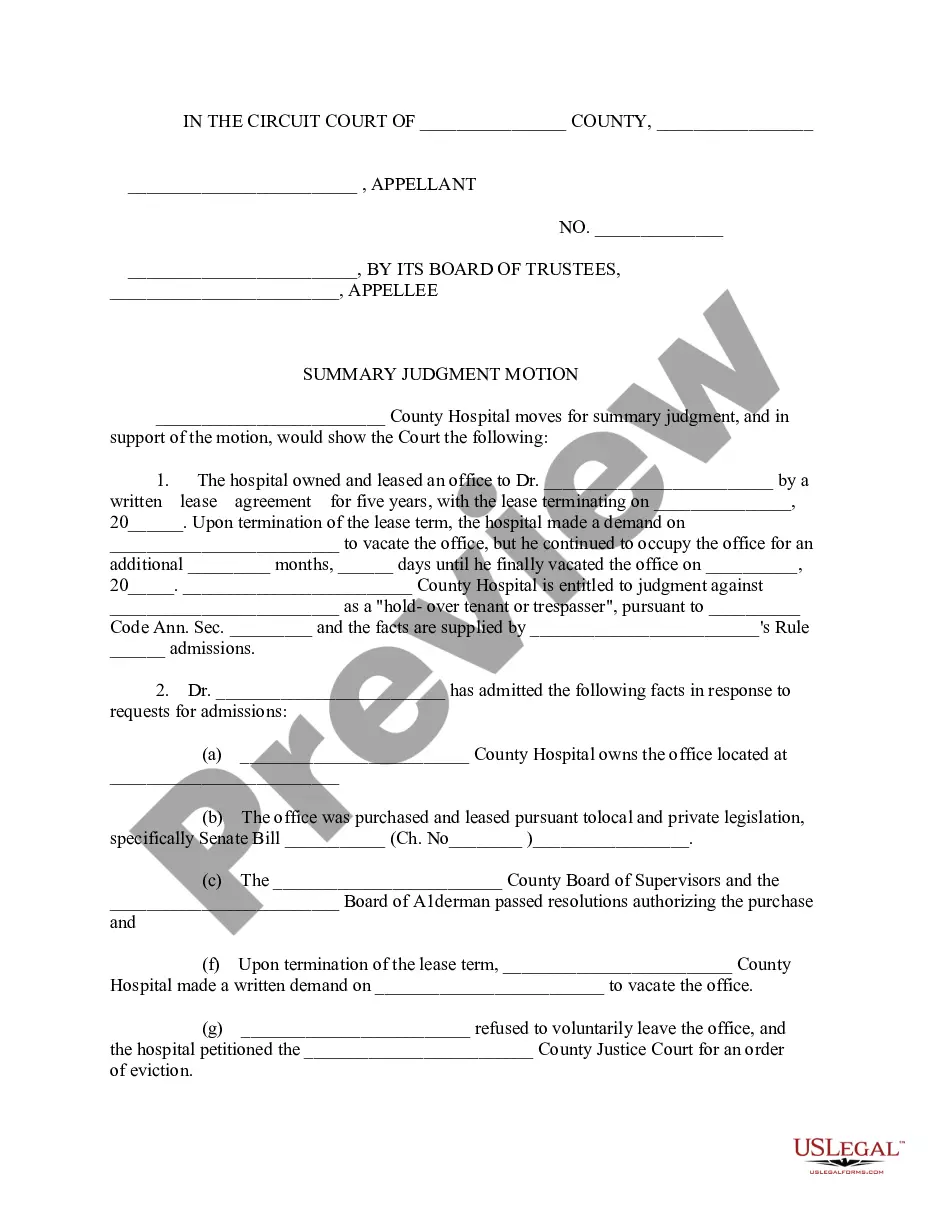
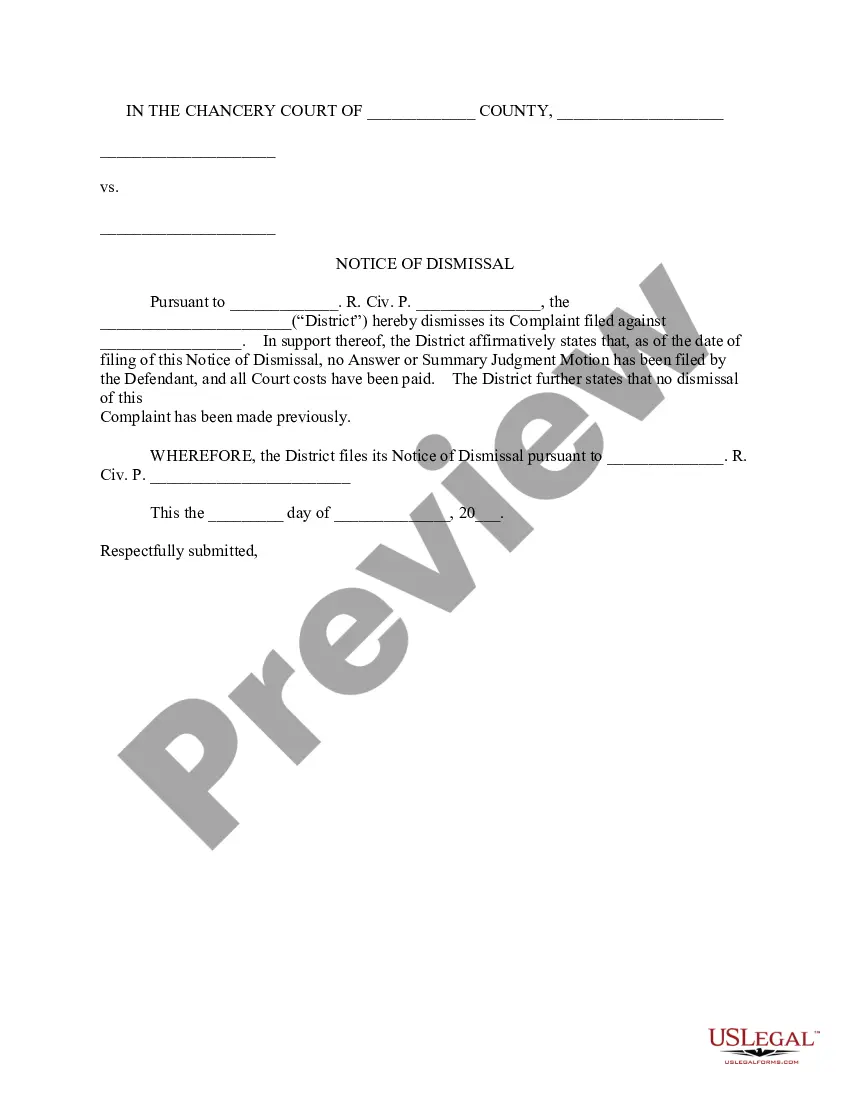
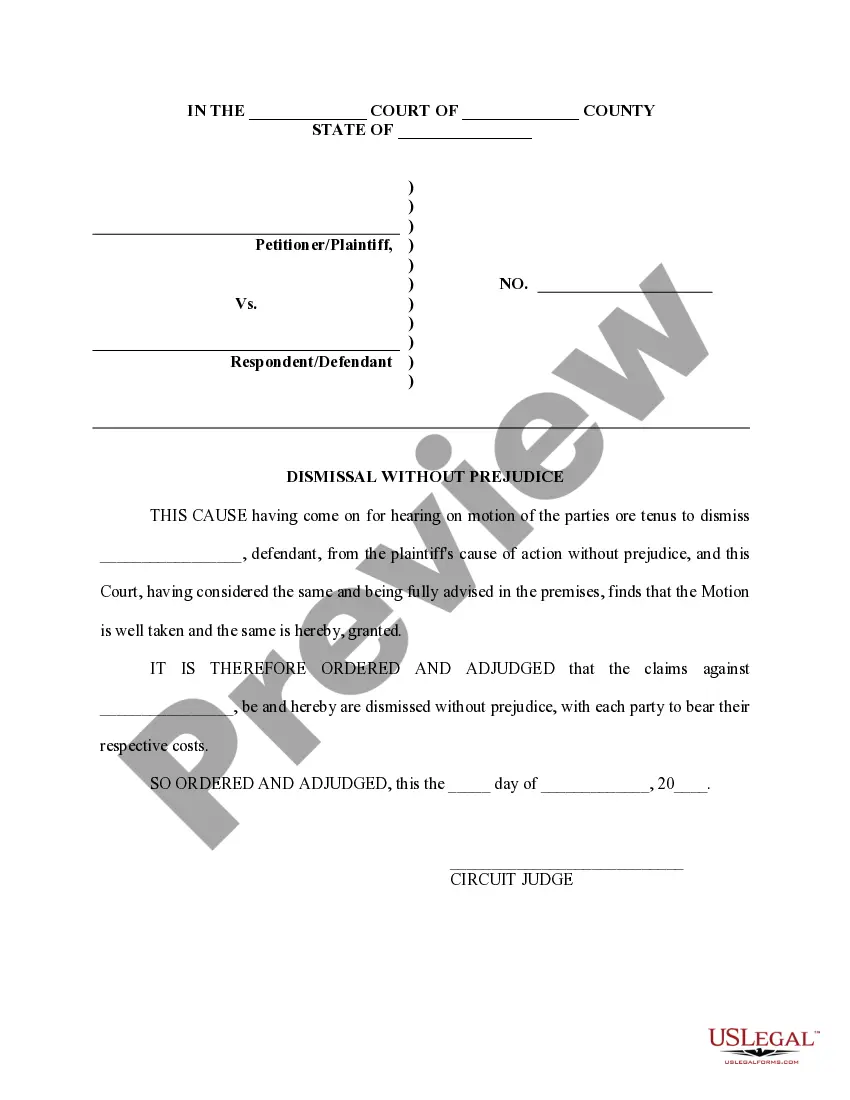
The Order Dismissing Case is a legal document issued by a court to officially terminate a case without prejudice, meaning the case may be refiled in the future. This form serves as a directive from the judge, commanding the dismissal of a case and is essential for parties seeking to conclude litigation amicably. It is important to differentiate this form from other dismissal orders, as it specifically focuses on voluntary or agreed dismissals without prejudice.
Key parts of this document
- Case caption: Identifies the title of the case and the parties involved.
- Order statement: Clearly indicates that the case is dismissed without prejudice.
- Judge's signature: Must be signed by the presiding judge to be valid.
Common use cases
This form is used when a party wants to officially dismiss a case they have filed in court. Scenarios include reaching a settlement with the opposing party, voluntarily withdrawing a claim, or when the parties agree that continuing the case is not in their best interest. It is also applicable when issues arise that make it impractical to pursue the case further.
Who this form is for
- Individuals or entities who are parties to a legal case.
- Attorneys representing clients looking to withdraw their claims.
- Any party seeking to officially dismiss a case without prejudice.
Completing this form step by step
- Identify the case: Fill in the names of the parties involved and the case number at the top of the form.
- Specify the order: State that the case is being dismissed without prejudice in the relevant section.
- Sign the form: Obtain the judge's signature, which is necessary for the order to take effect.
Does this form need to be notarized?
This form does not typically require notarization unless specified by local law. Ensure compliance with local regulations to confirm any additional requirements.
Get your form ready online
Our built-in tools help you complete, sign, share, and store your documents in one place.
Make edits, fill in missing information, and update formatting in US Legal Forms—just like you would in MS Word.
Download a copy, print it, send it by email, or mail it via USPS—whatever works best for your next step.
Sign and collect signatures with our SignNow integration. Send to multiple recipients, set reminders, and more. Go Premium to unlock E-Sign.
If this form requires notarization, complete it online through a secure video call—no need to meet a notary in person or wait for an appointment.
We protect your documents and personal data by following strict security and privacy standards.

Make edits, fill in missing information, and update formatting in US Legal Forms—just like you would in MS Word.

Download a copy, print it, send it by email, or mail it via USPS—whatever works best for your next step.

Sign and collect signatures with our SignNow integration. Send to multiple recipients, set reminders, and more. Go Premium to unlock E-Sign.

If this form requires notarization, complete it online through a secure video call—no need to meet a notary in person or wait for an appointment.

We protect your documents and personal data by following strict security and privacy standards.
Typical mistakes to avoid
- Failing to sign the document or missing the judge's signature.
- Using incorrect case information, which can lead to dismissal issues.
- Not specifying "without prejudice," which is essential for allowing re-filing.
Why complete this form online
- Convenience of downloading and filling out the form from anywhere.
- Editability allows for customization to fit specific case details.
- Reliability, as templates are drafted by licensed attorneys.
Quick recap
- The Order Dismissing Case ends court proceedings without prejudice.
- Use this form if you wish to dismiss a case but retain the option to refile.
- Be sure to include all necessary information, including the judge's signature.
- Consult your stateâs rules to ensure compliance with local requirements.
Looking for another form?





Form popularity
FAQ
If you file an lawsuit and you decide you do not want to move forward, you can ask the court to dismiss the case. The person you sued paid you the money he or she owed you.You cannot find the defendant to serve him or her, but want to reserve the right to sue at a later date.
A dismissed case means that a lawsuit is closed with no finding of guilt and no conviction for the defendant in a criminal case by a court of law. Even though the defendant was not convicted, a dismissed case does not prove that the defendant is factually innocent for the crime for which he or she was arrested.
After a dismissal, the plea or verdict will be removed, and the conviction will appear as dismissed in the interests of justice.For example, your conviction can still count against you as a prior if you are facing additional criminal charges.
A dismissed case means that a lawsuit is closed with no finding of guilt and no conviction for the defendant in a criminal case by a court of law. Even though the defendant was not convicted, a dismissed case does not prove that the defendant is factually innocent for the crime for which he or she was arrested.
If the defendant's argument proves you do not have a valid claim, the lawsuit could be dismissed. This is called a directed verdict. You missed the statute of limitations or another deadline.
The court may dismiss a case in response to a defendant's motion to dismiss or do so sua sponte. According to FRCP 41(a), a plaintiff may also voluntarily dismiss an action by choosing to drop the case or by reaching an out of court settlement with the defendant.
It means the case was dismissed, either because plaintiff dismissed it or plaintiff didn't show up for the trial.
WHAT IS A DISMISSED CASE? A dismissed criminal case is one in which you were not convicted. When a criminal charge is dismissed, you are not guilty and the case is concluded.
Technically, prosecutors can drop charges before you appear in court if they find that the case does not have any merits or if they realize someone else committed the crime but prosecutors will typically not accept phone calls from defense attorneys or defendants asking to drop the charges until after you've already