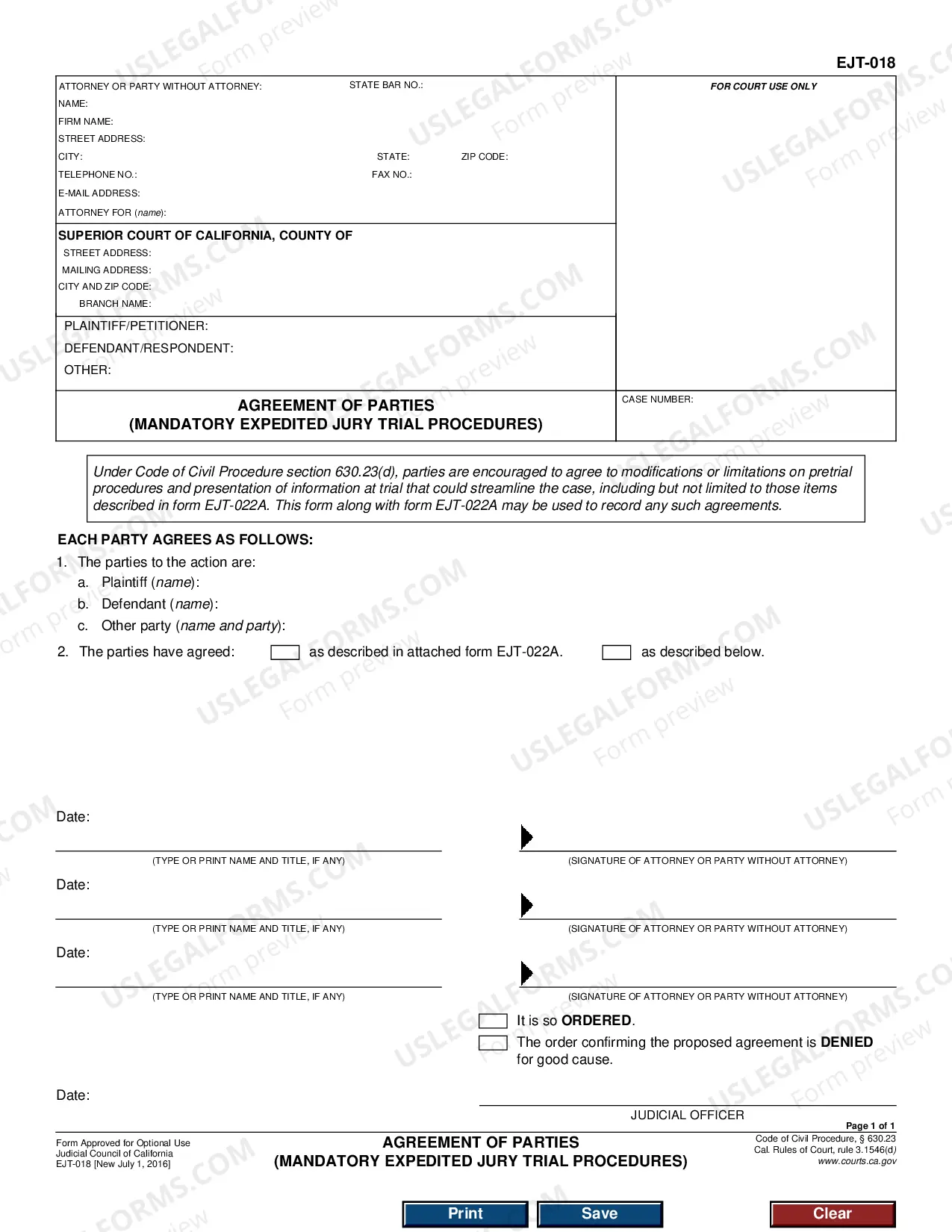
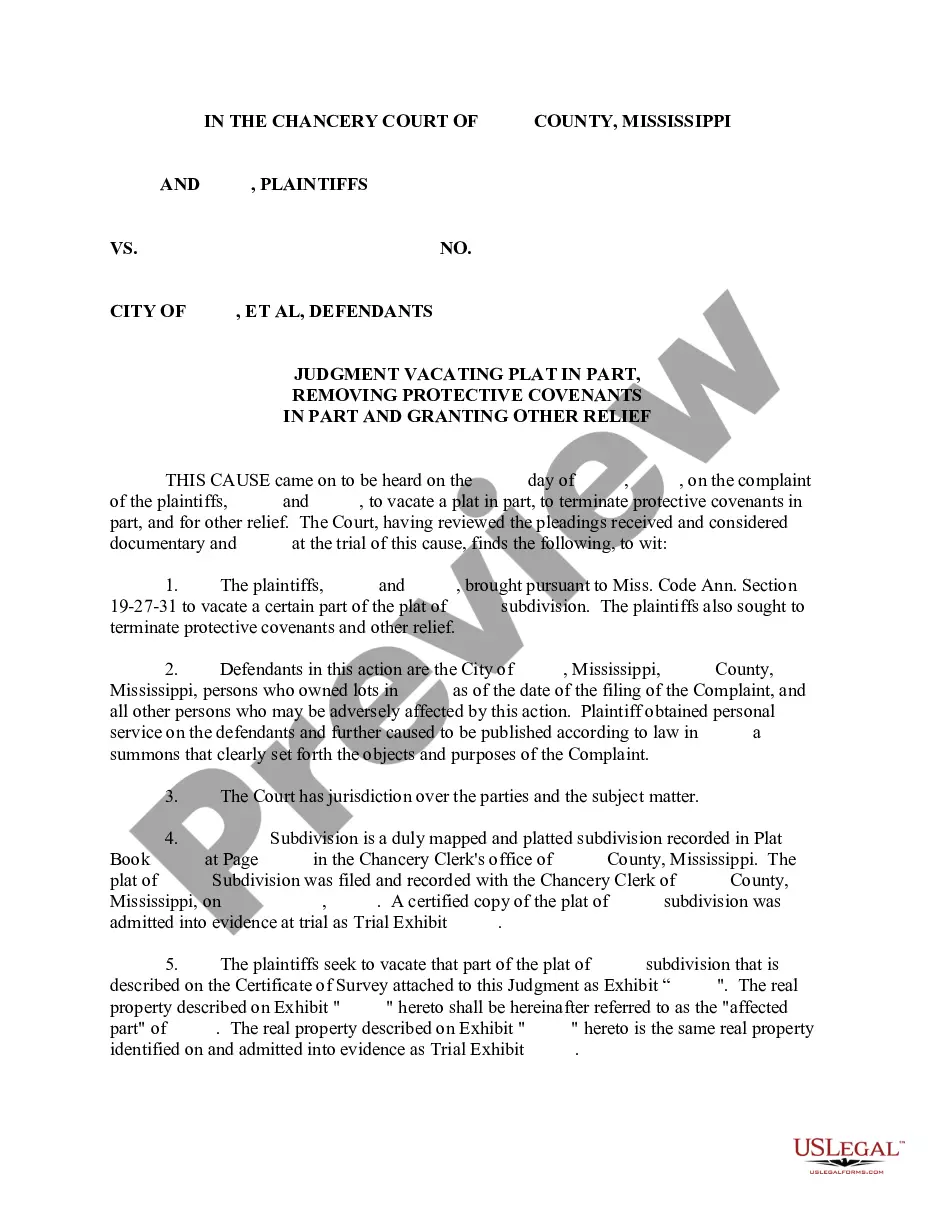
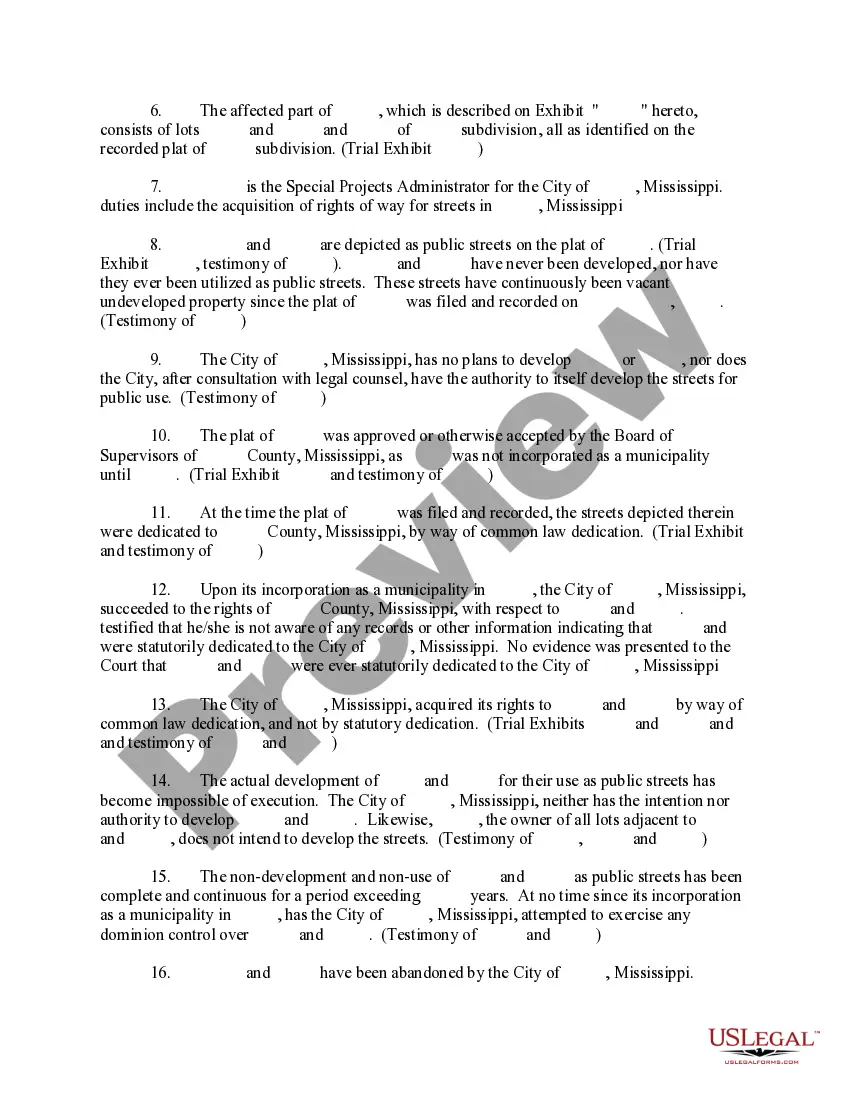
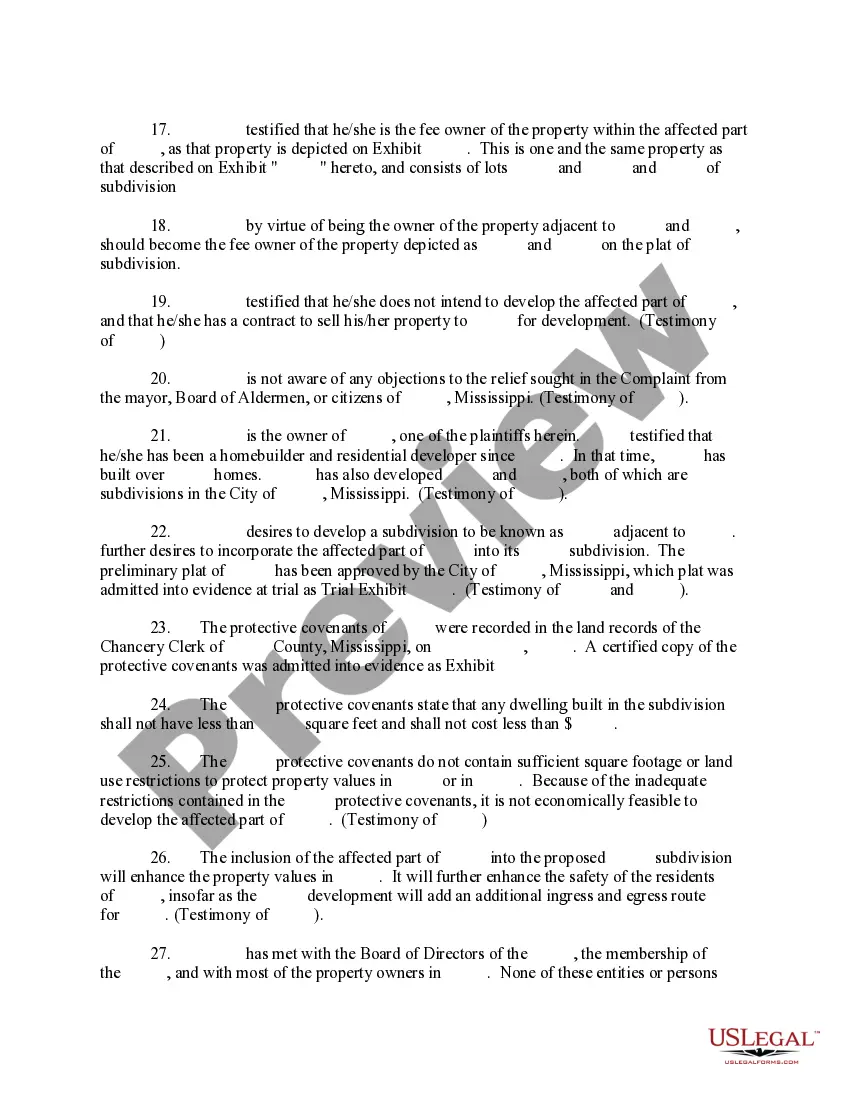
Mississippi Judgment Vacating Plat in Part, Removing Protective Covenants in Part, and Granting Other Relief
About this form
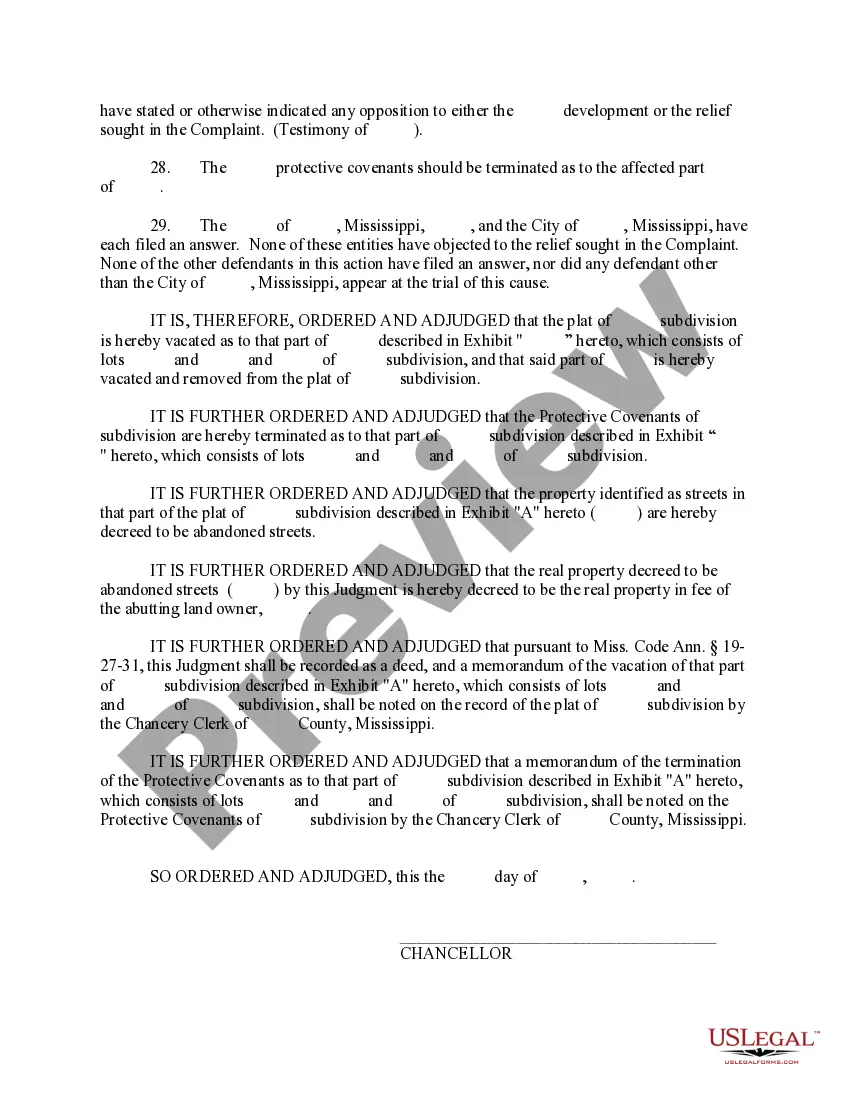
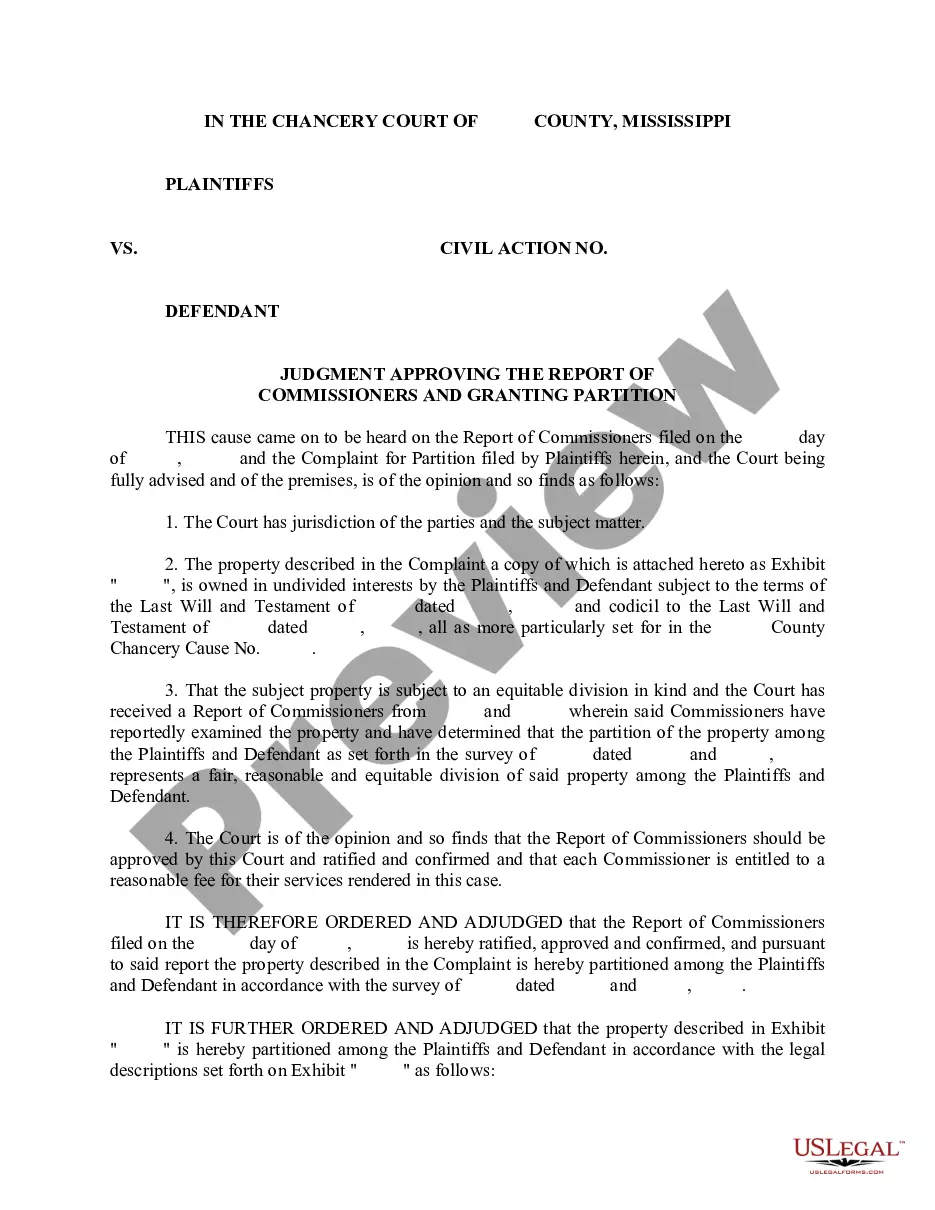
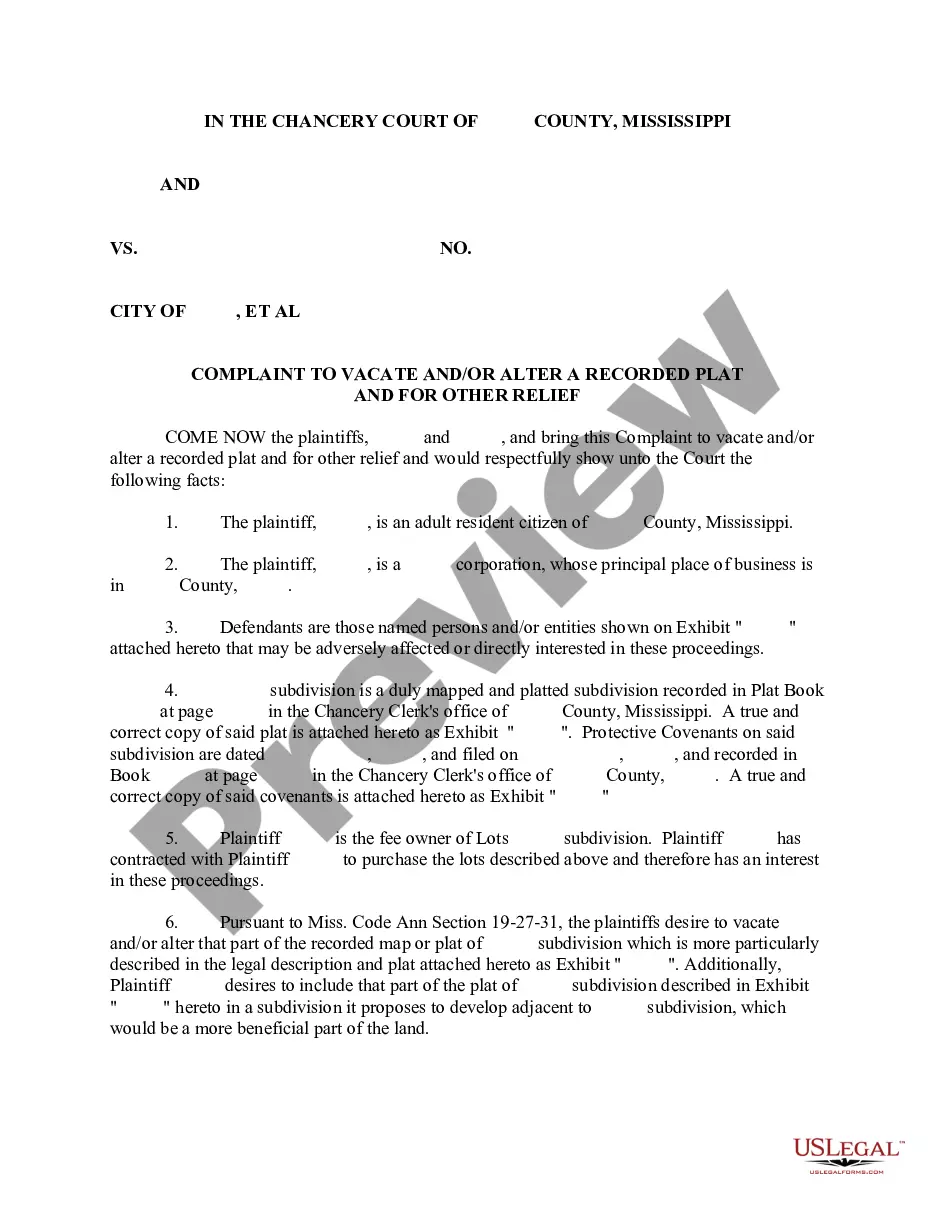
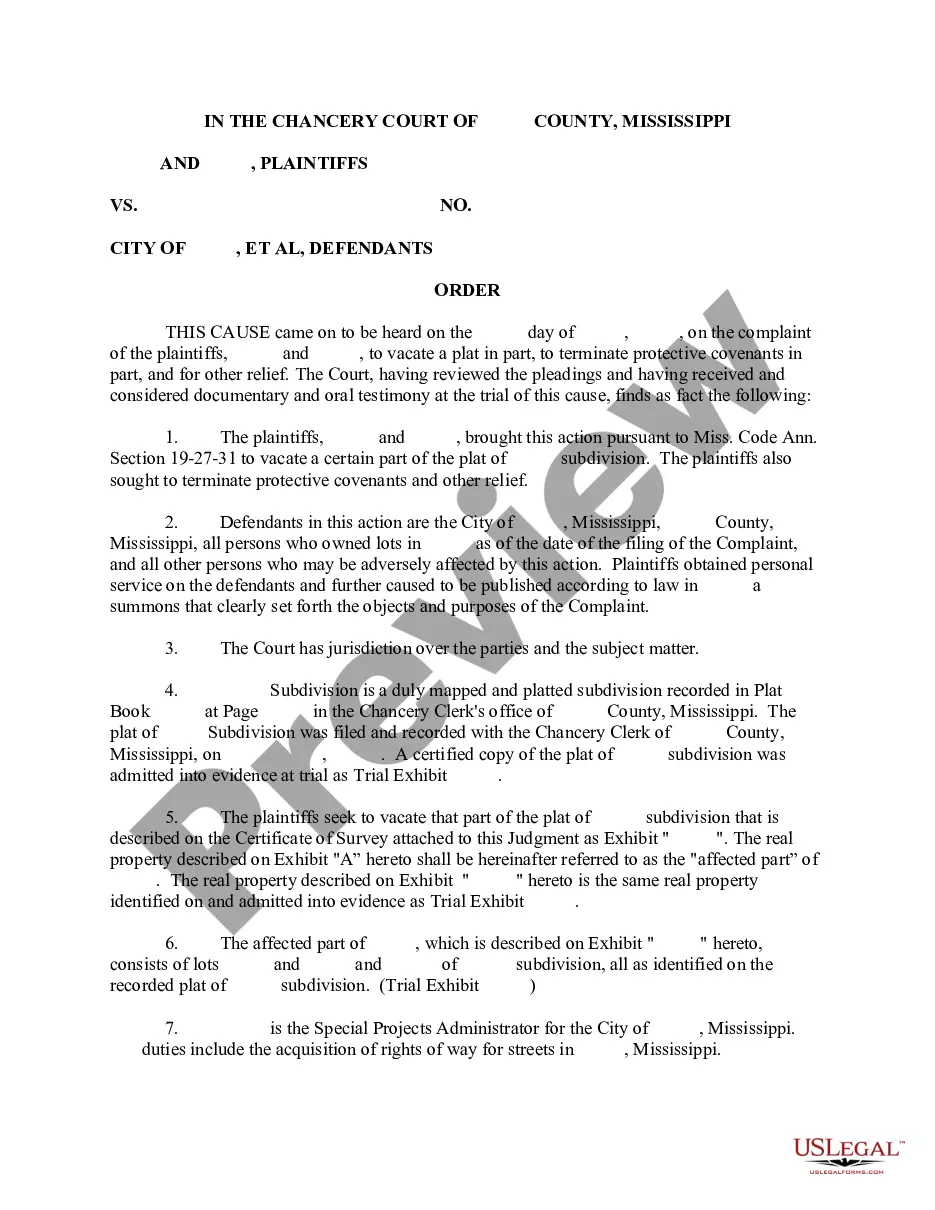
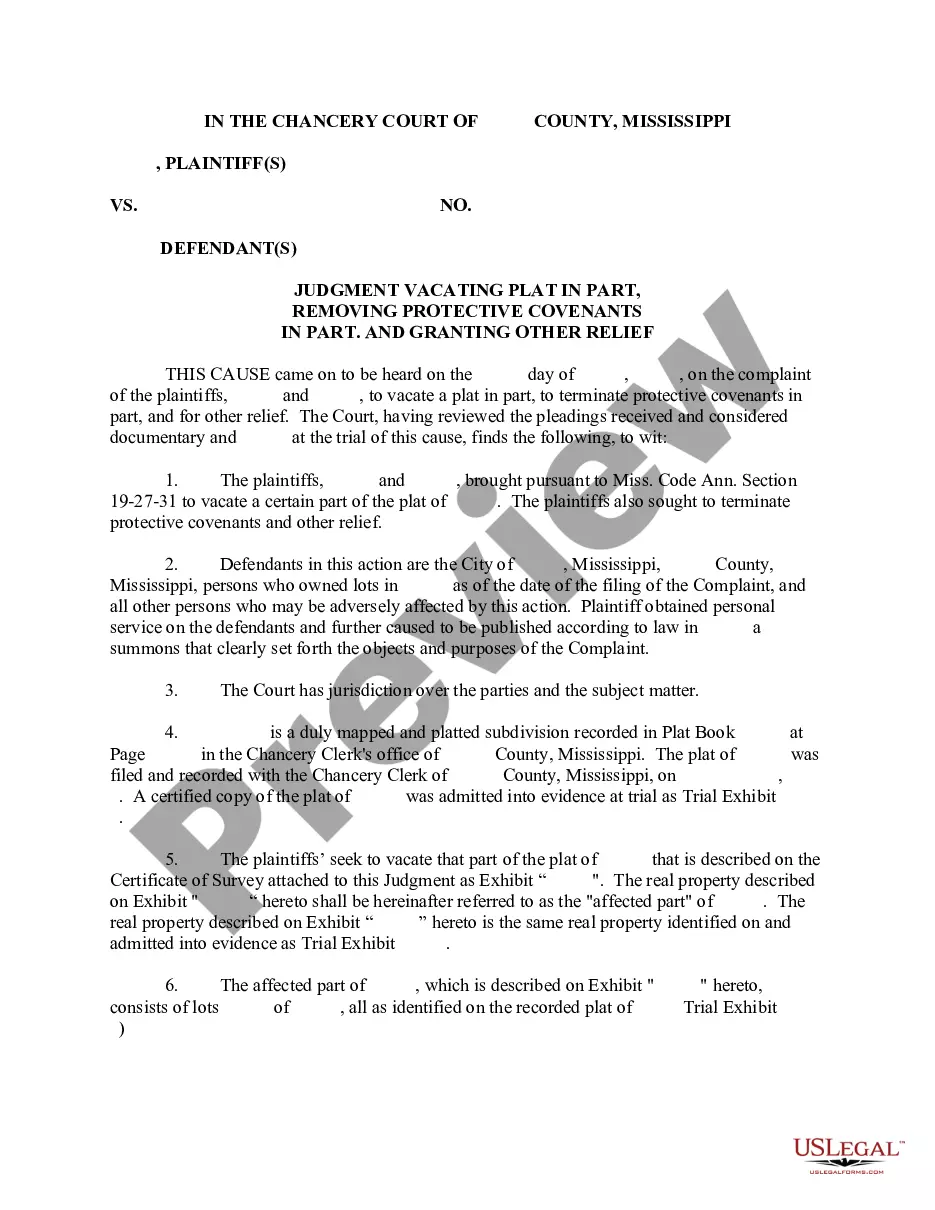
The Judgment Vacating Plat in Part, Removing Protective Covenants in Part, and Granting Other Relief is a legal form used to modify or nullify certain aspects of a court judgment. This form allows parties to formally request the removal of protective covenants from a judgment while addressing other relief deemed necessary. Unlike other judgment forms, this one is specifically tailored for situations where only part of the judgment is contested or needs alteration, providing a focused approach to legal relief.
Form components explained
- Caption: Identifies the case, court, and parties involved.
- Judgment Specifications: Details the specific aspects of the judgment being vacated or modified.
- Relief Requested: Specifies the additional relief being sought beyond the removal of covenants.
- Judge's Signature: A space for the judge to sign, which legitimizes the judgment.
When to use this form
This form should be used in scenarios where a party wishes to challenge parts of a court judgment, particularly when protective covenants may be overly restrictive or unnecessary. It is often applicable in real estate disputes where restrictions on property use are contested. Additionally, this form can be utilized when a court's previous ruling needs to be modified for clarity or balance.
Who needs this form
- Property owners seeking to remove restrictive conditions on their property.
- Individuals or entities involved in litigation who need to adjust prior judgments.
- Legal representatives working on behalf of clients in court cases where judgments are being vacated or modified.
How to complete this form
- Identify the parties involved by entering their names and contact information in the caption section.
- Clearly outline the specific judgment sections that are being vacated in the judgment specifications portion.
- Articulate any additional relief sought, ensuring clarity in your requests.
- Leave space for the judge to sign the document once completed.
- Review the entire form for accuracy and completeness before submission to the court.
Is notarization required?
To make this form legally binding, it must be notarized. Our online notarization service, powered by Notarize, lets you verify and sign documents remotely through an encrypted video session.
Get your form ready online
Our built-in tools help you complete, sign, share, and store your documents in one place.
Make edits, fill in missing information, and update formatting in US Legal Forms—just like you would in MS Word.
Download a copy, print it, send it by email, or mail it via USPS—whatever works best for your next step.
Sign and collect signatures with our SignNow integration. Send to multiple recipients, set reminders, and more. Go Premium to unlock E-Sign.
If this form requires notarization, complete it online through a secure video call—no need to meet a notary in person or wait for an appointment.
We protect your documents and personal data by following strict security and privacy standards.

Make edits, fill in missing information, and update formatting in US Legal Forms—just like you would in MS Word.

Download a copy, print it, send it by email, or mail it via USPS—whatever works best for your next step.

Sign and collect signatures with our SignNow integration. Send to multiple recipients, set reminders, and more. Go Premium to unlock E-Sign.

If this form requires notarization, complete it online through a secure video call—no need to meet a notary in person or wait for an appointment.

We protect your documents and personal data by following strict security and privacy standards.
Common mistakes to avoid
- Failing to properly specify which aspects of the judgment are being vacated.
- Not providing sufficient justification for the relief requested.
- Overlooking local court rules regarding formatting and submission procedures.
Why use this form online
- Convenience: Easily download and complete the form from anywhere.
- Editability: Make necessary changes before finalizing and submitting.
- Reliability: Ensure access to forms crafted by licensed attorneys.
Looking for another form?


Form popularity
FAQ
Unlike most credit report entries, judgments can be successfully removed well before seven years has passed, but it's going to take some work and luck on your part.
The short answer is yes, in most cases a court judgement can be removed from a credit file.By signing this document the plaintiff is agreeing to formally discontinue their action, not an unreasonable request if the judgement is paid or the defendant can settle the debt.
In order to vacate a judgment in California, You must file a motion with the court asking the judge to vacate or set aside the judgment. Among other things, you must tell the judge why you did not respond to the lawsuit (this can be done by written declaration).You may even be able to win the case.
In most cases, judgments can stay on your credit reports for up to seven years. This means that the judgment will continue to have a negative effect on your credit score for a period of seven years. In some states, judgments can stay on as long as ten years, or indefinitely if they remain unpaid.
California allows the judgment to last ten years and it can be renewed for an additional ten years if the creditor files the required forms in a timely fashion.
If you pay the full amount owed before that time, the judgment will be removed from your credit report as soon as the credit bureau receives either proof of payment from the credit provider or a valid court order rescinding the judgment.
A judgment is public information and remains on your credit report for 5 years or until the judgment is rescinded by a court or paid in full.
The first step, which you should take is to obtain a copy of your credit report from MyCreditStatus.co.za. Then you will have to contact the attorneys, which listed the judgements against you.
Prescribed debt refers to the debt that has not been recognised by the creditor or been paid towards for more than 36 months. This is considered old debt by creditors and may then be written off.