Mississippi Response to Motion to Quash - Plaintiff's
What this document covers
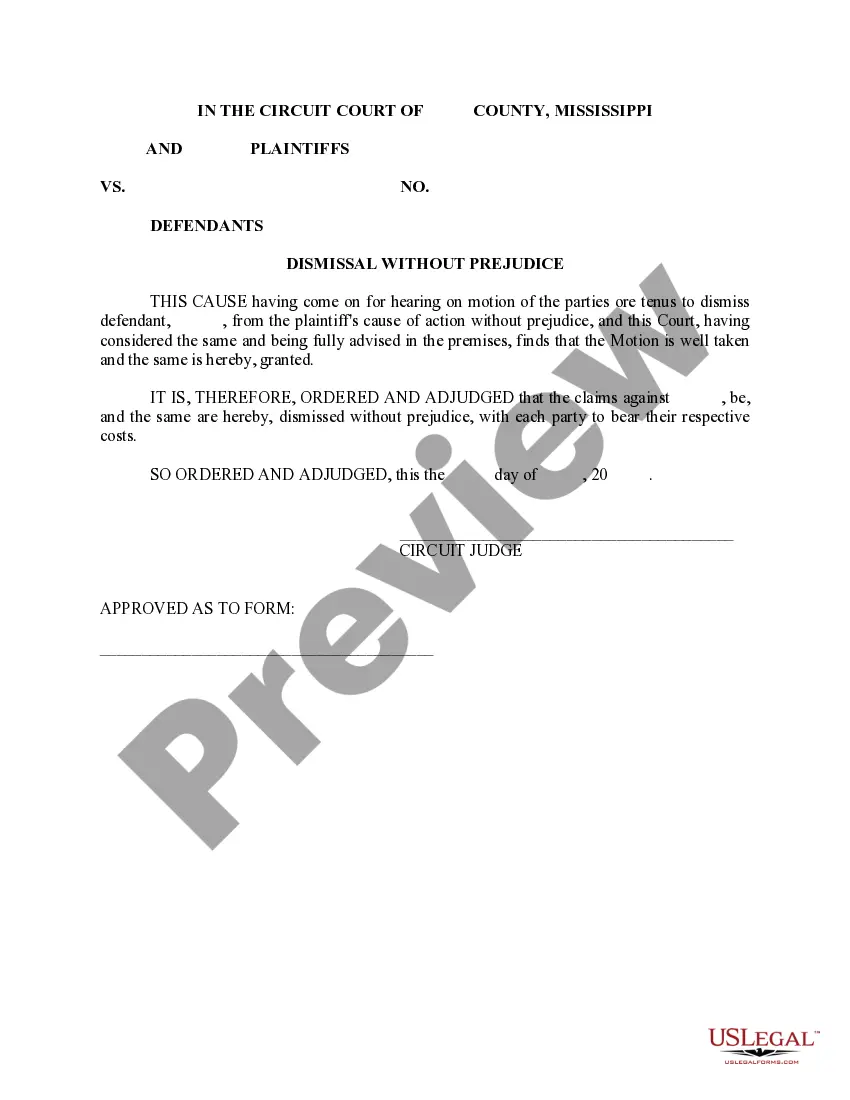
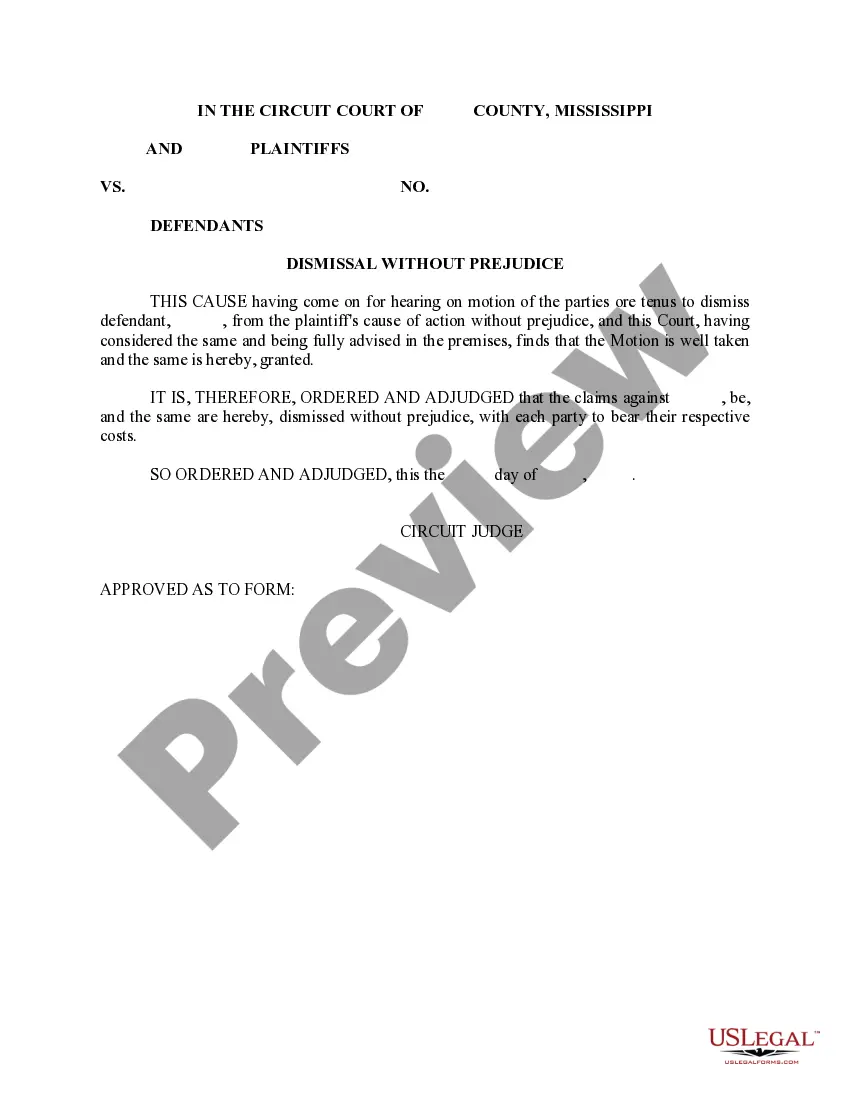
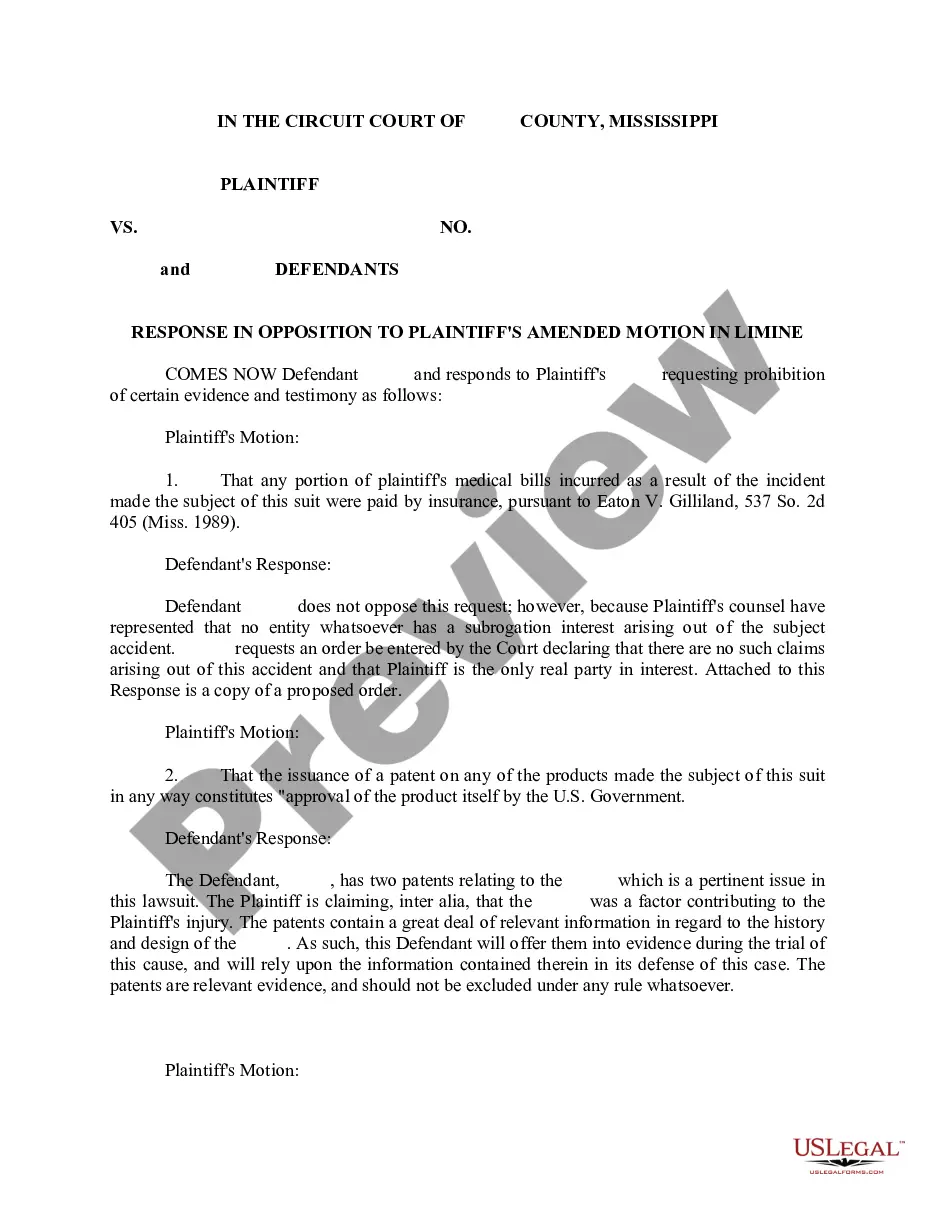
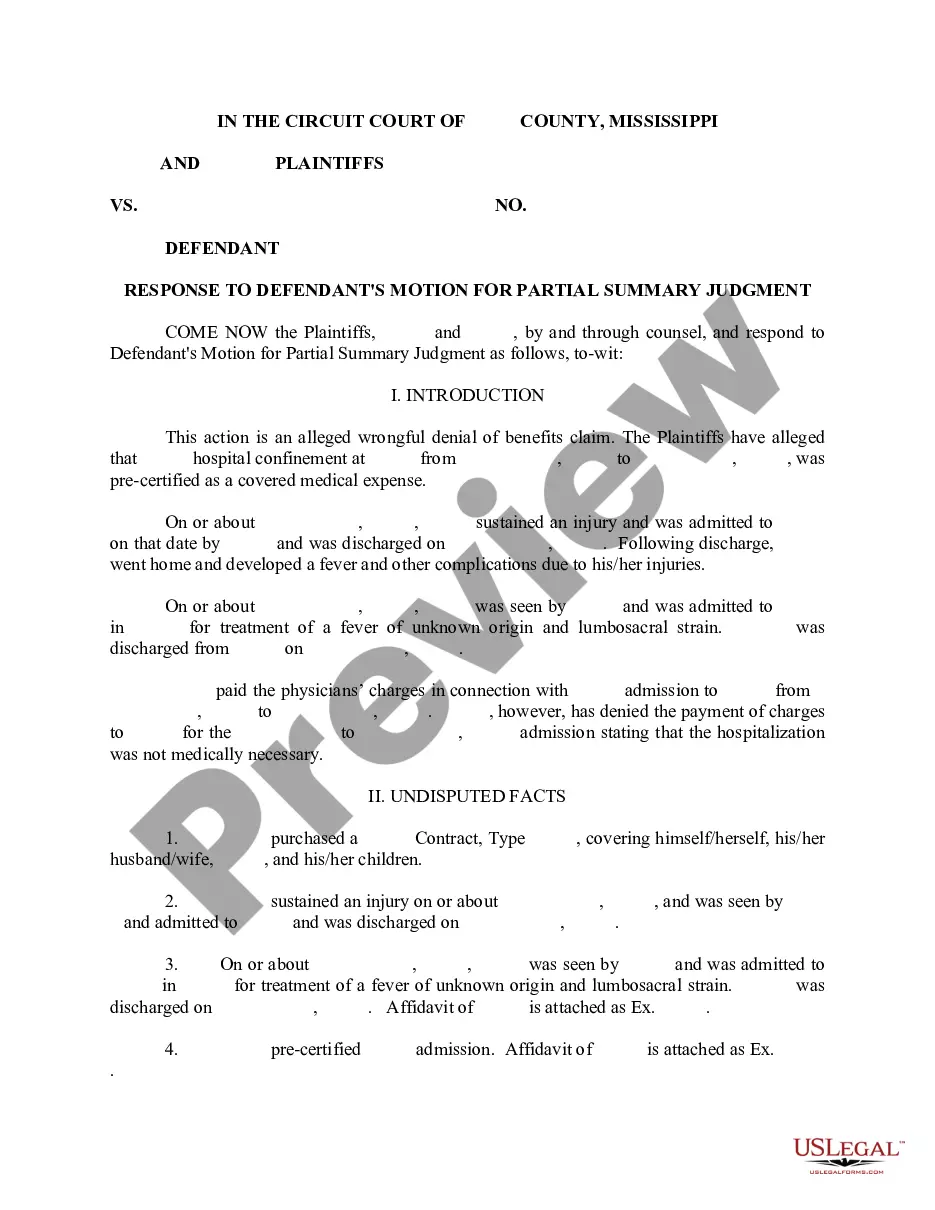
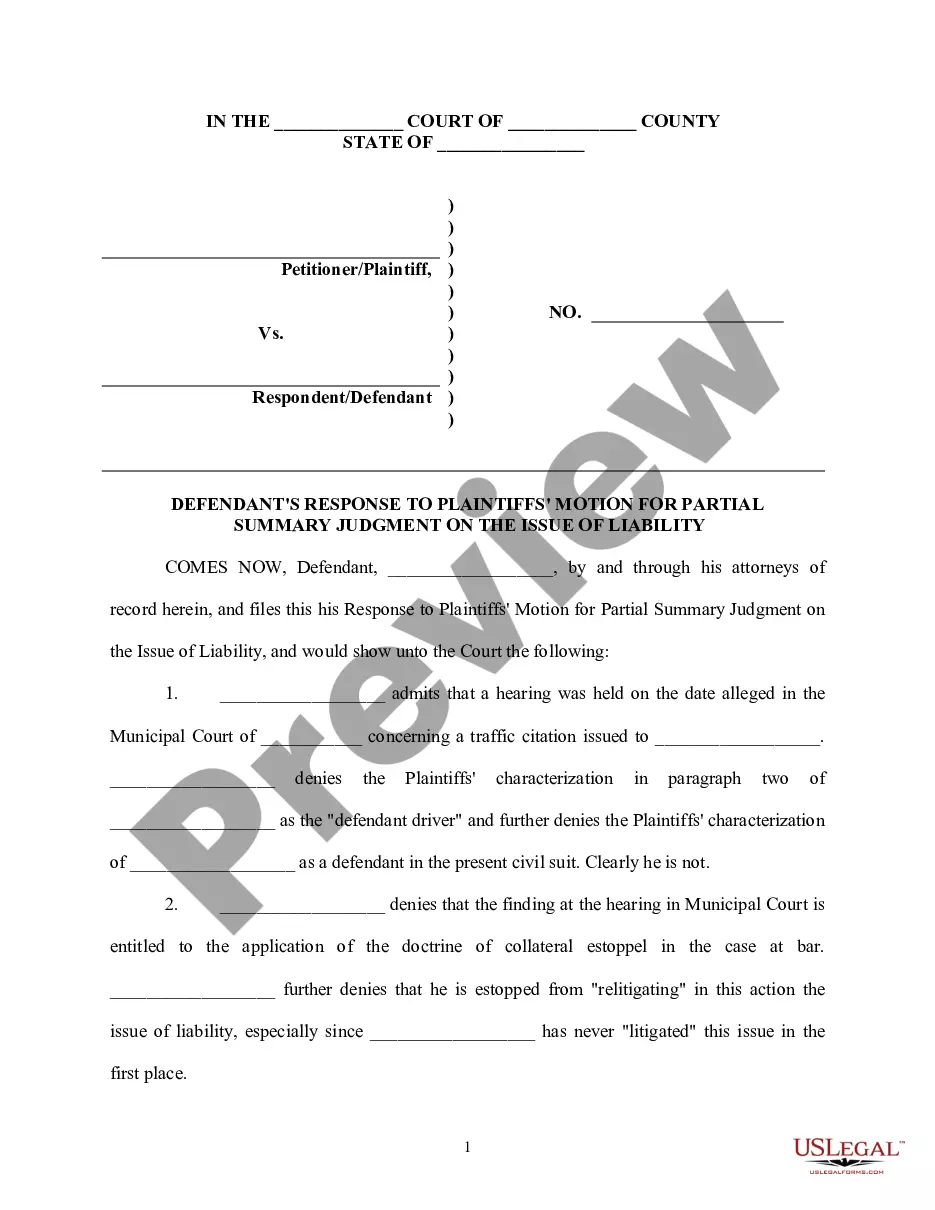
The Response to Motion to Quash - Plaintiff's is a legal document filed by a plaintiff in response to a defendant's motion to quash, which seeks to challenge the validity of certain evidence or a subpoena. This form allows the plaintiff to assert their position and provide arguments against the motion, ensuring that their interests are protected in legal proceedings. It is essential to understand the purpose of this document as it is distinct from other motions and responses typically used in litigation.
Key components of this form
- Case caption: Identifies the court, parties involved, and case number.
- Introduction section: States the plaintiff's intent to respond to the motion to quash.
- Arguments: Detailed content where the plaintiff can outline reasons the motion should be denied.
- Evidence: Space for the plaintiff to reference relevant evidence supporting their position.
- Conclusion: A brief statement summarizing the request to deny the motion to quash.
When this form is needed
This form is used when a plaintiff needs to formally respond to a defendant's motion to quash evidence or a subpoena that the plaintiff believes is crucial for the case. It is applicable in situations where the plaintiff feels that the evidence should be considered in court and that the motion to quash lacks merit. Using this form ensures that the plaintiff has a structured and legally appropriate way to express their objections.
Intended users of this form
- Plaintiffs involved in civil litigation.
- Individuals responding to a defendant's motion to quash.
- Legal representatives acting on behalf of a plaintiff in court.
How to complete this form
- Begin with the case caption, providing the necessary identification information.
- Clearly state your intent to respond to the motion to quash.
- Outline your arguments against the motion, providing legal reasoning and citations as necessary.
- Include any relevant evidence that supports your case for denying the motion.
- Conclude with a statement summarizing your request for the court to deny the motion.
Notarization requirements for this form
Notarization is not commonly needed for this form. However, certain documents or local rules may make it necessary. Our notarization service, powered by Notarize, allows you to finalize it securely online anytime, day or night.
Get your form ready online
Our built-in tools help you complete, sign, share, and store your documents in one place.
Make edits, fill in missing information, and update formatting in US Legal Forms—just like you would in MS Word.
Download a copy, print it, send it by email, or mail it via USPS—whatever works best for your next step.
Sign and collect signatures with our SignNow integration. Send to multiple recipients, set reminders, and more. Go Premium to unlock E-Sign.
If this form requires notarization, complete it online through a secure video call—no need to meet a notary in person or wait for an appointment.
We protect your documents and personal data by following strict security and privacy standards.

Make edits, fill in missing information, and update formatting in US Legal Forms—just like you would in MS Word.

Download a copy, print it, send it by email, or mail it via USPS—whatever works best for your next step.

Sign and collect signatures with our SignNow integration. Send to multiple recipients, set reminders, and more. Go Premium to unlock E-Sign.

If this form requires notarization, complete it online through a secure video call—no need to meet a notary in person or wait for an appointment.

We protect your documents and personal data by following strict security and privacy standards.
Mistakes to watch out for
- Failing to clearly state your arguments, making them difficult to follow.
- Omitting crucial supporting evidence that strengthens your response.
- Not adhering to local court formatting or filing requirements.
- Neglecting to sign or date the document before submission.
Why use this form online
- Convenience of downloading and using a professionally drafted form.
- Editability to tailor the document to individual circumstances.
- Reliability of information that adheres to current legal standards.
Summary of main points
- Use this form to formally respond to a motion to quash in legal proceedings.
- Ensure all arguments and evidence are clearly articulated.
- Be mindful of any specific state requirements regarding the form's use and submission.
Looking for another form?

Form popularity
FAQ
Definition. To set aside; to void. As in "to quash a motion" or "quash evidence."
Definition. To set aside; to void. As in "to quash a motion" or "quash evidence."
After the motion to quash is filed, the court will review the case and make its determination. For example, if the judge grants a motion to quash service, then the service on the defendant would be considered void. A motion to quash that is approved would also invalidate any applicable decisions from a lower court.
What happens after a motion to dismiss is filed in a civil litigation, does the case continue while the Court is deciding whether to grant or deny the Motion?Finally, the judge will decide to grant or deny the motion. But there could be months between the moving papers and the decision.
The remedy against the denial of a motion to quash is for the movant accused to enter a plea, go to trial, and should the decision be adverse, reiterate on appeal from the final judgment and assign as error the denial of the motion to quash.
X FILED A MOTION TO QUASH ON THE FOLLOWING GROUNDS: THAT THE COURT LACKED JURISDICTION OVER THE PERSON OF THE ACCUSED AND THAT THE COMPLAINT CHARGED MORE THAN ONE OFFENSE. CAN THE COURT GRANT THE MOTION ON THE GROUND OF LACK OF JURISDICTION? on this ground.
A motion to quash must be based on valid grounds.If the court grants the motion, it may quash the subpoena entirely, modify it, or order that you comply with it on specified conditions. If the court denies the motion, you will usually have to comply with it as written.
After the motion to quash is filed, the court will review the case and make its determination. For example, if the judge grants a motion to quash service, then the service on the defendant would be considered void. A motion to quash that is approved would also invalidate any applicable decisions from a lower court.
A motion to quash is a request to a court or other tribunal to render a previous decision or proceeding null or invalid.In some cases, motions to quash are requests to nullify a decision made by the same or a lower court. It can arise out of mistakes made by any lawyer or court officer.