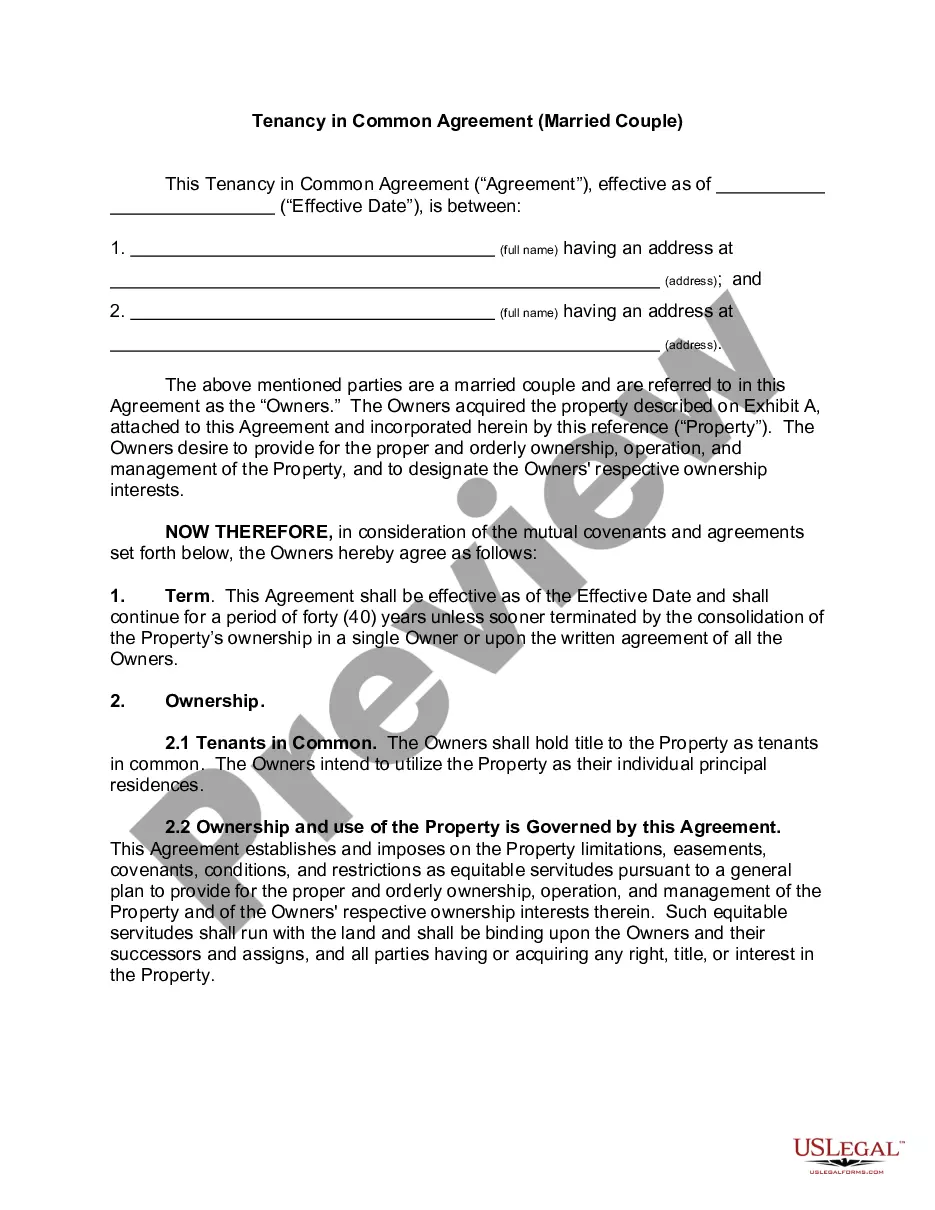
Mississippi Answer to Petition of Paternity and Establishment of Custody, Support and Visitation
About this form
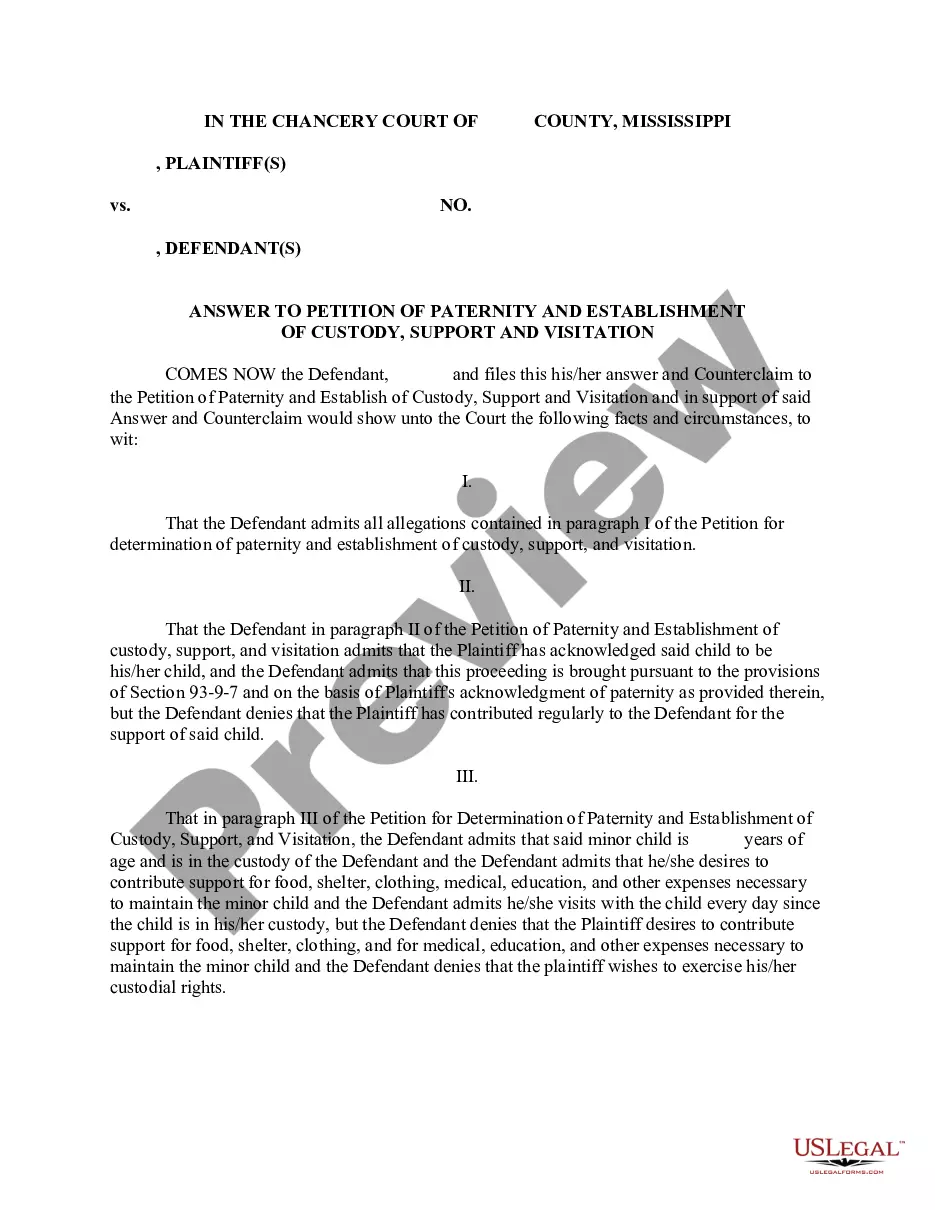
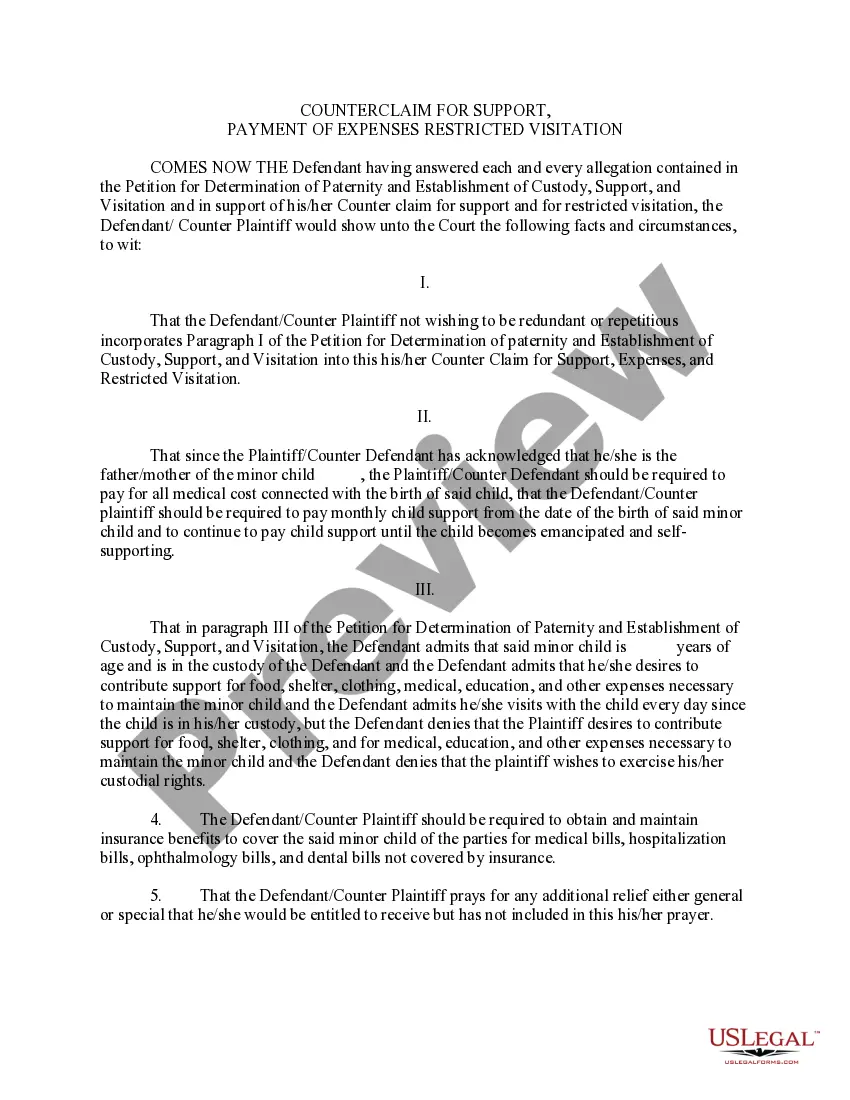
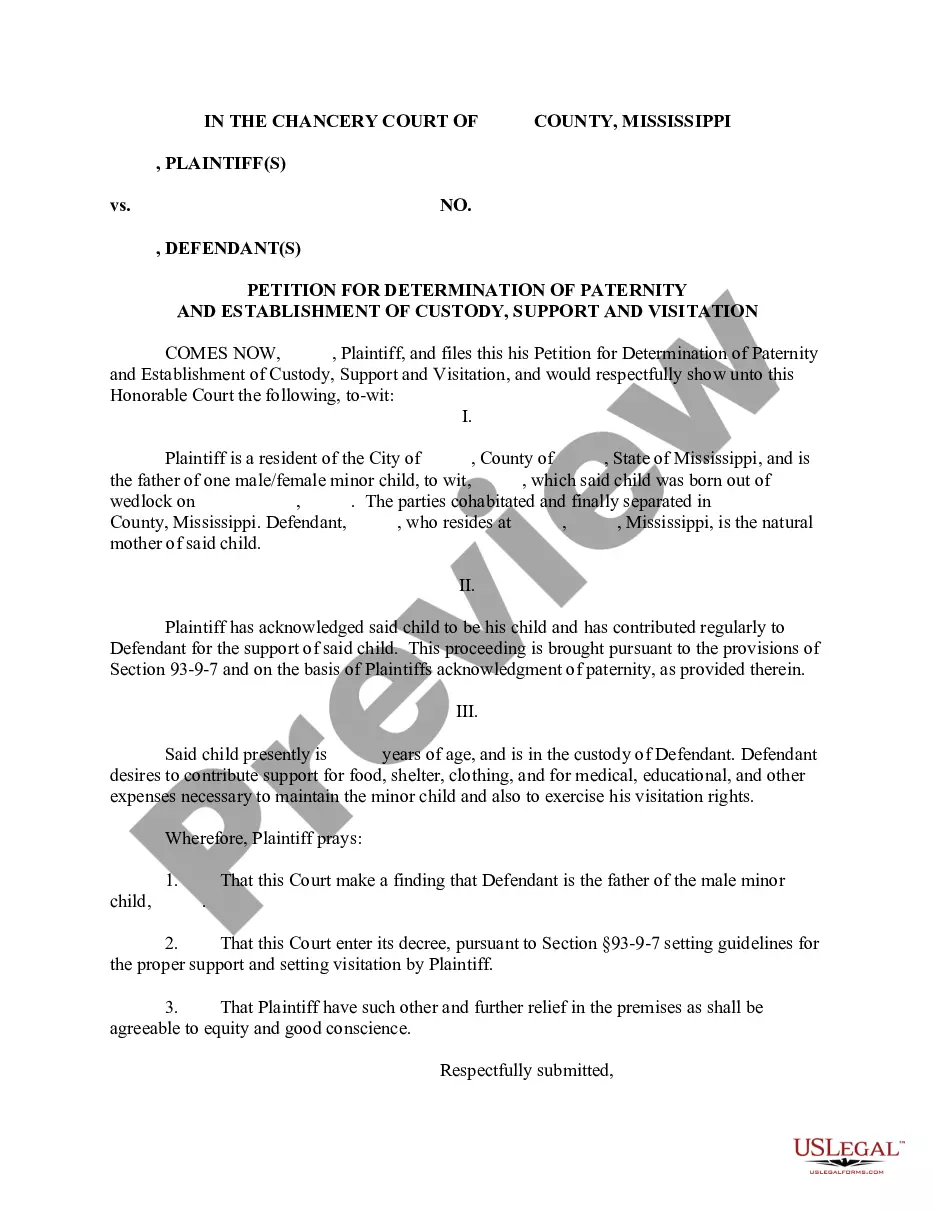
The Answer to Petition of Paternity and Establishment of Custody, Support and Visitation is a legal document filed by a defendant in response to a petition regarding paternity, custody, child support, and visitation rights. This form allows the defendant to admit or deny allegations made by the plaintiff and to present any affirmative defenses or counterclaims regarding child support or visitation restrictions. It serves to clarify the defendant's position in court, which is crucial in paternity and custody disputes.
Key components of this form
- Admission or denial of allegations made in the petition.
- Counterclaims for support and visitation issues.
- Provisions for the maintenance of medical insurance for the child.
- Request for additional relief not explicitly stated in the form.
Situations where this form applies
This form should be used when a defendant is responding to a petition involving the determination of paternity, custody arrangements, child support, and visitation rights. It is critical in scenarios where there are disputes over the recognition of paternity, the amount of support to be provided, or entitlement to visit the child. By filing this answer, the defendant formally presents their position and protects their legal interests in these matters.
Intended users of this form
This form is intended for:
- Defendants in paternity lawsuits seeking to establish their position regarding the allegations made.
- Parents who are involved in custody and support disputes and wish to respond formally to a petition.
- Individuals looking to assert their rights regarding visitation with a child.
How to complete this form
- Begin by filling in your name and contact information in the designated fields.
- Review the petition's allegations and indicate whether you admit or deny each claim.
- If applicable, include your counterclaims regarding support and visitation matters.
- Provide details about the child, including any requests for medical insurance or other support needs.
- Sign and date the form before submitting it to the appropriate court.
Notarization requirements for this form
This form does not typically require notarization unless specified by local law. Ensure to check state-specific regulations to confirm if notarization is needed.
Get your form ready online
Our built-in tools help you complete, sign, share, and store your documents in one place.
Make edits, fill in missing information, and update formatting in US Legal Forms—just like you would in MS Word.
Download a copy, print it, send it by email, or mail it via USPS—whatever works best for your next step.
Sign and collect signatures with our SignNow integration. Send to multiple recipients, set reminders, and more. Go Premium to unlock E-Sign.
If this form requires notarization, complete it online through a secure video call—no need to meet a notary in person or wait for an appointment.
We protect your documents and personal data by following strict security and privacy standards.

Make edits, fill in missing information, and update formatting in US Legal Forms—just like you would in MS Word.

Download a copy, print it, send it by email, or mail it via USPS—whatever works best for your next step.

Sign and collect signatures with our SignNow integration. Send to multiple recipients, set reminders, and more. Go Premium to unlock E-Sign.

If this form requires notarization, complete it online through a secure video call—no need to meet a notary in person or wait for an appointment.

We protect your documents and personal data by following strict security and privacy standards.
Typical mistakes to avoid
- Failing to respond to all allegations, which may result in assumptions being made by the court.
- Not including necessary factual details in counterclaims.
- Submitting the form without proper signatures or dates.
Benefits of using this form online
- Immediate access to legal documents that are tailored to your needs.
- Easy download options in multiple formats for convenience.
- Cost-effective solution compared to hiring an attorney for basic form preparation.
Legal use & context
- The form is legally binding once filed and signed.
- It can be used as evidence in court for custody and support determinations.
- Incorrect or incomplete responses may negatively impact legal proceedings.
Summary of main points
- The form is crucial for addressing paternity and custody disputes.
- Proper completion is vital to protect parental rights and obligations.
- State-specific rules may affect how the form is used.
Looking for another form?

Form popularity
FAQ
There is no legal age for a child to refuse to go to the court-ordered visitation while the child remains a minor. In the state of Mississippi, a child remains a minor until the child turns 21. Games with visitation should be AVOIDED because as the...
Fill out your court forms. Have your forms reviewed. Make at least 2 copies of all your forms. File your forms with the court clerk. Serve your papers on the other parent. File your Proof of Service. Go to your court hearing.
Be willing to work with the child's other parent. See your children whenever possible. Don't involve your children in the court case. Don't put the children in the middle. Perception is everything. Hire an experienced child custody lawyer.
An acknowledgement of paternity form can be signed by the parents at the hospital or after the child is born through the Department of Human Services. The other way paternity can be established is through the involuntary process of going to court.
Write clearly, and use your own words. Use bulleted lists for your major points. Don't insult or bash your ex. Attach evidence such as pay stubs or bank statements, but redact SSN and account numbers. Affirm that you are making your statement under oath, and under penalty of perjury.
However, you can go file paperwork with a Mississippi court to request that they establish paternity for your child. In this process, a trusted family law attorney can help you file the necessary paperwork, and explain to a judge why he or she should force your child's potential father to submit to a paternity test.
Read Information Sheet: Responsive Declaration to Request for Order (Form FL-320-INFO ). Fill out your court forms. Have your forms reviewed. Make at least 2 copies of all your forms. File your forms with the court clerk. Serve your papers on the other parent. File your Proof of Service.
If you do not respond to your spouse or partner's petition for divorce or separation or you file a response but reach an agreement, your case will be considered either a "default" or an "uncontested case." In a true default case, you are giving up your right to have any say in your divorce or legal separation case.
Pull the header information from the plaintiff's petition. Title your Answer Answer to Plaintiff's Petition/Complaint. Center this title and make it bold. Introduce yourself. Admit, deny, or claim that you lack sufficient knowledge to admit or deny each of the plaintiff's numbered allegations.