Mississippi Petition for Authority to Compromise and Settle Claim of a Minor without Guardianship - Divorced Parents
About this form
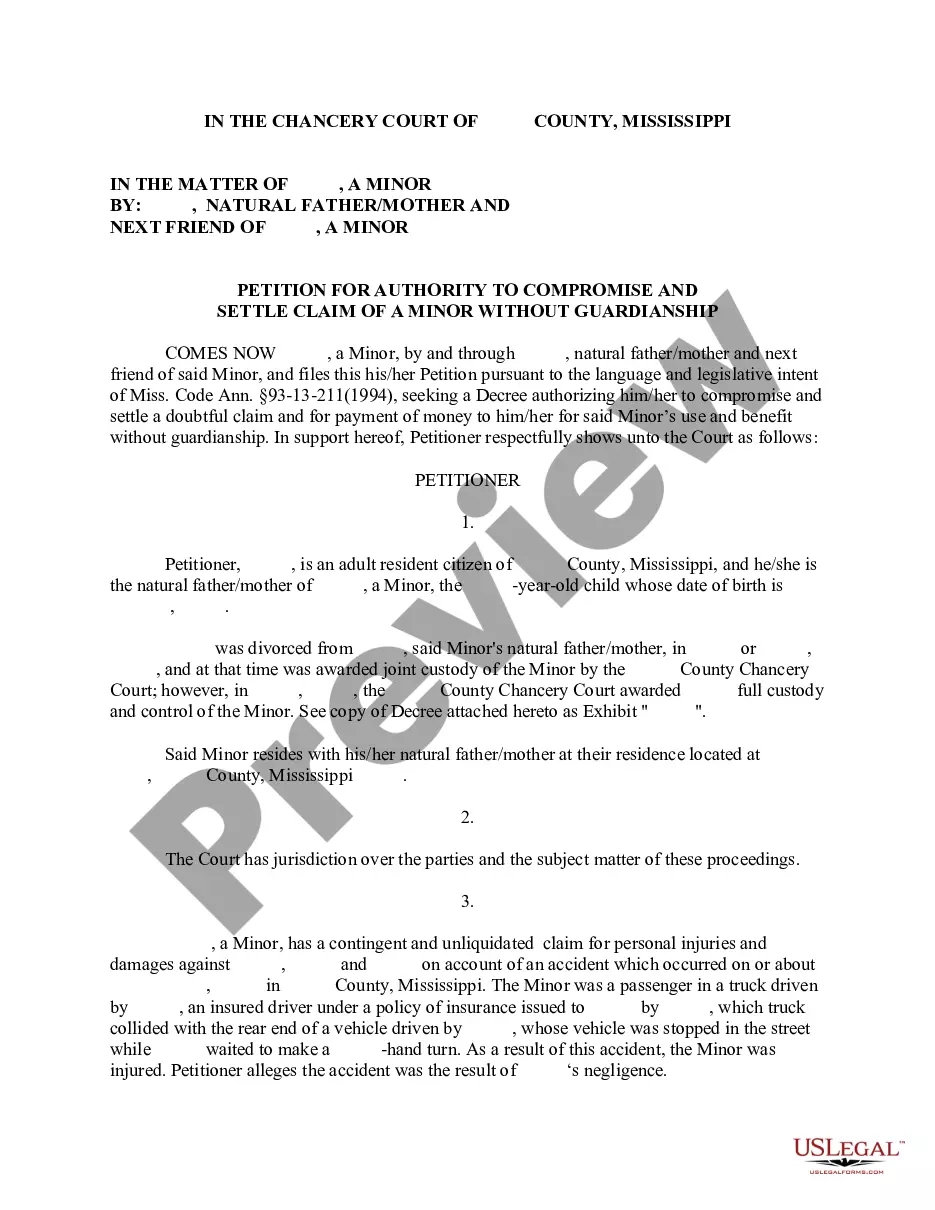
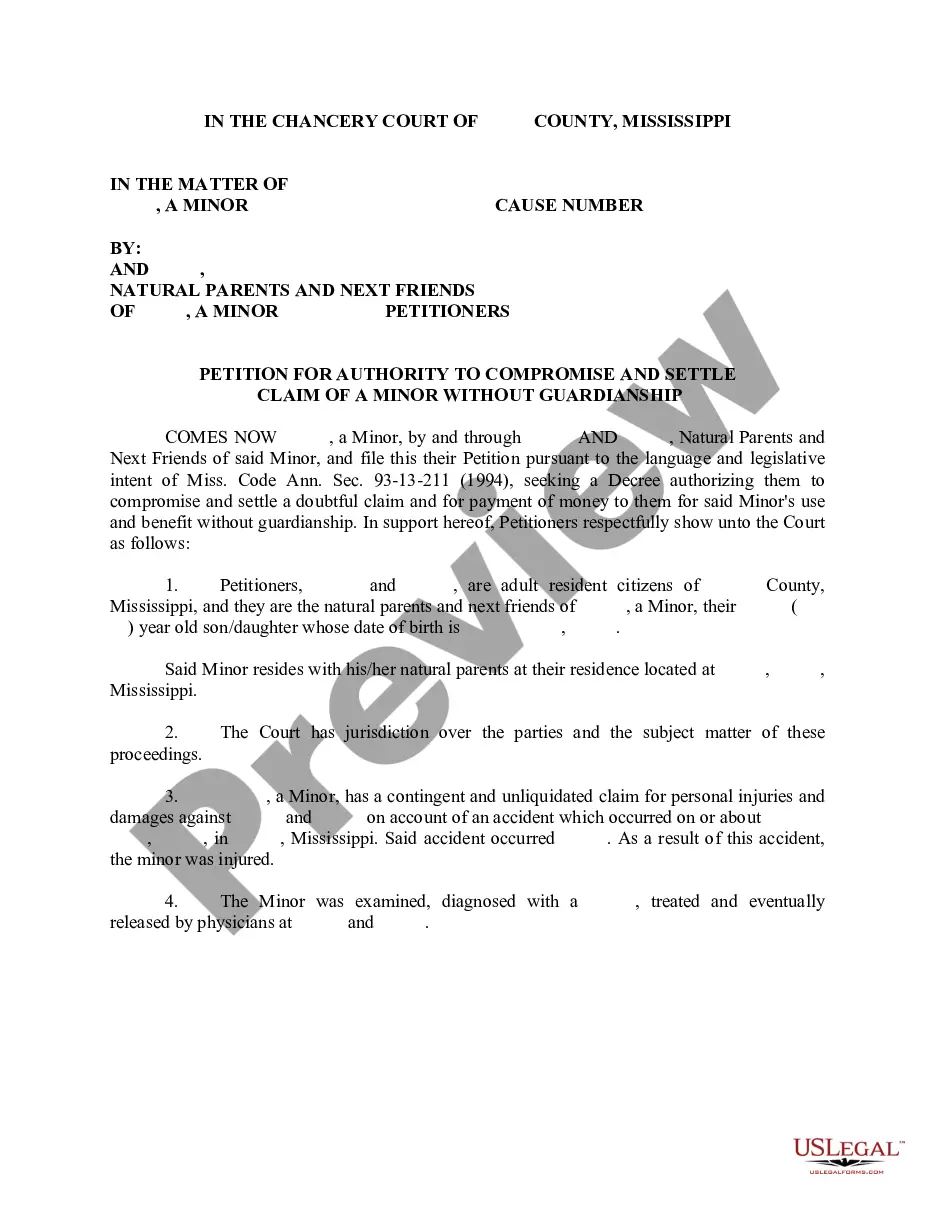
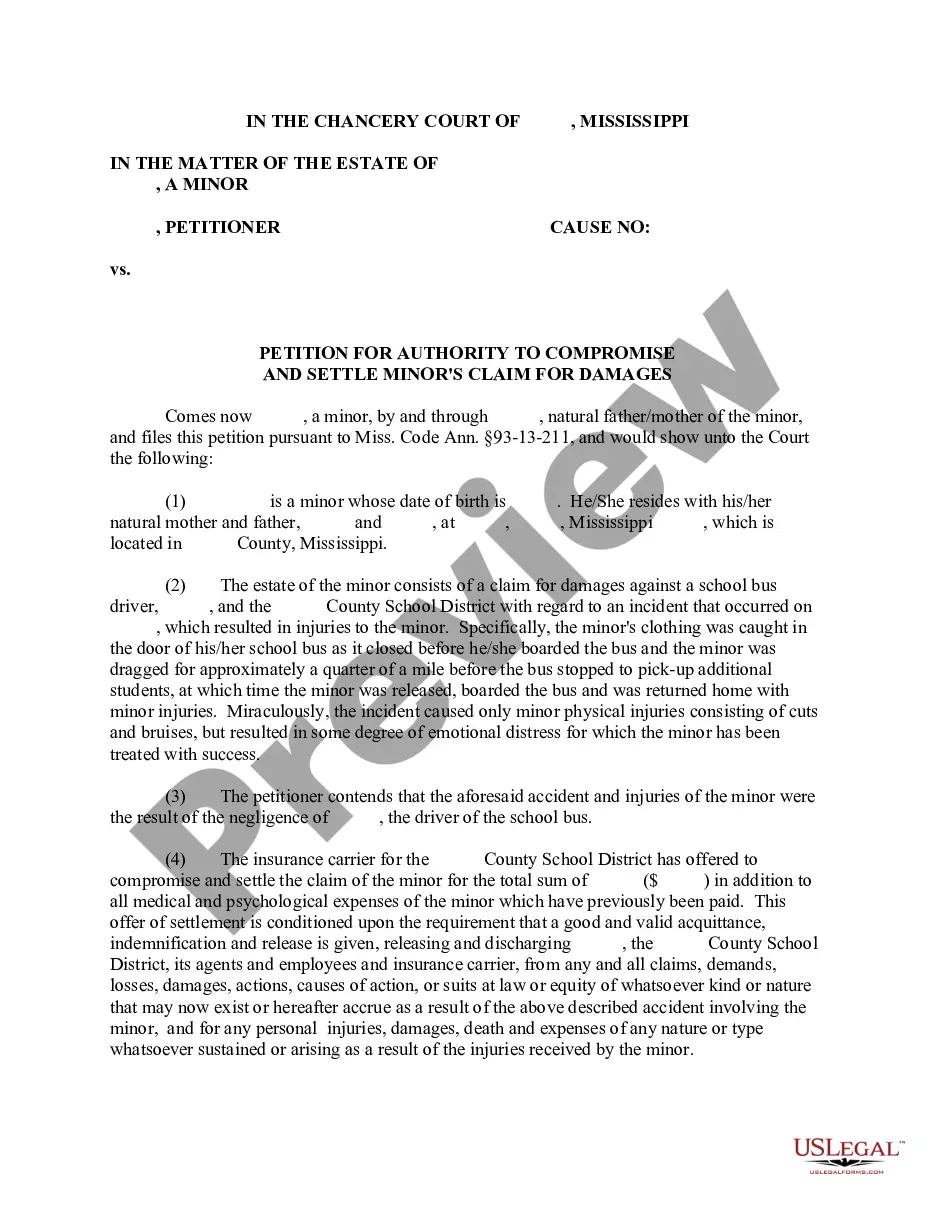
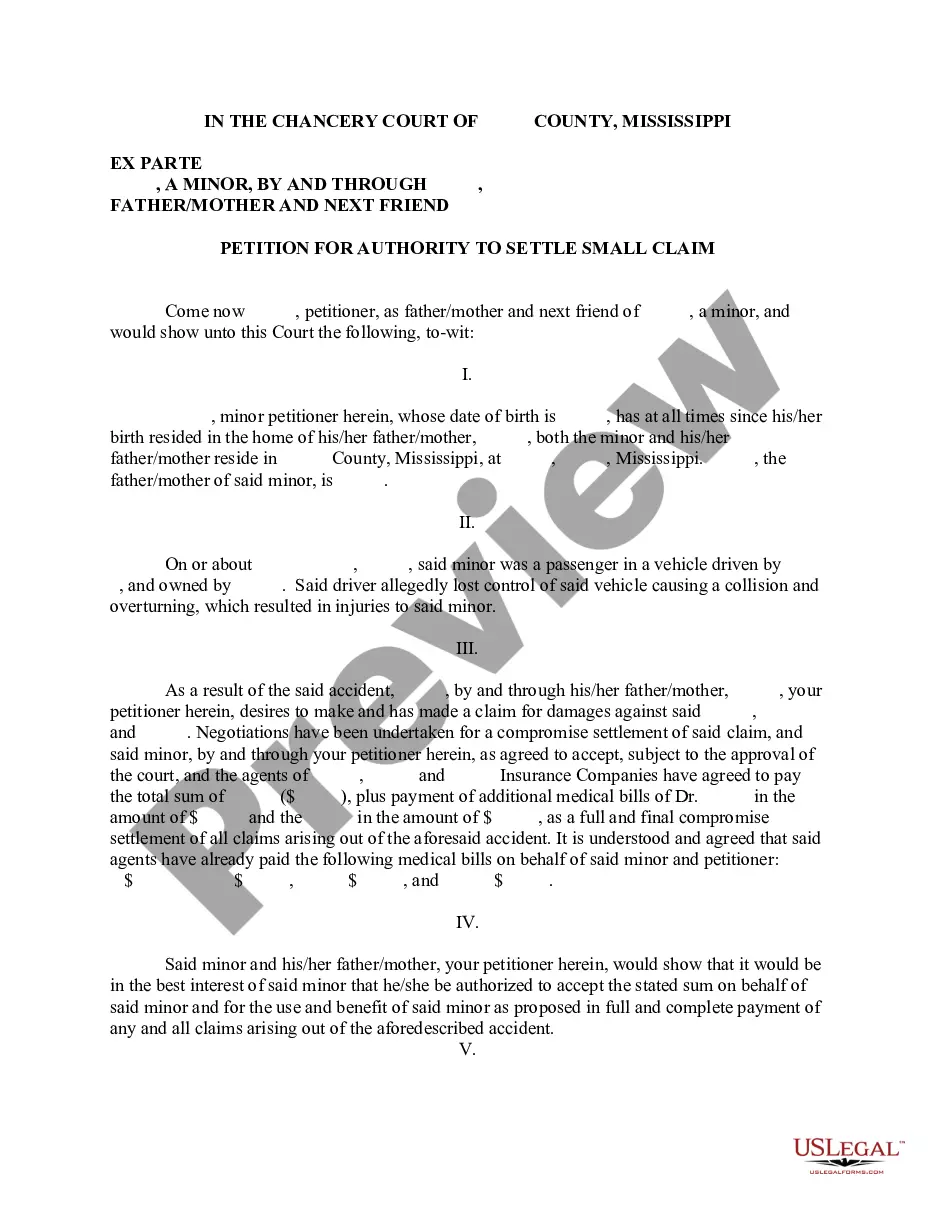
The Petition for Authority to Compromise and Settle Claim of a Minor without Guardianship is a legal document designed for divorced parents seeking to settle a claim on behalf of their minor child without the need for guardianship. This form initiates a request to the court to approve a settlement, ensuring it aligns with the best interests and welfare of the minor. Unlike other forms that may require legal guardianship, this petition streamlines the process for parents who are already divorced.
Key parts of this document
- Petitioner information: Details about the parent or guardian initiating the petition.
- Minor's information: Identification of the minor child related to the claim.
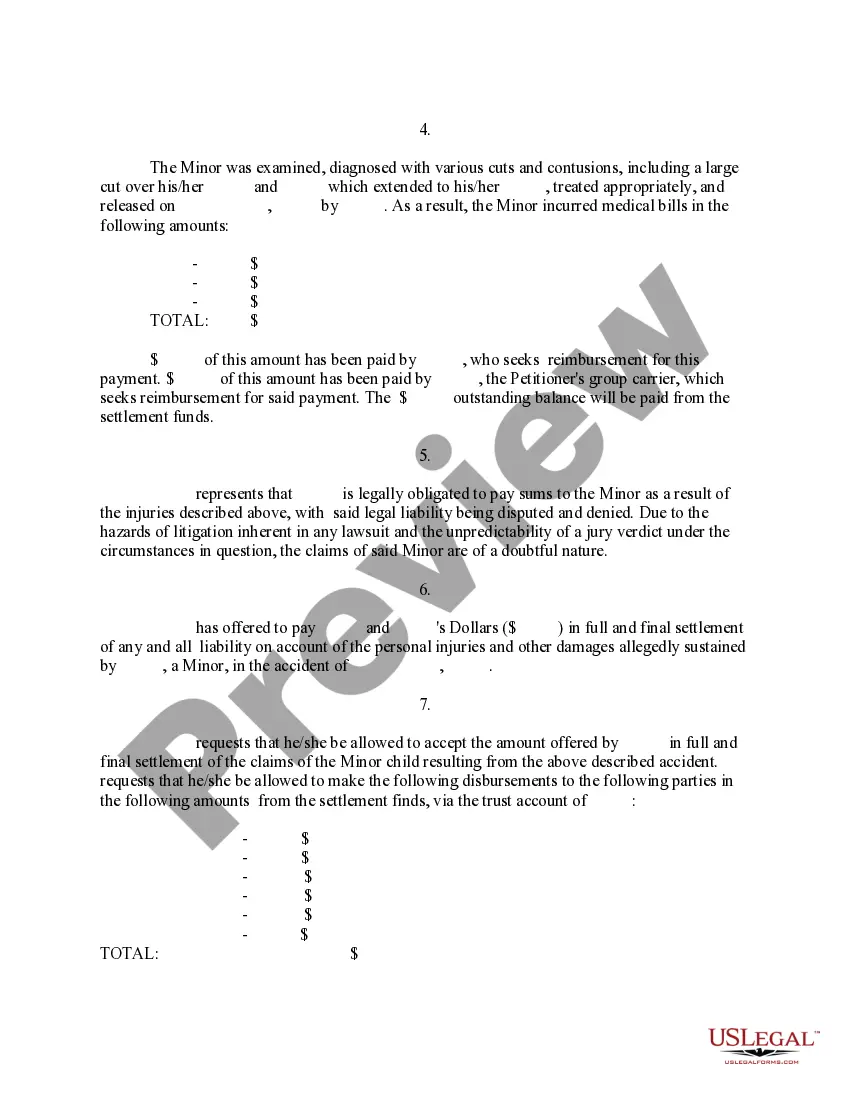
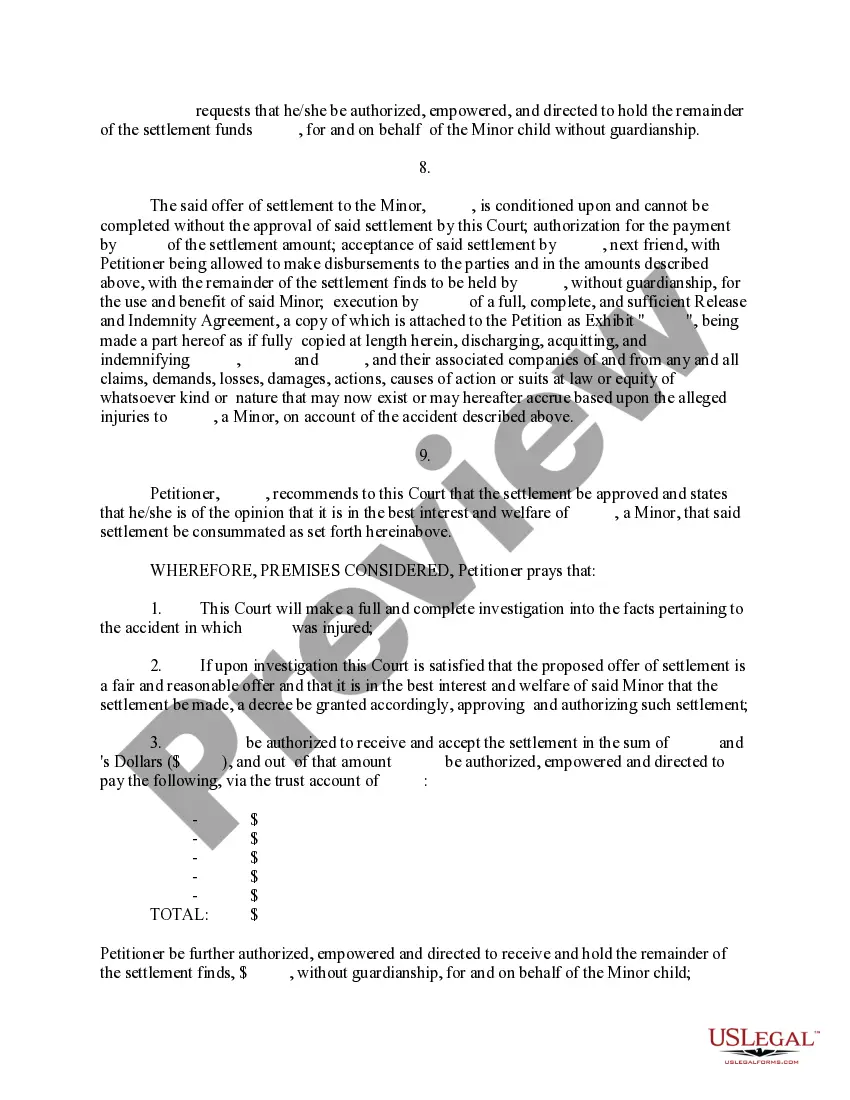
- Settlement details: Explanation of the proposed settlement offer, including terms and conditions.
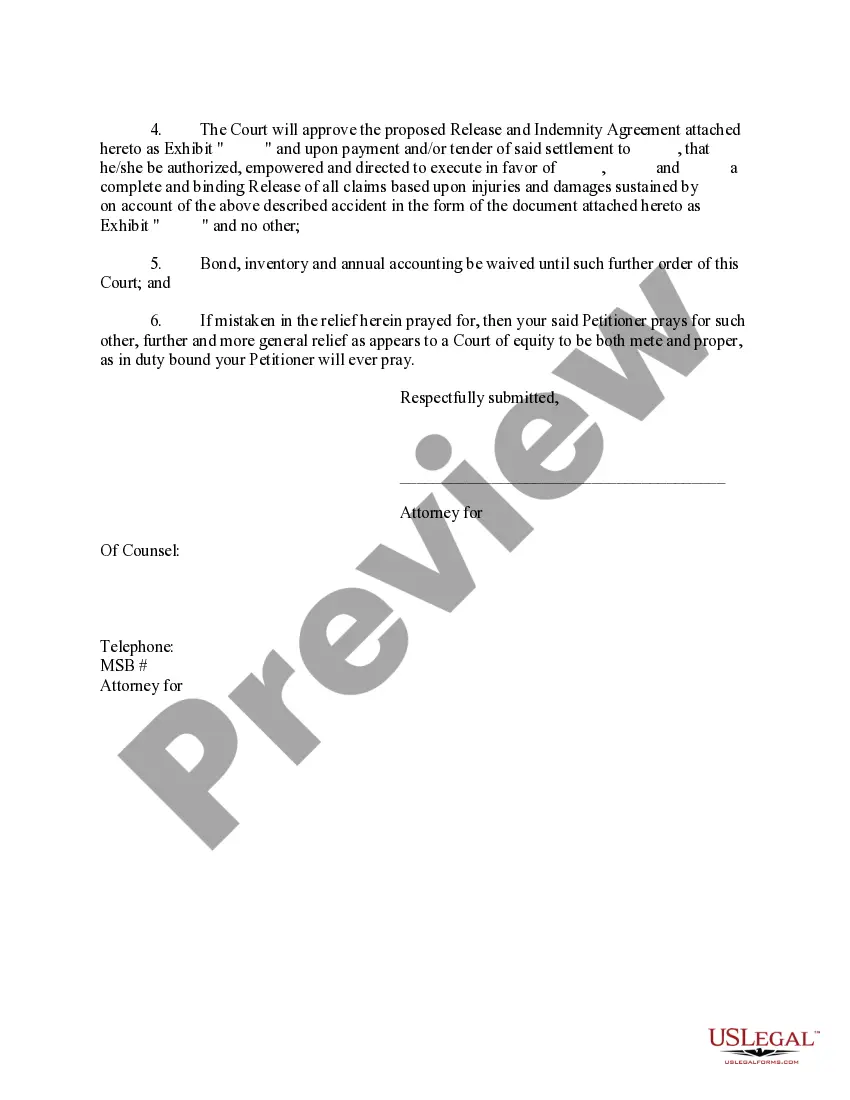
- Court approval request: A section to request the court's approval of the settlement as fair and in the child's best interest.
Situations where this form applies
This form is necessary when divorced parents wish to settle a claim related to their minor child without establishing a formal guardianship. Typical scenarios may include settling personal injury claims or disputes where a minor is entitled to compensation due to an incident or agreement. If both parents agree to the terms and find the settlement to be fair, this petition acts as a straightforward way to proceed with the legal formalities.
Who this form is for
- Divorced parents of a minor child looking to settle a claim.
- Individuals who are not the legal guardians but have consent from the parents to make a settlement on behalf of the minor.
- Anyone needing court approval for a minor's claim settlement that does not involve guardianship.
Steps to complete this form
- Identify the parties: Fill in the names and details of the petitioning parents.
- Specify the minor: Provide the name and information of the minor child involved.
- Detail the settlement: Clearly outline the terms of the proposed settlement offer.
- Request court approval: Include a section requesting that the court approves the settlement as fair and in the minor's best interest.
- Sign and date: Ensure all parties sign the form, providing the necessary dates of completion.
Is notarization required?
This form usually doesn’t need to be notarized. However, local laws or specific transactions may require it. Our online notarization service, powered by Notarize, lets you complete it remotely through a secure video session, available 24/7.
Get your form ready online
Our built-in tools help you complete, sign, share, and store your documents in one place.
Make edits, fill in missing information, and update formatting in US Legal Forms—just like you would in MS Word.
Download a copy, print it, send it by email, or mail it via USPS—whatever works best for your next step.
Sign and collect signatures with our SignNow integration. Send to multiple recipients, set reminders, and more. Go Premium to unlock E-Sign.
If this form requires notarization, complete it online through a secure video call—no need to meet a notary in person or wait for an appointment.
We protect your documents and personal data by following strict security and privacy standards.

Make edits, fill in missing information, and update formatting in US Legal Forms—just like you would in MS Word.

Download a copy, print it, send it by email, or mail it via USPS—whatever works best for your next step.

Sign and collect signatures with our SignNow integration. Send to multiple recipients, set reminders, and more. Go Premium to unlock E-Sign.

If this form requires notarization, complete it online through a secure video call—no need to meet a notary in person or wait for an appointment.

We protect your documents and personal data by following strict security and privacy standards.
Common mistakes
- Failing to include all necessary parties' signatures.
- Omitting important details about the minor or the settlement.
- Not clearly stating the reasons why the settlement benefits the minor child.
- Submitting the petition without ensuring it meets all local court rules.
Why complete this form online
- Convenience of downloading the form anytime from any location.
- Ease of editing fields to fit specific circumstances.
- Access to forms created by licensed attorneys, ensuring reliability.
Looking for another form?

Form popularity
FAQ
In a limited guardianship, a person's authority is relegated only to what the order states, and no more.In a full guardianship, the guardian is given complete authority over all of the health, housing, and financial decisions for the protected person.
A partial guardian is a guardian who has only those powers set forth in the order of appointment and the letters of guardianship. S/he possesses lesser than all of the legal rights and powers of a plenary guardian.In a case of partial guardianship, the wards possess some legal control over themselves.
A power of attorney and a guardianship are tools that help someone act in your stead if you become incapacitated. With a power of attorney, you choose who you want to act for you. In a guardianship proceeding, the court chooses who will act as guardian.
The main difference between the two is that custody focuses more on the parent-child relationship while guardianship involves finding help for people who are not mentally or physically capable of taking care of themselves.
A guardian is also prohibited from making gifts from the ward's estate. Generally, a guardian cannot tie up the ward's money by purchasing real estate, but can lend the money to someone else buying real estate if the property is sufficient security for the loan.
Guardianships, in contrast, although sometimes granted on a temporary or emergency basis, are often more durable than custody determinations and persist for the life of the guardian or until the child reaches the age of majority.
There are two types of guardianships, a full guardianship and a limited guardianship.
While a power of attorney is generally considered to be a device by which you empower a chosen 'attorney' (a person you grant authority to) to make financial and legal decisions on your behalf, an enduring guardianship specifically empowers your nominated 'guardian' to make lifestyle, health and welfare decisions for
Specific advantages include: Security Once you are named as guardian, you can be confident that you will be able to provide care for your ward for years to come. Legal Rights You will have the legal right to make financial, medical, and other decisions on behalf of your ward (in most cases).