Mississippi Complaint - Lessor Failure to Return Security Deposit
About this form
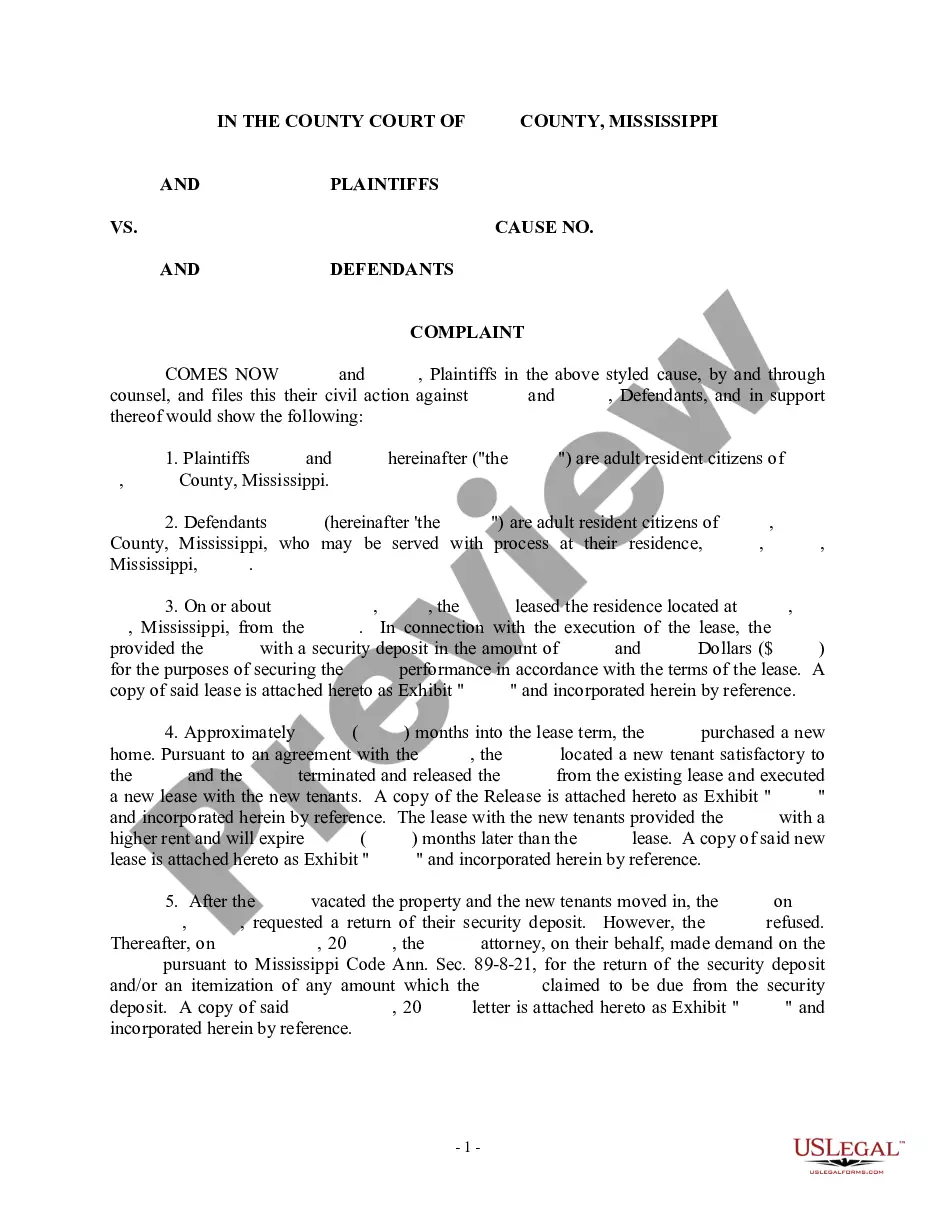
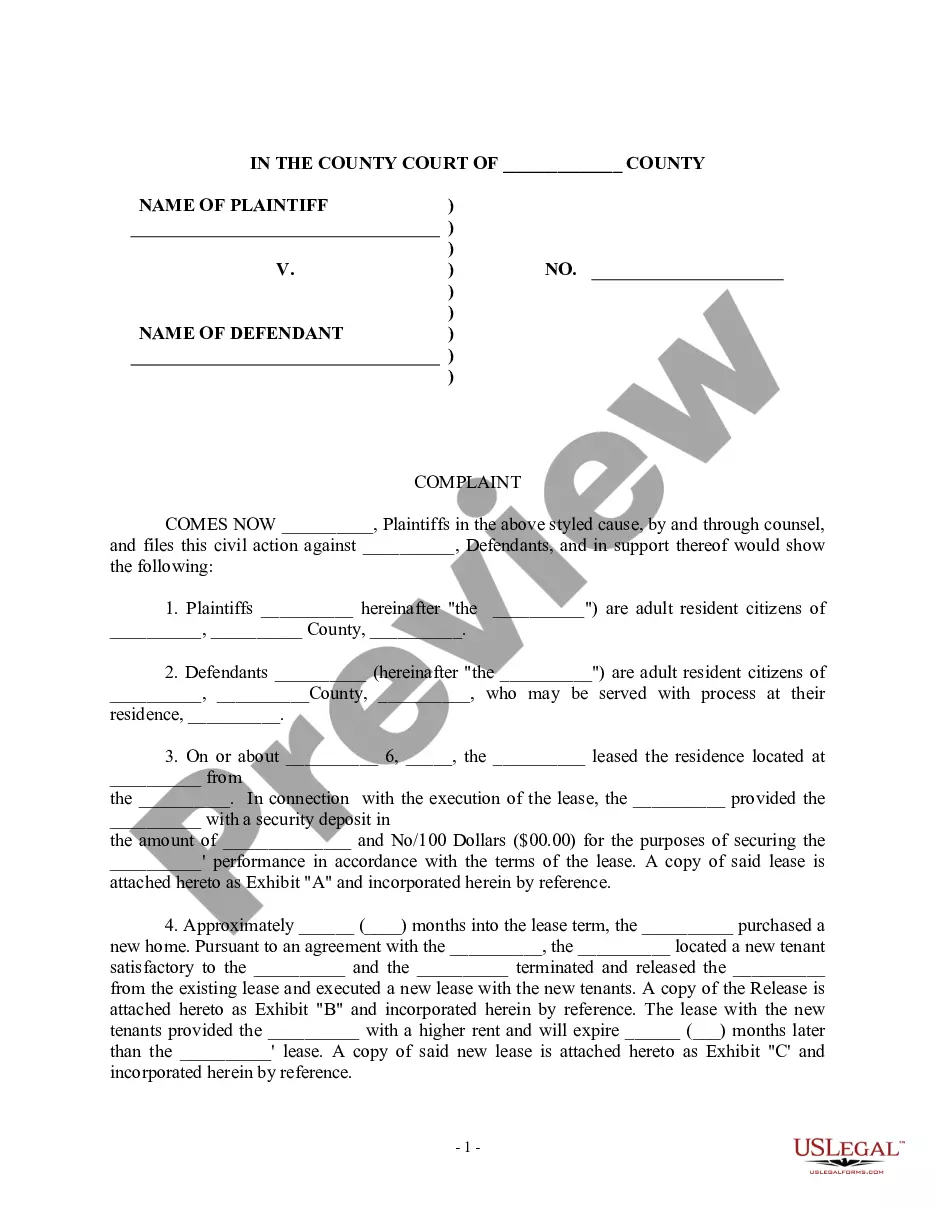
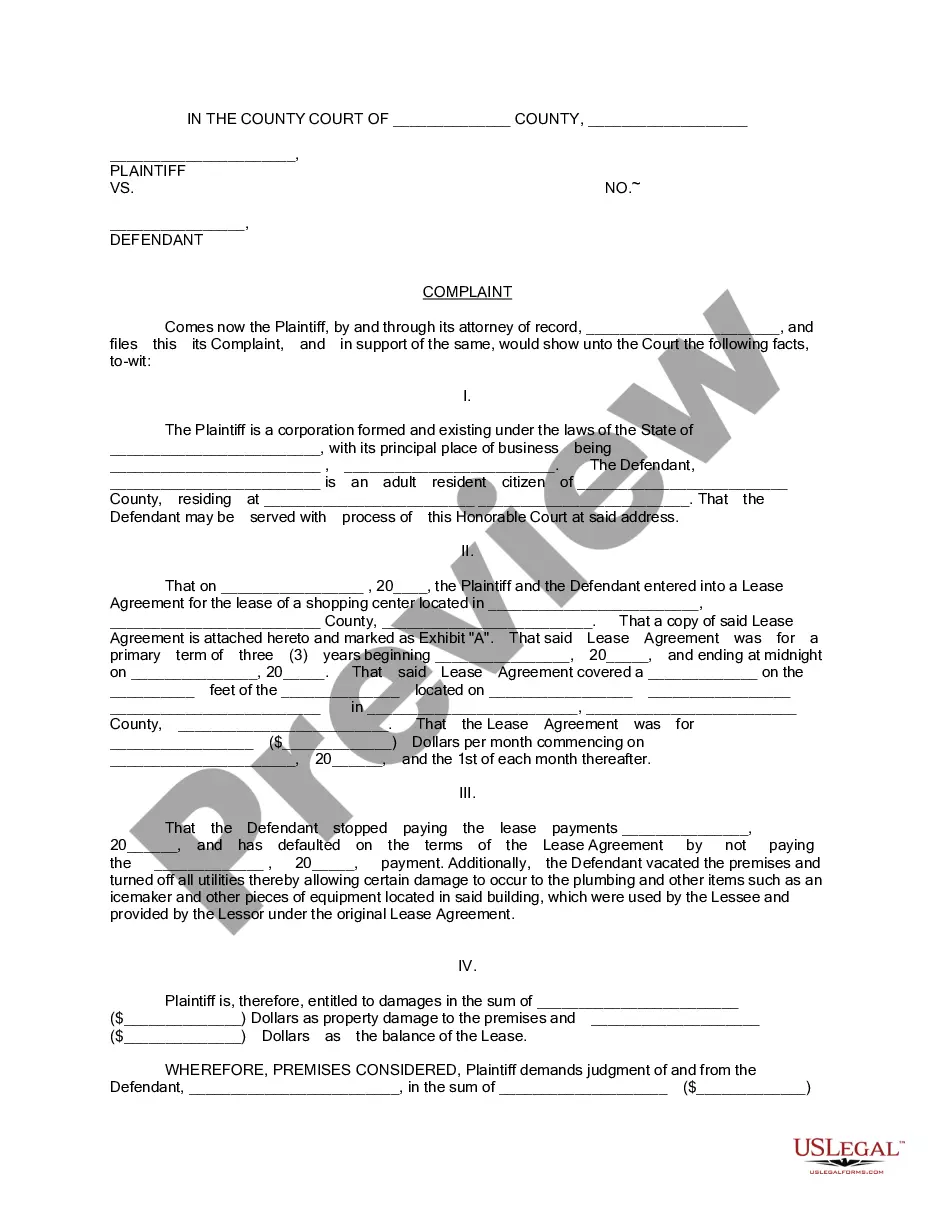
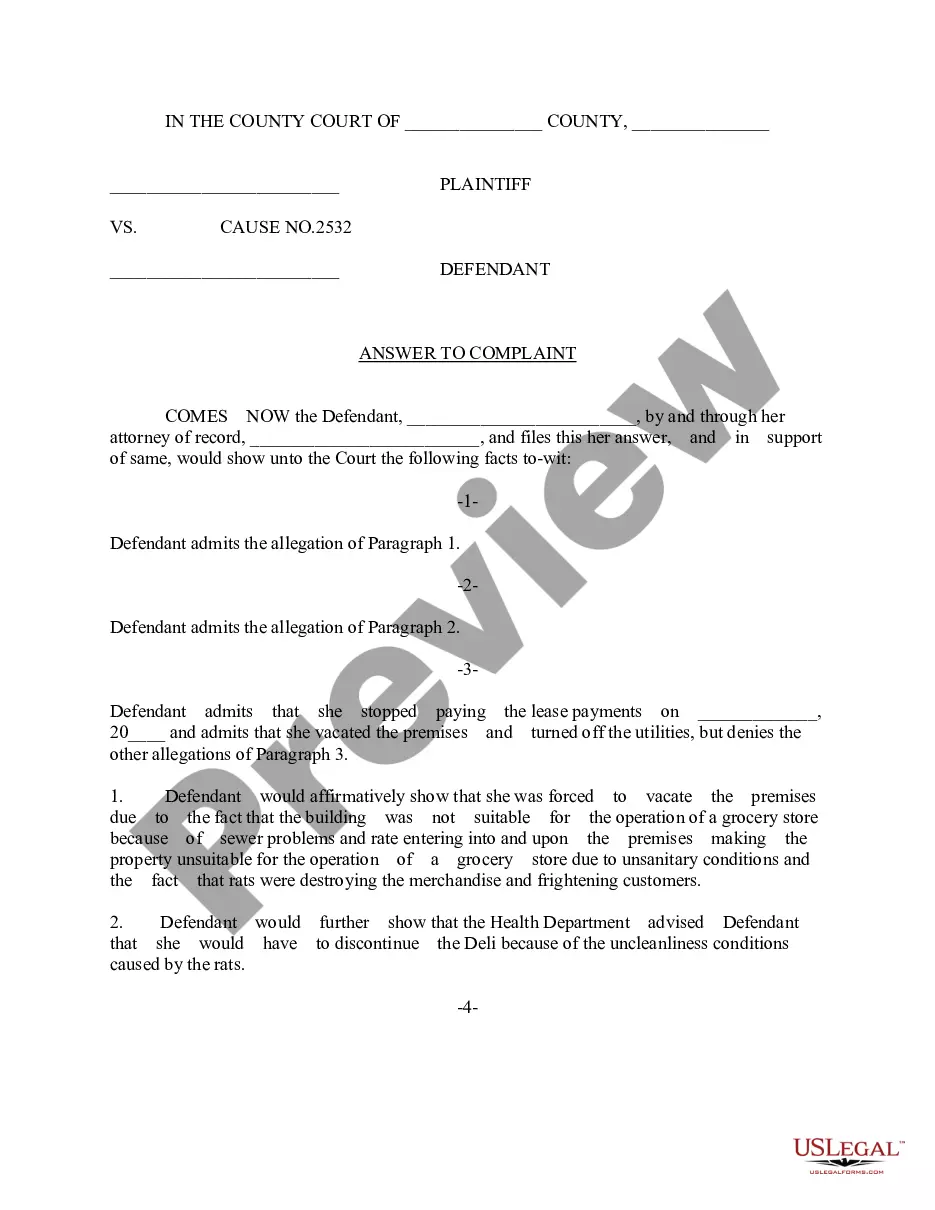
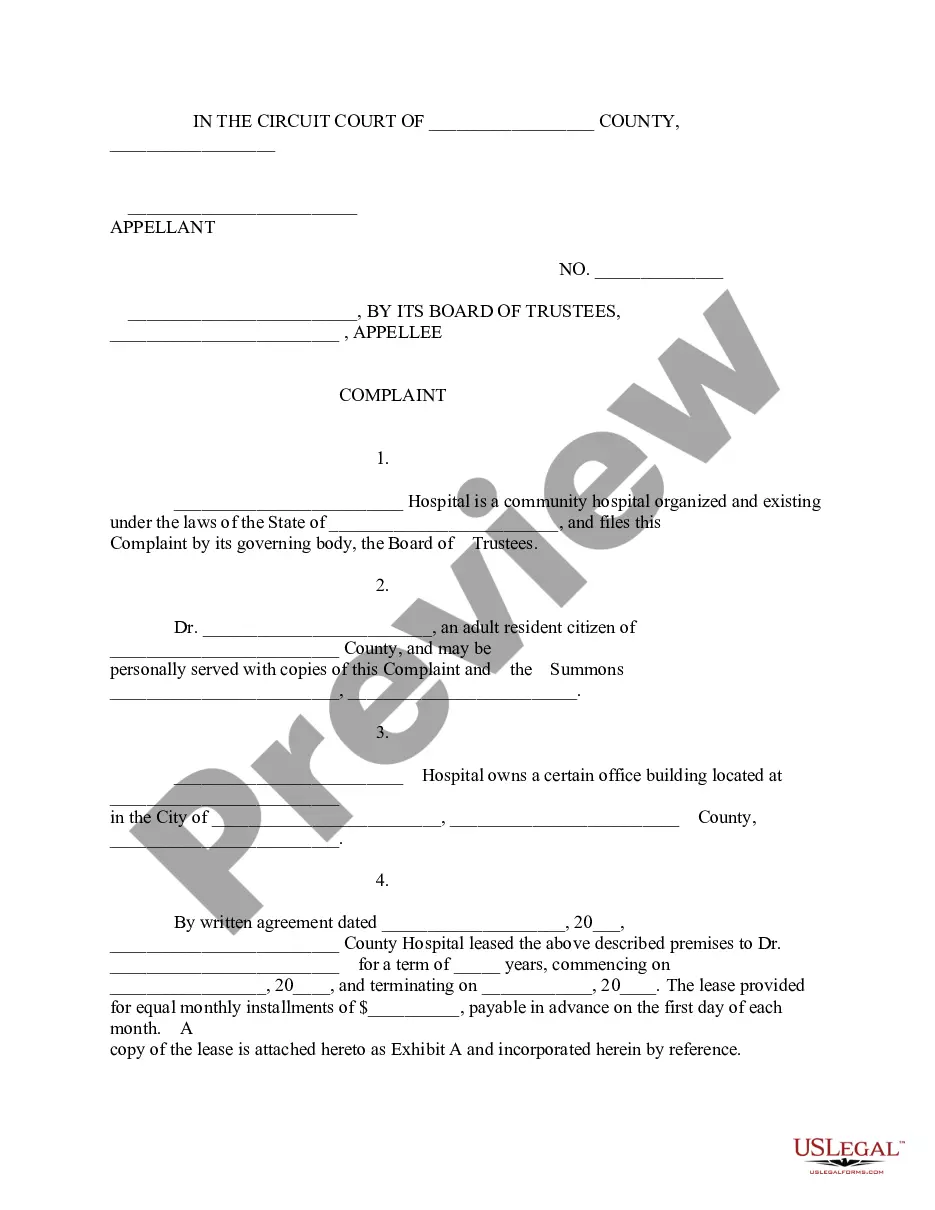
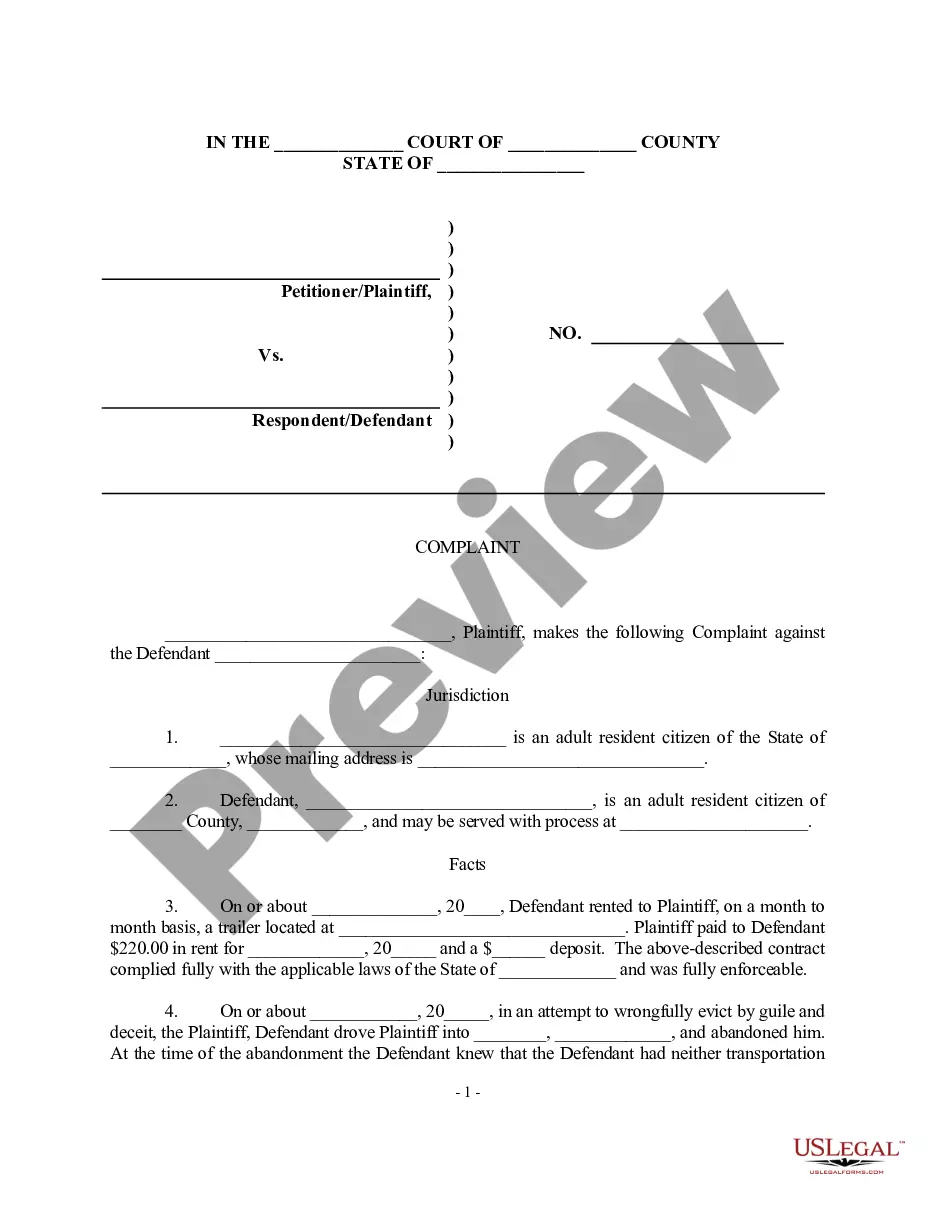
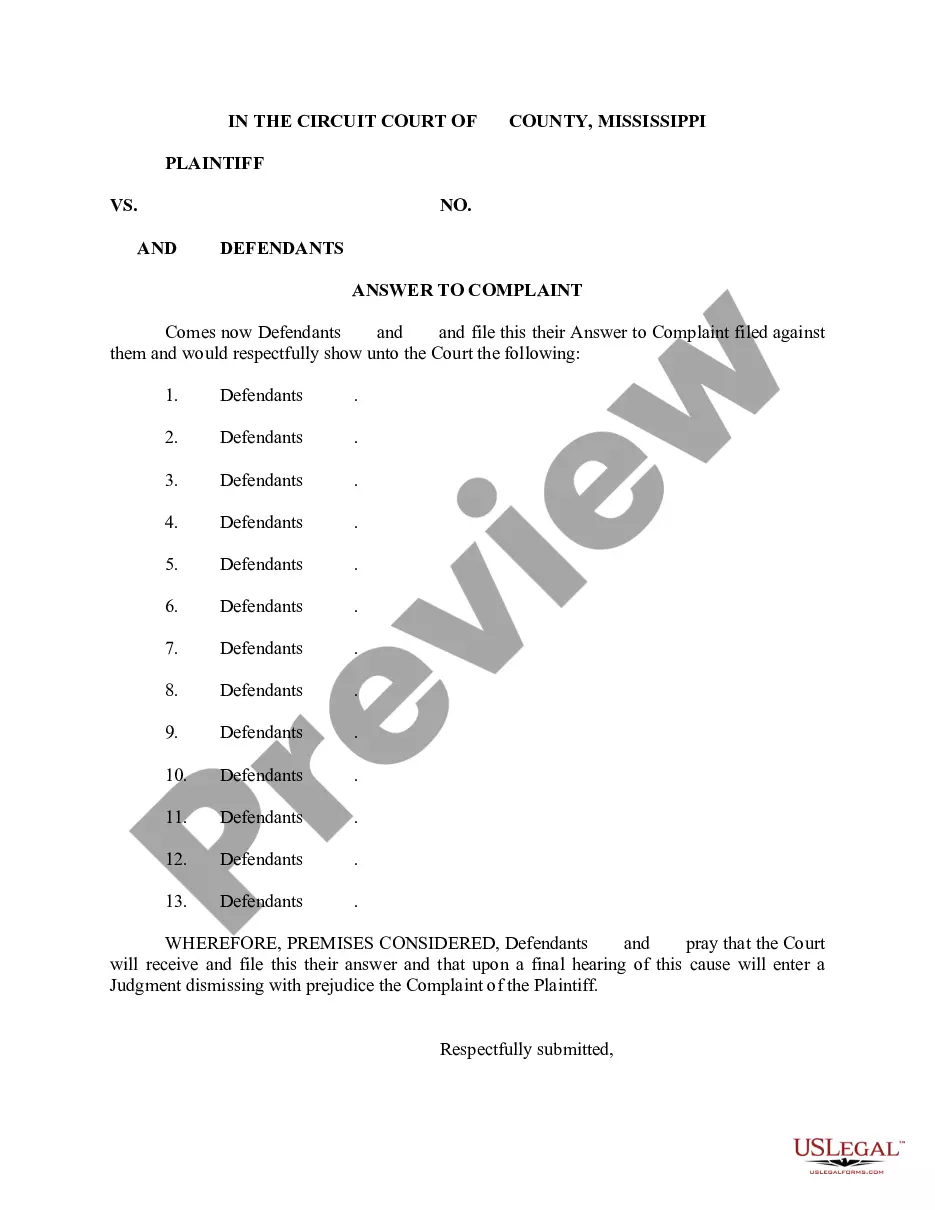
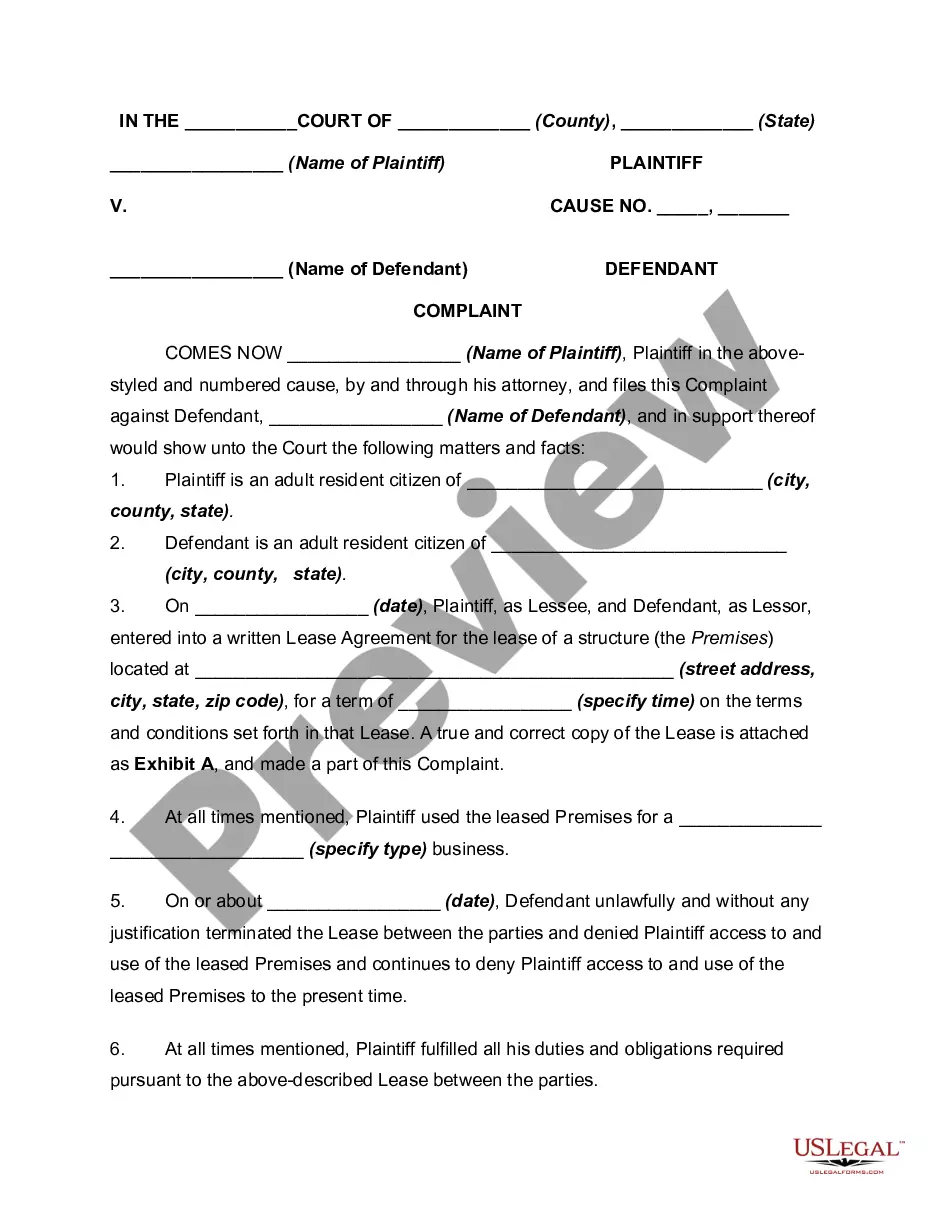
The Complaint - Lessor Failure to Return Security Deposit is a legal document that initiates a lawsuit when a former tenant seeks the return of their security deposit from their landlord. This form outlines the tenant's allegations regarding the landlord's refusal to return the deposit, distinguishing it from other types of complaints related to landlord-tenant disputes. It is essential for tenants who believe their rights regarding security deposits have been violated.
Key components of this form
- Caption: Includes the court's name, case title, and case number.
- Parties: Identifies the plaintiff (tenant) and defendant (landlord).
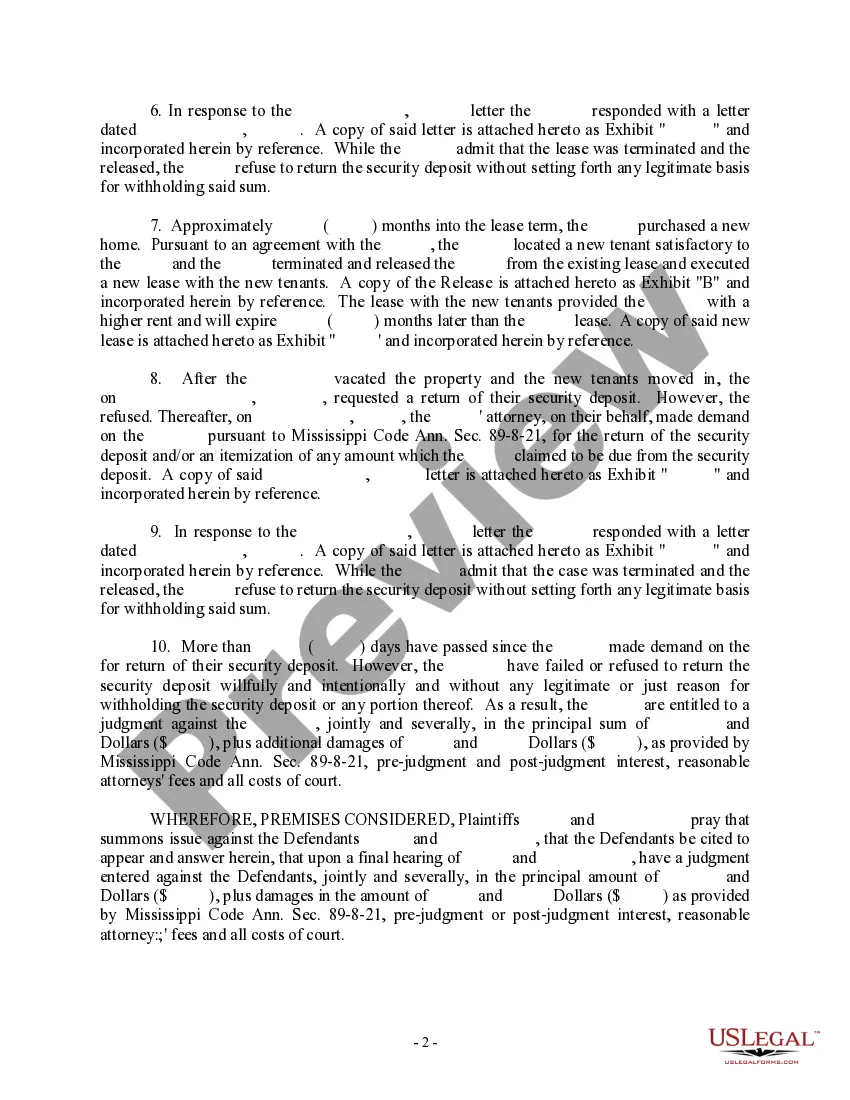
- Allegations: Details the reasons for the tenant's claim, including the amount of the security deposit and the landlord's non-compliance.
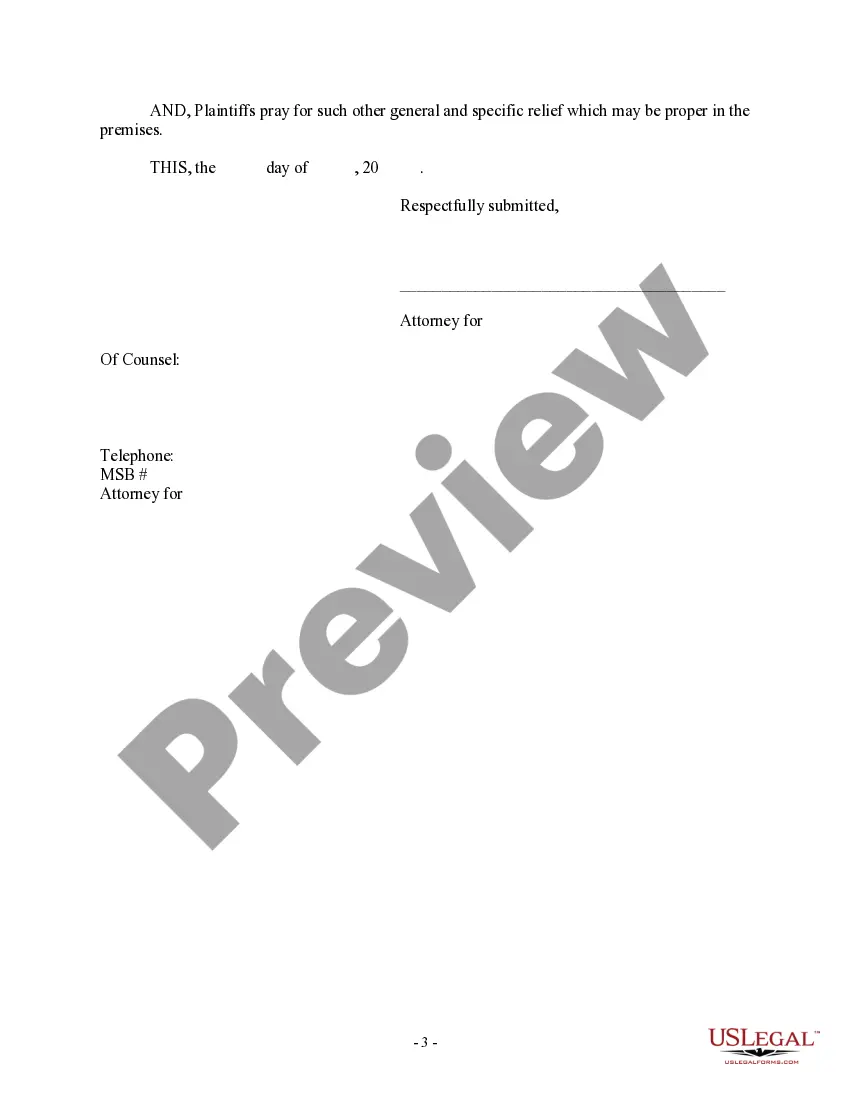
- Request for Relief: Specifies what the tenant is seeking, typically the return of the security deposit along with any additional damages.
- Signature Block: Includes space for the tenant's signature and date to formally submit the complaint.
Common use cases
This form should be used when a tenant has vacated a rental property and is seeking the return of their security deposit but has been denied by the landlord. It is suitable for cases where the landlord may have failed to provide a valid reason for withholding the deposit, potentially violating state or local tenant laws.
Who can use this document
- Former tenants seeking to reclaim their security deposit from a landlord.
- Individuals who have faced disagreement or dispute regarding the return of their deposit.
- Tenants who believe their landlord has acted unlawfully in withholding their security deposit.
Completing this form step by step
- Identify the parties by entering the names and addresses of the tenant and landlord.
- Specify the property by including the rental address associated with the security deposit.
- Detail the allegations by explaining the circumstances of the deposit non-return.
- Indicate the amount of the security deposit and any claimed damages.
- Sign and date the complaint, ensuring all information is accurate before submission.
Does this document require notarization?
This form usually doesn’t need to be notarized. However, local laws or specific transactions may require it. Our online notarization service, powered by Notarize, lets you complete it remotely through a secure video session, available 24/7.
Get your form ready online
Our built-in tools help you complete, sign, share, and store your documents in one place.
Make edits, fill in missing information, and update formatting in US Legal Forms—just like you would in MS Word.
Download a copy, print it, send it by email, or mail it via USPS—whatever works best for your next step.
Sign and collect signatures with our SignNow integration. Send to multiple recipients, set reminders, and more. Go Premium to unlock E-Sign.
If this form requires notarization, complete it online through a secure video call—no need to meet a notary in person or wait for an appointment.
We protect your documents and personal data by following strict security and privacy standards.

Make edits, fill in missing information, and update formatting in US Legal Forms—just like you would in MS Word.

Download a copy, print it, send it by email, or mail it via USPS—whatever works best for your next step.

Sign and collect signatures with our SignNow integration. Send to multiple recipients, set reminders, and more. Go Premium to unlock E-Sign.

If this form requires notarization, complete it online through a secure video call—no need to meet a notary in person or wait for an appointment.

We protect your documents and personal data by following strict security and privacy standards.
Avoid these common issues
- Failing to include all parties involved in the complaint.
- Not following the proper format required by court rules.
- Leaving out important details regarding the allegations.
- Not signing or dating the complaint upon completion.
Why use this form online
- Immediate access to a professionally drafted legal form tailored for your needs.
- Convenience of downloading in formats such as Word and Rich Text for easy editing.
- Time-saving by avoiding the need to draft the complaint from scratch.
Looking for another form?
Form popularity
FAQ
The landlord must return your security deposit within 21 days after you move-out. Your landlord must include an itemized list of any deductions taken from your deposit. The following table highlights the main provisions of California's Security Deposit Law.No, nonrefundable deposits are illegal.
If negotiating with your landlord doesn't work, you can then write a demand letter asking for the return of the deposit. It should include the main facts, your legal rights, what you want, and your intent to sue in small claims court if necessary.
You can use your scheme's 'alternative dispute resolution' (ADR) service to help you get your deposit back. You should use the ADR service if you can - it's free and easy to make a claim. You'll usually have to make your claim within 3 months of moving out of the property.
No, nonrefundable deposits are illegal. What Can A Landlord Deduct? Unpaid Rent, Damage in Excess of Normal Wear and Tear, and Cleaning Costs to Return the Unit Back to a Move-In Ready Condition.
The landlord is entitled to deduct from the rental deposit any expenses incurred repairing any damage to the property which occurred during the tenancy. The remainder of the money must then be refunded to the tenant no later than 14 days after the restoration of the property as dictated by the Act.
From 1 June 2019, when the Tenant Fees Act comes into effect, it's illegal for a letting agent to charge you fees when you rent a new property, or renew your tenancy. As part of the new legislation, deposits are also capped, reducing the amount that renters need to pay up front.
You can use your scheme's 'alternative dispute resolution' (ADR) service to help you get your deposit back. You should use the ADR service if you can - it's free and easy to make a claim. You'll usually have to make your claim within 3 months of moving out of the property.
You will generally have three calendar months from the date you vacate the property or from the date the deposit is unprotected, whichever is sooner, in which to raise a dispute. Please note that this is three months less one day.
The term non-refundable deposit or deposit should not be used for any fees or costs charged to the tenant that the tenant will not be refunded.If these fees are charged upfront they cannot be charged again at move out.