Mississippi Order to Disburse Funds on Motion of the Plaintiffs
Overview of this form
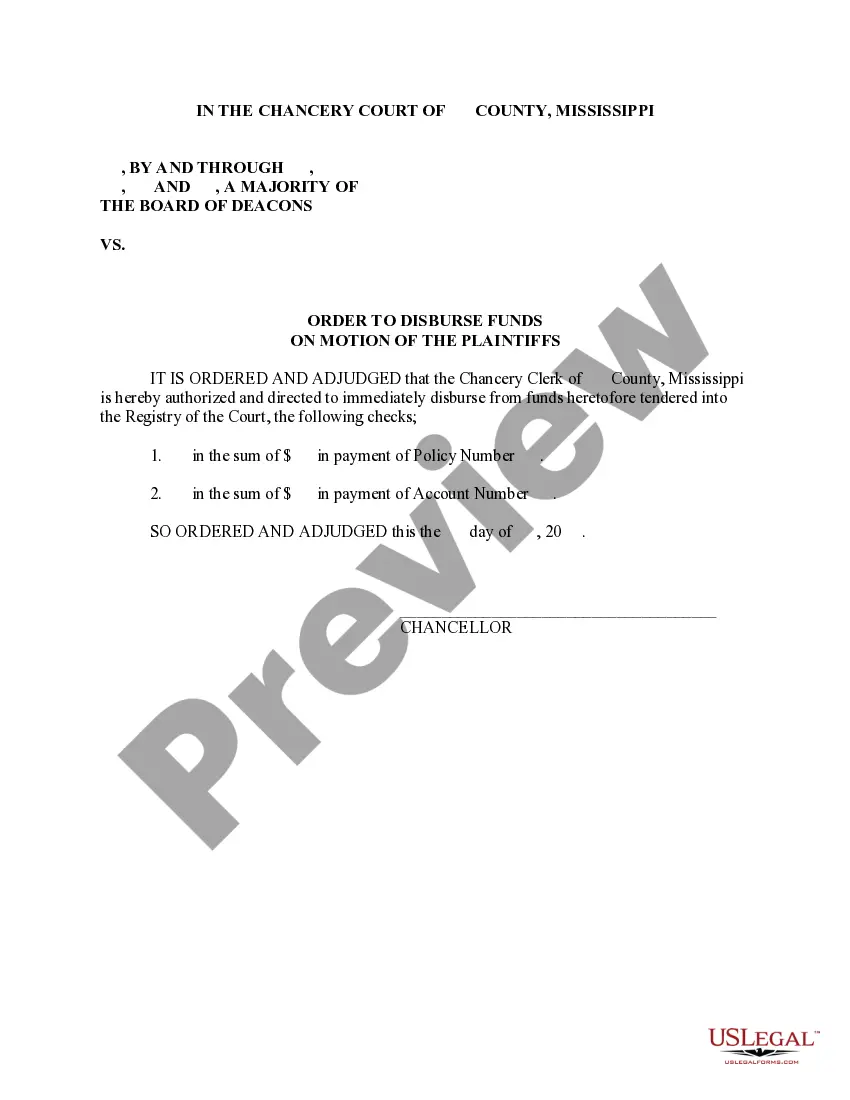
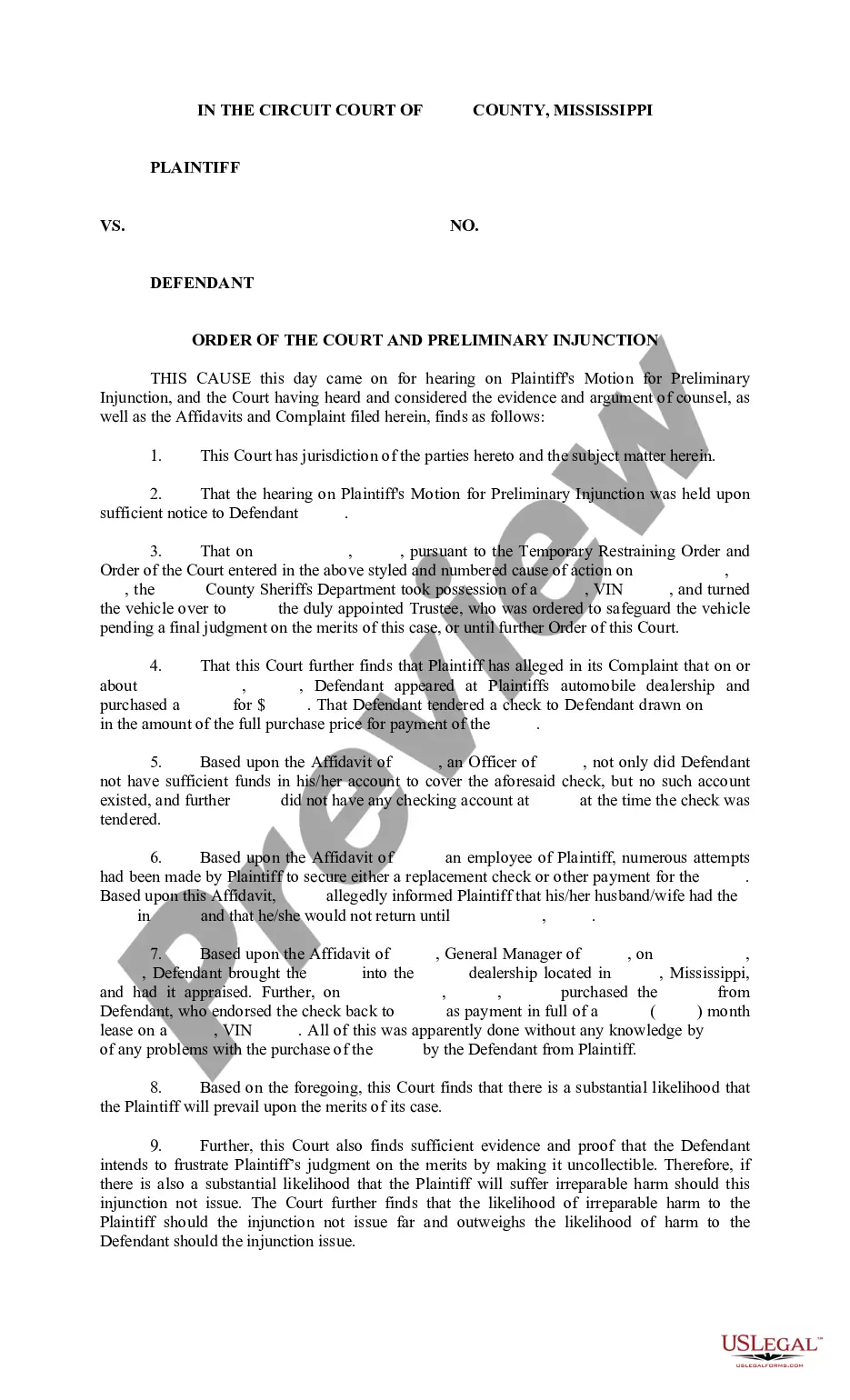
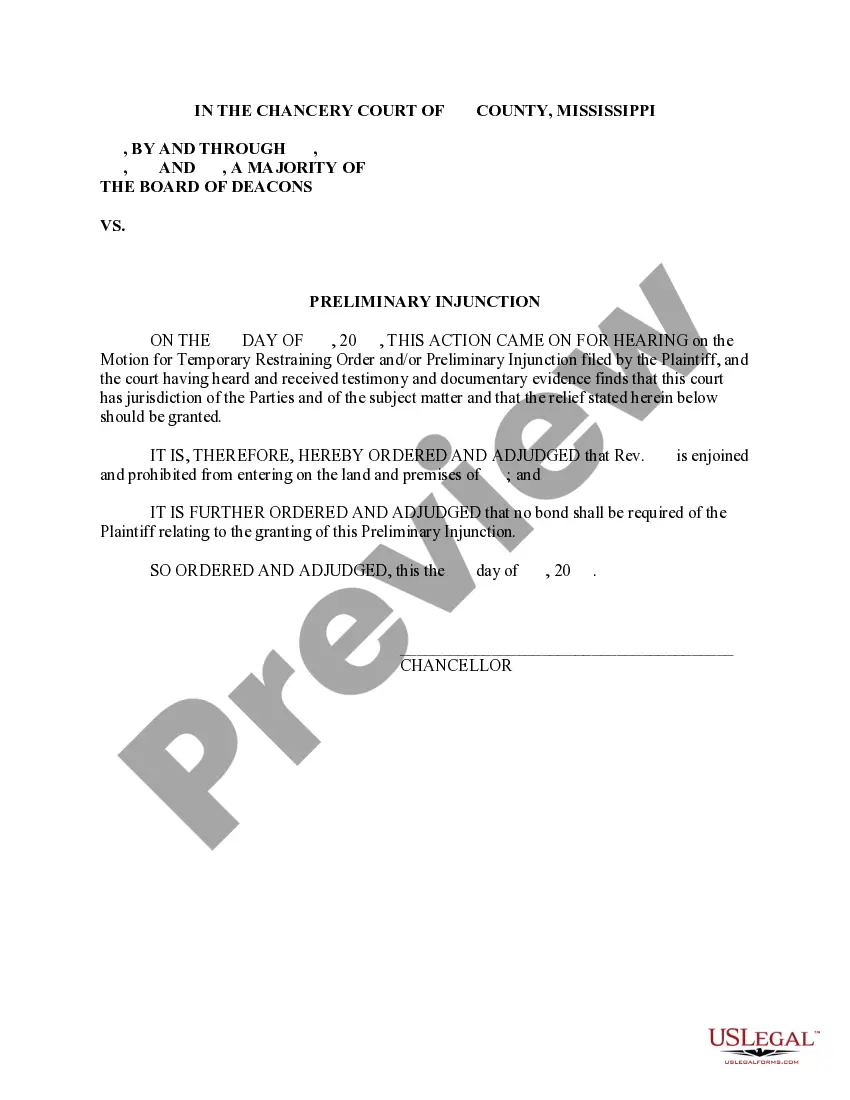
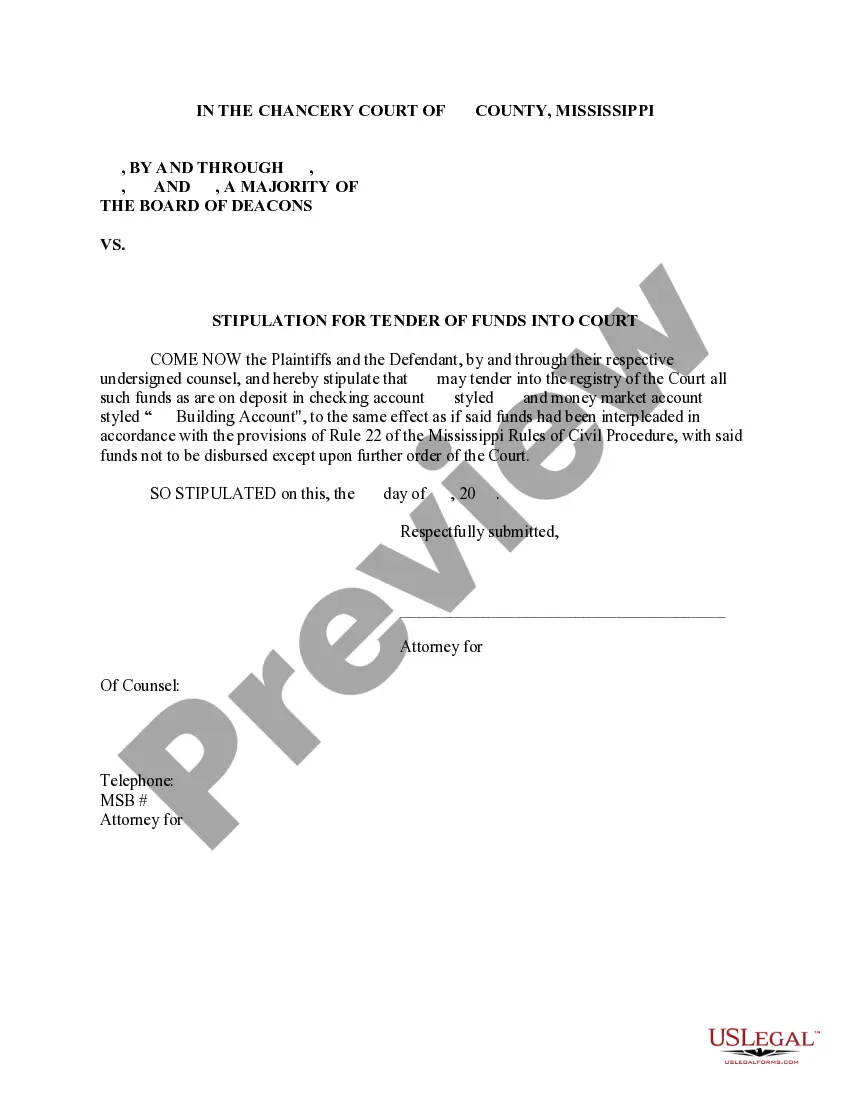
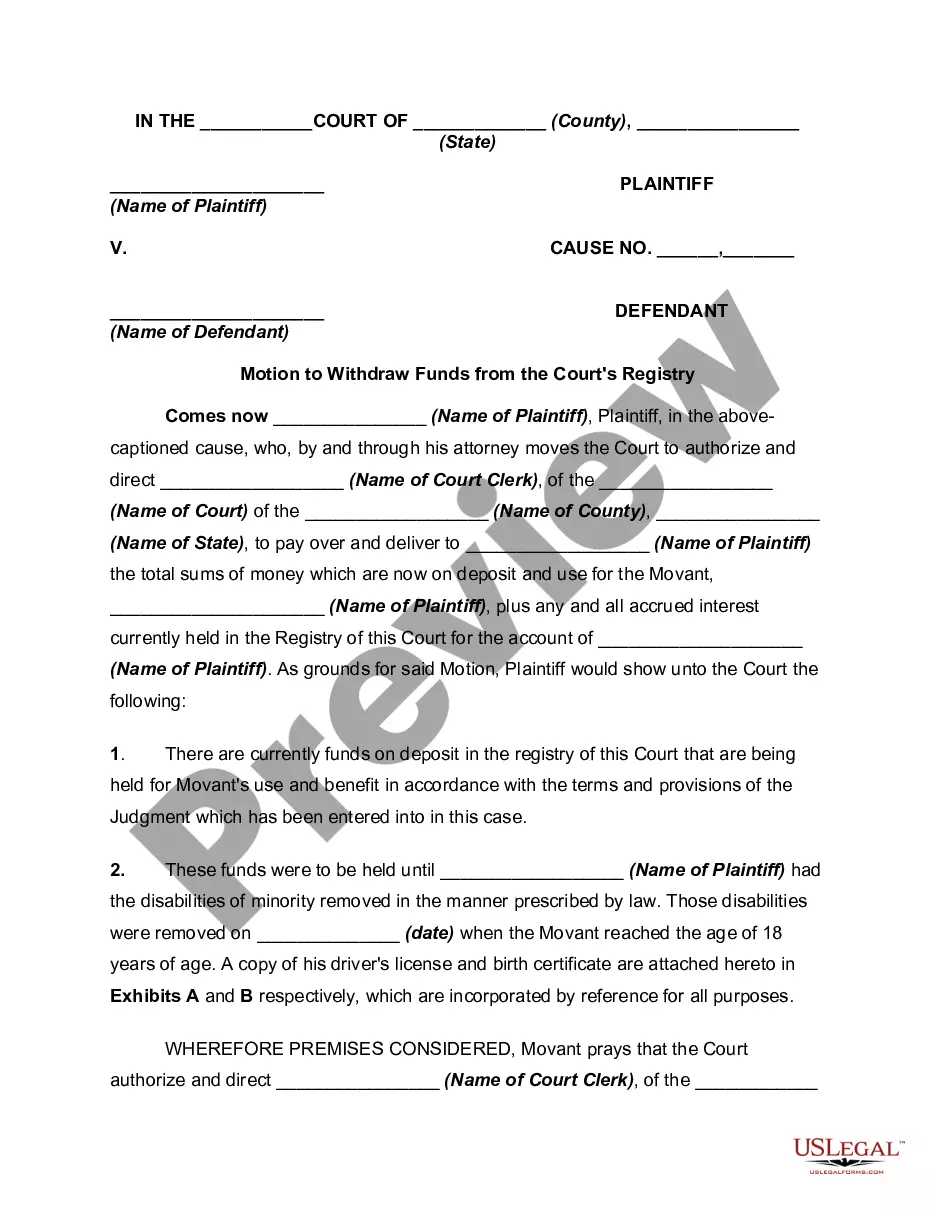
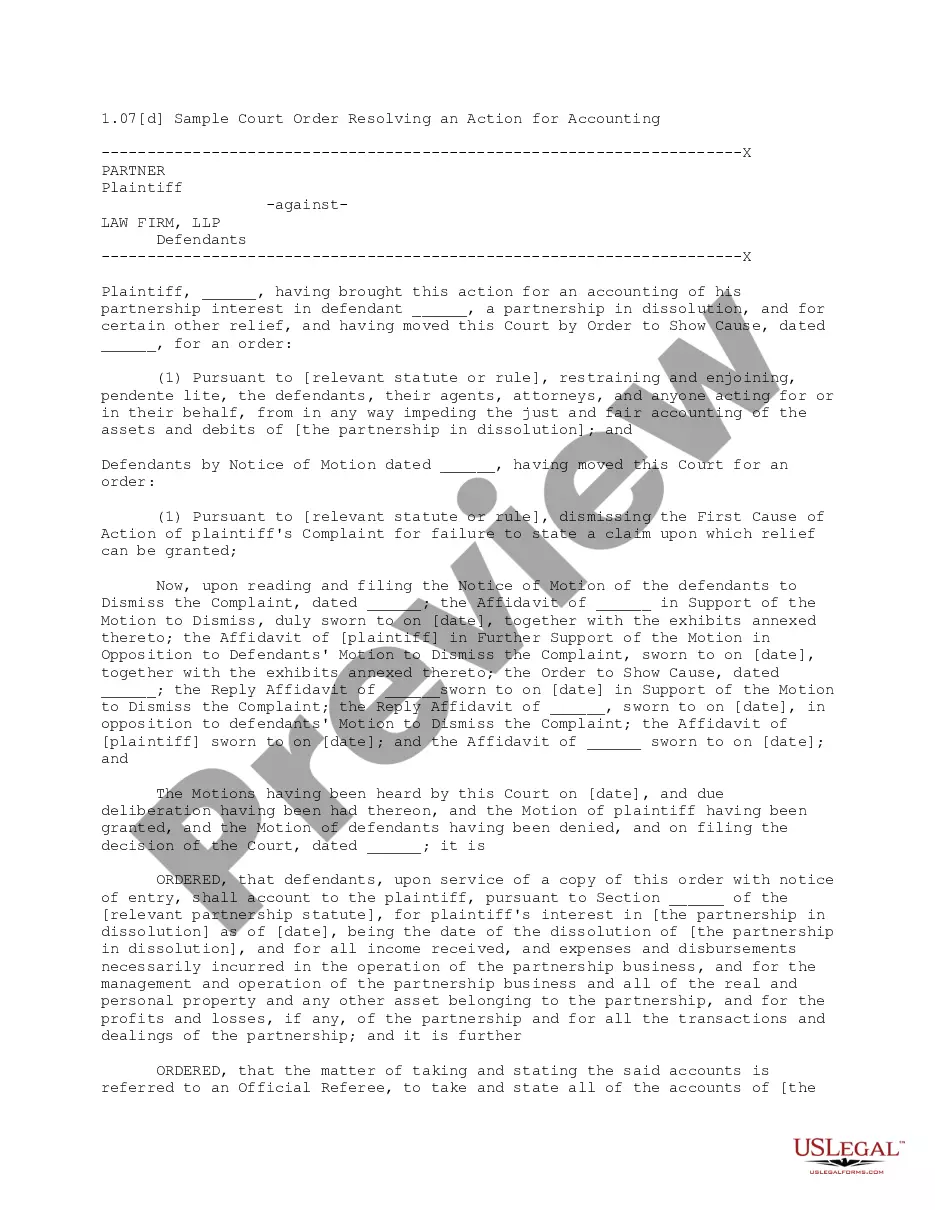
The Order to Disburse Funds on Motion of the Plaintiffs is a legal document used in Mississippi chancery courts to request the release of funds held in the court's registry. This form specifically instructs the defendant to disburse those funds, differentiating itself from other forms that may deal with more general financial agreements or requests. It is essential for ensuring that the court's order is followed promptly.
Key components of this form
- Case caption, identifying the parties involved in the legal action.
- Specification of the funds to be disbursed, including amounts and payment details.
- Authorization for the Chancery Clerk to release the specified funds.
- Date and signature section for official validation by the Chancellor.
When to use this form
This form should be used when plaintiffs have received a favorable ruling and seek to have specific funds disbursed from the courtâs registry. Situations may include settling claims, receiving insurance payouts, or redistributing funds associated with a legal dispute where the court has previously held funds pending resolution.
Who this form is for
This form is intended for:
- Plaintiffs in a legal action who have received a judgment requiring fund disbursement.
- Attorneys representing parties seeking the release of funds from the courtâs registry.
- Chancellors or court officials involved in the administration of such fund disbursements.
How to complete this form
- Identify the parties involved in the case and accurately label the caption.
- Specify the amounts to be disbursed and the associated payment details (policy or account numbers).
- Fill in the Chancery Clerk's name and the county where the court is located.
- Ensure all necessary signatures are obtained, including that of the Chancellor.
- Date the form appropriately before filing it with the court.
Is notarization required?
This form does not typically require notarization unless specified by local law. However, it is advisable to check with the appropriate Chancery Court in Mississippi for any specific additional requirements.
Get your form ready online
Our built-in tools help you complete, sign, share, and store your documents in one place.
Make edits, fill in missing information, and update formatting in US Legal Forms—just like you would in MS Word.
Download a copy, print it, send it by email, or mail it via USPS—whatever works best for your next step.
Sign and collect signatures with our SignNow integration. Send to multiple recipients, set reminders, and more. Go Premium to unlock E-Sign.
If this form requires notarization, complete it online through a secure video call—no need to meet a notary in person or wait for an appointment.
We protect your documents and personal data by following strict security and privacy standards.

Make edits, fill in missing information, and update formatting in US Legal Forms—just like you would in MS Word.

Download a copy, print it, send it by email, or mail it via USPS—whatever works best for your next step.

Sign and collect signatures with our SignNow integration. Send to multiple recipients, set reminders, and more. Go Premium to unlock E-Sign.

If this form requires notarization, complete it online through a secure video call—no need to meet a notary in person or wait for an appointment.

We protect your documents and personal data by following strict security and privacy standards.
Typical mistakes to avoid
- Failing to include all required payment details, such as policy and account numbers.
- Not obtaining the Chancellor's signature before submission.
- Entering incorrect dates or amounts, which can delay the disbursement process.
Why use this form online
- Instant access to pre-drafted legal forms created by licensed attorneys.
- Convenient downloading and editing options for personalization.
- Secure storage and easy retrieval of your completed forms.
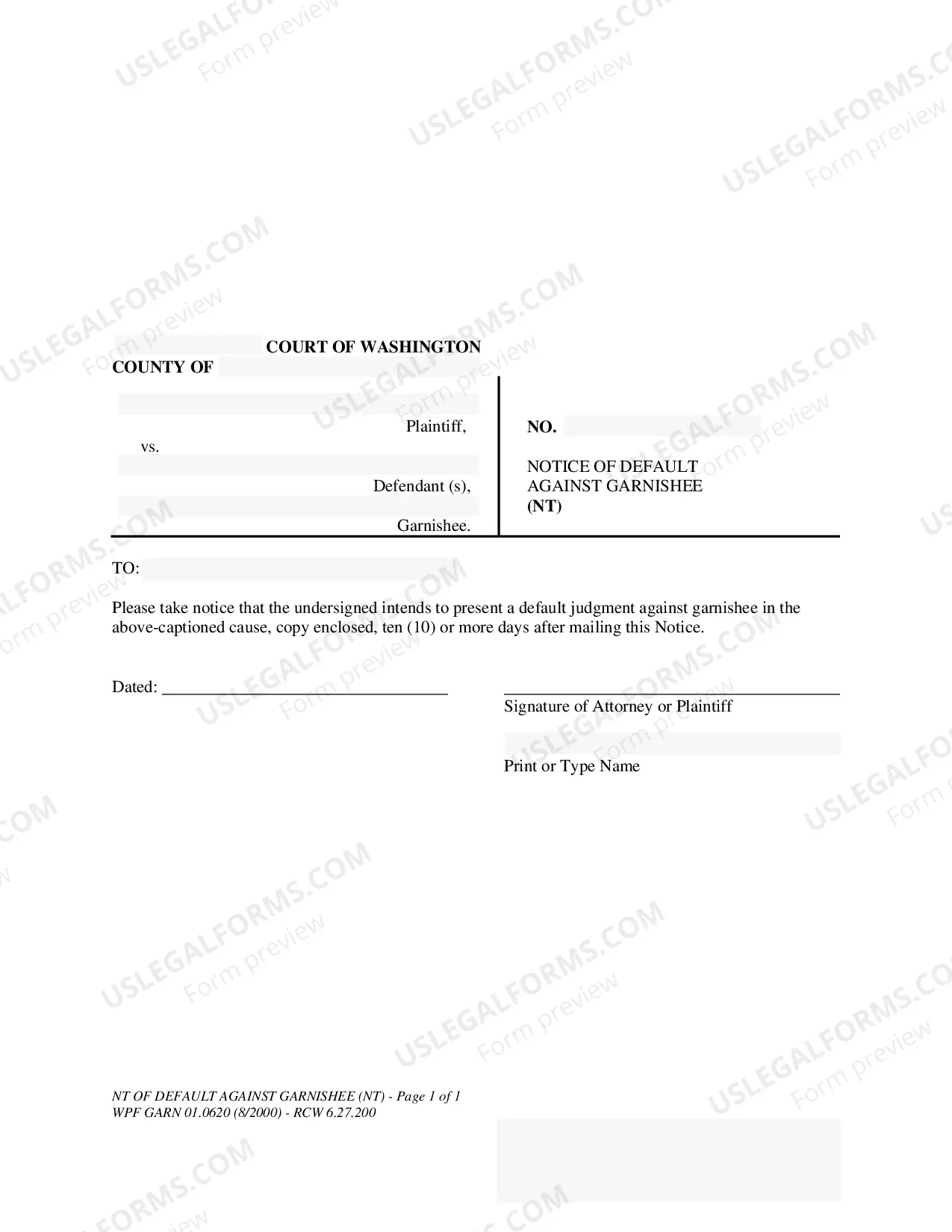
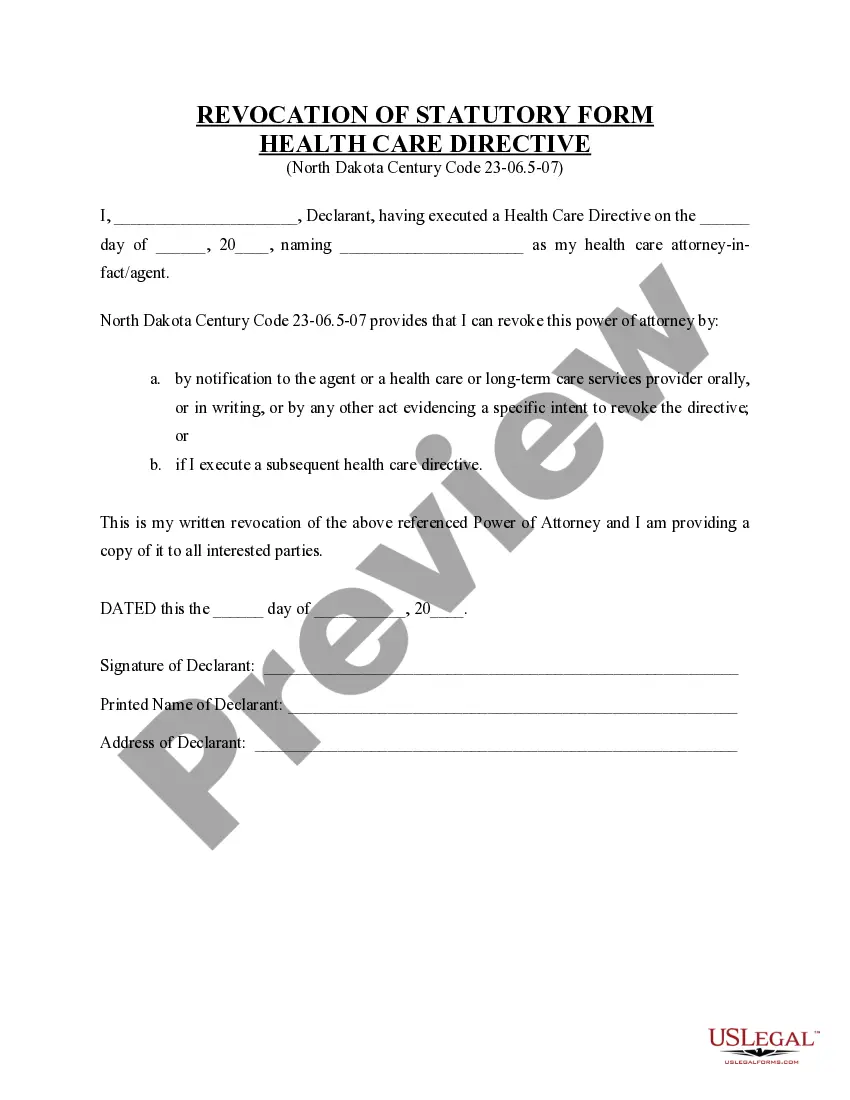
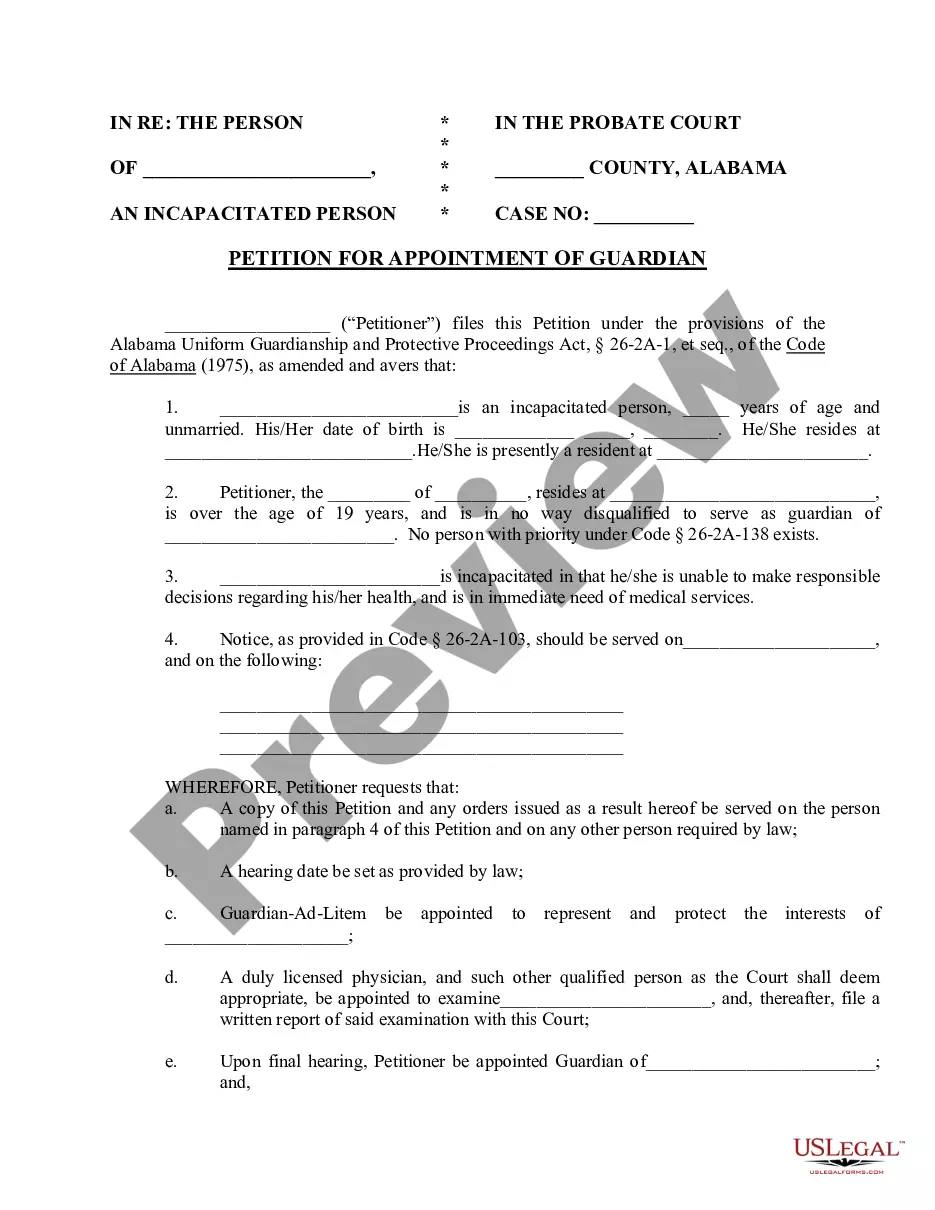
Looking for another form?
Form popularity
FAQ
At its most basic, a cattle brand is composed of a few simple letters and numbers, possibly in combination with a basic shape or symbols like a line, circle, heart, arc, or diamond.
The books are often available in county libraries or state archives; some state livestock boards may search their records for a fee. If you're lucky, the state will have digitized historical brand books. Search Utah's Division of Animal Industry's brand books from 1849 to 1930 on the state archives Web site.
Go to your state's brand registration office and ask to see the listing of already registered brands. This will give you some ideas, as well as show you what's no longer available. The brand registration officer will help you in the design process. Choose letters, numbers or symbols to create your brand.
Brands are read from left to right, from the top down or from the outside to the inside. If a letter or symbol is made backwards from its normal position, it's read as a reverse. A letter partially over on its face or back is said to be tumbling. If a letter lies horizontally on its face or back, it is called lazy.
Choosing the brand Be simple and unique. A brand is a mark others will identify with your cattle operation for years to come. To be legally binding, the brand must have at least two characters and be at least 3 inches in diameter.
A brand is filed based upon its first letter or character. Brands are read from left to right, top to bottom, or outside to inside. Brands that contain letters, numbers or characters having rafters, quarter circles, or bars above or below are listed under the letter, number or character category.
Livestock branding is a technique for marking livestock so as to identify the owner.Other forms of livestock identification include freeze branding, inner lip or ear tattoos, earmarking, ear tagging, and radio-frequency identification (RFID), which is tagging with a microchip implant.