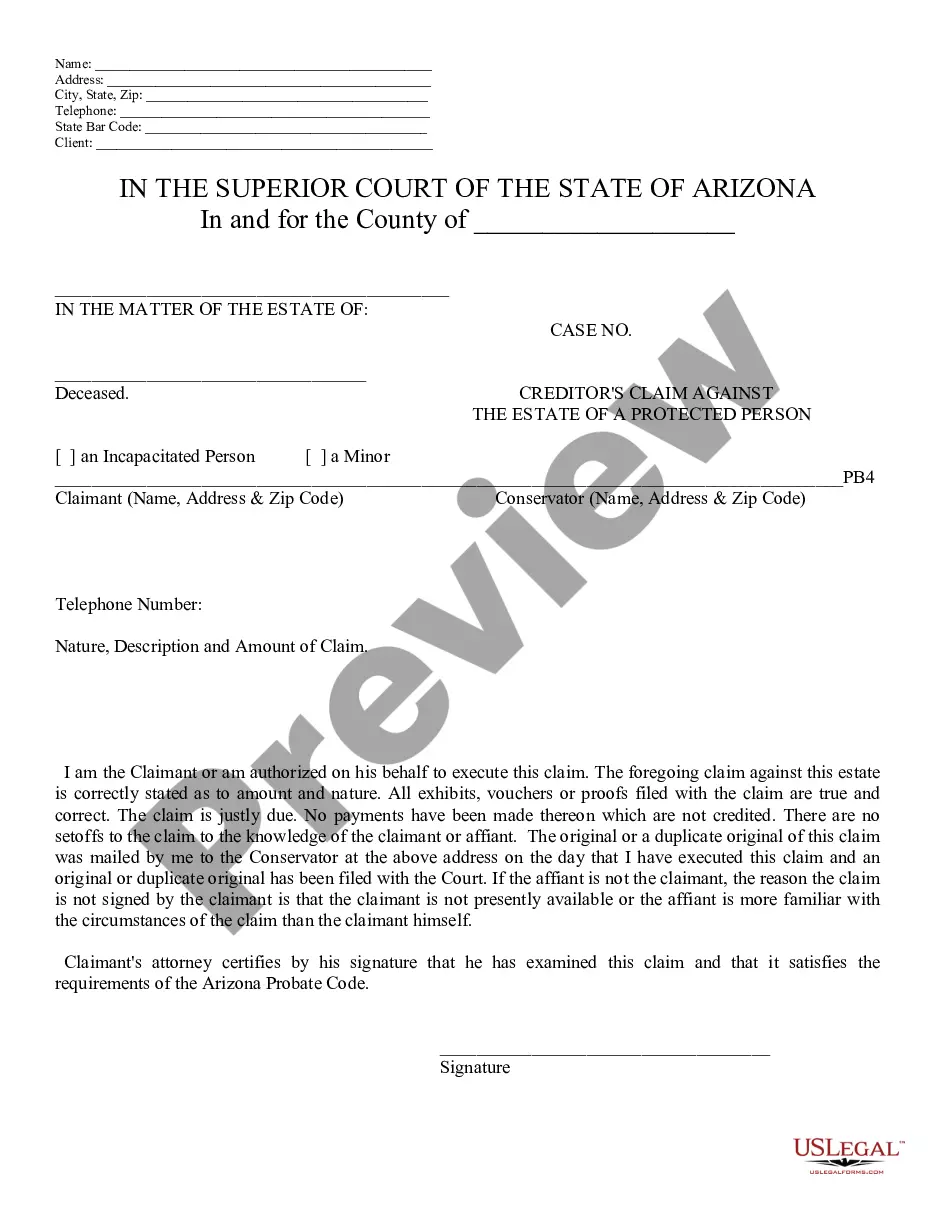
Mississippi Substitute Trustee's Deed
What is this form?
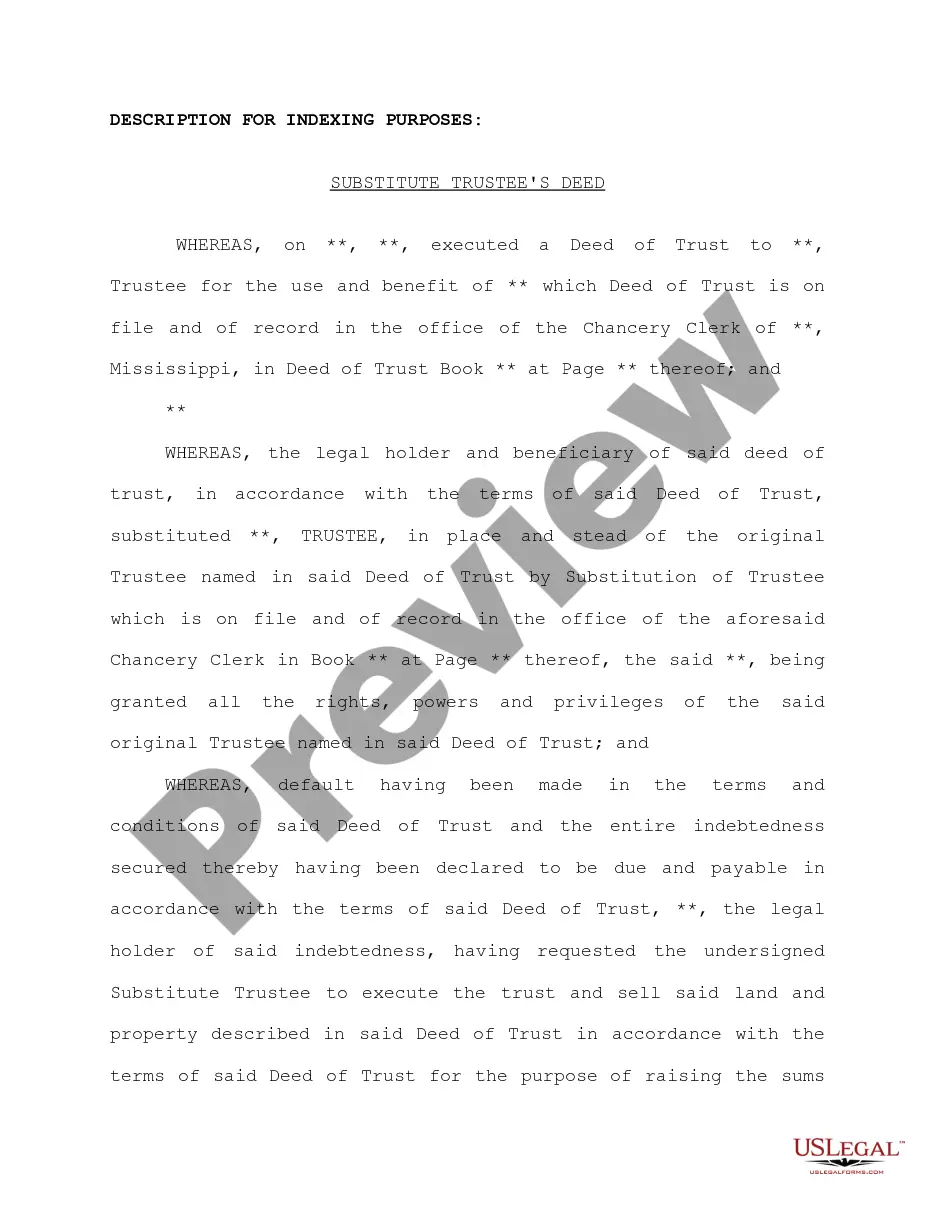
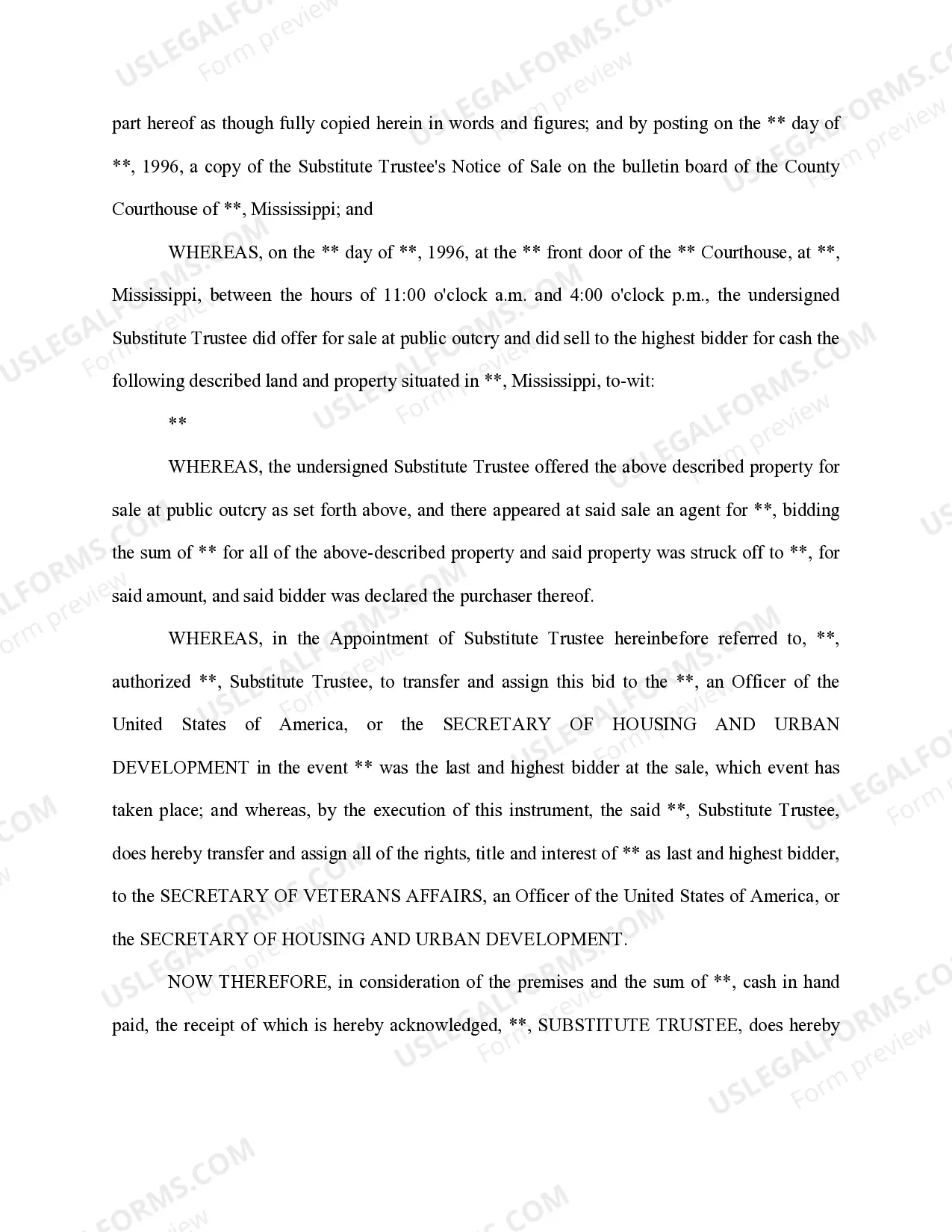
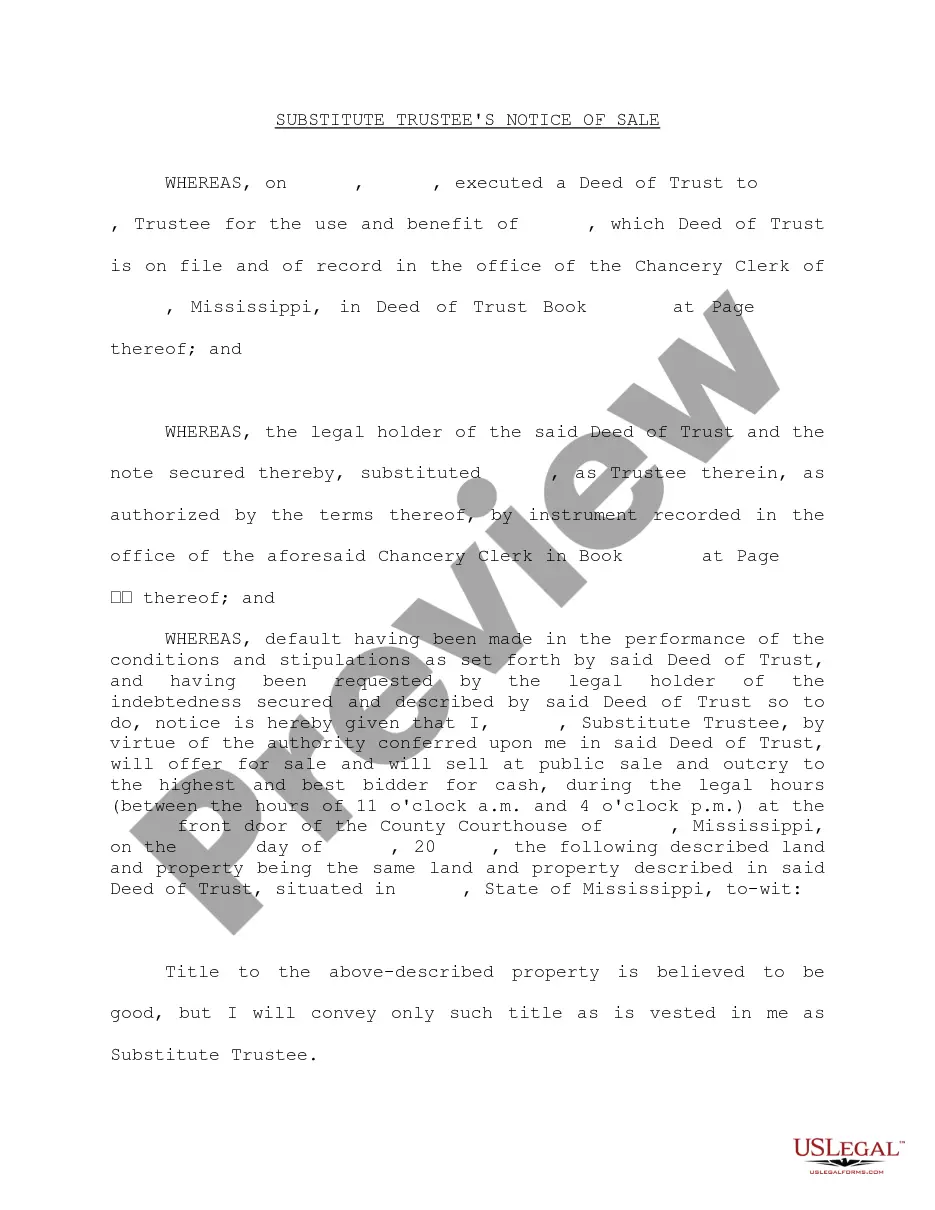
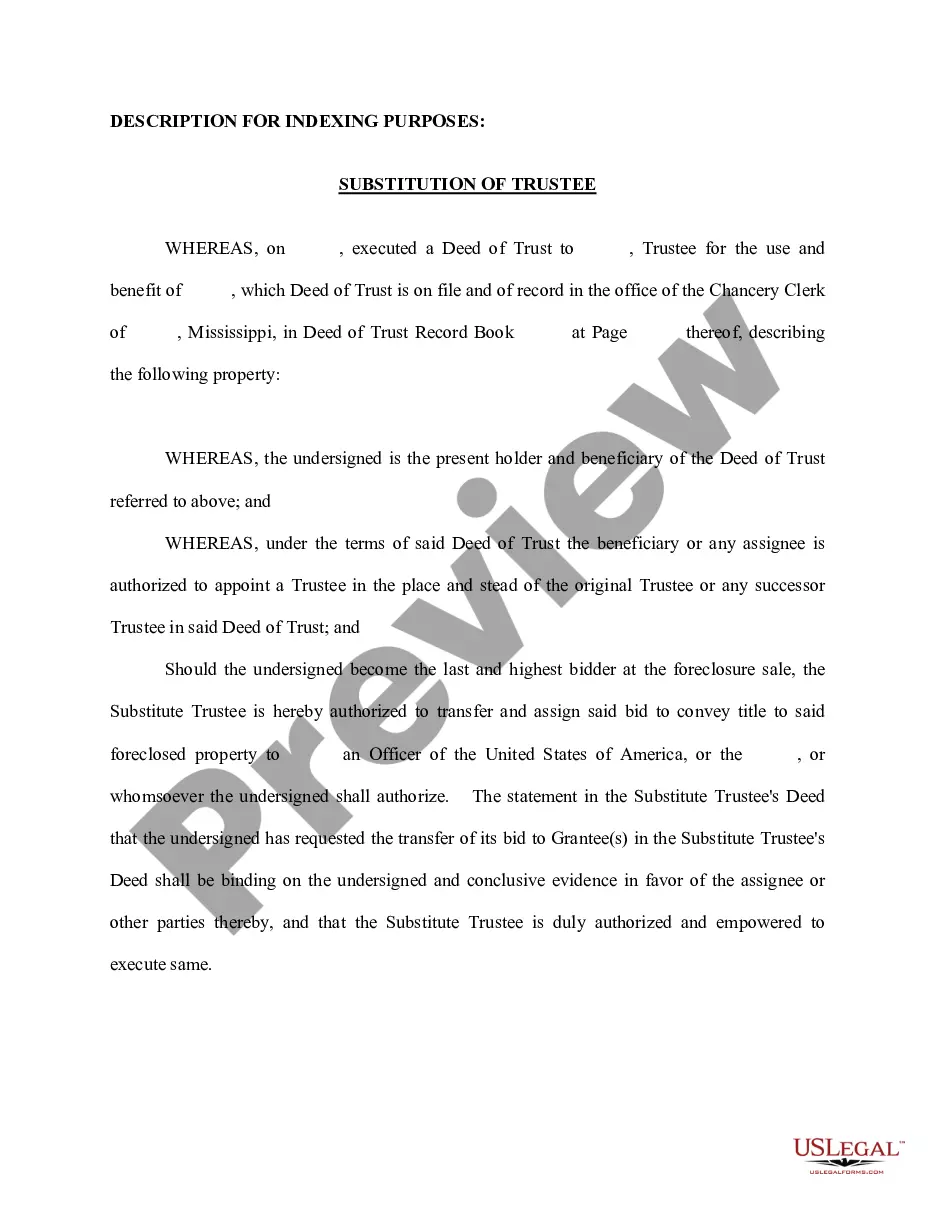
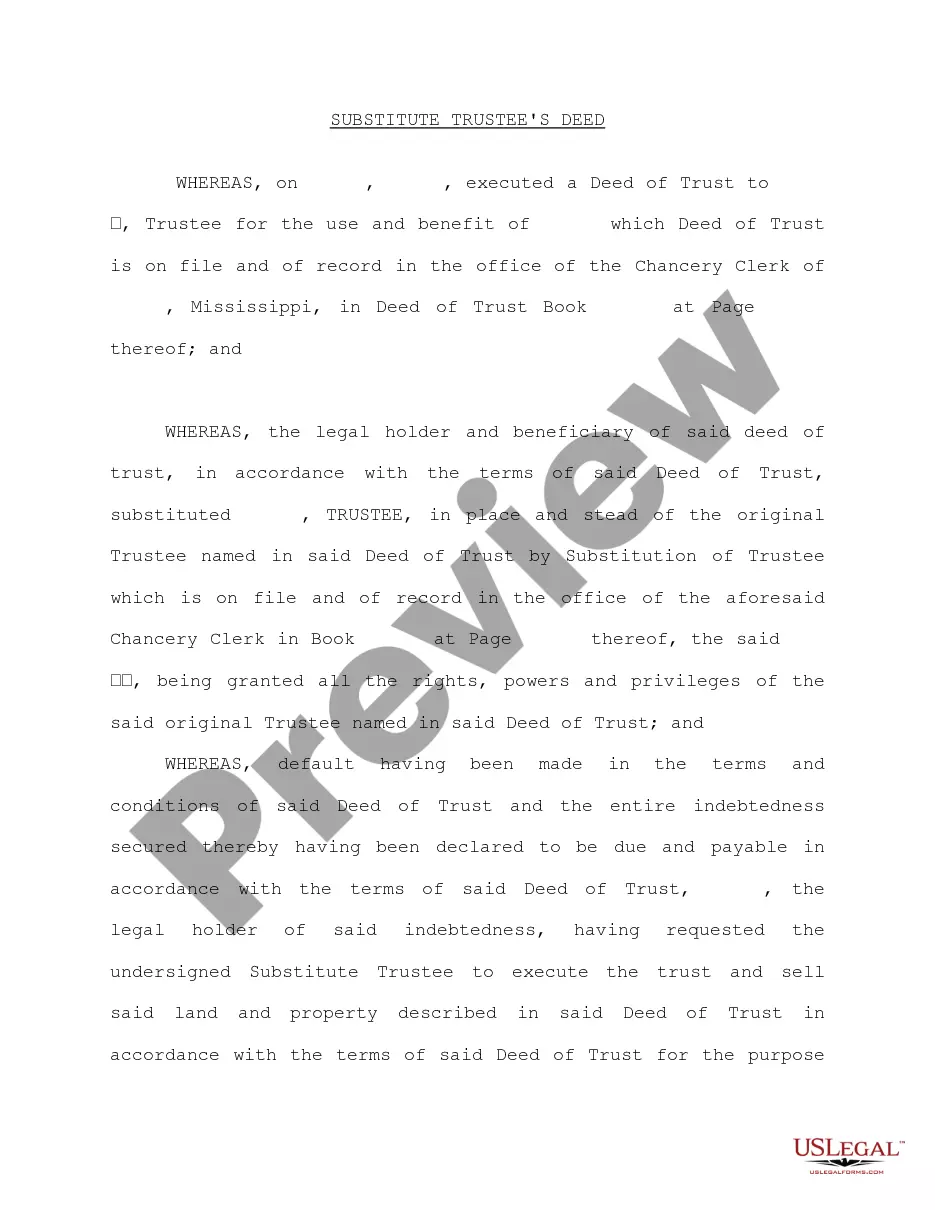
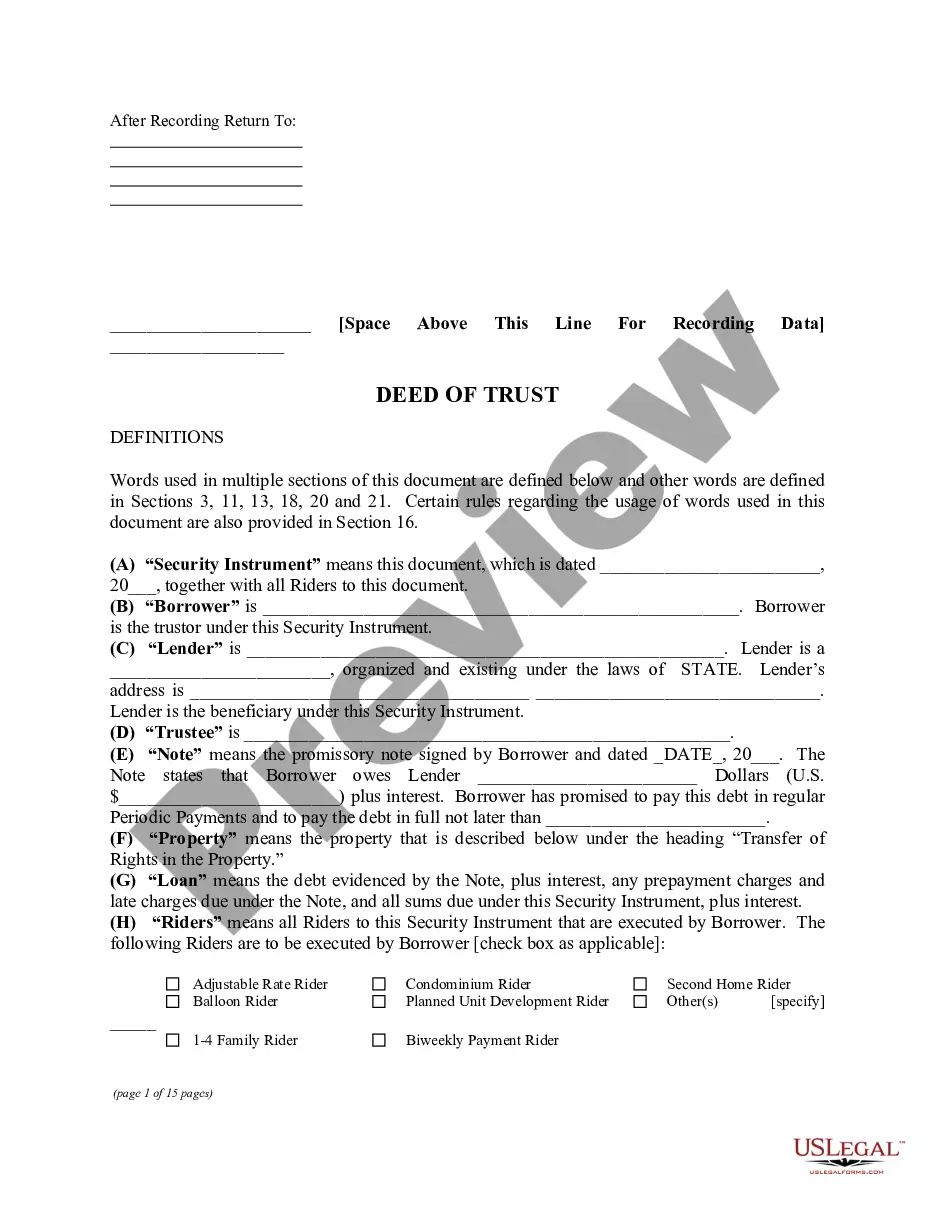
The Substitute Trustee's Deed is a legal document used in property transactions to transfer property ownership when a substitute trustee is appointed. This deed differs from a standard property deed as it specifically pertains to situations involving a trustee, often in the context of a foreclosure or other transfer of interest in real estate. It is essential for ensuring that the transfer adheres to state regulations and protects all parties involved in the transaction.
Main sections of this form
- Identification of the property being transferred.
- Names of the current owner and substitute trustee involved in the transaction.
- A detailed description of the transfer circumstances.
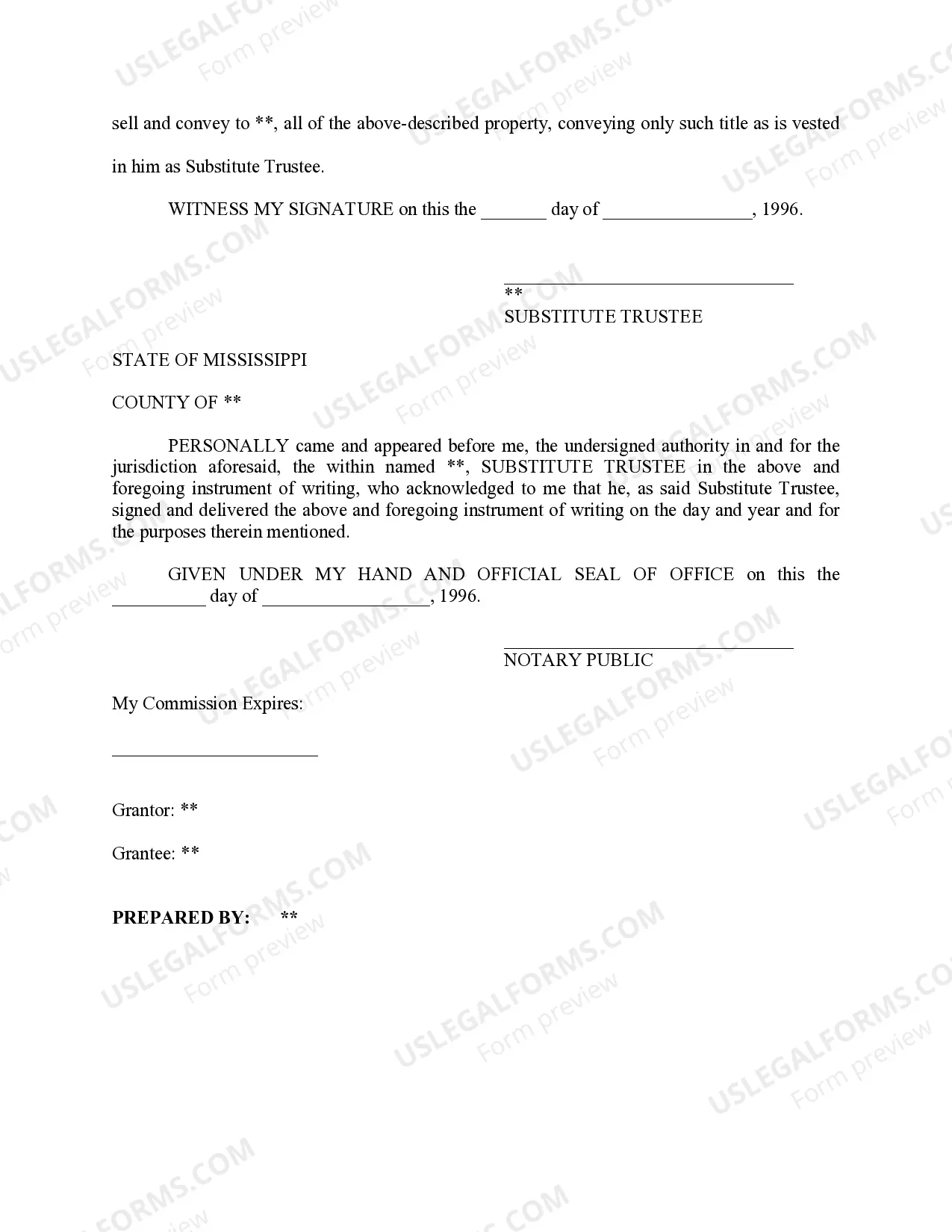
- Signatures of the parties required to validate the deed.
- Date of the deed execution.
Situations where this form applies
This form is typically used during the transfer of property when a substitute trustee is designated, such as in mortgage foreclosure proceedings or when the original trustee is unable to perform their duties. It is essential in situations where a trustee needs to transfer property rights legally on behalf of the borrower.
Who can use this document
This form is suitable for:
- Trustees appointed to manage real estate properties.
- Property owners involved in a transfer of their property through a substitute trustee.
- Individuals or parties involved in foreclosure proceedings.
- Real estate professionals seeking to facilitate property transfers.
Completing this form step by step
- Identify and include the full legal description of the property being transferred.
- Enter the names and details of all parties involved, including the current owner and the substitute trustee.
- State the reason for the transfer and the context under which the substitute trustee is acting.
- Ensure all parties sign the deed in the appropriate sections.
- Record the date of execution for the document.
Notarization guidance
This form needs to be notarized to ensure legal validity. US Legal Forms provides secure online notarization powered by Notarize, allowing you to complete the process through a verified video call, available anytime.
Get your form ready online
Our built-in tools help you complete, sign, share, and store your documents in one place.
Make edits, fill in missing information, and update formatting in US Legal Forms—just like you would in MS Word.
Download a copy, print it, send it by email, or mail it via USPS—whatever works best for your next step.
Sign and collect signatures with our SignNow integration. Send to multiple recipients, set reminders, and more. Go Premium to unlock E-Sign.
If this form requires notarization, complete it online through a secure video call—no need to meet a notary in person or wait for an appointment.
We protect your documents and personal data by following strict security and privacy standards.

Make edits, fill in missing information, and update formatting in US Legal Forms—just like you would in MS Word.

Download a copy, print it, send it by email, or mail it via USPS—whatever works best for your next step.

Sign and collect signatures with our SignNow integration. Send to multiple recipients, set reminders, and more. Go Premium to unlock E-Sign.

If this form requires notarization, complete it online through a secure video call—no need to meet a notary in person or wait for an appointment.

We protect your documents and personal data by following strict security and privacy standards.
Mistakes to watch out for
- Failing to include all necessary parties in the document.
- Not providing a complete legal description of the property.
- Incorrectly executing the signatures or failing to notarize the document if necessary.
- Using outdated forms that do not comply with current state requirements.
Why complete this form online
- Convenient access to legal forms anytime, without the need for in-person consultations.
- Editable templates that allow for customization to meet individual needs.
- Assured compliance with current legal standards drafted by licensed attorneys.
Looking for another form?
Form popularity
FAQ
A Trustee's Deed Upon Sale, also known as a Trustee's Deed Under Sale or a Trustee's Deed is a deed of foreclosure. This deed is prepared after a property's foreclosure sale and recorded in the county were the property is located.The property may be in default on taxes, have mechanic's liens and/or other encumbrances.
A Substitution of Trustee is a form filed when a successor trustee takes the place of a previous trustee. For example: if you assume a loan the Substitution of Trustee/Deed of Reconveyance is recorded in the name of the original borrower, not the current homeowner.
The trustee is a neutral third-party who holds the legal title to a property until the borrower pays off the loan in full. They're called a trustee because they hold the property in trust for the lender.
A Substitution of Trustee is a form filed when a successor trustee takes the place of a previous trustee. For example: if you assume a loan the Substitution of Trustee/Deed of Reconveyance is recorded in the name of the original borrower, not the current homeowner.
A substitution of trustee is a legal document that provides public notice regarding a foreclosure. California is one of several states that allows for mortgage foreclosure through a private transaction called a trustee's sale.
The trustee will then issue a reconveyance deed, which gives the legal title of the property to you.Instead, the original trustee, or sometimes the loan servicing company, will appoint a new Substitute Trustee to handle the foreclosure. To do this, they must file an Appointment of Substitute Trustees.
A document known as a substitution of trustee and full reconveyance identifies the person who has the authority to reconvey the property and remove the lien.Once the document is registered, it establishes the borrower as the sole owner of the property, which is now free and clear of the previous mortgage.
A mortgage holder issues a deed of reconveyance to indicate that the borrower has been released from the mortgage debt. The deed transfers the property title from the lender, also called the beneficiary, to the borrower. This document is most commonly used when a mortgage has been paid in full.