Mississippi Escrow Release
About this form
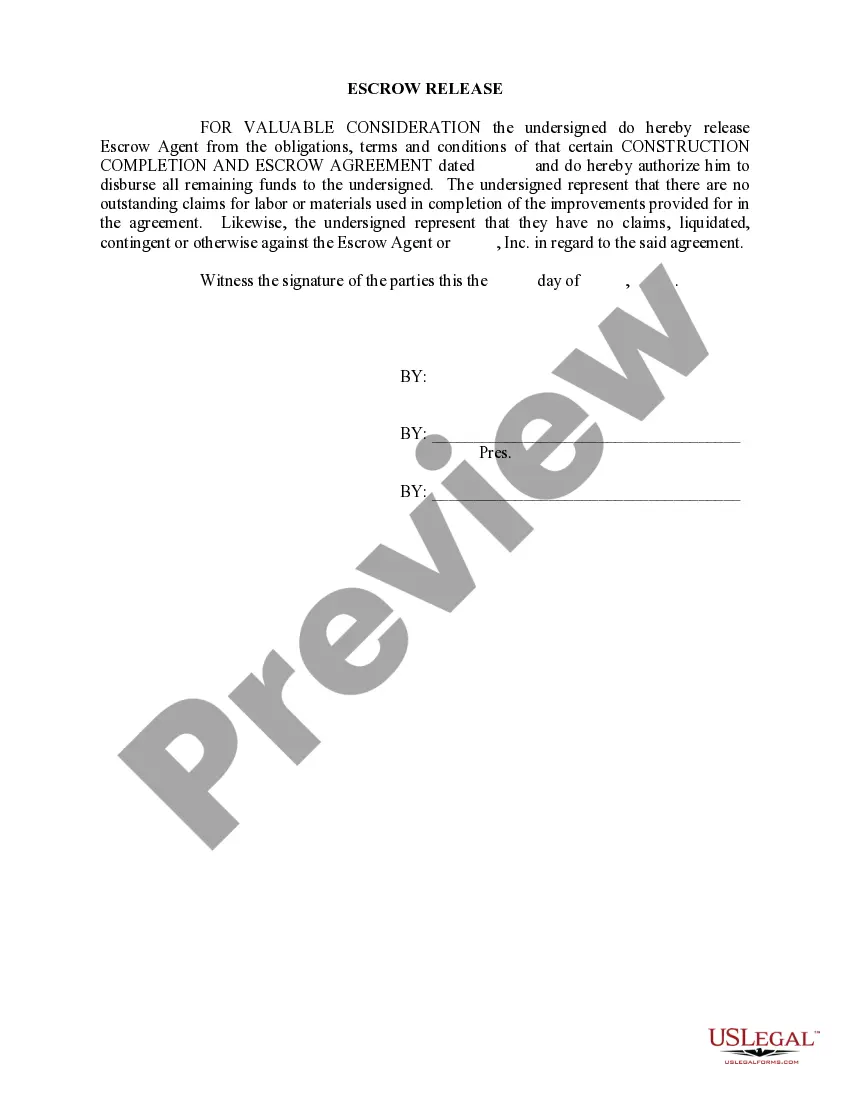
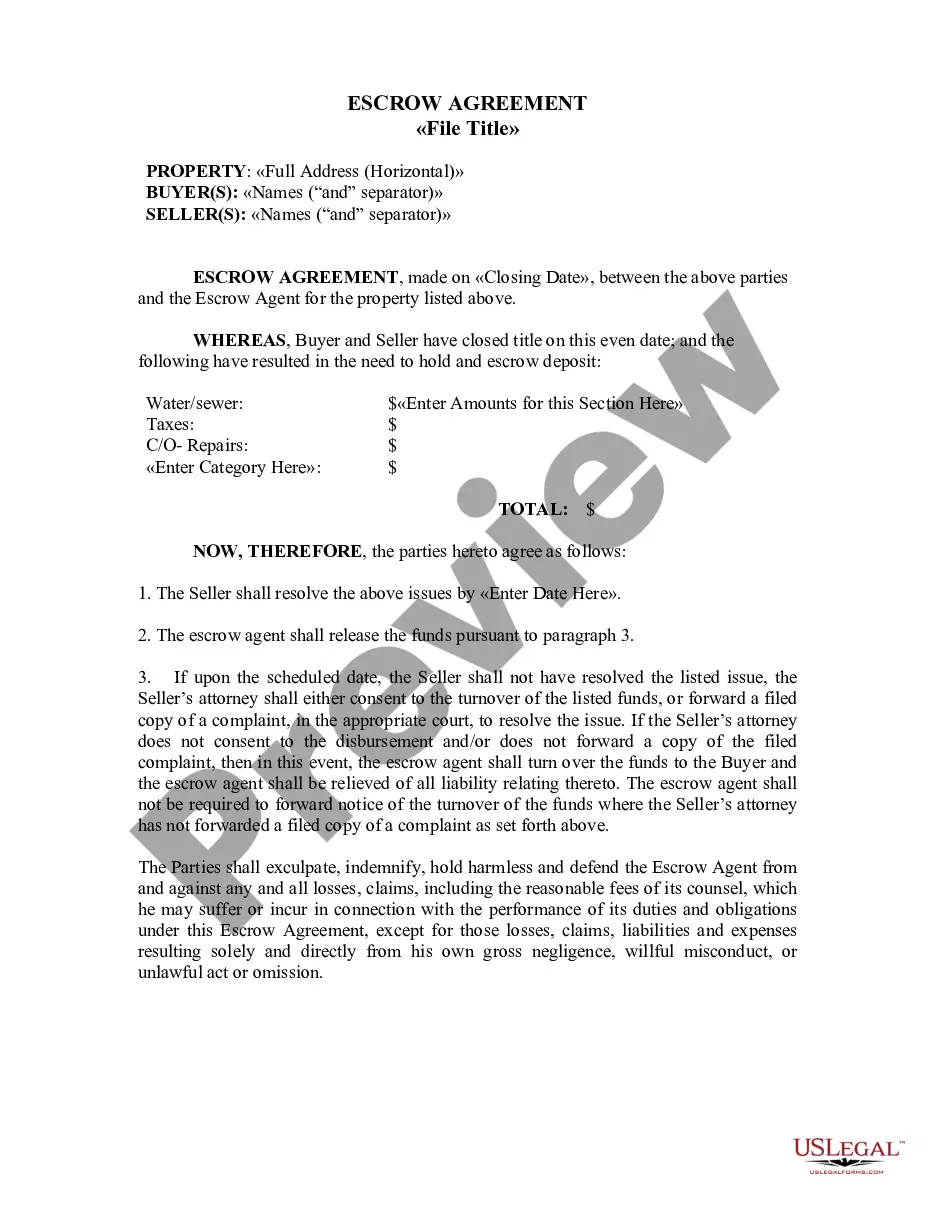
The escrow release form is a legal document that formally releases an Escrow Agent from their responsibilities as defined in a Construction Completion and Escrow Agreement. This form allows the Escrow Agent to disburse the remaining funds held in escrow to the parties specified. Unlike other escrow-related documents, the escrow release focuses specifically on concluding the agent's duties and ensuring the proper transfer of funds.
Key parts of this document
- Identification of the Escrow Agent and the parties involved.
- A statement releasing the Escrow Agent from their obligations.
- Authorization for the disbursement of escrow funds.
- Signatures of the parties involved to confirm agreement.

Common use cases
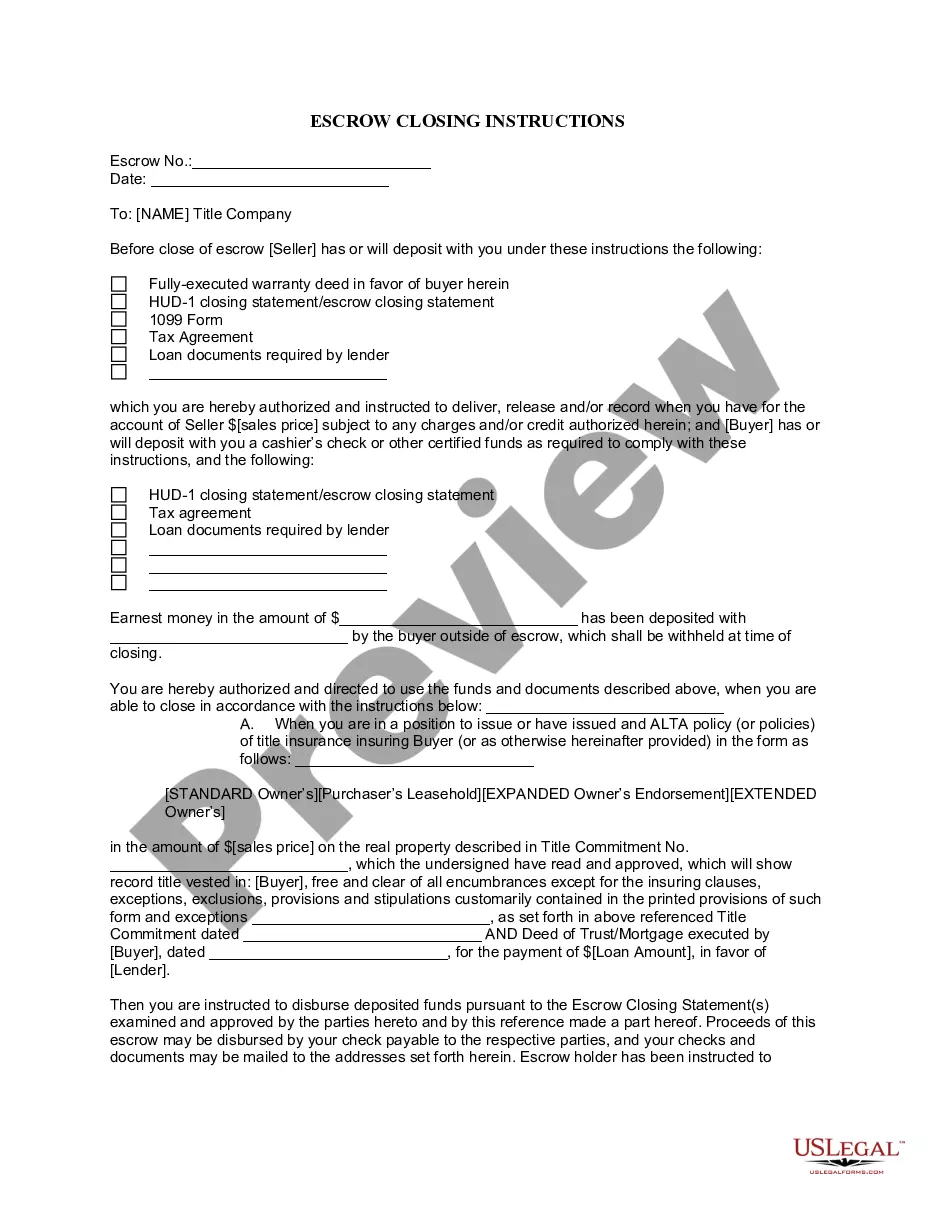
Use the escrow release form when a construction project has been completed, and the funds held in escrow need to be released. This form is essential when the agreement has been fulfilled, and all parties involved agree on the disbursement of the remaining funds. It is commonly used by homeowners, contractors, and real estate professionals to finalize transactions efficiently.
Who can use this document
- Homeowners who have completed construction projects.
- Contractors who require fund disbursement after project completion.
- Real estate professionals dealing with escrow accounts.
Completing this form step by step
- Identify the involved parties, including the Escrow Agent and those receiving the funds.
- Specify the total amount held in escrow and confirm that all parties agree on its release.
- Provide necessary dates relevant to the escrow agreement and release.
- Have all parties sign the document to validate the agreement.
Does this document require notarization?
In most cases, this form does not require notarization. However, some jurisdictions or signing circumstances might. US Legal Forms offers online notarization powered by Notarize, accessible 24/7 for a quick, remote process.
Get your form ready online
Our built-in tools help you complete, sign, share, and store your documents in one place.
Make edits, fill in missing information, and update formatting in US Legal Forms—just like you would in MS Word.
Download a copy, print it, send it by email, or mail it via USPS—whatever works best for your next step.
Sign and collect signatures with our SignNow integration. Send to multiple recipients, set reminders, and more. Go Premium to unlock E-Sign.
If this form requires notarization, complete it online through a secure video call—no need to meet a notary in person or wait for an appointment.
We protect your documents and personal data by following strict security and privacy standards.

Make edits, fill in missing information, and update formatting in US Legal Forms—just like you would in MS Word.

Download a copy, print it, send it by email, or mail it via USPS—whatever works best for your next step.

Sign and collect signatures with our SignNow integration. Send to multiple recipients, set reminders, and more. Go Premium to unlock E-Sign.

If this form requires notarization, complete it online through a secure video call—no need to meet a notary in person or wait for an appointment.

We protect your documents and personal data by following strict security and privacy standards.
Avoid these common issues
- Not clearly identifying all parties involved in the escrow agreement.
- Failing to include the total amount to be disbursed.
- Not obtaining all required signatures, which can invalidate the release.
Benefits of using this form online
- Convenience of downloading the form instantly in your preferred format.
- Easy editing to customize details before finalizing.
- Access to templates drafted by licensed attorneys for accuracy and reliability.
Key takeaways
- The Escrow Release form is essential for finalizing transactions in construction escrow agreements.
- Completing this form correctly ensures the smooth release of funds.
- Understanding common mistakes can help avoid issues during the agreement process.
Looking for another form?
Form popularity
FAQ
Withdraw in Writing You must withdraw from escrow in writing. In California, buyers must usually provide written notice to the seller before canceling via a Notice to Seller to Perform. The written cancellation of contract and escrow that follows must then be signed by the seller to officially withdraw from escrow.
Funding typically occurs within 1 to 2 hours after all parties sign the closing documents. If you are really impatient, you're welcome to ask the title company to sign the funding documents first.
To be perfectly clear, you can always back out of a real estate purchase contract at any time before closing. There's no way the seller can force you to actually purchase the home. However, if there's no valid reason for backing out as defined in the contract, you'll likely lose your earnest deposit.
Closing day is payday, and in most cases, you'll be able to collect your home sale profit as soon as the ink dries on the final documents. Pick a Monday through Thursday closing date during local banking hours for the speediest payment. Close on a Friday, and you may have to wait until Monday to receive payment.
In California, the seller can give the buyer a Demand to Close Escrow. If the buyer doesn't close escrow within the time frame outlined in the document, the seller can cancel the escrow and move forward to retain the earnest deposit.
When buyers cancel their real estate deals sellers may sue for breach of contract and monetary damages. "Specific performance" may also be a legal remedy for a property seller if a buyer backs out of the deal.A property seller might sue his buyer for specific performance to force that buyer to purchase the property.
Earnest money is an initial payment that a homebuyer offers to a seller in order to sign a purchase agreement letter.The only other acceptable reason to release earnest money funds is under instruction from a court order. This usually occurs if the deal becomes contentious, or there are unforeseen issues.
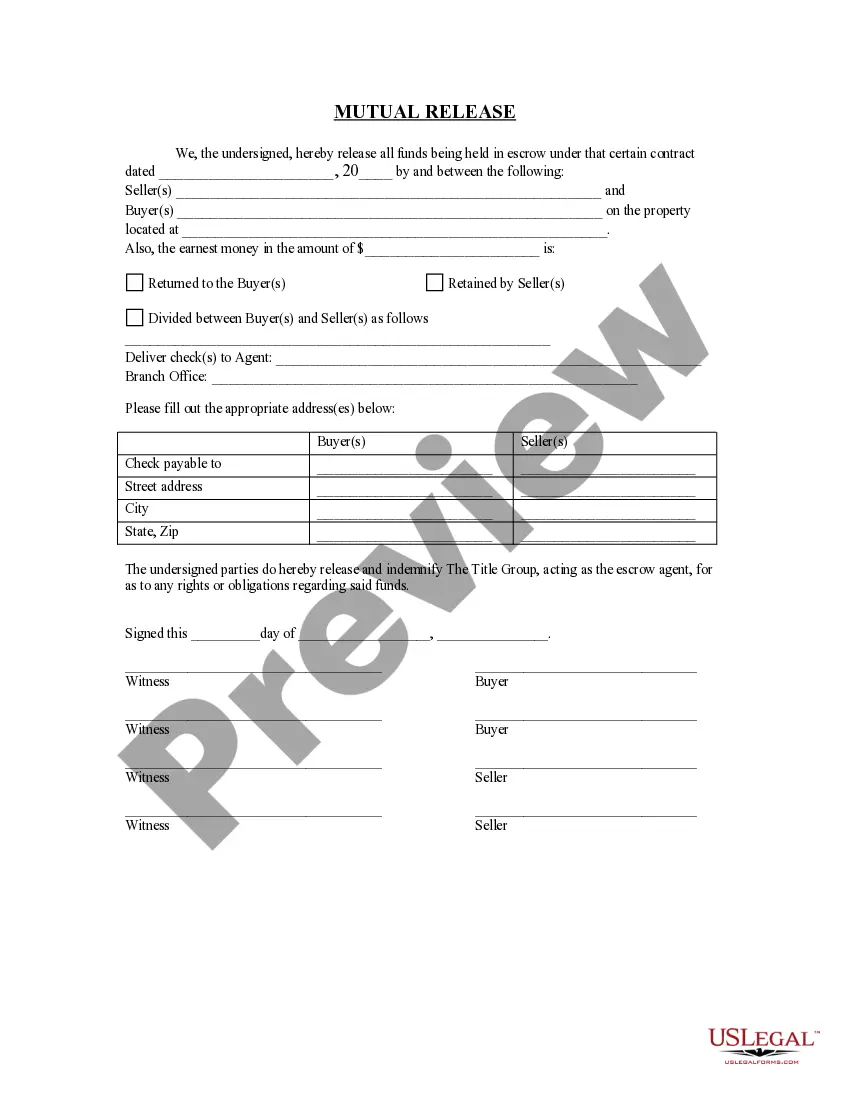
The release of earnest money form is a waiver that is to be signed by both the buyer and seller before an earnest money deposit towards a property may be released.In accordance with most States' laws, the earnest money is to be held in an escrow account of the agent (or a third party).
Get it in writing A contingency clause allows the buyer to receive full written approval from the lender, before moving forward to the closing. So, if your loan is denied for whatever reason, you can exit the contract and get your deposit back.