Mississippi Order Allowing Parties to Amend Answer and Cross Complaint
Understanding this form
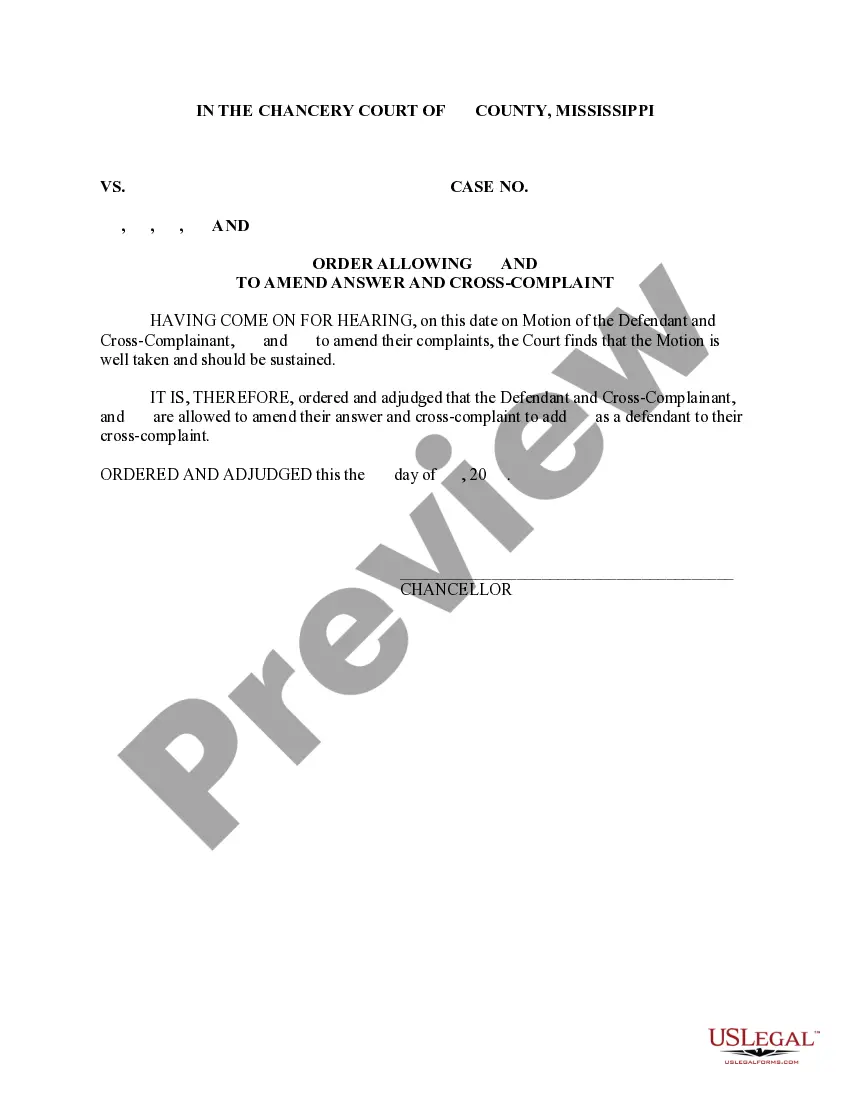
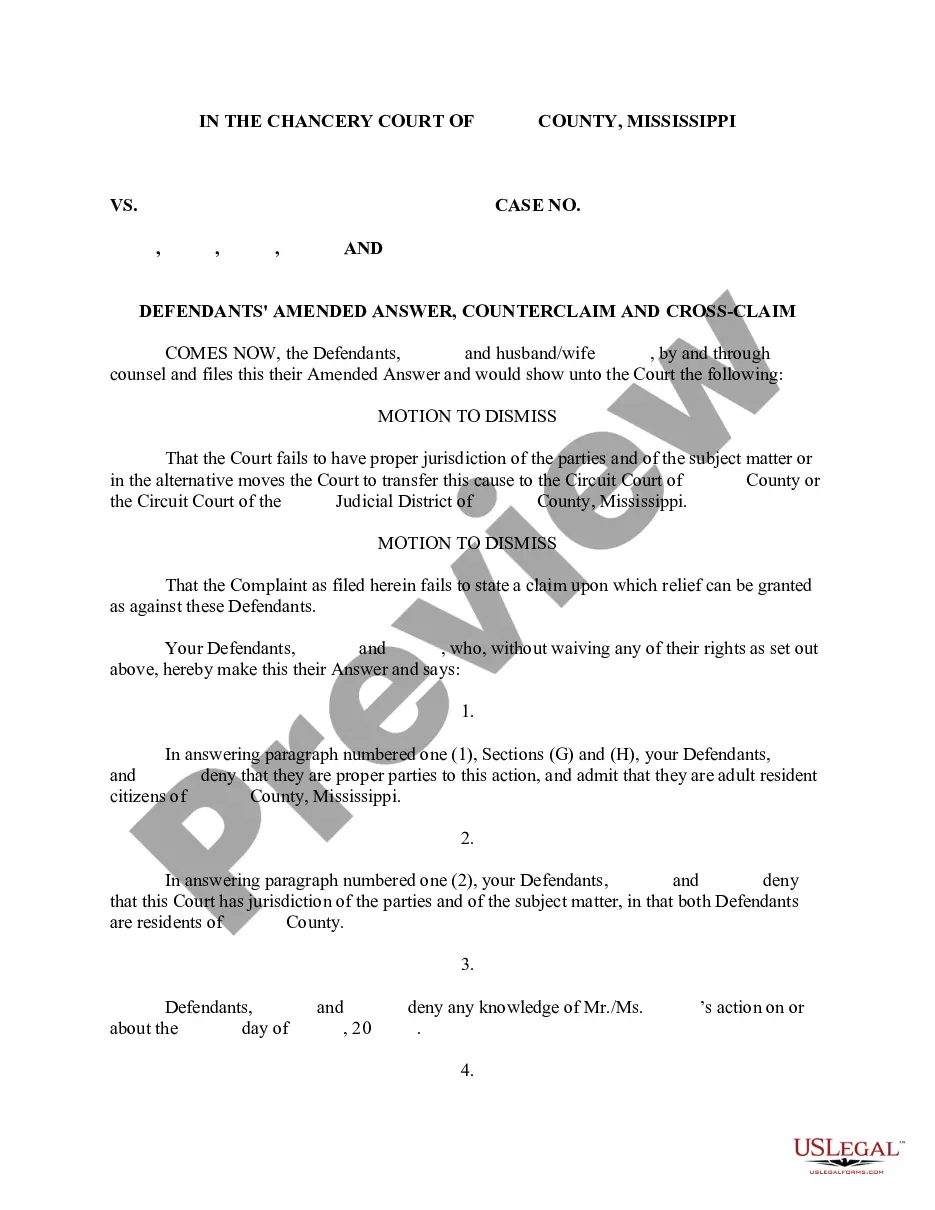
The Order Allowing Parties to Amend Answer and Cross Complaint is a legal document issued by the court that permits a party to modify their existing complaint in a case. This form is specifically used to request changes in the legal pleadings, allowing the inclusion of new defendants or claims. It differs from other forms in that it is a formal court order, signed by a judge, and compliance is mandatory once issued.
Main sections of this form
- Court identification: Specifies the court where the case is being heard.
- Parties involved: Names the defendant and cross-complainant requesting the amendment.
- Order clause: Clearly states that the request to amend is granted by the court.
- Details of amendment: Articulates what is being added or changed in the complaint.
- Date and judgeâs signature: Includes the date the order was issued and the signature of the judge.
Situations where this form applies
This form should be used when a party in a legal case needs to amend their answer or add a cross complaint. It is typically necessary when new information arises, such as discovering additional defendants who should be included in the case proceedings or clarifying existing claims that require modification. If the court has indicated that an amendment is permissible, this order serves as the formal record of that approval.
Intended users of this form
- Defendants in a legal case who need to update their pleadings.
- Cross-complainants who seek to add new claims or parties to the existing case.
- Attorneys representing parties involved in civil litigation.
- Individuals involved in a lawsuit who are acting pro se (without legal representation).
Instructions for completing this form
- Identify the parties involved: Fill in the names of the defendant and cross-complainant.
- Specify the amendments: Detail what changes are being requested, specifically new claims or defendants.
- Include the hearing date: Document the date when the motion for amendment was heard by the court.
- Obtain judicial approval: Ensure the judge signs the order, validating the request.
- File the order: Submit the finalized order to the court clerk as per local procedures.
Does this form need to be notarized?
This form does not typically require notarization unless specified by local law. However, users should verify state requirements to ensure compliance.
Get your form ready online
Our built-in tools help you complete, sign, share, and store your documents in one place.
Make edits, fill in missing information, and update formatting in US Legal Forms—just like you would in MS Word.
Download a copy, print it, send it by email, or mail it via USPS—whatever works best for your next step.
Sign and collect signatures with our SignNow integration. Send to multiple recipients, set reminders, and more. Go Premium to unlock E-Sign.
If this form requires notarization, complete it online through a secure video call—no need to meet a notary in person or wait for an appointment.
We protect your documents and personal data by following strict security and privacy standards.

Make edits, fill in missing information, and update formatting in US Legal Forms—just like you would in MS Word.

Download a copy, print it, send it by email, or mail it via USPS—whatever works best for your next step.

Sign and collect signatures with our SignNow integration. Send to multiple recipients, set reminders, and more. Go Premium to unlock E-Sign.

If this form requires notarization, complete it online through a secure video call—no need to meet a notary in person or wait for an appointment.

We protect your documents and personal data by following strict security and privacy standards.
Avoid these common issues
- Failing to include all necessary parties in the amendment request.
- Not specifying the precise changes being made to the original complaint.
- Omitting the judge's signature, which renders the order invalid.
- Incorrectly filing the order with the court, leading to potential delays.
Why complete this form online
- Convenience: Easily download and complete the form from home.
- Editability: Modify the template to suit your specific legal needs.
- Reliability: Forms are drafted by licensed attorneys to ensure compliance with legal standards.
Looking for another form?

Form popularity
FAQ
In common law, a crossclaim is a demand made in a pleading that is filed against a party which is on the "same side" of the lawsuit.
The defendant shall answer the amendments, or the complaint as amended, within 30 days after service thereof, or such other time as the court may direct, and judgment by default may be entered upon failure to answer, as in other cases.
(e) (1) In response to a demurrer and prior to the case being at issue, a complaint or cross-complaint shall not be amended more than three times, absent an offer to the trial court as to such additional facts to be pleaded that there is a reasonable possibility the defect can be cured to state a cause of action.
App. 352 251 P. 959, holds that when the original summons has been returned and filed, the clerk of the court has the power and the duty to issue an amended summons on the filing of an amended complaint which names a new party defendant.
2021 California Rules of Court (2) "Amended pleading" means a pleading that completely restates and supersedes the pleading it amends for all purposes.A supplement to a pleading may add information to or may correct omissions in the modified pleading.
Responsive Pleadings: Cross-Complaint (CA)
An answer may be amended once without leave of court within ten (10) days after the answer was filed, or if there is a demurrer to the answer, amendment without leave of court may be made before the demurrer hearing. Amendment as a matter of right is made by filing and serving the amended pleading.
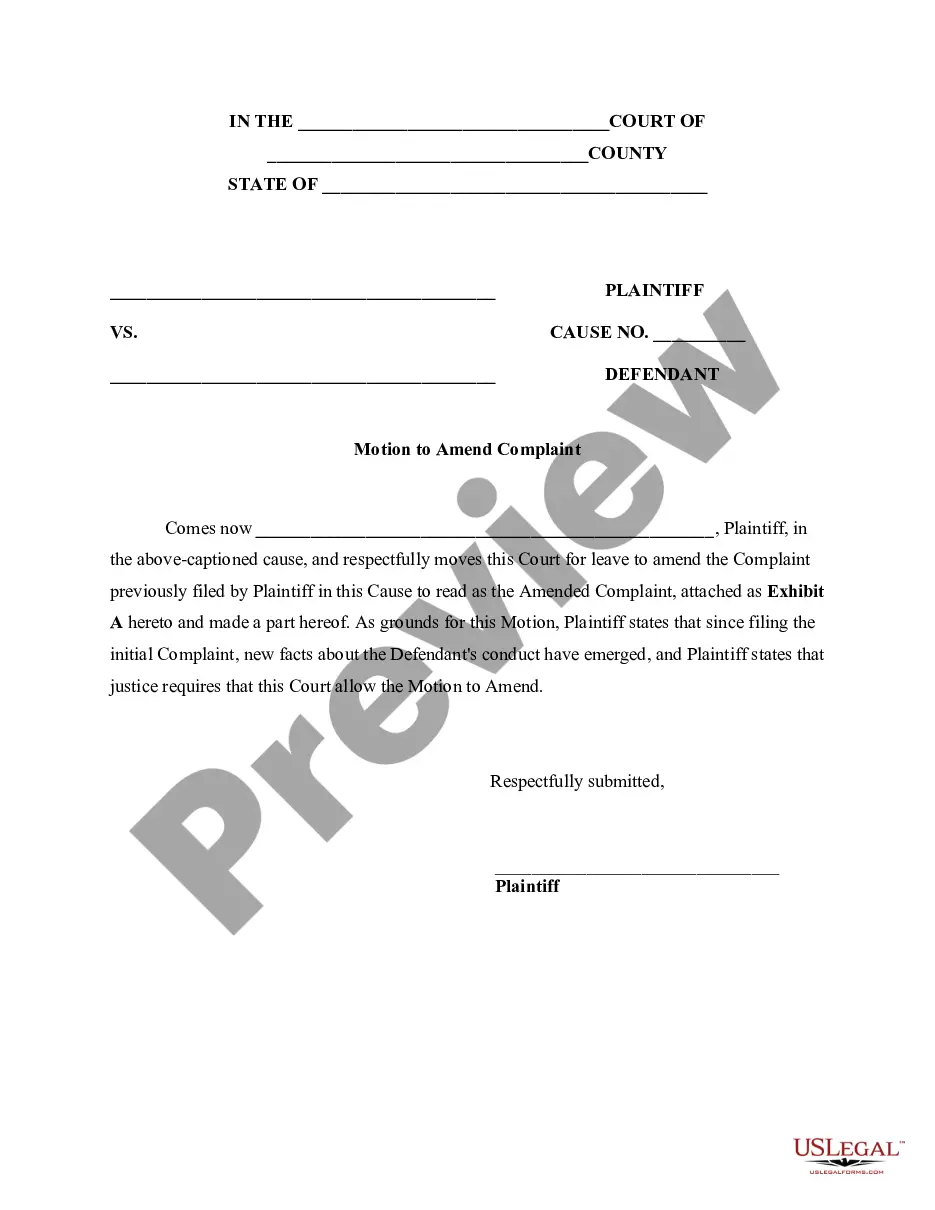
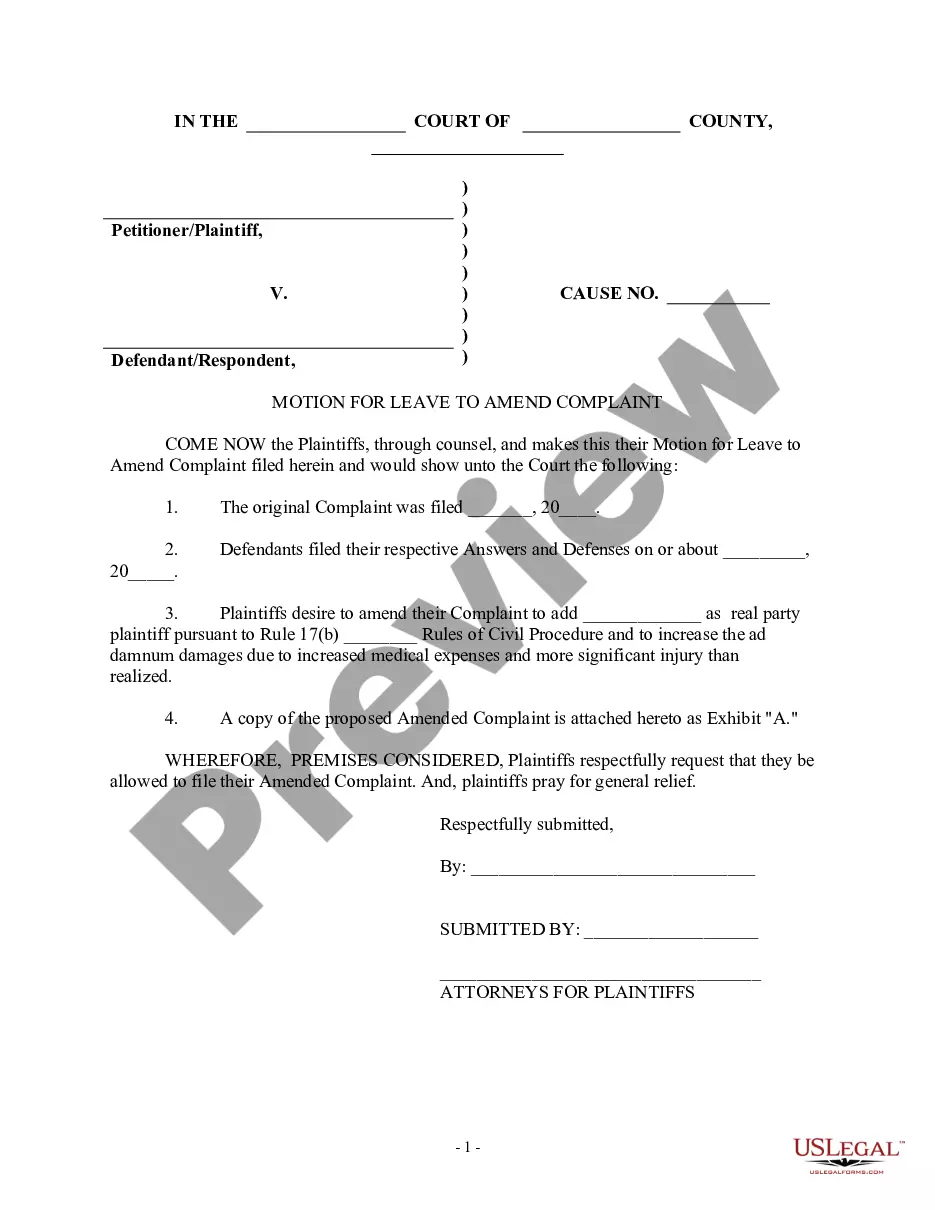
It means to change the basis for the case in some way. A motion to amend a complaint is the formal way of asking the court for permission to change the original complaint.
Once a defendant has answered, a first amended complaint can only be filed and served with leave of court. If the plaintiff did not get the court's permission, it is not deemed a valid first amended complaint.