Mississippi Stipulation for Dismissal
What is this form?
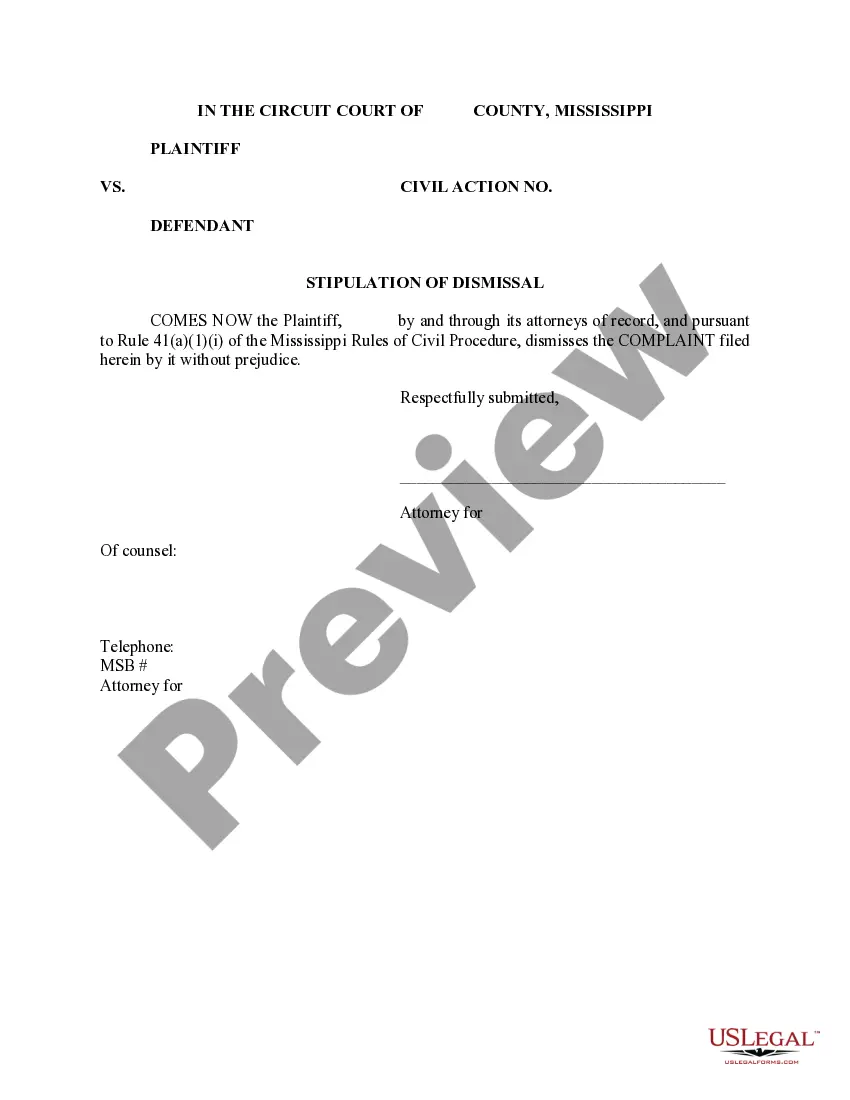
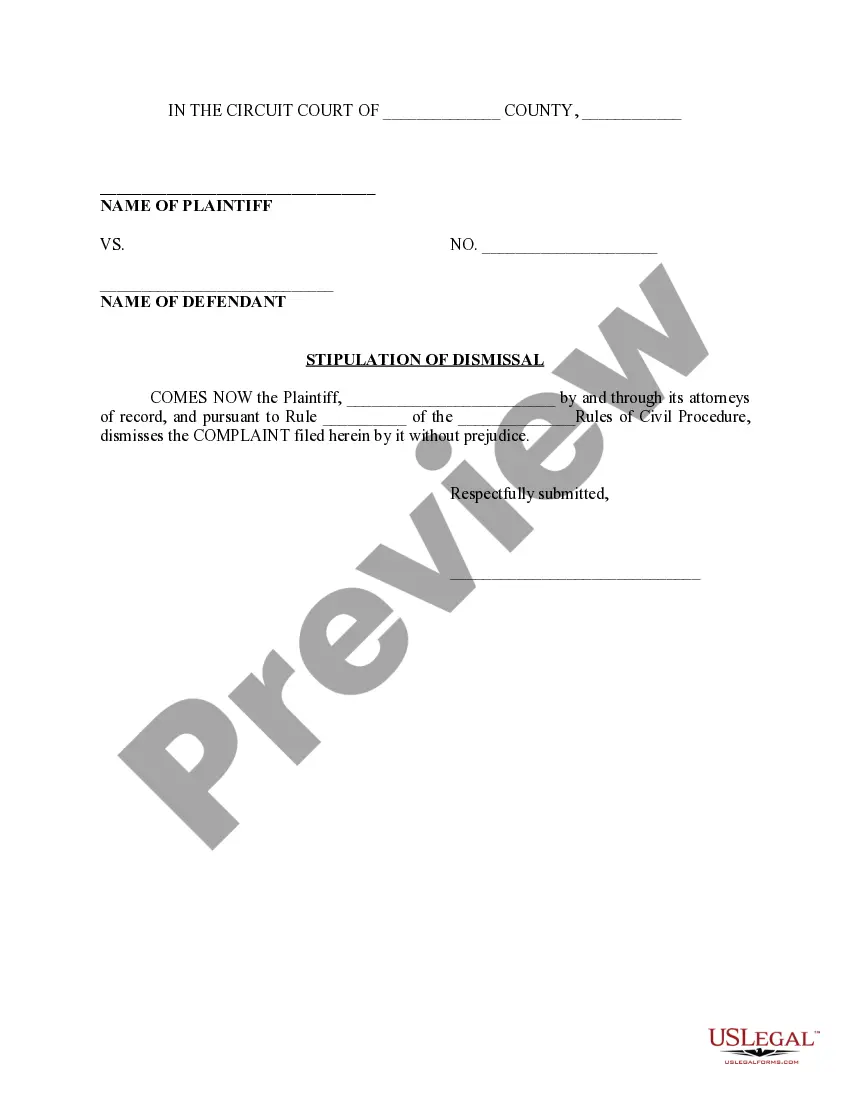
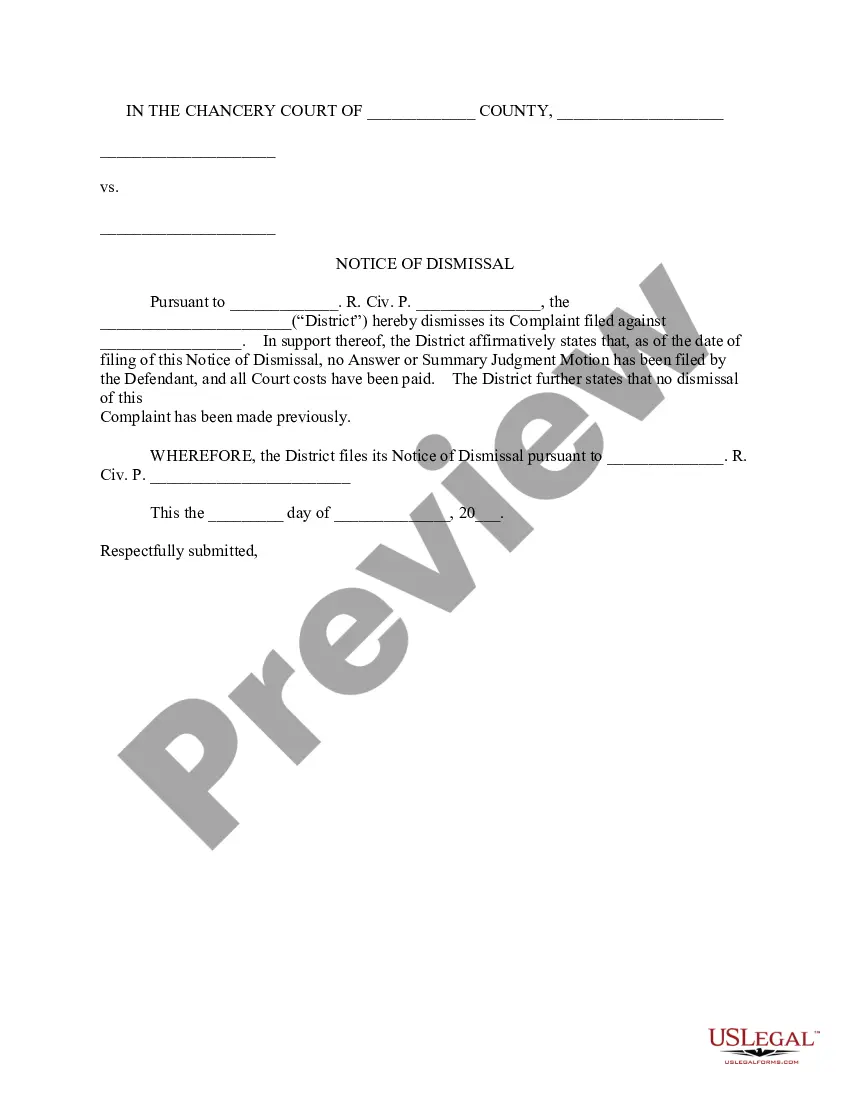
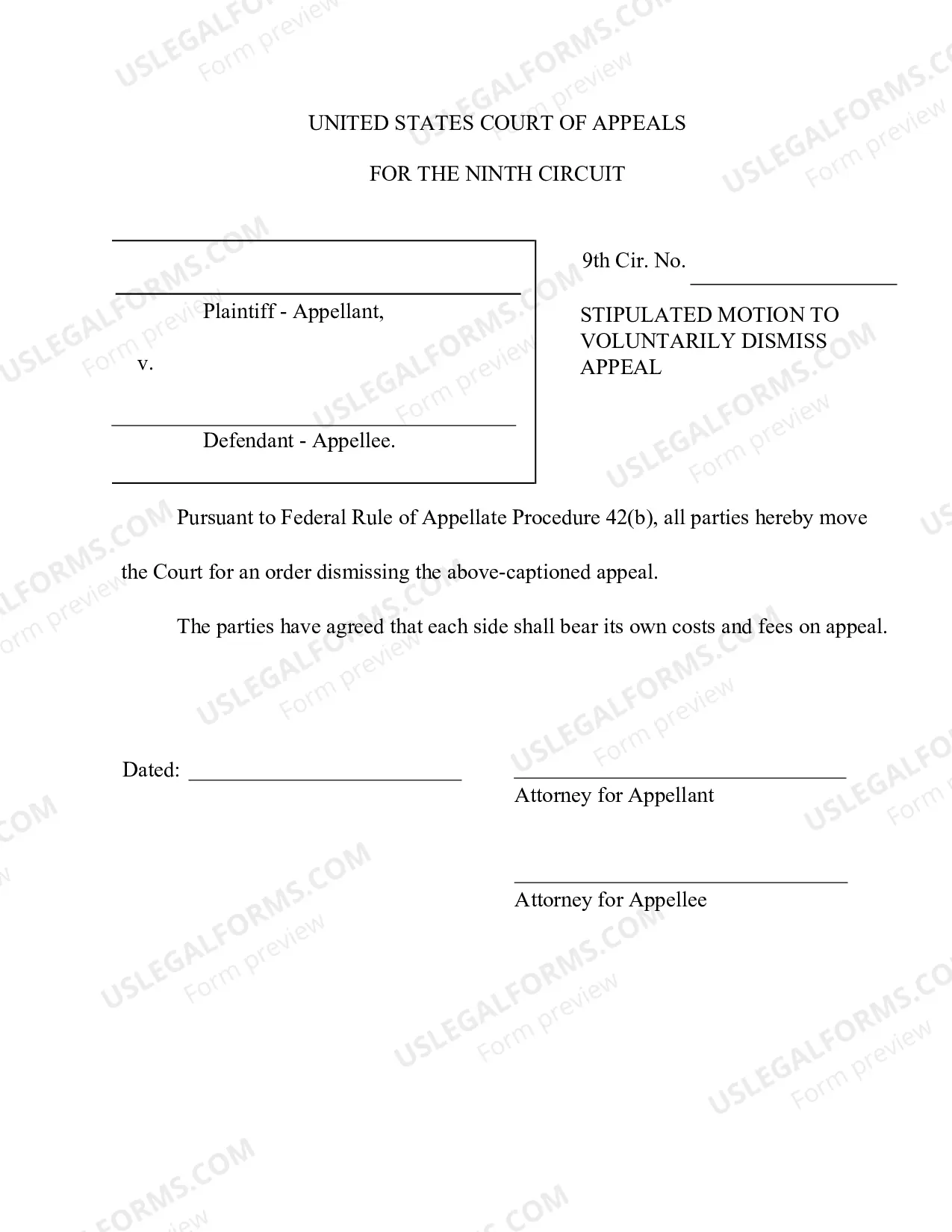
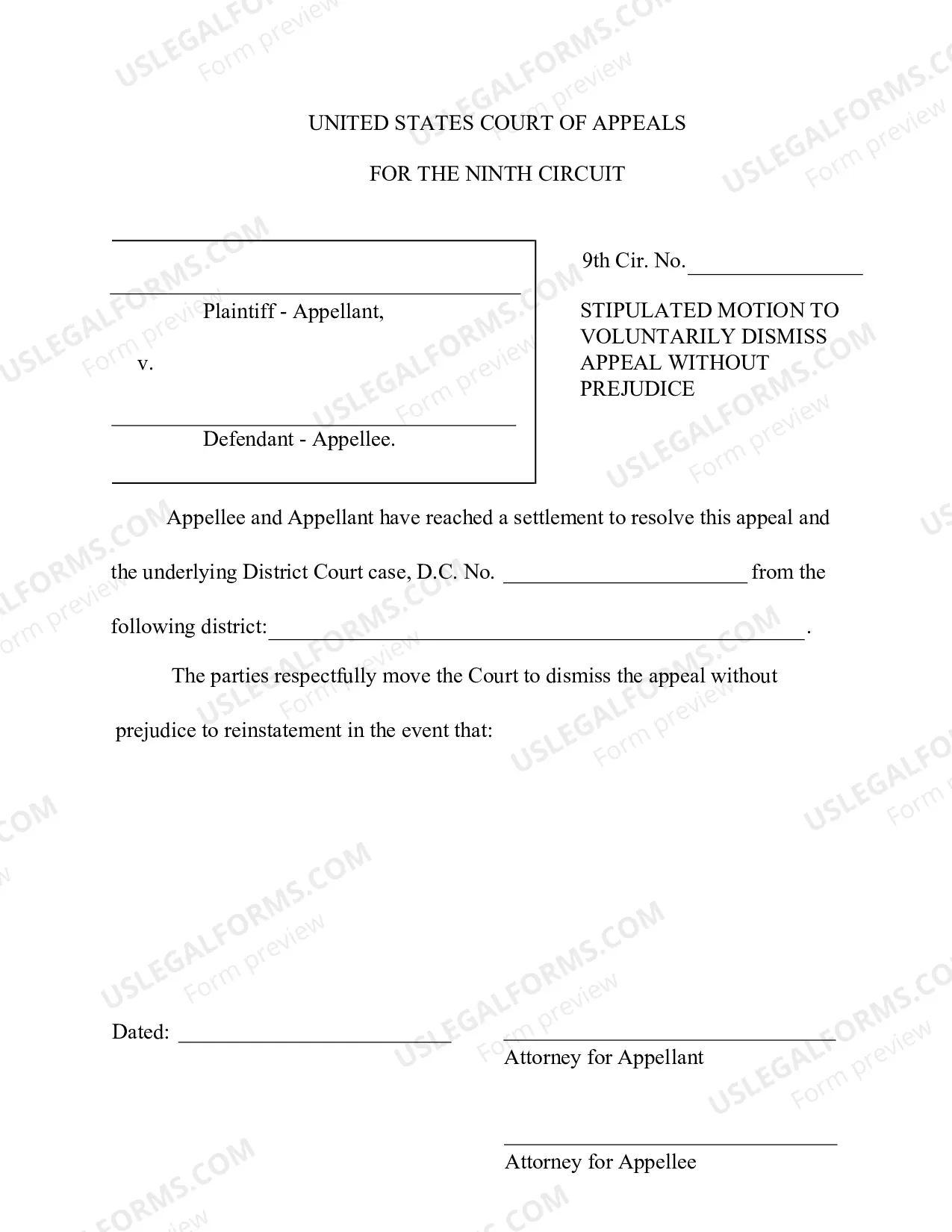
A Stipulation for Dismissal is a legal document initiated by the Plaintiff in a lawsuit. This form states that the Plaintiff wishes to dismiss the lawsuit against the Defendant without prejudice, meaning the Plaintiff can refile the case in the future if desired. This form is essential for officially concluding a case without any ruling on the merits, distinguishing it from other dismissal forms that may involve judgments or settlements.
What’s included in this form
- Title and heading indicating it is a Stipulation for Dismissal.
- Identification of the Plaintiff and Defendant involved in the case.
- A statement of intent to dismiss the lawsuit without prejudice.
- Signature lines for the Plaintiff and additional parties, if applicable.
- Date section to record when the form is executed.
When to use this form
This form is used when a Plaintiff decides to withdraw their lawsuit against a Defendant, often because they seek to resolve the matter outside of court or have found that litigation is no longer necessary. It is particularly relevant in circumstances where the Plaintiff wishes to preserve the right to refile the case in the future.
Who should use this form
- Plaintiffs who have initiated legal action and wish to withdraw it.
- Individuals representing themselves in legal matters (pro se litigants).
- Lawyers looking to formally dismiss a case on behalf of their clients.
Instructions for completing this form
- Identify the parties by entering the Plaintiff's and Defendant's names correctly.
- Clearly state your intention to dismiss the lawsuit without prejudice.
- Obtain the necessary signatures from the Plaintiff and any required parties.
- Record the date in the designated section to indicate when the form is executed.
- File the completed form with the court to officially dismiss the case.
Notarization requirements for this form
This form does not typically require notarization unless specified by local law. However, having it notarized can add a layer of verification should future legal issues arise.
Get your form ready online
Our built-in tools help you complete, sign, share, and store your documents in one place.
Make edits, fill in missing information, and update formatting in US Legal Forms—just like you would in MS Word.
Download a copy, print it, send it by email, or mail it via USPS—whatever works best for your next step.
Sign and collect signatures with our SignNow integration. Send to multiple recipients, set reminders, and more. Go Premium to unlock E-Sign.
If this form requires notarization, complete it online through a secure video call—no need to meet a notary in person or wait for an appointment.
We protect your documents and personal data by following strict security and privacy standards.

Make edits, fill in missing information, and update formatting in US Legal Forms—just like you would in MS Word.

Download a copy, print it, send it by email, or mail it via USPS—whatever works best for your next step.

Sign and collect signatures with our SignNow integration. Send to multiple recipients, set reminders, and more. Go Premium to unlock E-Sign.

If this form requires notarization, complete it online through a secure video call—no need to meet a notary in person or wait for an appointment.

We protect your documents and personal data by following strict security and privacy standards.
Common mistakes
- Failing to sign the form, which can render it invalid.
- Not specifying that the dismissal is 'without prejudice,' limiting future actions.
- Incorrectly entering the names of the parties involved, leading to confusion.
Benefits of using this form online
- Convenience of downloading the form at any time.
- Editability allows you to customize the form to meet your specific situation.
- Access to templates drafted by licensed attorneys ensures legal compliance.
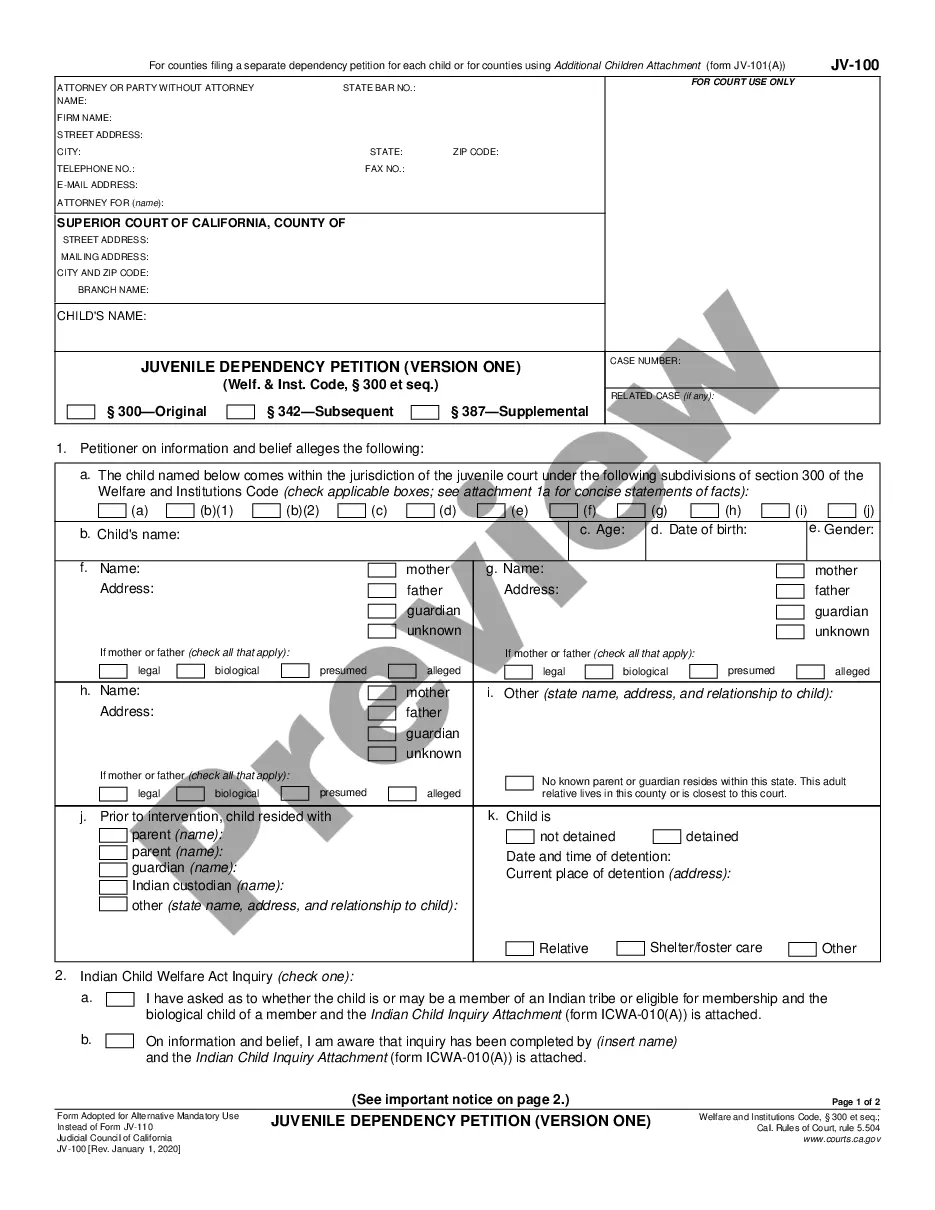
Looking for another form?




Form popularity
FAQ
In the formal legal world, a court case that is dismissed with prejudice means that it is dismissed permanently. A case dismissed with prejudice is over and done with, once and for all, and can't be brought back to court. A case dismissed without prejudice means the opposite.
The ruling by a judge that all or a portion (one or more of the causes of action) of the plaintiff's lawsuit is terminated (thrown out) at that point without further evidence or testimony.A defendant may be "dismissed" from a lawsuit, meaning the suit is dropped against that party.
A request for involuntary dismissal can be made by a defendant through a motion for dismissal, on grounds that the other party is not prosecuting the case, is not complying with a court order, or to comply with the Federal Rules of Civil Procedure.
In the formal legal world, a court case that is dismissed with prejudice means that it is dismissed permanently. A case dismissed with prejudice is over and done with, once and for all, and can't be brought back to court. A case dismissed without prejudice means the opposite.
A stipulated (agreed) dismissal (see s. 799.24(3) of the Wisconsin Statutes) happens when the plaintiff and the defendant agree to have the judge dismiss the action and not enter a judgment against the defendant only if the defendant pays the plaintiff an agreed upon amount by a certain date.
A stipulation is an agreement between two parties that is submitted to the judge for approval.A written Stipulation and Order includes the parties' agreement, both of their notarized signatures, and the judge's signature. Once signed by the judge, the agreement becomes a legally binding order.
WHAT IS A DISMISSED CASE? A dismissed criminal case is one in which you were not convicted. When a criminal charge is dismissed, you are not guilty and the case is concluded.
A dismissed case means that a lawsuit is closed with no finding of guilt and no conviction for the defendant in a criminal case by a court of law. Even though the defendant was not convicted, a dismissed case does not prove that the defendant is factually innocent for the crime for which he or she was arrested.
Orders are generally temporary pending the final resolution of the complaint issues by judgment after the trial or by a court-ratified settlement.A 'stipulation' is an agreement between parties that a certain fact may be considered true or accepted, or that a certain procedure may be followed in court.