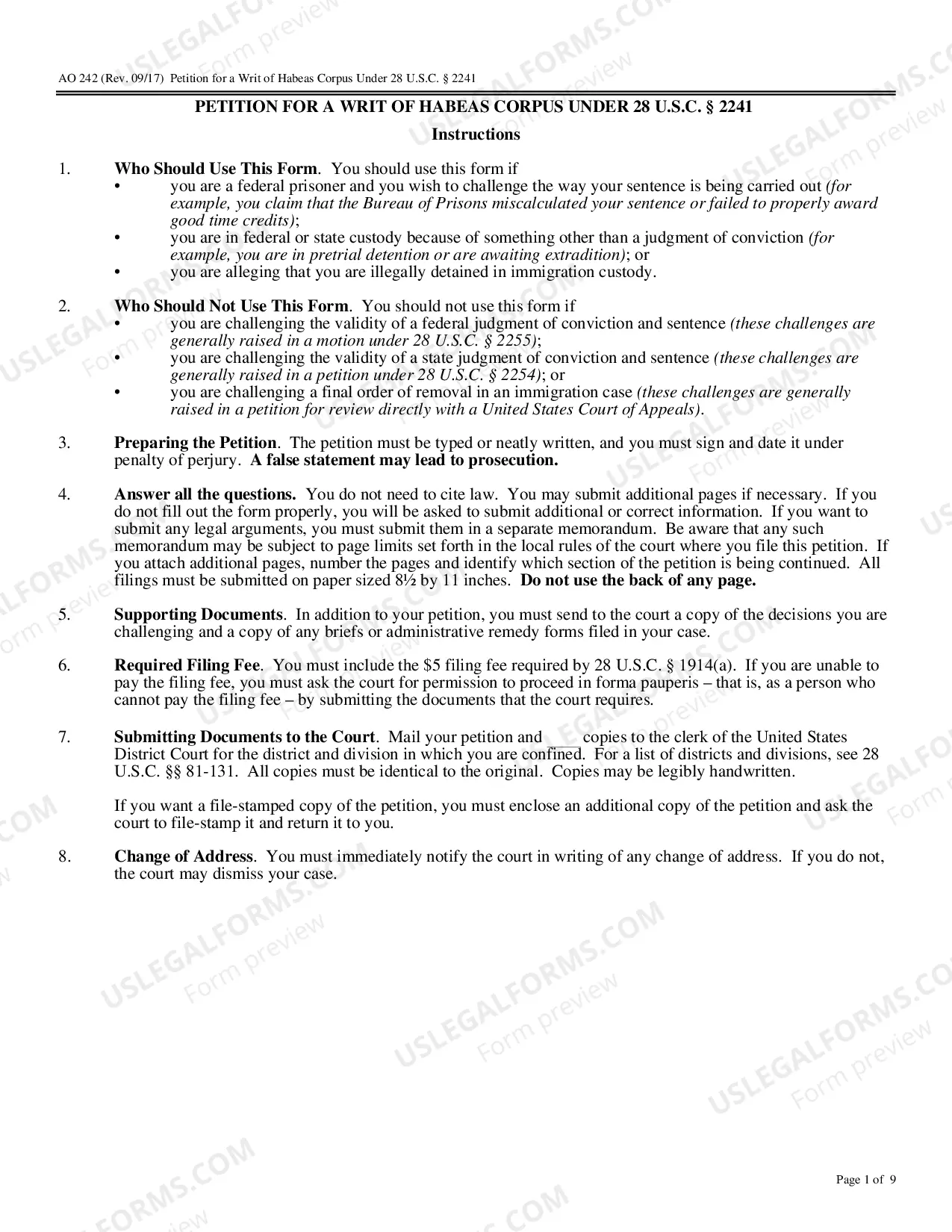
Mississippi Judgment of Committal of a Chemically Dependent Person for Treatment
About this form
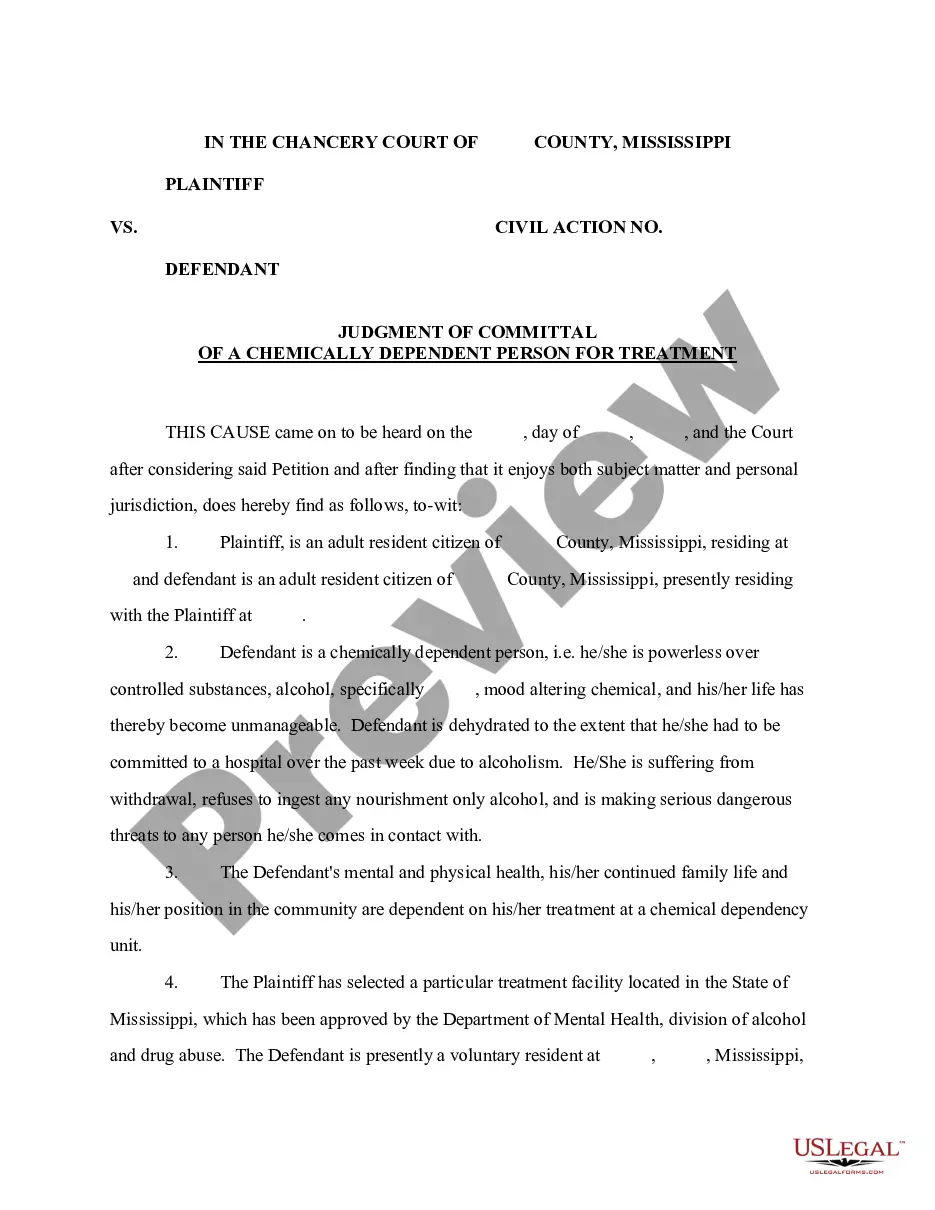
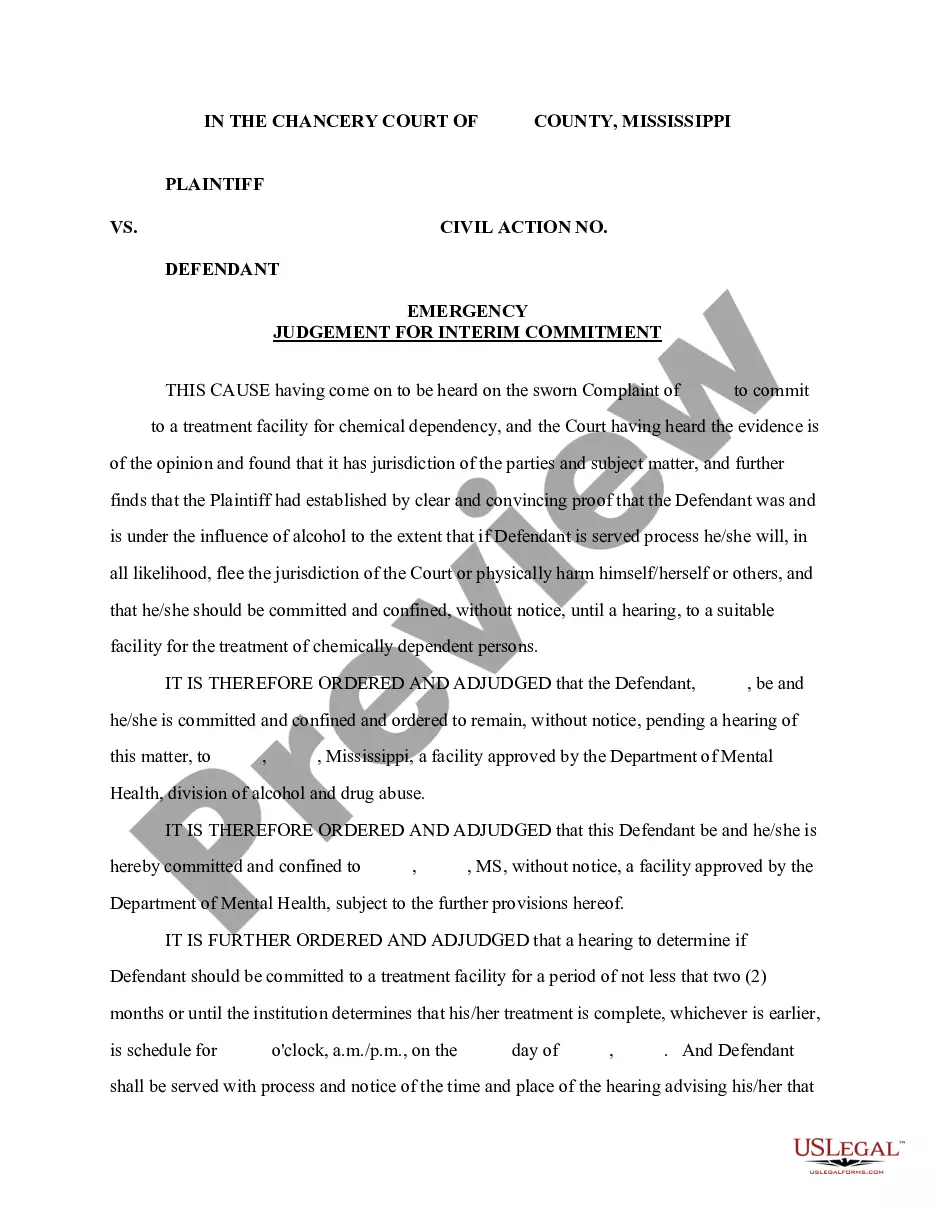
The Judgment of Committal of a Chemically Dependent Person for Treatment is a legal document used in Mississippi Chancery Court. It is designed to authorize the treatment of individuals suffering from chemical dependency. This form differs from other legal forms as it specifically addresses the commitment of an individual who voluntarily agrees to treatment, ensuring their mental and physical well-being and that of their family and community are safeguarded.
Key parts of this document
- Statement of the defendant's condition and the necessity for treatment.
- Waiver and Joinder by the defendant, indicating their voluntary agreement to the commitment.
- Details regarding the impact of the defendant's condition on their health, family, and community role.
- Provisions for waiving further notice and the requirement for a hearing or physical examination.


Common use cases
This form should be used when an individual with a chemical dependency recognizes their need for treatment and wishes to voluntarily commit themselves. It is applicable in situations where the individual's health and social responsibilities are at risk due to their dependency, and they seek a legal declaration to facilitate access to necessary treatment.
Who should use this form
- Individuals experiencing chemical dependency who wish to seek treatment.
- Family members or legal guardians acting on behalf of dependent individuals who require treatment.
- Legal professionals assisting clients in drafting this form for court proceedings.
Steps to complete this form
- Begin by providing the full name and contact information of the defendant.
- Document the reasons for the defendant's commitment, outlining their chemical dependency and its effects on their life.
- Ensure the Waiver and Joinder is executed to indicate the defendantâs voluntary agreement to the commitment.
- Include any relevant medical or psychological evaluations that support the need for treatment.
- Finalize by signing and dating the form in the presence of a notary, if required.
Notarization guidance
This form does not typically require notarization unless specified by local law. However, confirming the need for notarization may ensure the document's acceptance in court.
Get your form ready online
Our built-in tools help you complete, sign, share, and store your documents in one place.
Make edits, fill in missing information, and update formatting in US Legal Forms—just like you would in MS Word.
Download a copy, print it, send it by email, or mail it via USPS—whatever works best for your next step.
Sign and collect signatures with our SignNow integration. Send to multiple recipients, set reminders, and more. Go Premium to unlock E-Sign.
If this form requires notarization, complete it online through a secure video call—no need to meet a notary in person or wait for an appointment.
We protect your documents and personal data by following strict security and privacy standards.

Make edits, fill in missing information, and update formatting in US Legal Forms—just like you would in MS Word.

Download a copy, print it, send it by email, or mail it via USPS—whatever works best for your next step.

Sign and collect signatures with our SignNow integration. Send to multiple recipients, set reminders, and more. Go Premium to unlock E-Sign.

If this form requires notarization, complete it online through a secure video call—no need to meet a notary in person or wait for an appointment.

We protect your documents and personal data by following strict security and privacy standards.
Common mistakes to avoid
- Failing to fully complete all required sections of the form.
- Not obtaining the necessary signatures from the defendant or witnesses.
- Neglecting to attach supporting documentation that justifies the commitment.
- Overlooking state-specific requirements that could invalidate the form.
Advantages of online completion
- Immediate access to a professionally drafted template that reflects legal standards.
- Convenience of downloading and completing the form at your own pace.
- Editability allows customization to fit specific circumstances while ensuring compliance.
- Reliable source for legal forms that meet state requirements.
Looking for another form?
Form popularity
FAQ
Psychological dependence is a term that describes the emotional or mental components of substance use disorder, such as strong cravings for the substance or behavior and difficulty thinking about anything else.
The APA ditched both substance abuse and substance dependence in favor of substance use disorder. Substance use disorder is now the medical term for addiction. Previously, abuse was a mild form of addiction, and dependence was a moderate or severe form of addiction.
Chemical Dependency DefinedChemical dependency is characterized by the repeated, uncontrollable use of alcohol and/or drugs in a way that threatens the individual's physical and mental health and well-being as well as the physical safety and emotional well-being of those around him or her.
Substance abuse can simply be defined as a pattern of harmful use of any substance for mood-altering purposes. "Substances" can include alcohol and other drugs (illegal or not) as well as some substances that are not drugs at all.
Substance dependence, also known as drug dependence, is an adaptive state that develops from repeated drug administration, and which results in withdrawal upon cessation of drug use.
Substance abuse can simply be defined as a pattern of harmful use of any substance for mood-altering purposes. "Substances" can include alcohol and other drugs (illegal or not) as well as some substances that are not drugs at all.
There are two main types of alcohol or drug dependence. The first kind is physical dependency. This means that the body has developed a physiological reliance on a drug because it has caused changes in its natural state of being. Opiates, tobacco, and alcohol are common drugs that cause physical dependency.
Drug dependent person means a person - (a) who, as a result of repeated administration to the person of controlled or restricted. drugs or poisons - (i) demonstrates impaired control; or-