Mississippi Authorization for Release of Medical Information
What is this form?
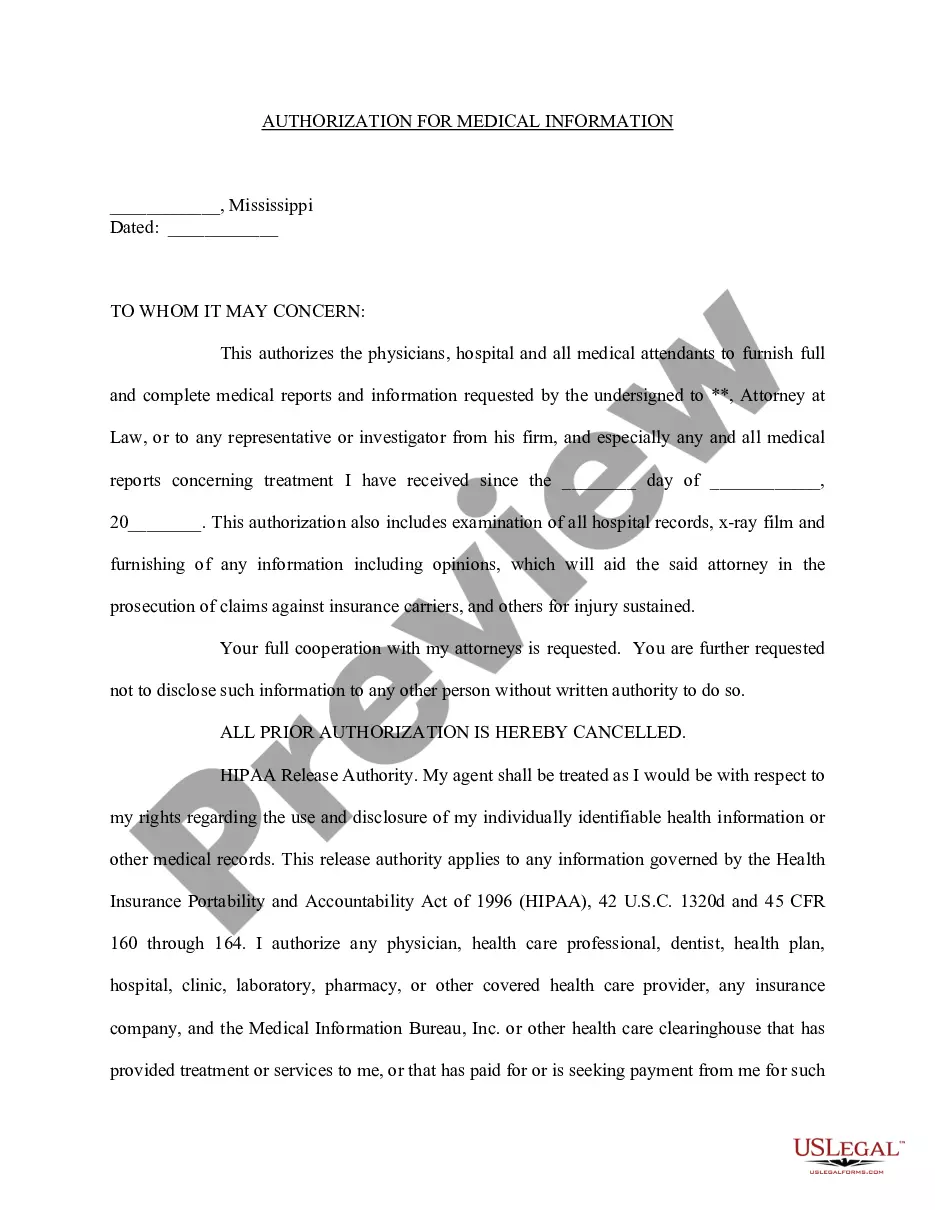
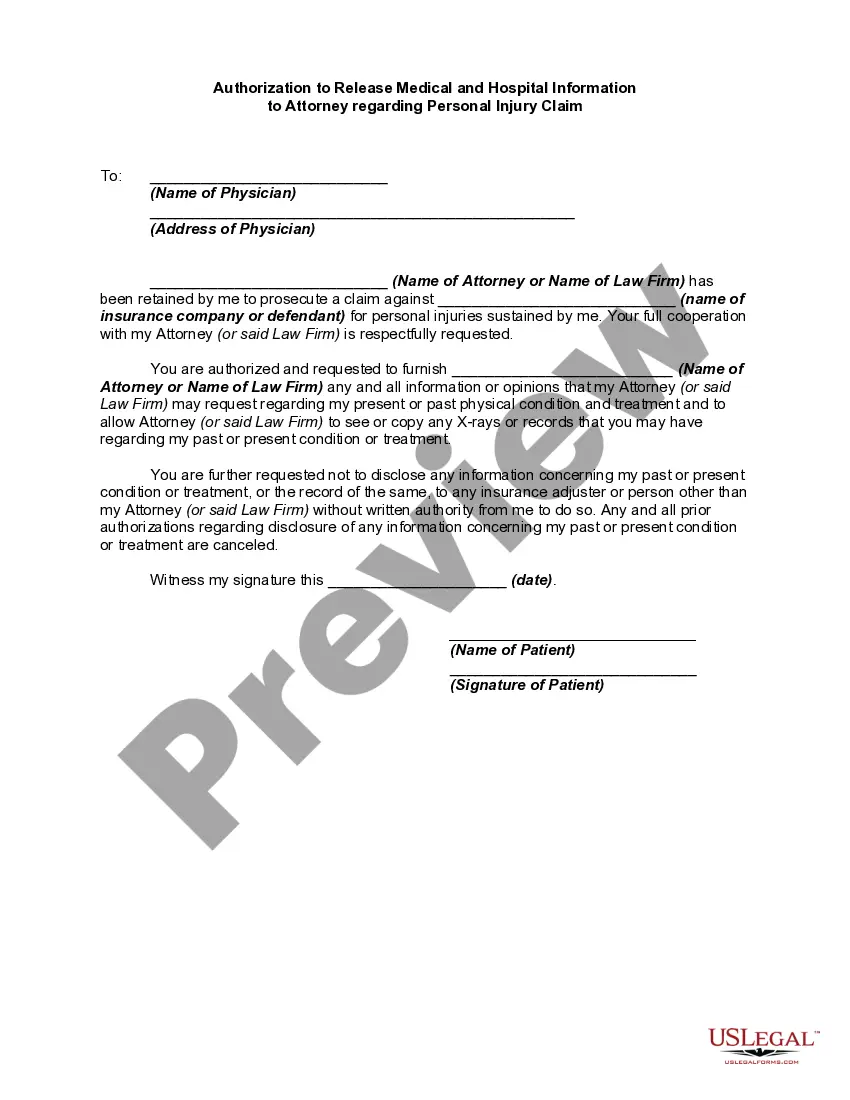
The Authorization for Release of Medical Information is a legal document that allows a patient to grant their attorney access to their medical records. This form is essential for trial preparation, as it enables attorneys to obtain necessary health information that may affect a legal claim. Unlike other medical release forms, this document specifically empowers attorneys to collect detailed medical reports and information from healthcare providers.
Key components of this form
- Patient details: Includes the patient's name and contact information.
- Authorization clause: Grants permission to healthcare providers to release medical records.
- Scope of information: Specifies the types of medical records covered, such as hospital records, treatment history, and diagnostic information.
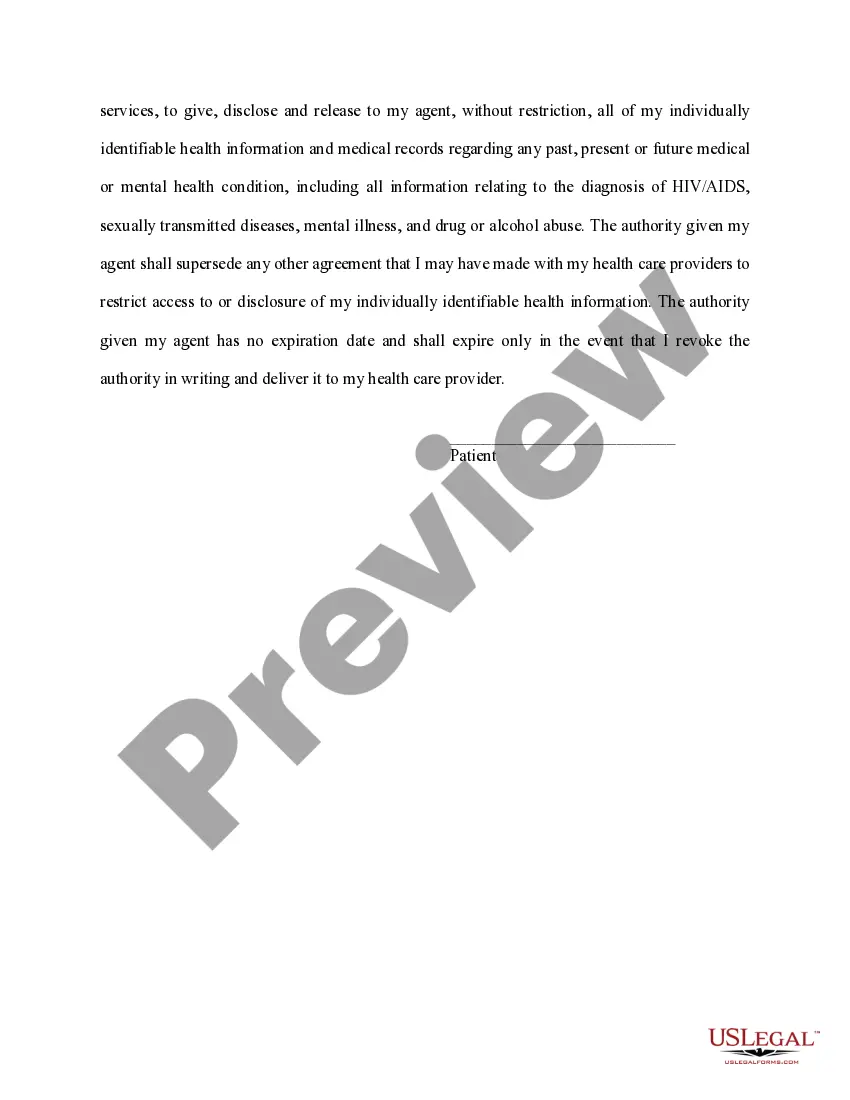
- HIPAA compliance: Ensures that the release adheres to privacy regulations under the Health Insurance Portability and Accountability Act.
- Cancellation of prior consents: Allows the patient to revoke previous authorizations for medical information disclosure.

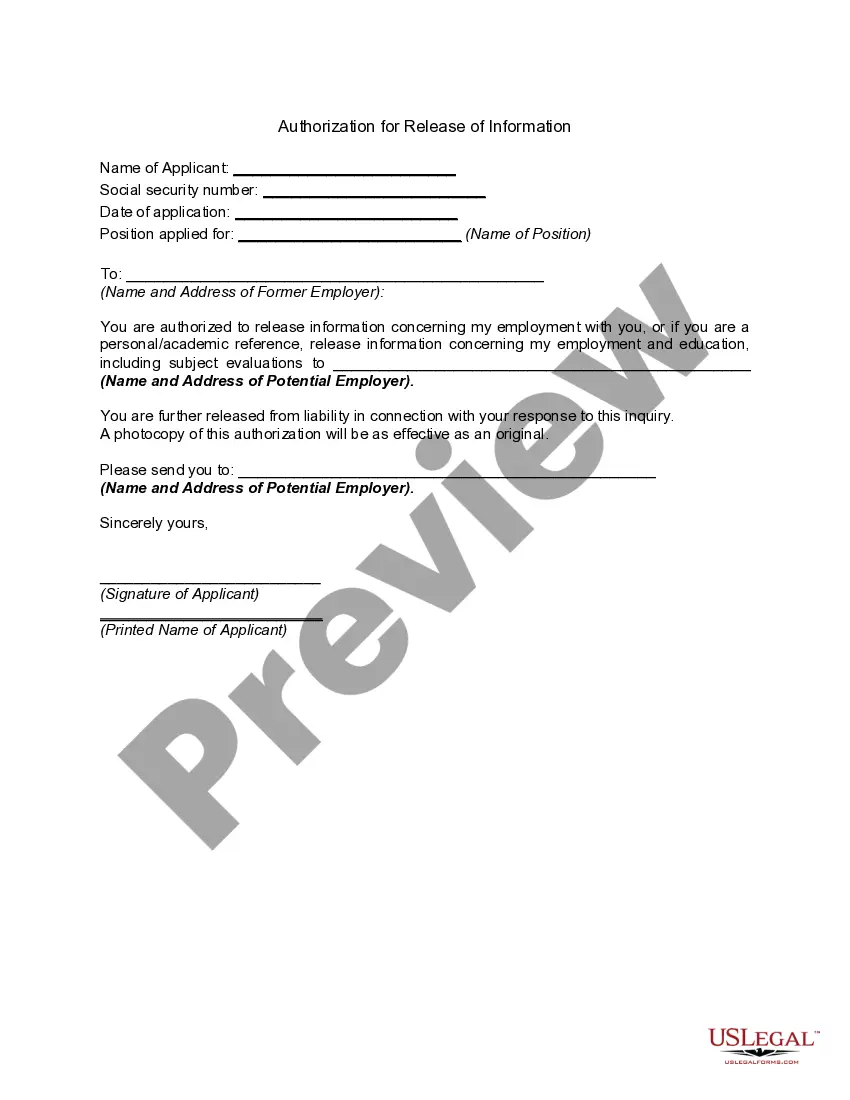
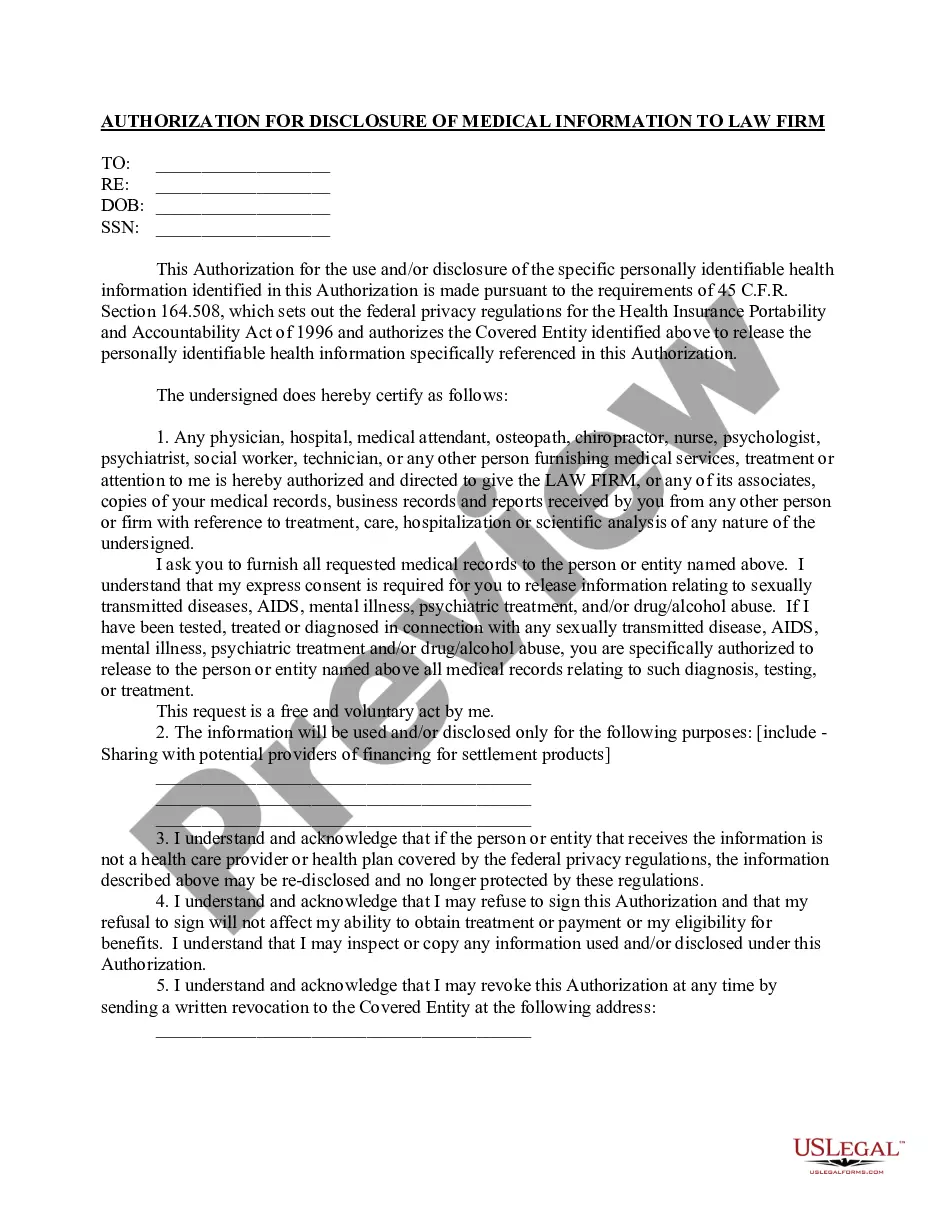
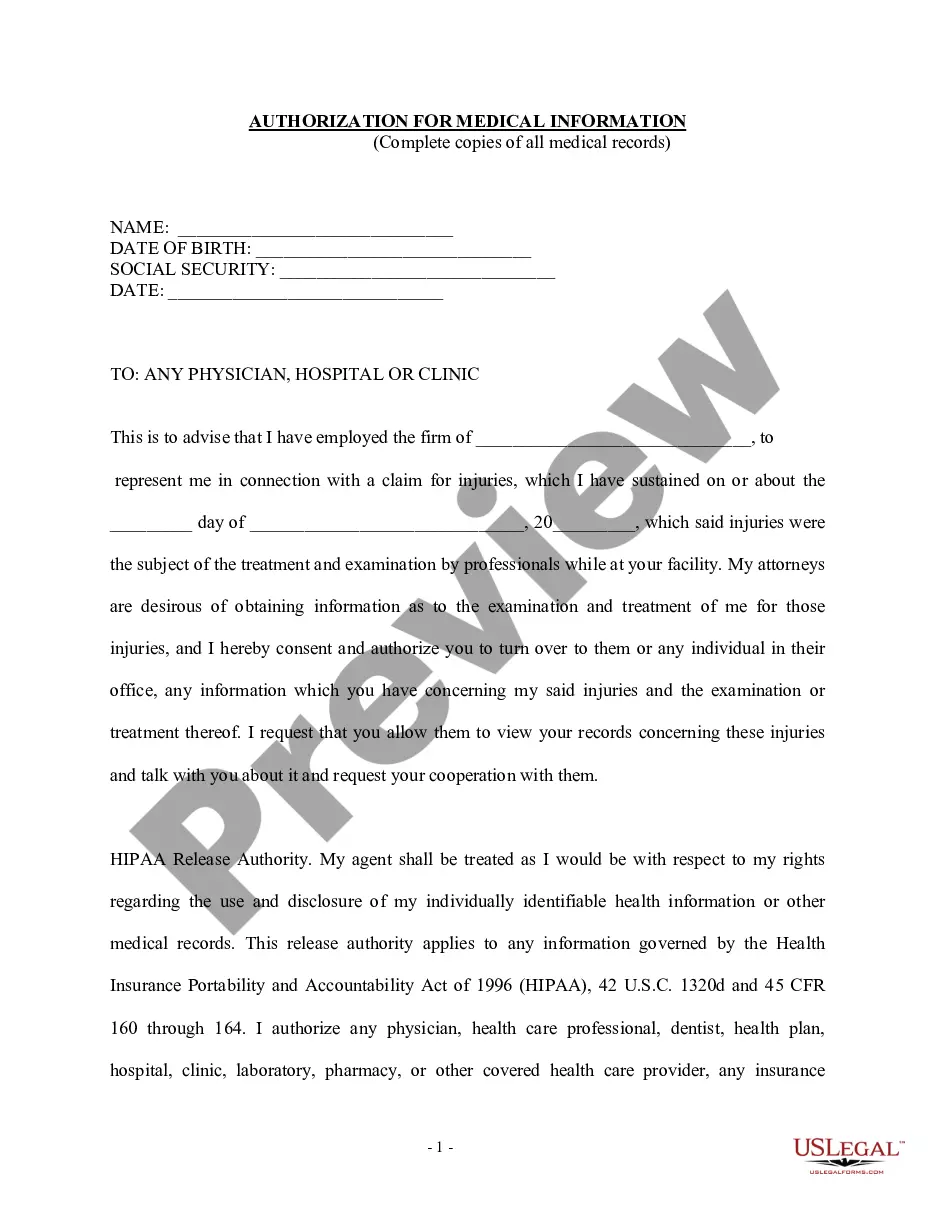
When this form is needed
This form should be used when an individual is involved in legal proceedings, such as personal injury cases, where access to their medical records is crucial. It is particularly useful when an attorney needs to evaluate the extent of injuries sustained and to prepare properly for trial or negotiations with insurance carriers.
Who should use this form
- Patients pursuing a personal injury claim.
- Individuals needing to provide medical evidence for legal matters.
- Lawyers representing clients in cases requiring medical documentation.
- Healthcare providers responding to legal requests for patient information.
How to prepare this document
- Identify the patient: Write the full name and contact details of the individual granting permission.
- Specify the attorney: Enter the name and contact information of the attorney who will receive the medical records.
- State the dates: Include the dates of treatment or medical history that the attorney is authorized to review.
- Sign and date: The patient must sign and date the form to make the authorization valid.
- Make copies: Keep a copy for personal records and provide copies to the attorney and healthcare providers as needed.
Does this document require notarization?
This form does not typically require notarization unless specified by local law. However, having a notary witness the signing of the form can enhance its legal validity in certain situations. Always check your local regulations for specific requirements.
Get your form ready online
Our built-in tools help you complete, sign, share, and store your documents in one place.
Make edits, fill in missing information, and update formatting in US Legal Forms—just like you would in MS Word.
Download a copy, print it, send it by email, or mail it via USPS—whatever works best for your next step.
Sign and collect signatures with our SignNow integration. Send to multiple recipients, set reminders, and more. Go Premium to unlock E-Sign.
If this form requires notarization, complete it online through a secure video call—no need to meet a notary in person or wait for an appointment.
We protect your documents and personal data by following strict security and privacy standards.

Make edits, fill in missing information, and update formatting in US Legal Forms—just like you would in MS Word.

Download a copy, print it, send it by email, or mail it via USPS—whatever works best for your next step.

Sign and collect signatures with our SignNow integration. Send to multiple recipients, set reminders, and more. Go Premium to unlock E-Sign.

If this form requires notarization, complete it online through a secure video call—no need to meet a notary in person or wait for an appointment.

We protect your documents and personal data by following strict security and privacy standards.
Typical mistakes to avoid
- Not including complete contact information for all parties involved.
- Failing to specify the time periods for which the medical information is applicable.
- Not signing or dating the document, which can render it invalid.
- Using outdated or previously canceled authorizations without proper updates.
Benefits of completing this form online
- Immediate access to the form for quick completion.
- Easy editing capabilities to tailor the form to specific needs.
- Secure storage and download options for personal records.
- Guidance throughout the completion process to prevent errors.
Legal use & context
- This form is compliant with HIPAA regulations, ensuring patient privacy is maintained during the information release.
- It serves as a legal authority for attorneys to collect medical information directly from healthcare providers.
- Failure to securely obtain and manage these records may negatively impact legal proceedings.
Main things to remember
- The Authorization for Release of Medical Information is crucial for trial preparation in legal cases involving health issues.
- Patients should ensure the form is completed accurately to avoid delays in accessing medical records.
- Understanding the scope and limitations of this authorization is essential for both patients and legal representatives.
Looking for another form?
Form popularity
FAQ
Medical release forms are used to request that a healthcare provider share a patient's medical history with a third party (employer, insurance company, school, etc.).
Record requests can be honored without a patient's signature. Sometimes False. HIPAA generally allows for disclosure of medical records for treatment, payment, or healthcare operations absent a written request. However, most state laws require record requests to be in writing and signed by the patient.
An authorization is a detailed document that gives covered entities permission to use protected health information for specified purposes, which are generally other than treatment, payment, or health care operations, or to disclose protected health information to a third party specified by the individual.
The core elements of a valid authorization include: A meaningful description of the information to be disclosed. The name of the individual or the name of the person authorized to make the requested disclosure. The name or other identification of the recipient of the information.
A medical release form is a document that gives healthcare professionals permission to share patient medical information with other parties.
Your authorization allows the Health Plan (your health insurance carrier or HMO) to release your protected health information to a person or organization that you choose.Revoking this authorization will not affect any action taken prior to receipt of your written request.
By signing an authorization to release information, a party is consenting to provide another party with access to otherwise confidential information or records about an individual. However, signing a release doesn't mean the complete loss of confidentiality because most authorization forms are subject to limitations.
Patient requests must be written without requiring a "formal" release form. Include signature, printed name, date, and records desired. Release a copy only, not the original. The physician may prepare a summary of the medical record, if acceptable to the patient.
A signed HIPAA release form must be obtained from a patient before their protected health information can be shared with other individuals or organizations, except in the case of routine disclosures for treatment, payment or healthcare operations permitted by the HIPAA Privacy Rule.