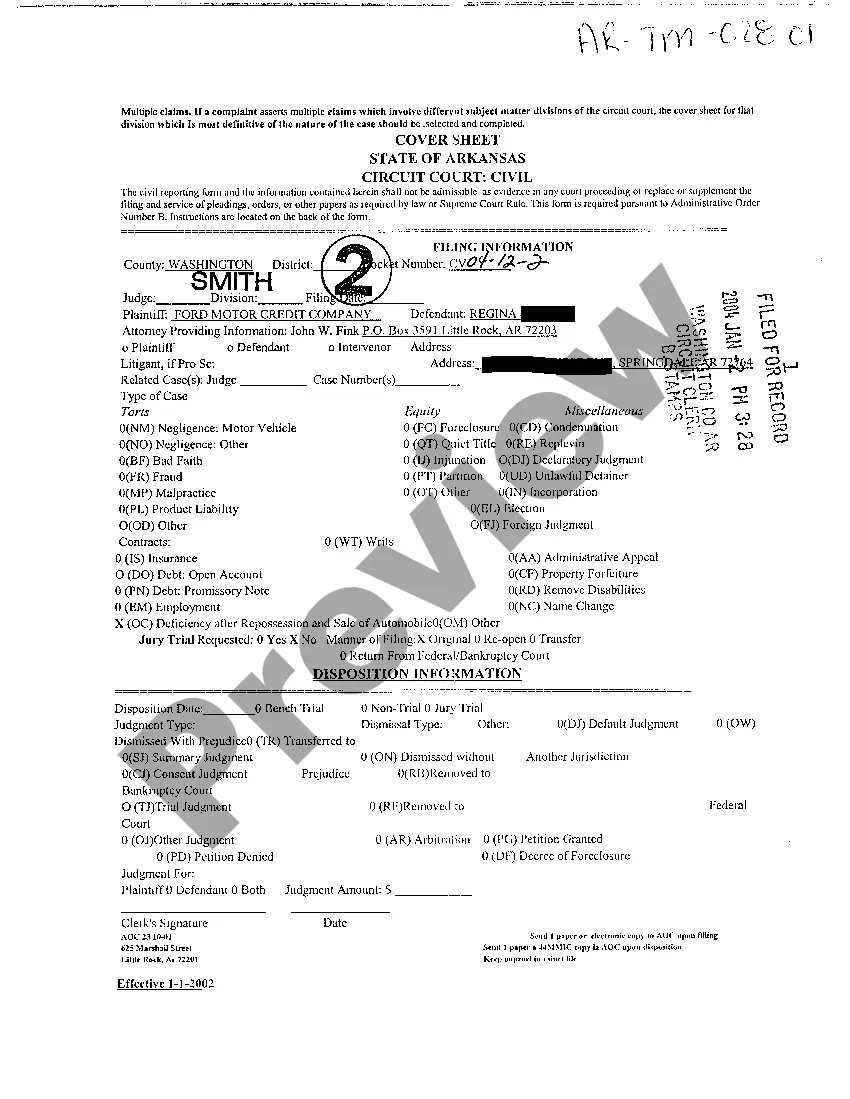
Mississippi Sample Legal Opinion Re Loan Modification
About this form
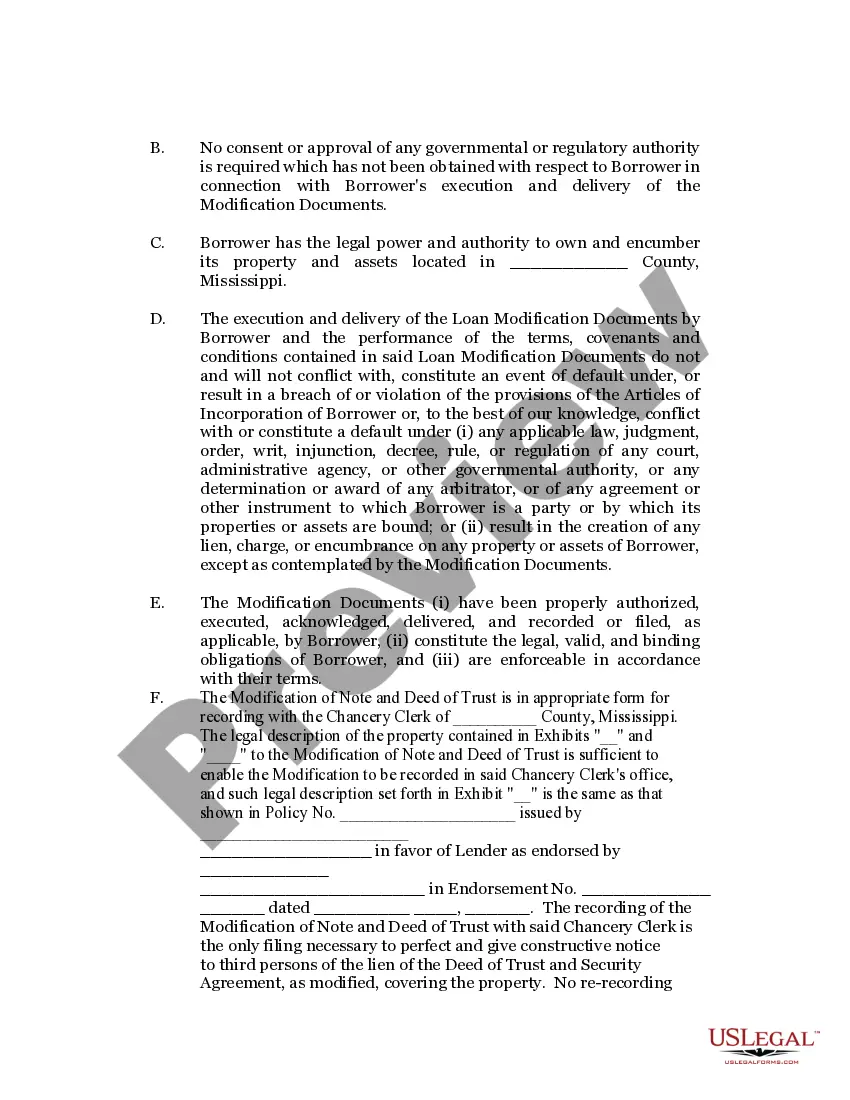
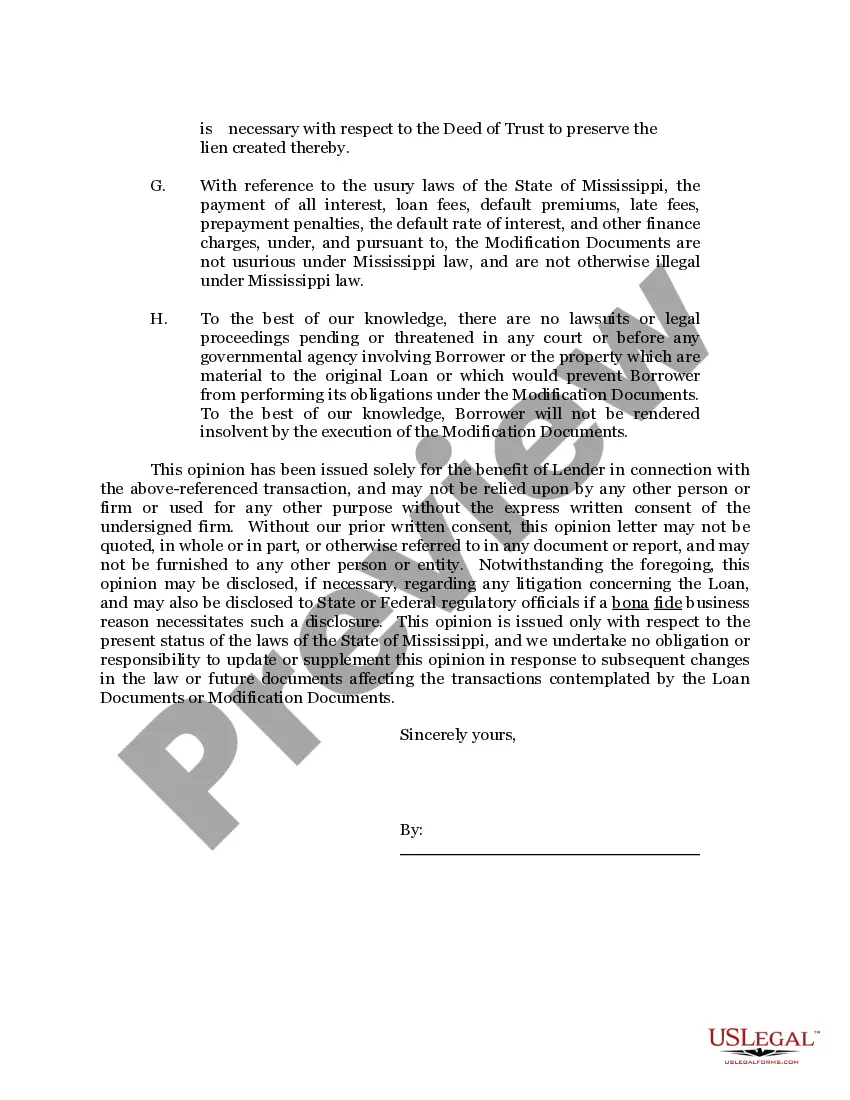
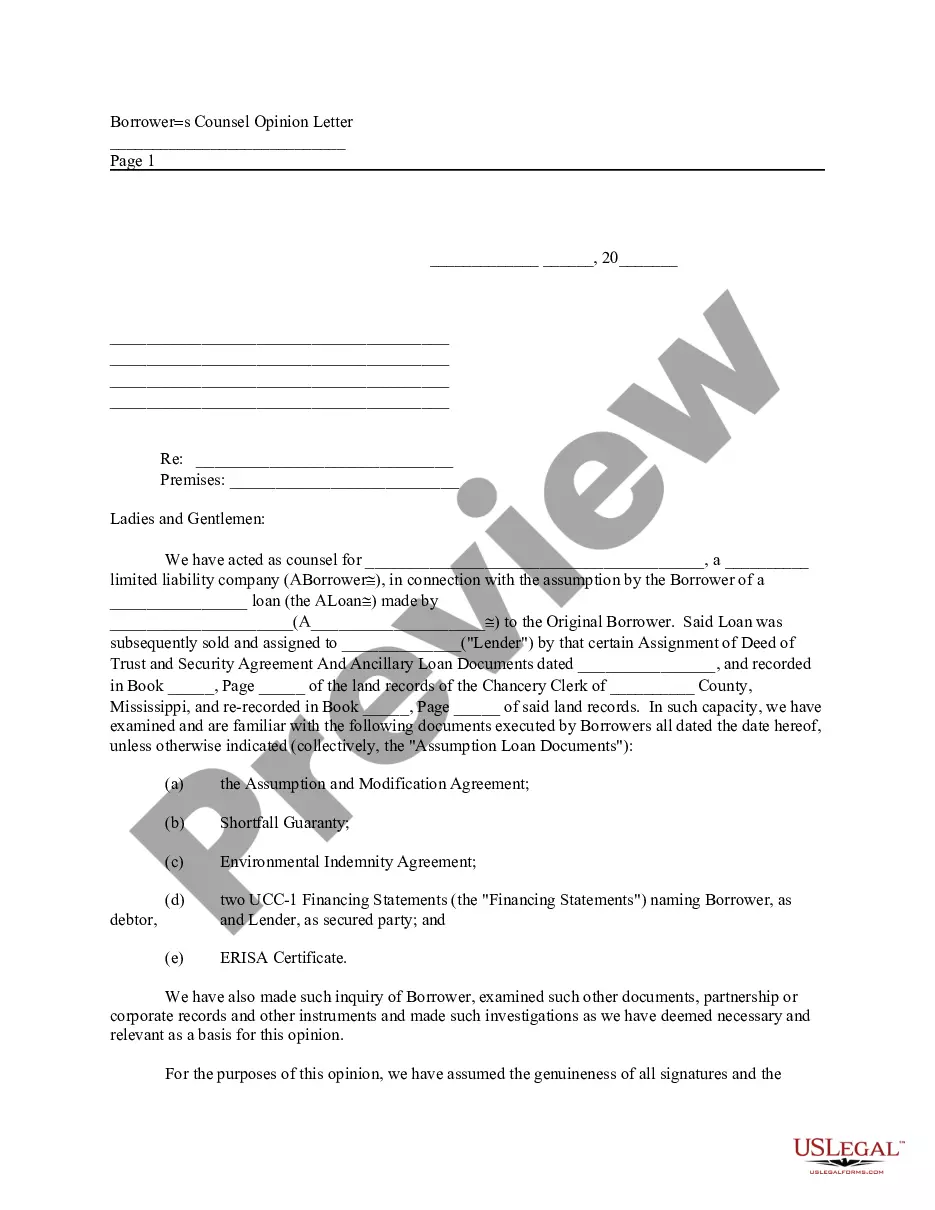
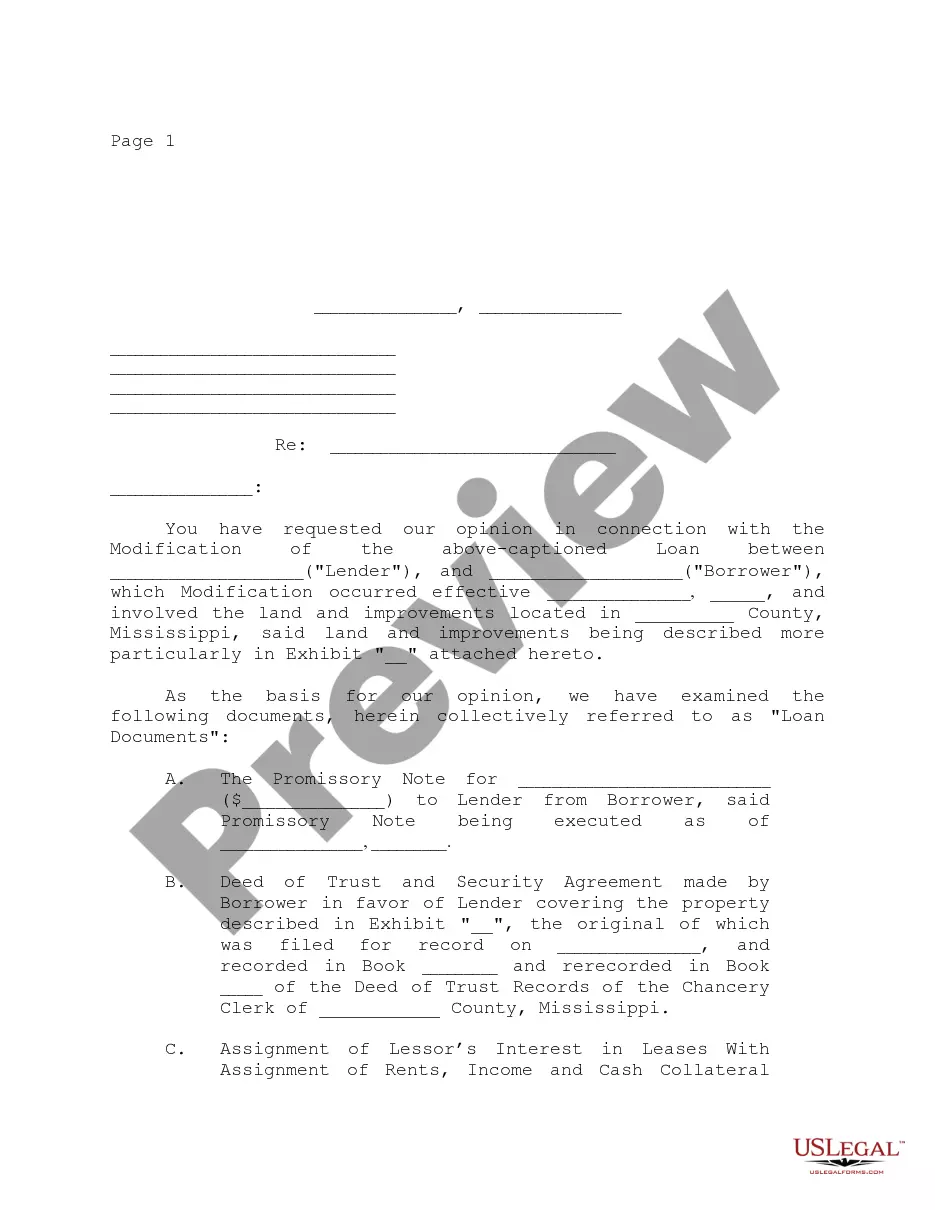
This form is a Sample Legal Opinion Re Loan Modification, typically drafted by counsel to provide a legal assessment regarding the modification of loan documents. It aims to clarify the legal standing of the borrower and lender involved in a loan modification process in the state of Mississippi. This opinion differs from standard loan modification forms by offering an attorney's analysis and assurance on various critical legal aspects and documentation required during the modification of a loan.
What’s included in this form
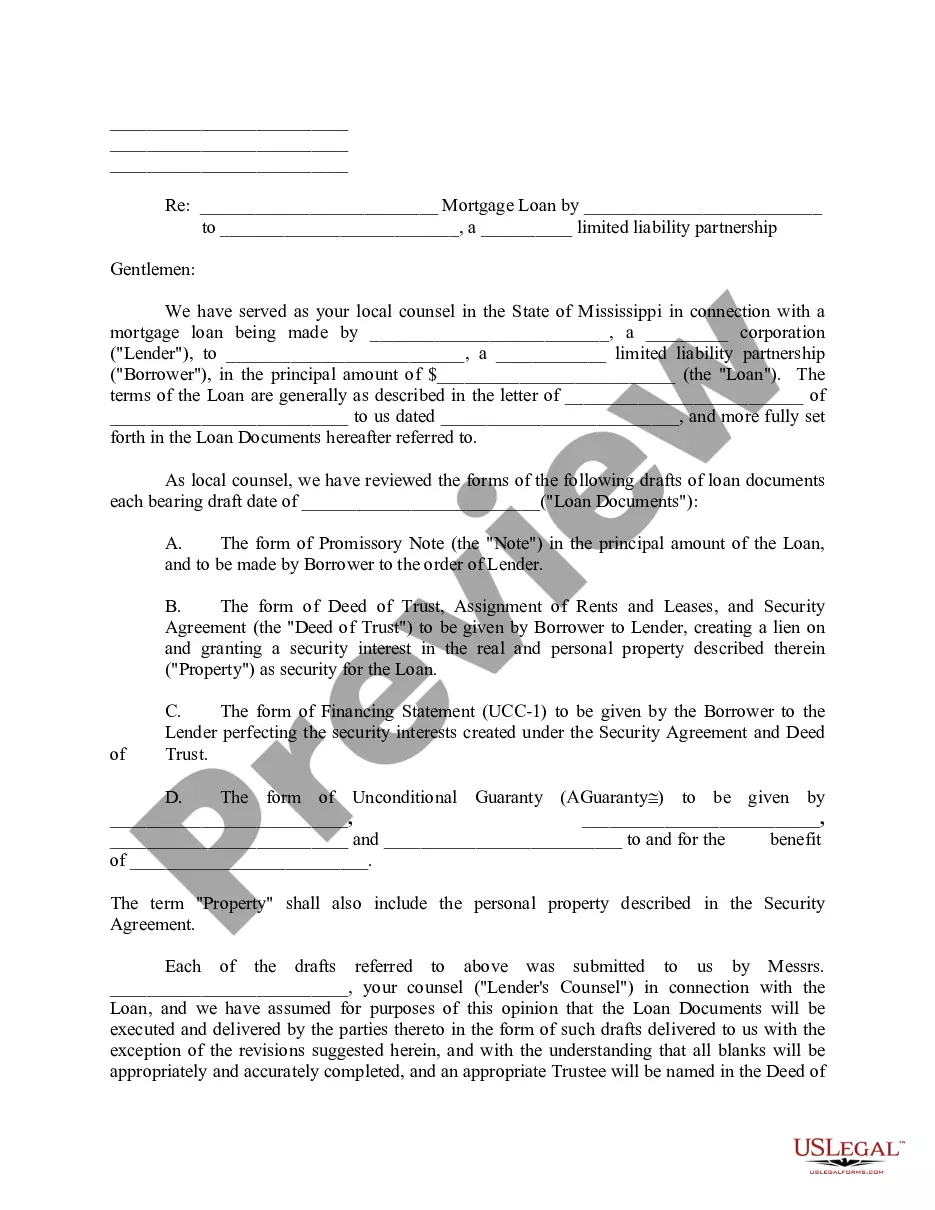
- Identification of parties involved as Lender and Borrower.
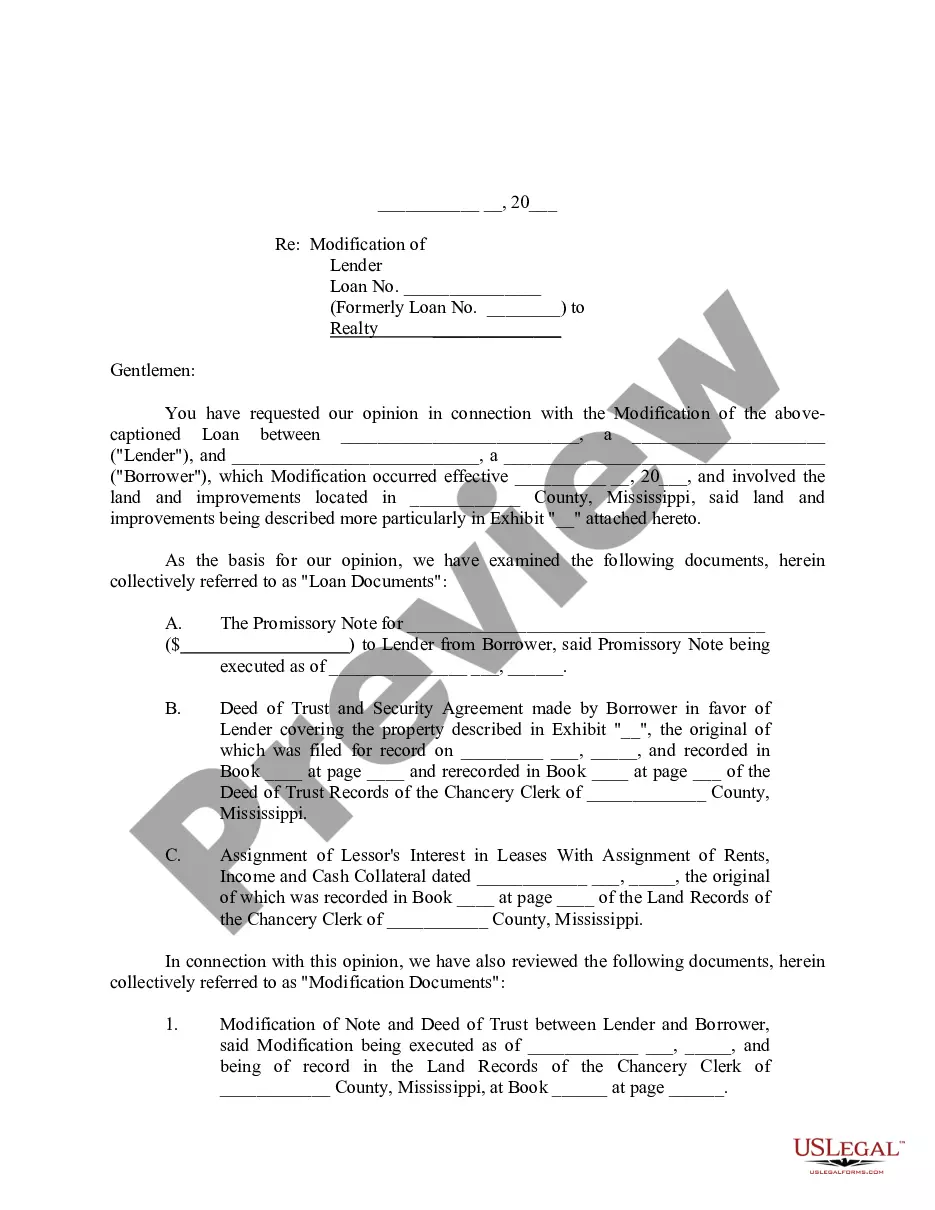
- Details of the original loan and modification terms, including effective dates.
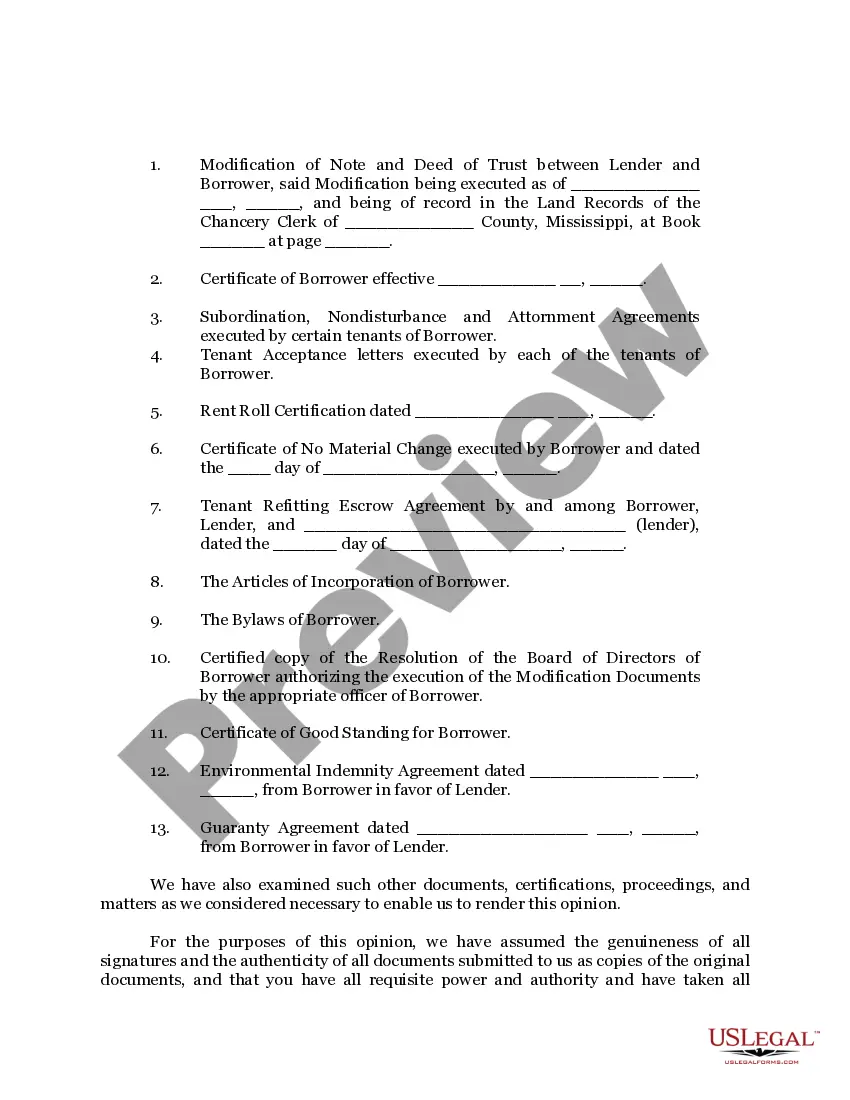
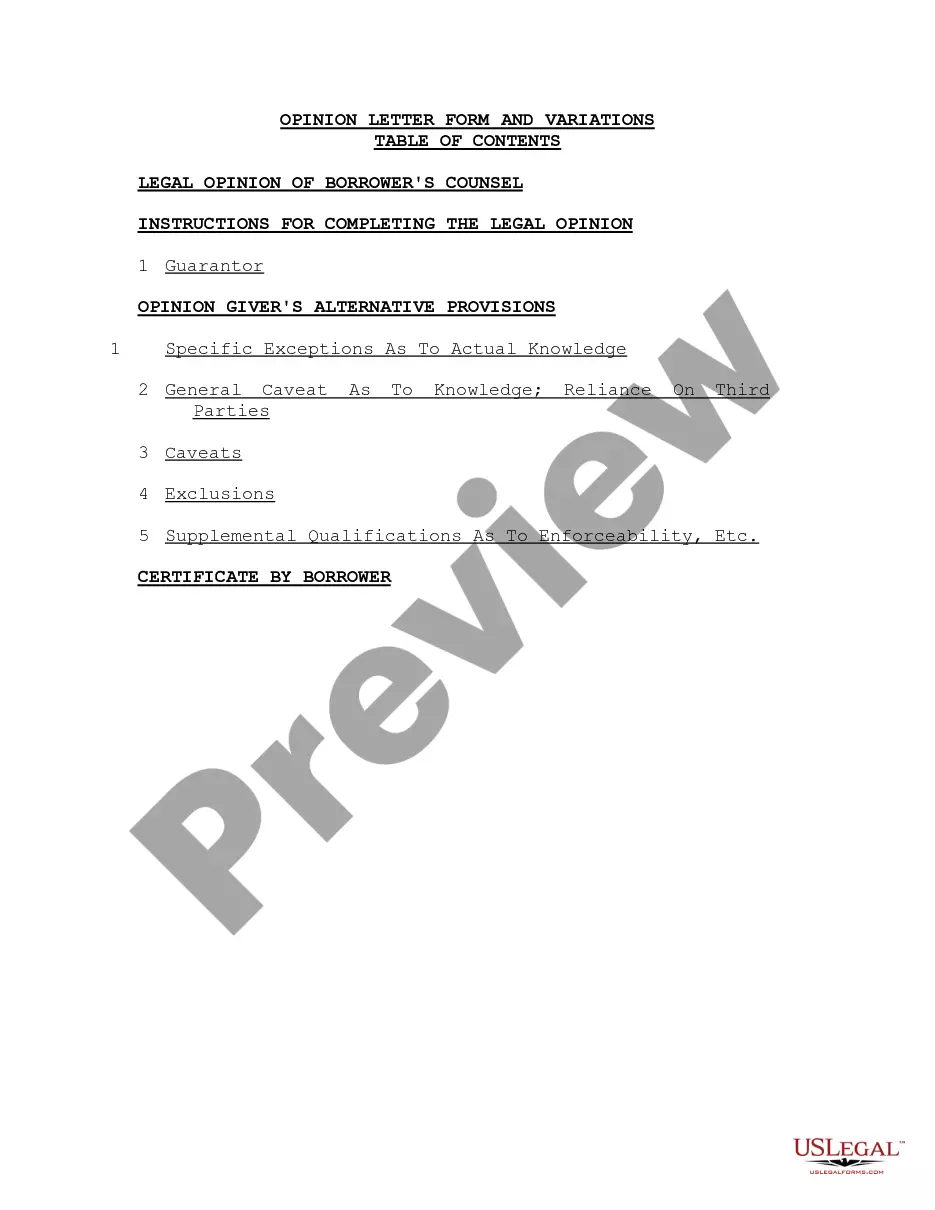
- Examination of key legal documents associated with the loan and its modification.
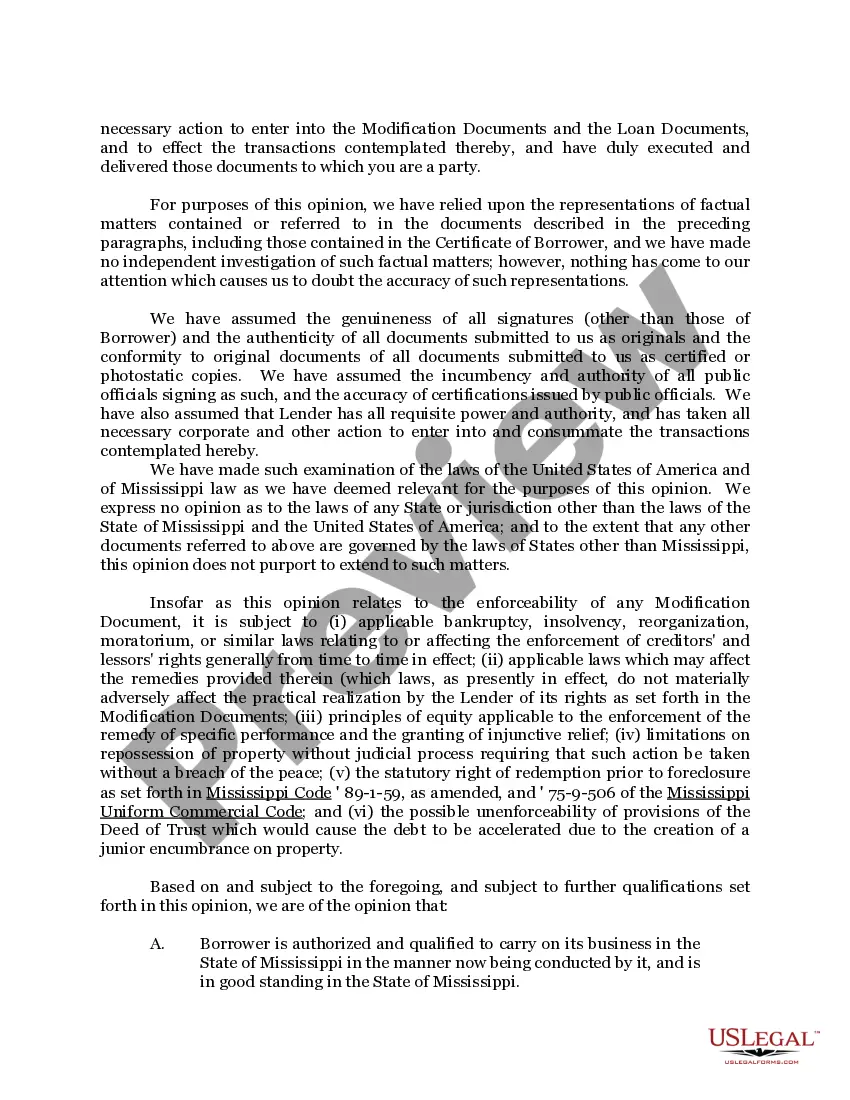
- Legal opinion regarding the authority and capability of the Borrower to enter into the modification.
- Information on compliance with applicable laws specific to Mississippi.

Situations where this form applies
This form should be used when a borrower seeks to modify the terms of an existing loan and requires a legal opinion confirming the legality and enforceability of the modified loan documents. This situation commonly arises when a borrower faces financial difficulties and needs to negotiate adjusted repayment terms with the lender.
Intended users of this form
This form is intended for:
- Borrowers who are modifying their existing loan agreements.
- Lenders who require a legal opinion before agreeing to loan modifications.
- Attorneys representing either the borrower or lender in the loan modification process.
Completing this form step by step
To complete this form, follow these steps:
- Identify the parties involved in the modification, namely the Lender and the Borrower.
- Specify the original loan numbers and provide details of the property being modified.
- List and attach all relevant loan documents and modification agreements to the opinion.
- Fill in the effective dates for the loan modification and ensure all required signatures are obtained.
- Review the opinion to confirm compliance with all local laws and regulations applicable in Mississippi.
Notarization guidance
This form does not typically require notarization unless specified by local law. For additional legal assurance, you may consider having your documents notarized to enhance their authenticity.
Get your form ready online
Our built-in tools help you complete, sign, share, and store your documents in one place.
Make edits, fill in missing information, and update formatting in US Legal Forms—just like you would in MS Word.
Download a copy, print it, send it by email, or mail it via USPS—whatever works best for your next step.
Sign and collect signatures with our SignNow integration. Send to multiple recipients, set reminders, and more. Go Premium to unlock E-Sign.
If this form requires notarization, complete it online through a secure video call—no need to meet a notary in person or wait for an appointment.
We protect your documents and personal data by following strict security and privacy standards.

Make edits, fill in missing information, and update formatting in US Legal Forms—just like you would in MS Word.

Download a copy, print it, send it by email, or mail it via USPS—whatever works best for your next step.

Sign and collect signatures with our SignNow integration. Send to multiple recipients, set reminders, and more. Go Premium to unlock E-Sign.

If this form requires notarization, complete it online through a secure video call—no need to meet a notary in person or wait for an appointment.

We protect your documents and personal data by following strict security and privacy standards.
Mistakes to watch out for
- Failing to accurately identify all parties involved in the loan modification.
- Neglecting to attach necessary documents that support the modification.
- Using outdated or incorrect loan numbers and property descriptions.
- Failing to ensure that all changes to the loan documents are compliant with Mississippi laws.
Advantages of online completion
- Convenient online access to a legally vetted form for loan modifications.
- Ability to edit the form to suit specific transaction needs.
- Collation of relevant legal documents in one integrated package for ease of use.
- The legal opinion confirms the enforceability of the loan modification agreement.
- It provides protection for both Borrower and Lender against potential legal disputes.
- Ensures compliance with Mississippi state law, minimizing legal risks.
Summary of main points
- The Sample Legal Opinion Re Loan Modification is essential for validating a modified loan agreement.
- Accurate completion of the form ensures legal protection for all parties involved.
- Consultation with a legal professional can greatly enhance understanding and effectiveness of the form.
Looking for another form?
Form popularity
FAQ
You have to be suffering a financial hardship. You have to show you cannot afford your current mortgage payments. You have to be able to show that you can stay current on a modified payment schedule.
A loan modification is a change to the original terms of your mortgage loan. Unlike a refinance, a loan modification doesn't pay off your current mortgage and replace it with a new one.
Be at least one regular mortgage payment behind or show that missing a payment is imminent. Provide evidence of significant financial hardship, for reasons such as:
Under this option, you reach an agreement between you and your mortgage company to change the original terms of your mortgagesuch as payment amount, length of loan, interest rate, etc. In most cases, when your mortgage is modified, you can reduce your monthly payment to a more affordable amount.
A loan modification can relieve some of the financial pressure you feel by lowering your monthly payments and stopping collection activity. But loan modifications are not foolproof. They could increase the cost of your loan and add derogatory remarks to your credit report.
Your name, address, phone number and account number. The type of debt resolution you're seeking. Your financial situation that has caused you to fall behind in your payments. A detailed budget and your plan for making payments (if you want to keep your home)
A loan modification is a change to the original terms of your mortgage loan. Unlike a refinance, a loan modification doesn't pay off your current mortgage and replace it with a new one. Instead, it directly changes the conditions of your loan.
Forbearance. A forbearance happens when a lender temporarily suspends or reduces payments for the borrower. Rate Reduction. Loan Extension. Repayment Plan.
An income and expenses financial worksheet. tax returns (often, two years' worth) recent pay stubs or a profit and loss statement. proof of any other income (including alimony, child support, Social Security, disability, etc.) recent bank statements, and.