Mississippi Petition for Partial Distribution From Estate
About this form
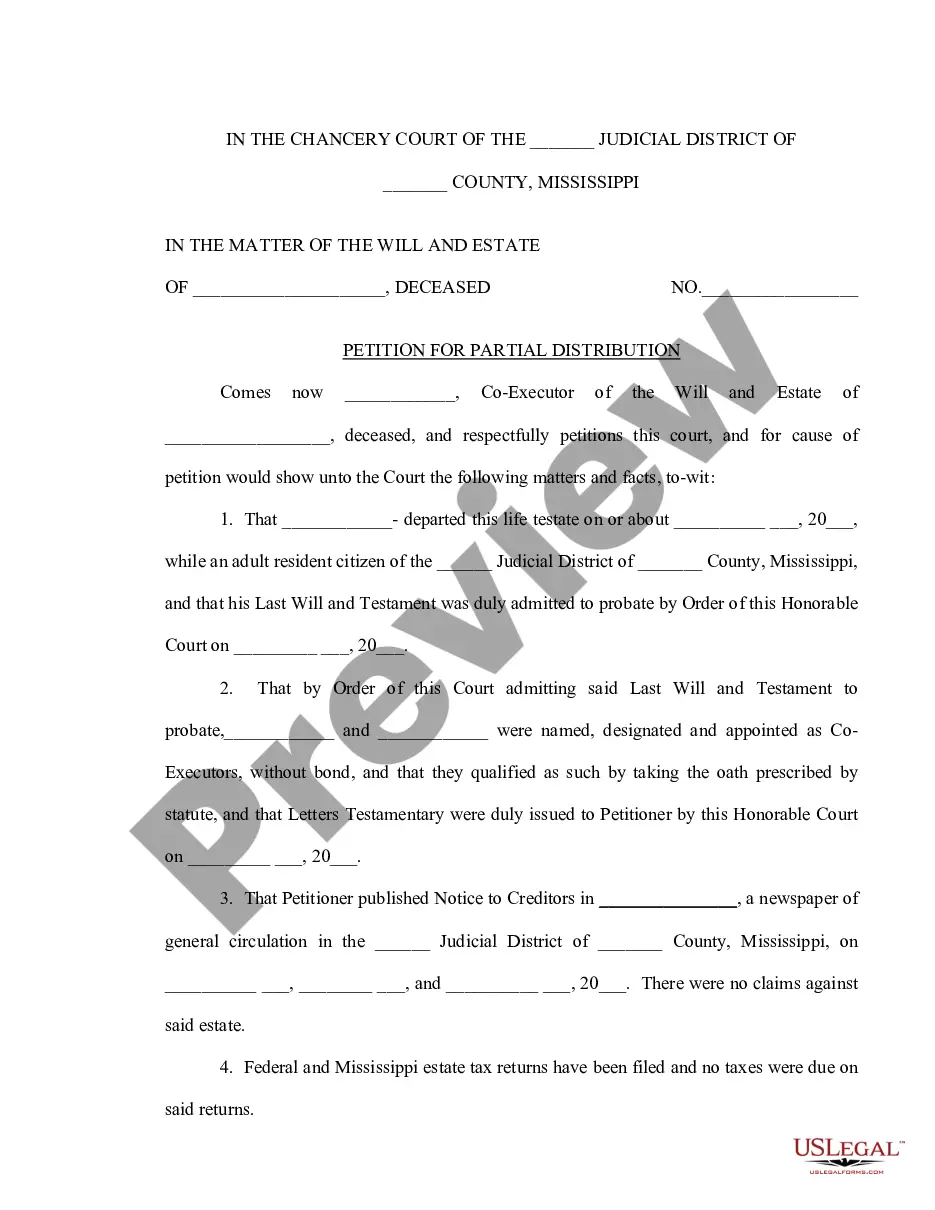
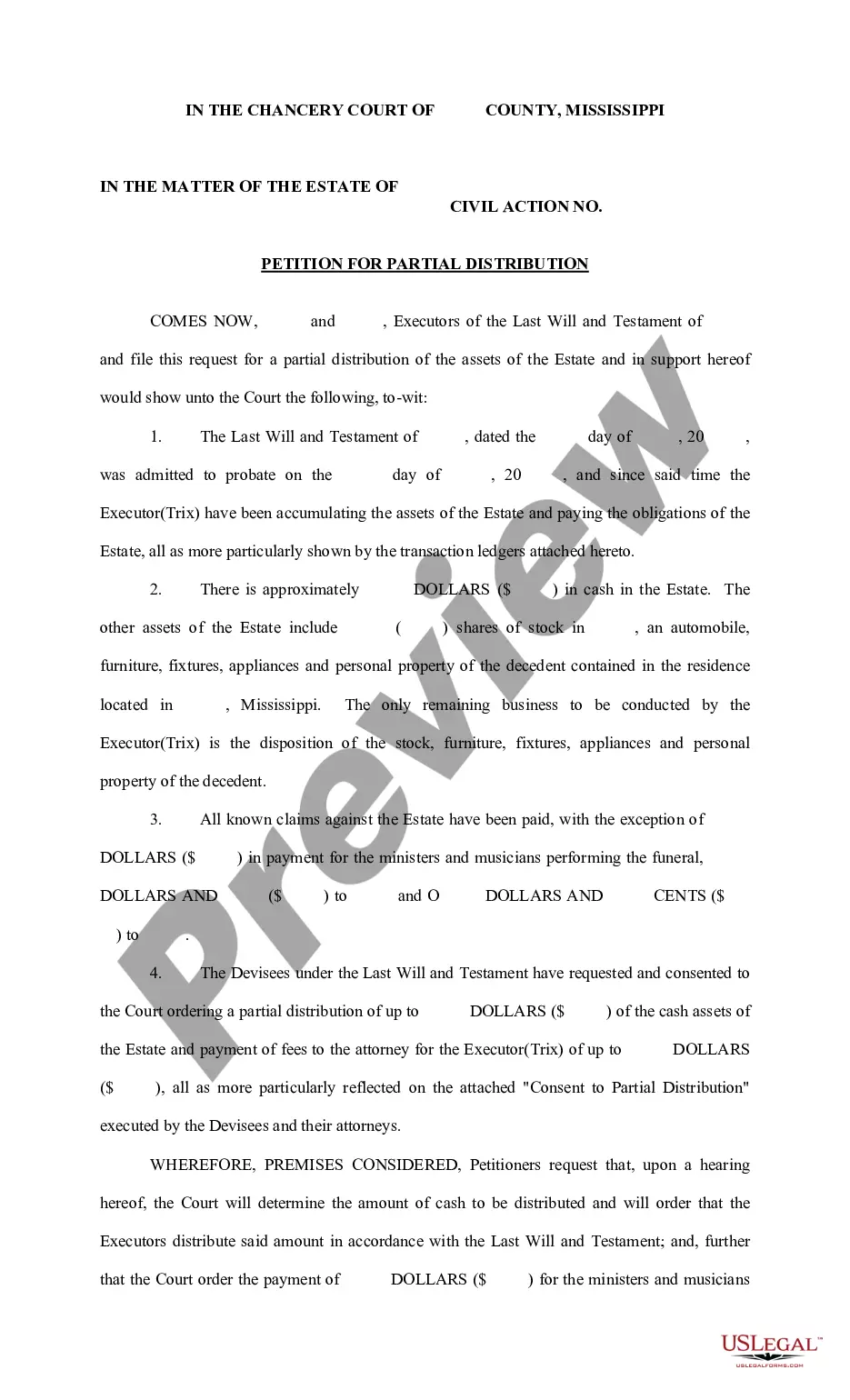
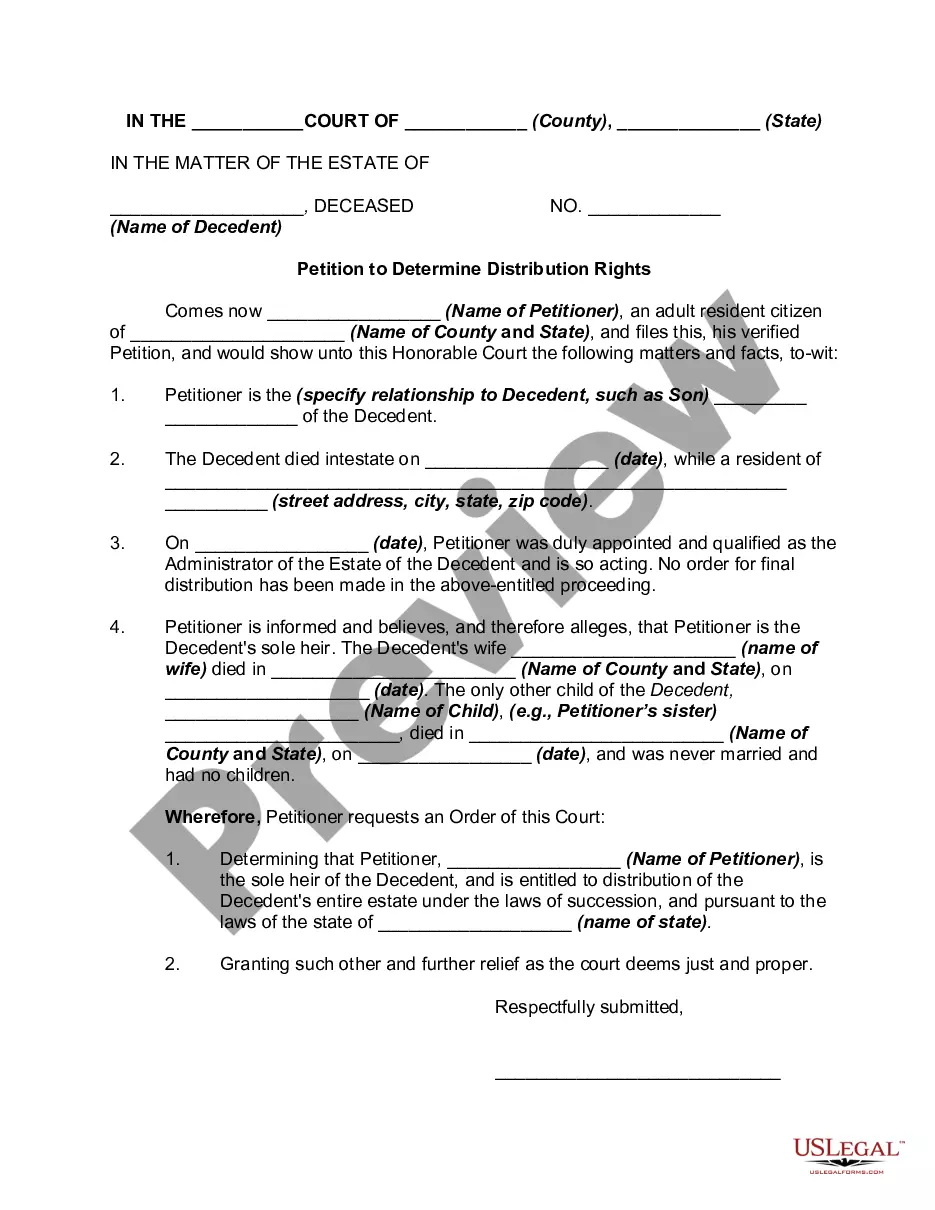
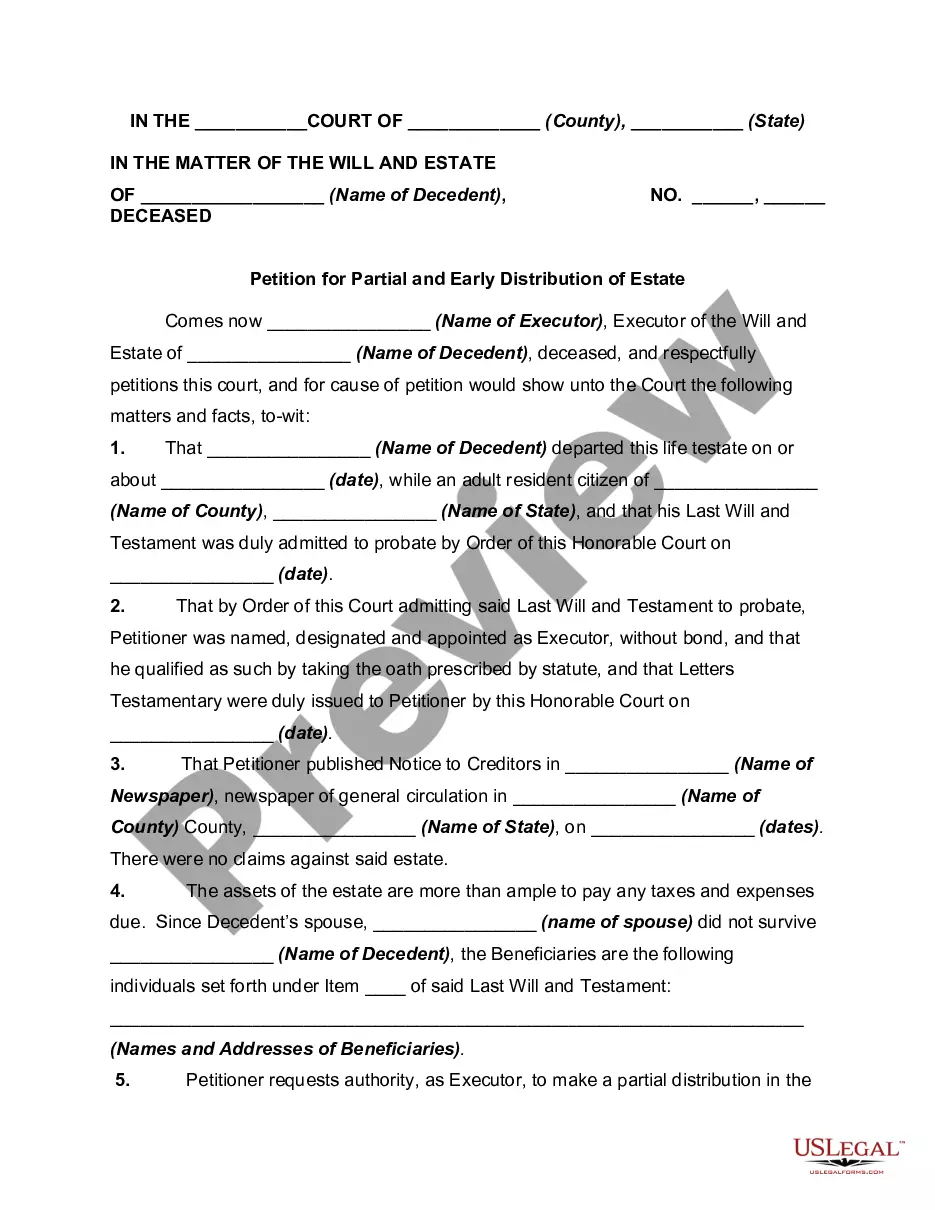
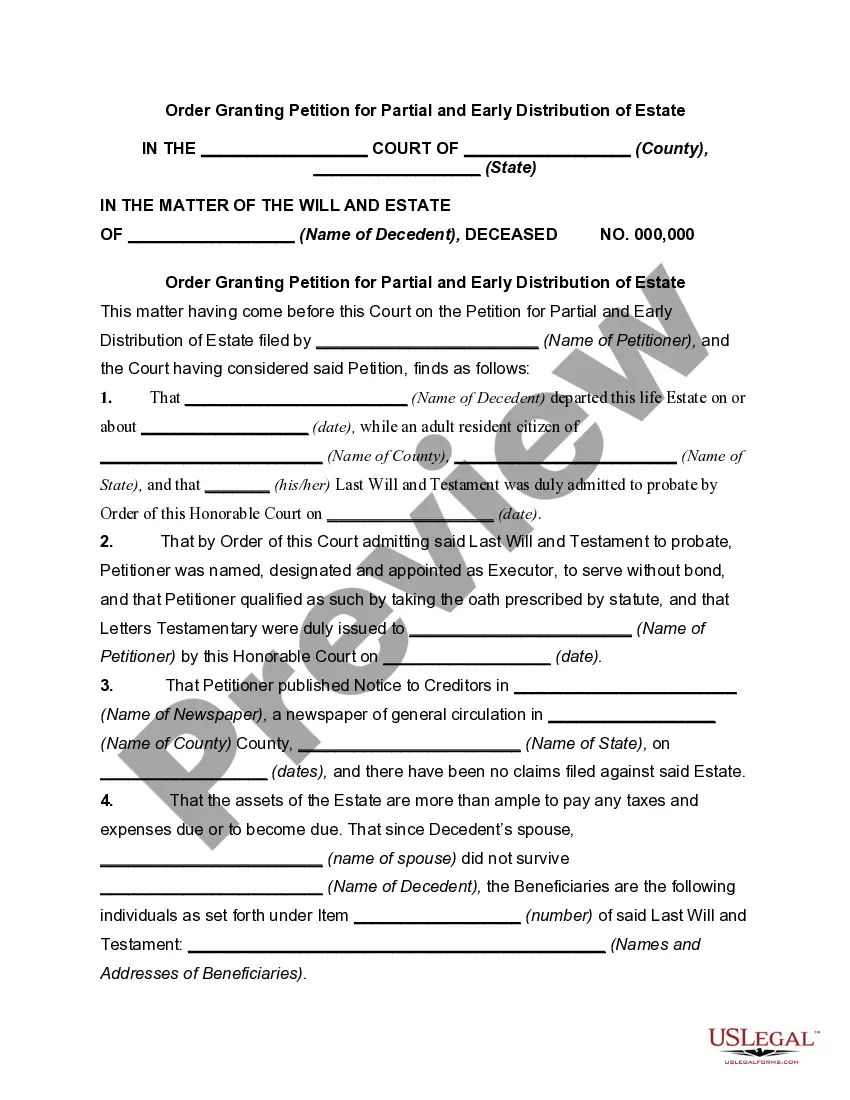
The Petition for Partial Distribution from Estate is a legal document filed with the Probate Court by the executor to request approval for a partial distribution of estate funds to the beneficiaries. This form is essential for ensuring that beneficiaries receive their share of the estate in a timely manner, differing from a full distribution which may occur at the closing of the estate.
Key components of this form
- Identification of the deceased, including name and date of death.
- Details regarding the appointment of co-executors by the court.
- Publication of notice to creditors to confirm no claims against the estate.
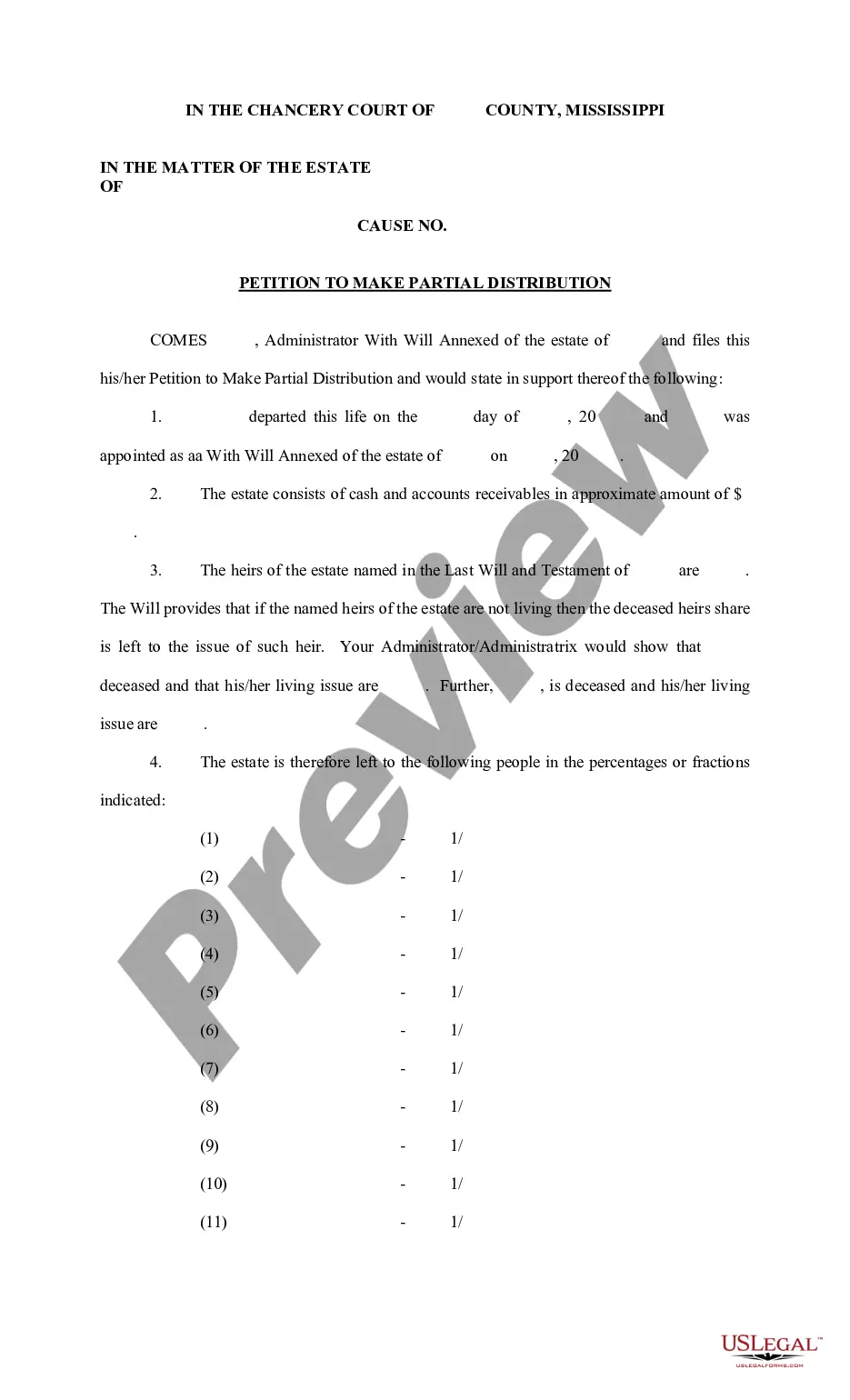
- List of beneficiaries as specified in the Last Will and Testament.
- Amount to be distributed to each beneficiary.
- Petitioner's request for court authorization to make the distribution.

Common use cases
This form is used when executors of an estate wish to request a partial distribution of assets before the estate is fully settled. It is typically required when the beneficiaries need financial assistance or when certain assets have already been distributed, allowing for equitable distribution among all beneficiaries.
Who this form is for
This form should be used by:
- Co-executors of an estate who have been appointed by the court.
- Individuals managing an estate where beneficiaries require partial distribution of funds.
- Executors of an estate in Mississippi looking to comply with local probate laws.
Steps to complete this form
- Fill in the name of the deceased and the date of death in the designated sections.
- List the names of the co-executors as appointed by the court.
- Note the date when notice to creditors was published.
- Specify the beneficiaries and the amount to be distributed to each.
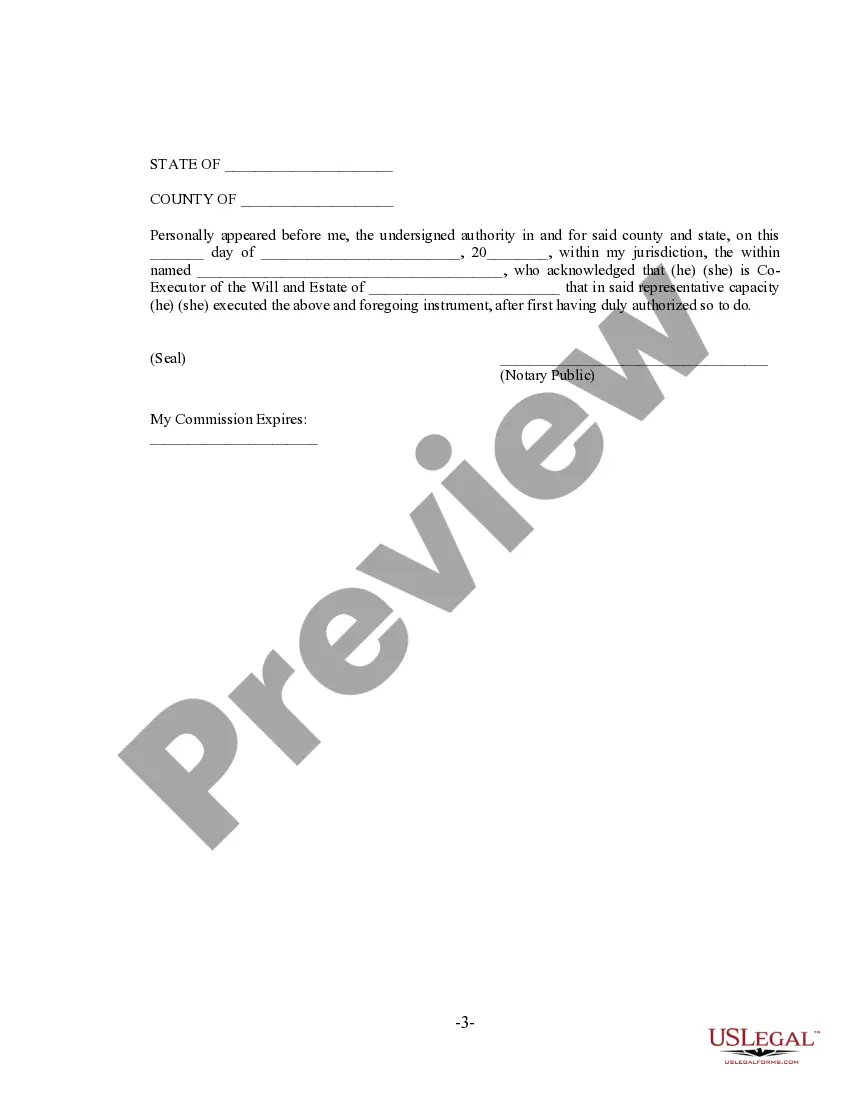
- Sign the form as co-executor and secure a notary if required.
Is notarization required?
This form does not typically require notarization unless specified by local law, though signing in front of a notary can add an extra layer of legal assurance. If notarization is needed, US Legal Forms offers integrated online notarization options for your convenience.
Get your form ready online
Our built-in tools help you complete, sign, share, and store your documents in one place.
Make edits, fill in missing information, and update formatting in US Legal Forms—just like you would in MS Word.
Download a copy, print it, send it by email, or mail it via USPS—whatever works best for your next step.
Sign and collect signatures with our SignNow integration. Send to multiple recipients, set reminders, and more. Go Premium to unlock E-Sign.
If this form requires notarization, complete it online through a secure video call—no need to meet a notary in person or wait for an appointment.
We protect your documents and personal data by following strict security and privacy standards.

Make edits, fill in missing information, and update formatting in US Legal Forms—just like you would in MS Word.

Download a copy, print it, send it by email, or mail it via USPS—whatever works best for your next step.

Sign and collect signatures with our SignNow integration. Send to multiple recipients, set reminders, and more. Go Premium to unlock E-Sign.

If this form requires notarization, complete it online through a secure video call—no need to meet a notary in person or wait for an appointment.

We protect your documents and personal data by following strict security and privacy standards.
Mistakes to watch out for
- Failing to include all required beneficiary information.
- Not properly documenting prior distributions of estate assets.
- Omitting the publication of notice to creditors.
- Failing to sign or improperly filling out the date for signatures.
Benefits of completing this form online
- Convenient access to the document anytime and anywhere.
- Easily editable to meet specific needs and circumstances.
- Reliable templates drafted by licensed attorneys ensuring legal compliance.
Summary of main points
- The Petition for Partial Distribution allows executors to legally distribute part of an estate before full settlement.
- It is suitable for beneficiaries needing immediate financial support.
- Proper completion and notarization are essential for court approval.
Looking for another form?



Form popularity
FAQ
Generally, beneficiaries have to wait a certain amount of time, say at least six months. That time is used to allow creditors to come forward and to pay them off with the estate assets. (In some cases, an executor may make partial distributions to the heirs after he or she estimates the debts.
A petition to open probate is filed with the court. A copy of the death certificate and will must be included. A probate attorney must be hired since the state probate laws requires an attorney for all estates in probate. The court will approve the executor or appoint someone if the will didn't name a person.
A personal representative has the discretion to make a partial distribution of assets during the administration of the estate.Once final expenses have been made and the estate is ready to close, the personal representative can distribute the remaining assets to the beneficiaries.
The Mississippi small estate affidavit may be used by an heir or successor when the decedent's estate (the person who died) left $75,000 or less in probate-able personal property.
In Mississippi, you can make a living trust to avoid probate for virtually any asset you ownreal estate, bank accounts, vehicles, and so on. You need to create a trust document (it's similar to a will), naming someone to take over as trustee after your death (called a successor trustee).
The Pandemic Unemployment Assistance (PUA) program is an emergency program activated in response to a crisis and designed to provide benefits to certain individuals who are ineligible for or who have exhausted entitlement to regular unemployment compensation or extended benefits.
You should file for benefits as you may be eligible for partial unemployment. Please note: when working and filing, all hours and gross earnings must be reported. A portion of your gross earnings will be deducted from your weekly benefit amount.