Mississippi Warranty Deed from Individual to Corporation
What this document covers
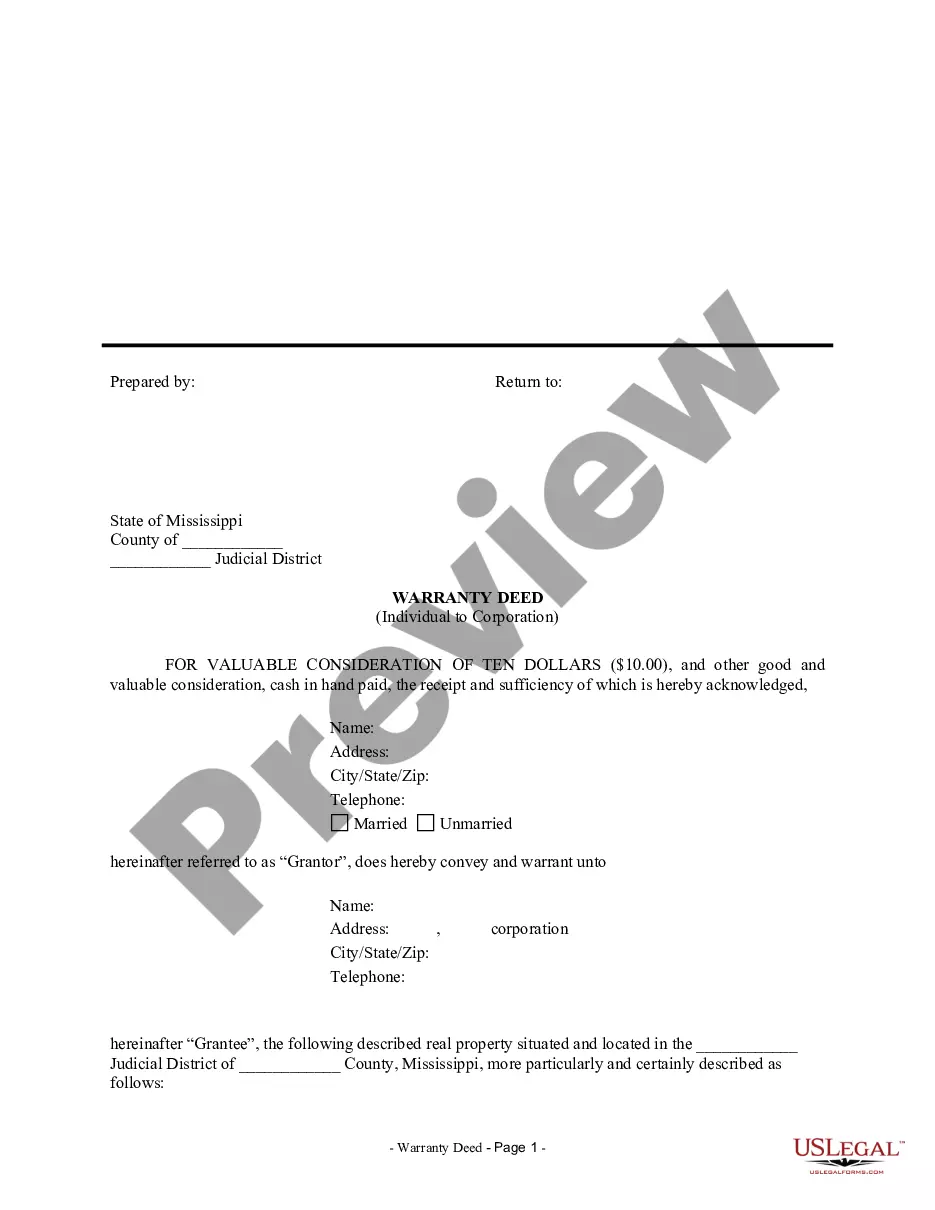
The Warranty Deed from Individual to Corporation is a legal document used to transfer ownership of real property from an individual (the grantor) to a corporation (the grantee). This form not only ensures that the property is conveyed but also includes a warranty that the grantor holds clear title to the property. Unlike other deeds, this warranty deed specifically addresses transfers between an individual and a corporate entity, providing additional legal assurances for the corporation receiving the property.
Key parts of this document
- Parties involved: Identification of the grantor (individual) and the grantee (corporation).
- Consideration statement: Acknowledgment of the payment (commonly stated as ten dollars).
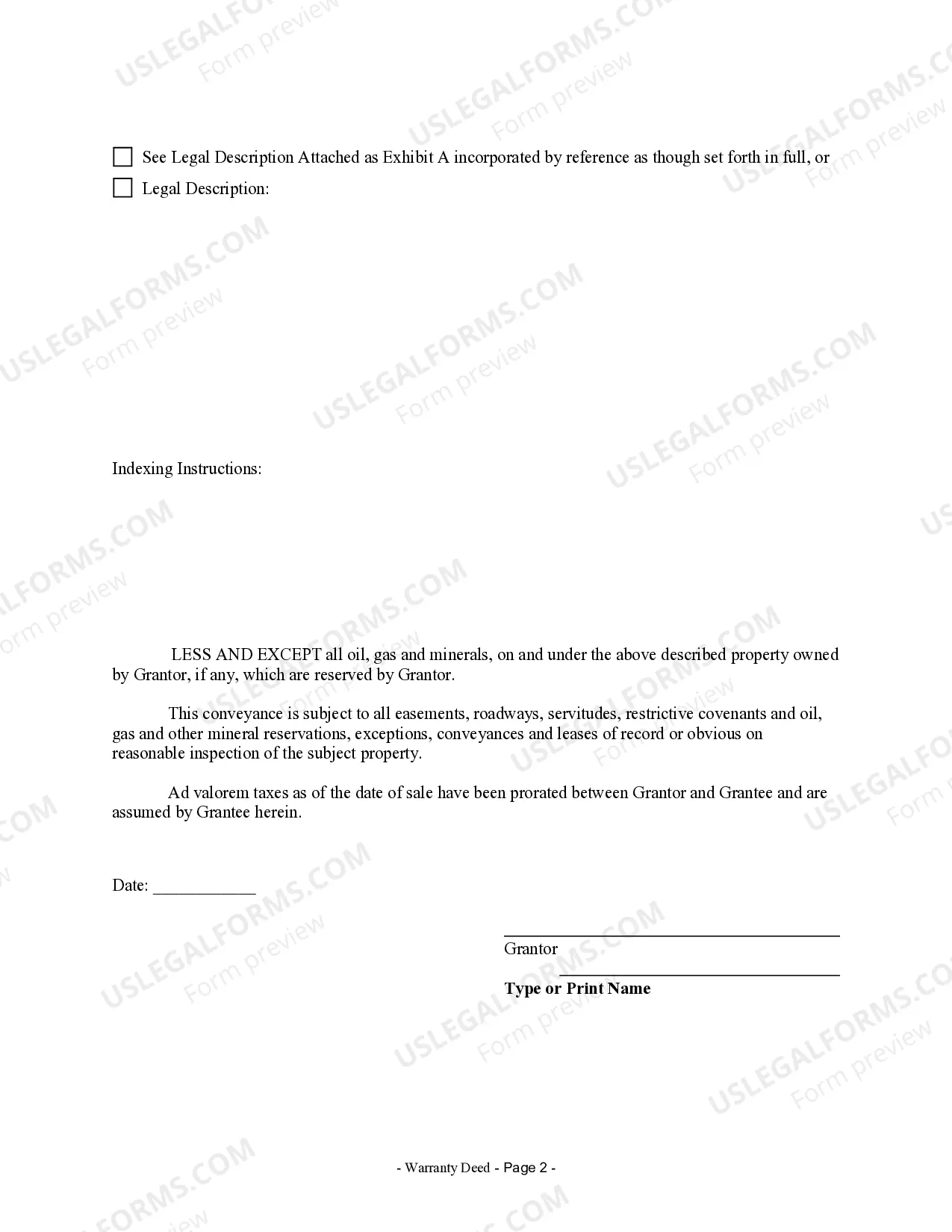
- Legal description: Detailed description of the property being transferred.
- Warranties: Grantor's assurance of a clear title to the property with specified exceptions.
- Signatures: Required signatures of the grantor to validate the deed.


Common use cases
This warranty deed should be used when an individual wishes to transfer property ownership to a corporation. Common scenarios include business acquisitions, property investments, and estate planning where the individual wants to place their real estate into a corporate structure for liability protection or other reasons.
Who this form is for
- Individuals who own real estate and are transferring it to a corporation.
- Corporations acquiring property from an individual.
- Real estate professionals involved in property transactions.
- Estate planners facilitating property transfers to business entities.
Instructions for completing this form
- Identify the parties involved in the transaction: the individual grantor and the corporation grantee.
- Specify the property by including a legal description that details the boundaries and features of the real estate.
- State the consideration paid for the property, typically stated as a nominal amount.
- Include the necessary warranties that confirm the grantorâs clear title, noting any exceptions for oil, gas, and minerals as applicable.
- Obtain the grantor's signature to finalize the deed.
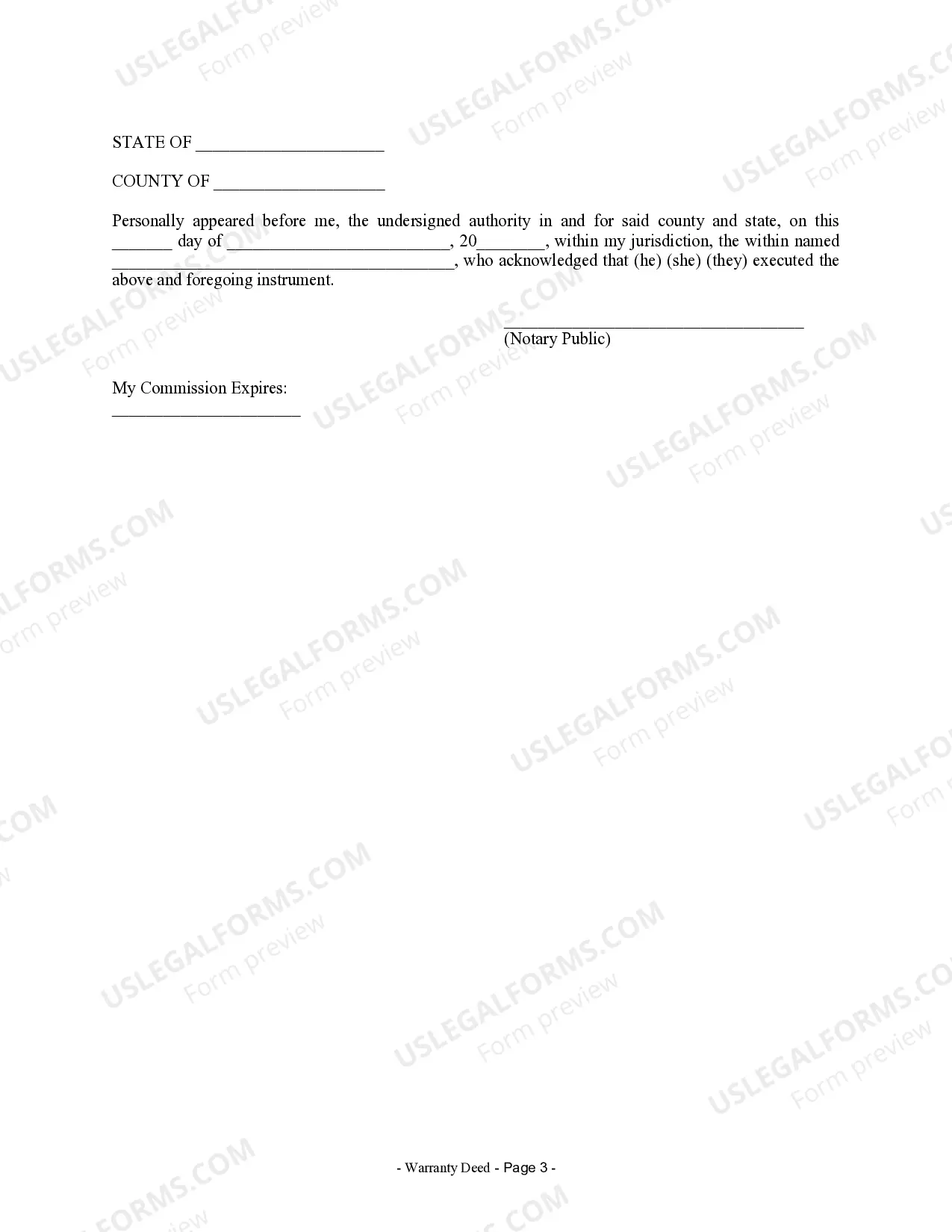
Is notarization required?
This form does not typically require notarization unless specified by local law. Users should check their stateâs regulations to confirm if notarization is necessary for validity.
Get your form ready online
Our built-in tools help you complete, sign, share, and store your documents in one place.
Make edits, fill in missing information, and update formatting in US Legal Forms—just like you would in MS Word.
Download a copy, print it, send it by email, or mail it via USPS—whatever works best for your next step.
Sign and collect signatures with our SignNow integration. Send to multiple recipients, set reminders, and more. Go Premium to unlock E-Sign.
If this form requires notarization, complete it online through a secure video call—no need to meet a notary in person or wait for an appointment.
We protect your documents and personal data by following strict security and privacy standards.

Make edits, fill in missing information, and update formatting in US Legal Forms—just like you would in MS Word.

Download a copy, print it, send it by email, or mail it via USPS—whatever works best for your next step.

Sign and collect signatures with our SignNow integration. Send to multiple recipients, set reminders, and more. Go Premium to unlock E-Sign.

If this form requires notarization, complete it online through a secure video call—no need to meet a notary in person or wait for an appointment.

We protect your documents and personal data by following strict security and privacy standards.
Typical mistakes to avoid
- Failing to provide a complete legal description of the property.
- Not properly identifying the grantor and grantee.
- Omitting necessary signatures from the grantor.
- Incorrectly stating the consideration amount.
Why complete this form online
- Convenience: Downloadable templates allow for immediate access and use.
- Editability: Customize the form to meet specific transaction needs.
- Reliability: Templates drafted by licensed attorneys ensure compliance with legal standards.
Main things to remember
- The Warranty Deed from Individual to Corporation is key for property transfers to a corporate entity.
- Ensure correct legal descriptions and party identification to avoid common mistakes.
- Check state-specific guidelines for compliance with local laws.
Looking for another form?
Form popularity
FAQ
Typically, the lender will provide you with a copy of the deed of trust after the closing. The original warranty deeds are often mailed to the grantee after they are recorded. These are your original copies and should be kept in a safe place, such as a fireproof lockbox or a safe deposit box at a financial institution.
Generally, someone else cannot remove you from title without your consent and/or knowledge. You should speak to a local real estate attorney to see how to return your name to title and how it was removed in the first place.
Retrieve your original deed. Get the appropriate deed form. Draft the deed. Sign the deed before a notary. Record the deed with the county recorder. Obtain the new original deed.
Corporate warranty deeds offer the seller's guarantee to the buyer in regards to the validity of the chain of title. Generally, special warranty deeds only protect against problems occurring since the seller purchased the property.
Once signed and notarized, a Mississippi deed must be recorded. The deed must be presented to the Recorder of Deeds in the county where the property is located. The transfer takes effect when signed and accepted by the grantee. However, recording provides notice to the public that the property was transferred.
Before a quitclaim deed can be recorded with a county recorder in Mississippi, the grantor must sign and acknowledge it. The names, addresses, and telephone numbers of the grantors and grantees to the quit claim deed, along with a legal description of the real property should be provided on the first page (89-5-24).
The original deed is returned to the owner of the property from the office of the recorder after proper entry. The office of the Recorder of Deeds maintains a set of indexes about each deed recorded, for an easy search. Almost all states have a grantor-grantee index including a reference to all documents recorded.
The Mississippi general warranty deed is used to transfer real property in Mississippi with a guarantee from the seller or grantor that the property is free from hidden claims against the title and that the grantor has the legal authority to sell the property.
Once signed and notarized, a Mississippi deed must be recorded. The deed must be presented to the Recorder of Deeds in the county where the property is located. The transfer takes effect when signed and accepted by the grantee. However, recording provides notice to the public that the property was transferred.